
Does an inspection mean going on the roof?
Not always. The ground, the loft and a ladder show a great deal, and we only walk a slope where it is safe and adds something.
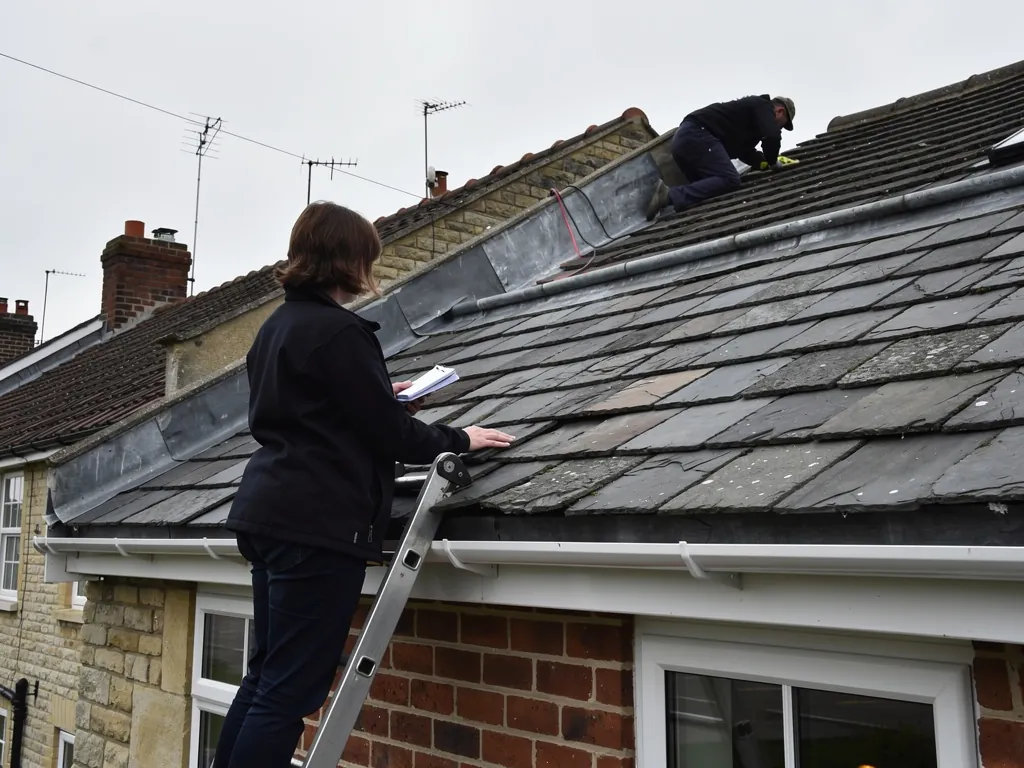
A roof inspection for homeowners, buyers, landlords and commercial property managers, or anyone planning work. We look at the covering, the junctions and the loft, photograph what we find and put it in writing.
Not always. The ground, the loft and a ladder show a great deal, and we only walk a slope where it is safe and adds something.
Photographs of your own roof, a plain note of what each one shows, and a written quote for any work the roof needs.
No. We separate faults that let water in from ageing that can wait, so you can plan spending instead of reacting to a long list.
| Job | Typical cost |
|---|---|
| Standard roof inspection | £150 to £250 |
| Drone roof survey | £200 to £400 |
| Thermal imaging survey | £300 to £500 |
These are national figures for stand-alone inspections, not our prices. When you want work done as well, the written quote arrives with the photographs once we have seen the roof.
MyBuilder roof inspection cost guide (updated August 2026).
See all costs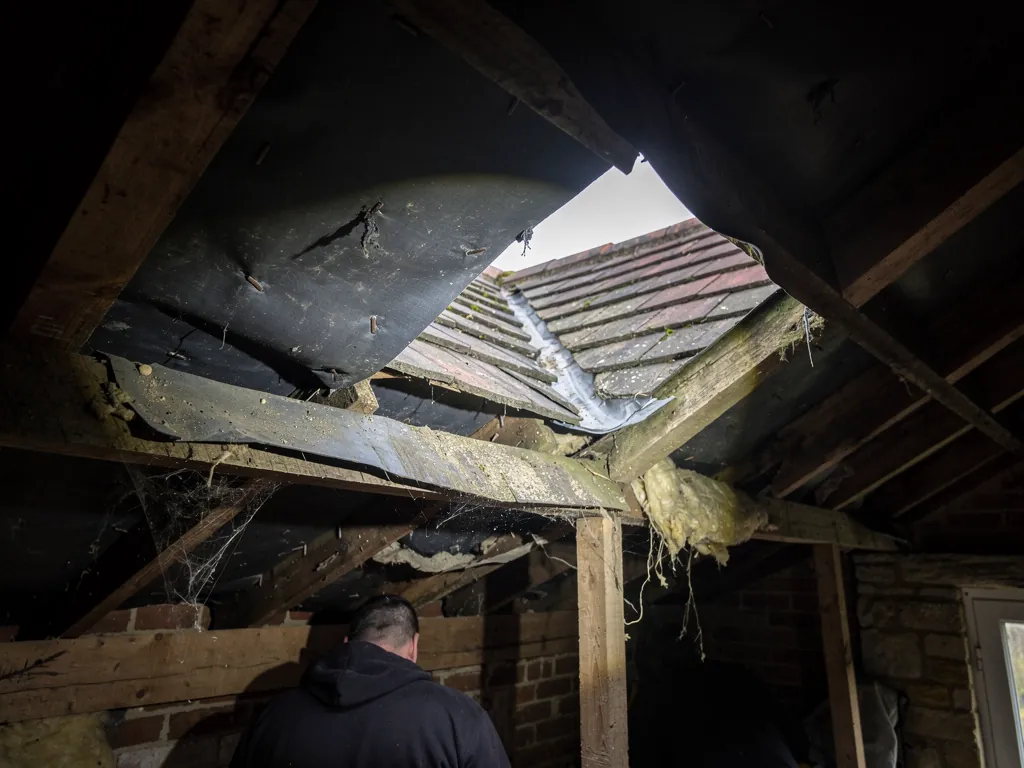 The roof coveringSlates, tiles or sheets checked for slipped, cracked, flaking or missing pieces, rusted fixings, and moss or lichen holding moisture against the surface.
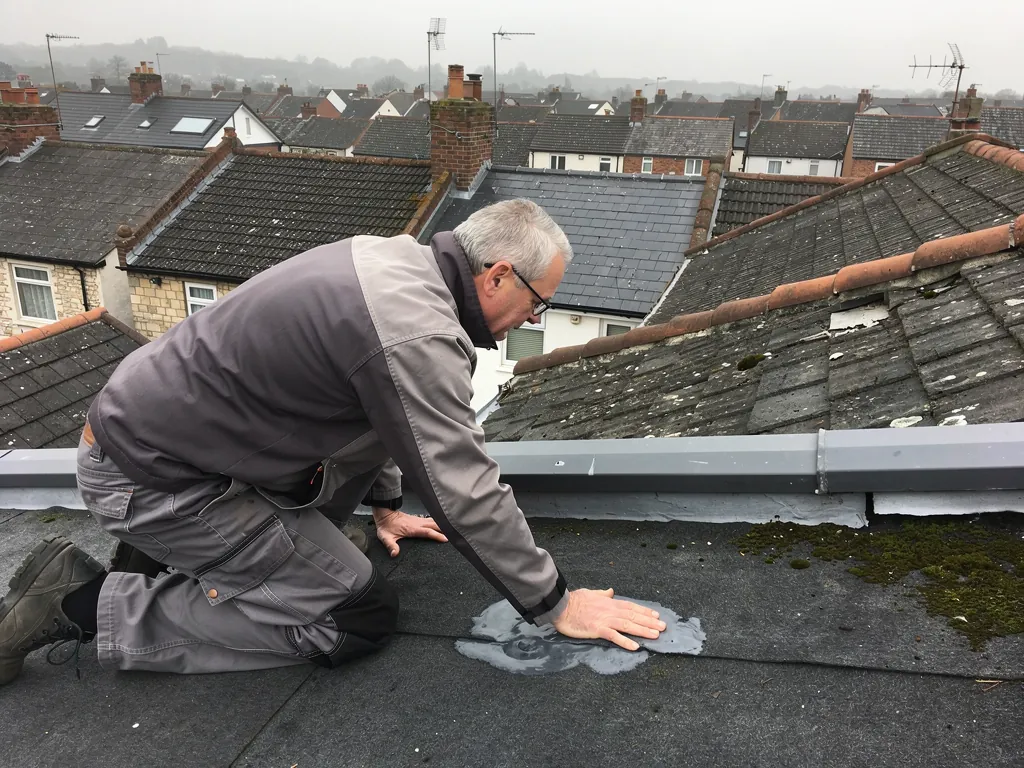 Ridges, hips and vergesThe top lines and gable edges, where old mortar loosens and wind lifts tiles, checked for bedding, fixings and gaps that let rain in.
 Flashings and valleysLead or mortar sealing the joint against a wall, dormer or stack, and the channels where two slopes join and carry the heaviest flow.
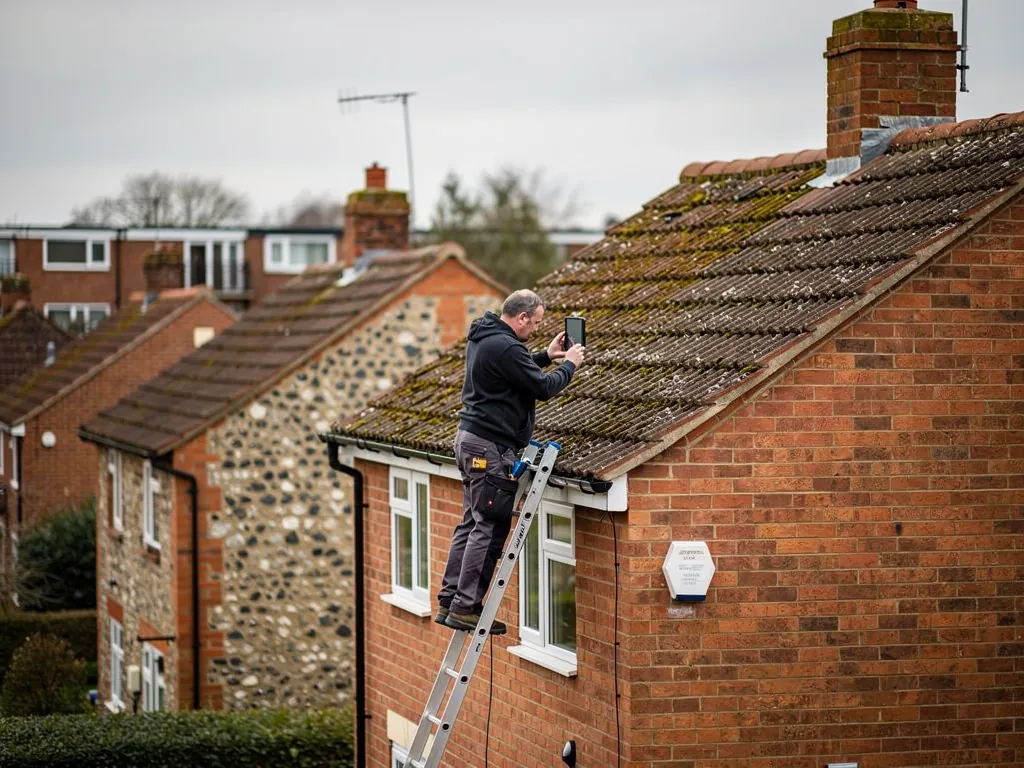 Chimney stacksPointing, flaunching (the mortar cap round the pots), flashings and brickwork, looked at from the roof and again from inside the loft.
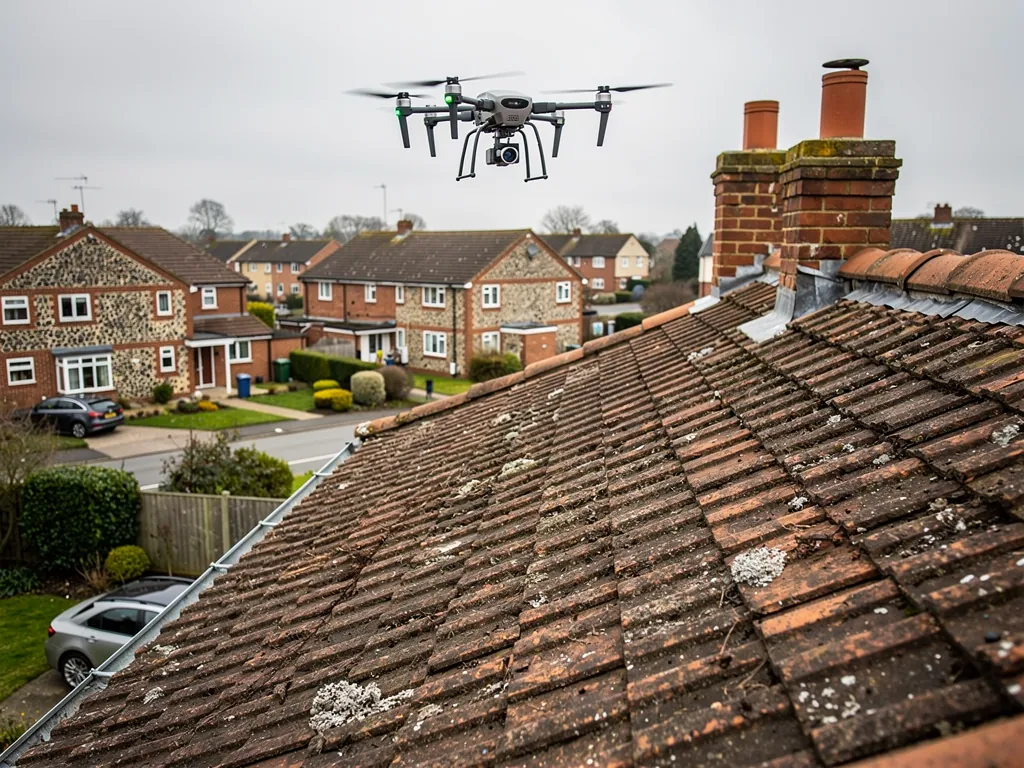 Roofline and drainageFascias, soffits, bargeboards and gutters examined for rot, sagging, blocked outlets and the staining that shows water going the wrong way.
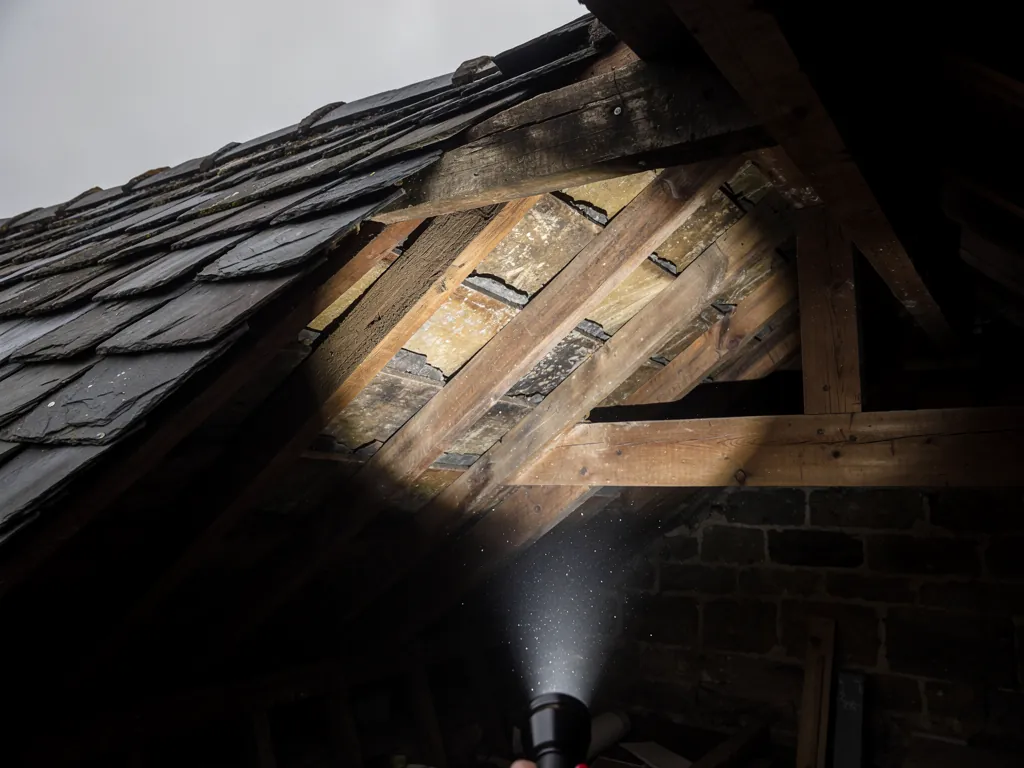 The loft and timbersUnderlay, battens, rafters and insulation checked for daylight, damp, rot and condensation, since the underside often shows what the top hides.
Roof inspections explained
From what happens on the day to how often a roof deserves another look, with the costs and limits of each method.

The short answer
An inspection starts outside, looking up from the ground, then moves into the loft, and goes onto the slopes only where that is safe and adds something. You are given photographs of what was found, a note on what each shows, and a view on which faults let water in.
A good inspection is a sequence rather than a glance, and we keep the same order on every building, from a bungalow extension to a three-storey terrace, so nothing is skipped.
We walk round the building first and look up. From the pavement or the garden you can see more than most people expect: slipped or missing tiles, a ridge line that dips, gutters that sag or sprout weeds, staining on brickwork under a failing joint, and the way the roof meets neighbouring walls. Three terms come up constantly. The ridge runs along the very top of the roof. A hip slopes down from it where two faces form an outside corner. At a gable wall the roof ends in a verge, the sloping edge where the covering stops. All three are checked at this distance before anyone climbs.
The loft tells you what the roof cannot. Daylight showing through the covering, darkened timber, damp nail tips, stained underlay (the membrane beneath the tiles or slates) and gaps round pipes all point to trouble. We also look at the battens, the thin timber strips the covering hangs from, and at the rafters, checking for rot, old beetle damage and anything that has moved. Insulation deserves attention too: laid thickly it can hide a leak, laid without ventilation it can cause condensation that passes for one, and thin or missing quilt costs you energy efficiency, so we note that as well. Our answer on what to check in your loft lists what you can look at yourself before we arrive.
Whether we go onto the slope depends on pitch, height, condition and access, never on habit. A steep slate roof held by old nails is not walked casually, because walking it can crack the very slates we are judging. Where it is sensible we use steps, a hooked roof ladder or a mobile tower, check the junctions by hand and photograph close up. Where it is not, we choose another method and say so in the notes. Roof inspection methods compared sets the options side by side.
For ordinary work on your own home, the main safety duties sit with the firm doing the job. HSE guidance on CDM 2015 treats you as a domestic client, and your client duties normally pass to the contractor, or to the principal contractor where more than one trade is involved, who must plan, manage and monitor the work. The Work at Height Regulations 2005 place the planning, supervision and choice of access equipment on whoever employs or controls the people at height. You still owe visitors a duty of care as the occupier, but the Occupiers' Liability Act 1957 lets you expect a tradesperson to guard against the risks that come with their own trade. Your part is to pick a competent firm and mention any hazard you know about: a fragile rooflight, soft boards or old asbestos cement sheets. Real cases turn on their facts. HSE sets out the duties of domestic clients.
Every finding is photographed and tied to a plain description, then sorted into faults letting water in now, ageing that can wait, and details that are sound. If you ever need to show a buyer, a landlord or an insurer what the roof looked like, why a roof inspection should include photos explains what makes a set of pictures useful.
A dry day shows cracked tiles clearly, and rain shows from the loft where water travels. Neither rules an inspection out, and whether a roof can be inspected in the rain covers the trade-offs for each.
The short answer
Published guides put a stand-alone inspection at about £150 to £250, a drone survey at £200 to £400 and thermal imaging at £300 to £500. The spread is wide because the method, the size of the roof and the amount of written detail you want all change the job.
A quick look to confirm a roof is sound is a different product from a written condition report with annotated photographs and recommendations, and the figures online mix the two together.
MyBuilder, in a guide updated in August 2026, gives a range of £150 to £500 for roof inspections as a whole. Within that it puts a standard inspection at £150 to £250, a drone survey at £200 to £400 and a thermal imaging survey at £300 to £500, and notes that drone work generally starts at £150. Those are national averages for the visit itself, and they are not our prices.
Size comes first, since a long terrace or a large detached house takes longer than a garage. Height and access follow: a roof that can be read from a ladder and the loft hatch is quick, while one that needs a tower or a closer look at a chimney takes planning. The depth of the write-up matters just as much. A page of notes costs less than a full report with a photograph for every finding, and a thermal survey needs the right conditions and equipment on the day. Scaffolding sits outside all of this; MyBuilder puts a standard two-storey set-up at around £850 to £1,200, and a plain inspection rarely needs one.
Judge any professional inspection by what the customer keeps afterwards. From us that means dated photographs of your own roof, a plain written account of each defect, and, where work is needed, a written quote as one total price. If we then carry out the work, it comes with our 10-year workmanship guarantee in writing. Customers' comments on our Google listing are there to read before you book.
Many people ask for an inspection because they already suspect work is needed. In that case the survey that goes with a quote does the same job at the same visit. We photograph your own roof, find the cause, then price the fix in writing as one total figure. Where a roof is past saving, that same visit tells you and prices a new roof instead. We carry out the roof repairs our inspections uncover across Swindon and the surrounding towns. Our guide to how much a roof survey costs goes through each figure, and what a free roof inspection really includes explains the difference between a quote visit and a stand-alone report.
A stand-alone report suits a different moment: you are not ready to commission work, or somebody else needs to read the findings. Say so when you book and we write it up for that purpose.
Say no on the step, however urgent it sounds. Ask to see pictures of the claimed damage taken on your roof, then get a second view from a roofer you found yourself. Good signs are a written total price, a real postal address and a guarantee set down on paper. Bad signs are cash only, a large payment up front and a price that expires today. A contract made at your home normally carries a 14-day right to cancel, and a pushy caller can be reported through the Citizens Advice consumer helpline, which refers cases to Trading Standards. Our page on checking a roofer before you hire goes further.
Whatever the price, dated pictures of your roof, each with a note of what it shows, will outlast any verbal opinion by a long way.
What it typically costs
The answer
It depends on the roof. A ladder and the loft suit most houses, a drone helps with tall, steep or fragile roofs, and thermal imaging answers a narrower question about heat and moisture. No single method sees everything, so the choice should follow what you need to know.
Inspection methods are tools, and the useful question is what each can show and what it leaves hidden, because the gaps are where problems get missed.
Looking from the ground shows the overall shape of the roof and obvious breaks, but it cannot see under a lifted flashing or behind a chimney. The loft shows what has already got in, but not what is about to. Close work from a ladder or the slope lets us lift a tile, press a joint and see how a fixing really holds, which no photograph can replace. Each method fills a gap left by the others, which is why we combine them.
A drone is useful for a roof that is tall, steep, fragile or simply awkward to reach, such as a glazed lean-to, a tall gable or an old slate roof where walking would do damage. It gives overall pictures of every slope without anyone stepping on it, and the images are easy to share with an owner or a managing agent. Its limits matter as well. It cannot touch, test or lift anything, close-up detail under overlaps and behind flashings is hard to capture, and a clear sky helps. Our guide to what drone roof inspections show and their limits goes into both sides.
A camera on a pole reaches awkward places such as a flat roof edge or a valley that cannot be seen from a ladder, and how a pole camera inspection works explains when it fits. Thermal imaging is a more specialist tool. It shows temperature differences, which can point to wet insulation or heat escaping, but it does not by itself explain why, so it supports an inspection rather than replacing one. The guide to thermal imaging roof surveys sets out where it is worth paying for.
Leak investigation starts at the stain and works backwards, because water seldom drops straight down. It runs along underlay, battens and rafters first, so the mark on the ceiling can sit well away from the point of water ingress. We check the loft during or soon after rain where we can, take moisture readings on timber and plaster, and look hard at the usual entry points above: flashings, valleys, the chimney and any skylight or rooflight. If that does not settle it, a controlled water test, wetting one area at a time while someone watches inside, narrows it down. Thermal imaging can show where insulation has got wet. Finding the cause matters more than drying the symptom, because slow water damage to structural timbers is the costly part.
The method changes from a pitched roof. A felt, EPDM (a synthetic rubber sheet) or GRP fibreglass (glass-reinforced plastic) roof is checked for blisters, splits, ponding water and weak upstands, the short vertical edges where the membrane turns up a wall, plus the outlets and the trims at the edge. Those are best seen close to and by hand, and moisture readings from the room beneath often show whether the deck has been wet.
Not sure which method you need? Describe the symptom and the building when you get in touch, and we suggest the mix.
| Method | Shows well | Falls short |
|---|---|---|
| From the ground | Overall shape, missing tiles, gutters, staining | Anything under flashings or behind stacks |
| Loft inspection | Damp, daylight, rot, condensation, underlay | The outer face of the covering |
| Ladder or roof ladder | Close checks of fixings, joints and junctions | Tall or fragile roofs where access is unsafe |
| Drone images | Every slope on high or awkward roofs | Touching, testing and fine detail |
| Thermal imaging | Heat loss and suspected wet insulation | Explaining the cause of what it shows |
The short answer
Yes, when the roof looks old, has been patched, or is mentioned in the homebuyer report. A general building survey comments on the roof in passing, while a roofer's inspection looks closer and can put a price to any work, which helps you negotiate or budget before you commit.
A roof is one of the largest repair bills a house can carry. Finding out before exchange gives you choices: a reduction, a seller repair or a proper budget. Afterwards you only get the bill.
A homebuyer or building survey covers the whole property, so the roof gets a few lines among many. The surveyor will usually note the covering, anything obviously wrong and whether further investigation is advised. That wording is worth reading closely. Phrases such as "further investigation recommended" or "covering nearing the end of its life" are flags, not diagnoses. Our guide to what to do when a homebuyer survey flags the roof explains how to read them and how to use a roofer's findings in negotiation.
A roofer's inspection goes closer and answers practical questions: is this a repair or a replacement, what would each cost, and how urgent is it? That is a different job from a surveyor's, and our short comparison of roofer or surveyor for a roof inspection sets out who suits which purpose. If a repair is the answer, the finding goes straight into a written quote that shows the fault in photographs, taken on the very roof you are about to buy.
Sometimes a lender's valuation raises the roof and the lender asks for a report before it will go ahead. What it accepts, and from whom, is for the lender to say, so ask before you pay for anything. What a mortgage roof report is covers the usual requests. Auctions are tighter still, because the decision is made before the hammer falls and there is no cooling-off afterwards. Checking the roof before bidding is far easier than regretting it, and checking the roof when buying at auction lists what can be done in the time available.
Age and style change what to expect, and experience of each type of house helps. A Victorian terrace may have slate with no underlay at all; a 1970s estate house raises questions about concrete tiles, ageing felt and ridge bedding; a newer home can still show poor detailing at verges. None is a reason to walk away, only a reason to know the position before you agree a price.
Book through the agent early and check the seller can clear a path to the hatch; most sellers help, since a clean report suits them too.
MythA roof that looks fine from the street is fine.
FactFailed flashings, wet timbers and rusted fixings are often only visible from the loft or close up, long before anything shows from the pavement.
The short answer
It can help show what condition the roof was in and when, which matters because policies often exclude wear and tear. It cannot make a claim succeed. Your insurer decides, and the Financial Ombudsman Service is there if you think a decision was wrong.
Roof damage and insurance meet most often after a storm, and the argument is nearly always the same: did the weather cause this, or was the roof already failing? An earlier record of the roof can speak to that, though it never decides it.
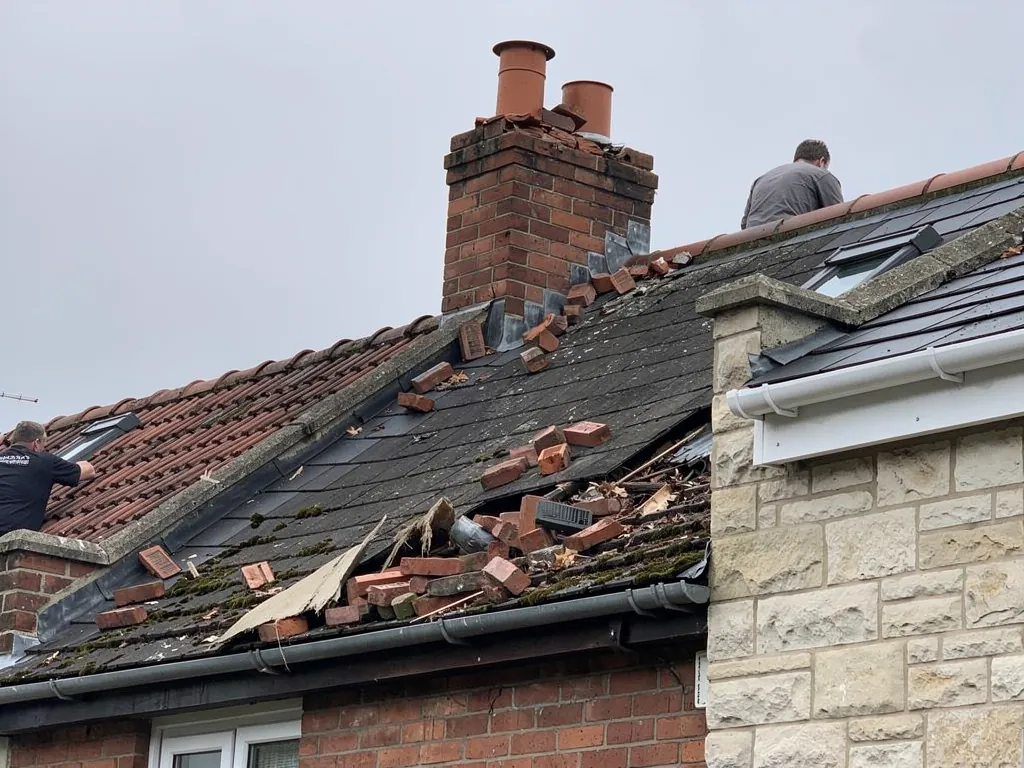
When the Financial Ombudsman Service reviews a storm complaint, one of its questions is whether the weather was the main cause or the damage might have happened regardless. Policies commonly leave out gradual damage and wear and tear, and Which? points to a leak through a badly kept roof as a typical case. A dated set of photographs showing a sound roof before the weather, followed by photographs of fresh damage after it, puts facts on the table instead of recollections. The Ombudsman sets out its approach on its storm damage guidance for consumers.
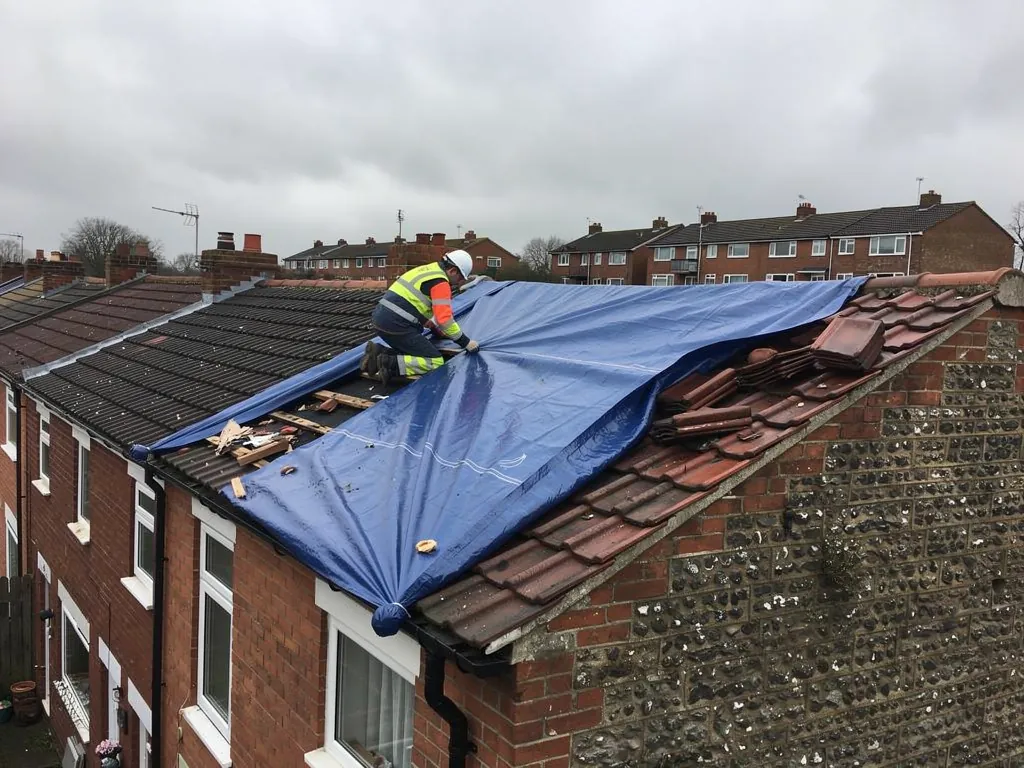
Before is simple: keep the photographs and the written findings from any inspection somewhere safe. After is about order. The Association of British Insurers' guidance during Storm Eunice in 2022 told householders to ring their insurer promptly, to put in temporary repairs only if needed to stop things worsening (after speaking to the insurer), and to hold on to every receipt. We make a damaged roof safe, photograph what we find and write it down. What you then say to your insurer, and when, is between you and the policy.
A report cannot overrule an exclusion, and it cannot show that a storm happened on a given date. It records what one visit saw, nothing more. Our guide to roof reports for insurance, before and after storms goes through what to keep, and the wider page on what roof condition reports are for covers the other readers a report may have, such as buyers and landlords.
Photographs taken before any damage are worth the most, those taken straight afterwards come next, and anything reconstructed later is weakest. Keep even a casual loft photo on your phone; its stored date can matter.
If water is coming in now, deal with that first. Our emergency roof repairs page explains how we make a roof safe before anything else is decided.
Our view
A dated record of the roof can strengthen your case, but only the insurer and the policy decide the outcome.
The answer
Many owners check every few years and after severe weather, and sooner on an older roof. MyBuilder suggests fascias and soffits are inspected every five years, and the age of the covering sets the rest: the nearer it is to the end of its typical life, the more often it deserves a check.
No single interval suits every roof. Age, covering, exposure and recent events all matter, so a sensible routine has three triggers: time, weather and change.
A severe gale, a heavy snowfall or a fallen branch is a reason to look, even if nothing appears wrong. Damage is often small and slow, like a lifted ridge tile that lets in a little water for a whole winter before a stain appears. Changes to the building count too. New aerials, a solar installation, a loft conversion or a trades visit on the roof can disturb fixings or flashings, and a quick check afterwards costs little.
Roofing materials have very different life expectancy, so the right rhythm differs. The lifespan figures below are typical ranges from published guides, not promises, and the quality of the original workmanship, exposure and maintenance move any one roof in either direction. A slate roof in its second century and a flat roof in its fifteenth year are in very different places, and the sooner a flat roof gets attention, the better. Our answer on how often a roof should be inspected turns this into a practical schedule.
Rented residential properties and blocks of flats benefit from a planned maintenance routine, because several people depend on the roof and nobody sees it daily. Landlords and managing agents often want a dated record each time, and roof inspections for landlords covers what to keep. Leaseholders sometimes do not know who is responsible, which who is responsible for the roof of a leasehold flat sets out. New owners are well served by a first-year check, described in the first roof check after moving in, because it sets a baseline for everything that follows.
Yes. Shops, offices, industrial units and landlords' blocks follow the same order: the purpose first, then the covering, the junctions and the inside. Their materials and faults differ. A metal roof or wall cladding suffers cut-edge corrosion and loose fixings, flat membranes split at upstands, and box gutters between bays block. Fragile rooflights and older asbestos cement sheets are judged from below, from a platform or by drone, and never walked on. Facilities and property managers usually want a dated report for their files. Larger work is handled by our commercial roofing service.
We are a local Swindon roofer, so the town and its districts come first, including Stratton St Margaret and Haydon Wick. We also inspect roofs in Royal Wootton Bassett, Wroughton, Blunsdon, Chiseldon, Highworth and the rest of north Wiltshire within 30 road miles.

A slipped slate refixed this autumn is a small job. Left for several winters, it becomes wet battens, a stained ceiling and a larger bill.
More on survey costs, drone and thermal methods, reports for buyers, landlords and insurers, and what to do once you have the findings.
Only where it is safe and where it adds something. Fragile, steep or brittle pitched roofs are assessed from ladders, the loft and other methods, because walking them can cause the damage we are looking for.
Yes, for the loft at least. Someone needs to let us in, show us the hatch and see the photographs if you want to talk them through. The outside check can carry on while you get on with your day.
Then you have photographs showing a sound roof at a known date, and no work to pay for. That record is useful if you sell, let the property or have to discuss storm damage later.
Please do. Pictures of the stain, the loft or the roof taken safely from the ground let us arrive with suitable access equipment and a clear idea of where to begin. They do not replace a visit.
A clear route to the hatch and a little floor space beside it is plenty. Boxes against the eaves can wait, and if something must be moved we will tell you before we touch it.
Often, but not always. Some leaks only show in particular wind directions or after prolonged rain, and then we narrow the possible entry points and may return in wet weather to confirm.
Tell us why you want the roof inspected, send the address and a photo of the front of the house, and mention any stain, survey comment or storm that prompted it. If you can, check that the loft hatch is reachable. We will arrange a visit, check the loft and the junctions first, and send the photographs with a written quote.
Tell us what’s happening and we’ll call you back.
Or call 01793 626096
Message us on WhatsApp