
Owning a let property means you carry a roof you rarely see. Tenants notice a drip, but they do not notice a slipped ridge tile or a gutter filling with moss, and by the time something reaches the ceiling the repair is usually bigger than it needed to be. A regular inspection moves the discovery earlier, when a repair can be planned, priced and scheduled between tenancies, not forced through on a wet weekend.
This guide suggests an inspection schedule for one house or a small portfolio, explains what each visit should look at and record, and covers the practical side of dealing with tenants, access and paperwork. It does not give legal advice about your duties as a landlord; for those, check with your letting agent, a solicitor or a landlord association. For how inspections fit into our wider work, see roof inspections and surveys.

Why rented homes need a schedule, not a reaction
An owner-occupier tends to hear the roof: the rattle in a gale, the drip in the loft, the damp patch on the landing. A tenant may notice the same signs and say nothing, or report them late, or not connect them to the roof at all. That gap is why a landlord benefits from a routine that does not depend on anyone phoning in.
A schedule also protects your position. If a leak does turn up, a dated record showing the roof was checked, what turned up and how it was dealt with is far stronger than a vague recollection. It shows the property was looked after, which matters if a tenant, a letting agent, a lender or an insurer later asks how the problem arose. Our page on roof condition reports describes the kind of written record worth keeping.
Finally, a schedule helps your budget. A roof that gets a small repair each year, and a clear note of what is next, is easier to plan around than one that costs several thousand pounds with no warning. Between tenancies, a roof visit costs little extra, because the access arrangements and the empty property are already in place.
How often to look
There is no single right interval, and no figure here should be taken as a legal or insurance requirement. What we suggest is a rhythm built around three kinds of visit.
What goes into a yearly look?
Once a year, a quick external check is sensible: standing in the street or garden with binoculars or a long-lens camera, plus the gutters, downpipes, fascias and any visible flashings. Doing it in autumn, after the leaves have fallen, catches blocked gutters before winter rain. It takes minutes and it is something a managing agent or a handyman can do if you do not live nearby.
When is a fuller inspection due?
Every few years, or when a tenancy changes, a proper inspection by someone who can get closer to the roof and into the loft earns its cost. Older roofs, roofs with flat sections and roofs that have had patch repairs justify a shorter gap than a recent, well-fitted one. If you buy a let property, the first inspection should come soon after completion, not after the first complaint.
What triggers an extra visit?
Any event that could have damaged the roof does, such as a severe storm, a fallen branch, scaffolding work next door or a report of damp from a tenant. Check after the event, not at the next scheduled date. A short note recording that nothing was found is as useful as a note recording a fault.
What each inspection should record
A landlord's inspection works best when it follows the same sequence every time, so that records can be compared year to year. Start with the covering: look for loose, broken or absent tiles and slates, moss build-up, and any area that looks different from its neighbours. Then the ridge and hips, which are the high lines on the roof where a cap of tiles or mortar can loosen. Then valleys, the sunken gutters between slopes, which collect debris and are often the first place to give trouble.
After that come the details around penetrations. Chimneys, vent pipes, roof windows and the junctions with neighbouring walls are all spots where rain can get in. Lead flashings can lift or crack, and the mortar that holds them can crumble. Gutters and fascias get a look as well, since an overflowing gutter soaks the wall behind it and can pass for a roof leak when seen from inside.
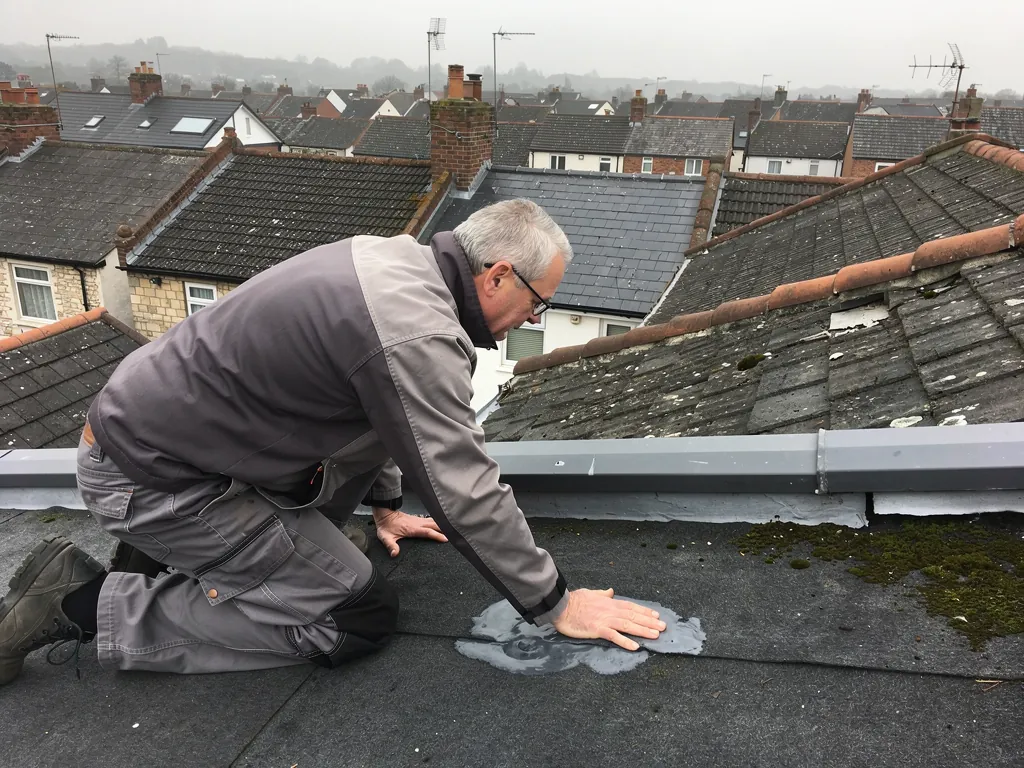
If there is a flat roof on an extension or a porch, it needs a separate set of notes covering ponding, splits, blisters and the state of the outlets. And the loft, where it exists, should be checked for daylight, stains on the timber, damp insulation and signs of pests. Our guide to loft damp inspection explains what to look for there.
Photograph the same views each time: front slope, rear slope, each chimney and each flat roof. A run of matching images shows change far better than a handful of random ones.
Choosing the method for the property
Different buildings call for different ways of looking. A two-storey semi with a plain gable can be checked well from outside and from the loft, and a pole camera or drone reaches what is out of sight. A terrace with a shared chimney stack needs a close look at the stack and the party wall flashing. A block with several flats or a roof at height may call for a more formal survey. Our guide to roof inspection methods compares the options.
When damp is the reported problem but nothing explains it from the outside, thermal imaging can help trace wet insulation or a cold bridge without opening up the structure. It is a tool for a particular question, not a routine part of every visit, and our page on thermal roof surveys explains when it earns its fee.
Whichever method is used, safe access matters. Nobody, including a landlord, should be climbing on a roof for a casual check. Fragile materials, wet slates and roof edges are hazards, and a fall is far more costly than an inspection. If you cannot see something safely from the ground or a ladder at the eaves, leave it to someone who has the equipment and training.
Working with tenants and arranging access
Inspecting a let property means going on to someone else's home, and a tenancy agreement normally sets out how and when you may do that. Check what yours says, and give the tenant at least 24 hours' notice in writing and a clear reason. A tenant who knows a roofer is coming on Thursday morning to look at the loft hatch is far more helpful than one who finds a stranger on the drive.
It helps to explain the purpose in plain words: a routine check of the roof and gutters to keep the house watertight. Ask whether the tenant has noticed damp, drips, stains, noises in the loft or draughts, and write down what they say. They live there, and what they have seen is useful evidence. Tell them whom to contact if something changes between visits, and make it easy to report a problem by text or email.
Where the loft is used for storage, ask for the hatch to be cleared so the inspector can get in without moving boxes of someone else's belongings, which neither side wants to be responsible for. If a loft conversion has been made, the roof structure is more complicated, and the inspection should cover the dormers, the roof windows and the junctions where the new work meets the old. Always confirm access times in writing, and send a short note afterwards saying what was found and what happens next.
Records, photographs and what to keep
A good file for each property does not need to be elaborate. It needs a dated entry for each inspection with the name of the inspector, a short statement of condition, the photographs, and a list of any work recommended. If you hold several properties, use the same layout for each so that gaps stand out. Add the details of repairs afterwards: the date, what was done, who did it and what it cost, along with the guarantee paperwork. Over a few years it builds into a clear history of the roof.
Store photographs as files with their original dates intact, in a named folder for each property and year. Cloud storage and a copy on a second device protect against loss. If you manage several properties, a simple spreadsheet listing each roof's covering, approximate age, last inspection and next action gives a one-page view of where your money is likely to go.
Records carry weight if an insurer asks about a claim or a buyer asks about the roof. Our guide to the roof report for insurance covers how a dated record helps, and it is worth asking your own insurer what it expects of a landlord policy. When we survey a roof we take photographs of the roof itself and give them to you with a written quote, which makes them a ready first entry for the file.
Acting on what you find
The point of the inspection is to decide what to do, and a sensible landlord decides before the inspector has left the drive, while the details are fresh. Most findings fall into three groups: nothing to do now, a repair worth doing soon, and a repair that cannot wait. A single slipped tile or a blocked gutter belongs in the second group, and dealing with it costs little beside the damage it can do. Active leaks, loose ridge tiles and damaged chimney flashings belong in the third, and so does anything that makes the property unsafe for the people who live there.
We lean towards the modest repair that properly deals with the fault. For a let property that often means a targeted repair between tenancies, with a clear note on how long it should last and what to watch for next. If a roof has nearly run its course, we tell you and explain what we saw, because replacing it on your timetable is cheaper and calmer than doing it in an emergency. Written into our work is a 10-year workmanship guarantee, and when we leave, the waste goes with us.
One caution applies to older buildings. The Health and Safety Executive tells owners to assume asbestos is there in any building put up or refurbished before 2000, and publishes guidance on whether asbestos is present. If a garage roof or a soffit looks like old sheeting or board, do not drill, break or scrub it; tell us and we will advise before anyone touches it.