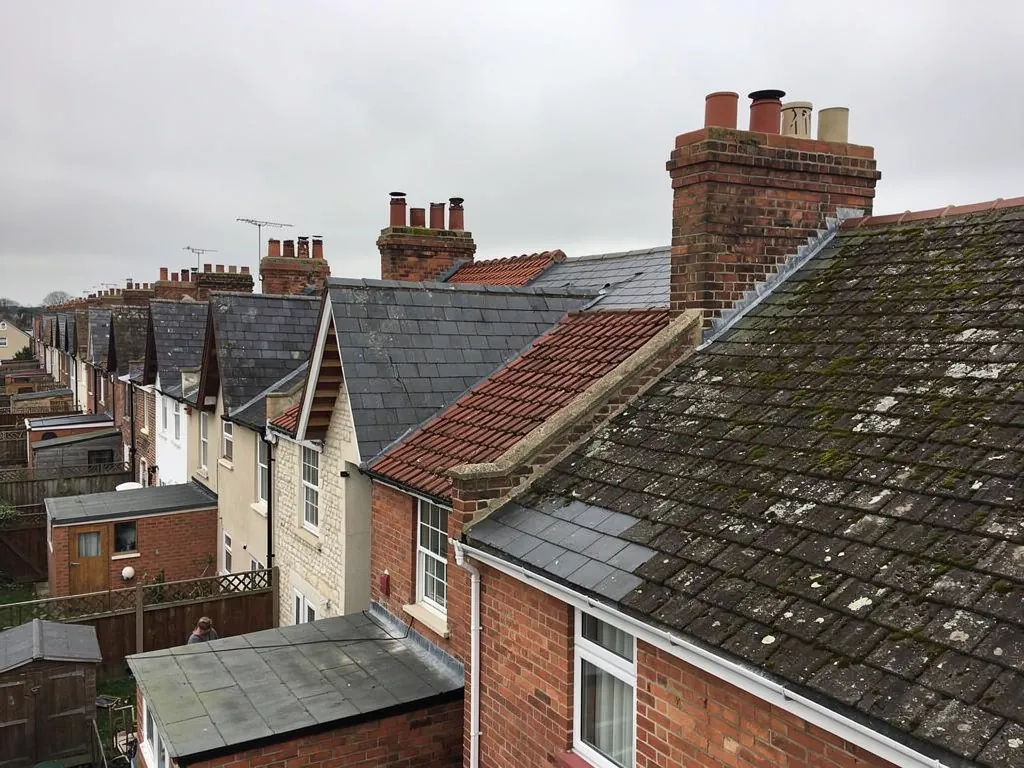
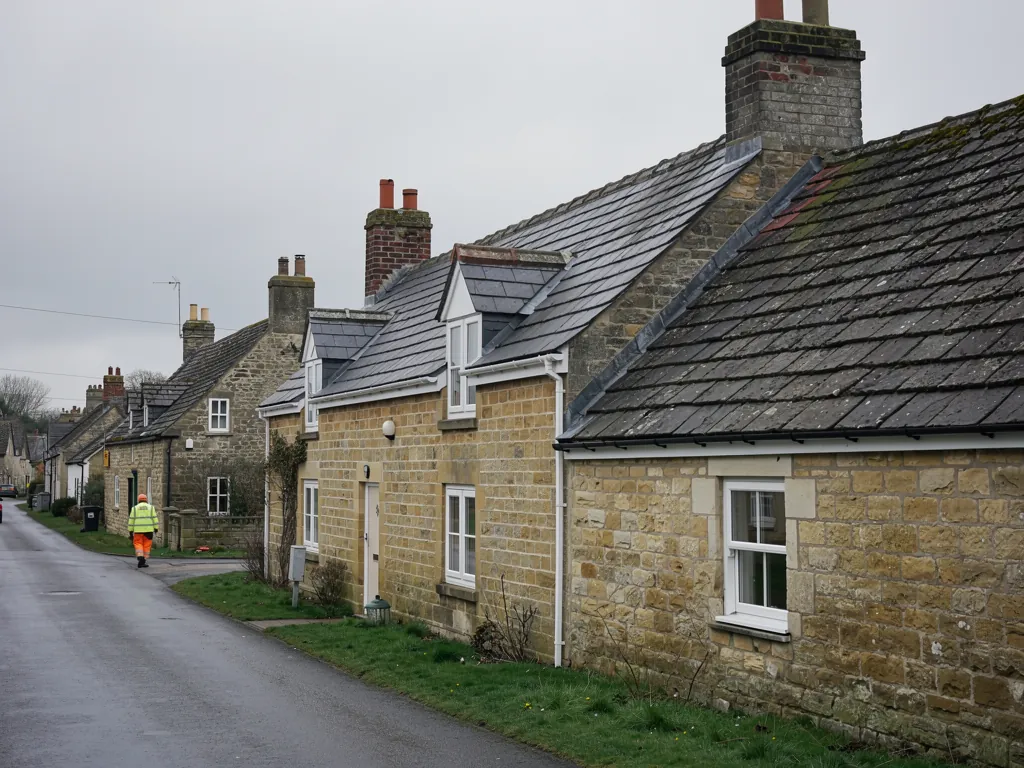
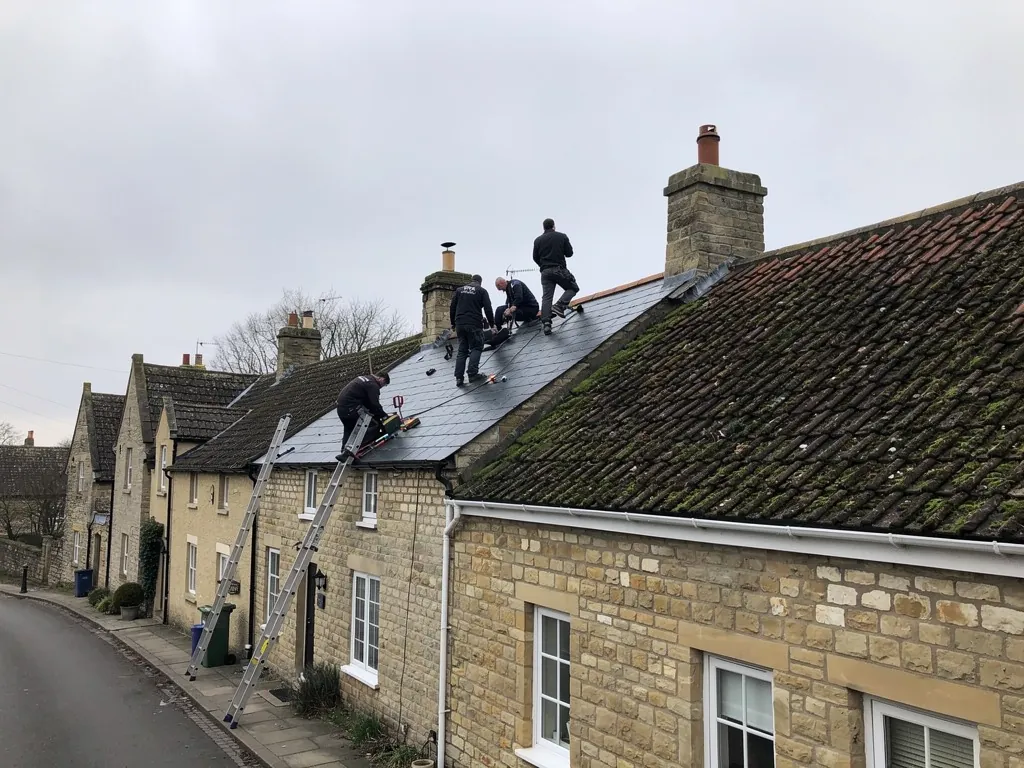
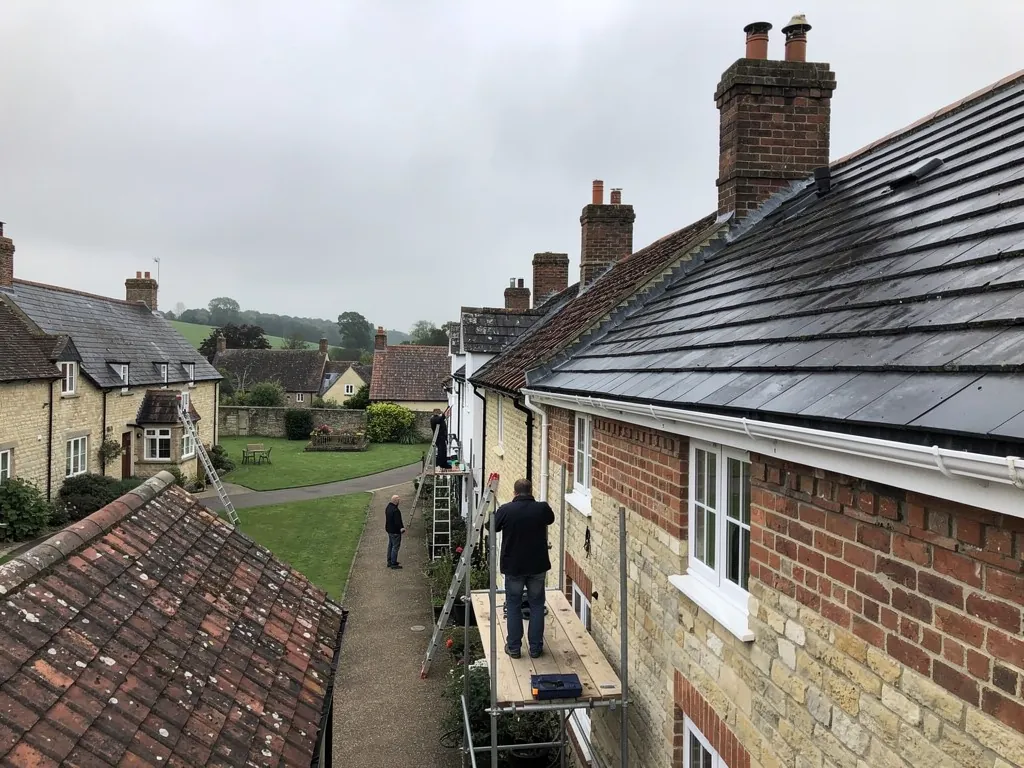
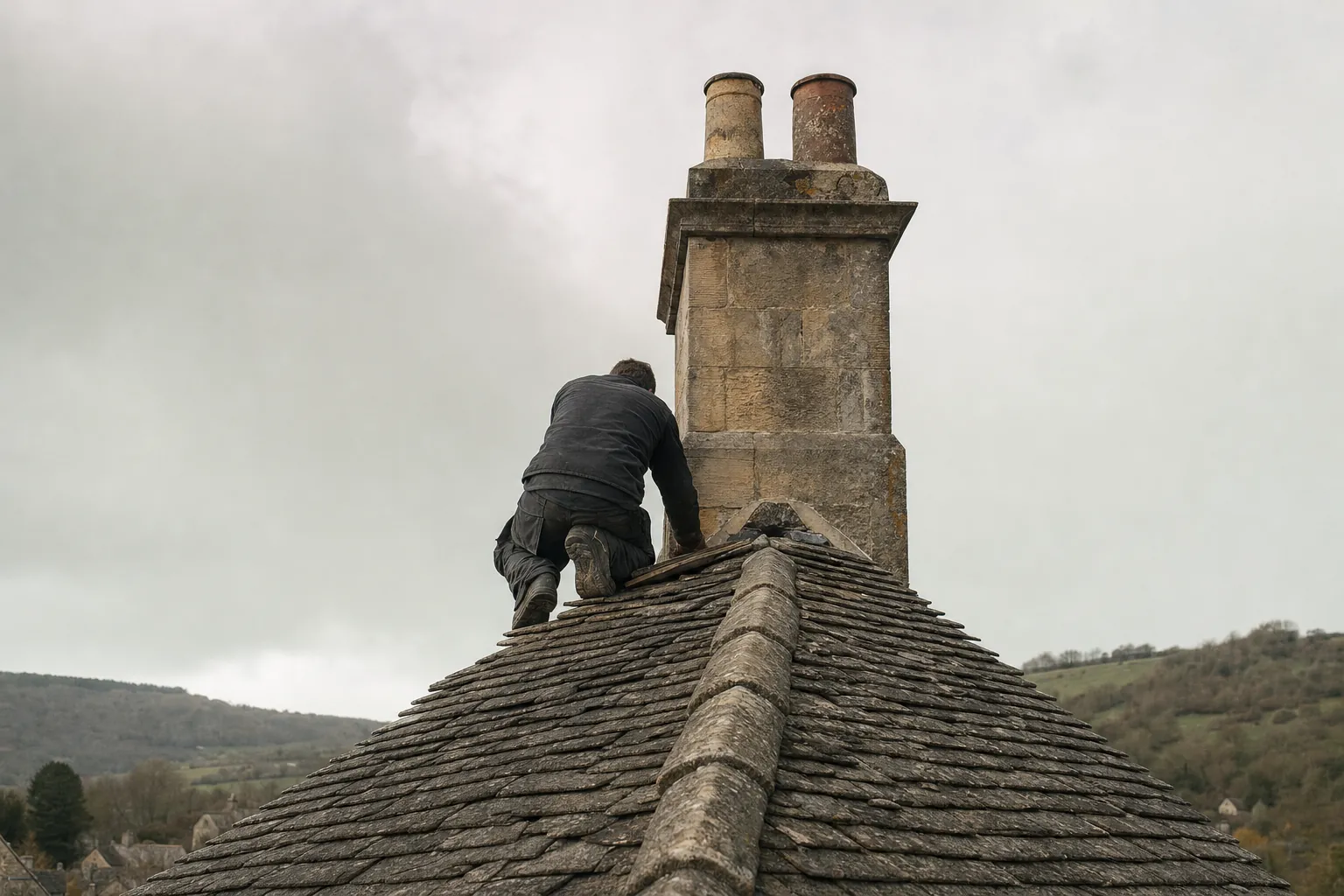
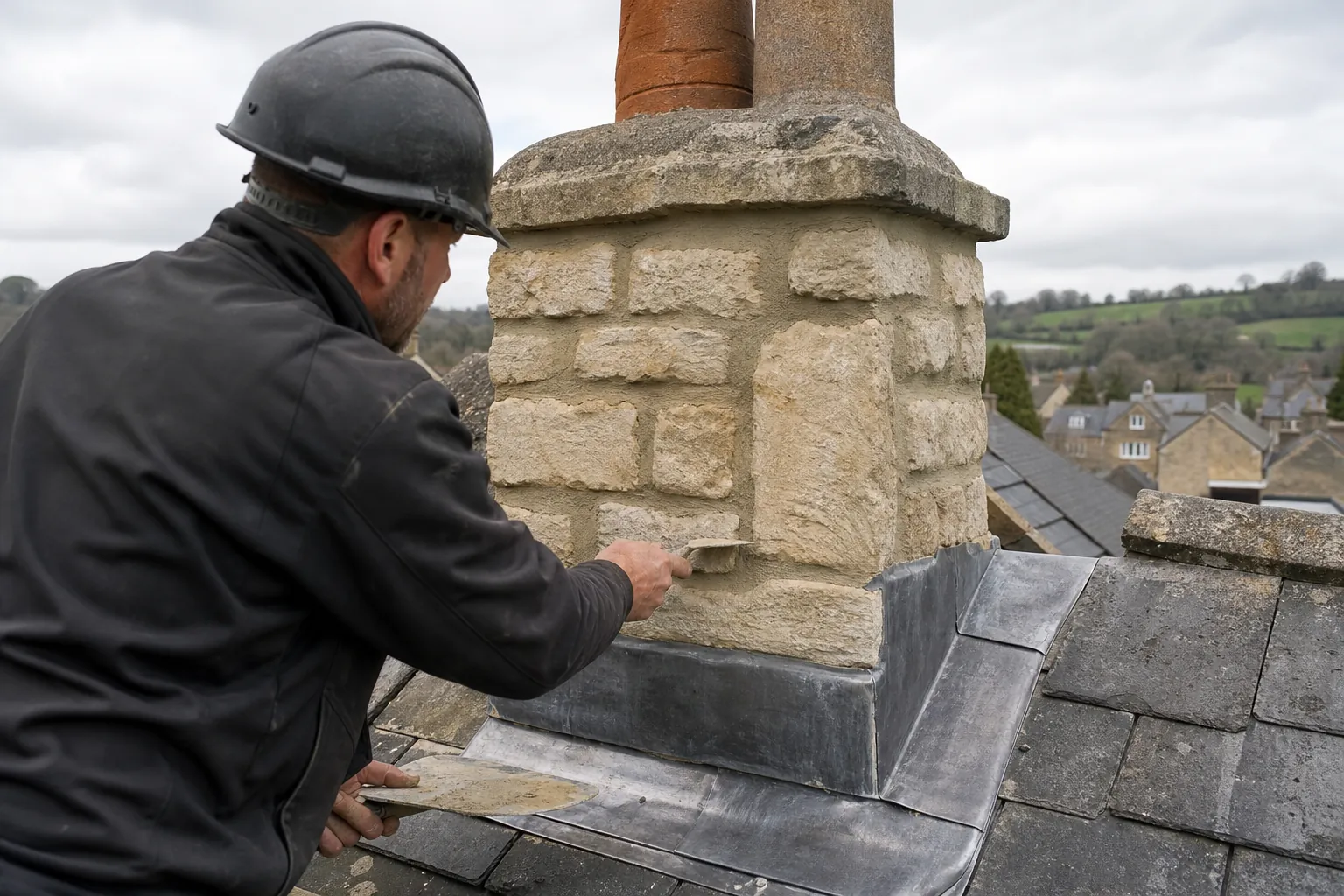
When a stone-tiled roof starts to leak, the stones are rarely the first thing to fail. Pegs rot, battens soften, and the mortar or moss packing between the courses breaks down. Individual stones slip, and gaps open at the ridge and the verges. All of that can be put right without throwing away the covering.
Q2.1Should the stones be refixed, or the slope stripped and re-laid?
Where a few stones have slipped, they can be refixed in place. Where a whole slope is moving, the better approach is to strip it carefully, sort the stones by size, replace the battens and fixings, and re-lay the same stones in their courses with any broken ones made up from matching reclaimed stock. That keeps the roof looking as it did, which matters on a street the council has designated for its character.
Reclaimed stone needs care in sourcing. Stones taken from another building can strip that building of its own roof, and stone of a different type or colour can look wrong for years. We match by size, thickness and tone, and say where the stone has come from.
Q2.2Does changing the covering affect the rafters?
Stone is heavy. Re-laying a stone roof does not change the load, but swapping it for a different material does, and the opposite change, stone onto a roof built for slate, can overload the rafters. Either way, we check the structure first and tell you if building control needs to be involved. Our roof replacement page explains when a full re-cover is the right call.
A well-kept stone roof can go a very long time between major works, and regular attention, such as clearing moss from between the courses and refixing the odd slipped stone, helps it get there.
When a stone roof does need stripping, we photograph it before anything comes off, so the stones can go back in the pattern they came from and the finished slope looks like the one you started with.