
Which code of lead suits a chimney flashing?
Plain flashings are typically Code 4, while longer stepped runs often move up to Code 5. The survey settles which.
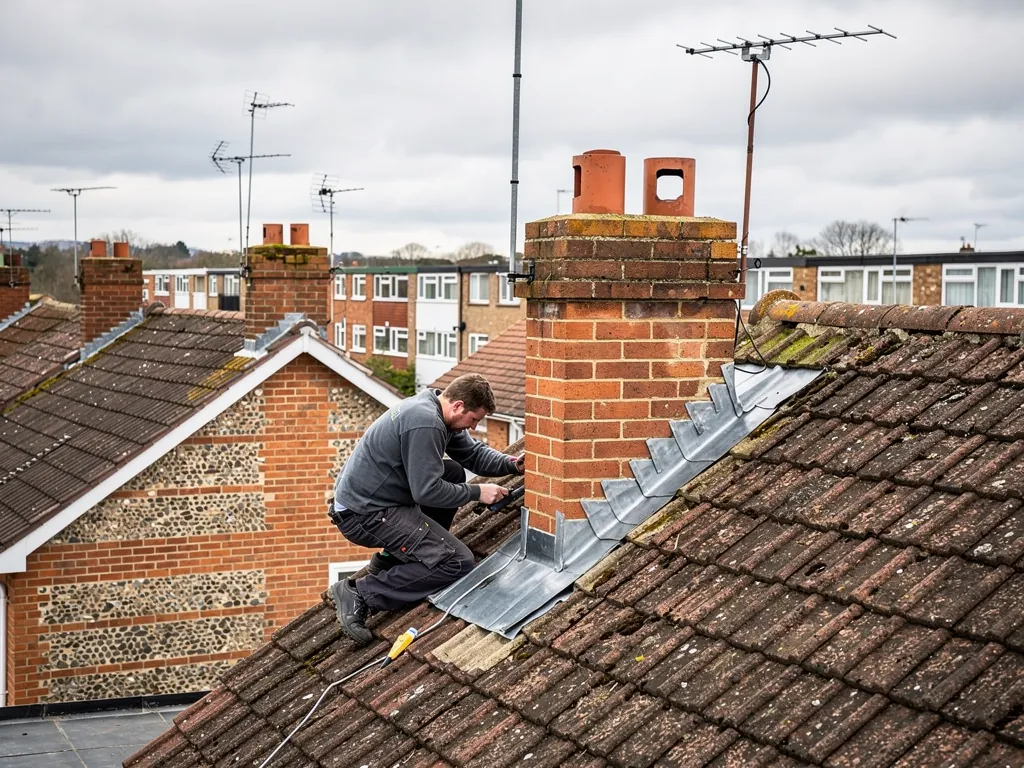
Flashings, soakers, valleys, aprons and lead flat roofs, cut and dressed in the right code for the job. You get survey photographs and a written quote.
Plain flashings are typically Code 4, while longer stepped runs often move up to Code 5. The survey settles which.
Sometimes, when the lead around the split is sound. A flashing split in several places, or pinned down too hard, is usually better replaced.
It is lead carbonate, formed as bare lead weathers. It is mostly cosmetic, though it can streak the masonry below.
| Job | Typical cost |
|---|---|
| Chimney leadwork patch repair | £150 to £250 |
| Full chimney leadwork replacement, no scaffold | £350 to £460 |
| Full chimney leadwork replacement, with scaffold | £700 to £920 |
| Stepped lead flashing | £80 to £120 per metre |
| Lead flat roof covering | £150 to £200 or more per m² |
Guide figures from national sources, not Skyline prices. Once the lead has been surveyed, the code, the access and the length of run go onto paper in one written price.
MyJobQuote chimney leadwork guide (22 September 2026); Checkatrade roof repair guide (October 2026, flashing ex VAT); MyBuilder flat roof cost guide (updated August 2026).
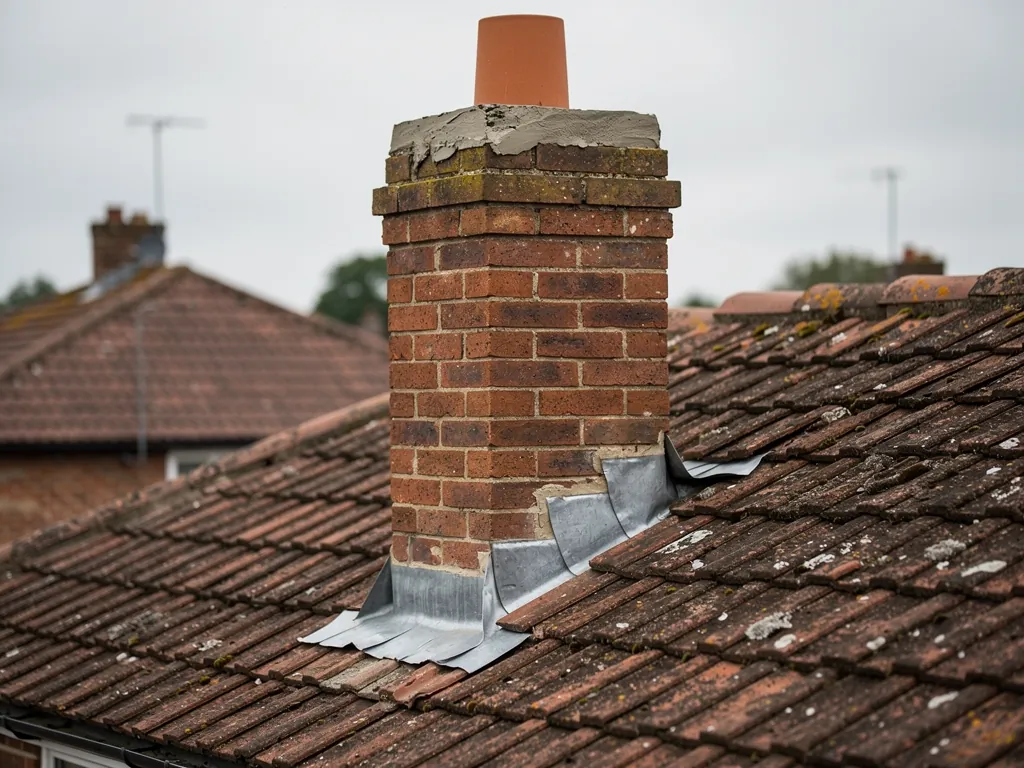
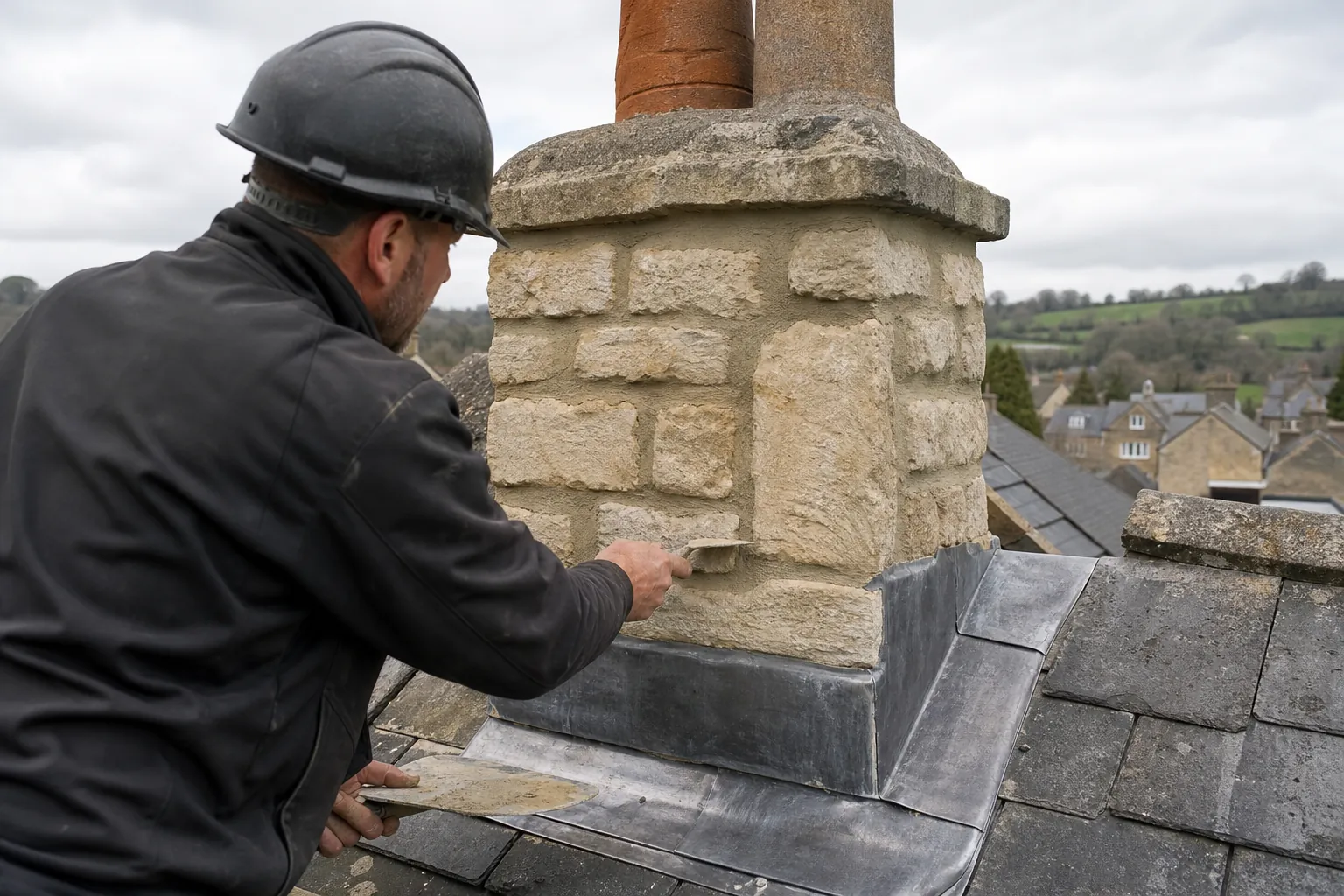
See all costs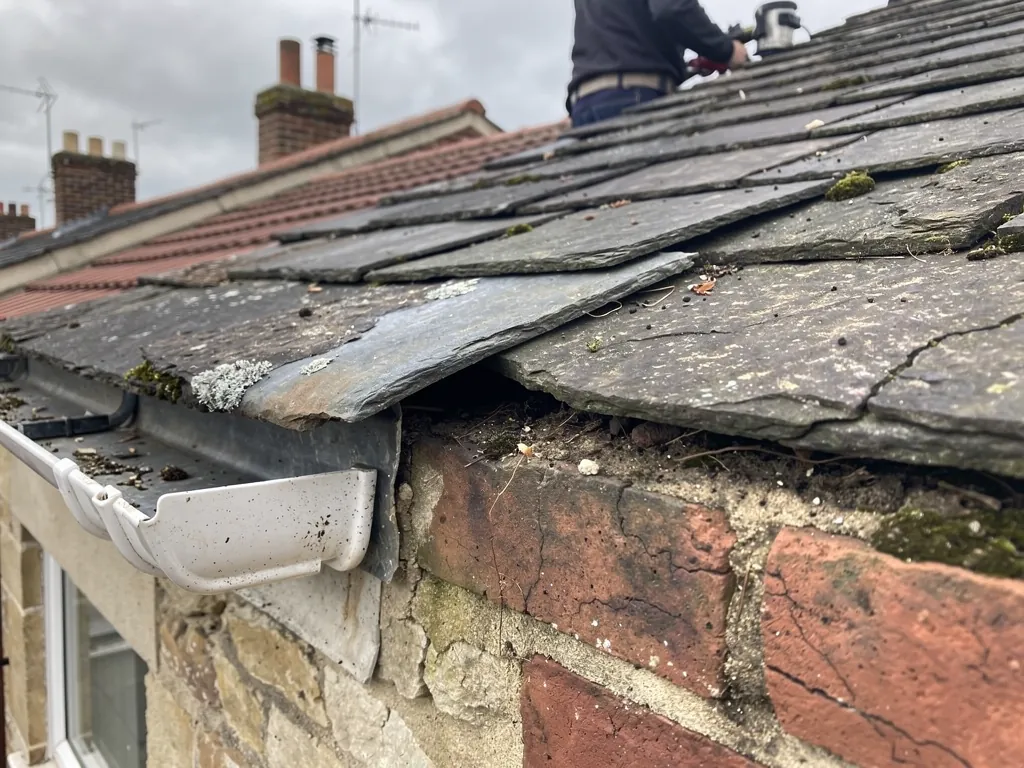 Chimney flashings and apronsFront aprons, stepped side flashings, back gutters and saddles dressed around a stack, with soakers where slates or tiles meet the brickwork.Abutments and party wallsStepped flashings where a pitched roof meets a wall, set into the mortar course, wedged, and pointed so the joint sheds water.
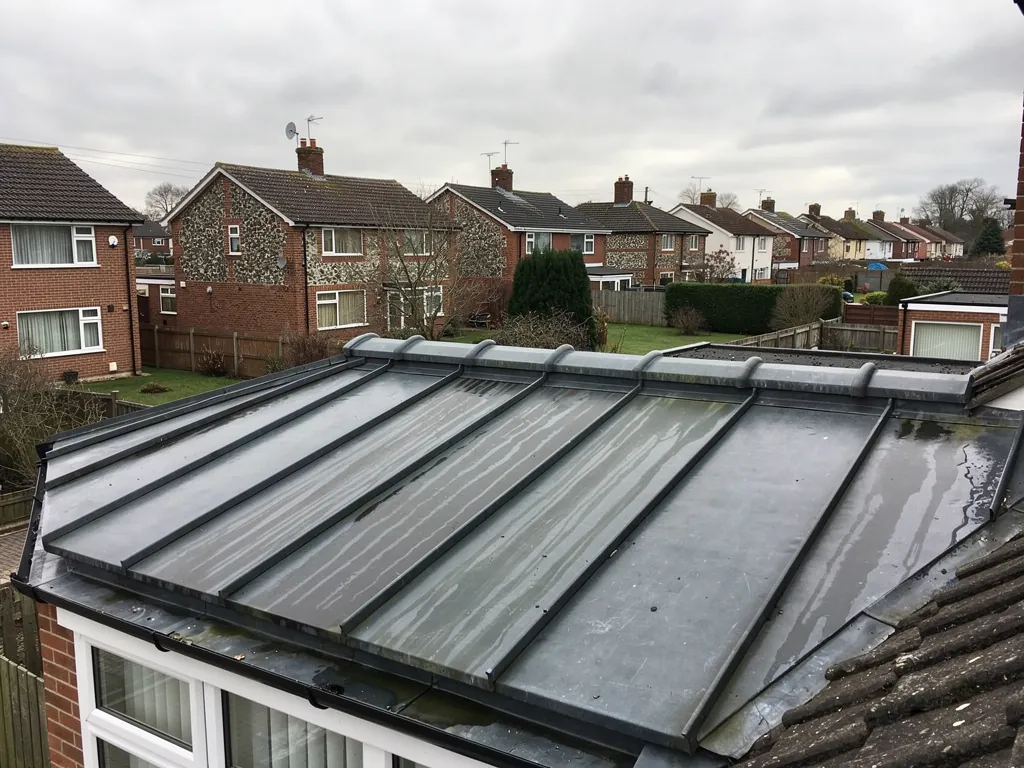 Valleys and box guttersLead-lined valleys between two slopes and the gutters behind parapets, laid to a fall with the laps and drips the water needs.
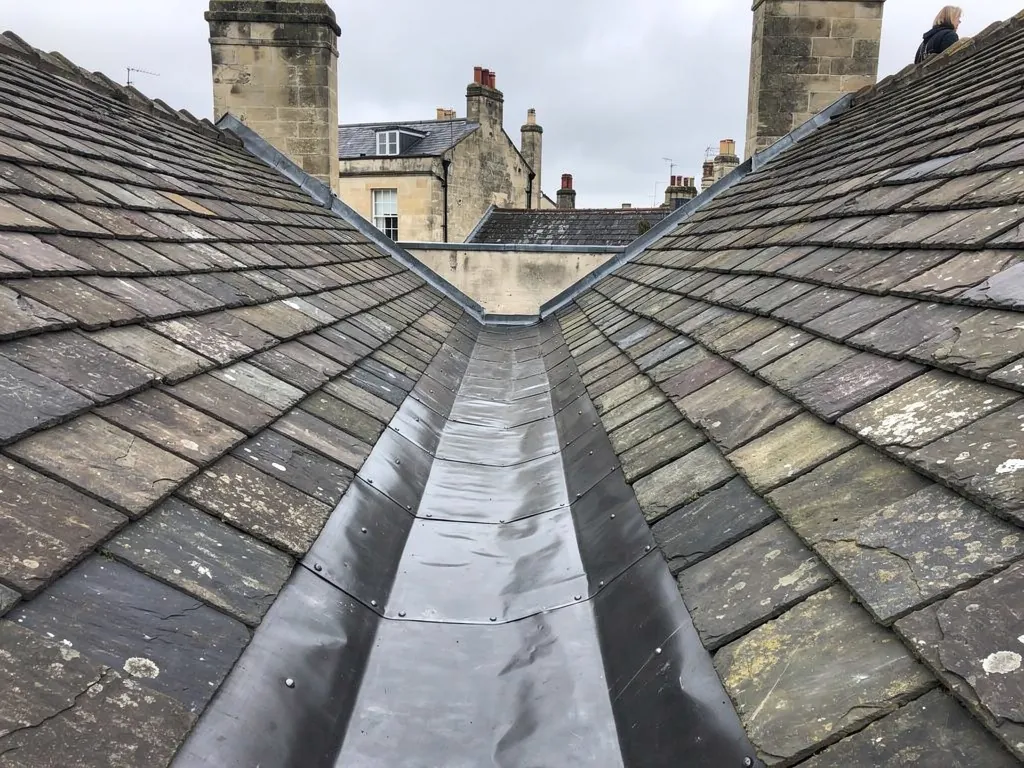 Dormers, bays and porchesCheeks, tops and aprons on dormers, and the small lead roofs over bay windows and porches, which weather hard from several sides.
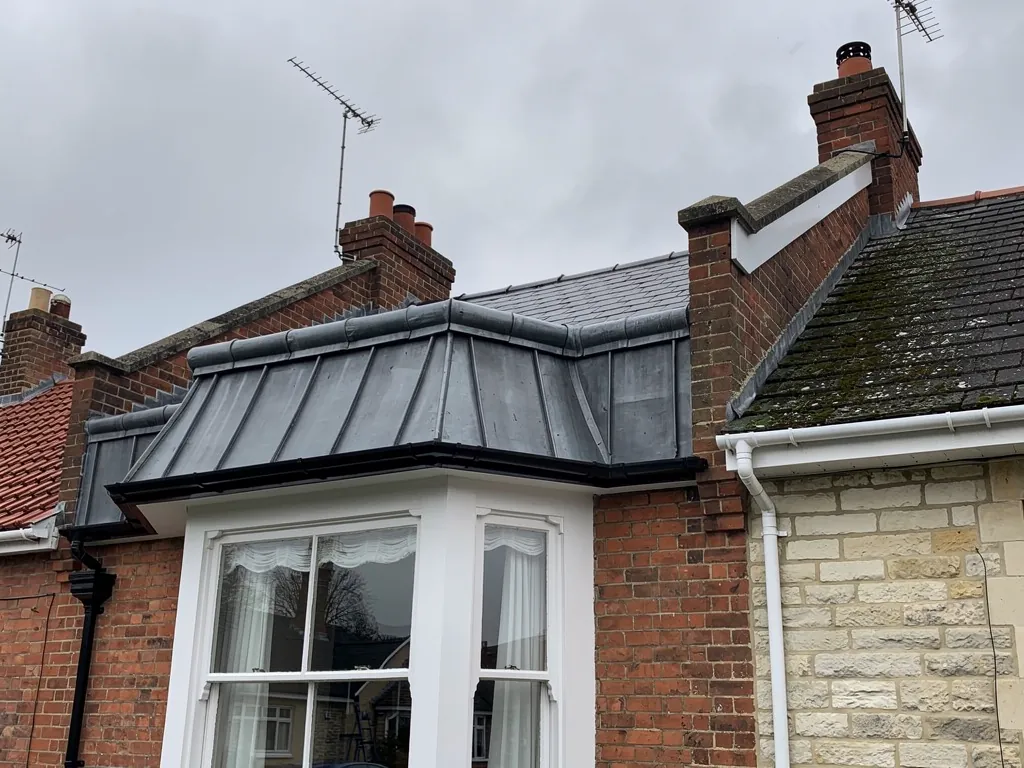 Lead flat roofsRolled and welted lead on a sound deck, set out in short bays with drips and rolls, for roofs expected to last for decades.
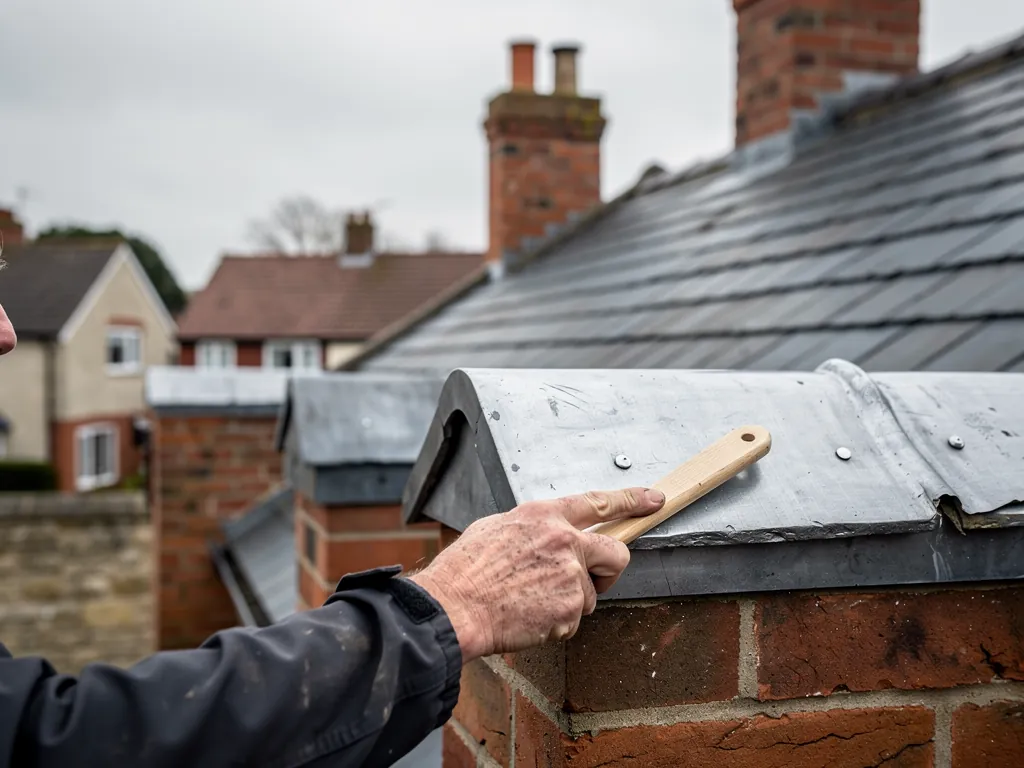 Repairs and renewalsSplits patched where the surrounding lead is sound, failed pointing raked out and renewed, and tired flashings replaced where a patch would not hold.
Leadwork, one question at a time
From what lead does on a roof to the code, the cost, the cracking and the rules for older homes in and around Swindon.
The short answer
Leadwork is the sheet lead that waterproofs the awkward places: around chimneys, along walls, in valleys, on dormer cheeks and over small flat roofs such as bays and porches. The slates or tiles shed most of the rain, and lead deals with the joints where that covering stops.
Walk round a house and the leadwork is the dull grey metal you only notice when it fails. Slates and tiles shed rain downhill. They cannot seal a joint where the roof stops at a brick wall, wraps around a chimney or turns into another slope. Lead can, because it is soft enough to be dressed into the exact shape of the joint and heavy enough to stay where it is put.
A flashing is a strip of lead that covers the gap between the roof and a wall or stack. Where a roof slopes up against a wall, the flashing steps down the brickwork in short pieces that follow the mortar courses. A soaker is a small piece of lead, folded to an L, that sits under each slate or tile along that same edge and carries water back onto the roof; the stepped flashing above overlaps the soakers. An apron is the flashing across the lower face of a chimney, and a saddle or back gutter handles the rear of the stack, where water banks up behind it. Valleys, where two slopes meet, can be lined with lead, and a box gutter is a lead-lined channel behind a parapet.
Victorian and Edwardian terraces usually have lead at the chimney stacks and along the party walls between neighbours. Swindon Borough Council's appraisal of the Railway Conservation Area describes the roofs of the railway village as generally slate, and a slate roof depends on its lead at every stack and wall junction. Newer estate houses may have little leadwork beyond a porch or bay, and some use manufactured flashing products at junctions instead of lead.
Often, on older roofs. Some heritage roofs finish the ridge or hip with sheet lead dressed over a timber roll instead of ridge tiles, and the hips of many bay roofs are done the same way. Dormers are a common home for lead cladding: the cheeks, the triangular sides, and the small flat top are covered in sheet lead on boarding, with an apron where the dormer meets the slope below. These details are cut and bossed to fit each roof, which is where the quality of the dressing shows. Our pages on lead on dormers and lead bay and porch roofs cover both.
Because the leadwork is the joint, it takes the movement, the weather and the water. Lead expands in sun and contracts at night. The mortar it is pushed into cracks and lets go. The slates or tiles can be sound while the flashing beside them has split or lifted, which is why a leak that looks like a slate problem so often turns out to be a lead problem. Our guide to what leadwork is and where it sits on your roof shows each piece in turn.
For stacks, chimney repairs covers the brickwork and pointing that the lead is fixed into, and we look at both together.
If you can see the roof from an upstairs window, look at where it meets the chimney or a neighbour's wall. Lead that is lifting away, has gaps along the edge or shows a bright crack is worth photographing. Do not climb up to look. A photograph from the window or the ground is enough for us to start from.
The short answer
For general flashing the standard pick is Code 4, while Code 3 is recommended for soakers only. Code 5 and above suit stepped, valley and gutter work, where the lead is longer, wider or carries more water. The job decides the code, not habit.
Lead sheet is sold by code, and the code is simply a thickness class. Rolled lead sheet for building is made to BS EN 12588, and the codes run from 3 to 8, each with its own colour stripe on the back so it can be identified on site. A higher code is thicker and heavier. Choosing between them is one of the first decisions on a leadwork quote, and one you should be able to see written down.
Code 3 is 1.32 mm thick, Code 4 is 1.80 mm and Code 5 is 2.24 mm. Code 6 is 2.65 mm, Code 7 is 3.15 mm and Code 8 is 3.55 mm. The thicker the sheet, the stiffer it is and the longer it tends to last.
The lead supplier Royston sets out which uses each code suits. Code 3 is recommended for soakers only. Code 4 appears against soakers, flashings, pitched valley gutters and dormers. Code 5 and Code 6 are listed for flashings, valley gutters, parapet and box gutters and dormers. Codes 7 and 8 are the heavy-duty end, listed for valley gutters, parapet gutters and dormers. Another supplier, Leadworx, notes that Code 4 has become the standard choice for general flashing work. For a stepped flashing on a chimney or a tall wall, many roofers go up a code, and Checkatrade's repair guide prices a Code 5 flashing not exceeding 150 mm at £50 to £70 per metre.
Heavier lead is harder to dress tight into a mortar joint or around the corner of a stack, and a flashing that sits proud of the wall invites water behind it. The right code is the one that suits the length of the run, how exposed the position is and how much movement the piece has to take. A short soaker does not need what a box gutter needs.
Yes. Our quotes name the code of lead being fitted, so two quotes can be weighed fairly. If another roofer proposes a lighter code for a chimney or a gutter, ask them to say why. Our lead codes guide lays the codes out in more detail.
Colour stripes are a quick check once lead is on site, but they say nothing once the lead is on the roof. Ask for the code to be written on the quote and on the invoice. It costs nothing to record, and it settles any later doubt about what was fitted.
| Code | Thickness | Colour mark | Typical use |
|---|---|---|---|
| Code 3 | 1.32 mm | Green | Soakers and light duty |
| Code 4 | 1.80 mm | Blue | General flashing |
| Code 5 | 2.24 mm | Red | Flashings, valleys, dormers |
| Code 6 | 2.65 mm | Black | Larger roofs |
| Code 8 | 3.55 mm | Orange | Heavy-duty gutters |
The answer
National guides put chimney leadwork at £150 to £250 for a patch and £350 to £460 for a full replacement without scaffolding, rising to £700 to £920 with it. Stepped lead flashing is £80 to £120 per metre before VAT. Access, length and condition move your figure.
Leadwork prices are hard to compare because the jobs are so different. Re-dressing a lifted flashing on a bungalow stack is a short visit. Replacing every piece of lead on a three-storey terrace with a valley, two stacks and a bay means days on a scaffold. Both get described as "lead flashing".
MyJobQuote's chimney leadwork guide, dated 22 September 2026, gives £150 to £250 for a patch repair and £350 to £460 to replace the leadwork on a chimney without scaffolding. With scaffolding the same job is £700 to £920, and the guide puts the average at about £570. In its October 2026 roof repair guide, Checkatrade gives stepped lead flashing as £80 to £120 per metre before VAT. For a whole lead flat roof, MyBuilder's flat roof guide, updated in August 2026, gives £150 to £200 or more per square metre, against £90 to £130 for EPDM and £95 to £150 for GRP.
Getting to the work is the biggest factor. MyBuilder's scaffolding guide puts high-level chimney scaffolding at £400 to £900, which can outweigh the lead itself on a small job. After that come the number of faces on a stack, the code of lead, the total length of flashing and whether the mortar joints and brickwork behind the lead need repair first. A flashing that has leaked for years often hides damp timber or crumbling pointing, and those become part of the job once they are seen.
On the roof, the warning signs are flashing tape or a bead of sealant where lead should be, lead nailed hard at both ends, stepped flashing with no wedges in the chase, and new lead laid over old. At the door, be wary of a cold caller who has spotted a problem with your roof, a price given without anyone going up, a push to sign on the spot, or a demand to be paid in cash. Whoever you use, a sound quote is in writing, carries a business address, says which lead details are being renewed and in which code, and gives one total price. Get the guarantee in writing too. If a job goes wrong, Citizens Advice can pass your complaint to Trading Standards, and our guides to doorstep roofers and checking a roofer go further.
As local roofing contractors, we price after the survey, from photographs of your own lead, and customers get the quote in writing. That order matters on lead: until the old flashing is seen close up, nobody can say whether the chase behind it is sound or the timber beneath is dry. Our lead flashing cost guide goes deeper into the national figures, and chimney repairs covers the stack itself.
Lead is bought by weight and its price moves, so an old figure should be re-checked before work begins. Whatever a roofer quotes you, find out if scaffolding, VAT and the disposal of old metal are inside the figure or added afterwards, and how long the price stands.
What it typically costs
The short answer
Lead splits when a piece is too long to move freely, when it is pinned down hard, or when it has simply worked for decades. A split in otherwise sound lead can sometimes be patched. A flashing cracked in several places is usually better replaced.
Lead is a long-lasting roofing metal, but it is not inert. A crack is nearly always a sign that something has stopped it moving the way it needs to, and the repair depends on understanding why.
Lead expands when the sun warms it and contracts again at night. Over a year that is thousands of small movements. A flashing that is free to creep slightly will take them for decades. A flashing that is too long, folded too tightly or fixed hard at both ends will fatigue along the line where it is held, and eventually crack. This is why lead is cut into short lengths and lapped, rather than run in one long piece along a wall.
A stepped flashing is tucked into a groove cut in the mortar course and held with lead wedges, then pointed. When the pointing perishes, the wedges loosen and the lead drops, leaving a gap at the top where rain runs behind. Sealant squeezed into that gap lasts a season or two but cannot move with the metal. Our answers on why lead cracks and why the cause matters follow the same line.
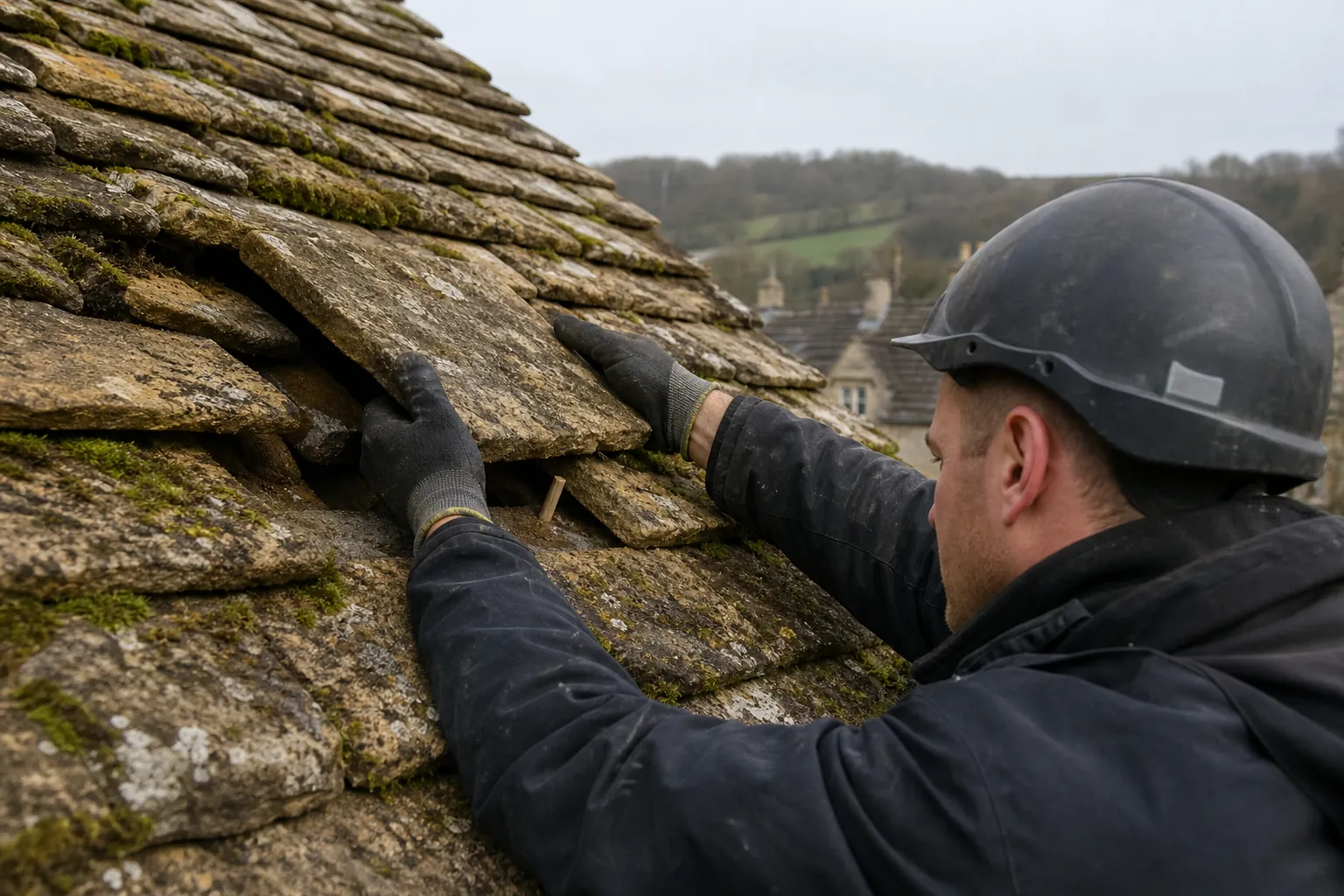
A small split in lead that is otherwise flat, thick and clean can be patched, or joined by lead welding, which fuses the metal without solder. A patch is a good repair where the rest of the piece is sound. It is a poor one where the lead has thinned along the folds, where the surface is covered in hairline cracks, or where the piece is too long to move. In those cases a new flashing in short lengths is the repair that lasts, and the survey photographs show you why.
Valleys and box gutters carry more water than any flashing, so faults show sooner. Renew when the lead has split at a drip or a lap, when water stands because the fall has sunk, or when patches have been piled on patches. Damp on a ceiling below a valley, or along the wall under a parapet, is the usual clue. Our guides to lead valleys and lead parapet and box gutters show what a renewal involves.
MyJobQuote gives over 80 years for lead flashing that is fitted well, and over 100 years in higher codes. Less puts lead flat roofs at 50 to 100 years. These are typical ranges, not promises, and they assume sound fixings and pointing. A lead roof that fails in twenty years has usually been undermined by length, fixing or substrate, not by the metal. That is why a survey looks past the split itself to the pointing, the wedges and the timber beneath.
Leadwork needs little maintenance, but it does need looking at. Check the flashings from the ground after a storm, keep valleys and gutters clear of leaves, and ask for a closer inspection whenever scaffolding is up for other work. Loose pointing in the chase is the usual first fault, and it stays a modest repair when spotted in good time.
Lead rarely wears out; it is usually stopped from moving until it cracks.
MythA bead of sealant along a split flashing is as good as new lead.
FactSealant bridges a gap for a season or two but cannot take the movement of the metal, so the lead itself has to be put right.
The short answer
Renewing lead with lead rarely calls for planning permission. Listed buildings follow stricter rules, where work altering their character requires listed building consent, and a switch to another material may count. Conservation areas and Article 4 directions can add further rules, so check with Swindon Borough Council first.
Lead is the traditional metal for flashings and small roofs on older buildings, and replacing it with something else is often the change that draws attention. Whether you need permission depends on what the building is and what is being changed.
Section 55, in the Town and Country Planning Act 1990, treats maintenance works that do not materially affect the external appearance of a building as outside the definition of development. Put simply, taking off tired flashings and fitting new lead that looks the same normally needs no planning permission. Two caveats apply: the building may be listed, and an Article 4 direction may have withdrawn permitted development rights in the area. Neither is rare in older parts of the borough, so it pays to ask before the scaffold goes up.
Listed building consent becomes necessary for works that change a listed building's character, and section 7 of the 1990 listed buildings Act is where that comes from. The Railway Village cottages in Swindon were listed in 1970. The council's appraisal records that the village became a conservation area in 1975 and became part of the merged Railway Conservation Area in 2020 to 2021, and an Article 4 direction adopted in 1980 covers its residential streets. A 1980 council leaflet says most properties there are listed and that consent is usually required, so confirm with Swindon Borough Council's planning team before any work, including lead.
Swindon Borough Council's list runs to 27 entries, including Old Town, Rodbourne Cheney, Highworth and Wroughton, and notes Article 4 directions for Bishopstone and the railway village. Conservation area status mainly affects what can be changed, such as a new material, a new shape or a new feature on the roof. It does not stop an ordinary repair, and a maintained roof is part of what the designation exists to protect. If your street is in one of these areas, tell us at the survey and we will build the consent question into the quote.
Church roofs often carry a lot of leadwork. Churches in use by the Church of England, Roman Catholic Church, Methodist Church, Baptist Union or United Reformed Church fall under the ecclesiastical exemption, with the Church of England handling consent through its faculty system. Other denominations, and churches no longer in use for worship, need listed building consent.
On an older building we renew lead with lead, in the same form, and tell you before we propose anything different. Our guide to leadwork on listed and conservation-area buildings covers the consent side in more detail.
If you are unsure whether your building is listed, the council can tell you. Do that before ordering work, not after, because unauthorised works to a listed building are an offence.
Our approach
On an older building we renew lead with lead and check the consent route before proposing anything different.
The answer
Lead earns its place where it is expected, on older buildings and awkward details, because it lasts and can be dressed into any shape. Zinc, GRP and EPDM suit particular roofs, and self-adhesive tape is a stopgap, not a replacement. The right choice depends on the building.
Lead is not the only way to waterproof a junction or a small roof, and it is not always the right one. The useful question is what suits the building, the budget and the risk of theft or movement.
Yes, on homes and commercial buildings alike. Chimney aprons, stepped flashings against old brick, valleys on slate roofs and the small roofs over bays are lead's home ground. It dresses tightly into irregular joints, ages without needing paint and looks right against slate and stone. On a period house or a listed building it is usually the covering the building was designed for, and the one the council expects to see renewed.
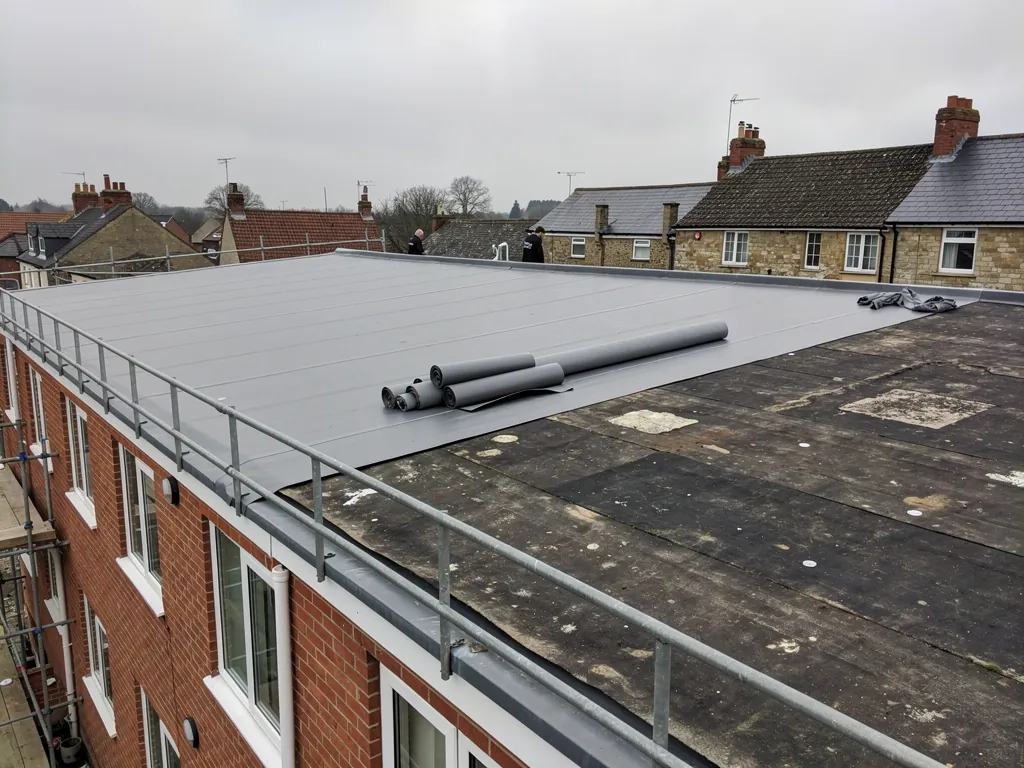
On a larger flat roof, EPDM or GRP will often do the job for less per square metre, and our flat roofing page covers them. Zinc is a long-lived sheet metal that suits some modern and period designs; VMZINC states that correctly designed and installed zinc can last in excess of 100 years. Where lead has been stolen from a roof once, a replacement in a less valuable material is a reasonable choice, and our guide to lead alternatives weighs the options, including lead-free flashing products, while lead or zinc compares the two metals.
Leadwork is skilled, specialist work, and installation happens on the roof, not in a factory. Our team strips the failed lead, checks the mortar joints and timber beneath it, then cuts new pieces to size and bosses them, shaping the metal with wooden tools, until each detail fits. Where a joint cannot be lapped, it is lead welded. New lead is fixed, wedged and pointed, and oiled where patination is wanted so that it weathers evenly. Old lead is taken off site as waste, and we leave the roof, garden and drive clear. Work is done in dry weather, because lead and mortar both need a dry surface, and if rain arrives mid-job we cover what is open and come back rather than closing up a wet joint. Before we leave, we look at the finished lead from the ground and from the loft, and you get photographs of the work.
Our workmanship on lead is guaranteed for 10 years, with the terms put in writing. The paperwork lists what was fitted and where. It applies to the lead we laid, not to parts of the roof we left alone, while any manufacturer warranty on other materials stays with you.
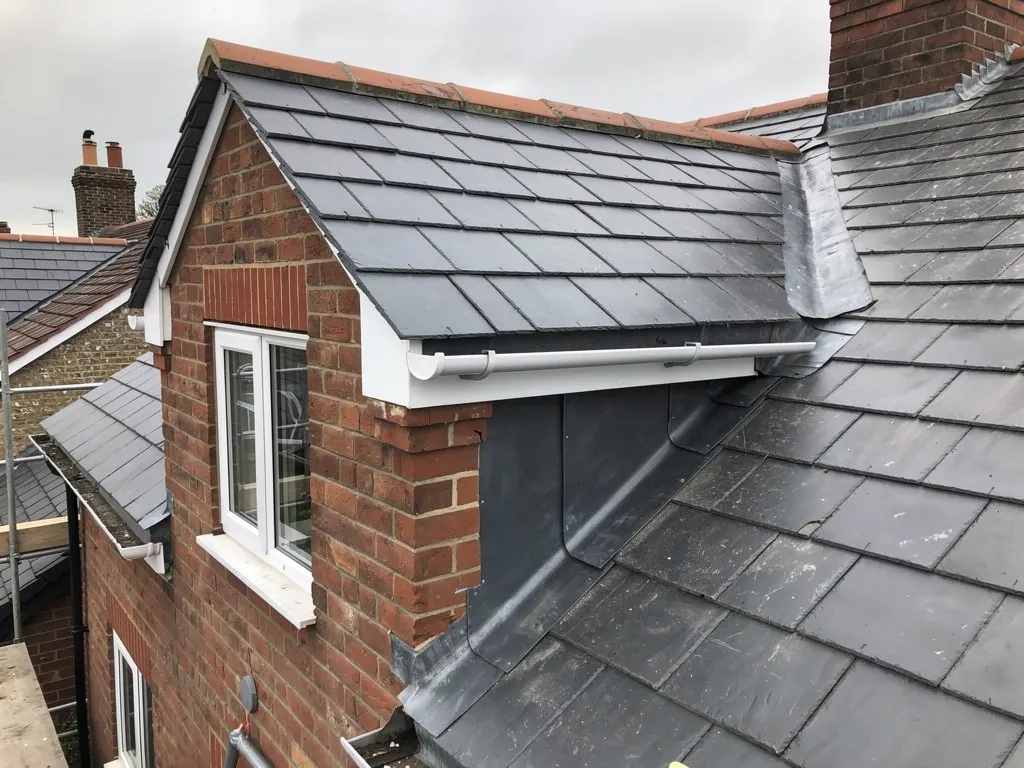
If you are weighing lead against another material for a particular roof, send us a photo and say what is worrying you. In our experience the building usually settles it, and we will give you a view at the survey and a written price for the option you choose.
Codes, costs, cracking, valleys, dormers and listed buildings, plus quick answers on soakers, aprons, saddles and white staining.
Fresh lead reacts with air and rain and can streak with white carbonate. A coat of patination oil gives an even finish and cuts down the staining on the masonry below.
A person should be there to let us in and look over the finished lead. Between those two moments you can carry on, though we may ask for the loft hatch to be cleared.
No. Old lead comes off first so we can see the mortar chase and the timber beneath it. Laying new lead over old traps water and hides faults.
Where the mortar around the chase has perished, we rake it out and repoint, and that work is included in the one written price.
Look for cracks along the joints, standing water, bright thin patches and stains on the ceiling or the window head below.
Tape is quick to apply, so it is often used as a temporary measure. It does not move like lead, and the lasting repair is lead dressed into the joint.
Send a photo of the chimney, the wall junction or the bay roof, taken safely from the ground, and say where the stain shows indoors. At the survey we check the lead, the pointing and the timber beneath it before anything is priced.
Tell us what’s happening and we’ll call you back.
Or call 01793 626096
Message us on WhatsApp