
Does moss need to come off?
Usually, yes. Thick moss holds water against the covering and can push gutters to overflowing. A light film of lichen is a different matter, and we say which you have.
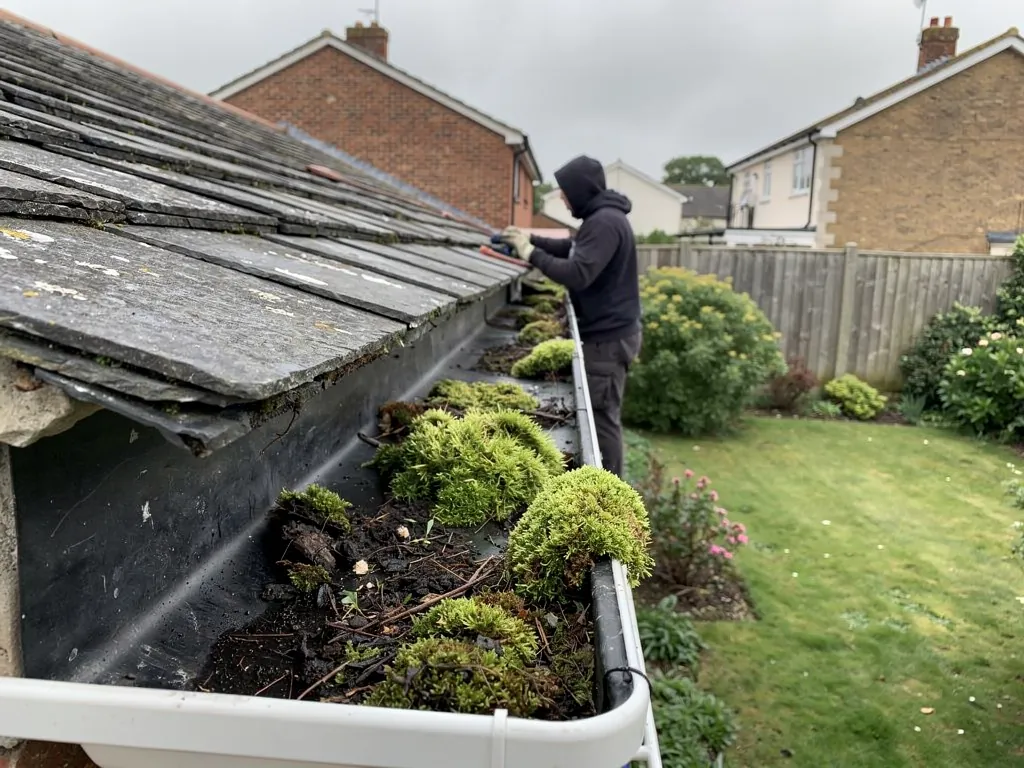
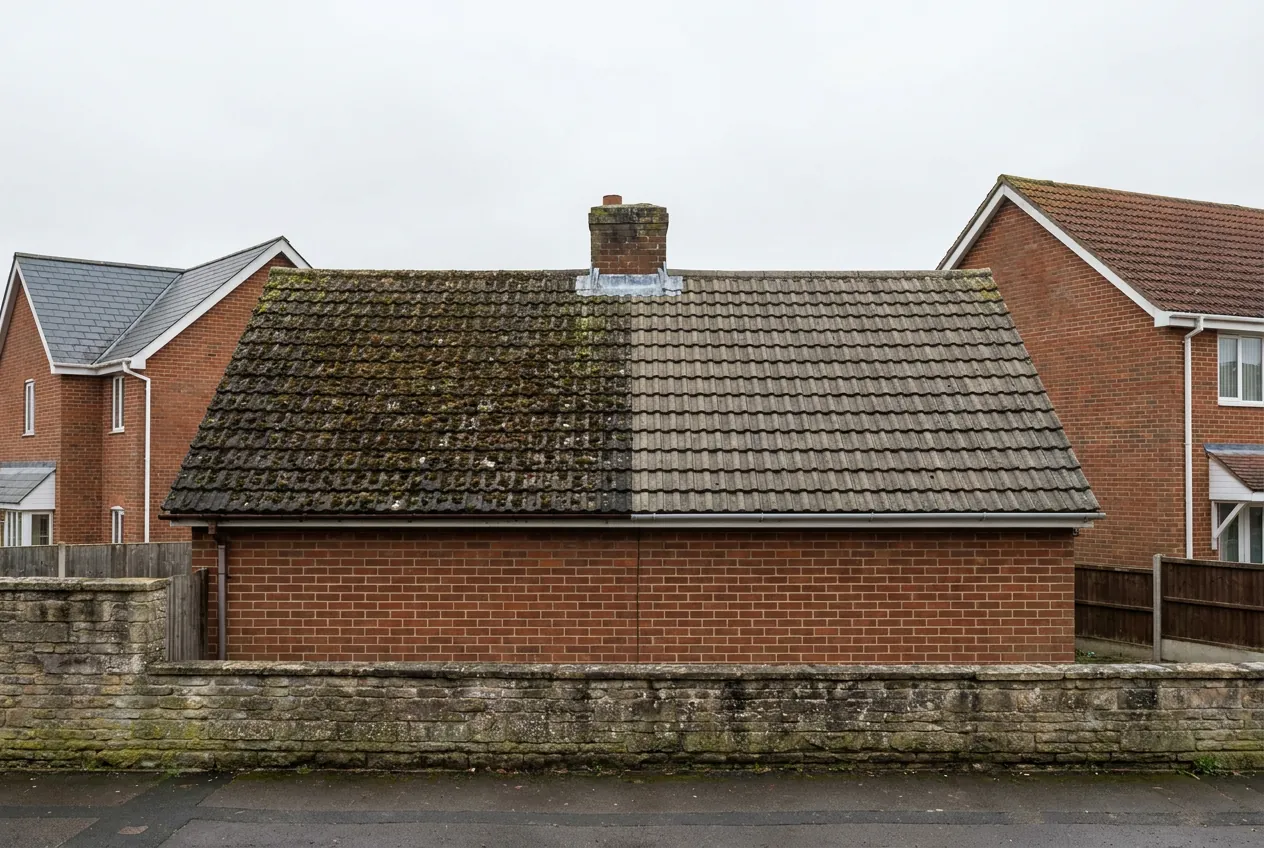
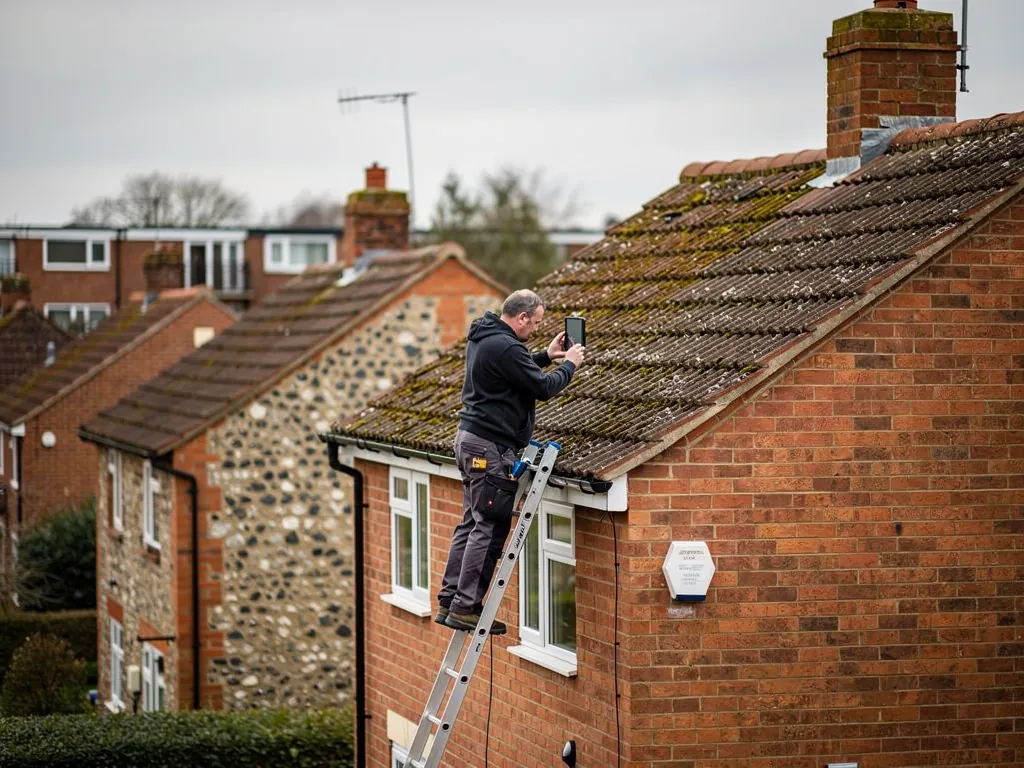
Moss, lichen and black algae taken off tiles, slate and flat roofs by a method that suits the covering. We check the roof while we are up there, then send photographs with a written quote.
Usually, yes. Thick moss holds water against the covering and can push gutters to overflowing. A light film of lichen is a different matter, and we say which you have.
Often not. A hard jet can wear away the coloured face of concrete tiles and push water beneath the laps. Scraping and low-pressure washing are the gentler routes.
Over time, on shady slopes, yes. A biocide treatment slows it, and a roof that dries quickly keeps it at bay for longer.
| Job | Typical cost |
|---|---|
| Flat roof clean | £300 to £600 |
| Pitched roof clean | £450 to £850 |
| Slate roof clean | £500 to £1,000 |
| Tiled roof clean | £400 to £750 |
| Scaffolding, standard two-storey house | £850 to £1,200 |
National ranges for a whole-roof clean, not our prices. Size, covering and access move the figure, so yours is written down once the survey photographs are in.
MyBuilder guides to roof cleaning and to scaffolding (August 2026 update).
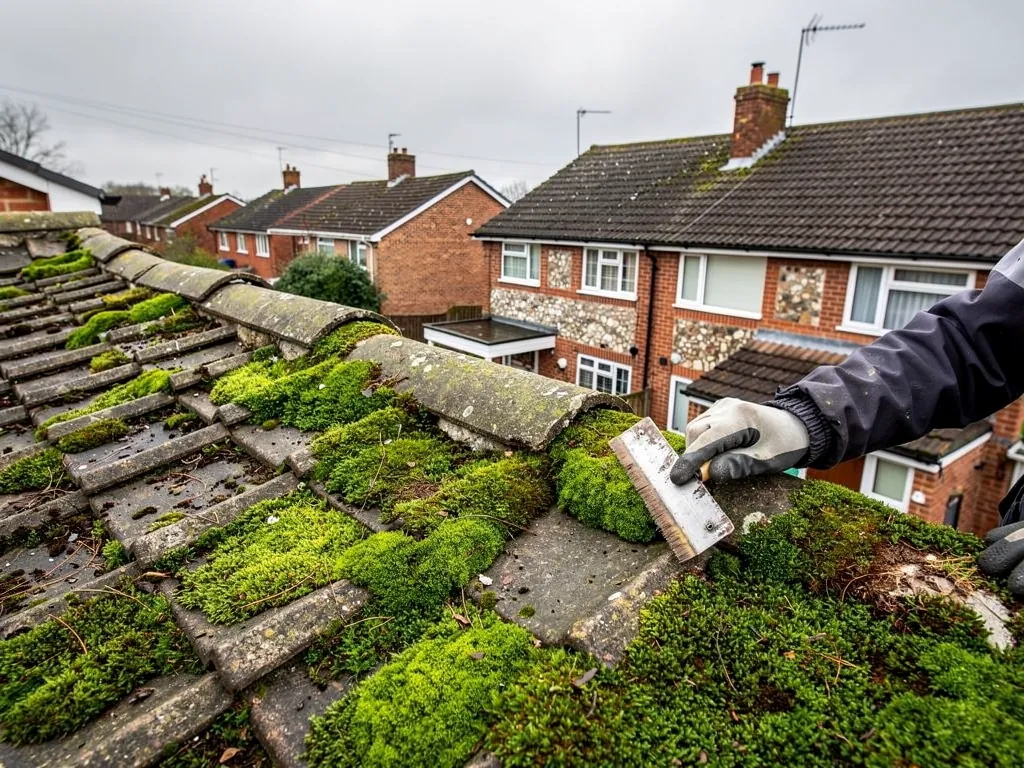
See all costs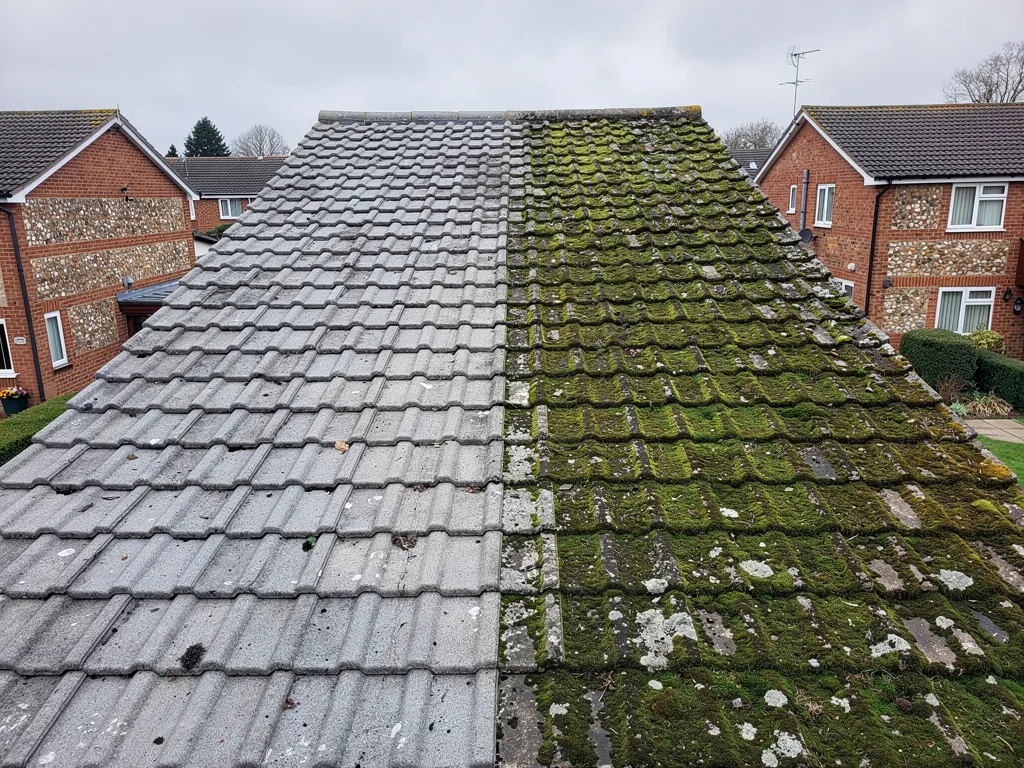 Moss on tiles and slateDry moss lifted off by hand with soft brushes and scrapers, bagged and taken away rather than dropped into the gutters.
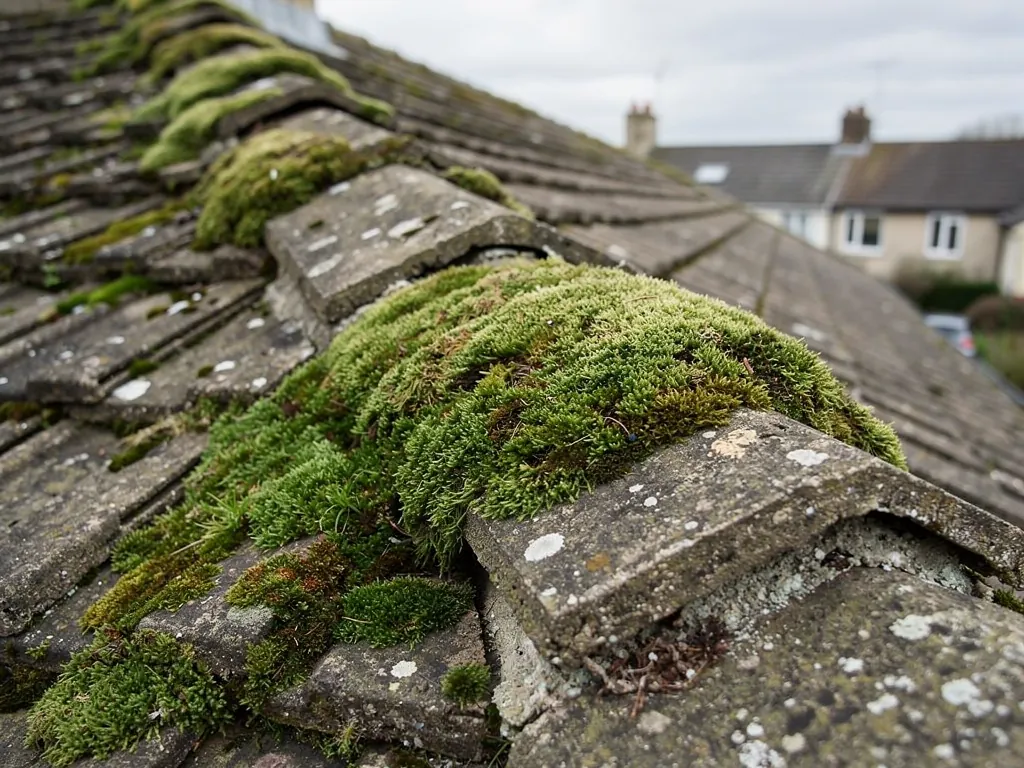 Lichen and black algaeCrusty grey patches and dark streaks treated with a biocide, which we apply at low pressure, so they fade gradually without scouring the surface.
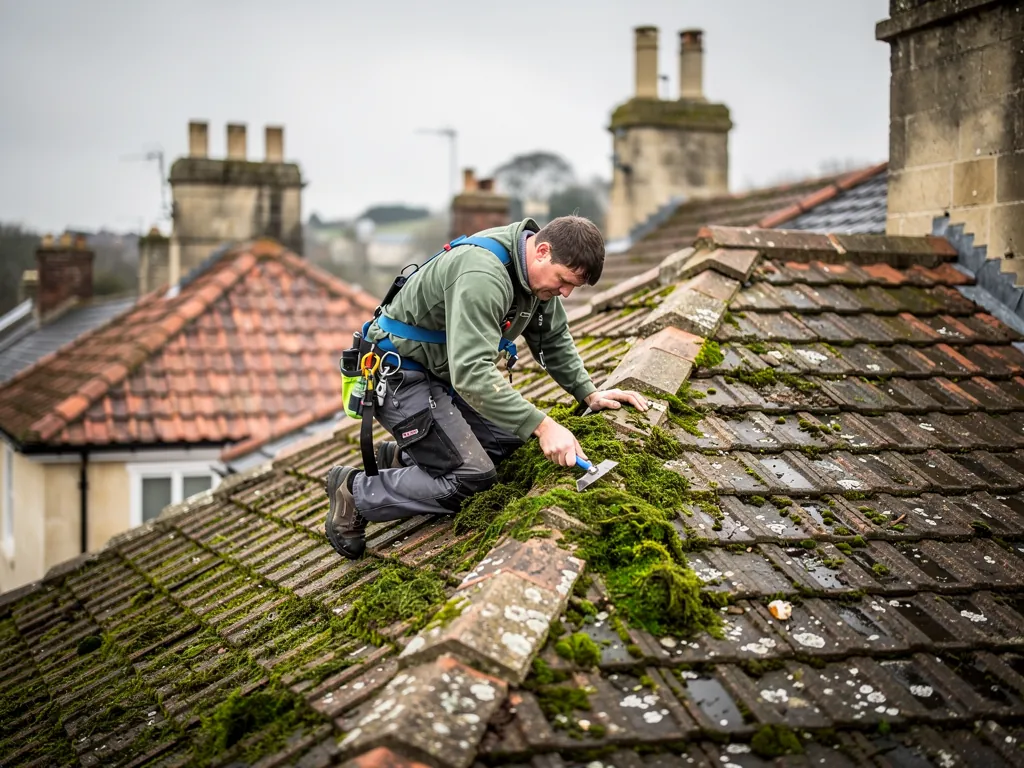 Concrete tile roofsCleaned gently, because the textured face of a concrete tile is what holds its colour and sheds water, and a hard jet can strip it.
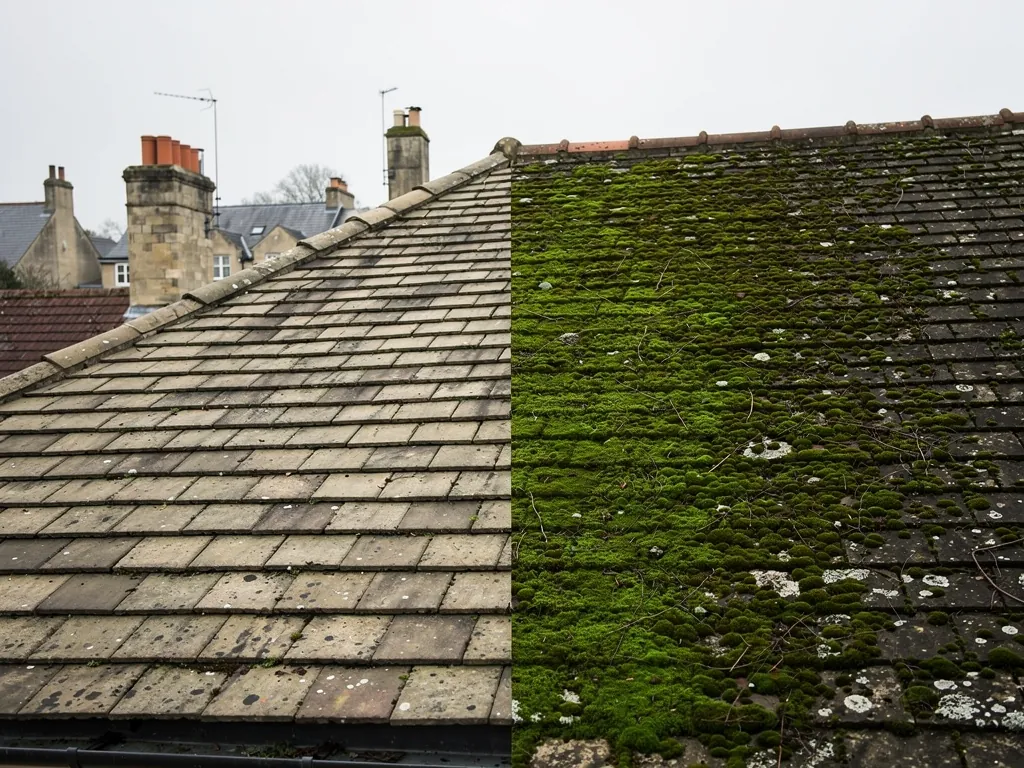 Flat roof coveringsFelt, EPDM and GRP brushed and rinsed carefully, with no metal scrapers, so the waterproof layer is left unmarked.
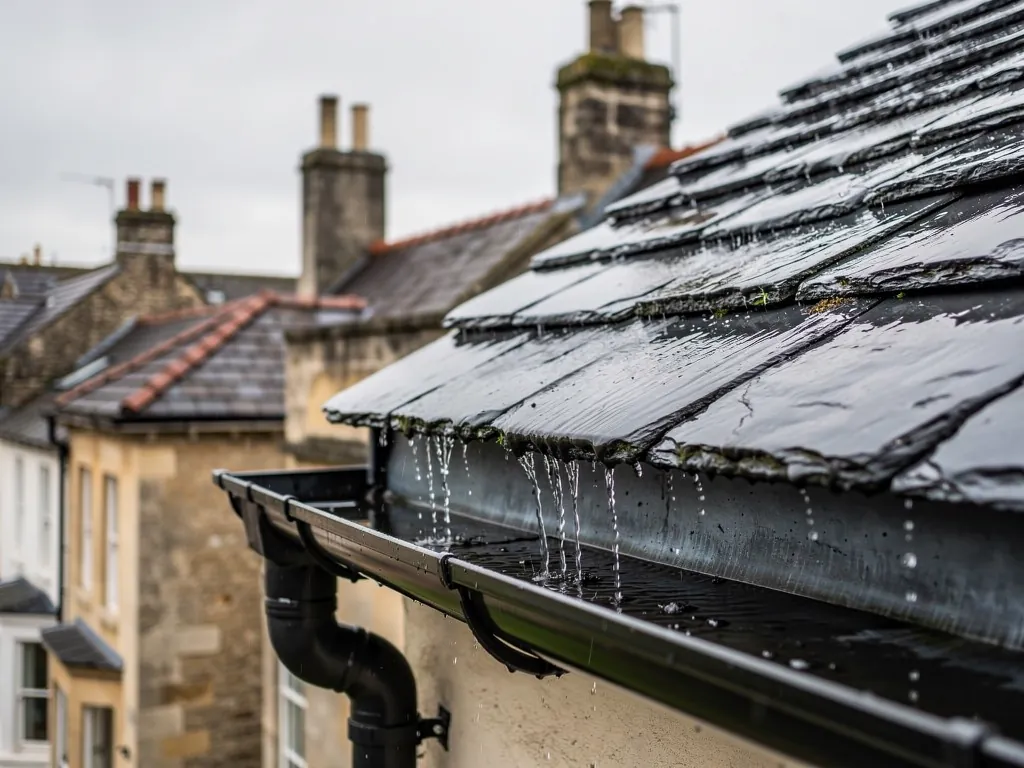
 Gutters and valleysFallen moss, silt and leaves cleared from gutters, hopper heads and valley channels, with downpipes flushed so water runs freely again.A roof check while we are thereSlipped or cracked tiles, tired ridge mortar and lifting flashing photographed and reported, because cleaning exposes faults moss was hiding.
Roof cleaning explained in six parts
From whether moss does any harm to what a sensible clean leaves behind, the points Swindon householders weigh before booking.
The short answer
Moss is rarely the end of a roof, but it is not harmless. A thick mat soaks up rain and stays wet, adds weight, and sheds clumps into the gutters. Where water can sit against a tile or slate through a freezing night, the covering ages faster.
A professional clean is worth paying for once moss is thick enough to keep the covering wet, lift tile edges or choke the gutters, because from then on it shortens the roof's life. Where the growth is a light green haze and the tiles are firm, the case is mainly about appearance and kerb appeal, and it can wait. Moss is a symptom of damp and shade first, and a problem second.
Moss behaves like a sponge. After rain it holds the water against the surface of the tile or slate, long after a clean roof would have dried. In a cold snap that trapped water freezes and expands, and the surface of a concrete tile or the edge of a soft slate can flake away. Over many winters that is how a sound roof loses its face. The effect is slow, which is why it is easy to ignore.
The worst spots are the lower courses of a slope, where run-off collects, and the channels where two slopes meet. Moss growing across the laps of plain tiles can lift a tile edge slightly, letting wind-driven rain reach the batten. In a valley it can narrow the channel until water backs up and spills over the side. Along the eaves, clumps fall into the gutter and block the outlet, so the overflow runs down the wall instead.
A thin green film on a north-facing slope, with firm tiles and clear gutters, is mainly an appearance matter. Lichen, the crusty grey and orange patches that grow slowly on stone and tile, is usually left alone on older roofs because scrubbing it off can do more harm than the lichen does. Our guide on whether moss damages roof tiles goes through the mechanisms, and lichen on roof tiles explains when to leave it. Insurers routinely leave gradual deterioration and wear and tear out of home cover, which is how slow moss harm tends to be viewed; our answer on whether insurance covers moss damage looks closer.
On the survey we judge the depth of growth, the condition of the surface beneath, and whether the gutters are already struggling. If the roof is sound and the moss light, we may say the clean can wait. If the covering is breaking down anyway, we say that too, because cleaning a roof that needs replacing is money wasted. Our roof inspections and surveys page describes how we record that.

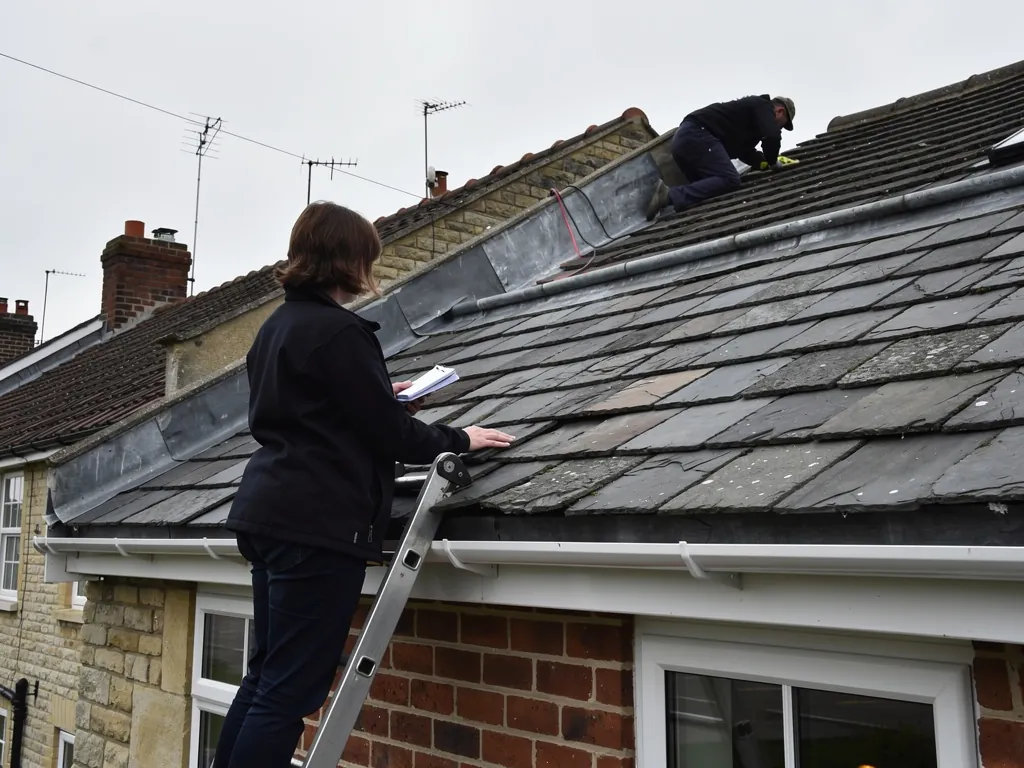
Wet moss is also slippery underfoot, which makes cleaning from the roof itself a job for people with the right access gear. Please do not go up to scrape it off yourself.
The short answer
Published UK guides suggest a whole-roof clean at around £300 for the simplest jobs, with tiled roofs at £400 to £750, pitched roofs at £450 to £850 and slate at £500 to £1,000. Scaffolding, if needed, can add £850 to £1,200, so access often decides the bill.
Cleaning prices swing more than people expect, mostly because roofs differ in size and because getting to them safely costs money in its own right. A bungalow reached by ladder is another job entirely from a three-storey house with a roof ladder and a scaffold.
MyBuilder's roof cleaning guide, updated in August 2026, says costs start from around £300. It gives flat roofs at £300 to £600, pitched roofs at £450 to £850, tiled roofs at £400 to £750 and slate at £500 to £1,000. By method, it puts manual scraping at £5 to £10 per m², soft washing at £15 to £20, pressure washing at £10 to £15 and steam cleaning with the Doff system at £20 to £30. Those are national figures, not ours.
Roof area is the obvious driver, but the pitch, the number of valleys and dormers, and the amount of growth all add time. Access comes next. MyBuilder's scaffolding guide gives £850 to £1,200 for the usual scaffold on a two-storey house, which can exceed the cleaning itself, so wherever it is safe we reach the roof by lighter means. A tree overhanging the roof usually means more debris to clear and a quicker return of the problem, a point our answer on overhanging trees and roof damage expands on.
The covering matters too. Slate and old clay need gentle handling piece by piece, and dormers, stacks and solar panels add hand work in the angles where growth collects.
A very low price for a cleaning job can mean moss blown off with a jet and left in the gutters, no gutter clear, no treatment and no check of the roof. Ask what is included: removal of the debris, gutters, any biocide, and a written note of defects. The lowest-priced route often turns into a second visit, and a roof left with moss in the valleys can start overflowing again within weeks.
Most of the cost is time and safe access, not chemicals. Getting onto a roof properly means roof ladders, a mobile tower, a hired cherry picker or a scaffold, chosen by height and ground. The work itself is slow: moss is lifted by hand course by course, bagged on the roof and carried down, then the gutters and downpipes are cleared and any biocide goes on at low pressure. None of that can be hurried without cutting corners on the roof. Our roof cleaning cost guide runs through the national figures by roof type. For your own roof, the answer arrives after the survey photographs as one total price, in writing.
One more thing to compare is what a price assumes about scaffolding. A quote that excludes it can look cheaper until the scaffolder's invoice arrives, so ask whether access is inside the figure or on top of it.
What it typically costs
The answer
A pressure washer is quick, but a hard jet can wear the face off concrete tiles, push water up under the laps and damage soft slate and old pegs. MyBuilder's guide warns it may damage delicate tiles. Hand scraping and low-pressure treatment are slower and kinder.
Jet washing a roof looks satisfying: a clean stripe appears behind the lance. The trouble is that the stripe is the roof's own surface leaving with the moss, and the water goes places it was never meant to reach.
Many concrete tiles carry a thin coloured surface layer over the body of the tile. That layer gives the tile its shade and helps it shed water. A strong jet can wear it away, leaving a rougher, paler face that holds moss more readily the next time. The roof looks clean for a season and then regrows faster than before.
Natural slate is made of thin layers, and a hard jet can lift and break the edges. Handmade clay tiles are more forgiving but still lose their weathered face. Old stone slates are hung on pegs, and blasting at them risks loosening the very fixings that hold them. A Cotswold stone roof is cleaned by hand and never pressure washed; the proper method is gentle scraping and brushing, with a treatment that works over weeks.
Roof coverings shed rain falling downwards. A jet fires water upwards and sideways, forcing it under overlaps and into the loft, where it soaks insulation and can stain ceilings. Underlay that has lost its flexibility is particularly exposed. A sound roof can end up leaking after a wash it did not need.
A jet also turns moss into slurry that blocks hopper heads and splashes paths, cars and conservatory roofs below, and the first heavy rain carries whatever is left into the downpipes. Dry removal, with the debris bagged on the roof, keeps the garden clean.
On hard, sound surfaces such as some flat concrete or paved areas, a controlled wash is reasonable. On a pitched covering we prefer methods that leave the surface alone. Our guide on pressure washing roof tiles sets out the risks in more detail, and how concrete roof tiles are cleaned covers the gentler route for the most common modern covering.
If a firm offers to blast your roof, ask what pressure they use, whether they treat afterwards, and who pays if the loft gets wet. A sensible answer comes without hesitation.
A roof sheds rain that falls down, and a jet fires water the other way.
MythA pressure washer is the fastest and best way to clean any roof.
FactSpeed is the only thing it reliably wins, and a jet can strip tile surfaces, break slate edges and drive water under the laps.
The short answer
Hand scraping and brushing suit most pitched roofs and are essential on stone slate. Low-pressure soft washing with a biocide handles algae, lichen and light growth. Steam cleaning is a gentler alternative for delicate surfaces. The covering decides, not habit.
There is no single best way to clean a roof, only the right one for the covering and the condition. We choose after the survey, and the quote names the method so you can compare like with like.
Dry moss is lifted away with plastic scrapers and soft brushes, working down the slope, and collected in bags. It is slow, but it removes the bulk of the growth without wetting the roof or abrading the surface. It is the method for Welsh slate, clay tiles and old stone slates. Cotswold District Council's technical guidance notes that a stone roof scraped once a year could last twice as long, which tells you how seriously traditional stone roofs treat the job, and our Cotswold stone roofing page covers that building stock.
A soft wash is a low-pressure spray of a biocide that kills growth at the root, left to work over days and weeks, with rain rinsing away the dead material. It deals with the algae that cause black streaks and with the stains moss leaves behind. Our guide on soft washing and biocide treatments explains how it works and what aftercare helps.
The Doff system is specialist equipment that uses hot water at low pressure to lift growth and kill spores, with no chemicals. It costs more per square metre in the national guides, but it is gentle on delicate surfaces. See Doff steam roof cleaning for how it compares.
Slate is cleaned with soft tools and care, because it splits under pressure and under boots. A listed building needs the gentlest method and sometimes consent for anything that alters its appearance, which our guide on cleaning the roof of a listed building covers. Flat roofs get brushing and rinsing only, with no metal tools, as set out in flat roof cleaning. The full comparison sits in roof moss removal methods compared.
The survey photographs show the covering, the depth of growth and the pitch, which usually settle the method, and experience of slate and stone roofs tells us when to go gentler. If the roof looks different once we are up there, such as brittle slates, we change the plan and tell you first.
Often the answer is a combination: scrape the bulk by hand, treat what remains, and clear the gutters last. Where a roof has several coverings, such as a slate main roof and a felt porch, each part gets its own method.
| Covering | Usual method | What we avoid |
|---|---|---|
| Concrete tiles | Hand scraping, then low-pressure treatment | A hard jet on the tile face |
| Natural slate | Soft brushing and a gentle biocide | Walking on wet slate, strong jets |
| Clay plain tiles | Dry brushing and treatment | Scraping that chips the edges |
| Stone slate | Hand scraping, treatment over time | Jets that loosen pegs |
| Felt, EPDM or GRP | Brushing and rinsing | Metal scrapers and solvents |

The short answer
Cleaning puts us on the roof with a close view of every tile, ridge and flashing, so we check them. Slipped slates, cracked tiles, crumbling ridge mortar and lifting lead are photographed and reported. Nothing is repaired or charged for until you have agreed it.
A roof clean is one of the few times a roofer gets a slow, close look at the whole covering. Moss can hide cracks, and it can also hold a loose tile in place. Once the growth is gone, faults show. That is why we treat the clean and the check as one visit.
On tiled roofs we check for slipped, cracked or missing tiles, and for tile edges that moss has been lifting. At ridges and hips we look at the bedding mortar and at the fixings, because BS 5534:2014 asks for ridge and hip tiles to have a mechanical fixing on top of the bedding, and a ridge held by old mortar alone is worth knowing about. At walls and chimneys we examine the flashings, because lead that has lifted or cracked is a common source of slow leaks. Verges, the sloping edges of a gable roof, are checked for loose pointing and tiles.
Sometimes the moss was doing a job. A cracked slate held flat by a mat of growth, or a gap in ridge mortar filled with root, can start to leak the moment it is cleared. We tell you before we begin if we think that could happen, and we have the repair costed so you are not surprised.
Everything we find goes into a short written report with photographs. Small jobs, such as refixing a slipped tile, can be priced there and then. Larger ones, like re-bedding a length of ridge, are priced once we have seen the photographs, and our roof repairs page explains how we trace and fix them. Our answer on repairs during roof cleaning sets out why we raise them at the time.
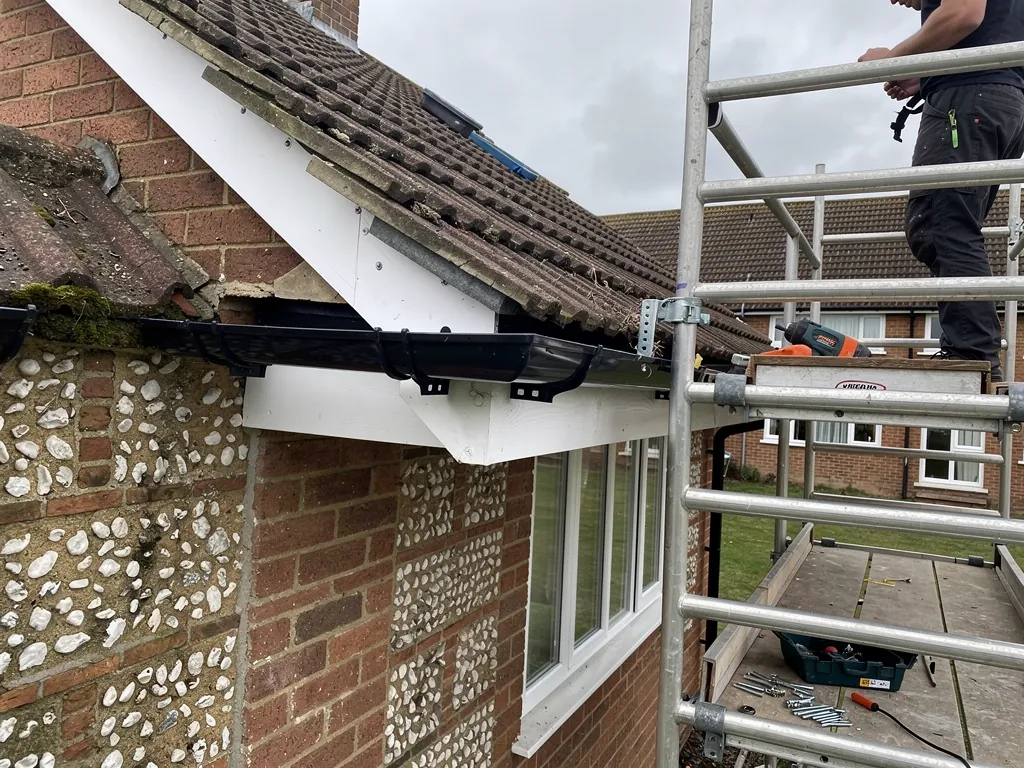
The access equipment depends on height, pitch and what is below. A bungalow or single-storey extension can often be done from ladders, with a hook-on roof ladder for the slope; a two-storey house may need a mobile tower, or a hired cherry picker where the ground is firm and wide enough; tall or awkward roofs get a scaffold. Conservatories and glass below are boarded or covered, overhead cables are kept well clear, and roof lights and plastic sheets are never stood on. We also look for nesting birds and bats before disturbing any roof edge or void, and stop to take advice if we find them. Safety decides the method, then the price.
Because cleaning uncovers faults, and a local roofer can put them right. A customer gets dated photographs of the clean roof that show the quality of the work, a note of any defect, and, if a repair is wanted, one written total price for it. You can read what other customers say on our Google listing before booking.
Yes. We feel along the gutter for sagging brackets, look for joints weeping at the seams, and check the fascia and soffit boards for soft or stained patches. Gutter faults often start as a moss problem, because a blocked outlet sends water down the wall.
You decide what happens next. The report is yours to keep, whether you ask us to fix anything or simply file it with the house papers.
The answer
You cannot stop it for good, because moss spores are everywhere. You can slow it by treating the roof, cutting back overhanging branches, keeping gutters clear and letting light and air reach the slope. A roof that dries quickly gives moss less to work with.
Anyone who promises a roof will never grow moss again is promising something no one controls. Spores arrive on the wind, and they need only damp, shade and a surface to hold on to. What we can do is make the roof a harder place to settle.
A biocide applied after cleaning leaves the surface hostile to regrowth for a time, and rain washes the dead material away. How long the effect lasts depends on the shade, the surface and the weather, so we judge it on your roof rather than quote a period. Many householders have the roof treated again when the first green returns, rather than waiting for a full mat. Our answer on how long before moss grows back covers realistic expectations.
Shade is the biggest driver. A tree over the north slope keeps the covering damp, drops leaves into gutters and feeds moss with debris. Trimming it, with the owner's consent if it is not yours, often helps more than any chemical. Blocked gutters and slow drainage keep the eaves wet, so clearing them is part of the job. Why moss grows on roofs explains the pattern, and why it is worse on the north side picks up the shade point.
Metal strips fixed near the ridge release traces of metal in rain, which discourages growth below them. Their reach is limited, and our answer on whether zinc strips stop roof moss covers where they help.
It is optional, and we will not push it. A roof sealer or tinted coating is a film sprayed or rolled over cleaned concrete tiles. In its favour, it can even out faded colour, and makers say a smoother face gives spores less to grip, so a weathered roof looks tidier for a while. Against it, roof sealing repairs nothing: a cracked or slipped tile stays that way under the coat. It peels if laid on a damp or half-cleaned surface, it commits you to recoating as it wears, and it can hide faults from a future buyer's surveyor. On slate, clay or stone it covers a material meant to weather naturally. Before agreeing, ask the coating maker whether it suits your tile, and the tile maker what it means for any warranty. Our look at roof coatings on houses goes further.
You will see moss-free promises in the market. Read what they cover and what aftercare they require, using what a moss-free guarantee really means. Our own is a 10-year workmanship guarantee, given in writing, covering the work we carry out.
It varies from roof to roof. A shaded, north-facing slope under trees needs attention far sooner than an open, sunny roof. Let the roof tell you: look at each slope from the ground in spring and autumn, clear the gutters after leaf fall, and book a clean when moss starts to lift tile edges or block the outlets. Treating the first green tinge early is cheap maintenance that spares the surface heavier scraping later. Our answer on how often to clean a roof sets out the signs.
Swindon and its estates first, then Royal Wootton Bassett, Highworth, Wroughton, Purton, Cricklade, Marlborough and other Wiltshire towns and villages within 30 road miles, for houses and other property alike.
For gutters that fill again after the clean, our note on moss blocking gutters sets out what to do, and our gutters, soffits and fascias page covers repairs.
Our view
Clean when growth is thick, treat to slow it, and fix the shade and drainage that feed it.
More on methods, biocides, regrowth and costs, plus particular roofs from conservatories and sheds to slate and listed buildings.
Dry, mild spells work. Frost, ice and high wind stop work on a roof, and a treatment needs dry weather to take hold. Our guide to the best season for taking moss off goes through the timing.
Yes. Moss is bagged and removed with the other waste, not left on the lawn or swept into the gutters, and the site is cleared when we finish.
Treatment is sprayed at low pressure with covers over plants and water butts, and we tell you how long to keep pets away. Our answer on whether roof moss killer is safe goes into the details.
It can reveal faults that moss was hiding, which is why we check first and report afterwards. A sound roof cleaned gently should not start to leak.
Yes, with care. Polycarbonate and glass need soft tools and safe access, and felt shed roofs need brushing only. We use boards so no one stands on a panel.
Someone needs to meet us on arrival to agree access, and to see the photographs when we finish. Between those points the day is yours, and we keep to the front or garden areas you have agreed.
Take a picture from the ground of the slope with the most growth, add one of the gutter if you can see it, and tell us the type of tile or slate if you know it. We will book a survey, photograph the roof ourselves and send the method with one total written price.
Tell us what’s happening and we’ll call you back.
Or call 01793 626096
Message us on WhatsApp