
Soft washing is the cleaning method most people mean when a roofer says the roof will be "treated". Instead of driving water at the tiles, the operator sprays a biocide solution over the slope at low pressure and leaves it to act. The moss, algae and lichen die back, loosen and wash away with rain over the following weeks. The tile surface is barely touched.
That sounds simple, and in outline it is. The details are what separate a good treatment from a disappointing one: the strength of the mix, the condition of the roof beforehand, what grows beneath the plants being treated, what the run-off does in the garden, and how long you are prepared to wait. This guide explains how biocides work on a roof, what you will see and when, and the aftercare that helps the result last. If you are weighing it against other approaches, our overview of roof cleaning and moss removal sets them side by side.
How a roof biocide actually works
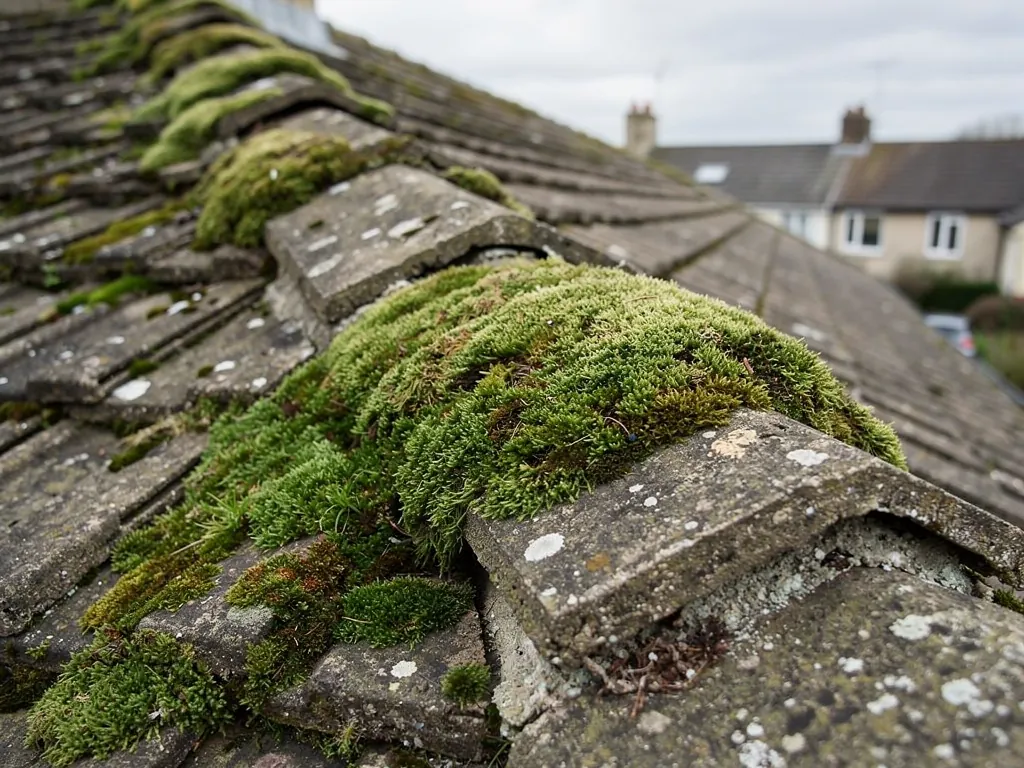
A biocide is a product designed to kill living organisms. The roof versions target the three things that colonise tiles and slates: moss, algae and lichen. Each is a living thing with a different structure, which is why a single treatment does not always clear all three at the same rate.
Algae are the simplest. They form the dark film behind most black streaking, and a biocide reaches them directly because they sit on the surface. Moss is a small plant with a cushion of stems and leaves, and the treatment has to soak through that cushion to reach the base. Lichen is a joint organism, a fungus living with an alga, and it clamps to the tile with a tough body. It is the slowest to give up, because it holds on and its outer layer resists the solution.
Most treatments work by damaging the cell structure of the plant on contact. Dead growth turns brown or grey, dries, loses its grip and breaks down. Rain, wind and gravity then do the removal. The product's data sheet names the active ingredient, the dilution and the safety information, and a reputable operator can show it to you.
Why not just scrape the moss off?
Scraping removes the visible growth but leaves spores, roots and the base of the plant in the pores of the tile. A biocide reaches those, which is why a treated roof often stays clean longer than a scraped one. The two are sometimes combined: heavy moss is lifted first, then the surface is treated. Our guide on why moss grows on roofs explains why the spores come back so readily.
What happens on the day
A soft wash visit is quieter than most people expect. The operator checks the roof, the weather and the surroundings, then protects what needs protecting before any product goes on. That usually means covering or wetting plants beneath the eaves, closing windows and doors, moving garden furniture and cars, and noting where the downpipes drain.
The solution is applied with a pump and lance, working from the ridge downward in even passes so every tile is wetted. Some operators apply a rinse with clean water afterwards, depending on the product. On steep or fragile roofs the lance is used from a ladder, tower or scaffold, so nobody needs to walk on the covering.
The job often looks disappointing at the end. The roof is wet and the moss is still there. That is normal. The product has been put in place and the work of the biocide begins after the operator has left.
How long does the visit take?
The answer turns on roof area, how many valleys and dormers there are, and how much access has to be arranged. Many treatments take a few hours for an ordinary house. What takes the time is preparation and protection, not spraying. We tell you at survey stage what the access involves and what the day will look like.
Do I have to stay in while the roof is sprayed?
It helps if someone can let the team into the garden and talk through anything near the house, but you do not need to stand over the job. What you do need is to keep windows shut and keep children and animals off the damp ground below the roof until the product guidance says otherwise.
The weeks afterwards: what you will see
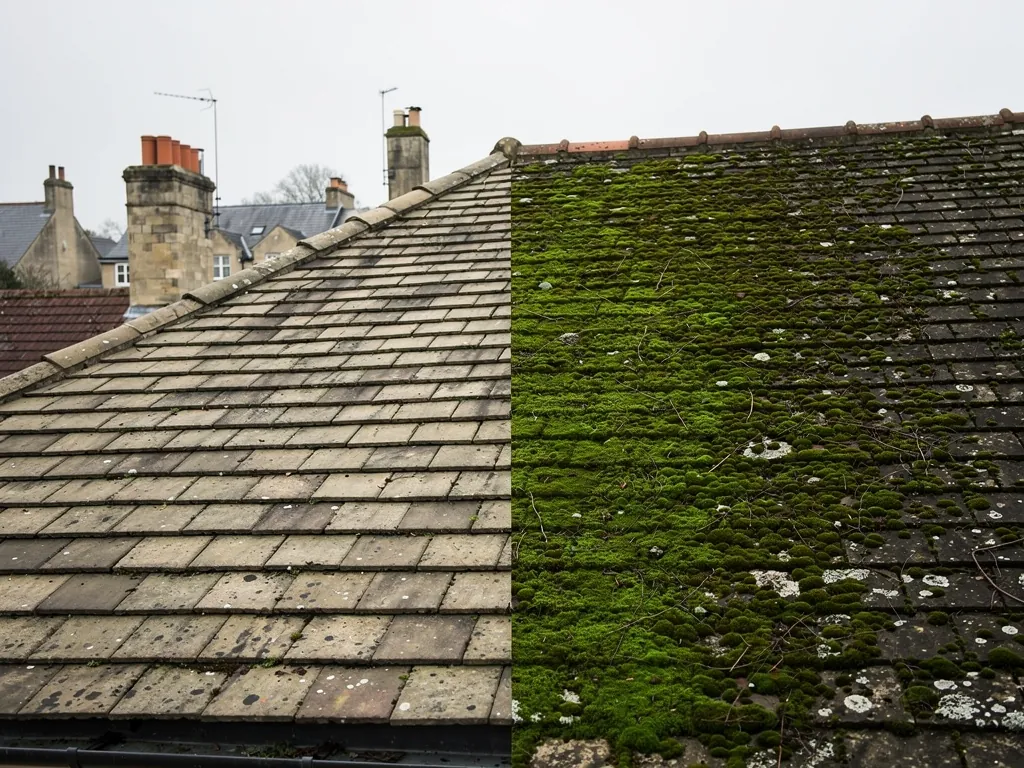
This is the stage that catches people out. Because a biocide kills rather than removes, the roof does not look better at once. Over the following days and weeks the colour changes, and the speed depends on the growth and the weather.
Algae tend to fade first, and dark streaks lighten. Moss turns brown or black, then dries and crumbles. Lichen is slower, and thick crusts can stay on the roof for months before they lift. Rain and breezes carry the dead material down the slope, and it ends up in the gutters.
Some roofs improve gradually over a season. Others show a quick change, then a slower tail where patches linger on the shadiest slopes. A reputable operator tells you what to expect for your particular roof rather than promising a finish date.
Expect the gutters to collect the debris. A flush of dead moss sliding into a gutter can block a downpipe, so a check a few weeks later is sensible. Where the growth is heavy, it makes sense to have the gutters cleared after the treatment as well as before it.
Should I brush or hose the dead moss off?
Not straight away, and not by climbing up yourself. Brushing too early drags half-dead moss across the tile and can scuff the surface. Waiting lets the treatment finish and the growth release on its own. If a patch has not cleared after a reasonable period, a second look from the ground, or from a roofer, is better than a home-made fix. Our guide to the pressure washing of roofs explains why the force of water is not the answer to leftover growth.
Run-off, plants, pets and the garden
A biocide is made to kill living things, and it does not know the difference between moss on the roof and a rose beneath it. Responsible use is mostly about keeping the product where it belongs.
Before spraying, the operator should tell you which plants, ponds or water butts are in the run-off zone. Plants are covered or watered, water butts are disconnected from downpipes during and after treatment, and ponds are shielded. Downpipes that discharge to a soakaway or onto a lawn need to be considered as well, because run-off from the first few rainfalls carries residue. Whether your drains are foul, surface or combined differs from house to house, and the operator needs to know where the water goes.
Many roof products are sold with guidance for contact with people and pets, and some are designed to break down quickly. Read the sheet, and follow it. If anyone in the household has asthma, a chemical sensitivity or an allergy, say so before the day, so the product, wind conditions and timing can be chosen with that in mind.
Ask for the product name before the day, read its safety sheet, and ask where the run-off will go. A sensible operator will have answers ready.
Our answer on whether a roof moss killer is safe for gardens, pets and drains goes through those questions in more detail. Nesting birds are protected too, so we check eaves and chimney tops before treating a roof.
Aftercare that makes a treatment last
A treated roof is clean, not immune. Spores arrive on the wind and in bird droppings, and anywhere that remains wet and gloomy will be colonised again in time. What you do after the visit affects how long the result lasts.
What should I do in the first few weeks?
Leave the roof alone, keep the gutters clear and watch for debris reaching the downpipes. Avoid climbing up or sending anyone up to brush. If rain is slow to arrive, patches may take longer to clear, and that is not a reason for concern in itself.
What helps the roof stay clean?
Reducing the damp that moss feeds on. Cut back branches that shade or drip onto the slope. Keep the gutters running so water leaves the roof quickly. Fix any slipped tiles that hold water in the overlaps. Check the north-facing and shaded slopes first, because they are the places where growth returns soonest. Our guide to lichen on roofs covers why the shaded areas are the hardest to keep clear.
Will it need repeating?
Usually, at intervals that depend on shade, trees and the surface. Some treatments leave a residual film that slows regrowth, and an operator may recommend a repeat application after a set time. Treat any claim of permanent protection with caution. Nothing applied from a lance changes the damp, shaded conditions that moss prefers.
Where the treatment reveals damage that was hidden under growth, such as cracked tiles or perished pointing, we show you the photographs, and a repair is quoted as a separate piece of work once you have seen the photographs.
Soft wash, steam or pressure: how to choose
Choosing a method comes down mainly to the roof covering and its state.
Soft washing suits roofs where the surface should be left alone: concrete tiles whose skin has begun to wear, clay, slate and ageing coverings generally. Because the chemistry does the work, nothing abrasive touches the tile. The drawback is waiting, and the need to manage run-off.
Pressure washing gives an instant visual result, but a jet can strip granules from concrete, push water under tiles and damage joints. Steam systems use hot water at gentler pressure and clean without a chemical, which suits some gardens and some buildings; the equipment is specialised and the work slower.
Manual removal, with a scraper or stiff brush, has its place on heavy growth, delicate coverings or small areas. It is labour-intensive and, on its own, leaves the pores of the tile untreated.
How do the costs compare?
MyBuilder's guide, updated 21 August 2026, gives typical UK rates of £15 to £20 per m² for soft wash, £10 to £15 for pressure washing and £20 to £30 for steam. Our page on roof cleaning costs sets out the ranges and what moves a price.
When we survey, we look at the covering, the growth, the shade and the access, and recommend the method that suits the roof, not the one that is easiest to sell. After the survey you receive the photographs of your roof and a written quote, and repair work we carry out has a 10-year workmanship guarantee in writing.