
Is crumbling mortar on a chimney urgent?
Not an emergency, but it should not wait for years. Loose joints let water into the brickwork, and a wet stack in winter freezes and breaks up faster.
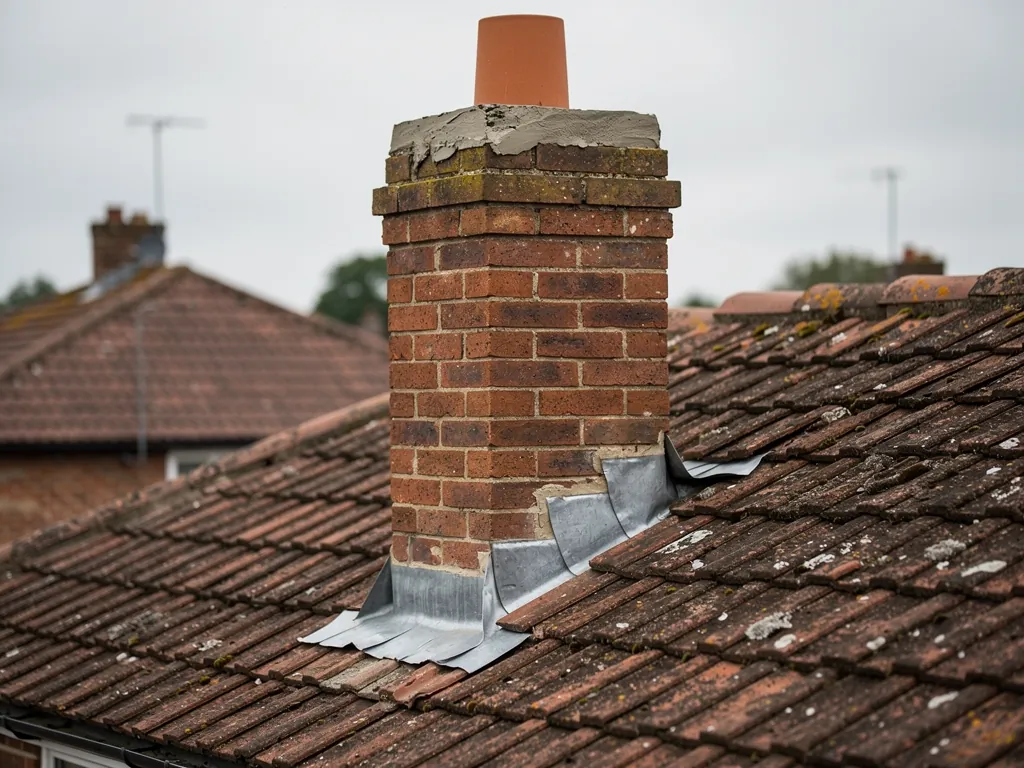
Crumbling mortar, cracked flaunching, tired lead flashing, leaning stacks and damp chimney breasts, traced to the cause and repaired to suit the house. You get photographs of your stack and a written quote.
Not an emergency, but it should not wait for years. Loose joints let water into the brickwork, and a wet stack in winter freezes and breaks up faster.
Often water is entering at the stack, flashing or pot, then running down the flue. We look outside and in the loft before blaming the wall.
Sometimes, if the movement is only in the top courses. A deep lean usually means taking the stack down to sound brickwork and rebuilding it.
| Job | Typical cost |
|---|---|
| Repointing a chimney stack | £500 to £2,000 |
| Chimney flashing repair | £250 to £1,200 |
| Patch repair to chimney leadwork | £150 to £250 |
| Scaffolding for high-level chimney work | £400 to £900 |
| Chimney stack rebuild | £2,000 to £10,000+ |
Published national guides, quoted for scale only. Once the survey is done, your own stack gets its own figure on paper, fixed before work starts.
MyBuilder chimney repair and scaffolding price guides (updated August 2026); MyJobQuote chimney leadwork guide (September 2026).
See all costs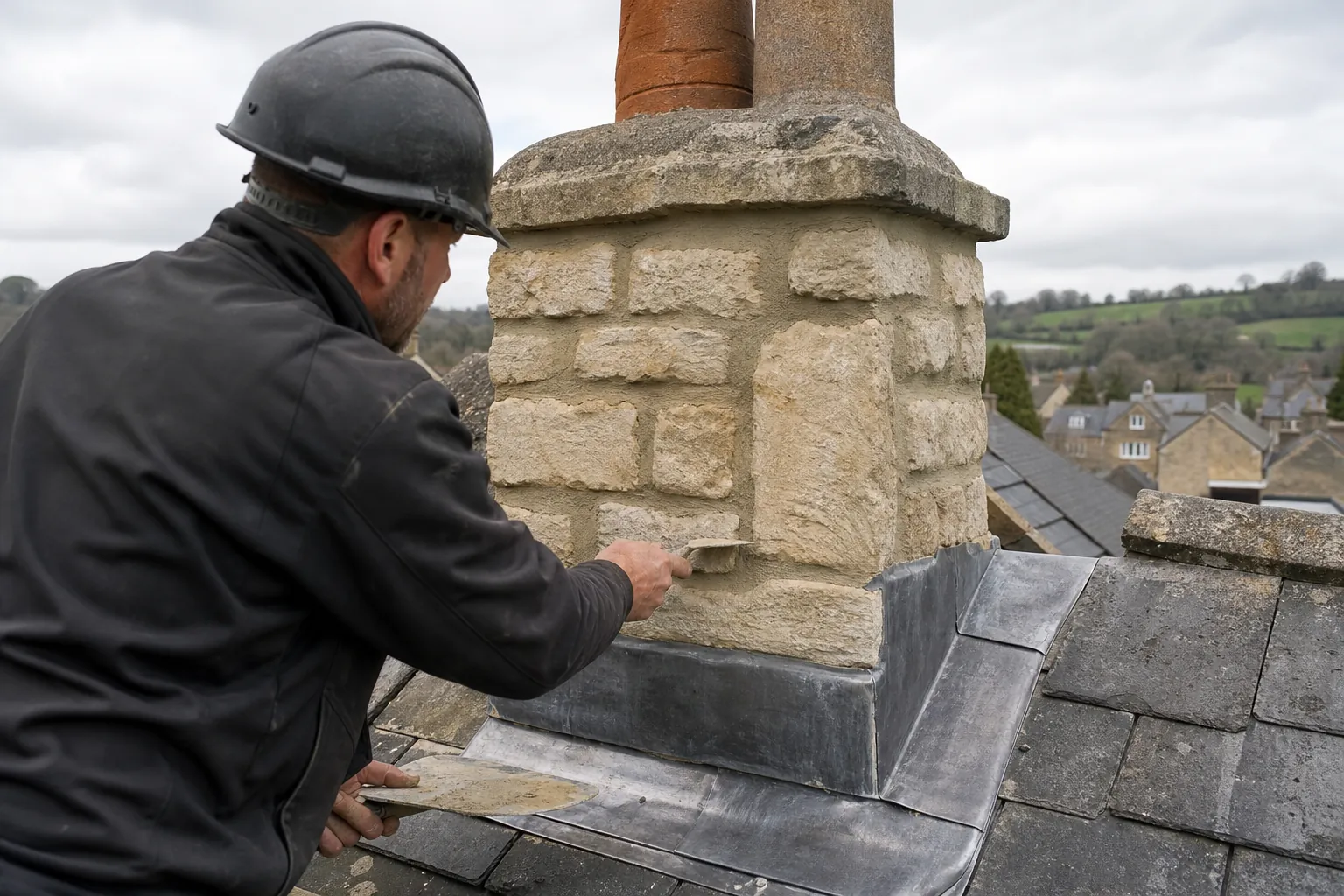 Repointing the stackFailed joints raked out and refilled with a mortar that suits the brick, so the stack sheds water again and the bricks stop taking it in.
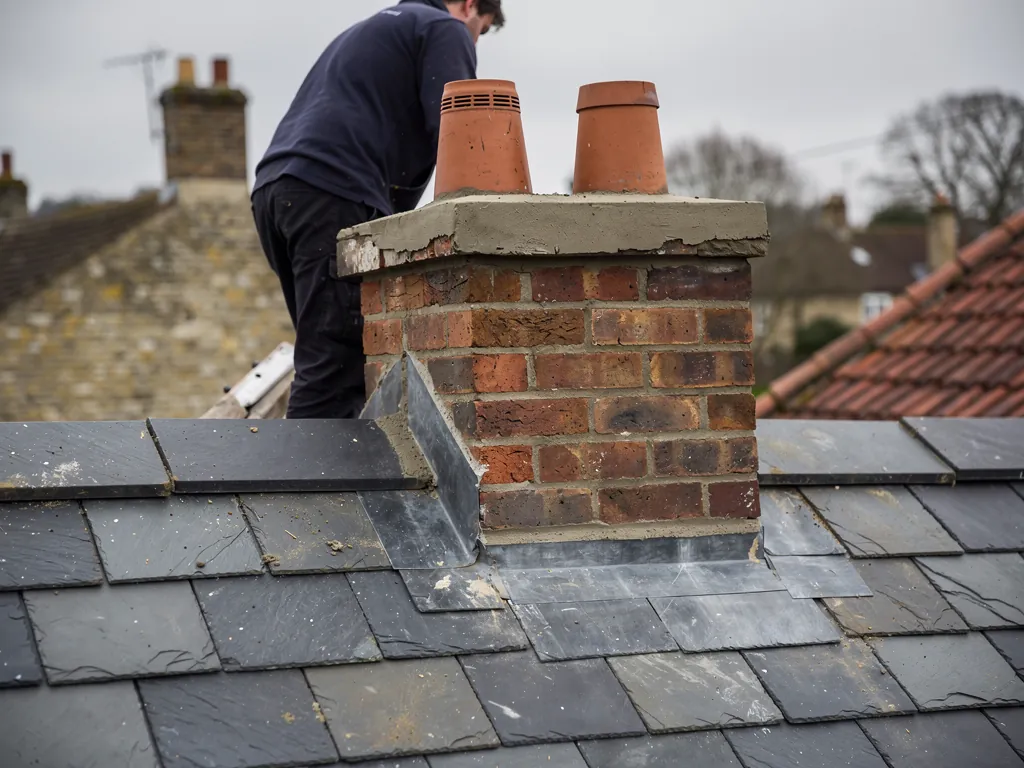 Flaunching and potsThe sloping mortar bed that holds the pots is renewed where it has cracked, and loose or broken pots are re-seated or replaced.
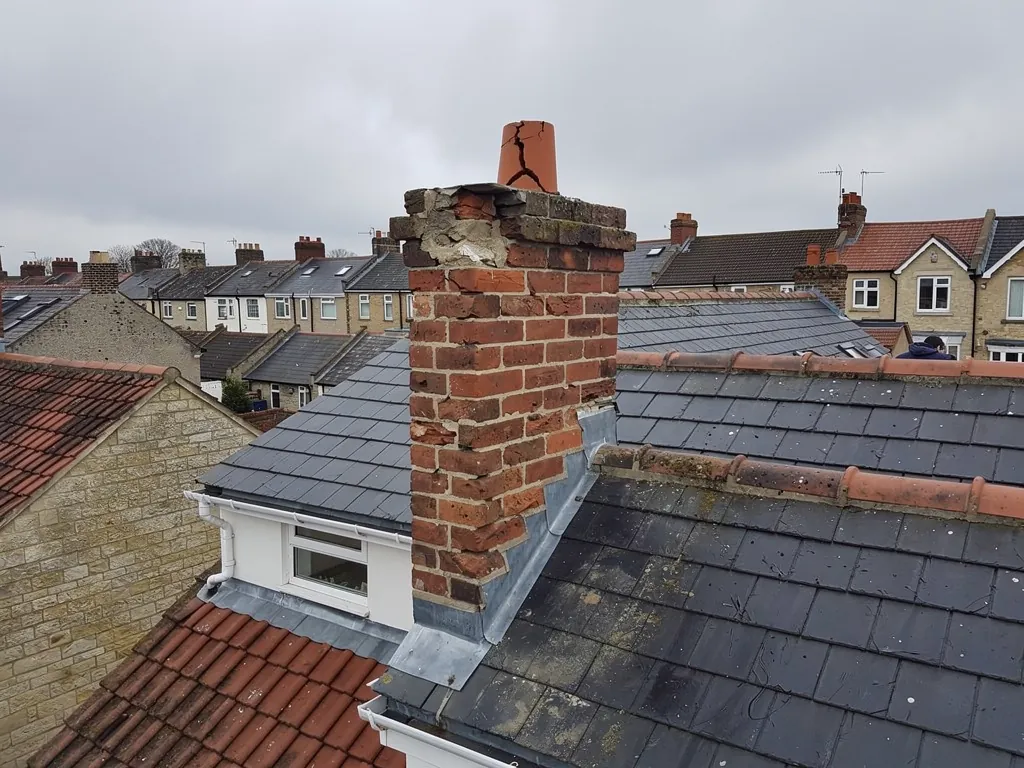 Lead flashings and traysLead where the stack meets the roof is renewed or repaired, including the front apron, side steps and the back gutter behind the stack.
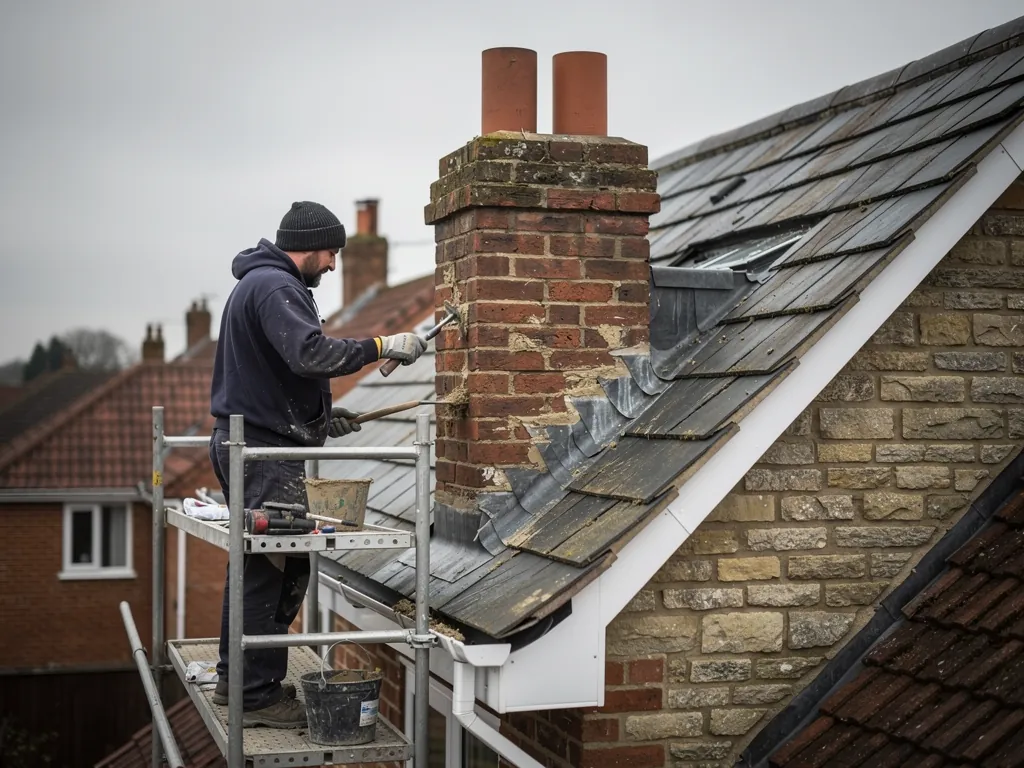 Cracked and spalled brickworkDamaged bricks are cut out and replaced with matching ones, and cracks are traced to find out whether they are old or still moving.
 Leaning and rebuilt stacksWhere the upper courses have shifted, the stack is taken down to sound work and rebuilt in the same brick, with a new damp-proof tray.
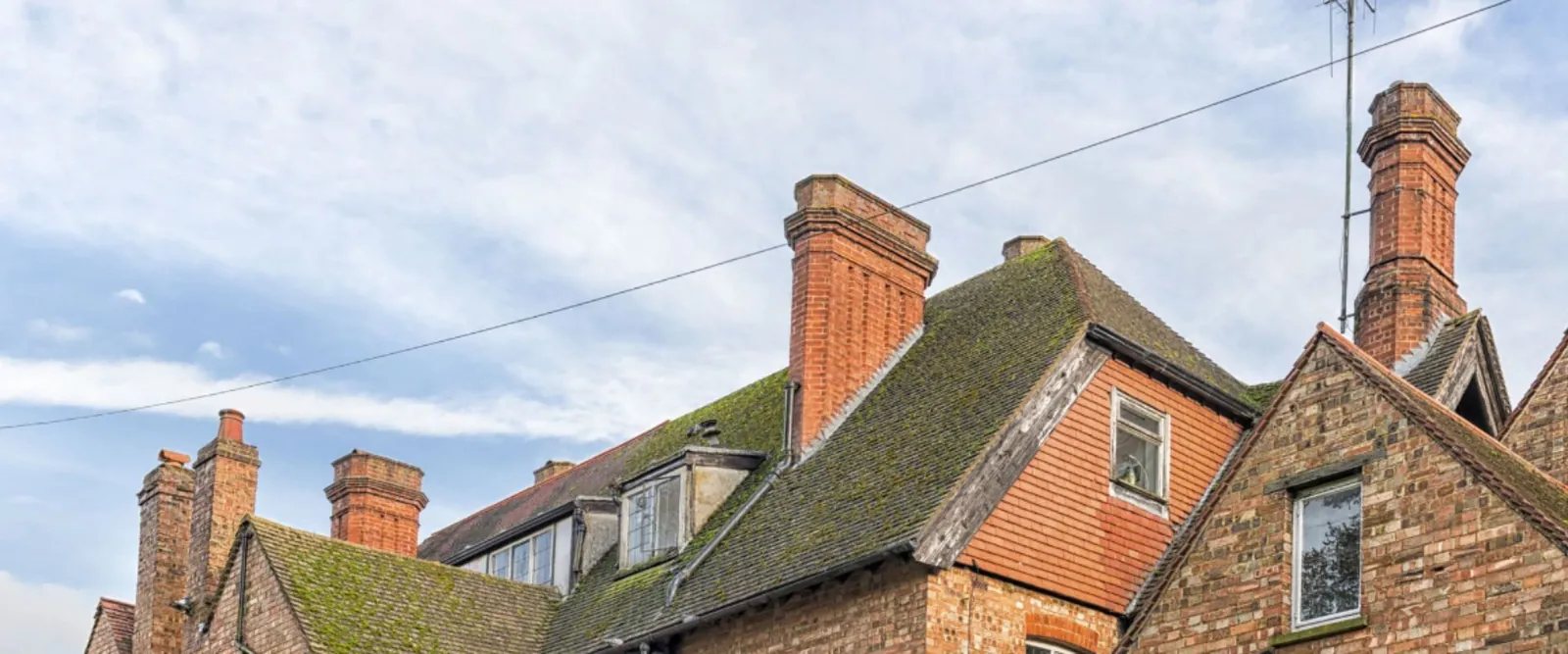 Caps, cowls and redundant fluesDisused flues are capped with a ventilated cap, and pots are fitted with cowls or mesh bird guards where birds or rain are getting down the flue.
Chimney repairs: the long read
From spotting the first sign of trouble to what a rebuild involves, the questions Swindon homeowners put to us before a stack is touched.
The short answer
Look from the garden for crumbling joints, a leaning stack, loose pots, lifted lead where the stack meets the roof, and white staining on the bricks. Inside, a damp chimney breast or soot-coloured water on the wallpaper points to water entering at the top.
A chimney stack is the most exposed part of the house, standing clear of the roof and wet on four faces at once. Small faults often run for years unnoticed, yet the first signs can usually be seen from the garden.
Start with the mortar joints between the bricks. Sound joints are firm and slightly recessed. Failing ones are sandy, hollow or missing, and you may find grit on the path or the flat roof below. Next, look at the bricks. A face that is flaking or coming away in layers is called spalling, and it usually follows years of water getting in and freezing. Look at the top of the stack for the sloping mortar bed that holds the pots in place, known as the flaunching. Hairline cracks are common, but a bed that has broken away lets rain run straight down beside the flue.
Finally, check where the stack meets the roof. The lead strips that seal the junction are called flashings. If they are lifting, split or stained, water is probably tracking in behind them. A stack that appears to lean, or a pot that sits at an angle, needs looking at sooner rather than later.
Inside the house, the clues are damp patches on the chimney breast, brown stains that bloom in wet weather, a musty smell from the fireplace, or flaking paint and wallpaper on the breast or in the bedroom above. White crystals on the plaster are salts carried out of the brickwork by moisture. Our guides on why a chimney leaks and why a chimney breast is damp separate the causes.
Please stay off the roof. Binoculars or a zoomed phone photo from the garden shows enough for a first opinion, and we then survey close up and photograph each fault.
Yes, roofers repair chimneys, but only the outside: brickwork, pots, flaunching, lead flashings and pointing. Sweeping is a separate trade, and so is lining a flue or fitting a stove. Soot, smoke blowing back into the room, a blocked flue or a cracked liner belong with a chimney sweep or a flue and stove installer. If the fire draws badly, start with the sweep. If the breast is damp or the brickwork is crumbling, start with a roofer. Some faults need both, and a sweep or a roofer sets out which comes first.
Keep people and pets away from the ground below the stack, since loose brick and broken pot can still fall. Do not climb up or lean from a loft window. Take dated photos from the ground, and of any staining indoors, then call us. We prioritise storm damage: a damaged stack is made safe first, by lifting off loose pots or brickwork and sheeting any opening, and the permanent repair follows in dry weather. Tell your insurer early too. The insurance FAQ below and our page on chimney insurance claims explain what policies tend to separate.
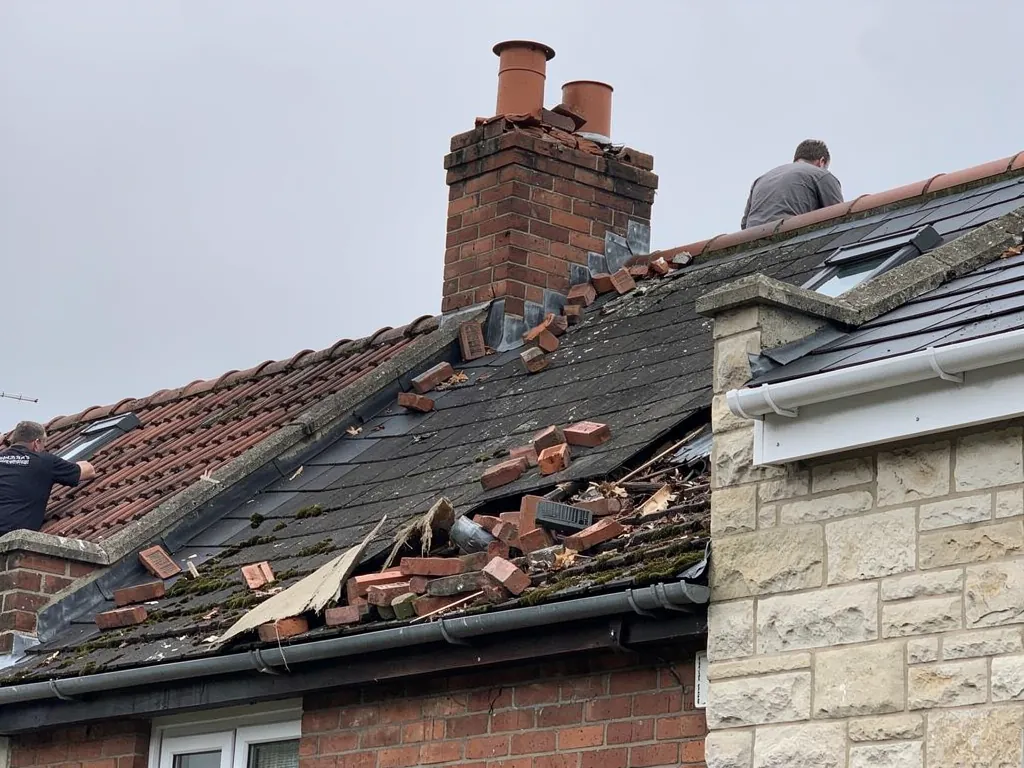
Falling debris is the one sign to act on at once. Everything else on the list can wait for a survey on a dry day.
The short answer
Published guides put repointing a stack at roughly £500 to £2,000, a flashing repair at £250 to £1,200 and a full rebuild at £2,000 or more. Height and scaffolding move the price most, followed by how much brickwork has failed.
Chimney prices swing widely because two stacks that look alike from the road can be very different jobs. A low stack on a bungalow, easy to reach, is over in a short visit. A tall central stack on a three-storey house, with failed lead and a leaning top course, needs scaffolding, brickwork and new lead. Both get called a chimney repair.
MyBuilder, in its guide updated in August 2026, puts repointing at around £750 on average, within a range of £500 to £2,000. It breaks that down by house type: £200 to £700 for a bungalow, £600 to £900 for a semi-detached with a side chimney and £900 to £1,500 where the stack sits in the middle of the roof. A flashing repair is listed at £250 to £1,200, and a stack rebuild at £2,000 to £10,000 or more. For chimney leadwork, MyJobQuote's guide of September 2026 gives £150 to £250 for a patch repair, and £350 to £460 for full replacement without scaffolding or £700 to £920 with it. A second guide puts repointing a standard stack lower, at £250 to £350, which shows how far apart the sources can be.
Access is the biggest variable. MyBuilder puts high-level chimney scaffolding at £400 to £900, and Checkatrade, in February 2026, quotes about £660 a week. Next comes the amount of failed mortar and the number of faces to work on, since a stack with two flues has more joints than one with a single pot. Brick condition matters too: replacing a handful of spalled bricks is routine, but a stack whose bricks have gone soft throughout is a rebuild. The mortar itself also matters, because older stacks often need a softer lime mix that costs more to prepare and apply than a standard sand and cement one.
Whichever roofing contractors you ask, look for the same things. A written quote with one total price, given after someone has looked at the stack properly. A business address and phone number on paper. A guarantee in writing; ours covers workmanship for 10 years. Be wary of a knock at the door about your chimney, pressure to agree today, or a request for cash only. Look the firm up on Google and read what customers say. Trading Standards, reached through Citizens Advice, is there if a job goes wrong, and our guide to checking a roofer goes further. Our quote follows the survey, in writing, as one total. Our chimney repair cost guide goes through the typical figures job by job, and the page on how long chimney repair takes explains the time each job needs.
When you compare quotes, check whether scaffolding, VAT and waste removal are included in each. A low figure that leaves scaffolding out is not the same job as a higher one that includes it, and the difference usually shows up as an extra later.
What it typically costs
The answer
Repoint when the bricks are sound but the joints have failed. Renew the flaunching when the bed under the pots has cracked. Rebuild only when bricks are soft, the stack has moved, or the damage runs deeper than the top few courses. We recommend the smallest job that fixes the fault.
Choosing between these three is the heart of most chimney surveys, and it turns on how sound the brickwork is and how far the stack has moved.
Pointing is the mortar between the bricks. If the bricks are firm and the joints have simply eroded, the old mortar is raked out to a good depth and refilled. The mix has to suit the brick: a hard cement mortar packed into a soft old brick traps water and makes the brick, rather than the joint, take the damage. That is why pre-1920s stacks in Old Town and the Railway Village are usually repointed in lime, which is specialist work in its own right, as set out in our guide to lime mortar for old chimneys. Our page on chimney repointing describes the process in full.
Flaunching is the cambered mortar bed at the top that seats the pots and throws water clear of the flue. It takes the worst of the weather, and when it cracks, rain runs down beside the flue lining and shows up as damp on the chimney breast. Renewing it is a small job when it is done with the pots lifted off and re-seated. Our guide to chimney flaunching shows how to tell a cracked bed from a sound one.
The lead flashing where the stack leaves the roof is the other usual suspect. Flashing is lead dressed over the junction so that water runs away from it. MyJobQuote's guide states that when lead flashing is installed correctly it can last over 80 years, and longer in heavier codes. The code is the lead's thickness, and Leadworx names Code 4 as the standard pick for general flashing. What makes the difference is the fitting: long runs are cut into shorter lengths so the metal can expand and contract without splitting, and the top edge is tucked into a raked-out joint rather than smeared with sealant. Behind a stack on a sloping roof there is also a small back gutter, and when it blocks with leaves and moss, water backs up under the tiles and produces a damp breast that has nothing wrong with its bricks. Our guides to chimney flashing repair and the chimney back gutter cover both.
A rebuild is needed when bricks crumble under a thumbnail, when the stack leans, or when old repairs have failed repeatedly. The stack is photographed, numbered and taken down to the first sound courses, then rebuilt in the same brick or a close match, with a new damp-proof tray where it passes through the roof. A leaning top section sometimes only needs the top few courses lifted, as covered in causes of a leaning chimney. A full chimney stack rebuild is the right answer only when that will not hold.
Wherever we can, we carry out the smaller repair, and the photographs explain why.
Maintenance on a stack is mostly looking: each spring, and after any storm, check it from the garden against the list above. When scaffolding is up for gutters or a re-roof, ask for a closer inspection of the pots, the flaunching (some roofers call it the chimney crown) and the lead, because access is already paid for. Catching deterioration early keeps a stack at repointing rather than restoration or a rebuild. Our page on what a chimney inspection covers lists what we look at.
If a stack has been repointed before and the joints have failed again within a few years, ask what mortar was used and whether the cause of the water was ever fixed. A repeat failure usually points at the flashing or the pot bed, not the pointing. Frost then finishes the job, as frost damage to chimneys explains.
Repointing a stack that is leaning is like painting a door that will not close.
MythWaterproof paint on a damp chimney stack stops the damp for good.
FactA coating can trap moisture already inside the brick, so the cause, usually failed joints, flaunching or flashing, must be repaired first.

The short answer
Usually, yes, for anything beyond a quick look. A stack stands above the ridge, and repointing, lead work or a rebuild needs a stable platform around it. Pot swaps and small checks on low stacks can sometimes be done from a roof ladder or tower.
Scaffolding is often the largest single cost in chimney work, so it is worth knowing when it is needed and when it is not. The rule we follow is simple: if the job means working at the top of the stack for more than a few minutes, or lifting heavy material, there should be a platform.
A roof ladder hangs from the ridge, and a chimney sits above that line. Repointing means working every face, including the one over the drop, and lifting pots puts weight at height. A scaffold gives a safe platform with a rail at the edge.
MyBuilder puts high-level chimney scaffolding at £400 to £900, and Checkatrade quotes about £660 a week, so the length of the hire matters. A repoint of a single stack usually needs the scaffold for a short spell, whereas a rebuild keeps it up longer. We plan the work to keep it up for as little time as the job allows, and the price in the quote already allows for it. Our answer on scaffolding to repair a chimney covers the choices in more detail.
Many Swindon terraces have no side access, so a scaffold may need to stand on the front path or on the pavement, and a pavement scaffold needs a licence from the council. MyBuilder lists those licences at £50 to £200. A shared stack serving two houses raises a further point, because the neighbour's roof or garden may be needed for access, and the cost of the repair is a conversation between the owners. We explain how that usually works in who pays for a shared chimney stack.
On a bungalow or a low rear stack, a tower is sometimes enough for a pot swap or a flashing check. It stands on firm ground, is tied to the wall where needed and moves round the house as the work goes on, and if the job can be done safely that way, we price it that way. Safety sets the method; cost does not.
Tell us early if a neighbour's drive or garden is needed. A short word with them before the scaffolders arrive prevents delays, and we protect paving and planting wherever the scaffold or tower stands.
| Job | Usual access | Reason |
|---|---|---|
| Pot swap on a low stack | Roof ladder or tower | Short job, light loads |
| Lead flashing repair | Tower or scaffold | Needs a firm stance on the roof edge |
| Repointing the stack | Scaffold | Every face must be reached |
| Stack rebuild | Scaffold | Bricks, mortar and weight at height |
The short answer
Capping a disused flue is a routine repair, provided the cap lets air through. Removing a chimney breast needs Building Regulations approval every time; if it stands on a shared wall, the neighbour must also get a party wall notice. Taking down just the part of the stack that stands above the roof is a different matter, so check it with building control.
Many Swindon chimneys have not carried smoke for decades. Getting the room back, taking the stack off the roof and stopping the damp are separate jobs with separate rules.
A disused flue still needs air moving through it, otherwise condensation builds up inside and works its way into the breast as damp. A proper cap keeps rain and birds out while letting the flue breathe. Fitting one is quick, and our page on capping a chimney sets out when it is sensible and when a cowl is a better choice. If the pot is cracked as well, replacing it is covered in chimney pot replacement.
The Planning Portal states that Building Regulations approval will always apply when removing chimney breasts, because they are part of the building's structure, and it recommends advice from a structural engineer. If the breast is on a party wall, the GOV.UK party wall guide treats removing chimneys from a shared wall as notifiable to the adjoining owner, with the notice served anywhere from a year to two months ahead of the work. You can read the Planning Portal's chimney breast advice and the GOV.UK party wall guide yourself. Our answers on permission to remove a chimney and on party wall notices for roof work go through the steps.
Plenty of houses were altered years ago, with the breast taken out of a downstairs room or a bedroom and the stack left above. If the brickwork above is not properly supported, it can sag or crack. We look at this from the loft, and the page on stacks with the breast removed explains what supports the stack. Where the stack itself is coming down, chimney stack removal sets out the process, and the same rule applies: check with your building control body first.
Taking a stack out leaves a hole in the roof covering that is closed with matching slates or tiles as part of the job. If you only want the stack lower, reducing chimney height has its own considerations.
Yes. An open pot invites nesting. On a flue still in use, a cowl with a mesh bird guard keeps birds out while letting smoke away; on a disused one, a ventilated cap does the same job. Fitting waits until any nest is empty, because it is an offence to damage or destroy a wild bird's nest while it is in use or being built. If a nest has already blocked a working flue, a sweep clears it, and we fit the guard afterwards.
Where consent applies, we explain the route and take care of the Building Regulations notification ourselves. Whoever designs a breast removal, the structural calculations come from an engineer, not from us.
Before you remove
Cap a spare flue freely, but treat any breast or stack removal as a job for an engineer and building control first.
The answer
Often, yes. Stacks on Victorian and Edwardian houses in Old Town, the Railway Village and the older terraces usually need lime mortar and matched brick. Listed homes and conservation areas can also bring consent rules, so we check before proposing anything that differs from what is there.
Swindon is a town with several layers. There are the Old Town streets on the hill, the railway terraces built for the Great Western works, the pre-war semis, and the estates of the last fifty years. A stack is built to suit its era, and a repair that is right for one can be wrong for another.
The Railway Village cottages were statutorily listed in 1970. The area became a conservation area in 1975 and is now part of Swindon's Railway Conservation Area, formed in 2020 to 2021, and an Article 4 direction was adopted there in 1980. Matching repairs rarely need consent, but changing the brick, the pot or the method on a listed building can need listed building consent, and Swindon Borough Council's conservation team can advise. The council's appraisal also says aerials and satellite dishes on chimneys or roofs there will be resisted. Our page on chimney repairs on listed and Railway Village homes covers the details, and chimney pots and cowls describes pot choices for period stacks.
Older stacks are usually built with softer bricks and lime mortar. Hard modern repointing can lock water inside them, which accelerates spalling. We match the brick, the bond and the joint profile so the repaired stack looks like its neighbours, and we explain the options in the quote. Terraces often share a stack with the next house, so it is worth reading why chimney bricks crumble and talking to the neighbour before work starts.
Stacks on later houses are often built in harder brick, with cement mortar, and sometimes carry a flue liner. Faults there tend to be flashing and flaunching rather than brick failure. A modern stack in a prominent position may also carry an aerial bracket, and the weight and vibration are discussed in whether an aerial harms a chimney.
We are local roofers, and we repair chimneys across Swindon and its surrounding villages, from Old Town, Rodbourne and Stratton St Margaret to Wroughton, Highworth and Royal Wootton Bassett. That covers domestic stacks on houses and flats, and chimneys on shops, pubs and other commercial property, which are surveyed and repaired the same way; larger buildings are covered under commercial roofing. In our experience a terrace stack in Rodbourne and a farmhouse stack near Wroughton rarely need the same repair, so each one is surveyed on its own merits.
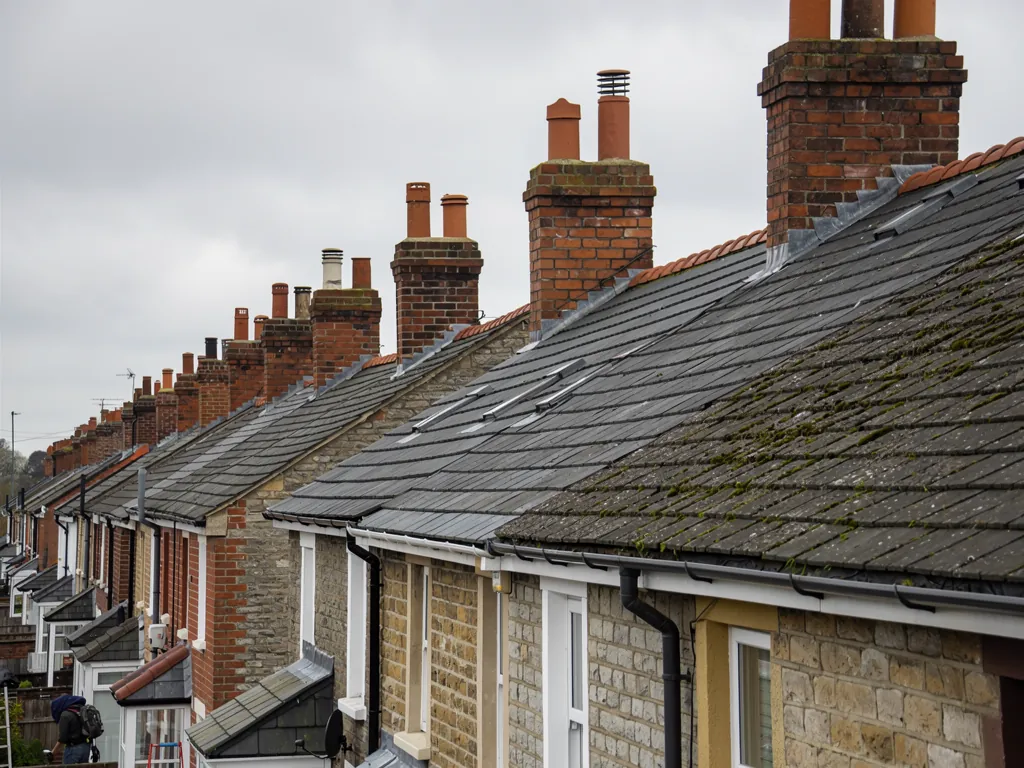
If your home is listed or in a conservation area, tell us when you first call. We will explain what is likely to need consent and what is repair in kind, and point you to Swindon Borough Council's team for the decision.
Further reading on repointing, flaunching, flashing, rebuilds, removal and the questions that come up around them, from damp breasts to shared stacks.
Water that gets in and then freezes. Failed pointing or a cracked crown lets rain into the brickwork, frost swells it, and faces start to break away. The quality of the pointing and flaunching is the first line of defence.
Rain stops most chimney work, because mortar and lead need dry surfaces and a dry, safe stance. Where a leak cannot wait, we put a temporary cover over the stack and come back for the repair in settled weather.
We match the brick, the bond and the joint profile as closely as we can, using reclaimed bricks on older stacks. A new brick looks brighter at first and weathers into its neighbours.
Which? notes that standard policies may not cover wear and tear. Sudden storm damage may be treated differently, so read your policy and speak to your insurer. We provide dated photographs of the damage.
Please be there when we arrive, to agree access, and when we finish, to look over the result. We may need to enter the loft to check the flue and the back of the stack.
A fine crack in an otherwise firm joint can be watched. A widening crack, or one running through the bricks as well as the mortar, deserves a survey to find out whether the stack is still moving.
Take a photo of the chimney from the garden or the street, and note where inside the house the damp, staining or soot appears. Send both to us with your address. We will arrange a survey of the pot, flaunching, brickwork and flashings, photograph each fault, and write up the repair.
Tell us what’s happening and we’ll call you back.
Or call 01793 626096
Message us on WhatsApp