
How long should natural slate last?
Often a century or more for Welsh slate, with the nails and fixings usually giving out well before the slate itself does.
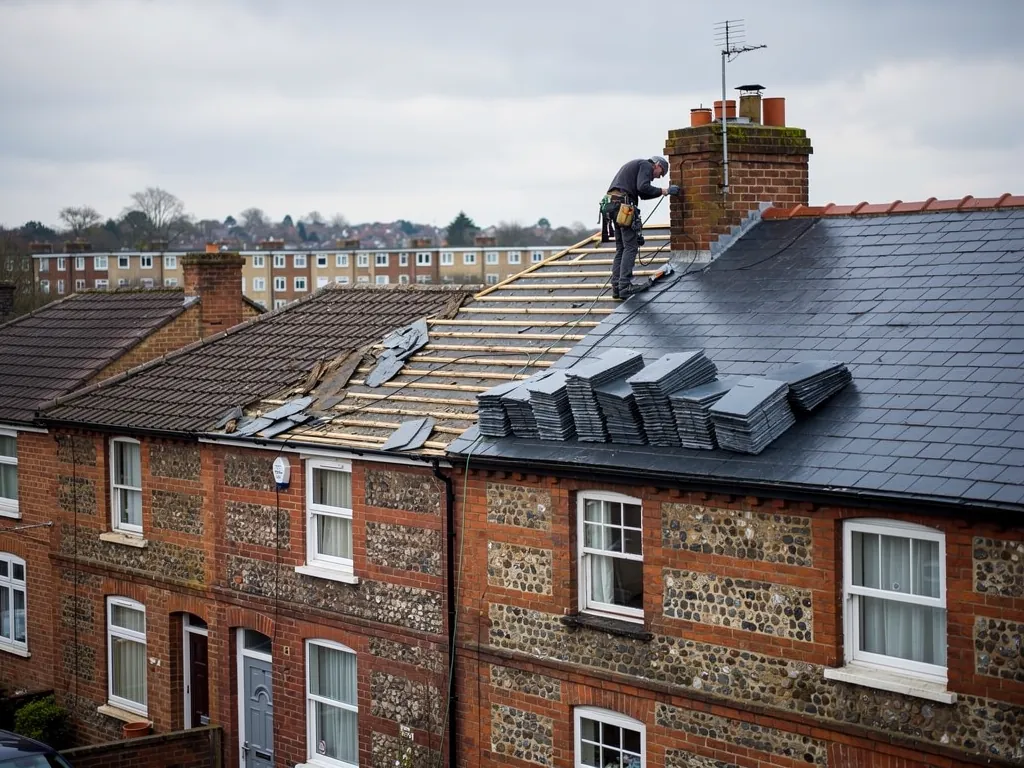
Reslating, slipped and cracked slates, failing fixings and period roofs, handled slate for slate. We photograph what we find and send a written quote.
Often a century or more for Welsh slate, with the nails and fixings usually giving out well before the slate itself does.
Sometimes. Sound slates are sorted and reused, but nail holes limit how many survive, so reclaimed or new slates make up the gap.
Often, yes. Old roofs may have none, or a torn felt, and relaying is the moment to fit suitable underlay and sound battens.
| Job | Typical cost |
|---|---|
| Spanish slate re-roof, installed | £100 to £130 per m² |
| Re-roof in reclaimed slate, installed | £110 to £150 per m² |
| Welsh slate re-roof, installed | £140 to £180 per m² |
| Ridge tile re-bedding or renewal | £300 to £600 |
| Cleaning moss from a slate roof | £500 to £1,000 |
These are national ranges from published cost guides, not our prices. The slate you choose, the access and whatever the strip uncovers set your figure, and it reaches you on paper after the survey.
MyBuilder slate roof and roof cleaning cost guides, updated August 2026.
See all costs Full reslatingStripping an old slate roof, sorting what can be reused, and laying new or reclaimed slate on fresh battens and underlay to the correct headlap.
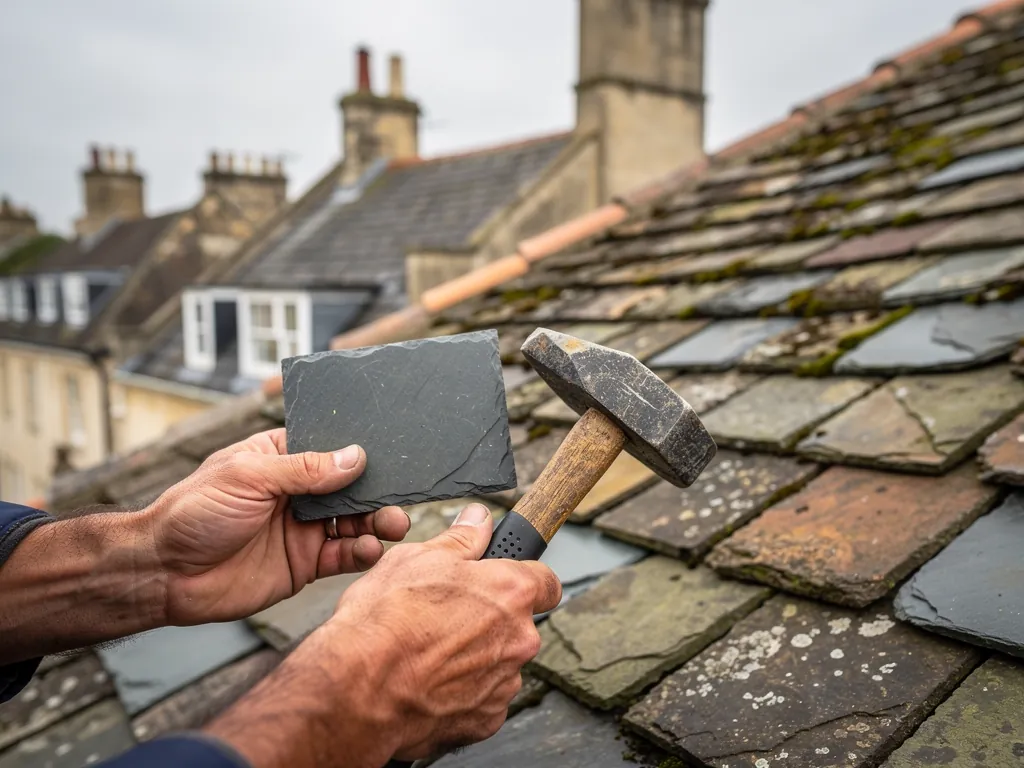 Slate repairsSlipped, cracked and missing slates replaced and held with tingles or hooks, matched for size and colour to the slates already on the roof.
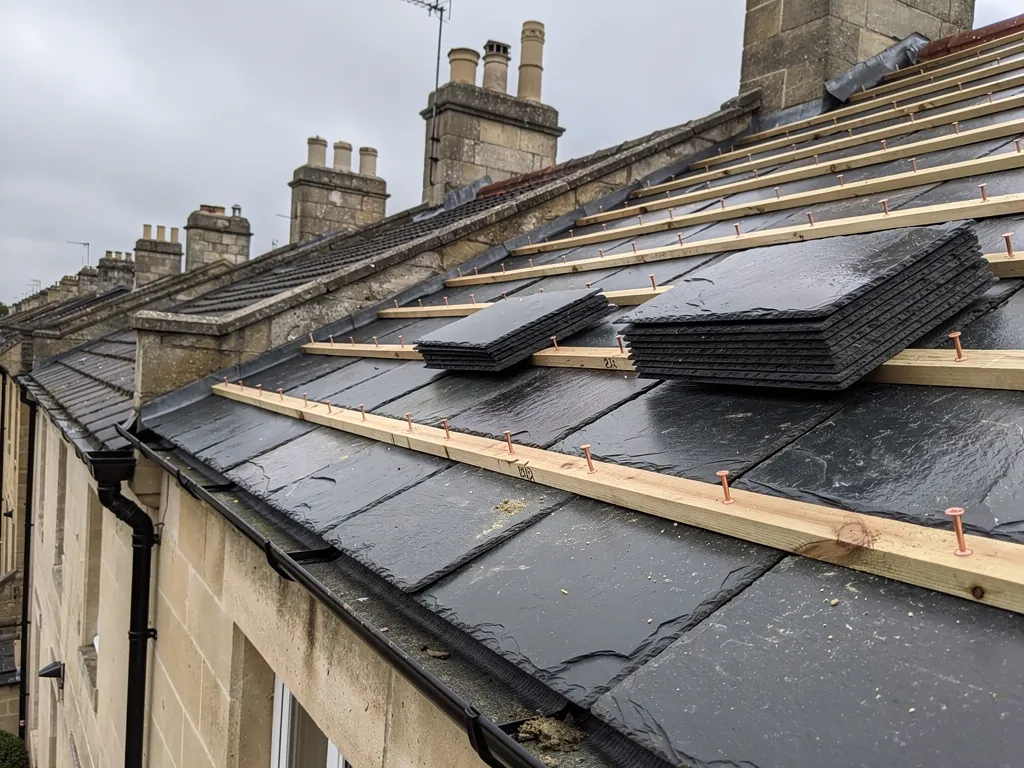 Nail sicknessRoofs where corroded nails are releasing slates, assessed slope by slope so you know whether to refix one area or the whole roof.
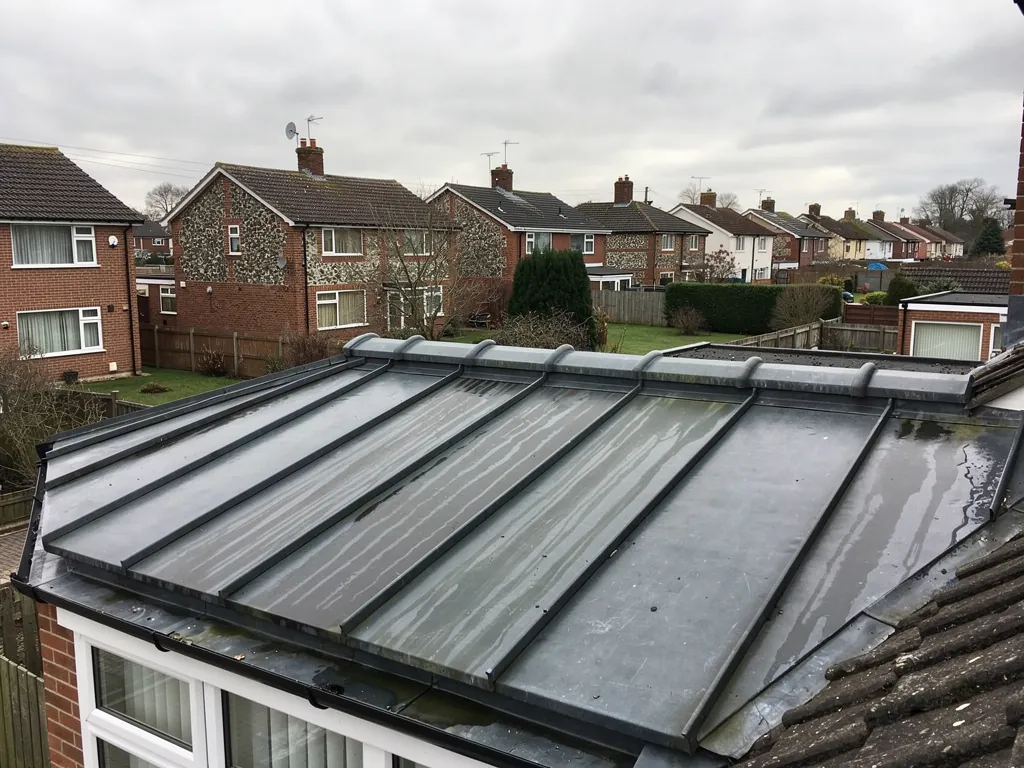
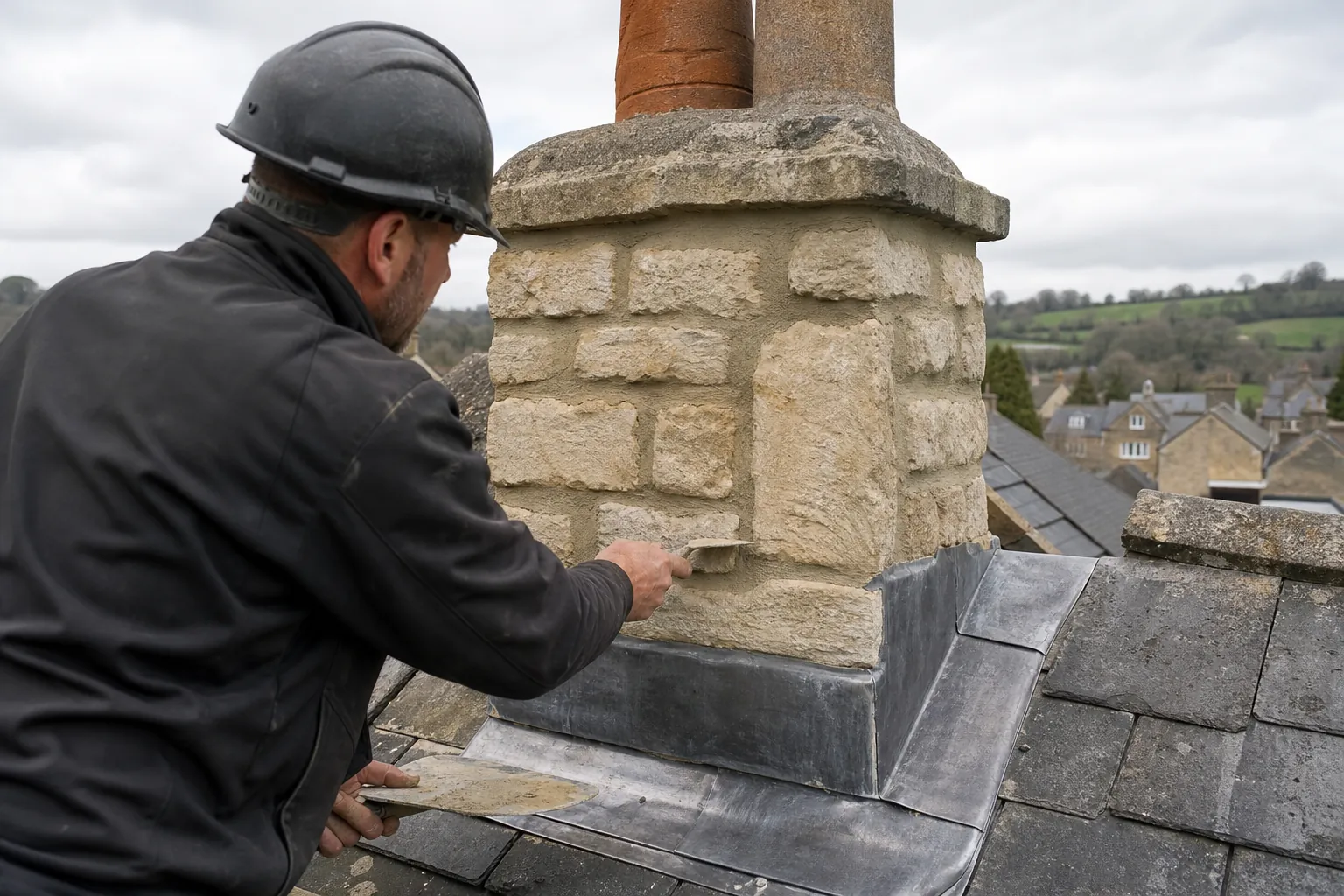
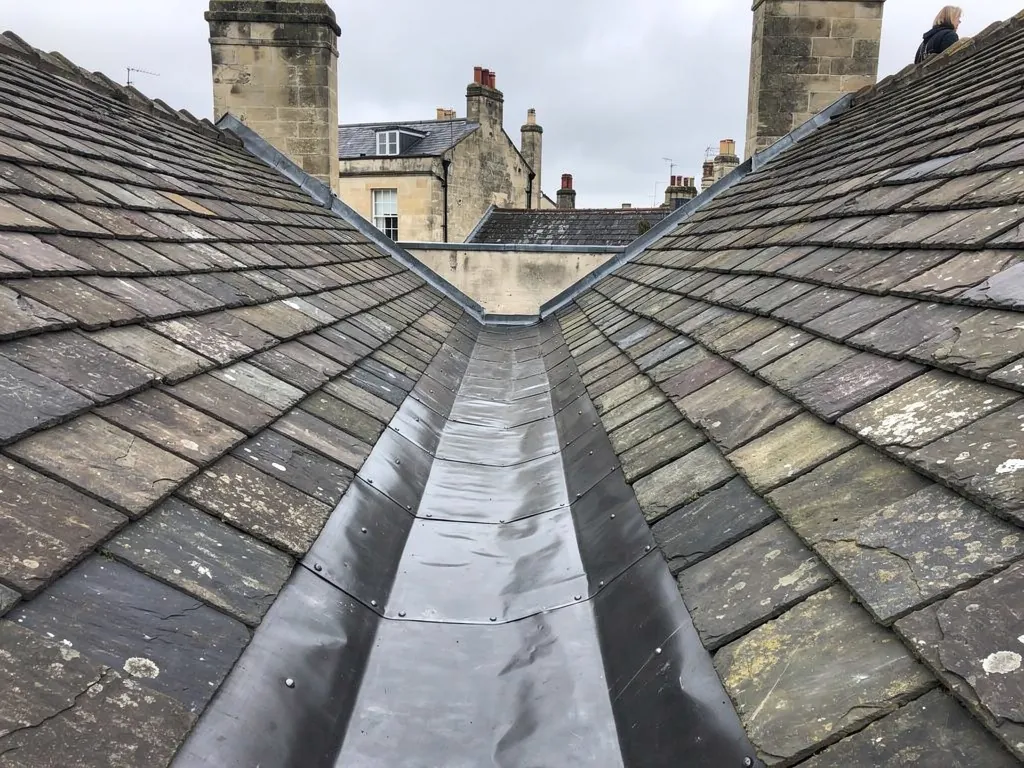
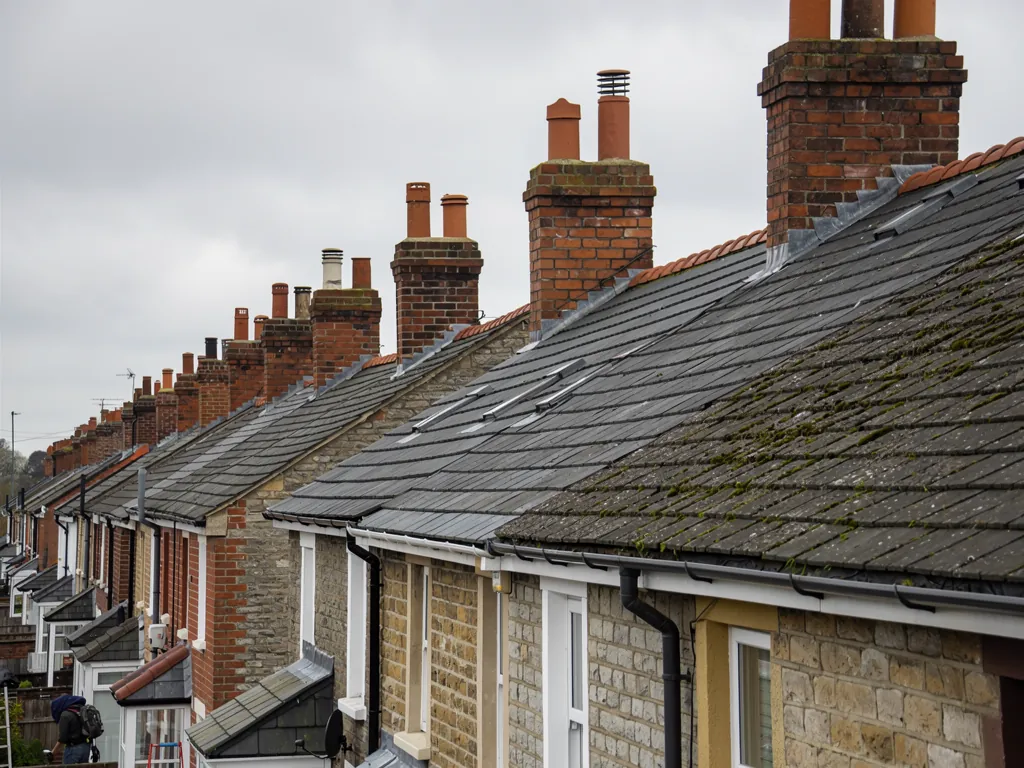 Ridges, hips and valleysRidge and hip tiles fixed mechanically, valleys lined in lead, and slate cut neatly at every junction so water runs where it should.
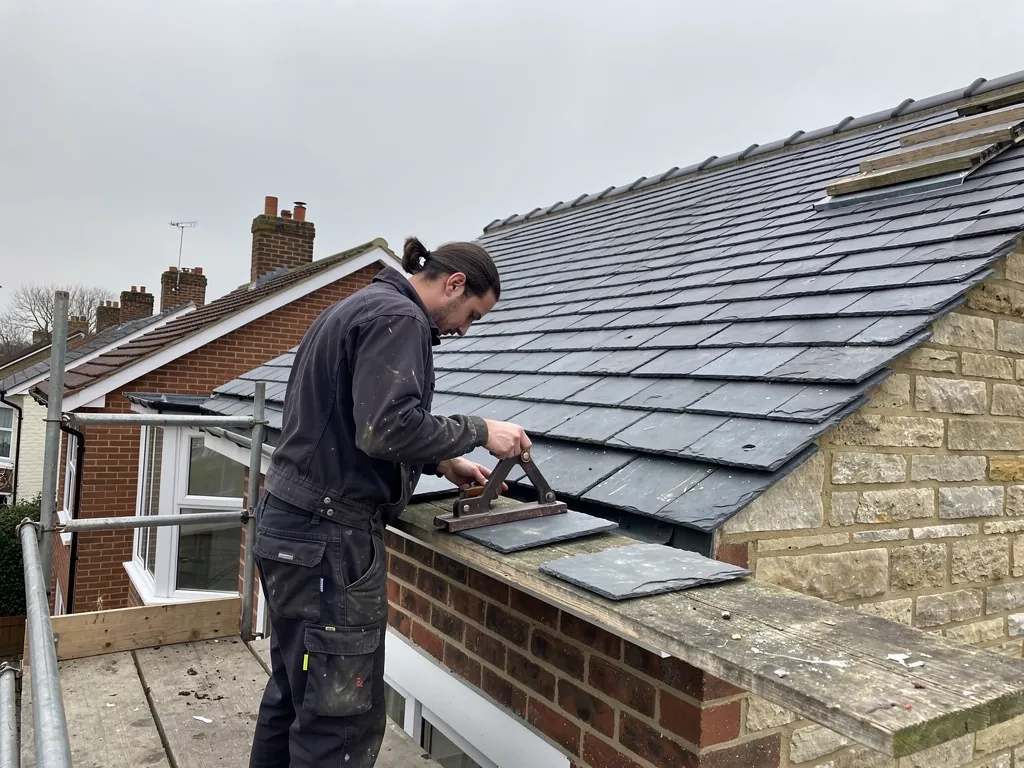 Flashings and abutmentsLead soakers and flashings where slate meets a wall, chimney or dormer, dressed so the metal can move without splitting.
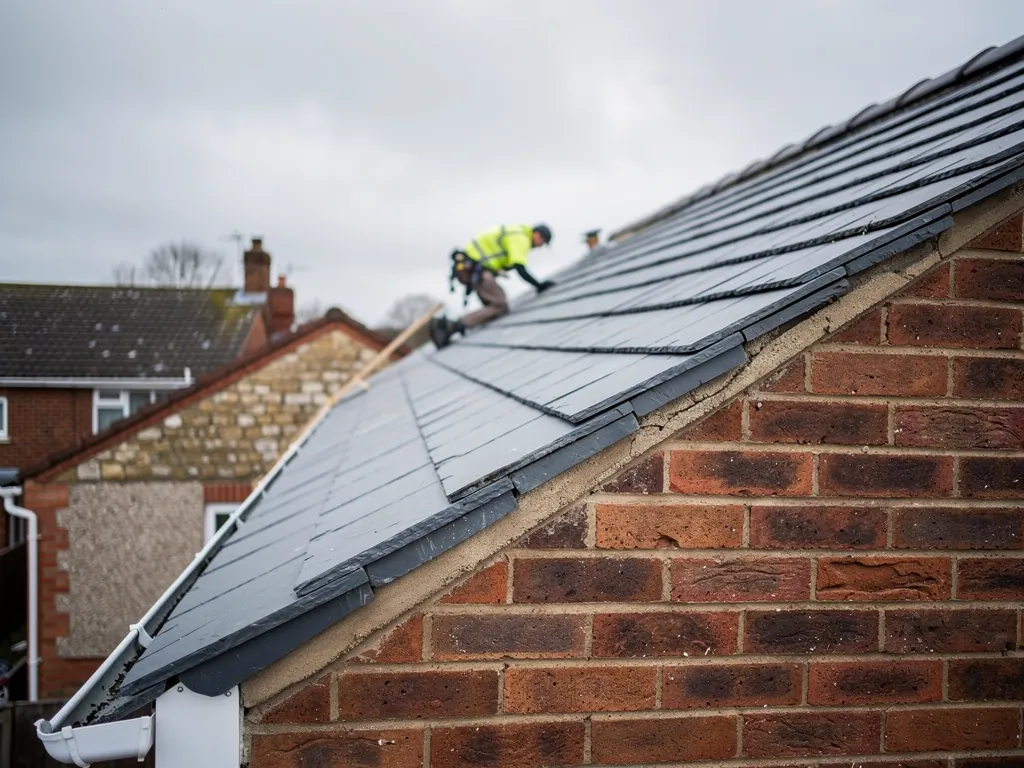 Period and protected roofsNatural slate laid like for like on Victorian terraces and listed or conservation-area homes, with the consent position explained before work begins.
Slate roofing, question by question
From choosing between Welsh, Spanish and reclaimed slate to what a reslate involves and how a protected roof is handled, the questions that decide a slate job in Swindon.
The short answer
Match the slate to the house. Welsh slate is the traditional choice and is reported to last over a century, Spanish slate is quoted at 75 to 100 years and costs less, reclaimed slate suits repairs and period roofs, and fibre-cement slate is quoted at 30 to 50 years.
Slate is a family of materials, not one product, and the right choice starts with the roof you already have. A repair has to match what is there. A full reslate gives you room to decide, within what the building and the council will accept.
Welsh slate has long been the traditional covering on British roofs. MyBuilder's slate roof guide, updated in August 2026, says Welsh slate commonly lasts for upwards of 100 years. Spanish slate is usually the lower-priced natural option, and the same guide gives it a lifespan of 75 to 100 years. Both are natural stone, so every slate varies a little, and a good slater sorts them as they go up. Thickness and splitting quality matter as much as origin: a thin, well-split slate lies flat and sheds water cleanly, while a poorly split one can twist, chip at the tail and let wind-driven rain in under the course above. Our comparison of Welsh and Spanish slate goes through colour, weathering and where each suits.
Reclaimed slate comes off other roofs and is graded before it is sold. For a repair on a Victorian terrace it is often the closest match, because it already carries the weathering, the size and the tone of its neighbours. For a whole roof it needs more care: the supply has to be consistent in size and sound enough to give another long stretch of service, so we check the grade and the nail holes before agreeing to it. The page on buying and using reclaimed slate explains how grading works.
Fibre-cement slate is a manufactured board cut to look like slate, and MyBuilder quotes synthetic slate at 30 to 50 years. Its uniform edges weather differently from natural stone and sit poorly beside real slate on a terrace, and a council looks closely at that swap on a listed building. Natural against fibre-cement slate sets out the trade-offs, and it can suit an outbuilding or a rear extension.
Natural slate is dense and durable, and once it is fixed properly it is low maintenance: there is no surface coating to wear off, and the stone usually outlasts the nails that hold it. MyBuilder expects concrete tiles to need replacing after 30 to 50 years, well short of the lifespans quoted for natural slate. As stone, slate does not burn, which counts in a fire. Sound slates can be lifted, sorted and laid again, which keeps good material out of the skip and is the main environmental case for it. On a period street, matching slate also protects the look of the property, and with it the value. Our pitched roofing page covers tile roofs.
The first bill is higher than for concrete tile, as the price table shows. Weight matters too: changing from tile to slate, or the reverse, alters the load on the rafters, and the Planning Portal says Building Regulations approval is needed where the new covering is 15 per cent or more heavier, so we check the structure first. Slate is brittle, so nobody should walk on it, and old roofs fail at the nails before the stone. Imported slate varies in quality, which is why an experienced slating contractor asks for its origin and test data before ordering.
During the survey we bring a slate or two from your roof down into daylight, so you can compare colour, thickness and edge finish with the options. Our advice is to choose the smallest piece of work that genuinely cures the fault.
| Slate | Quoted lifespan | Installed, per m² |
|---|---|---|
| Welsh | Regularly over a century | £140 to £180 |
| Spanish | 75 to 100 years | £100 to £130 |
| Reclaimed | Depends on grade and age | £110 to £150 |
| Fibre-cement | 30 to 50 years | Priced on survey |
The short answer
National guides put a re-slate at £100 to £180 per m² installed, with Spanish slate at the lower end and Welsh at the upper. Your figure turns on slate type, roof area, pitch, access and what the strip reveals underneath. The written quote follows the survey.
Slate costs more than most coverings to lay and less than most to own over the long run, which is why the question of price has two halves: what you pay now, and how long the roof then goes without a major bill. We take the first half first.
MyBuilder's slate roof guide, updated in August 2026, puts a slate re-roof at £100 to £180 per m² installed. Within that, Welsh slate is quoted at £140 to £180, Spanish at £100 to £130 and reclaimed at £110 to £150. Checkatrade's October 2026 repair guide lists natural slate repairs, based on Spanish slate, at £150 to £220 per m² before VAT, excluding access equipment.
Area is the first multiplier, and a roof with hips, dormers or a chimney adds cost to a plain gable's rate, because every junction takes cutting and leadwork. Pitch matters because steeper slopes take less headlap, which changes how many slates a given area needs. Access comes next. MyBuilder's scaffolding guide gives around £850 to £1,200 for a standard two-storey setup, and on a reslate the scaffold stays up for the whole job. The same slate guide gives £300 to £600 to re-bed or renew ridge tiles, and the roof cleaning guide puts a slate roof clean at £500 to £1,000.
Natural slate is quoted at 75 years to well over a century, so the cost per year of service is often lower than a shorter-lived covering even though the first bill is higher. That is a comparison of quoted lifespans, not a promise about any one roof, and it only holds if the fixings and flashings are kept sound.
Nobody can price rotten battens or a damaged rafter foot until the slates are off. We look in the loft first and show you any softness we can see. Anything beyond the quote is shown to you and priced before we carry on. For what drives the price, the guide to slate roof cost per m² goes through the figures, and the cost of replacing one slate covers the smallest job. If you are weighing slate against tiles, is slate more expensive than tiles compares the figures.
Before you decide between two prices, confirm both include the same slate type and size, underlay, battens, scaffolding, lead, ridge, waste and VAT. A low total that leaves out battens or scaffolding is not a low price, it is an incomplete one, and the gap tends to appear in the middle of the job.
What it typically costs
The answer
Repair when the damage is local: a few slipped slates, a failed flashing, a blocked valley. Reslate when slates are coming loose across the whole roof because the fixings have corroded, since patching one area at a time then becomes a repeating bill without ending the problem.
A slate can almost always be fixed. The real question is whether fixing it again and again is the best use of your money, or whether the roof has reached the stage where one larger job is cheaper than a string of small ones.
A repair makes sense when the faults are local and the remaining slopes are in good order. A few slates slipped after a storm, one cracked by a falling branch, a lead flashing that has lifted at a chimney, a valley clogged with leaf litter: each has a cause we can point to and photograph, and putting it right restores the roof. A replacement slate is held at its tail by a copper or stainless tingle or a hook, because nails cannot be driven through the slates above it. Our guide to slate roof repairs sets out each fix, and what a slate tingle is and how long it holds are covered in a short answer.
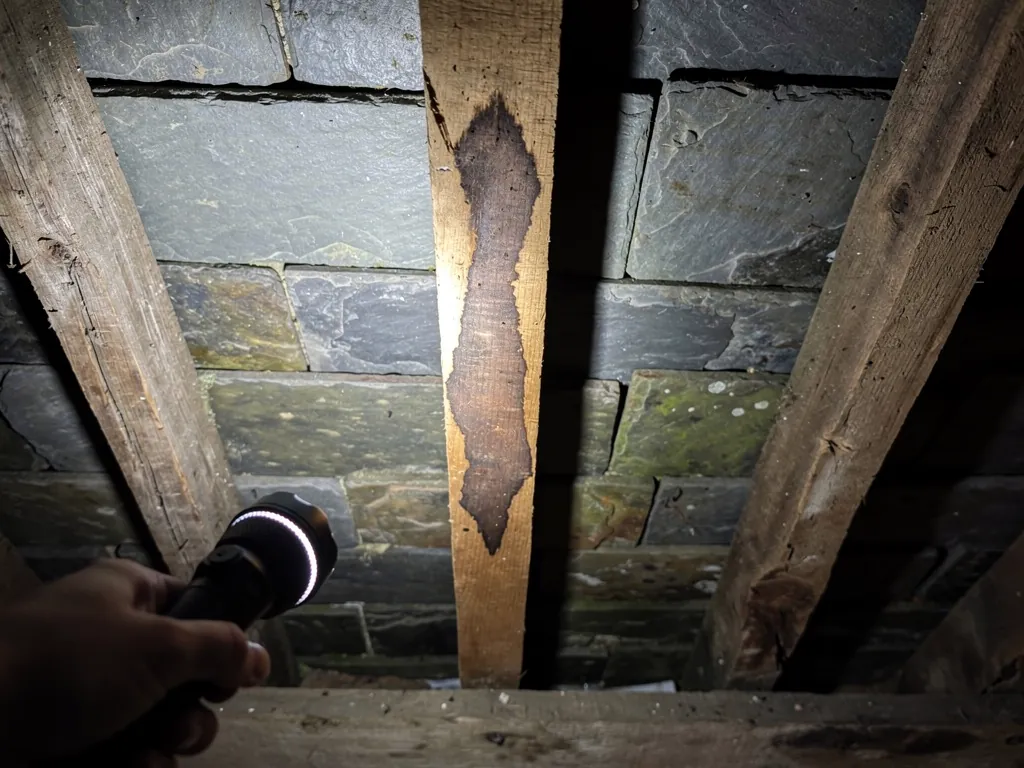
Slates are normally nailed, and on many older roofs those nails are plain iron or poor-quality steel. Over the decades they rust through and the slates they hold begin to drop, often one or two at a time, then in handfuls after the next gale. This is nail sickness: the slate is sound, the fixing is not. From the ground it shows as scattered gaps across the slopes, and from the loft as slate fragments, rust staining and daylight. Replacing single slates on such a roof is chasing the problem round the house. The page on nail sickness on a slate roof explains how to spot it.
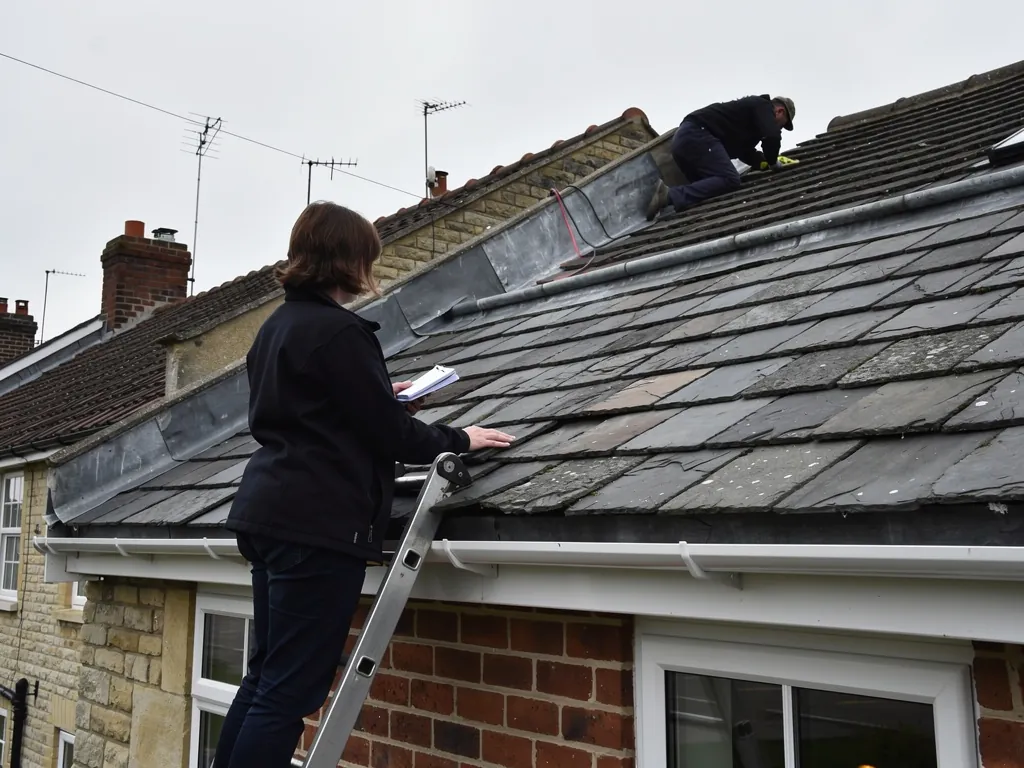
We go up, photograph the slopes and check the loft. We note how many slates have moved, whether the nails have corroded where we can see them, what the underlay is doing, if there is any, and whether the battens are sound. Then we say whether it is a repair or a reslate and show you the photographs behind the answer. If a repair properly solves the fault, that is the job we quote. If it will not, you receive the larger quote with the repair price beside it. The answer on repair or reslate covers the decision in more depth, and faults away from the slate itself, such as leaking leadwork, sit under roof repairs.
A test you can run from the garden: slipped slates grouped in one place suggest a local cause, such as a branch or a failed flashing, while gaps scattered over every slope point to the fixings. A photo through the gate is enough for us to say which.
On slate, the slate is rarely what fails first. The nail is.
MythA few slipped slates mean the whole roof has failed.
FactSlipping in one place usually has a local cause, while slipping scattered across every slope points to corroded fixings, and that is the pattern that justifies reslating.

The short answer
A reslate strips the old slates, sorts the sound ones, renews underlay and battens where needed, relays slate to the correct headlap and fixings, and finishes with ridge, flashings and valleys. Scaffold goes up first, and the Building Regulations are considered before the strip begins.
A reslate is a rebuild of the weatherproof layer of your house, done in the open, so it helps to know what happens in which order. A typical roof takes days rather than hours, and each stage has its own checks.
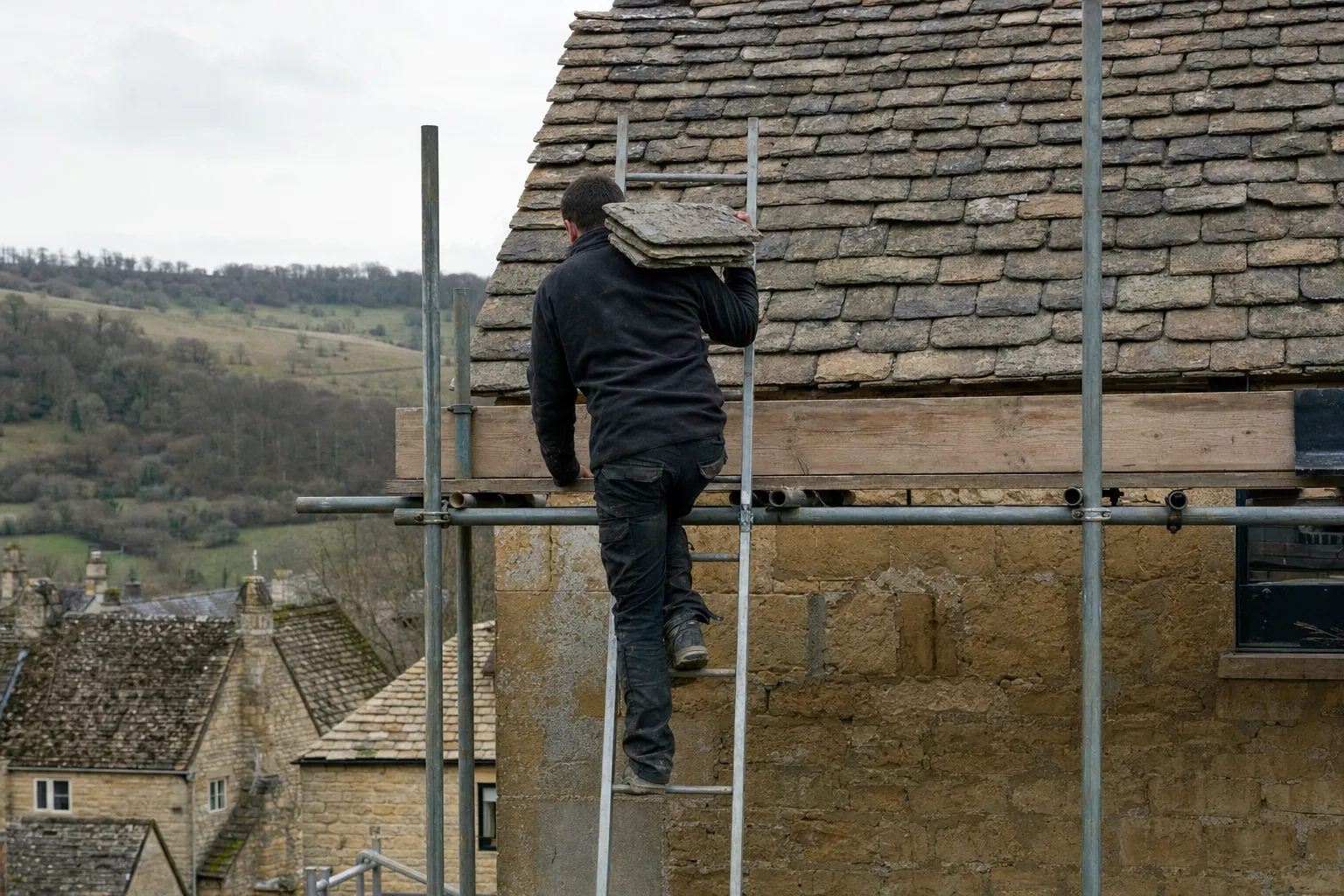
Scaffold goes up first, with a covered way to the front door where one is needed. The slates come off in sections, working down the slope, and are sorted into those fit to reuse and those that are not. Once the roof is bare, the timbers underneath are visible for the first time in decades, and we check rafters, battens and wall plates for rot, woodworm and movement. Where a house has timber boards beneath the slates, called sarking, we look at those too. Our guide to reslating a roof goes through the strip in more detail.
New underlay and battens go on next, or only the battens where the underlay is recent and sound. Headlap, the overlap between a slate and the one two courses below it, is set by the pitch, the slate size and the exposure of the site. Cupa Pizarras, a slate supplier, cites BS 5534 for a minimum natural slate pitch of 20 degrees, with a 115 mm headlap for a 500 x 300 slate at that angle. Steeper roofs need less headlap and shallower ones are not suited to slate at all. Our short answers on the minimum pitch for a slate roof and slate sizes and headlaps carry the full table.
Slates are nailed with copper or stainless fixings; hooks are used only where the pitch allows, and the supplier's guidance is that hooks are not used below 25 degrees. The choice is set out in nails against hooks. Since BS 5534:2014 a bed of mortar is not trusted on its own for ridge and hip tiles, so we clip or screw them as well as bedding them, and valleys are lined in lead or cut as mitred slate, covered in the answer on slate valleys.
Re-roofing normally needs no building control application where less than 25 per cent of the total building envelope and less than 50 per cent of the roof is affected, according to the Planning Portal. A heavier covering can bring in Approved Document A, and a stripped-back roof Approved Document L, whose insulation upgrade also cuts the energy lost through the roof. We explain which applies and handle any notification to building control. You get survey photographs and one written total price before work starts, photographs of the finished roof afterwards, and a 10-year workmanship guarantee in writing.
Fixings are the one place where a reslate gets short changed unnoticed, because they disappear under the next course. Ask for the fixing type and the headlap on the quote, and we put both in writing, so that the roof you are paying for is the roof you receive.
The short answer
Yes, but the rules depend on the building. Swapping old covering for new in the same material rarely needs planning permission, yet works that change the character of a listed building need consent of their own, and a conservation area or Article 4 direction can change what is permitted. We explain what applies, and you confirm it with the council.
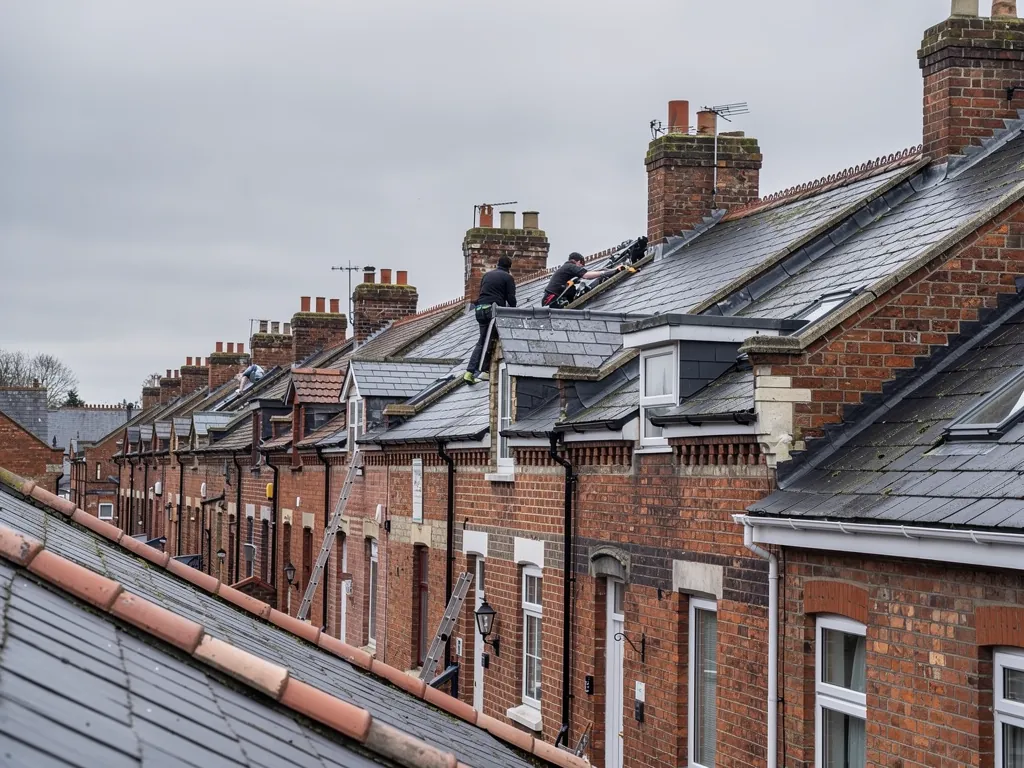
Slate and protected buildings go together in much of the Swindon area, so the consent question comes up often. The short principle is that the more a job changes how the roof looks or what it is made from, the more likely the council will want to see it first.
Swindon's Railway Conservation Area Appraisal and Management Plan describes the railway village's roofs as generally slate and refers to heavy-looking pitched slate roofs. The village became a conservation area in 1975 and in 2020 to 2021 was folded into the wider Swindon's Railway Conservation Area. The cottages were listed in 1970. An Article 4 direction adopted in 1980 applies to the village's residential streets and to Church Place, which means alterations and extensions need planning permission, and painting the exterior does too. Matching slate size, colour and coursing is part of the job here, and so is asking the council first.
Under the Planning (Listed Buildings and Conservation Areas) Act 1990, works that affect the character of a listed building need listed building consent unless they are authorised. Repairing in kind, with the same material laid the same way, is the usual starting point. Swapping natural slate for another material is where consent becomes a real question. Our guide to slate roofs on listed and conservation-area homes covers it, and Victorian slate roofs on Swindon's terraces explains how those roofs were built and where they fail.
Swindon Borough Council's conservation areas page lists 27 areas, from Swindon Old Town to Wroughton and the villages, and notes Article 4 directions for Bishopstone and the railway village. A conservation area on its own does not usually prevent a straight swap of old covering for new, but an Article 4 direction can change that, which is why the survey includes a check of the address against the council's list. In the North Wessex Downs National Landscape the councils still decide planning, not the National Landscape body. See the council's page on conservation areas in Swindon for the list.
Slate work takes us across Swindon and out into Wiltshire, Oxfordshire and Gloucestershire, from the Railway Village and Old Town to Wroughton, Purton, Royal Wootton Bassett, Highworth and Cricklade. Each local page describes that place's roofs and planning picture. We work for homeowners, landlords and commercial customers, on houses, shops, offices and halls.
If you are unsure that your house is listed, or sits inside a conservation area, ask Swindon Borough Council's planning team, or the planning department of the council where you live if that is elsewhere in our area. We note the answer in the survey so the quote reflects it, and we do not start anything that needs consent before it is in place.
Before you commit
On a protected roof, matching natural slate for slate is the safest starting point, and the council confirms what needs consent.
The answer
Check it from the ground twice a year, keep gutters and valleys clear, leave moss alone until it is thick enough to hold water, and stay off the slates, which crack underfoot. A survey every few years catches fixings and flashings before they leak.
A slate roof asks for little, which is exactly why it gets forgotten. The aim of maintenance is not to fuss over the slate. It is to catch the small, cheap faults in nails, lead and gutters before they become wet ceilings.
Stand back from the house after a storm and look along the slopes. Gaps in the courses, a slate sitting proud of its neighbours, slate fragments on the path or in the gutters and sagging along the ridge all merit a call. Binoculars help. Inside, a torch in the loft on a bright day shows pinpricks of light where a slate has gone, and damp rafters point to where water has been running. Checkatrade's slate guide says a slate roof can last anything from 50 to 200 years, with most easily lasting over 100, so a small repair done early is usually worth far more than the same repair left until the ceiling is wet.
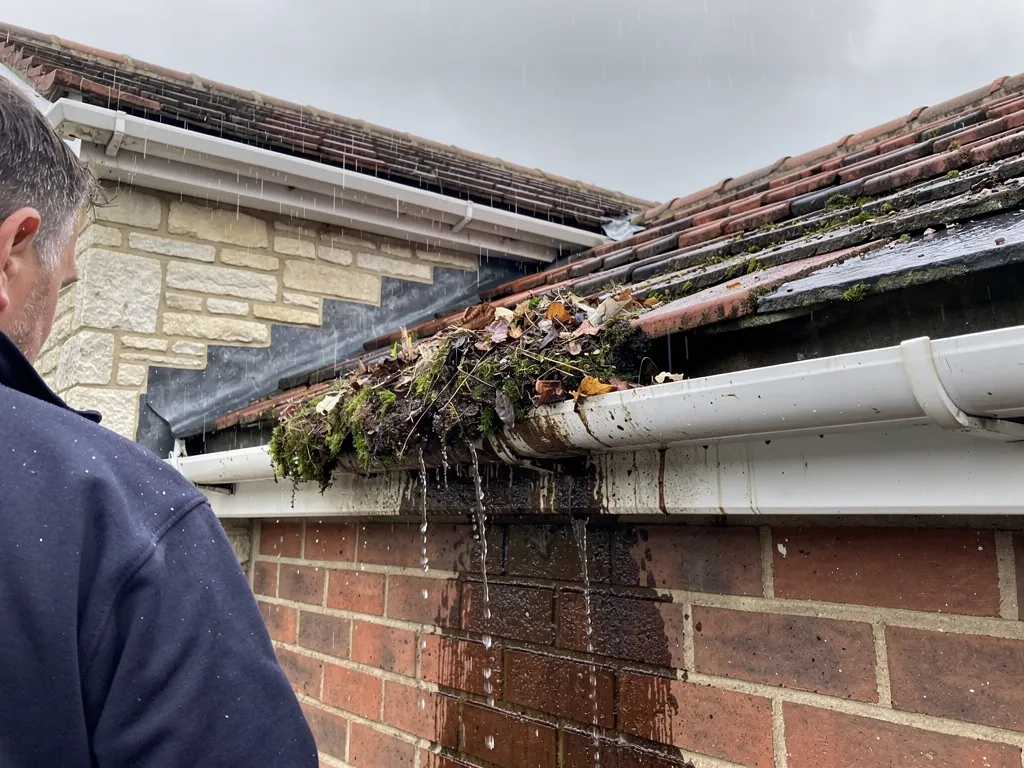
A thin layer of moss does little harm. A thick cushion holds water against the slate and can lift the edges, and blocked gutters push water up under the lowest course. Clearing gutters is a regular job and our page on gutters, soffits and fascias covers it. For moss, gentle removal beats force: MyBuilder warns that pressure washing may damage delicate tiles, and slate is brittle enough that the same applies. Our roof cleaning and moss removal page explains the methods. Never walk on a slate roof to look. Slates crack underfoot, and the answer on walking on a slate roof explains how roofers move across one safely.
Trim back branches that brush the slates or fill the valleys with leaves, and avoid fixing dishes through the slates.
Book a survey if slates are slipping, slate is flaking in layers, which the page on flaking slates explains, or you are buying a house with slate on top. Our roof inspections and surveys page covers what a survey includes, and the guide to how to maintain a slate roof sets out a yearly routine.
Keep any photographs and paperwork from past work on the roof. If slates start to move later, knowing what was fixed, with what and when, saves time on the survey and helps us tell a one-off fault from a pattern.
More detail on slate types, sizes, fixings, costs, period roofs and the faults that bring slates down, from tingles to torching.
Colour, thickness and edge finish give most of the clues once a slate is in the hand. We compare a loose slate from your roof with samples during the survey and tell you what we think it is.
MyBuilder's roof repair guide, updated August 2026, puts a minor repair at £100 to £300, and a few slipped, cracked or missing slates reached by ladder usually sit in that band. The slate itself is a small part; access and the state of the slates around it set most of the figure. Our quote is one written total, and the cost of replacing one slate goes further.
Most pitched roofs, yes. BS 5534, as cited by Cupa Pizarras, sets 20 degrees as the minimum pitch for natural slate with the right slate and headlap, which covers houses, extensions, bays and commercial buildings alike. Below that, a flat roof covering suits better, and we give that advice plainly.
Yes. The slates are cut and dressed round the frame with lead flashings. A new window brings its own rules, and our skylights and roof windows page explains them.
Sound slates are sorted and set aside for reuse where they match. Broken and flaking ones go off site with the rest of the waste.
Coatings hide the fault rather than fix it, and they stop slates moving as they should. We find the cause and repair that, which is the smallest job that properly solves it.
Not if size, colour and coursing are matched. New slate looks cleaner at first and weathers in over time, and on protected homes matching is the rule.
Usually not. The work is outside, though scaffolding and lifting slates make noise, so move valuables out of the loft and we sheet over what remains.
Take a photo of the roof from the pavement or garden, note where slates have slipped or stains have appeared, and tell us the age and type of house. We check the loft and the slopes, photograph the slate and its fixings, and send a written quote.
Tell us what’s happening and we’ll call you back.
Or call 01793 626096
Message us on WhatsApp