
Can a metal sheet roof be recovered rather than stripped?
Often, yes. New sheets can go over sound purlins, but the survey checks the structure, the fixings and any asbestos cement first.
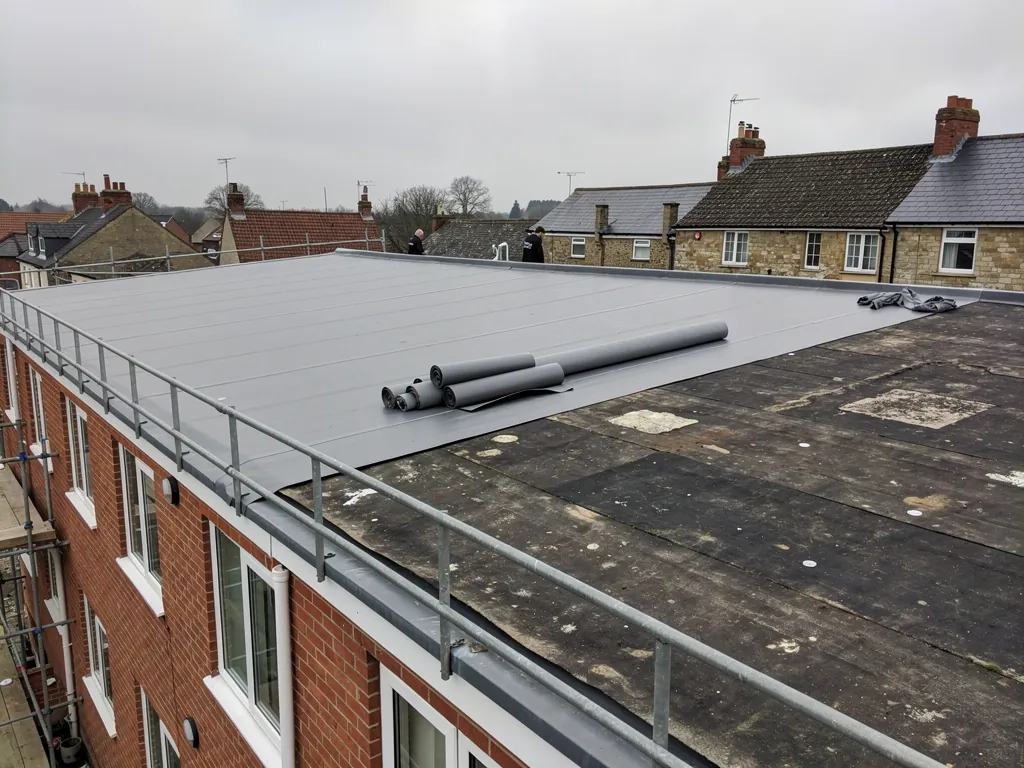
Flat roofs, metal sheeting, composite panels and older pitched roofs on shops, units, offices and farm buildings. Every fault is photographed, the quote is in writing and the work is phased around your business.
Often, yes. New sheets can go over sound purlins, but the survey checks the structure, the fixings and any asbestos cement first.
Rarely. The roof is worked on in sections, with covered walkways at doors and loading bays, so staff and deliveries carry on below.
Your lease decides. Read the repairing covenant and the service charge wording first, then send us the roof details so the survey can fix the scope.
| Job | Typical cost |
|---|---|
| Bitumen felt flat roof, replaced | £70 to £100 per m² |
| EPDM rubber membrane, replaced | £90 to £130 per m² |
| Single-ply membrane in PVC, replaced | £95 to £140 per m² |
| GRP fibreglass flat roof, replaced | £95 to £150 per m² |
| Metal sheeting, composite panels, over-cladding and coatings | priced on survey |
These are national flat roof figures, written mostly around houses and extensions, and they are not our prices. A large unit is sized, drained and reached differently, so the survey fixes your figure and it comes to you on paper.
MyBuilder flat roof cost guide, updated 21 August 2026.
See all costs Single-ply and felt flat roofsNew coverings and repairs on shops, offices and extensions, laid to a proper fall so water leaves the roof instead of standing on it.
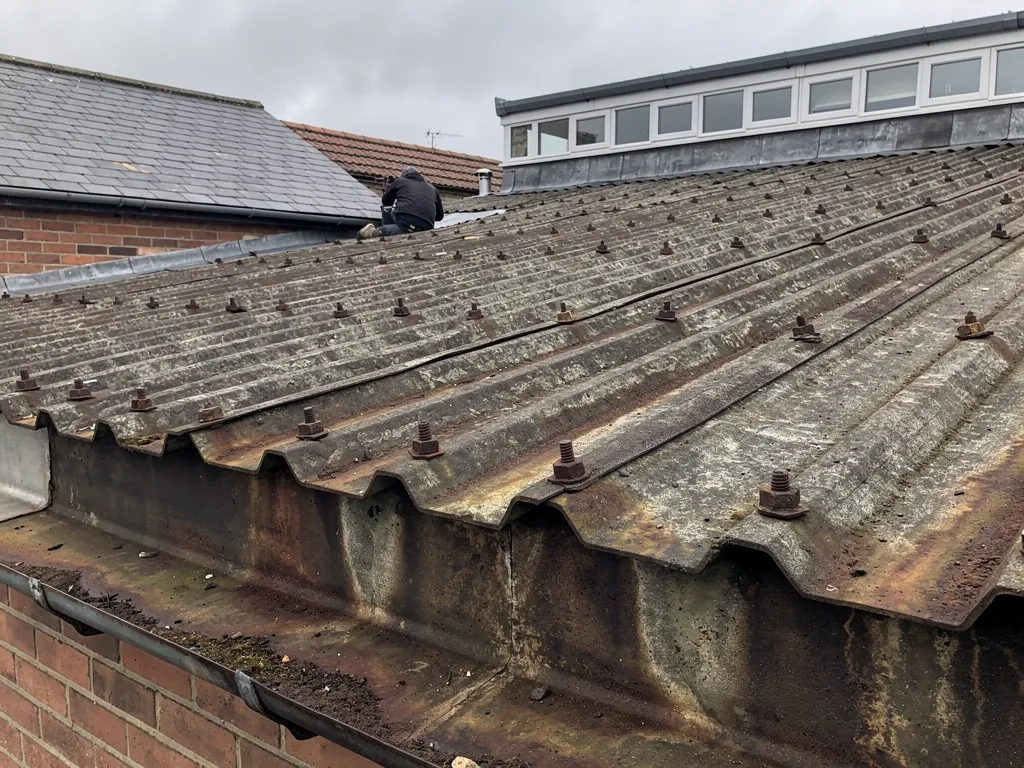 Metal sheeting and claddingProfiled steel and aluminium sheets on sheds and units, from sealing laps and replacing fixings to full recovering over sound purlins.Composite and insulated panelsPanels with insulation between two metal skins, an installation that gives a unit a warmer, quieter roof in one pass.
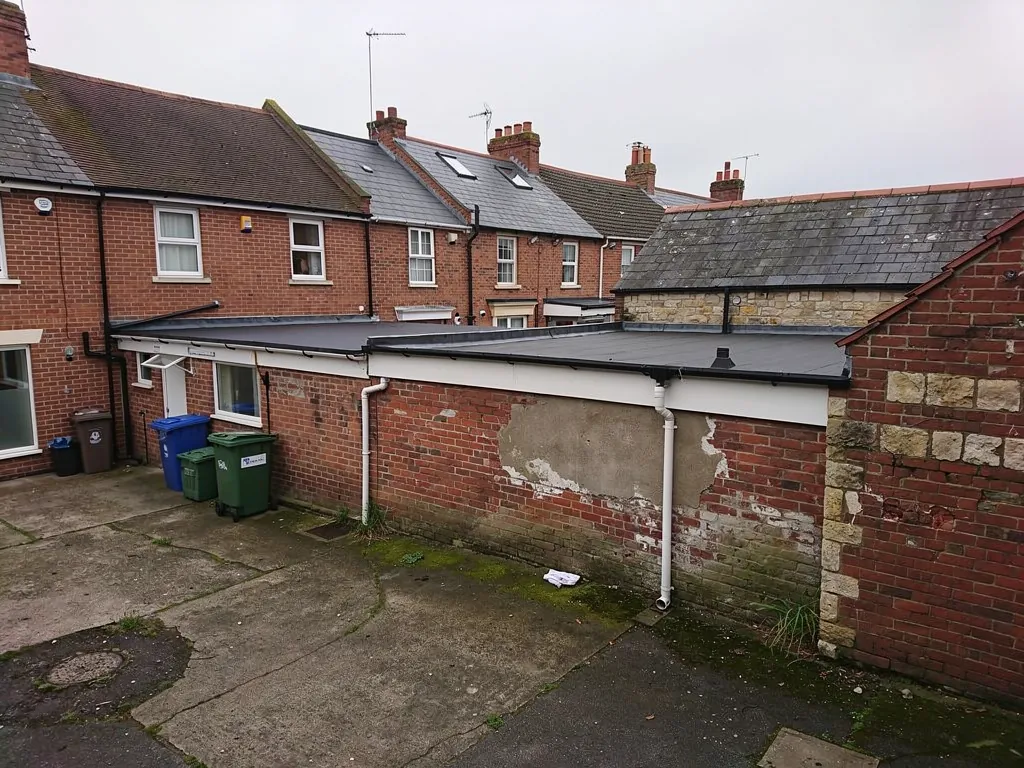 Over-cladding and coatingsNew sheets laid over an old roof, or a coating applied to a sound one, when the survey shows the base is worth keeping.
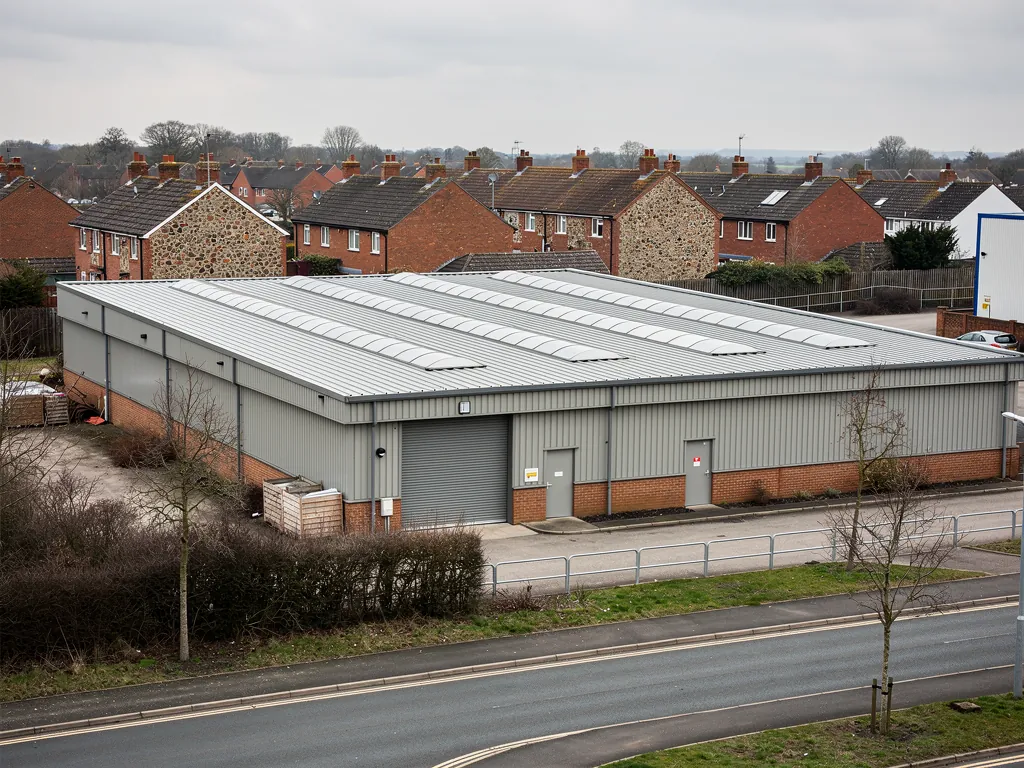 Rooflights and drainageReplacement rooflights, valley and parapet gutters, outlets and downpipes, cleared, lined or renewed so the roof can shed its water.
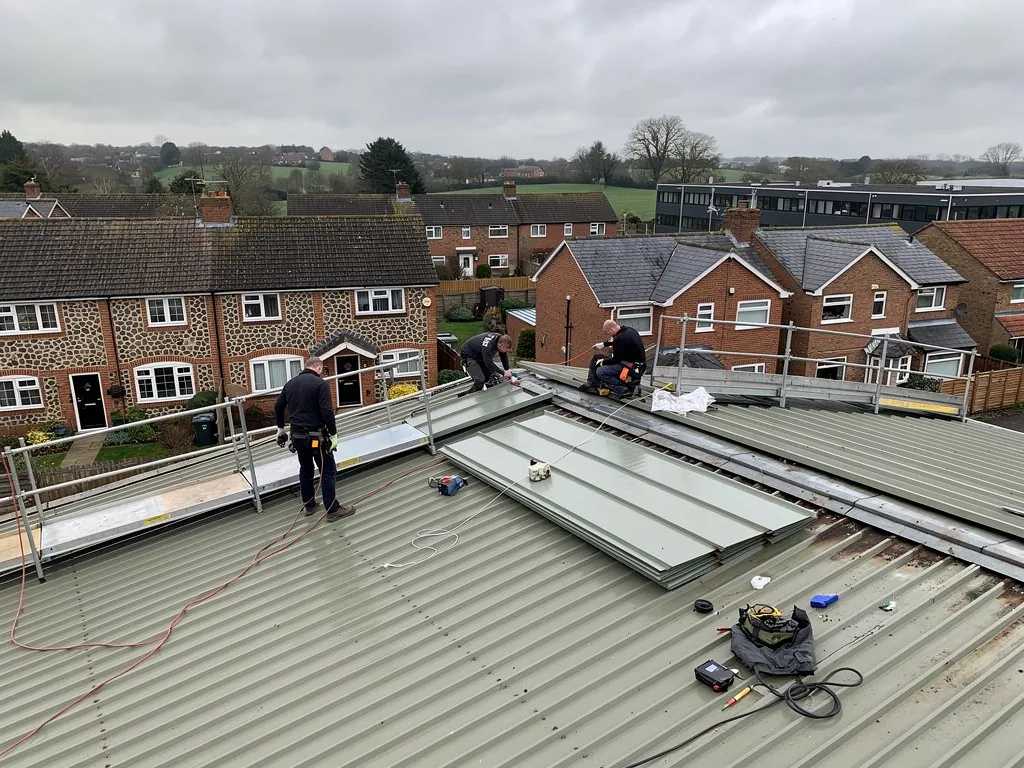 Older pitched roofsSlate and tile roofs on shops, halls, workshops and churches, repaired in kind and checked for consent before we propose any change.
Commercial roofing in depth
From the roof system to the lease, these are what business owners and managers in Swindon raise first.
The short answer
The building decides. Flat or shallow roofs on shops and offices suit single-ply or built-up felt, wide sheds suit profiled metal or composite panels, and older premises often keep slate or tile. Falls, loading, access and what happens underneath narrow the choice before price does.
Commercial buildings are roofed in a wider mix of systems than houses, and the right one depends on the span, the structure underneath and what goes on inside. A single-storey shop, a steel-framed warehouse and a brick workshop with a slate roof are three different jobs, even though all three are called commercial.
Flat and shallow roofs on shops, offices, schools and extensions are usually waterproofed with a membrane. Single-ply sheets, such as EPDM (a synthetic rubber) or a PVC membrane, come in large pieces with few joints. They are adhered to the insulation, mechanically fixed through it, or held down with ballast. Built-up felt is laid in layers, with the cap sheet torched or stuck down on top. Both sit over insulation and a vapour control layer, which stops warm, moist air from the building reaching the cold side of the roof.
Either way the roof must fall towards its outlets. BS 6229:2018, the code of practice for flat roofs with continuously supported flexible coverings, recommends a minimum finished fall of 1:80, so the roof is designed to 1:40 to allow for deck movement and construction tolerance. Standing water is an early sign that the design or the deck has moved. Our guide to single-ply roofing for commercial buildings compares the membranes, and how many layers a commercial roof has walks through the build-up from deck to surface.
Larger units and sheds are commonly covered in profiled steel or aluminium sheets fixed to purlins, the rails that span between the frames. A single-skin sheet is lined and insulated beneath it, while a composite panel carries its insulation between two metal skins and goes on in one operation. Sheets are joined at laps and sealed along them, and those laps, together with the fixings and the gutters at the eaves, are where leaks tend to start. Read more on metal roof sheeting and composite roof panels.
A liquid coating can extend the life of a roof whose sheets or membrane are still sound, and it is sometimes the sensible choice on a roof that cannot easily be stripped. It does not cure a failed deck or wet insulation, and the survey tells you which applies. Commercial roof coatings sets out where they work and where they do not.
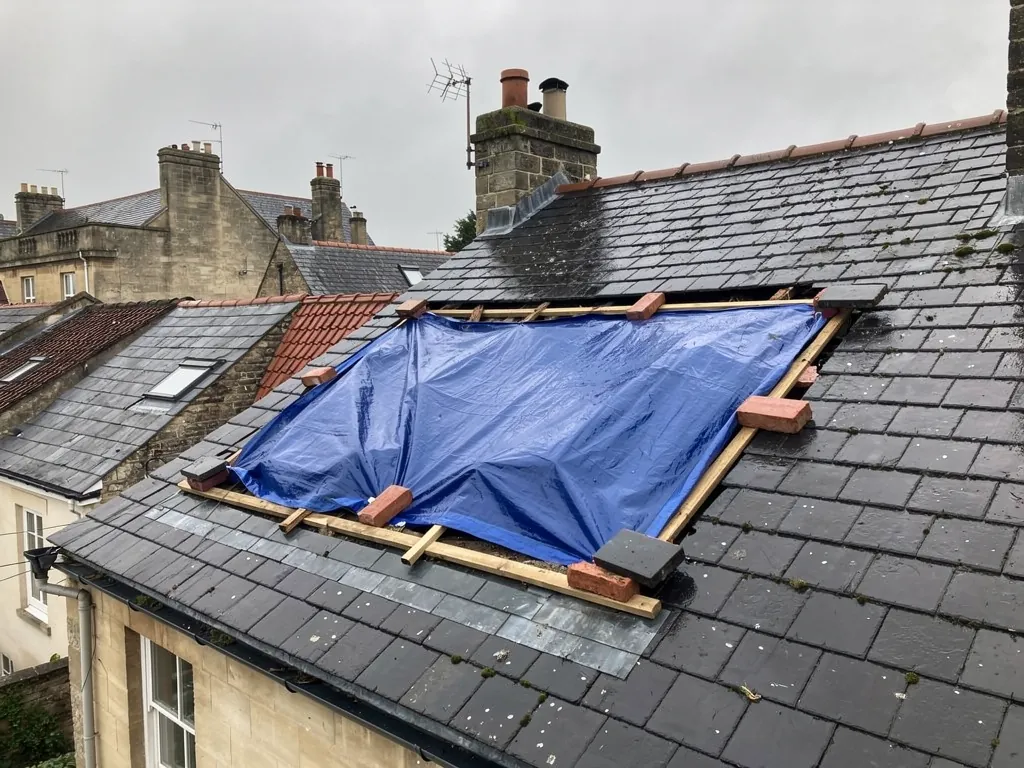
Older shops, village halls, workshops and chapels often keep natural slate or clay tile, repaired in kind. The same team roofs residential property as well, and our pitched roofing page covers that side of the work.
Not sure what your roof is made of? A photograph from the ground and the age of the building are enough to begin with. Where one site carries two systems, such as a felt roof over the offices beside a metal-sheeted shed, the survey judges each on its own terms.
| System | Typical building | What to watch |
|---|---|---|
| Single-ply membrane | Shop, office, school | Seams, upstands and outlets |
| Built-up felt | Flat extension, older flat roof | Blisters, splits and ponding |
| Profiled metal sheet | Warehouse, workshop, barn | Laps, fixings and cut edges |
| Composite panel | Insulated unit, cold store | Joints, flashings and panel ends |
| Slate or tile | Older shop, hall, chapel | Nails, lead and valleys |
The short answer
Usually, yes. The roof is worked on in sections so only one area is disturbed at a time, with edge protection and covered walkways over entrances and loading bays. What changes is noise, deliveries and access, and we plan those with you at the survey, not on the morning.
For a business the roof is rarely the only thing that matters. A shop wants its doors open, a unit wants its lorries to load and a school wants its pupils kept well away from the work. A good programme starts from those constraints and fits the roofing around them, not the other way round.
Instead of stripping the whole roof and hoping for dry weather, we divide it into sections that can be stripped, laid and made watertight within the working day or the working week. Each section is finished and sealed before the next is opened, so the building is never left under a roof with a hole in it. The order follows your use of the building: the stockroom end first while the shop floor stays open, or the quieter bays before the production line. Our answer on repair work while a business stays open goes further into phasing and safety.
Anything that can drop is dealt with before it can. Edge protection goes up round the working area, walkways over entrances are covered, and the ground below is fenced or coned off. Loose material is bagged and lowered, not thrown. Inside, dust sheets and temporary protection go over fixtures, stock and equipment that sit directly under the work, and we check with you what cannot be moved. If your insurer or landlord sets rules on hot works, such as torch-on felt, tell us early so the method can be chosen to suit.
Programmes often fail on small things: a delivery that cannot reach the yard, a car park that fills up, a fire exit that is blocked by a skip. We walk the site with you at the survey and mark where the skip, the hoist and the welfare facilities will go, so the staff on shift know where not to park and which doors stay clear.
Stripping metal sheets is louder than a house repair, and a hoist or crane may need the yard for a day, so the loudest operations are agreed with you in advance to keep disruption to the business low. Old roofs also contain fragile materials. Asbestos cement sheets, aged rooflights and corroded steel can all give way underfoot, so crawling boards, nets and covers are part of the plan, and the survey marks which areas not to step on. Fragile roofs: safety for owners and contractors explains why every old sheet is treated as fragile until it is checked.
Tell us about opening hours, deliveries, alarms and anyone who works directly under the roof, plus any tenant or neighbouring unit that shares walls, gutters or access. Those details shape the programme more than the roof area does.
The answer
National guides put flat roof replacement at about £70 to £150 per m² depending on the covering: felt, EPDM, single-ply or GRP. Metal sheeting, panels and coatings are priced on the survey, because the span, the access and what lies under the old covering set the figure.
A commercial roof cannot be priced from a postcode and a floor area. Two units of the same size can cost very different amounts if one has a clear yard and the other a tight service lane, or if one has dry insulation under the sheets and the other has a soaked deck. The national figures below show the range for flat coverings.
MyBuilder's flat roof guide, updated on 21 August 2026, gives bitumen felt at £70 to £100 per m², EPDM at £90 to £130, a PVC single-ply membrane at £95 to £140 and GRP at £95 to £150. Those guides are written mainly around houses, garages and extensions, so a large industrial roof does not simply scale up: bigger areas can lower the cost per square metre, while height, hoisting and phasing can raise it. For scale against a whole house, MyBuilder puts a typical UK roof replacement at £5,000 to £12,000, and Checkatrade gives an average of around £8,000 before VAT (October 2026).
Access comes first. Scaffolding or edge protection, a hoist or a crane, and the programme needed to keep the building working all sit alongside the roofing itself. Then comes what is under the old covering. Wet insulation, rotten decking or a corroded purlin is found when the roof is opened, and the survey tries to find it earlier with moisture checks and photographs. A thermal upgrade, new rooflights, new outlets and the removal of the old roof all add to the total. Asbestos, where it is present, changes the method and the price entirely, and it has its own question below. Our guides to commercial roof replacement cost and how long a commercial re-roof takes go through the drivers in more detail, and upgrading insulation on a commercial roof covers the thermal part.
There is no single best commercial roofing company, only the right contractor for your building, and the checks hold whoever you ask. Expect a professional survey from the roof itself, with photographs, before any figure appears. Ask for a written scope, a method statement for fragile sheets and open edges, and the asbestos register or a test result before an old sheet roof is touched. A firm with real specialist knowledge of your roof type can show past projects for customers with similar buildings and the quality of their laps and upstands in photographs, put a postal address on its paperwork and give its guarantee in writing. A van saying "roofing experts" proves nothing. Be wary of a knock on the door after a storm, a price given from the car park, a cash-only deal or pressure to sign that day, and report that kind of behaviour to your local Trading Standards service. Our own quote is one written total, and it records what is assumed about the existing deck and who agrees any change once the old covering is off.
Check that every quote you compare includes VAT, access, disposal and the insulation upgrade in its total, how long the price holds, and what happens if extra work turns up under the old covering. With those answers in writing, a business can budget for the job with confidence.
Access and what lies under the old covering decide a commercial price more than the new membrane does.
What it typically costs
The short answer
Keep what is sound, fix what is failing and strip only when the deck, fixings or insulation leave nothing sound to build on. A repair suits a few failed laps or outlets, over-cladding or a coating suits a roof with a good structure, and stripping suits a wet or corroded one.
On a unit as on a house, we put forward the least work that properly stops the fault. Whether to repair, cover over or strip depends on the structure, the condition of the covering and how long the building will be used.
Leaks on a commercial roof often trace to a few places: sheet laps that have opened, fixings that have worked loose, a split at an upstand or a blocked outlet that lets water stand. These can be repaired, and a regular inspection catches them before the water reaches stock or ceilings. Flat roofs have lifespans that vary by system: GreenSpec gives EPDM 20 to 30 years of expected service life, Less gives GRP 25 to 40 years and felt 10 to 20 years, and MyBuilder puts a flat roof at 15 to 30 years in general. Treat those as typical bands rather than promises, since workmanship, exposure and upkeep all move them. Our guides on industrial roof leaks and industrial gutter lining cover the repair side.
An urgent leak starts with making the building safe, not with a rush onto the roof. If water is near lights, sockets or machinery, isolate the power to that area where it is safe to do so, move stock clear and catch the drips. A fragile sheet or old rooflight is no place for a hurried footstep, so a temporary repair, such as a sheeted cover or a patch over an open lap, goes on from a safe working position. Photograph the damage for your insurer before anything is cleared. We prioritise leaks and storm damage, and once the roof is holding, the permanent repair follows as one written total price. Our emergency roof repairs page explains how a make-safe works.
A check in spring and another in autumn is a sensible rhythm, with an extra look after high winds or a heavy storm. Outlets, gutters and valleys are cleared on each visit, and every inspection is photographed so that a slow change shows up before it becomes a leak. Commercial roof maintenance plans sets this out as a programme, and commercial roof surveys covers the first full look.
Over-cladding lays new insulated sheets or panels over the old roof, avoiding a strip and improving thermal performance in one visit, but only where the purlins and fixings are sound and the structure can take the added weight. Cut edge corrosion, where the cut face of a coated steel sheet rusts, is a common reason sheets give up, and the page on cut edge corrosion on metal roofs explains what can be treated and what cannot. A coating suits sheets or a membrane that are sound but weathered. Read roof over-cladding for industrial units before deciding.
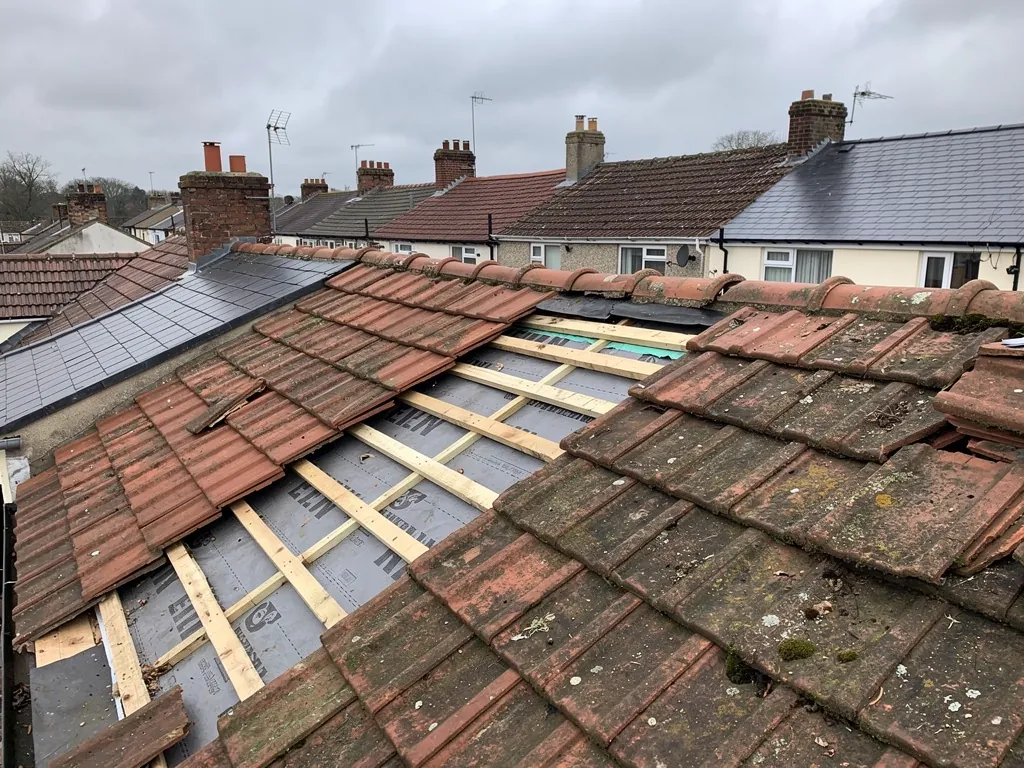
If insulation is wet through, the deck is soft, fixings have corroded away or the old build-up has too many layers to overlay safely, stripping gives a sound base for the new roof. It also lets the falls be corrected so water stops standing in the same low spots. The photographs at the survey and on opening show why the answer is a strip and not a patch. Flat-roofed premises with a smaller footprint may be better served by our flat roofing page.
A roof with five good years left, kept on a maintenance plan, is a better answer than a replacement it does not yet need. If the building is due to be sold, let or redeveloped, tell us so the roof work can be timed to match.
Where we start
Keep what is sound, repair what is failing, and strip only when nothing sound remains to build on.
The short answer
It might. The HSE tells owners to presume asbestos until proven otherwise in buildings put up or refurbished before 2000. Corrugated sheets, old rooflights and some soffits are typical places, so the roof is tested before any price is fixed and the sheets are treated as fragile until then.
Asbestos cement was widely used for roof sheeting on industrial, agricultural and commercial buildings in the past. Intact and undisturbed it is low risk. Broken, drilled or weathered to the point of crumbling, it is not, and a roofing job is exactly the kind of work that disturbs it.
The HSE says to handle buildings constructed or refurbished before 2000 as though they contain asbestos. That takes in many older units, barns and workshops around Swindon, and a newer metal roof fitted over an old one can hide cement sheets beneath it. The only reliable way to know is to have samples tested, and we raise that at the survey, before the quote, not after the sheets are off.
According to the HSE, removing asbestos cement products such as roof sheeting is non-licensed work when the material is handled carefully and not broken up, and that includes weathered sheets that are not otherwise substantially damaged. Work becomes notifiable non-licensed work where the sheeting has been substantially damaged or broken up, or where the removal will break it up. Asbestos insulating board, found in places such as external soffits, is different, and most work to remove it is licensed work. Which category your roof falls in depends on the survey, and it decides the method, the notification, the disposal and the price. You can read the rules for yourself on the HSE page on non-licensed work.
Fragility is a separate issue from asbestos, and it matters just as much. An old cement sheet that looks sound can fail without warning under a boot, and the same goes for aged rooflights and heavily corroded steel. Nobody should go onto an old roof without crawling boards, nets or a platform beneath, and that includes electricians and solar installers as well as roofers.
Testing comes first, and the result sets the programme. Where asbestos is present, the quote shows who carries out each part of the removal and disposal, so the responsibilities are on paper. Sheets are never walked on, dropped or broken into skips, and the area below is protected. For a deeper look, see asbestos cement roofs on commercial buildings, and for domestic outbuildings garage roof replacement covers the same material on a smaller scale.
Do not drill, cut, scrape or pressure-wash an old sheet roof before it has been tested, because each of those can release fibres. If you already hold an asbestos register for the premises, send it with your enquiry.
The answer
A straight swap of one covering for the same covering seldom needs planning permission, and a listed building or an Article 4 direction is the exception to check. A new covering or insulation can bring in Building Regulations, and a lease may decide who pays and who must agree. We explain each point and handle the notification where it applies.
Most of the paperwork on a commercial roof job is straightforward once it is laid out in order. The three questions are whether the work needs consent, whether the Building Regulations apply and what your lease says about the roof.
Under section 55 of the 1990 planning legislation, maintenance, improvement or alteration work is not development where the building's external appearance is not materially changed, so a straight swap for the same covering seldom needs planning permission. The caveats are important. A listed building needs listed building consent for works that affect its character, and an Article 4 direction removes permitted development rights in a defined area. Changing the colour, profile or material of a commercial roof can alter the appearance, so confirm the position with Swindon Borough Council, or with the authority covering your own address, before work begins. Our answer on planning permission for a commercial roof replacement covers the common cases.
Replacing a roof covering can bring in the Building Regulations, especially where the build-up changes, a new insulation layer is needed to meet the energy efficiency standards in Part L, or the structure has to carry more weight. We explain at the survey which rules apply, then submit the Building Regulations notification ourselves if the job is notifiable. Swindon Borough Council runs its own building control service, while elsewhere in our area the route runs through the local council or a registered building control approver.
Beyond the roof itself, check who else must be told. A freeholder, a managing agent, a lender or a neighbouring tenant may all have a say, and each can slow a start date if approached late.
If you rent, the lease decides who repairs the roof and who pays. Repairing covenants, service charges and dilapidations clauses vary, and a roof repair at lease end can become a significant claim. We cannot give legal advice, but our guides on commercial landlords and roof repairs and dilapidations and roof repairs at lease end list the questions to put to your agent. Places of worship have their own regime: the ecclesiastical exemption covers working churches of the denominations it names (the Church of England through its faculty system), while other denominations' buildings and any church no longer in use for worship go through listed building consent, as set out in church roof repairs and permissions. Farm buildings follow barn roof replacement.
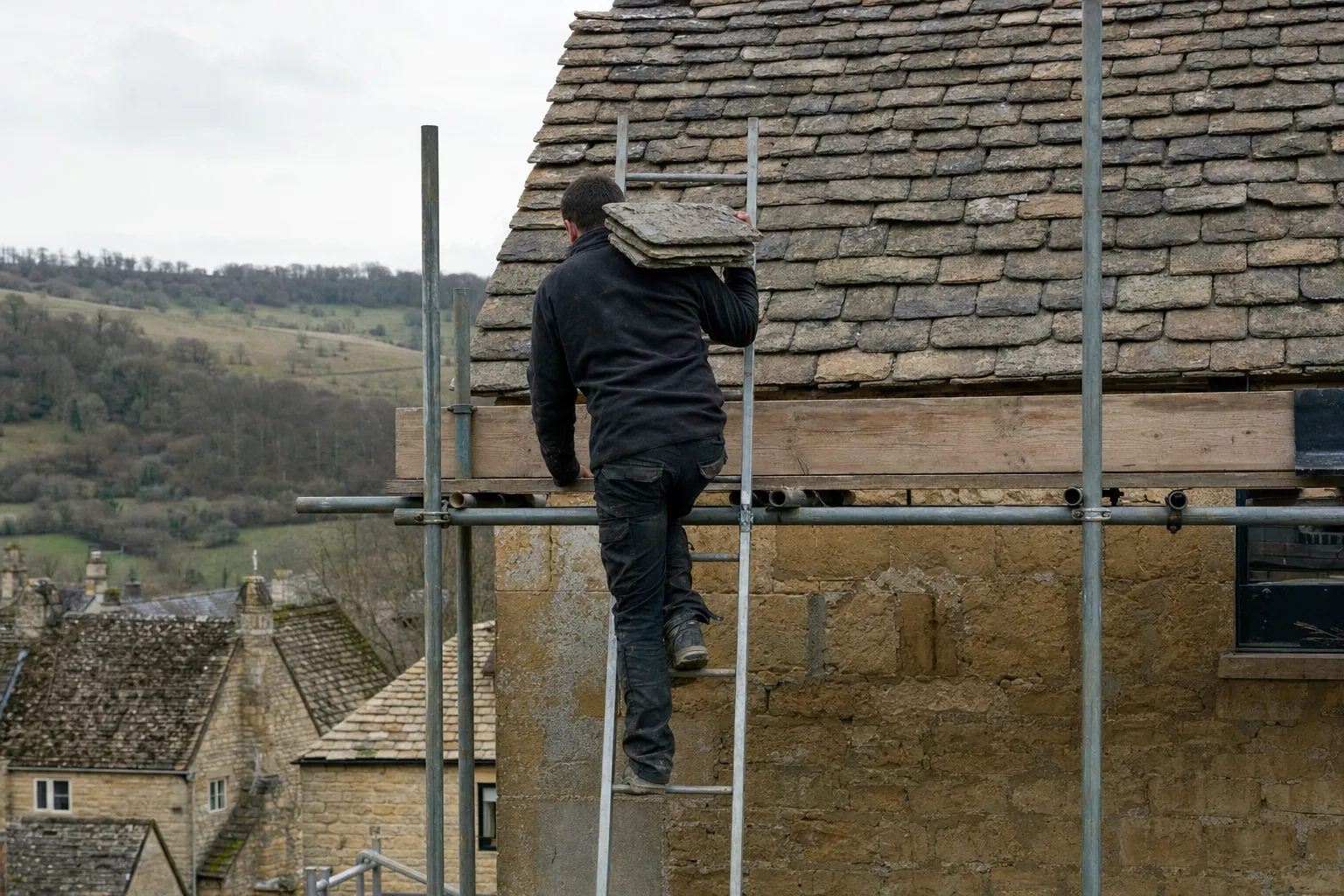
Whatever the building, the order is the same: confirm the consents, agree the scope with whoever owns the roof, then fix the programme. Doing it the other way round is how jobs stall.
MythA like-for-like commercial roof replacement always needs planning permission.
FactRarely. A listed building, or a site under an Article 4 direction, can change that, so check before work starts.
Further reading on systems, surveys, leaks, drainage, cladding, rooflights, church and barn roofs, from siphonic outlets to dilapidations.
Yes, in many cases. Old rooflights are often the most fragile part of the roof, and replacing them can be a self-contained job, provided the surrounding sheets and fixings are sound enough to take the new units.
Rarely. The schemes listed on gov.uk, such as ECO4, the Great British Insulation Scheme and the Warm Homes: Local Grant, are aimed at homes and fund energy efficiency measures such as insulation, heat pumps and solar panels, not a replacement roof on a commercial building. If a re-roof includes an insulation upgrade, ask your accountant how the cost is treated before you budget.
We plan access and edge protection first, treat every old sheet and rooflight as fragile until checked, and photograph each fault so you can check what we found without climbing up yourself.
The age of the building, the roof material if you know it, a photograph from the ground and what the building stores. That lets us plan a survey that deals with asbestos and access before a quote.
Yes. Lined gutters can often be re-lined, and where the metal or the timber behind has failed, the section is renewed. We photograph the condition so you see which applies.
It covers our workmanship, in writing, with the scope of work recorded alongside it. Manufacturer warranties on membranes, sheets or panels are separate and are passed to you where they apply.
We roof shops, units, offices, schools, churches and farm buildings across Swindon and north Wiltshire, from Royal Wootton Bassett, Highworth and Cricklade to Marlborough and Chippenham. Send the address, the age of the building, a photograph from the ground and any lease details, and we will survey it, check for fragile sheets and asbestos first and send a written quote.
Tell us what’s happening and we’ll call you back.
Or call 01793 626096
Message us on WhatsApp