Do slipped tiles mean I need a new roof?
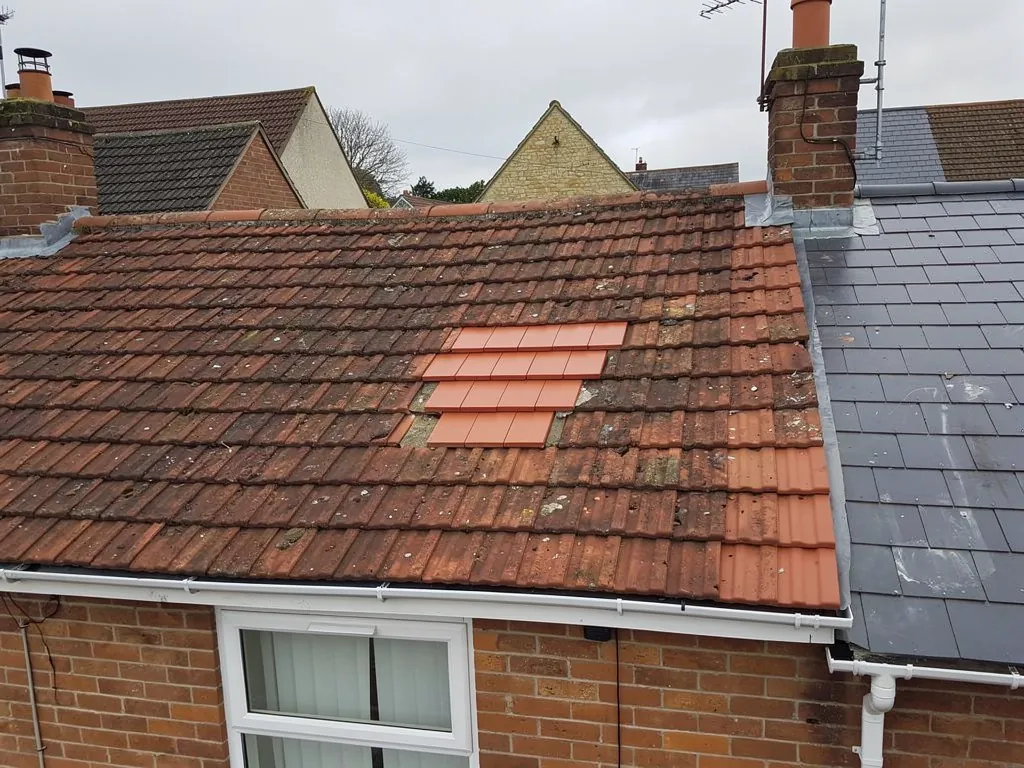
Usually not. Most are a repair, refixed to today's standard.
Ask us anything about your roof. We are a Swindon roofing company that answers plainly, photographs what we find and puts a 10-year workmanship guarantee in writing. Covering every place within 30 road miles of Swindon.
Usually not. Most are a repair, refixed to today's standard.
Often flashing or a valley, not the tiles. We find the cause first.
Not always. Blisters can be patched; ponding and splits need a new covering.
| Job | Typical cost |
|---|---|
| Roof inspection | £150 to £200 |
| Roof repairs | £200 to £500 |
| Flat roofing | £100 to £200 per m² |
| Full strip and re-tile | £6,000 to £15,000+ |
Guide prices. Your written quote follows the survey.
See all costsMap of the area we cover: 30 road miles around Swindon.
Based in Swindon, Wiltshire, and working from Haydon Wick, Stratton St Margaret, Covingham, Wroughton and Royal Wootton Bassett out to Marlborough and Chippenham, Cirencester and Lechlade in Gloucestershire, Faringdon and Wantage in Oxfordshire, and the West Berkshire towns along the M4.
All 285 areas we coverThe Swindon roof Q&A
What we tell Swindon homeowners before we quote, set out one question at a time.

The short answer
A small repair on a Swindon house usually sits between £200 and £500 on our guide prices, and a full strip and re-tile between £6,000 and £15,000 or more. National guides put a roofer's day rate at roughly £250 to £360. Size, access, the covering and what we find under it set where your job lands.
Swindon has almost every kind of roof in one borough, which is why a single price for "a roof" means very little. A slipped slate on a Rodbourne terrace, a tired felt garage roof in Toothill and a re-cover on a detached house in Wroughton are three different jobs with three different price shapes. Our guide prices give you the range before anyone climbs a ladder, and the survey narrows it to your roof.
Access comes first. A bungalow with a clear drive can often be reached with ladders and a roof ladder, while a three-storey villa in Old Town or a terrace with no rear lane may need scaffolding, which adds hundreds of pounds before a tile is touched. Next comes the covering: natural slate and clay plain tiles cost more to buy and take longer to lay than interlocking concrete tiles. Then the details: chimneys, valleys, dormers and lead flashings all add labour.
Hidden condition is the part nobody can price from the street, so an estimate over the phone can only ever be a range. Rotten battens, perished underlay or a sagging rafter can turn a tidy repair into a bigger job, and we would rather show you the photographs than guess. That is why the figure in your hand comes after we have been up there.
Checkatrade's roof repair guide (updated October 2026) puts roofers at £35 to £45 an hour or £280 to £360 a day before VAT; MyBuilder (August 2026) gives £250 to £300 a day. For whole jobs, MyBuilder's typical UK replacement runs £5,000 to £12,000 and Checkatrade's UK average for a new roof is around £8,000, while MyBuilder puts repairs between £150 and £1,500. A day rate leaves out materials, scaffolding and skips, so we price the whole job as one total instead of counting days, as our roofer day rate answer explains.
No month is reliably cheaper; the season changes how long a job takes more than what it needs. Winter brings short days, rain stoppages and extra time sheeting the roof weathertight overnight, so a re-roof runs longer. Spring and summer suit GRP and felt flat roofs, which must go down dry. If the roof can be made safe meanwhile, plan a big project for the warmer months; if water is coming in now, fix it now. Waste is the cost people forget: stripping a roof fills skips, and your quote includes disposal in the one total price.
What it typically costs

The short answer
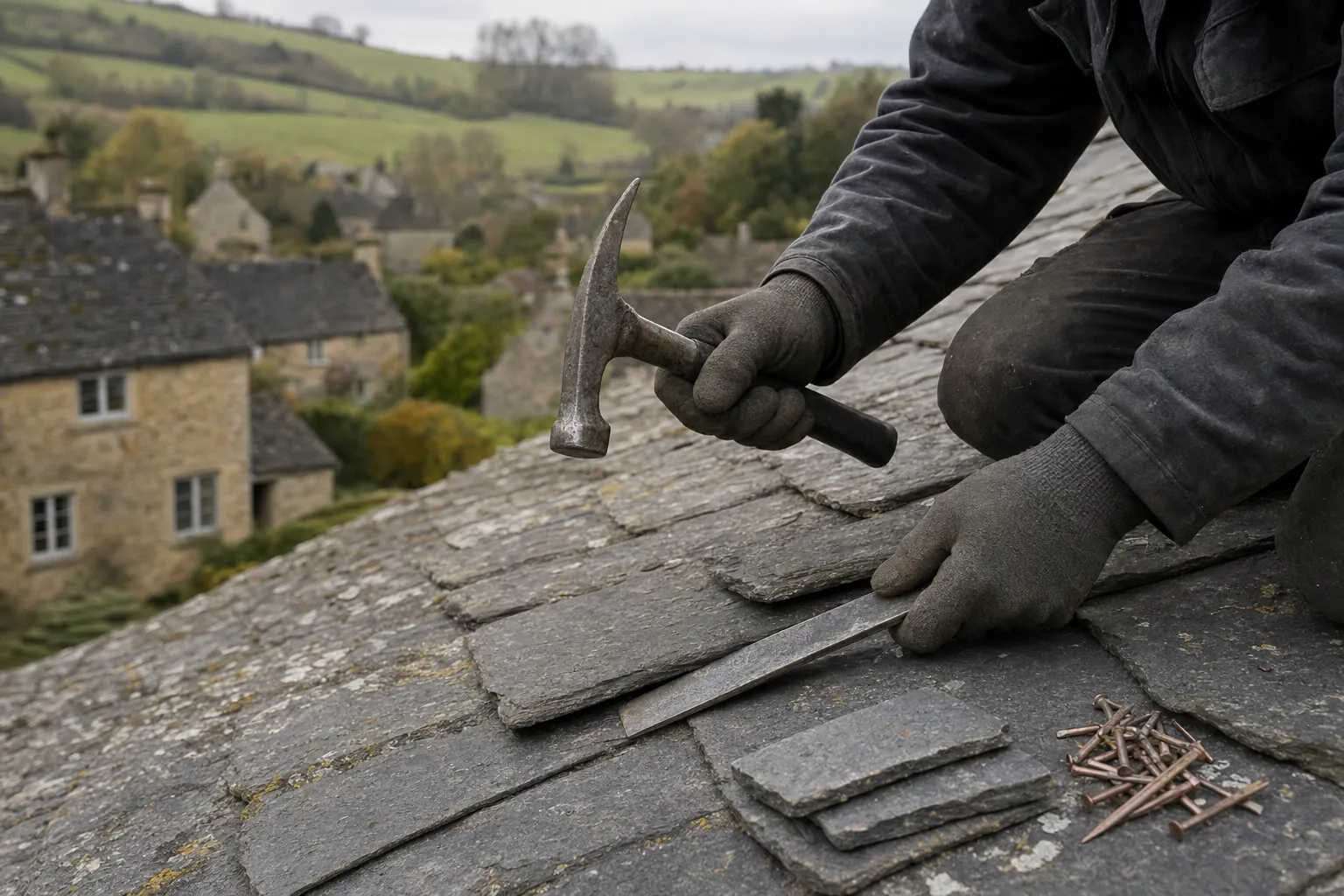
If the timbers are sound and the fault is local, repair it. Replacement starts to make sense when faults keep appearing across the whole slope, the underlay has failed, or the covering has simply worn out.
Most roofs that leak do not need replacing. A cracked tile, a lifted flashing or a blocked valley is a contained fault, and fixing it properly costs a fraction of a new roof. The trick is telling a contained fault from the first sign of a roof that is wearing out everywhere at once.
One area is affected, the rest of the slope looks sound from the inside and out, and the cause is obvious: storm damage, a single slipped slate, a cracked mortar fillet or a cracked lead joint. If the battens are dry and firm and the underlay is intact around the fault, a repair is the sensible answer.
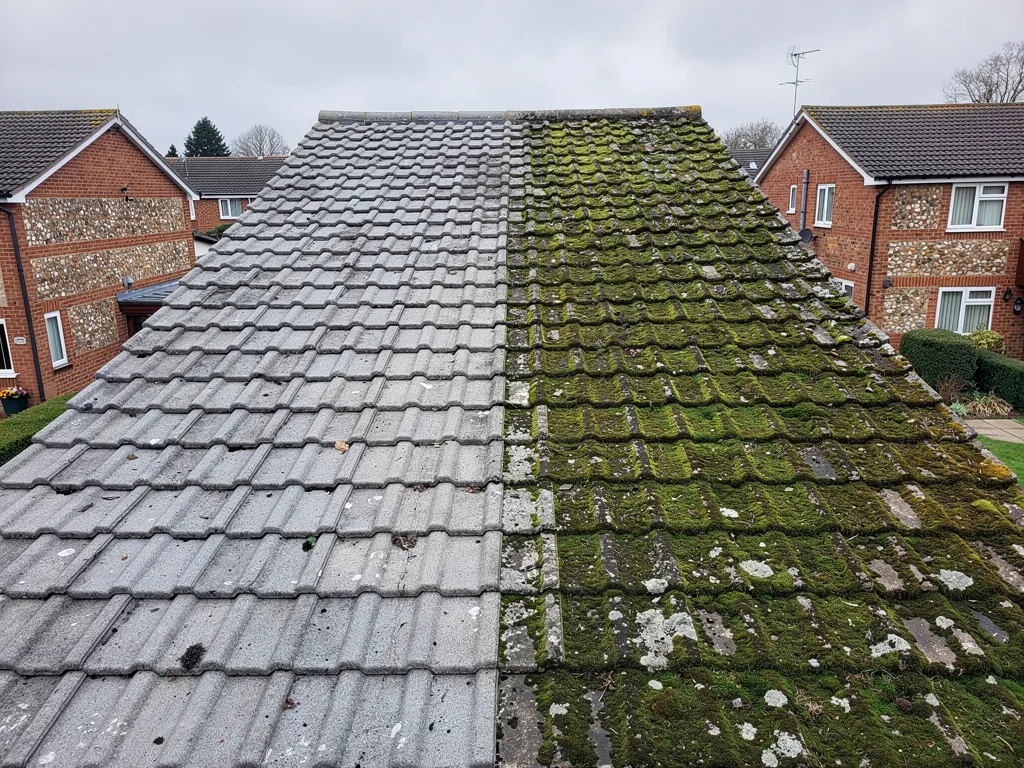
Repairs in one season are followed by new leaks somewhere else. Slates are delaminating across the slope, concrete tiles have gone soft and porous, nails have rusted through so slates slide out in rows, or the felt underlay has turned brittle and torn between the rafters. At that point you are paying for repeated scaffold and labour on a roof that will keep failing.
Sometimes one slope or one section can be stripped and re-covered while the rest stays. The catch is matching: new slates or tiles beside old ones can look different for a few years, and on a listed house or in a conservation area the match matters more. We will tell you which category your roof falls into, show you why, and price the option we would choose for our own house. Our guide to signs your roof needs repairing covers the checks in more detail.
Our rule
Repair the fault while the roof around it is sound, and replace only when the faults are everywhere.
The answer
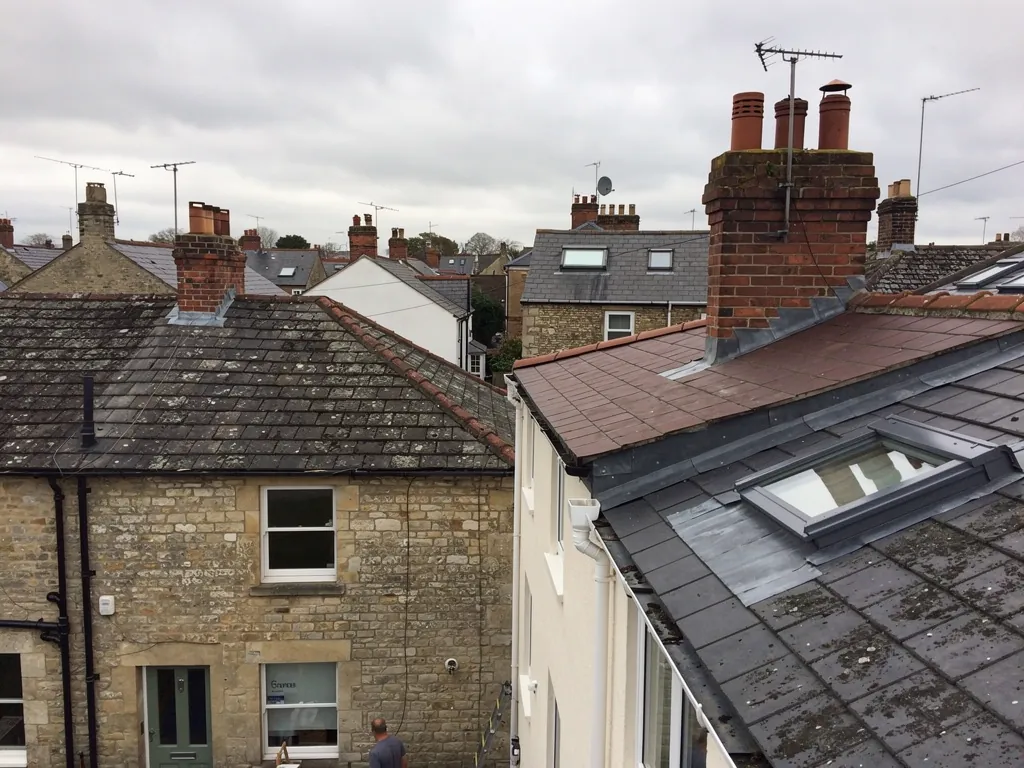
Look at the covering from the street. Thin, flat, dark grey sheets are slate. Small red or brown rectangles are usually clay or concrete plain tiles. Larger shaped tiles that overlap side by side are interlocking concrete, and thick, uneven grey-buff stone is Cotswold stone.
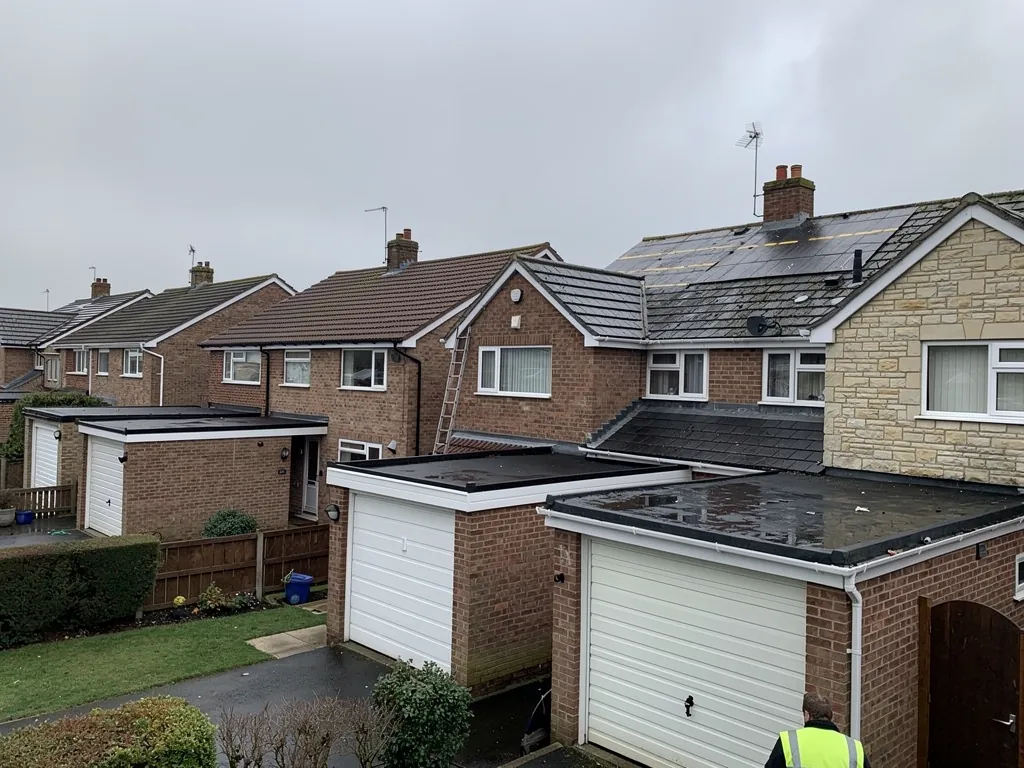
Knowing what is on your roof helps you read a quote, judge a lifespan and understand why one roofer suggests a repair and another a replacement. Swindon's housing makes a good tour of British roofing, because the town grew in waves.
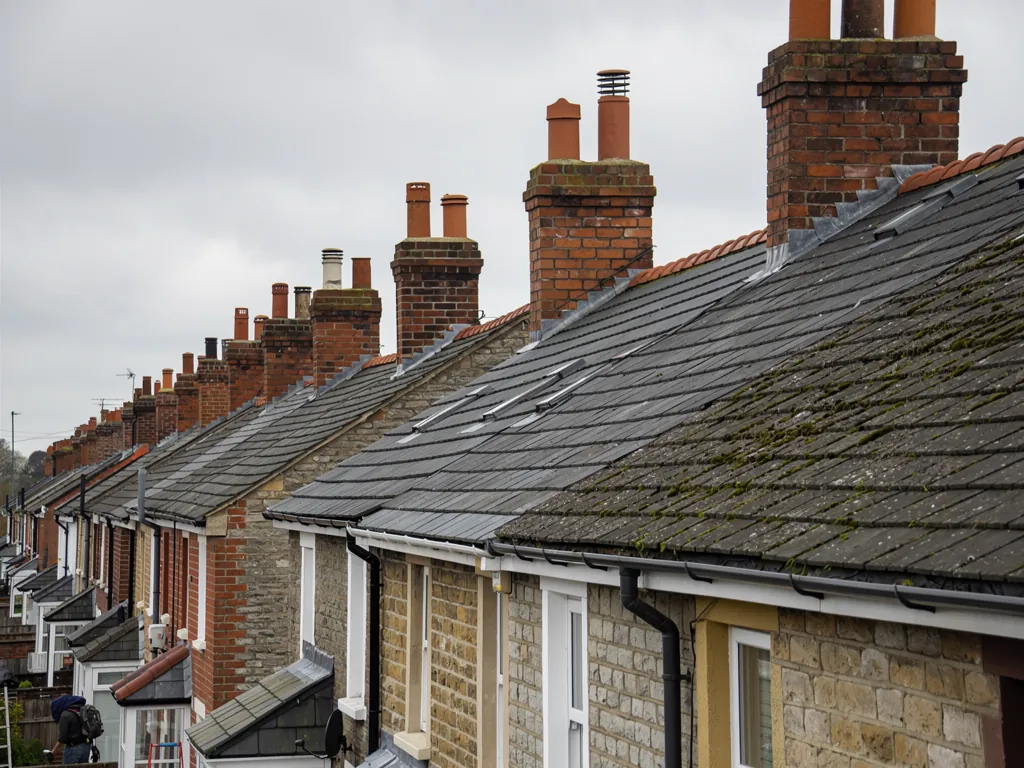
The terraces built for railway workers are slate country. The council's appraisal of the Railway Village describes heavy-looking pitched slate roofs, and the same Welsh slate runs through the streets around Rodbourne, Gorse Hill and the town centre. Chimney stacks, often shared between neighbours, sit on almost every ridge.
Older slate roofs here were often laid without any underlay at all, or with a torching of lime mortar on the underside. When we re-slate one, a breathable membrane goes in under new battens, which changes how the loft breathes. That is why ventilation comes up in our quotes for older houses: a roof that used to leak air now needs a planned route for moisture to escape.
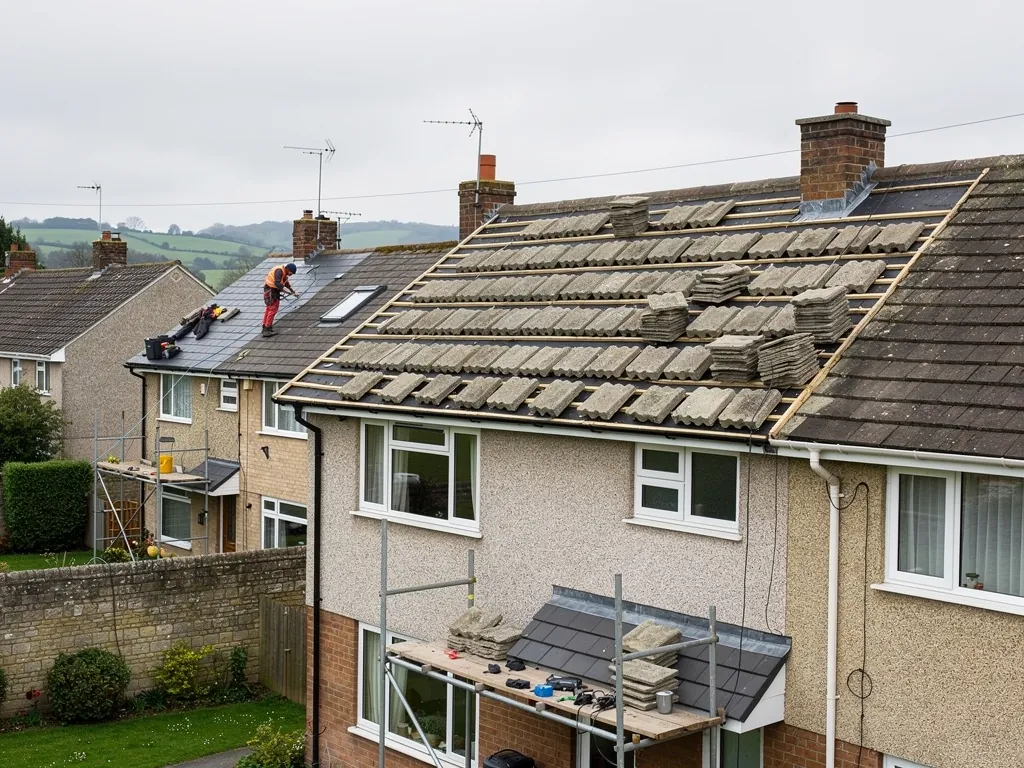
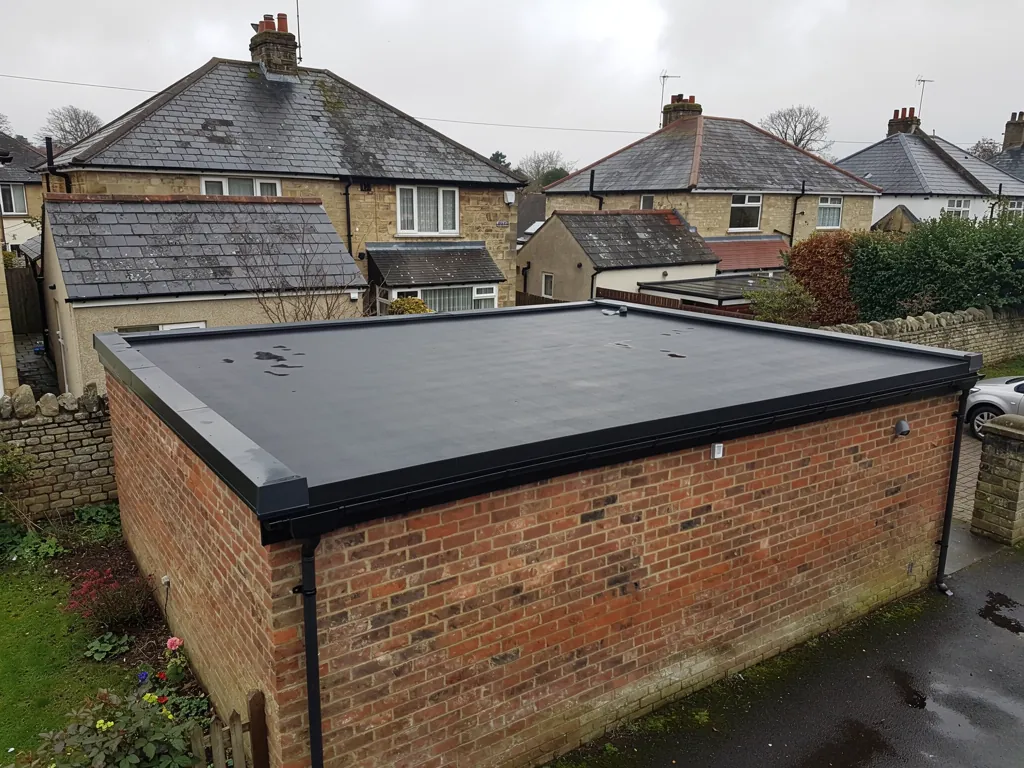
The big expansion to the west and north of the town brought interlocking concrete tiles, flat-roofed garages, porch roofs and dormers. These roofs are lighter on detail but carry their own faults: tired felt on flat roofs, ridge tiles held only by old mortar, and fascias and soffits that need attention. Many were built before the 2014 change to BS 5534, when a ridge bedded on mortar alone was normal practice, so a loose ridge after a windy night is a familiar call on these streets.
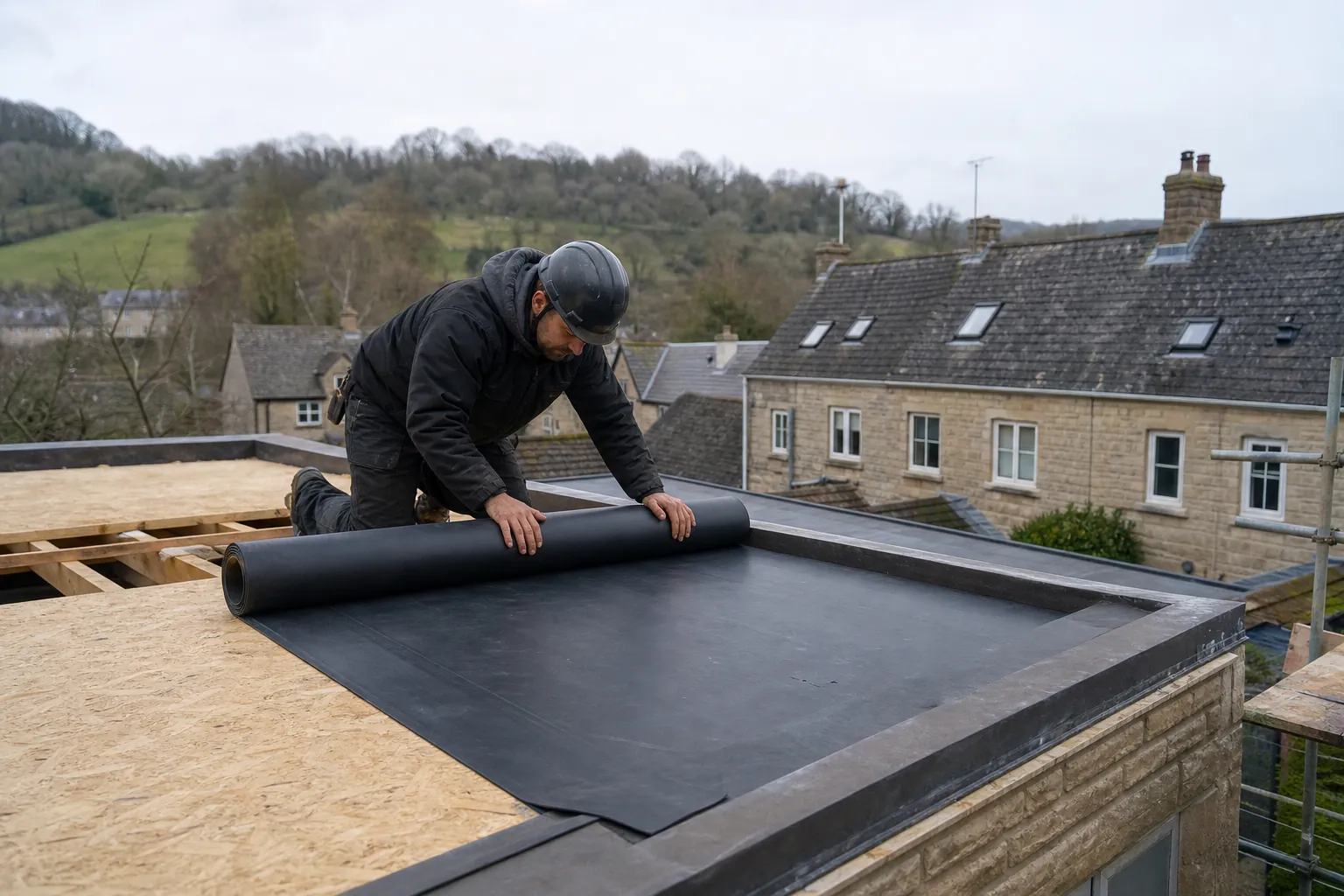
EPDM rubber goes on as one membrane, so a garage or small extension can go on as one sheet without a seam. GRP fibreglass is resin and matting over a timber deck, curing hard enough to walk on. Torch-on felt builds up in layers and suits renewing an old felt roof. The deck and its fall matter more than the covering, and where insulation is wanted, a warm roof sets it above the deck, under the waterproofing. Our flat roofing page compares the three.
Out towards Cricklade, Lechlade and Cirencester, limestone buildings carry Cotswold stone slates, a specialist covering laid in diminishing courses, with the biggest stones at the eaves and the smallest at the ridge. Brick-and-tile villages on the Vale side mix clay plain tiles with slate. Our guide to Swindon's houses and their roofs walks through each type.
Swindon grew in waves, and you can read each wave from its roofs.

The short answer
Putting back a roof that looks the same counts as maintenance, so the council rarely needs to be asked. Building Regulations come in when the work affects 25 per cent or more of the building envelope or 50 per cent or more of the roof, or when the new covering is noticeably heavier. Listed buildings and Article 4 areas need extra care.
Planning is about how the building looks and whether the change is allowed. Building Regulations are about how the work is built: structure, insulation, fire and drainage.
Replacing a roof covering with something that looks the same is maintenance, not development, so planning permission is not usually needed. Changing the look is different, and in Swindon's conservation areas the council takes a closer interest. The Railway Village and Bishopstone carry Article 4 directions, and most cottages in the Railway Village are listed, which brings listed building consent into play for alterations. Roof windows have their own rules, set out on our roof window planning page.
On the Planning Portal's reading, a repair or a re-cover stays outside building control while less than 25 per cent of the total building envelope and less than 50 per cent of the roof is affected. Overshoot either figure, or choose a covering 15 per cent or more heavier, and approval applies. A full re-roof may also bring an upgrade to the roof's insulation.
Approved Document L treats a stripped roof as a renovated thermal element, so when more than half of a roof is renovated the whole roof is expected to reach a better insulation standard where that is practical. We work this out at survey stage so it is in the quote rather than added halfway through.
Swindon Borough Council runs its own building control team, and private registered building control approvers can also do the job. Where a project is notifiable, we tell you before we start and sort the notification out ourselves. The Building Regulations guide has the detail.
| Job | Planning permission | Building Regulations |
|---|---|---|
| Like-for-like repair | Not usually | Not usually |
| Full re-roof, same look | Not usually | Usually, if 50 per cent or more of the roof |
| Heavier covering | Depends on the look | Yes, if 15 per cent or more heavier |
| Listed building | Listed building consent | As above |

The short answer
Sometimes. Home insurance usually covers sudden damage, such as a storm lifting tiles, but not wear and tear. If the roof was already in poor condition, an insurer can refuse, and the Financial Ombudsman looks at whether the storm was the main cause.
Standard home cover is built around sudden events. When a storm strips ridge tiles or a falling branch breaks a slope, that is the kind of damage policies are written for. Which? notes that insurers often rely on an industry definition of a storm that includes gusts of at least 55mph, so a blustery night may not count.
Gradual damage is usually excluded. A roof that leaks because the flashing perished years ago, or because moss lifted the tiles over a decade, is a maintenance problem in an insurer's eyes. The Financial Ombudsman asks three questions when a storm claim is disputed: was there a storm, is the damage the kind a storm causes, and was the storm the main cause. If the storm only exposed an existing problem, a complaint is unlikely to succeed.
Which? also cited figures from the Financial Conduct Authority: only 32% of storm-related claims made in 2024 led to a payout. That is not a reason to skip a claim, but it is a reason to go in with good evidence: dated photographs of the damage, a note of the weather that night, and a roofer's description of the cause. If your insurer refuses and you disagree, complain to them first; after eight weeks, or after their final response, you can take it to the Financial Ombudsman.
We cannot handle your claim or promise it will be paid. We can make a leaking roof safe, photograph the damage, and write a clear report of what we found and what caused it. Speak to your insurer before major work, and keep receipts for any emergency repair. Our page on roof repairs and home insurance goes further, and the emergency repairs page covers what happens on the day.
MythAny storm damage is covered, whatever state the roof was in.
FactPolicies usually exclude wear and tear, and an old fault exposed by a storm can be refused.
The answer
Get the quote in writing, see what the roofer found, and check the guarantee is written down. Be wary of anyone who knocks unannounced, wants a large payment up front, or prices the job without going near the roof.
Most bad roofing experiences follow a pattern: a price given on the doorstep, work started in a hurry, a large cash payment, and a guarantee that turns out to be a promise rather than a document. You can avoid nearly all of it by asking for a few things in writing.
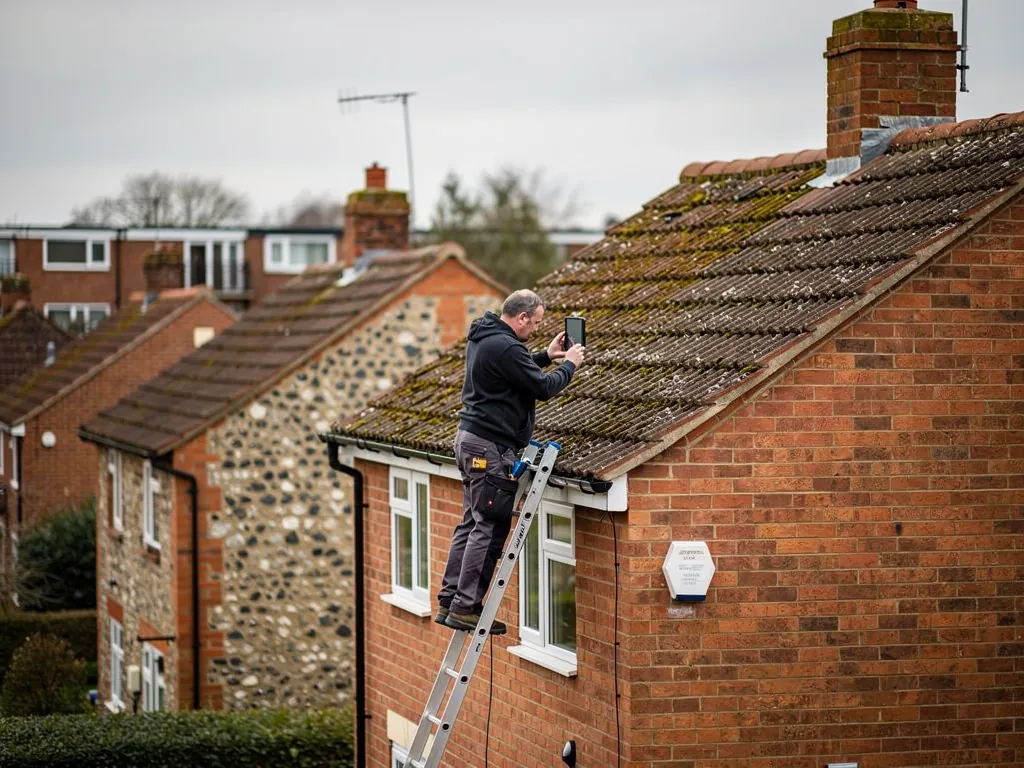
Ask what the roofer saw and how they saw it. Photographs from the roof itself are better than a description shouted from the ladder. The quote should name the work, the materials and the price, and say whether VAT is included. If a firm cannot tell you what is wrong, it cannot give you a fair estimate for the fix.
Compare like with like. Two quotes can differ by hundreds of pounds because one includes scaffolding, waste disposal and a new breathable membrane and the other leaves them out. Before you compare totals, check that each quote covers the same job, including scaffolding, waste and VAT, and ask about anything one firm mentions and another does not. A low price that grows once the roof is open is a familiar story, so ask what happens if the survey finds more, and get the answer in writing.
Warning signs: cash only, no address on paper, pressure to agree on the doorstep, or a fault spotted from the pavement that never shows up in a photograph. A good local roofer puts the total price and the guarantee in writing and lets you think it over. If a trader worries you, Citizens Advice can advise and refer the matter to Trading Standards.
If you sign a contract at home after a survey, the law gives you 14 days to cancel. A roofer can start inside that window only if you ask for that yourself, by letter or email. The Consumer Rights Act 2015 also expects the work to be done with reasonable care and skill.
Ask for the guarantee terms before work starts, not after. Ours is a 10-year workmanship guarantee, given in writing, and it is not insurance backed. Where the job needs building control sign-off, make sure the completion paperwork reaches you. Our guides on choosing a roofing company and spotting doorstep roofers go into more detail.
The short answer
That turns on the covering you have. Natural slate can last a century or more, clay tiles often 40 to 60 years or longer, and concrete tiles often 30 to 60 years. Flat roofs vary most: felt can be 10 to 20 years, while EPDM and GRP can run past 20.
A lifespan is a typical range, not a promise. Exposure, the quality of installation, ventilation and maintenance all decide whether a roof reaches the top of its range or fails early.
Natural slate is the long-distance runner: MyBuilder puts a well-installed slate roof at 80 to 100 years or more, and Welsh slate often passes a century. Clay tiles are long lived too, while concrete tiles usually need replacing somewhere between 30 and 60 years, depending on which guide you read. On older roofs the nails and battens often give out before the slates or tiles themselves.
Felt is the shortest lived, often 10 to 20 years for torch-on systems. EPDM rubber and GRP fibreglass last longer when the deck beneath is sound and the roof drains properly. Ponding water shortens every flat roof's life. BS 6229 sets a finished minimum fall of 1:80, and good practice is to design for 1:40 so the roof still drains once the deck deflects. Many older Swindon garage and extension roofs were laid almost level, which is why they wear out early whatever covering is on them.
Flashings, valleys and abutments decide how long a roof stays dry as much as the main covering does. Correctly installed lead can outlast the tiles around it, but lead that was dressed too thin, fixed too tightly or left without room to move cracks within years.
Clear gutters, keep moss under control and get the roof looked at after a big storm. Small faults caught early stay small. Our page on roof lifespans by material lists the figures with their sources.
On old roofs the nails often give up long before the slates do.


The short answer
Every part of a house or business roof, from one slipped tile to a full re-roof. That takes in pitched, slate and Cotswold stone roofs, flat roofs, chimneys and lead, the uPVC roofline and guttering, roof windows, inspections, moss removal and commercial buildings across Swindon and Wiltshire.
One visit often turns up two jobs: a slipped tile and a blocked gutter, or a leaking flat roof with tired lead above it. As a roofing contractor with eighteen services, we can deal with the whole roof from one survey and one written price, for residential customers and for commercial property such as shops, offices and industrial units.
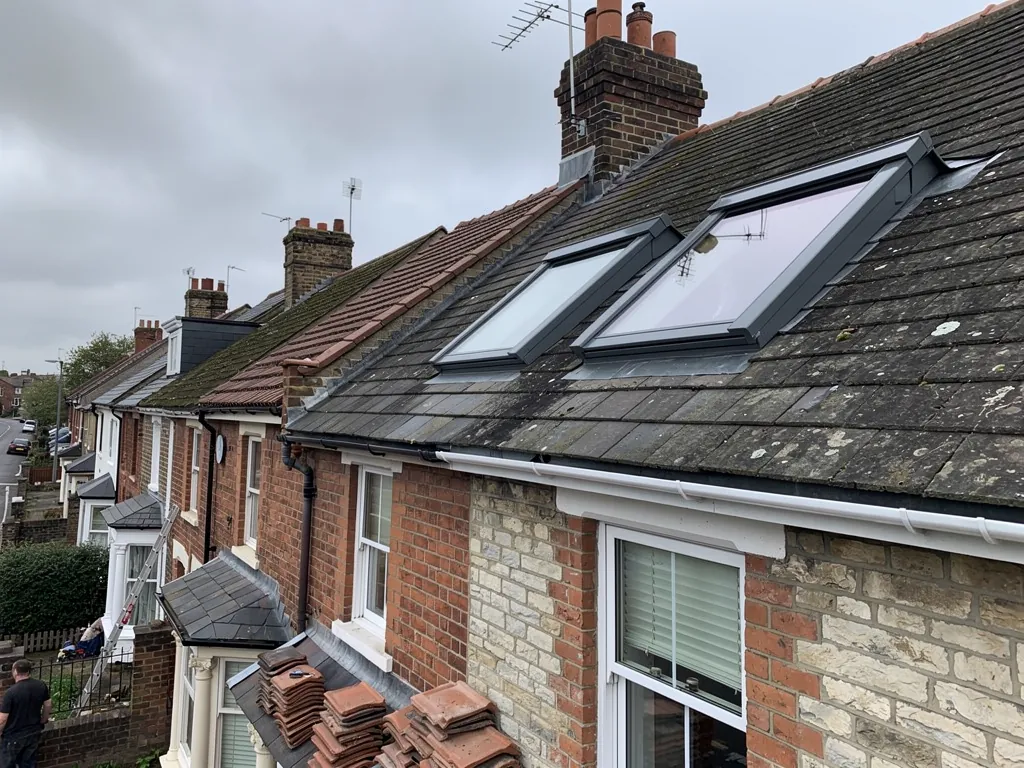
Roof repairs and emergency make-safes deal with slipped tiles, leaks and storm damage. We also do pitched roofing on tiled roofs, the installation of a new covering through roof replacement, natural slate roofing, and Cotswold stone roofing, which is specialist work towards Cirencester and the Gloucestershire edge. Dry ridge and dry verge systems, also called dry-fix, take over from failing mortar, and we fit roof windows and skylights.
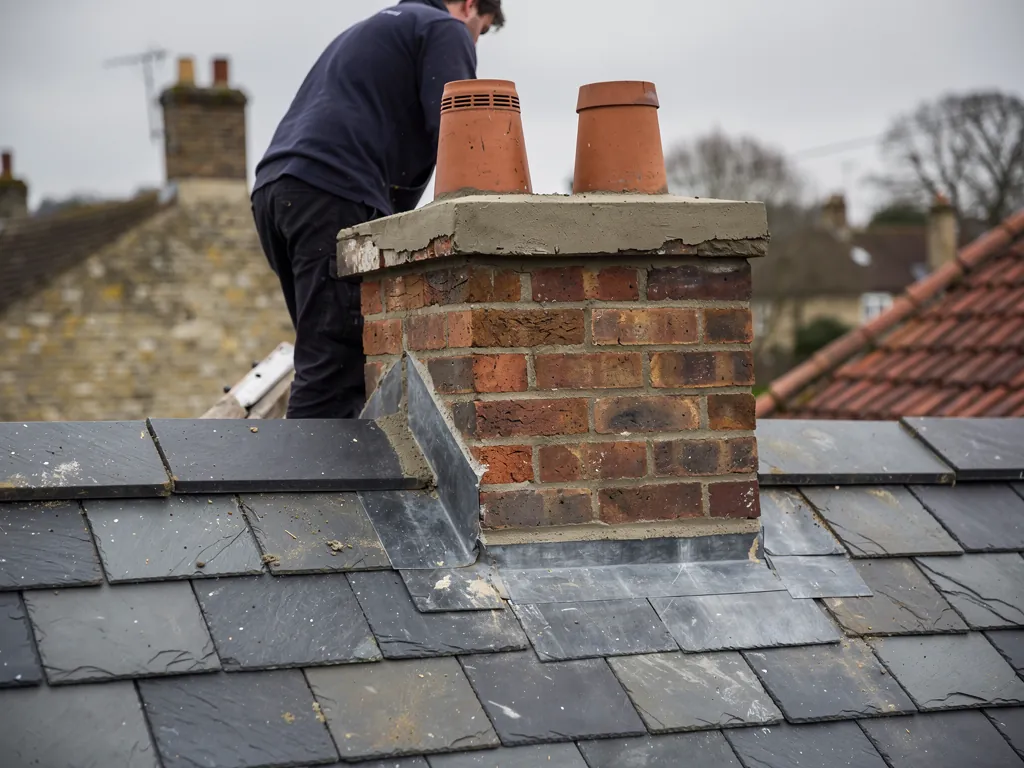
Yes. Chimney repairs take in repointing, new flaunching, the sloped mortar around the pots, and rebuilding a leaning stack. Lead roofing covers flashings, soakers and valleys, and the quality of that lead decides how long a chimney stays dry. At the eaves, guttering, fascias and soffits form the roofline, and we replace rotten timber boards with uPVC.
Flat roofing in EPDM, GRP or felt covers extensions, dormers and garage roofs. A conservatory roof replacement swaps tired polycarbonate or glass; solid roofs need building control approval, which we arrange. Commercial roofing plans access around trading hours. Before or between jobs come a roof inspection or survey with photographs, roof cleaning and moss removal by hand and biocide rather than a pressure washer, and spray foam insulation removal so hidden rafters can be checked.
For advice on anything you have spotted from the ground, send a photo by WhatsApp or ring 01793 626096, and leave the climbing to us. Our seasonal maintenance checklist covers upkeep between visits.
One survey
We look over the whole roof, so the gutter and the chimney get checked along with the tile you called about.
Longer reads on costs, rules, roof types and choosing a roofer, written for houses in and around Swindon.
Swindon and every town and village within 30 road miles: in Wiltshire, places such as Haydon Wick, Highworth, Royal Wootton Bassett, Marlborough and Chippenham; in Gloucestershire, Cirencester and Lechlade; in Oxfordshire, Faringdon and Wantage; and Hungerford and the West Berkshire towns along the M4.
Yes. A single slipped tile or slate is one of the most common jobs we see, and it is worth fixing before water reaches the battens. We refix it mechanically rather than relying on mortar or sealant.
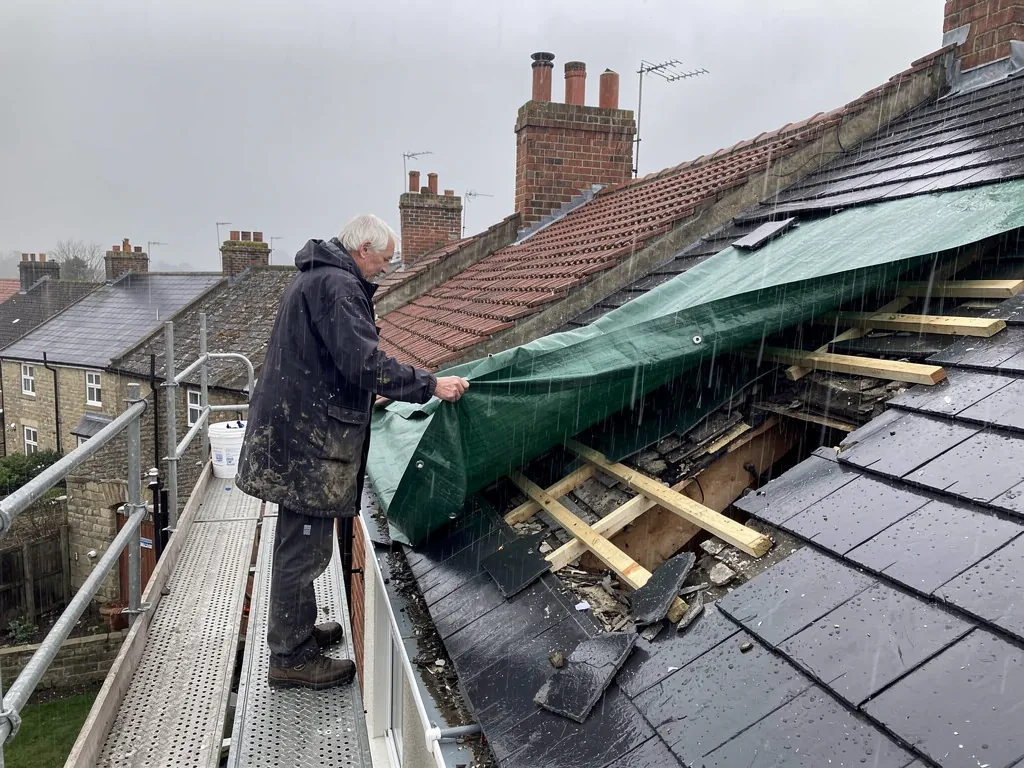
We prioritise leaks and storm damage. The first visit makes the roof safe, usually with a temporary cover or a quick repair, and the permanent fix follows once the cause is clear.
Yes. We match materials like for like and tell you when consent is likely to be needed. In the Railway Village, Old Town and Bishopstone, check with Swindon Borough Council's conservation team before anything that changes the look of the roof.
The written 10-year workmanship guarantee applies to our own work and starts on the day we finish. It is a workmanship guarantee, not an insurance-backed one. Materials carry their own manufacturer warranties.
Yes, alongside our residential work. We repair and replace roofs on commercial property such as shops, offices and industrial units across the M4 corridor, including flat and metal-sheet roofs, and plan access and safety around the business.
Not always. Many repairs on bungalows and two-storey houses can be done safely from ladders, roof ladders or a tower. Re-roofs, chimney repairs and repointing, and three-storey houses usually need scaffolding, and the quote says whether it is included.
Not usually for the roof itself. The gov.uk schemes pay for energy saving: ECO4, through energy suppliers for eligible households, now runs to 31 December 2026. The Great British Insulation Scheme, by contrast, finished on 31 March 2026. The Warm Homes: Local Grant funds insulation, heat pumps and solar panels for eligible owners in England through the council. Loft insulation might be covered next to a re-roof, but the roofing is normally yours to pay for. Ask your council's housing team about any repair help.
What it puts in writing: a total price after a proper look at the roof, an address on paper, photographs of the fault and the guarantee terms. Ask neighbours which local roofers they have used, read recent Google reviews, and walk away from cash-only deals or pressure to sign that day. The dodgy roofer chapter above has the full checklist.
Either can be right. Under BS 5534:2014 a bedded ridge needs mechanical fixings as well as its mortar. A dry ridge uses a kit tested to BS 8612:2018, with no mortar to crack. Mortar often suits a listed house or a conservation area; on estate houses whose mortar has failed, dry-fix is a common upgrade.
That depends on the job and the season. Leaks and storm damage are made safe ahead of planned work. Planned work such as a re-roof is booked once you accept the written quote, around scaffolding and the weather. For a contract agreed at your home, the 14-day cancellation period runs unless you ask in writing, by letter or email, for an earlier start.
Ring 01793 626096, or reach the team by WhatsApp or through the form. Tell us what you have noticed and roughly where on the roof, and we will arrange a visit.
Tell us what’s happening and we’ll call you back.
Or call 01793 626096
Message us on WhatsApp