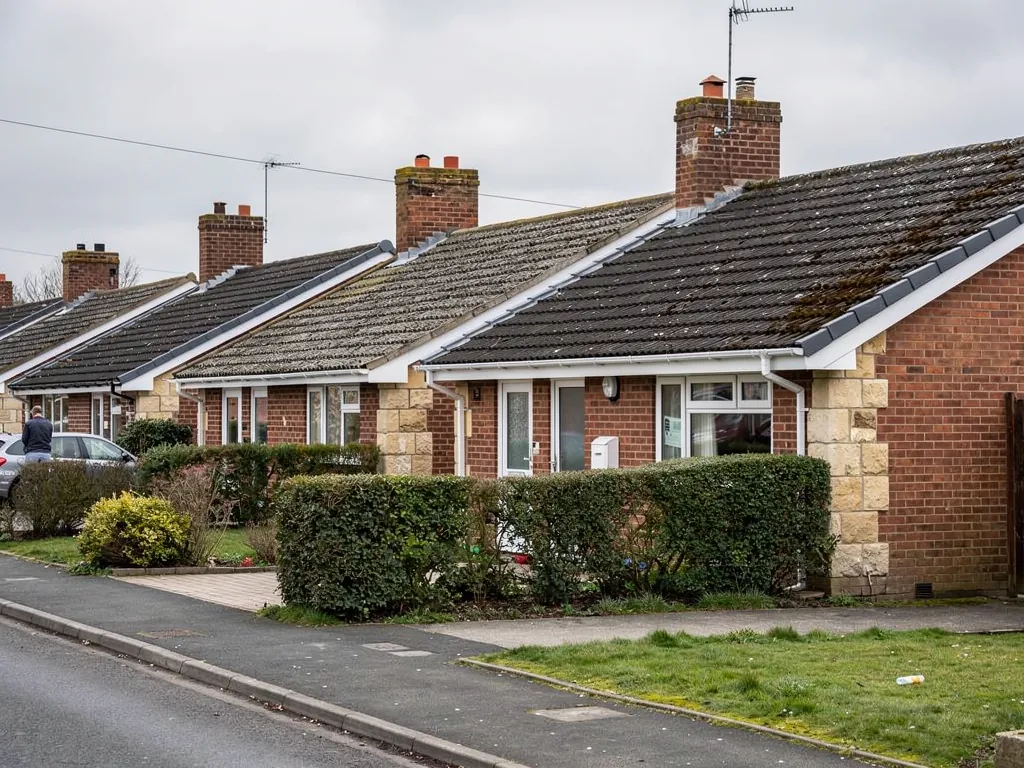
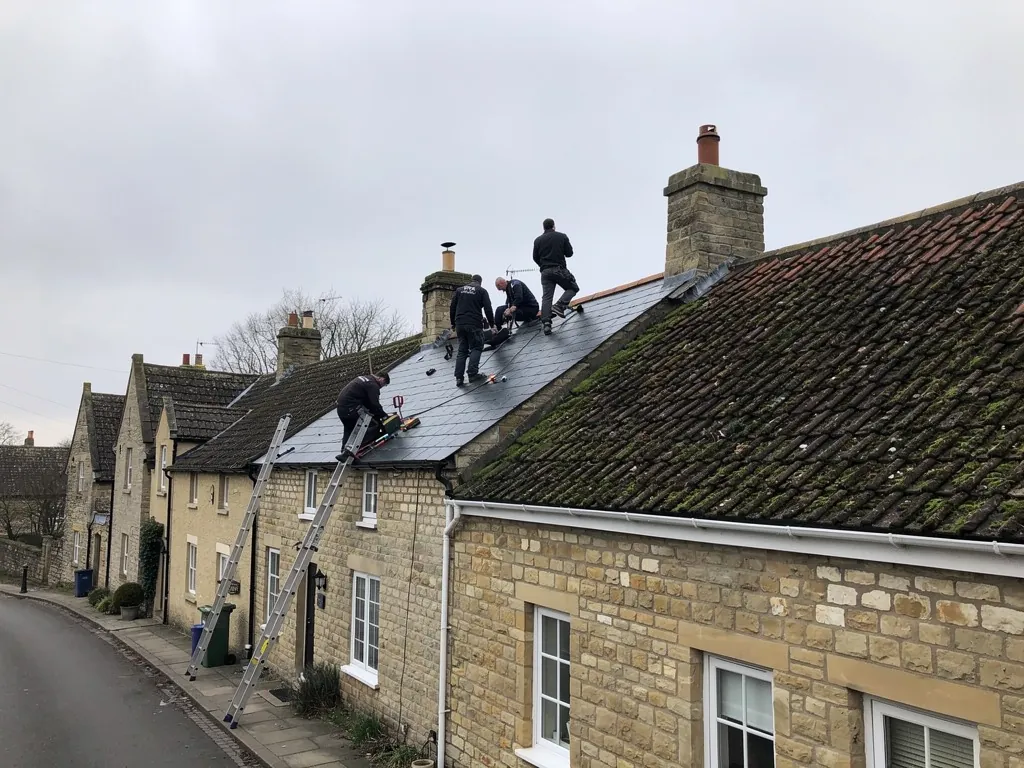
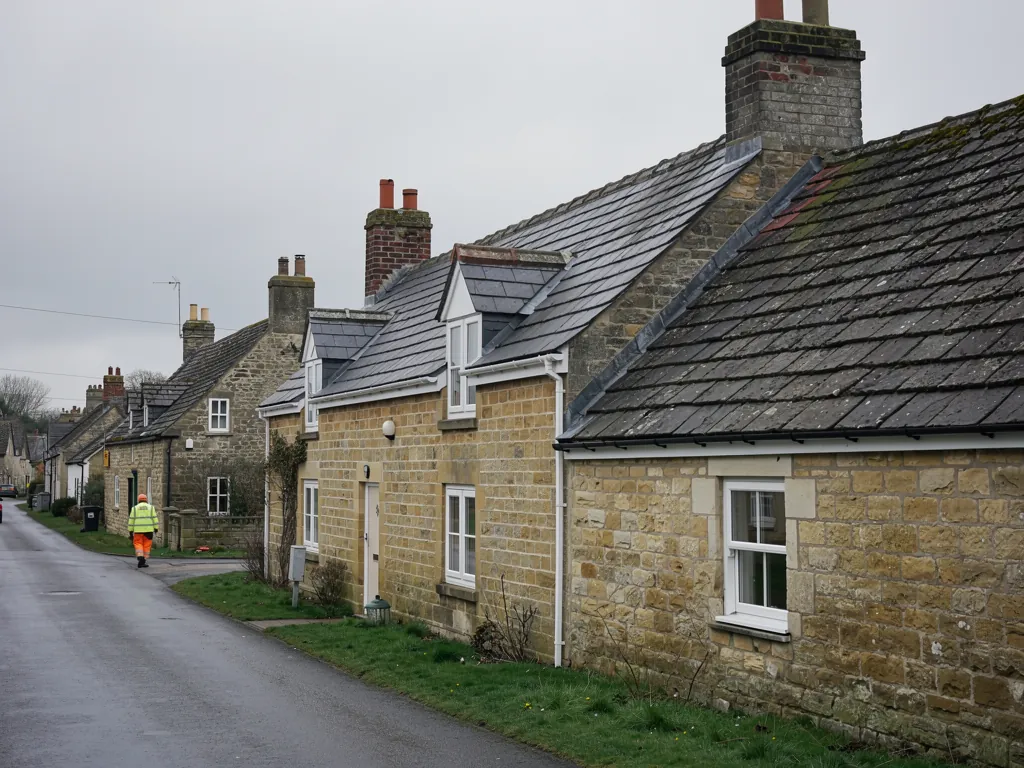
Row of stone cottages with steep stone slate roofs

Roofers in Marlborough

Roof repairs, re-roofing, lead, chimneys and flat roofs in Marlborough, from the clay-tiled frontages of the wide High Street to the later streets that run out towards the downs.

Marlborough's roofs, rebuilt after the fire

Plain clay tiles on a market town street
The High Street frontages

The Great Fire of 28 April 1653 destroyed the Guildhall, St Mary's Church, the County Armoury and 244 houses, and the High Street was rebuilt and widened afterwards. Further fires in 1679 and 1690 led to an Act banning thatch in the town. Wiltshire Council's conservation officer calls plain clay tile the predominant and historic covering in the conservation area. Plain tiles are small, so a roof is made of thousands of overlapping pieces, with tight valleys and hips to match. Repairs need tiles that suit the originals in size, colour and camber, or the patch shows from the street for years. Hips on these roofs are often finished with special hip tiles or lead rolls, and the valleys with purpose-made tiles, so even a small repair can involve several different parts. Chimneys on shared party walls add lead flashings that need checking whenever the slope around them is disturbed.

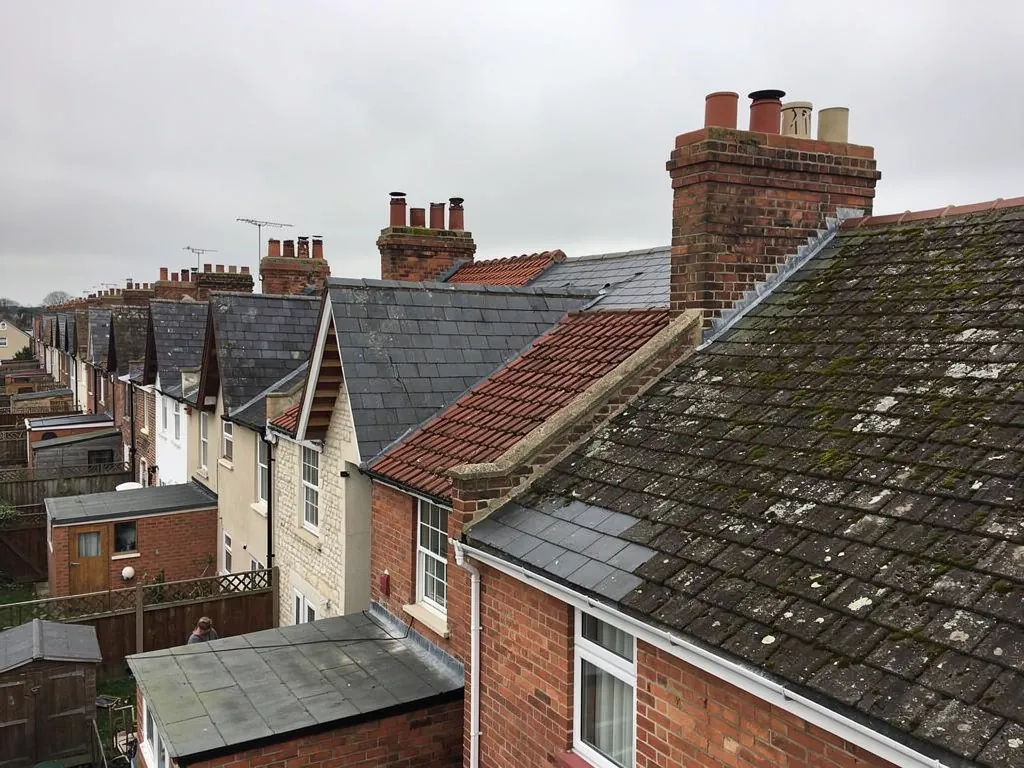
Slate terrace roofs with brick chimneys
Slate, and what the railway brought

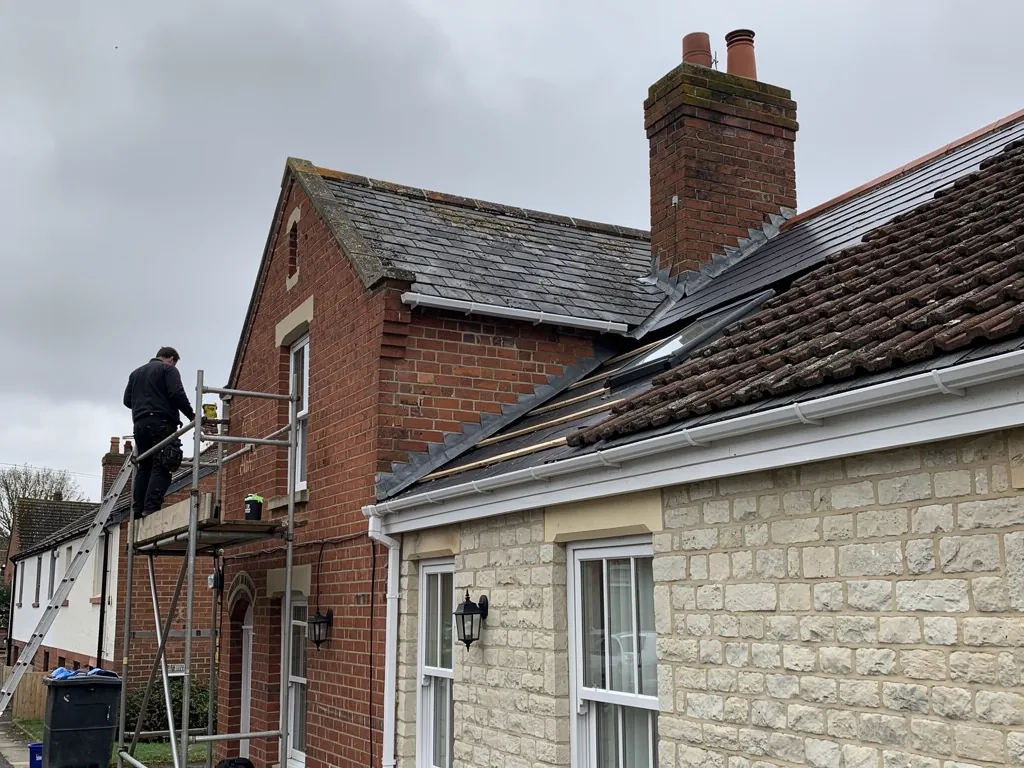
The same officer notes that slate arrived with the railway and is not as common as clay tile. Among clay-tiled neighbours, a slate roof usually tells you a building was put up or re-covered in the railway era. Slate is thinner, lighter and laid in neat regular courses. The faults we expect are rusted nails letting slates slip, lead gone brittle at chimneys, and ridge tiles that sit on nothing but a mortar bed. Matching the size and the shade of the slates already on a terrace keeps a repair from standing out against its neighbours. If a whole run of slates has gone, the cure may be refixing with stainless steel nails or hooks, or re-slating one slope with reclaimed or new natural slate, rather than renewing the whole roof.

Rear extension with a flat roof
Behind the High Street and out to the edge

Away from the old frontages, Marlborough runs out along the Kennet and towards the downs. Later houses, garages, extensions and the buildings behind the shops bring a wider mix: concrete tile, slate, flat roofs over rear extensions and small lean-tos. A flat roof over a shop kitchen or a back extension is a different job from a pitched clay roof, with its own membrane, upstands and falls. The survey identifies what you actually have, then recommends the least work that will put the fault right. Gutters and downpipes on the older extensions often share a fascia with the main roof, so we look at the roofline as one system, check that water reaches the drain, and tell you what is a quick fix and what is overdue.

From Swindon down to the Kennet

Map showing Marlborough and central Swindon. 12 road miles south of central Swindon.

Distance
12 road miles south of central Swindon
Council
Wiltshire Council
Council
Wiltshire Council
Conservation area
Marlborough Conservation Area, with a Conservation Area Statement
National Landscape
North Wessex Downs, on the town's doorstep

Marlborough roof questions

Why are Marlborough's old roofs clay-tiled, not thatched?

Fires in 1679 and 1690 led to an Act banning thatch in the town, passed in November 1690. Clay tile became the traditional replacement.

Is my Marlborough roof covered by the conservation area?

Check the boundary on Wiltshire Council's conservation area map first. Swapping like for like seldom needs consent, yet a new covering, or anything done to a listed building, deserves a call to the council beforehand.

Can plain clay tiles on a High Street roof be repaired?

Yes. Individual tiles can be replaced with ones that match in size and colour, and sound old tiles can be reused where a slope is re-laid.

Q1

What did the Great Fire change about Marlborough's roofs?

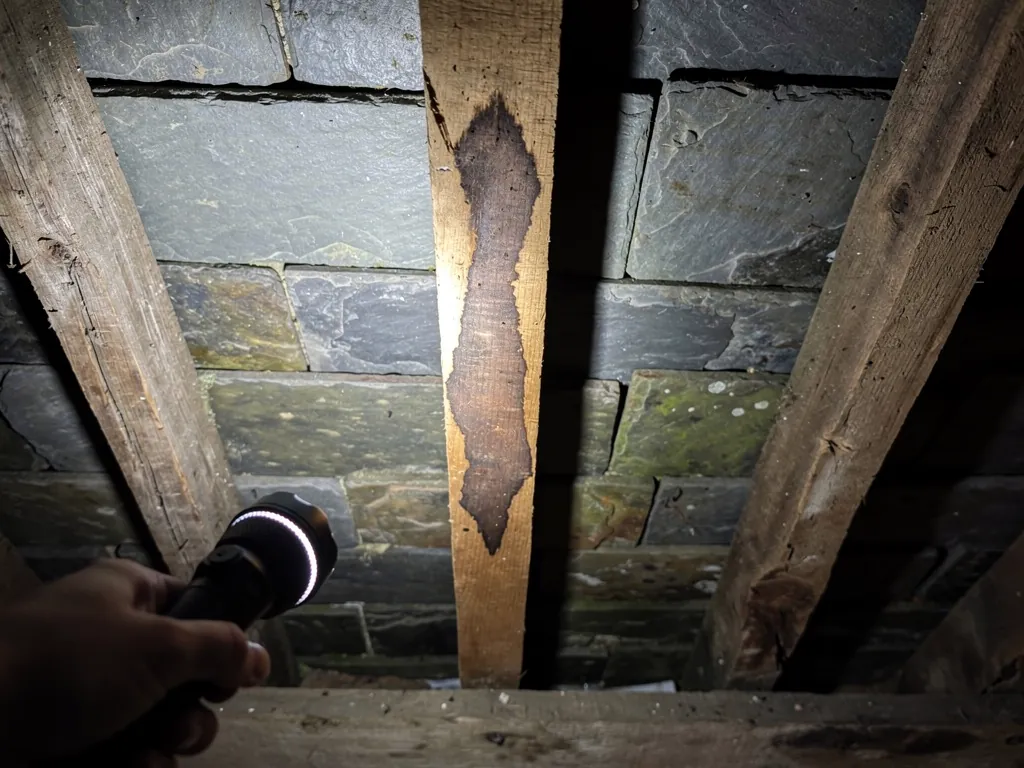
Torch showing a water-stained rafter beneath slates in a loft
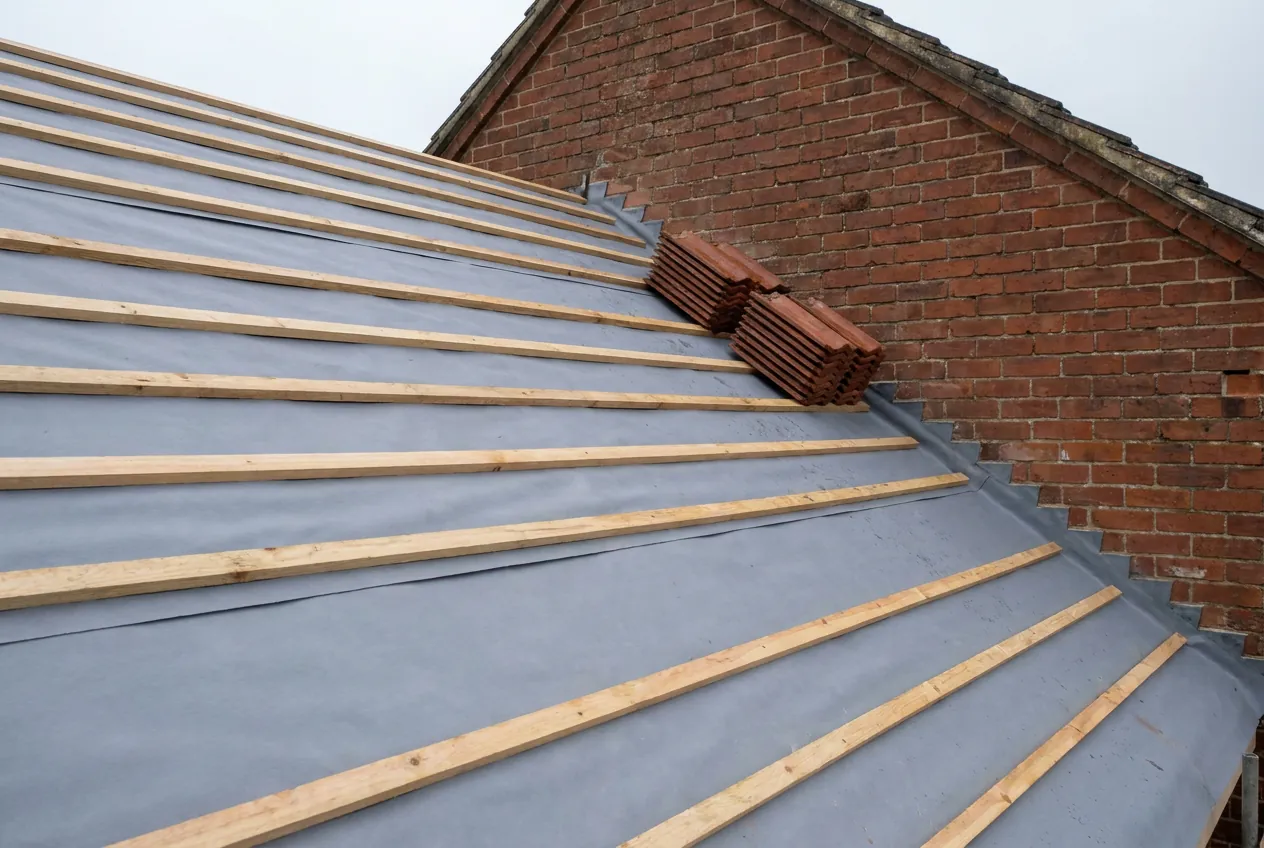
New membrane and battens with plain clay tiles stacked ready

The short answer

It destroyed 244 houses in 1653, and two later fires in 1679 and 1690 led to an Act banning thatch in the town. Rebuilding favoured tile, which is why plain clay tile is described by the council's conservation officer as the predominant and historic covering today.

Few market towns can date their roofs so exactly. The Great Fire began on 28 April 1653 and took the Guildhall, St Mary's Church, the County Armoury and 244 houses. Marlborough then burned again, and after fires in 1679 and 1690 the Act that banned thatch received royal assent on 18 November 1690.

Why did tile win?

Fired clay does not burn, it sheds water well when properly lapped, and it can be made locally and replaced piece by piece. A roof of plain tiles is laid with each course overlapping two below it, so a tile that cracks can be lifted out and swapped without disturbing the slope. That is exactly the quality that keeps old tiled roofs repairable for generations. It also explains why a leak is often traced to a battens-and-nails problem and not the tile itself. Lifting tiles around a stain, checking each batten with a probe and looking for daylight from inside the loft usually locates the fault before a single tile is replaced.

What did the fire leave behind?

The wide High Street is a product of the rebuilding. Buildings along it differ in age and height, so their roofs meet in valleys, parapets and party walls. Those junctions take lead, and lead tires faster than the tile around it.

How can I read my own roof?

Small tiles, a gentle camber and a slightly uneven surface suggest an older plain-tiled roof. Our roof repairs page explains how we deal with slipped and cracked tiles, and the written quote shows what the survey photographs found.

Not every old-looking roof is old. Reclaimed and new handmade tiles can look much alike from the street, which is why we examine the underside and the battens, not just the surface.

Marlborough's fires and what followed
DateEvent
28 April 1653The Great Fire destroys 244 houses and the Guildhall
1679A further fire in the town
1690Another fire, then the Act banning thatch (assent 18 November)
LaterSlate arrives with the railway
Q2

Should a plain-tiled High Street roof be re-covered?

The answer

Not automatically. Plain clay tile can go on for generations while its battens, nails and underlay stay sound, and plenty of faults are confined to one patch. Re-covering makes sense when tiles are failing across a whole slope or the timbers below are decayed. A survey separates those cases.

Clay tile life is a wide range, and old roofs often outlive the figures printed about them. The fixings and the timber beneath usually give out well before the tiles themselves.

Should I repair, patch or strip?

A few cracked tiles, a slipped course or a failing ridge can be put right with a repair. When a slope has lost its fixings or the battens have rotted, the better course is to strip it, sort the sound tiles, renew the battens and underlay, and relay the old tiles with matching new ones filling the gaps. That keeps the look the council values while giving the roof a new structure beneath.

What about valleys, hips and lead?

Where two slopes meet, plain tiles need either purpose-made valley tiles or a lead-lined channel. On a street rebuilt in phases the junctions are numerous, and they are where leaks start. We check each before deciding how much work the roof needs, because a failed valley is cheaper to repair on its own than after a season of water has reached the timber; our lead roofing page explains the codes and what they suit.

Can new tiles match the old?

New tiles that are flat, even and machine-sharp look wrong beside hand-made ones. We select for colour range and texture, and where possible we lay mixed batches so the repair settles into the surrounding roof.

If the survey shows a covering that is simply at the end of its life, you will hear that plainly, with the reasons shown in photographs of your own roof and the full replacement written up as an option.

Our view

Repair what is sound, re-lay the slopes that are failing, and match every new tile to its neighbours.

Q3

What permission does a Marlborough roof need?

Roofers on a slate roof along a limestone village street
Brick end-of-terrace gable beside a limestone house, slate roofs

The short answer

Planning permission is rarely needed to repair a roof in matching tile. The town has a conservation area, sits beside the North Wessex Downs, and has two listed historic churches, so speak to Wiltshire Council before choosing a new material or touching a listed building.

For most homes on the High Street and the streets behind it, replacing tiles with matching ones is maintenance and needs no application. A few situations call for more care.

What does the conservation area mean?

Marlborough Conservation Area has an adopted statement, and Wiltshire Council's conservation officer has said there is no Article 4 direction here, though it is worth asking the council to confirm that for your own address. Changing a tiled roof to another material, or altering how a front slope looks, is something the council will want to hear about before any scaffold is booked.

What about listed buildings and the churches?

Of the two historic churches, St Mary's carries a Grade I listing and is still in worship; St Peter and St Paul is Grade II* and now houses an arts centre. St Mary's, still in Anglican use, comes under the diocesan faculty system run by the church. When a church is closed for worship, ordinary listed building consent applies, as it does to a listed house. If your own home is listed, our starting point is identical materials, and any departure is put to you before a price is written.

Does the National Landscape matter?

The North Wessex Downs National Landscape advises on planning, but Wiltshire Council decides. The designation does not change the rules on a like-for-like re-roof. If you plan roof windows or a dormer, read our skylights page first, because the planning position for those is different.

When is building control involved?

A building control application is not usually needed while a re-cover affects under 25 per cent of the building envelope and under 50 per cent of the roof. Go past those limits and Building Regulations approval applies. Wiltshire Council's building control team, or a registered building control approver, deals with it; for notifiable work we explain the requirements and file the notification for you.

MythA listed High Street building cannot have its roof touched.

FactMatching repairs are routine; it is changes to the character of the building that need listed building consent.

Roofing services in Marlborough

Questions from the wide High Street

Why do Marlborough's older tiled roofs look uneven?

Hand-made plain tiles vary slightly in thickness and camber, and old timbers settle over centuries, so the surface develops a gentle ripple. That unevenness is part of the roof's character. Rather than flatten it, we let each repaired area follow the tiles beside it.

Do you work on shops and flats along the High Street?

Yes. Residential and commercial roofs are both part of our work, including roofs shared over several properties. Access, party walls and neighbours' gutters are planned at the survey, and the written quote covers how the site will be reached and cleared.

Is slate acceptable in place of clay tile in the conservation area?

It depends on the building and the street. Clay is described as the historic covering, with slate arriving later with the railway. A change of material is something to discuss with Wiltshire Council first, and a like-for-like repair avoids the question.

Are Marlborough ridge tiles bedded on mortar alone?

Often, as that was the usual method for a long time. Under BS 5534:2014 a bedding of mortar by itself is no longer trusted with ridge and hip tiles, which now take mechanical fixings too. When we re-bed a ridge we add them, or use a tested dry-fix system where it suits the roof.

Ask us about your roof

Tell us what’s happening and we’ll call you back.

  • Photos of what we find
  • A written quote
  • 10-year workmanship guarantee

Or call 01793 626096

Call Get a quote