
Can any conservatory take a solid roof?
Not automatically. A tiled or plastered roof is heavier than glass, so the frame, the base and the dwarf walls are checked before anything is ordered.
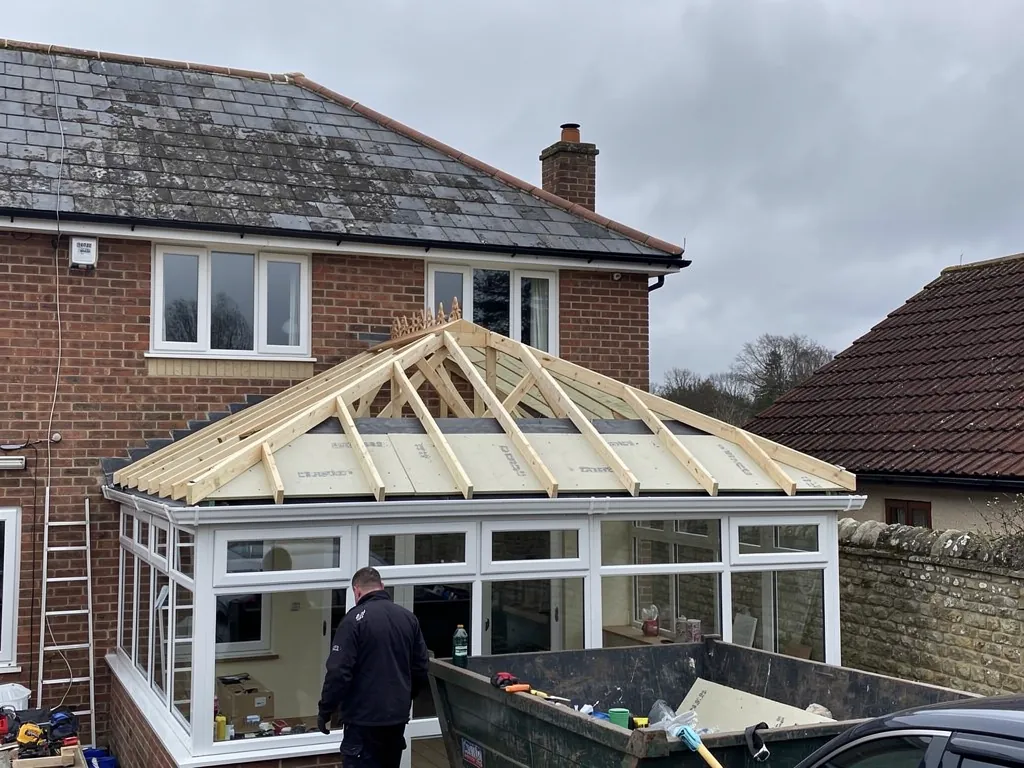
A conservatory roof that leaks, clouds over, rattles in the rain or leaves the room unusable for half the year can be swapped for one that suits the frame underneath. We check the frame first, explain the options and put the quote on paper.
Not automatically. A tiled or plastered roof is heavier than glass, so the frame, the base and the dwarf walls are checked before anything is ordered.
Only for like-for-like glazing. Changing to a solid roof alters the structure, which brings Building Regulations into it, and the roof edge, gutters and wall junctions all change too.
Polycarbonate is often put at around 10 to 15 years, while a tiled roof is quoted at more than 50. The condition of the seals and bars matters more than age alone.
| Job | Typical cost |
|---|---|
| Polycarbonate roof | £2,000 to £5,000 |
| Glass roof | £3,000 to £8,000 |
| Solid roof, tiled or insulated panel | £5,000 to £10,000 |
| Structural reinforcement of the frame, where needed | £500 to £2,000 |
| Scaffold bridge over the conservatory | £650 per week |
These are national guide figures for the roof and not a price from us. Once the frame and the room have been surveyed, a written quote shows what yours needs.
MyBuilder conservatory roof replacement cost guide (updated August 2026); Checkatrade scaffolding cost guide (February 2026).
See all costsPolycarbonate roofsClouded, cracked or leaking sheets taken off and replaced with a new multiwall roof, on the existing bars or on new ones where the old ones have perished.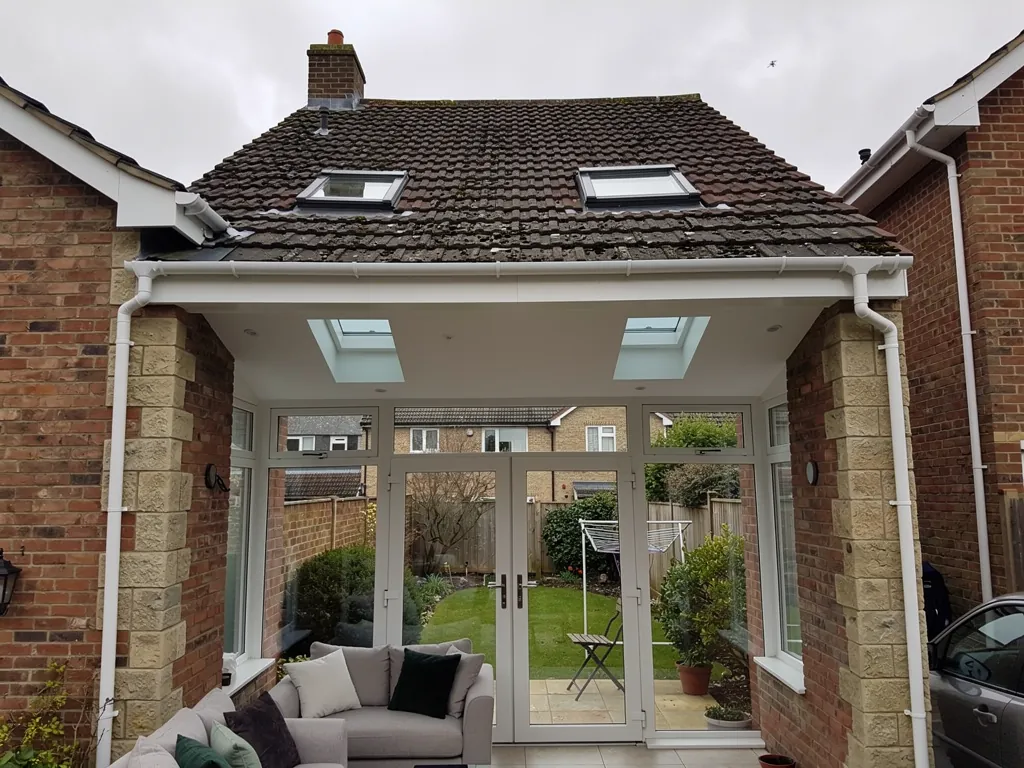 Glass roofsSealed glazing units fitted in new bars, usually with a solar control coating so the room stays usable when the sun is high.
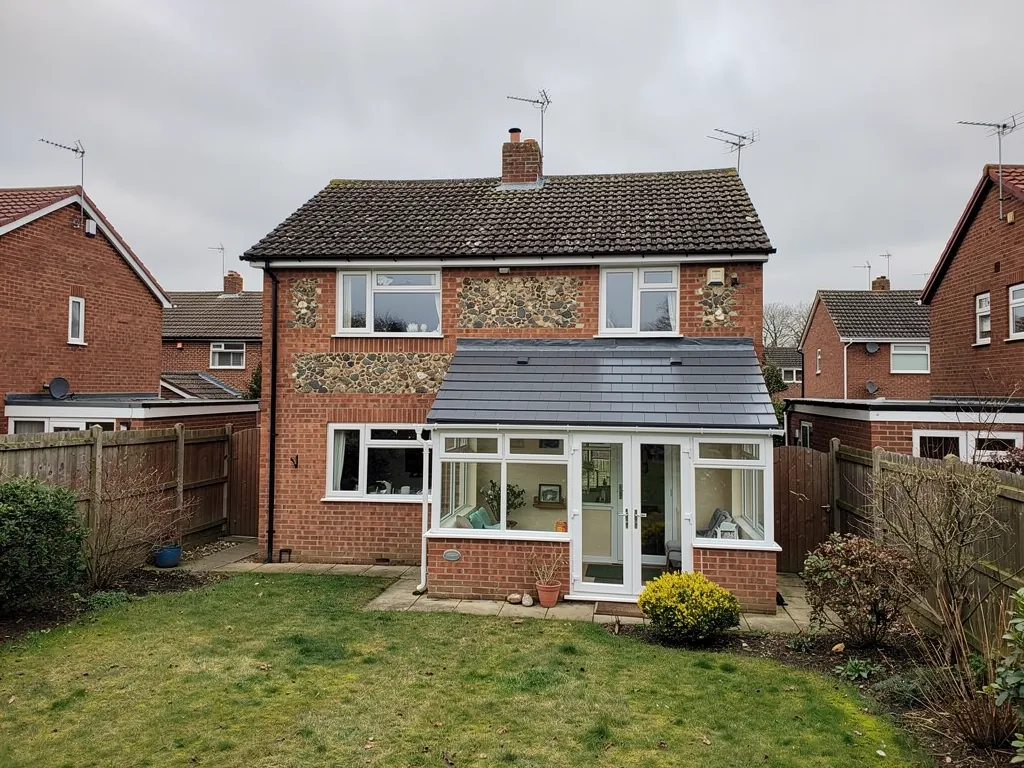
 Solid tiled roofsA lightweight tiled roof with insulation and a plastered ceiling beneath, built on a frame that has been checked for the extra weight.
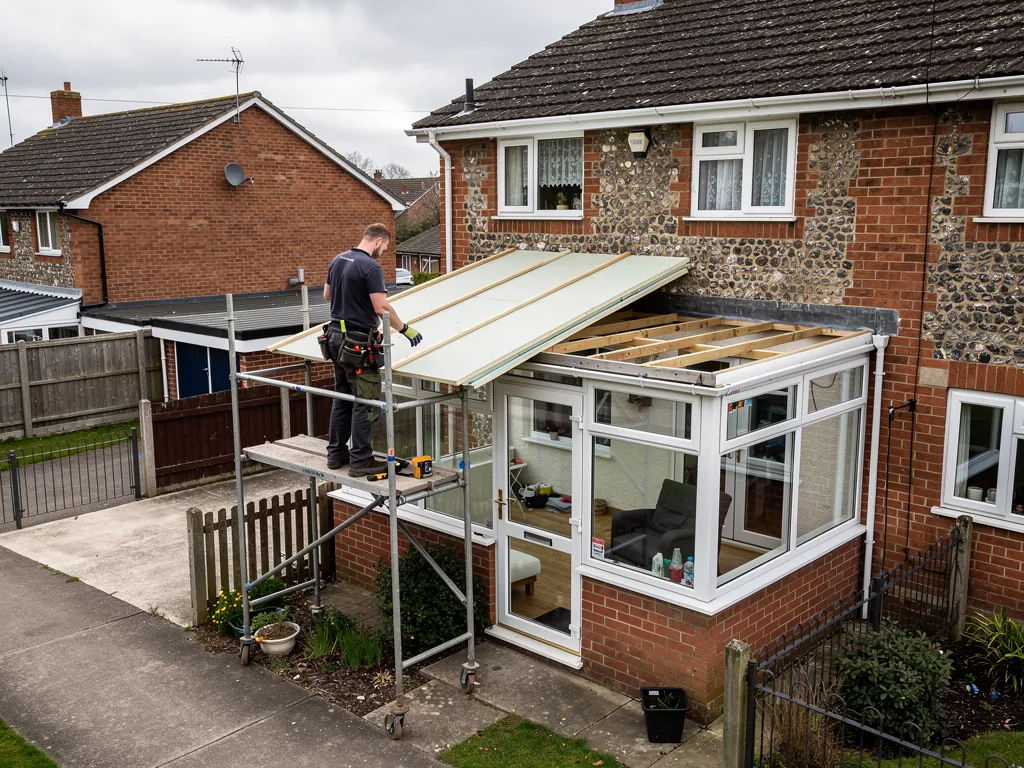
 Insulated panel roofsFactory-made panels that go on faster than a built-up roof, suited to frames where a full tiled build-up would be too heavy.
 Roof edges and junctionsNew lead or flashing where the roof meets the house wall, fresh cappings at the ridge and eaves, and gutters that suit the new roof line.
 Roof windows and ventsOpening roof windows and trickle vents set into a solid roof, so the room still has a way to let hot air out in summer.
Conservatory roofs, from old sheet to new
From deciding whether the old roof is worth saving to what the frame can carry, what the regulations ask and how the work runs.
The short answer
It is worth repairing when the glazing is sound and the fault sits at one junction, one sheet or one gutter. It is time to replace when the sheets are clouded or brittle, the bars have perished, or the room is too hot or too cold to use whatever you do to it.
A conservatory roof is built from many small parts: sheets or glass units, the bars that hold them, the seals between the two, and the cappings and gutters round the edge. Any one of them can fail without the rest being finished. That is why the first job is to find which part has gone, rather than to assume the whole roof must come off.
A split gasket, a lifted capping, a cracked single sheet, a blocked gutter and a gap at the house wall are all repairable. Water that appears at the wall end of the room is often a flashing or sealing problem, and the leaks guide on why a conservatory roof leaks walks through the usual entry points. Fixing one of these is a short visit and leaves the sound parts of the roof as they are.
Clouded or yellowed polycarbonate does not clear, and sheets that have gone brittle crack when they are touched. Guides to polycarbonate put a typical life at around 10 to 15 years, so a roof of that age with algae inside the cells and brittle edges has done its work. Glass roofs fail differently: a misted sealed unit has lost its seal, and the bars may be corroding underneath. When several parts fail together, a patched roof tends to leak again the next season, and that is poor value for money.
Comfort is a separate reason. A room that is too hot in July and too cold in January is a fault in the roof type, not in the sheets, and no repair changes that. Our guide to repairing or replacing a conservatory roof sets out how to weigh the two.
We go up on the roof and inside the room. We look at the state of every sheet and seal, whether the bars are plastic, aluminium or timber, how the roof meets the wall, and whether the gutters drain freely. We photograph each fault and point it out on the screen or print, so you are choosing from evidence rather than from a sales pitch. A roof with one cracked sheet and sound bars should have one sheet replaced, and that is what the written quote will show.

Please avoid sealing over a leak with mastic before we visit. It can hide the real entry point and makes the sheet harder to bond when we do the repair or the replacement.

The short answer
Polycarbonate is the lightest and lowest in cost, glass gives the brightest room, and a solid roof is warmest in winter and coolest in summer. A tiled roof looks like the house and lasts longest. The frame decides how far up that ladder you can go.
There is no single best conservatory roof. Each type trades light, temperature, weight and cost against the others, and the right one depends on how you use the room. Our guide to conservatory roof options compares them in more detail.
Multiwall polycarbonate is light, cheap and easy on the frame, which makes it the usual replacement for an older roof. It lets in light but also heat, and it is noisy in heavy rain. Glass lets in more light and sounds better. A modern glass roof carries a solar control coating to keep out some of the heat, and it is heavier than polycarbonate. Both leave the room following the weather outside. Our answers on keeping a conservatory from overheating and on whether roof blinds help cover those fixes.
A solid roof has an insulated build-up and a plastered ceiling, so the room stays steadier in all seasons and is quieter in rain. It costs more, weighs more and brings Building Regulations into the job. Our answer on lightweight tiled roofs explains how the tiles keep the weight down.
The new roof follows the footprint you already have: a lean-to against the house, a faceted Victorian or Edwardian design, or a gable front. Within that shape the style is a real choice. A glazed roof keeps the conservatory look, while a tiled one makes the room read more like an extension of the house. Tiles come in a range of colour and texture, so they can sit close to the main roof or stand apart in a neutral finish, and the trims are matched to a white, grey or dark uPVC or aluminium frame. Our answer on matching a conservatory roof to the house covers the design side.
An insulated solid roof keeps in far more heat than any glazed one. Thermal performance is written as a U-value, which measures heat escaping per square metre for each degree of difference, so a smaller U-value means a warmer roof. Approved Document L caps a roof built or rebuilt on an existing home at 0.15 W/m²K, and a conservatory left open to the house, or heated from the house system, is treated as an extension for those rules. The same insulation holds back summer heat and glare and dulls rain noise, which is what makes year-round use realistic and keeps the heating from chasing the room on energy bills. On a glazed roof, solar control glass trims heat and glare without the weight.
Yes, whichever way you go. A solid roof need not mean a dark room: roof windows between the rafters, a glazed panel or a lantern over the middle bring the daylight back, and an opening window lets hot air escape. On a glazed roof, clear solar control glass lets in far more natural light than clouded polycarbonate, and a self-cleaning coating cuts the maintenance. Glass quality differs between systems, so ask which coating is specified. Our answer on skylights in a conservatory roof covers where they work best.
If the room is a dining area or home office, steady temperature matters more than extra daylight, and a solid roof deserves serious thought. If it is a plant room or a summer sitting room, glass or polycarbonate may suit better and cost less. We ask how you use it before recommending anything.
Whichever roof you choose, ask what the supplier's warranty covers and for how long. A manufacturer's guarantee on the product is separate from our written 10-year workmanship guarantee on the fitting.
| Roof | Weight on frame | Light | Year-round comfort |
|---|---|---|---|
| Polycarbonate | Lightest | Good, diffused | Follows the weather |
| Glass | Moderate | Brightest | Better with solar coating |
| Insulated panels | Moderate | Little, unless windows added | Steady |
| Tiled | Heaviest | Little, unless windows added | Steadiest |
The answer
Often, but it has to be checked. A lightweight roof can go on most sound frames. A solid roof is heavier, so we look at the frame, the base and the dwarf walls first, and where they are not up to it, strengthening is part of the quote.
A conservatory frame was designed for the roof that came with it. Put something heavier on top and every joint in that frame, down to the footings, has to carry more than it was built for. The frame checks guide on what we look at before a new roof goes into the detail.
We check whether the uPVC, aluminium or timber frame is straight and sound, whether the corners and mullions are tight, and whether any steel or reinforcement inside the frame is present and in good order. A frame that has racked, sagged or rotted will not take a heavier roof. A heavier roof can pull a weak frame out of square, and then the doors catch.
Under the frame sits a base: usually a concrete slab or strip footings with dwarf walls. Cracks that are growing, a slab that has dropped or walls that are out of true tell us something has moved. Nobody should add weight to a base that is still settling. Where the base is sound, we record that in photographs, and they go into the building control file if there is one. If the dwarf walls have cavities, we check how they are tied to the frame at the top, since that is where the new load lands.
Where the frame cannot carry the new load, it can be reinforced with steel or timber, or the roof can be changed to a lighter build-up. MyBuilder's guide puts structural reinforcement at roughly £500 to £2,000, which is cheaper than finding out after the roof is on. In some cases a lighter insulated panel roof is the better answer than a tiled one, and we put that in the quote when the numbers favour it. We will not recommend a roof the structure cannot carry, whatever the room looks like on a brochure page.
The wall the roof leans on has to take the new load too. Existing flashings, lintels over any old openings and the condition of the brickwork where the roof meets the house are all looked at, since a roof fixed into a weak wall inherits that weakness.
If a structural engineer is needed, we tell you at the survey rather than part-way through. Some building control teams ask for calculations on a solid roof anyway, and having them early avoids a stop in the work.
The frame does the carrying, so the frame gets checked before the roof is chosen.
MythAny conservatory can take a tiled roof if the roofer is careful.
FactThe frame, base and dwarf walls decide it. Care in fitting does not make an unsound frame carry a heavier load.
The short answer
A like-for-like glass or polycarbonate replacement does not normally need a building control application, but replacing the roof with a solid one is classed as a material alteration, and that does. Planning permission is a separate question that depends on how much the roof changes.
People are often surprised that changing a roof is more than a tradesperson's decision. Two different sets of rules are involved, and they ask different questions. Our guide to conservatory roof regulations covers each in turn.
Homebuilding and Renovating, in a guide updated in July 2023, says that a solid roof replacing the old conservatory structure is treated as a material alteration by the Building Regulations, so a building control application is needed. The guide points out that the frame is then carrying a heavier load, which is why the structure is checked. The Planning Portal says a new roof must be structurally safe, energy efficient and properly ventilated. For a swap from one glazed roof to another of a similar weight, a building control application is not normally needed, though we check the position with building control if the roof type or weight changes.
In Swindon, Swindon Borough Council runs its own building control team, and a registered building control approver is the private alternative. When the roof is notifiable work, we set out the paperwork and see to the Building Regulations notification for you. For a house outside Swindon, the council's own team differs, and we tell you which applies at the survey.
The Planning Portal says most alterations to roofs are permitted development, provided they meet the limits in the legislation, and that planning permission may be required if the change significantly alters the structure or appearance of the roof. A glazed roof swapped for another glazed roof rarely raises the question. A taller solid roof with a new ridge may. If the house is listed or sits within a conservation area, ask Swindon Borough Council's planning team before you order anything, as our guide on conservatory roofs on listed homes and in conservation areas explains.
A solid roof put on without approval can hold up a house sale, because the buyer's solicitor will ask for the completion certificate. Getting the paperwork right at the start means the certificate exists when you need it. File it alongside the written guarantee and the roof specification.
It is a nickname for the time limit on planning enforcement, and the figure has moved. In England, building work done without planning permission used to become immune from enforcement four years after it was substantially completed. The Levelling-up and Regeneration Act 2023 raised that to ten years from 25 April 2024, while work substantially completed before that date keeps the four-year limit. Wales still uses four years. The rule is about planning only and says nothing about Building Regulations approval, so a solid roof fitted without it still has no completion certificate when the property is sold. For an older roof in doubt, ask the council or a solicitor who specialises in property; section 171B of the planning Act holds the wording.
You can read the Planning Portal's guidance on changing a conservatory roof yourself. If in doubt, your local council's planning and building control teams will advise.

The short answer
Guide figures for a polycarbonate roof are around £2,000 to £5,000, glass at £3,000 to £8,000 and a solid roof at £5,000 to £10,000. MyBuilder gives an average of about £4,500 across all the types. Frame work, access and the roof edge move your figure within those ranges.
Conservatory roofs have a wider price spread than most roofing jobs, because the three main types are such different products. Our conservatory roof cost guide goes through the figures one by one.
MyBuilder, in a guide updated in August 2026, gives a typical range of £2,000 to £10,000 or more, with an average of around £4,500. By type it puts polycarbonate at £2,000 to £5,000, glass at £3,000 to £8,000 and solid roofs at £5,000 to £10,000. These are national averages, and a Swindon job lands somewhere inside them. Your own figure is set by the roof and the frame, and it is confirmed in writing after the survey.
Size comes first, since every extra metre of roof is more material and more labour. A Victorian or P-shaped conservatory with several facets costs more than a simple lean-to of the same floor area. The frame comes next: reinforcement is put at £500 to £2,000, and it is better found at the survey than half way through. A solid roof adds the building control application and the plastering. Access matters too: a conservatory bridge in scaffolding is about £650 per week according to Checkatrade's February 2026 guide, and it is needed where the roof can't be reached safely from the garden.
Keeping the existing frame, choosing a lighter roof type and having the garden clear for access all help. Replacing polycarbonate with polycarbonate on sound bars is the lowest-cost route. So is repairing rather than replacing, when the survey says that will do. We would rather quote the smaller job that properly fixes the problem than the larger one that earns more.
Ask whether the quote includes VAT, the old roof's removal, the gutters and any structural work. A figure that leaves them out cannot be compared with one that includes them. Ask too how long the price holds, since glass, tiles and scaffold hire all change in cost over a season. A customer holding two quotes far apart is often looking at two different jobs.
Ask each firm for photographs of what it found on your roof. A quote based on a photograph of your frame is worth more than one based on a guess from the pavement.
What it typically costs
The answer
The old roof is stripped, the frame and wall junction are checked, the new roof is fitted and sealed, and the gutters are connected. A glazed roof swap is quicker than a solid roof build. The site is left tidy and the waste goes with us.
Most of the disruption is outside, but the conservatory itself is out of use for the duration of the work, and the doors between it and the house stay closed. The detail depends on the roof type, but the shape of the work is the same. Our conservatory roof replacement process guide covers it step by step.
Furniture and anything fragile inside the conservatory is moved out or covered. If the roof is to come off in one day, we plan the order of work to keep rain out, because a conservatory with no roof is open to the weather. Where a scaffold bridge is needed, it is put up first.
The old sheets or glass and the bars come off in sequence. This is when the top of the frame can be seen for the first time, so we check it again and photograph it. If something is different from the survey, such as rot in a timber plate, we show you and agree the next step before going on. Any extra is priced and agreed with you before we carry on, because a surprise on the invoice helps nobody.
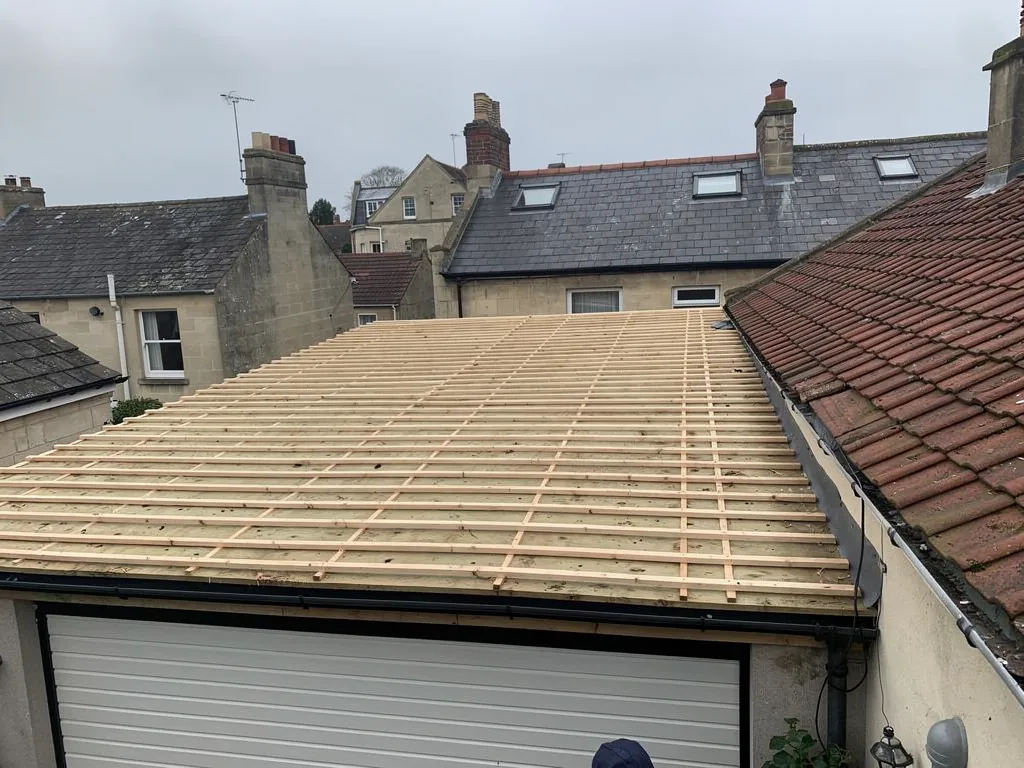
A glazed roof is fitted bar by bar, then glazed, sealed and capped. A solid roof is built up in layers: structure, insulation, membrane, battens and tiles, then the internal ceiling and plastering. That takes longer and depends on dry weather for the outside layers. Lead flashing is dressed where the roof meets the house wall, and the gutters and downpipe are reconnected. Where the new roof is higher than the old one, in our experience the wall junction is the detail to watch most closely, because that is where a new conservatory roof most often fails.
A like-for-like swap of polycarbonate or glass is usually a matter of days on site. A tiled conversion runs longer, because the roof goes on in layers and the new ceiling is plastered, and the plaster needs to dry before it is painted. Wet weather can pause the outside work, and a building control application adds time before anyone starts. Nobody can use the room while the installer works, and the door to the house is kept shut and weather-tight every evening. Our answer on how long a conservatory roof takes goes stage by stage.
By then the frame was checked before we quoted, the price was one written total, and building control was seen to where the roof needed approval. Where we can, we test the roof, then leave the site tidy and carry the waste off. Photographs of the finished work come to you with the 10-year workmanship guarantee, in writing. Where a building control application applies, an inspection is booked at the right stage, and the completion certificate follows when it signs off.
A contract signed at your home carries a 14-day cancellation period. Work begins inside it only when you have asked us, on paper or by email, to start sooner.
A new roof can change what your home insurance is covering, so it is sensible to go through your policy with your insurer about the change. Our answer on telling your insurer about a new conservatory roof covers the questions to ask.
Our view
Pick the roof that suits how you use the room, then make sure the frame can carry it.
Further reading on roof types, regulations, leaks, heat, noise and the questions that surface once a quote is in hand.
Often, yes. If the survey shows the frame is straight and sound, a new roof can go on it. For a solid roof we check it can carry the extra weight, and strengthen it if not.
We plan the work so the roof is stripped and covered again in the same visit where we can, and we make it watertight at the end of every working day.
It can reduce it, but the cause is moisture in the room and a cold surface. A solid or well-vented roof usually helps more than a different sheet.
The job pauses while we photograph the rot and walk you through it. Nothing outside the quote goes ahead until you have agreed it on paper.
Rarely for the roof itself. Government-backed schemes fund warmer homes through loft or wall insulation, solar panels or a heat pump for households that qualify, not a new conservatory roof. In England the Warm Homes: Local Grant is run by councils for lower-income households whose energy certificate is rated D to G. Councils also hold a discretionary power to help with home repairs, sometimes as a loan to be repaid, so ask Swindon Borough Council or your Wiltshire council what it offers locally.
Yes. We fit conservatory roofs across the Wiltshire towns around Swindon, such as Marlborough, Highworth, Purton, Wroughton and Royal Wootton Bassett, and over into the Vale of White Horse and the Cotswold edge. Our areas we serve page lists every place.
Send us a photo of the conservatory from the garden, one from inside looking up at the roof, and a note of what bothers you most, whether leaks, heat, cold or noise. We will arrange a visit to check the roof and the frame, and the written quote follows.
Tell us what’s happening and we’ll call you back.
Or call 01793 626096
Message us on WhatsApp