
Fitting a solid roof to a conservatory sounds like a change of covering. In the eyes of the Building Regulations it is more than that. The new roof is heavier, it has to keep heat in, it has to shed water, and it has to be carried by a frame designed for something lighter. Homebuilding & Renovating treats a solid roof going onto a conservatory as material alteration work, and says a building control application must be submitted.
Nothing here should put you off the project. It is a prompt to treat the paperwork as part of the build and not an afterthought. This guide explains what a material alteration is, what the application asks for, how the structure is checked, and what to do if a roof has already gone on without sign-off. It belongs with the rest of our conservatory roof replacement advice, alongside our guides on glass, polycarbonate and solid conservatory roofs and on whether your frame can take the weight.
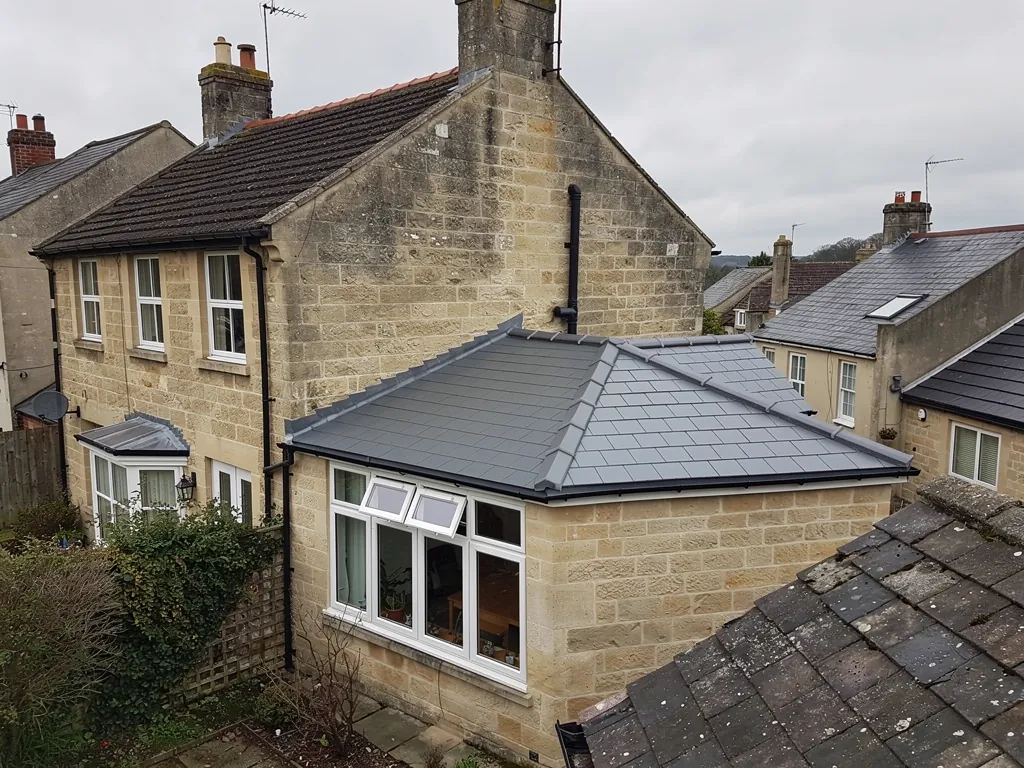
What makes a solid conservatory roof a material alteration
Building Regulations cover new building work, and they also reach changes to existing buildings. Putting a solid roof in place of a light one falls into that category, because the load on the frame goes up.
Approved Document A deals with the same point from the structural side. Where a structure cannot sustain a proposed increase in loading, perhaps because members are overstressed or deflect so much that water ponds, strengthening or replacing the members is classified as a material alteration too. In other words, the roof is not looked at alone. The frame, the base and the connection to the house wall all come into view once the weight changes.
The Planning Portal puts the general rule briefly: a new conservatory roof must comply with the regulations so that it is safe structurally, efficient with energy and properly ventilated. Those three tests, structure, energy and ventilation, are the spine of every solid roof application.
Does a like-for-like glass swap count?
The Planning Portal is plain that any new conservatory roof has to meet the regulations. A swap of one light covering for another is a lesser change than a solid roof, but the safe course is to ask the building control team before assuming. We raise it at survey, and if the answer is unclear we ask the council's building control team before quoting, not after.
What the building control application asks for
An application is a description of the project in enough detail for someone else to check it. For a solid conservatory roof that usually means drawings of the existing structure and the proposed roof, a specification of the build-up from ceiling to covering, and the structural information for any steelwork or timber that carries the load.
The thermal build-up is shown, since the roof has to be efficient with energy. A solid roof is, after all, mostly insulation, and the layers need to be arranged so that warm moist air from the room cannot condense in the wrong place. Ventilation is the other half of that, and the application shows how air is allowed to move where it must.
Who prepares the drawings?
Where the work needs a notification, we explain which consents apply and send it in for you. Where structural calculations are needed, they come from a suitably qualified person and are part of the submission, not an extra you chase later.
How long does the application take?
That depends on the body dealing with it and the route used. A Building Notice allows work to begin without waiting for approved plans, while Full Plans waits for a decision. We talk through the timing before a start date is promised, including how long drawings take and when an inspector can attend, and our answer on how long a conservatory roof replacement takes shows how the weeks fit together.
Full Plans or Building Notice for a conservatory roof
Swindon Borough Council's building control team explains the two routes on its application page. Swindon says Full Plans suits any kind of building work, houses included, and that a Building Notice is an option for domestic jobs.
The difference is how much is settled on paper before work begins. With Full Plans, drawings and calculations are checked and a decision is issued, and you build knowing the design has been accepted. With a Building Notice there are no approved plans to wait for, so the inspector examines the work as it proceeds and can ask for changes on site. That suits a straightforward job on a frame everyone understands. It is a poorer fit where structure is in doubt, because a change requested halfway through costs more than one raised in advance. Neither route is a short cut: the standards the work has to meet are the same, and only the timing of the scrutiny differs.
For a solid roof on a frame that has not yet been checked, Full Plans is often the more comfortable route, since the structural answer is on paper before the old roof comes off.
We tell you which route we are using and why, and the reason sits in your quote rather than being buried in the paperwork.
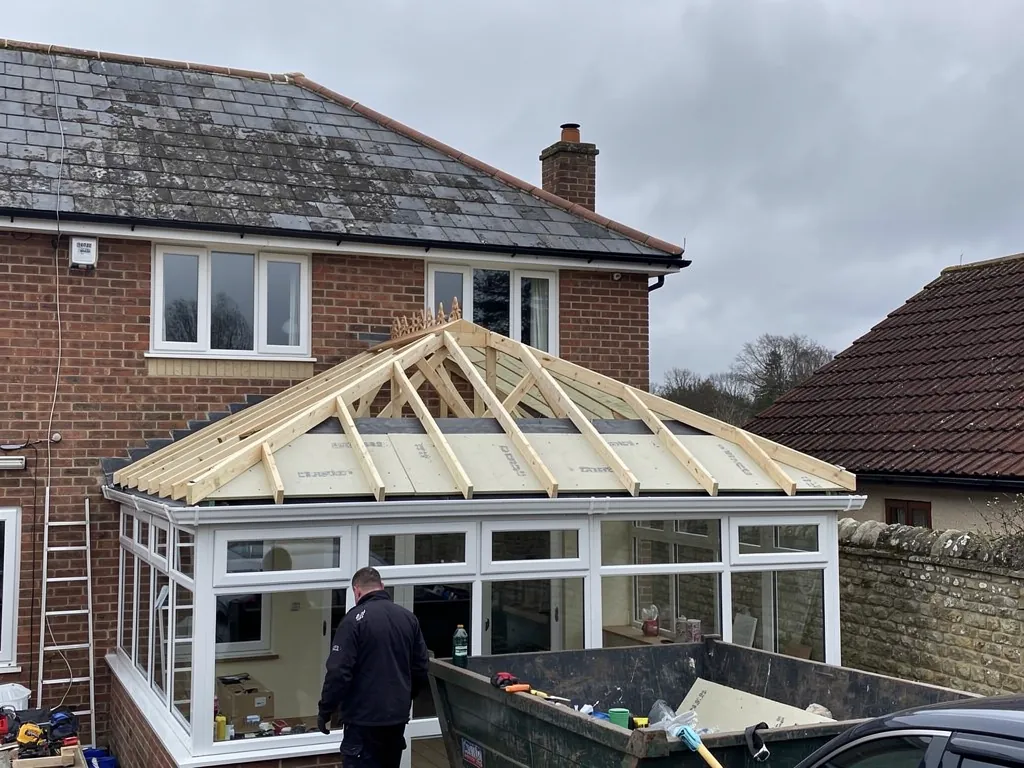
The structure is what the application hangs on
Of the three tests, structure is the one that most often changes the project. A conservatory frame was designed for glazing, and the dwarf walls, the slab and the ties back to the house wall were sized to match. Homebuilding & Renovating notes that these frames are now asked to bear more than they were meant to.
Where the frame is not up to the new load, the answer is usually reinforcement, with steel or additional timber that takes the weight off the window profiles. MyBuilder's guide, updated on 21/08/2026, gives a typical national range of £500 to £2,000 for structural reinforcement. It is published as a guide to cost, not a Skyline price, and what your frame needs appears in the written quote.
What gets checked on site?
The survey looks for movement in the dwarf wall, cracks, doors and windows that stick, and the way the existing roof meets the house. It also looks at the foundations as far as they can be judged from what is visible. Our guide to frame checks for a solid roof lists those signs one at a time.
Can a roof be too heavy for the structure?
Yes. When the structure cannot carry the load even with strengthening, a lighter covering is the better recommendation. Our approach is the smallest job that really settles the fault, and sometimes that means telling you the solid roof is the wrong choice for this particular frame.
Planning is a separate question
Building Regulations decide whether the roof is safe and efficient. Planning decides whether the change is acceptable in its setting. The two are separate, and getting one does not answer the other.
The Planning Portal notes that most roof alterations are permitted development as long as they remain within the legal limits, and that planning consent can be needed where a change greatly alters the roof's structure or look. A conservatory that gets a markedly taller, differently shaped solid roof could fall into that second group. The details of when that happens are covered on our answer about whether a solid conservatory roof needs planning permission.
Two situations call for a conversation with the planning team before you commit. One is a listed house, where listed building consent is a separate legal requirement. The other is a property in a conservation area with an Article 4 direction, where permitted development rights may have been withdrawn. For a Swindon address, Swindon Borough Council's planning team is who to ask.
We raise these questions at survey and note the answers in the quote, so the work is not priced on an assumption. With a listed house we would most want you to speak to the council first, because the consent route there can add time before any building control application is even lodged.
Inspections, sign-off and work that is already done
Once an application is in and work begins, building control inspects at set stages. Swindon Borough Council asks for at least 48 hours' written notice before commencement and at least 24 hours for other inspections, so we book them as the work progresses and make sure the roof is open and visible when the inspector arrives. For a conservatory roof the key stages are usually the structural work before it is covered and the finished roof.
When the inspections are satisfied, the sign-off is issued. Keep it with the house papers. The buyer's solicitor may request it, and a missing record can slow a sale at the worst moment.
What if the roof is already on?
Swindon's building control page notes that regularisation is available for work already carried out. It means applying after the event and, if necessary, opening up parts of the work so an inspector can see what is inside. It is better than leaving the gap, though it can be more disruptive than doing the job in order.
What if a solid roof is on a house you have just bought?
Ask the seller's solicitor for the building control record at the outset. If there is none, a survey of the roof can show what was done, and regularisation may be the route to put the paperwork right.
Who deals with building control at your address
The body that checks your conservatory roof depends on where you live. Within Swindon, the council runs its own building control team. Private firms can act instead, as registered building control approvers, a category set up by regulations in force from 6 April 2024, with registration handled by the Building Safety Regulator.
Beyond the borough boundary the arrangement changes. In the Vale of White Horse the service is Southvale Building Control, shared with South Oxfordshire. Cotswold District Council runs a building control team of its own in Cirencester. West Berkshire is served by Building Control Solutions. For addresses in Wiltshire Council's area, such as Royal Wootton Bassett, Chippenham or Calne, we deal with Wiltshire Council's building control team or a private approver.
You do not have to learn this map. We work out which body applies from your postcode and tell you at survey, together with the route we propose. If your question is about cost rather than rules, the guide to tiled and solid conservatory roofs covers how a solid roof is built, and it links on to the price ranges. When the survey is done, the written quote sets out the consent position as well as the roof. Photographs of the existing conservatory come with it, so the person at the council can see what you are starting from if you want to speak to them yourself.