
Anyone replacing a conservatory roof meets the same fork quickly. Do you stay with a glazed roof, and if so in glass or in multiwall plastic, or do you give up the skylight effect for something that works more like a normal ceiling? The honest answer is that each has a real advantage, and the winner changes with the room, the budget and the frame underneath.
We fit and replace all three, so we have no reason to push one over another. This guide compares them on the things that matter in daily use: what they cost, how warm or cool they keep the room, how loud they are in rain, how much they weigh on the frame, how long they last and what the rules say. If the price is your main question, our conservatory roof cost guide has the sourced figures, and our conservatory roof replacement page explains how a job runs.
The three options at a glance
Before the detail, here is the comparison in one place. The cost ranges are MyBuilder's typical UK figures, updated on 21/08/2026. The lifespans are third-party estimates (HomeBuilding and The Eco Experts, both 2024), not promises.
| Feature | Polycarbonate | Glass | Solid |
|---|---|---|---|
| Typical cost | £2,000 to £5,000 | £3,000 to £8,000 | £5,000 to £10,000 |
| Weight on frame | Lightest | Heavier | Heaviest |
| Light inside | Diffused | Clear, bright | Plasterboard ceiling, little overhead light |
| Rain noise | Loud | Moderate | Quiet |
| Typical lifespan | About 10 to 15 years | About 10 to 15 years quoted for the roof as a whole | Tiled roofs quoted at over 50 years |
Treat the table as a starting point. The lifespan for glass is a rough combined figure for a glass or polycarbonate roof, and a well-made glass roof with sound seals may go on longer than the cheaper end of that range. The seals and glazing bars, not the glass, tend to fail first.
Polycarbonate: cheap, light and quick to fit
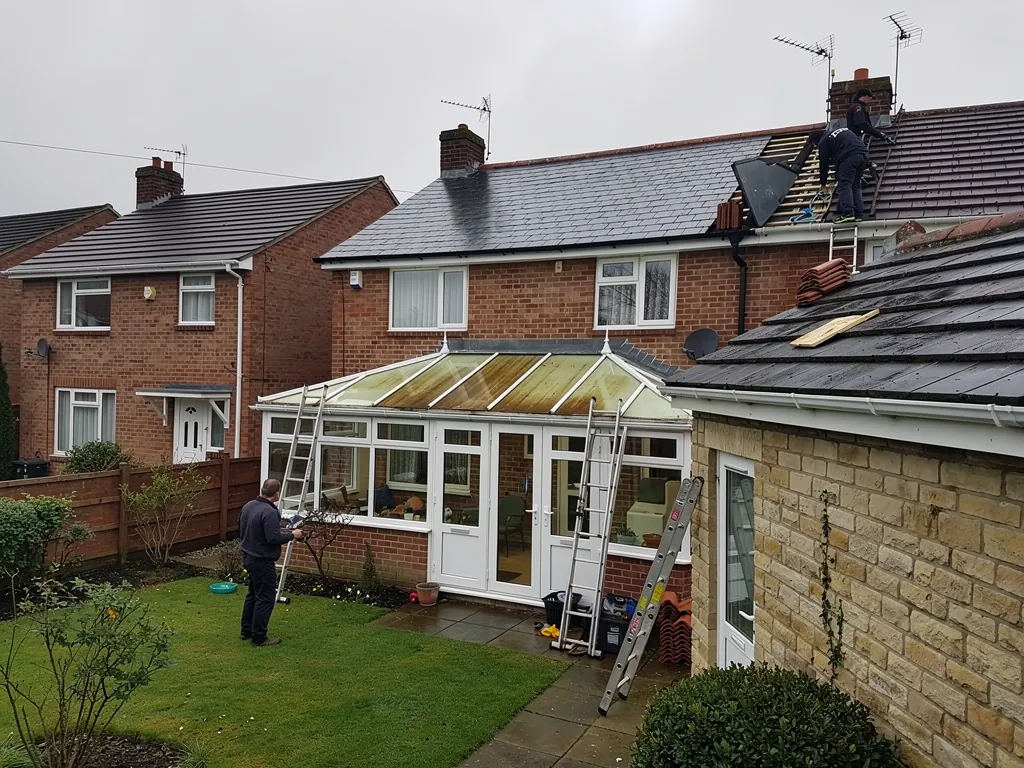
Polycarbonate roofs use multiwall plastic sheets, with air channels between thin layers. They are the lowest-priced option, at £2,000 to £5,000 in MyBuilder's guide, and light enough that most frames will take them without extra support. They can be fitted quickly, which keeps scaffolding costs down.
What are the weaknesses of polycarbonate?
Noise is the one people notice first. Rain on a thin plastic sheet is loud, and heavy rain can drown a conversation. Our page on the noisy conservatory roof looks at what quietens it.
The room also tends to run hot in summer and cold in winter, because multiwall sheet insulates less than a lined roof and the light that passes through it still brings heat. The sheets yellow and cloud with age, and the end seals can fail, letting water and algae into the channels.
When does polycarbonate make sense?
It suits a conservatory that is used lightly, a frame that cannot carry more weight, or a situation where the budget cannot stretch further. If you are weighing a single damaged sheet against a whole new roof, replacing a polycarbonate sheet can be the sensible small job.
Glass: brighter, quieter and heavier
A glass roof lets you look at the sky. For many people that is what a conservatory is for, and nothing in polycarbonate replaces it. Modern glass roofs use double-glazed units, often with coatings that reflect heat or reduce glare, and some have a self-cleaning surface layer. MyBuilder's guide puts replacement at £3,000 to £8,000.
Glass is quieter in rain than polycarbonate, though not silent, and it looks cleaner and more finished from both inside and outside. Its performance in sun and cold depends heavily on the specification you choose. A basic unit can still leave the room too hot or too cold, while a better-coated unit is noticeably more comfortable.
What does glass do to the frame?
It weighs more. A frame built for polycarbonate may need strengthening before it can carry glass, and MyBuilder puts structural reinforcement at £500 to £2,000. We check this on the survey, and our frame checks page lists what we look at.
Self-cleaning glass is worth a look if access for cleaning is awkward, and our guide to self-cleaning glass explains what the coating does and what it does not.
Solid roofs: a different kind of room
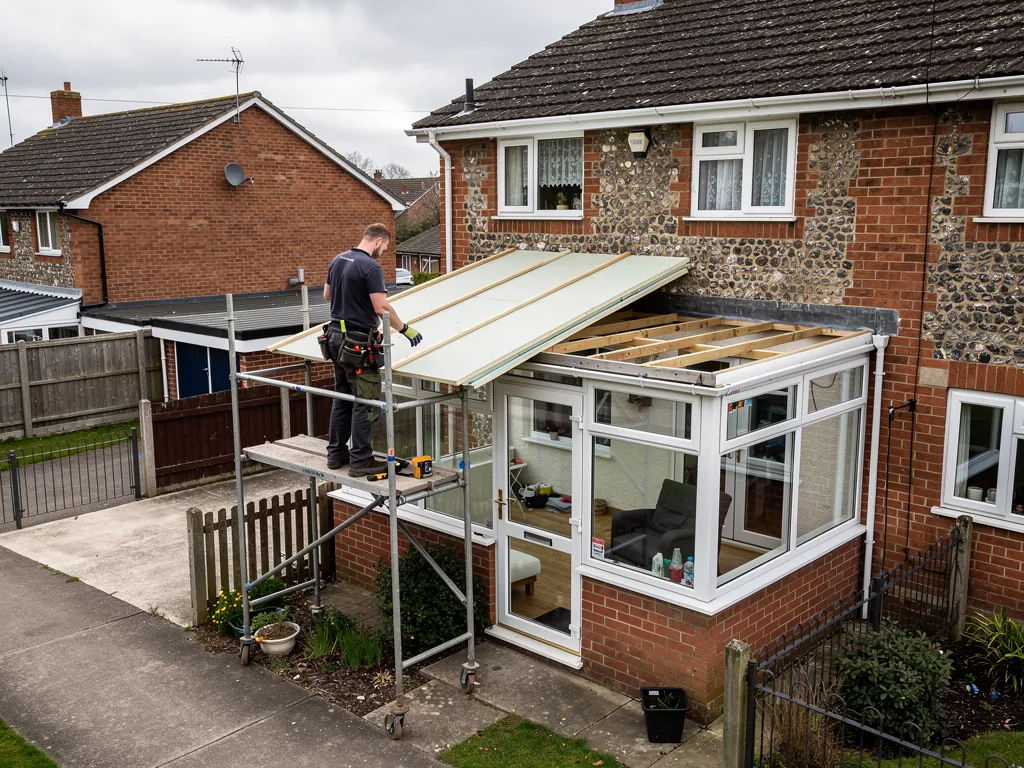
A solid roof removes the glazed look and puts an insulated structure in its place, usually with a plasterboard ceiling, spotlights and a tile or slate-effect finish outside. The conservatory starts to behave like a small extension: steady temperature, quiet in rain and usable all year.
The trade-offs are cost, weight and rules. MyBuilder puts the typical range at £5,000 to £10,000. The structure is much heavier than glazing, so frames, dwarf walls and foundations come under closer scrutiny. According to Homebuilding & Renovating (17 July 2023), swapping glazing for a solid structure is a material alteration, so an application goes to building control.
Does a solid roof lose the conservatory feel?
Yes, partly. You gain a room that is warm in winter and cool in summer, and you lose the overhead daylight. Many owners add roof windows or lanterns to bring some back, and our page on a solid roof extension shows how that works out in practice.
Rules are covered on the conservatory roof regulations page. If planning might come into it, put the question to your local planning authority; in Swindon that is the borough council.
Comfort: how each roof feels in July and January
Comfort is the reason most people replace a roof, so it deserves its own comparison.
In summer, the clear roof lets in the most sun. A polycarbonate roof diffuses the light, which helps with glare but not with heat, and a basic glass roof can feel like a greenhouse. Coated glass cuts the heat gain and can make a real difference. A solid roof sits at the other extreme, blocking direct sun almost entirely.
In winter the picture reverses. Single-skin polycarbonate loses heat fast. Double-glazed glass holds in more. A solid roof with insulation behaves most like the house.
Can blinds and vents fix the problem instead?
Sometimes. Roof blinds, solar-control film and openable roof vents change the summer picture without a new roof. Our conservatory roof insulation page explains what those fixes can and cannot do, and why they do not cure a failing roof.
How you use the room is the deciding question. For a room given over to plants or storage, comfort matters little and cost can lead. If it is a dining room or an office, comfort should lead, and the price premium for glass with a good coating or for a solid roof is likelier to pay back in years of use.
Leaks, maintenance and lifespan
Every conservatory roof has seals, bars and flashings, and every one of those ages. The covering itself matters less than how well it is detailed, because that is where leaks start. Our conservatory roof leak guide lists the points we check.
Polycarbonate is the shortest-lived of the three. HomeBuilding, in an article published on 18 April 2024, gives it a typical life of 10 years, while The Eco Experts (updated 29 April 2024) put the figure for glass or polycarbonate at about 10 to 15 years. Those figures are typical, not guarantees, and they vary with exposure and upkeep.
A tiled conservatory roof is a different proposition. HomeBuilding says it can last in excess of 50 years, although the frame, flashings and gutters around it will age at their own pace. Maintenance is also lighter: no seals to renew across the roof and no sheets to clean, though gutters and flashings still need a look now and then.
What upkeep does each roof need?
Glass and polycarbonate need cleaning, because algae and moss collect in the corners and at the bars. They also need the gaskets and end caps checked every few years. Solid roofs need the same attention as any pitched roof: clear gutters, sound flashings and a glance at the ridge after storms.
Shape, style and making the final choice
The covering is only half of how a conservatory roof looks. The other half is its shape. A lean-to has a single plane that falls away from the house, an Edwardian roof has a flat ridge with a hipped end, and a Victorian or P-shaped roof is faceted, with a ridge ornament and several angled panels. The shape decides how many junctions there are, and that matters as much for cost as the choice of glass or plastic.
Polycarbonate sits comfortably on simple shapes and can look flat and plain on a complicated one. Glass is the natural match for ornate Victorian styles, where the faceting and the finial are the point. A solid roof can copy the pitch and the tiles or slates of the main house, which helps a conservatory on an older brick or stone building look like it grew there instead of arriving later.
Does the colour of the frame and bars matter?
It matters more than people think. White, cream, anthracite and woodgrain finishes each change the character of the roof, and a new covering on an old frame may show up the frame's tired finish. Replacing the glazing bars at the same time as the covering is often worth considering, because new gaskets fitted into old bars rarely last.
If the house is in a conservation area or is listed, extra rules can apply to what the conservatory roof may look like. Ask the local planning authority before you commit to a design, and see our page on Victorian conservatory roofs for the particular points that arise with faceted styles.
Pulling the threads together, here is how we would think about the choice for a typical customer.
- Choose polycarbonate if the budget is tight, the frame is light or the room is used only occasionally.
- Choose glass if you want the light and the view, you can afford a good specification and the frame can carry it.
- Choose a solid or tiled roof if you want an all-year room, quiet in rain, and accept the weight, the building control application and the loss of the overhead glass.
Whatever you choose, the starting point is the frame. A beautiful roof on a tired frame will leak sooner than it should, and fixing the frame afterwards costs more than doing it at the same time.
On the survey we look at the frame, the existing covering, the junction with the house, the gutters and how the room is used. Survey photographs come with the written quote, which names the covering we recommend and the reasons for it. We prefer the smaller job where it properly fixes the problem, so we will say if a repair is the better choice.
Our workmanship carries a ten-year written guarantee, and once the job ends we clear up and take the waste with us. Ring 01793 626096, send a WhatsApp message or complete the enquiry form to start.