
Most conservatories get uncomfortable for the same reason: a large area of single glazing or thin polycarbonate sits over a room that is joined to a warm house. In summer it behaves like a greenhouse. In winter the roof is the coldest surface in the room, and the heat you pay for escapes through it. Insulating the roof looks like the obvious cure.
There are two broad ways to do it. One is to add something to the roof you already have, such as insulated liner panels fitted from inside. The other is to take the roof off and fit a better one. Each has a place, and the right choice depends on the condition of the frame, how worn the current covering is and how often the room is used. This guide sets the two routes side by side, so you can see what an internal fix will and will not achieve before you spend anything.
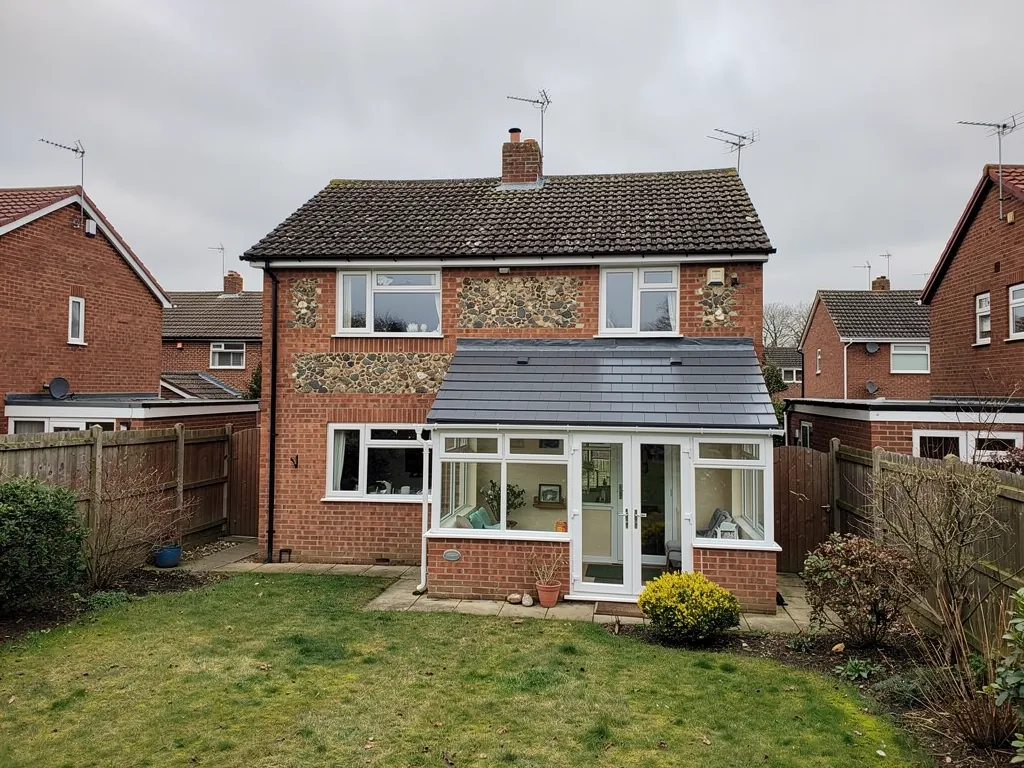
What insulating a glazed roof actually involves
A glazed conservatory roof loses and gains heat because glass and thin plastic are poor insulators, and because the roof is the largest single surface in the room. Anything that slows that transfer will help. The approaches fall into three groups.
- Add a layer to the inside of the existing roof, such as insulated panels, a lining or a ceiling with insulation above it.
- Change the surface properties, for example solar-control film, reflective blinds or a coated glass replacement.
- Replace the roof with one built to insulate: a solid roof, a lightweight tiled roof, or a higher-performing glazed unit.
The first two leave the original structure in place, which is both their attraction and their limit. The structure keeps whatever problems it has. If the seals have failed, the bars have corroded or the sheets have cracked, the new layer sits underneath those problems and hides them instead of curing them.
Before choosing, decide what the room is for. A space used as an occasional sun room needs little. A dining room, home office or play room that you want to use year-round asks much more of the roof, and the lowest-priced fix may not deliver it.
Internal insulation panels and liners
Panel kits are fitted below the glazing, spanning from the ridge to the eaves. Some are rigid insulated boards finished in white or timber effect, while others are thin multi-layer foils. They are quicker and cheaper than a new roof, they leave the outside untouched, and they can make a visible difference to temperature and glare.
What do liner panels not fix?
They do not stop a leak. Water that gets through a failed seal or a lifted flashing still arrives, but now lands behind a panel where you cannot see it, and the first sign may be a stained ceiling or a rotten timber. If the roof has any history of dampness, sort that out first. Our guide to conservatory roof leaks lists the places to look, and our conservatory roof replacement page explains how we approach the wider job.
Can a liner trap moisture?
Yes. A conservatory is a humid room, and warm air meeting a cold surface leaves water behind. If a panel is fitted tightly under the glazing, condensation can form in the gap above it, out of sight, and sit on the glazing bars and the frame. Good fitting leaves an air path and respects the ventilation the roof already had. Ask any fitter how the panels will be held, how air will move behind them and what happens at the ridge and the eaves, because the answers separate a tidy job from one that causes new damp.
Do panels put extra weight on the glazing bars?
Some do. Rigid boards are heavier than foil systems, and the bars that were designed to carry glass at a certain weight may not like being asked to support a ceiling as well. A fitter should be fixing to the frame, not hanging boards from sealed units, and should tell you where the load goes.
There is also the glazing itself to consider. Panels hide the bars and the structure from inside, so you lose the view of the sky and a good deal of daylight, which is often the reason people wanted a conservatory in the first place.
Blinds, films and coatings
These are the lightest options, and for some rooms they are enough. Roof blinds on tracks cut summer glare and, when closed, slow the heat from escaping on cold nights. Solar-control films stuck to the glass reduce the sun's warmth coming through. Some glass has a coating applied at manufacture, which is a different thing from a film and sits within the sealed unit.
Their strength is that they add little weight, rarely need building control involvement and can be fitted without disturbing the frame. Their weakness is narrowness. Each treats one problem at a time: a film that helps in July does nothing about draughts in January, and blinds do little for a roof that is cold to the touch.
If the main complaint is summer heat, the cure is usually shading and ventilation, not insulation. Insulation holds heat in as well as out, and a hot conservatory can get hotter under a poorly ventilated liner.
Our pages on the hot conservatory and the choice of roof blinds look at those summer problems in more detail. The roof vents page covers the ventilation side.
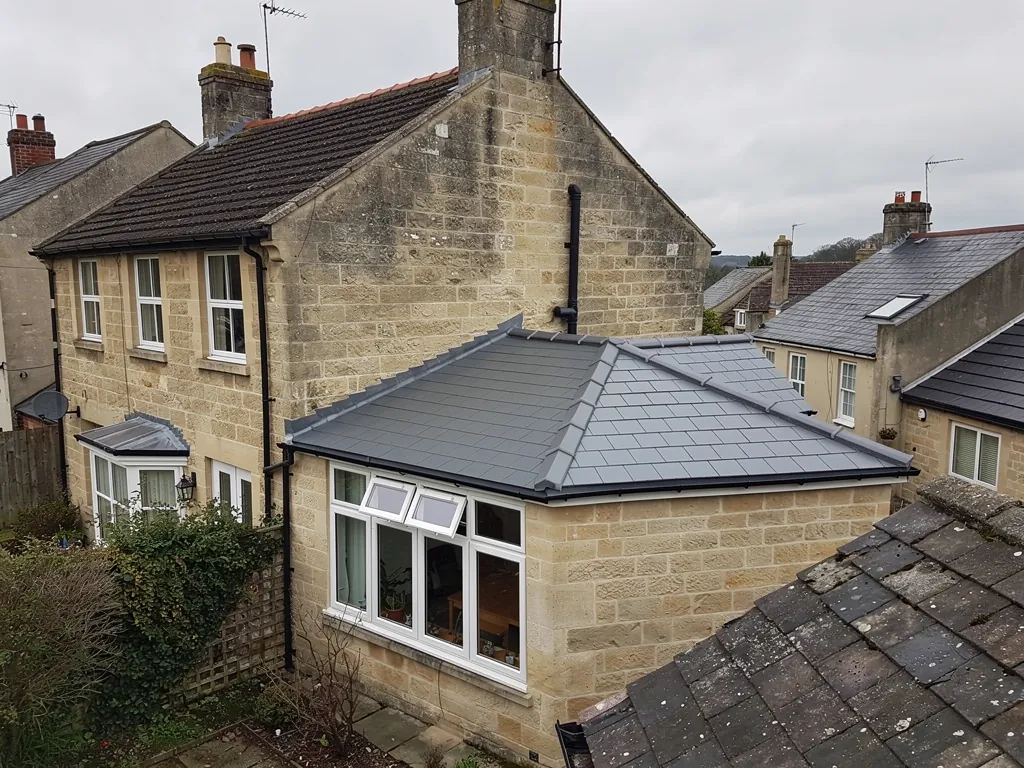
When a replacement roof is the better investment
A new roof comes into its own when the existing one is showing little life left or when you want the room to work in every season. Three routes are common.
What does a solid roof change?
Instead of glass, you get a built-up roof with insulation, a tile or slate finish on top and a plasterboard ceiling beneath. The room stays far steadier in temperature. The trade-off is weight and paperwork: Homebuilding & Renovating (last updated 17 July 2023) says that a solid roof counts as material alteration work, so building control must receive an application, and the frame is given more to carry. The Planning Portal adds that a new roof must comply with the building regulations: it has to be safe structurally, energy efficient and properly ventilated. A glazed roof that is simply being re-covered is a different case, which is one more reason to ask us about the route before you choose a product.
Is a lightweight tiled roof a middle route?
It can be. Lightweight tiled systems are made to sit on conservatory frames with less strengthening than a traditional build-up would need. Our page on lightweight tiled roofs covers how they are put together.
What about better glass?
Replacing old glazing with a modern unit raises performance without the weight of a solid roof, though it will never match a properly insulated build-up for winter warmth.
Where the roof meets the house, and the glazed doors beneath
Insulating the roof alone can leave a conservatory feeling no better, because heat also leaves through the places where the roof stops. Where the roof lands against the house is the first. A flashing or sealed strip runs along it, and on older conservatories that line is often poorly finished, with gaps that let cold air in and warm air out. Cleaning it up and resealing it costs little and can matter as much as a panel.
The eaves are the second. A gutter that has dropped, a cill that has shrunk away from the frame or a cracked cover strip all let draughts in. These are ordinary maintenance points, yet they undermine an expensive insulated roof if they are ignored.
Should the doors and walls be looked at first?
If the room has a separating door to the house, closing it in cold weather lets you judge the conservatory as a space apart. Single-glazed side panels, tired door seals and low dwarf walls with no insulation will all work against any roof improvement. That is no case for doing nothing; it simply means looking at the whole envelope and decide which step gives the most benefit for the money.
A roofer can only advise on the roof and its junctions. If the walls or glazed doors are the main weakness, we tell you straight away and suggest a glazing specialist looks at that part first, then come back to the roof when it makes sense.
How the costs compare
MyBuilder's conservatory roof guide, updated on 21/08/2026, gives typical UK figures of £3,000 to £8,000 for a glass roof and £5,000 to £10,000 for a solid one, with £500 to £2,000 for any structural reinforcement the frame needs. Internal panels and coatings are not part of that guide, and their price varies too much with the product and the roof area to set a sensible range.
What the figures do show is the shape of the decision. A liner is a smaller outlay today and leaves you with a roof that may still need replacing later. A replacement costs more today and removes the old covering, its seals and its faults at the same time. If the covering is close to failing, putting a liner under it means paying twice for the same room.
VAT and scaffolding need checking whichever way you go. Conservatory roofs are usually worked on from a bridge or scaffold platform, and that cost belongs in any quote you compare.
For the full range of typical costs, read our guide to conservatory roof replacement costs.
What we look at on the survey
When you ask us about insulating, we start by checking whether the roof you have deserves it. The survey covers the frame for movement and corrosion, the seals and glazing bars for failure, the gutter and flashings at the junction with the house, and any signs of condensation or damp. The survey photographs of your roof arrive alongside the quote, which lets you check each finding for yourself.
Where the roof is sound and the real complaint is comfort, we tell you that and discuss the lighter options openly. If it is worn out, we explain why adding a liner would be money badly spent. We favour the smallest repair that genuinely cures the fault, and that sometimes means a smaller job than you expected.
Noise is another reason people ask about insulating, because rain on polycarbonate can be loud. Our page on a noisy conservatory roof looks at what changes the sound and what does not.
Work we carry out comes with a 10-year workmanship guarantee in writing. The conservatory roof process page sets out the steps from your first message to a finished roof and a cleared site.