
A conservatory that feels lovely in July can become a room nobody uses from November to March. The walls and floor are rarely the main reason. The roof makes up a very large part of the outer surface, and a roof of thin glazing or twin-wall sheet lets warmth go faster than almost anything else in the building. Cold air falls from the underside of it, the glass chills the air around your head, and the heating you turn up simply leaks out through the lid.
This guide explains where the heat goes, what you can try before spending much, and when the roof itself is the right thing to change. It also compares the main roof choices, with typical national cost ranges, so that you can read a written quote knowing what you are paying for. If the roof is leaking as well as cold, read our guide on whether to repair or replace a conservatory roof alongside this one.
Where the warmth actually escapes
Heat moves from a warm room to cold air outside by three routes: straight through the material, through gaps, and by warm air rising to meet a cold surface. A conservatory is unusually exposed on all three. Single-skin or thin double glazing passes heat readily. Twin-wall polycarbonate sheet traps some air in its channels but is a thin barrier compared with a roof built up with insulation. And the joints between roof bars, glazing gaskets and the wall plate are often where draughts begin.
Warm air rises, so the hottest air in the room collects against the roof, where the surface is coldest. That is why a conservatory can feel chilly even with the radiator on: the heat goes up, meets the roof and passes straight through. It is also why a cold roof produces condensation, because moisture in that warm air turns to water where it touches a cold surface.
Why the walls matter less
Dwarf walls and framed sides still lose heat, and old frames can have failed seals. But those surfaces are usually smaller than the roof, and they are far easier to improve. If you have a choice between spending on the roof and spending on the sides, the roof tends to give the larger change in how the room feels.
What to try before you change anything
Some fixes cost little and are worth doing first, because they show you how much of the problem is the roof. None of them turns a conservatory into a heated living room, but together they take the edge off.
Blinds and curtains
Thermal-lined blinds fitted close to the glass trap a layer of still air between the blind and the roof. Roof blinds that run on tracks are the usual choice, and they help in summer too. They do not stop heat leaving through the frame, but they make the room feel warmer in the evening, which is when most people use it.
Doors between the house and the room
If the conservatory opens straight into the house with no door, you are heating a glass box from your living room. A good door that closes properly lets you choose when to heat the room and stops cold air flowing back into the house.
Draughts and seals
Perished gaskets, gaps around the doors and open vents at the eaves all let air through. Replacing worn seals and sealing around door frames is cheap. Leave deliberate ventilation alone, though. A conservatory needs some air movement to keep condensation down, and sealing everything tight can swap a cold room for a damp one.
Swapping polycarbonate for glass
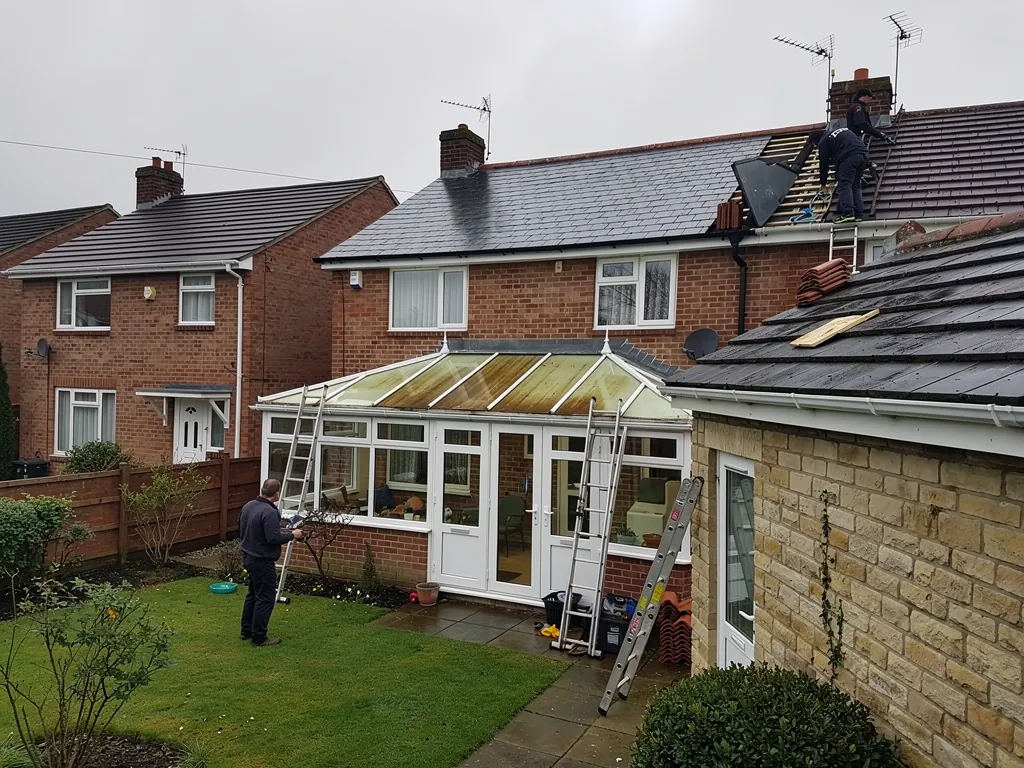
If your roof is polycarbonate, a glass roof is the simplest upgrade. Polycarbonate roofs have a typical lifespan of around 10 to 15 years according to HomeBuilding and The Eco Experts, so one that is going cloudy, brittle or noisy in the rain is also near the end of its life. Modern glass units for roofs are sealed double glazing with low-emissivity coatings, which reflect heat back into the room, and many have a solar-control layer that cuts the glare and heat gain in summer.
Glass changes how the room feels more than it changes how it looks. It is quieter in rain, clearer, and warmer in winter than twin-wall sheet. It is also heavier, and the frame has to carry the extra weight. That is why a roof change should start with a frame check, which our guide on whether a conservatory can take a heavier roof covers.
MyBuilder's conservatory roof cost guide, updated 21 August 2026, puts a glass roof at around £3,000 to £8,000 and polycarbonate at £2,000 to £5,000 nationally. Glass costs more, and the extra buys you comfort rather than lifespan alone. The price turns on your frame, your size and your access, and after the visit our written quote gives one total for the whole job.
A solid insulated roof
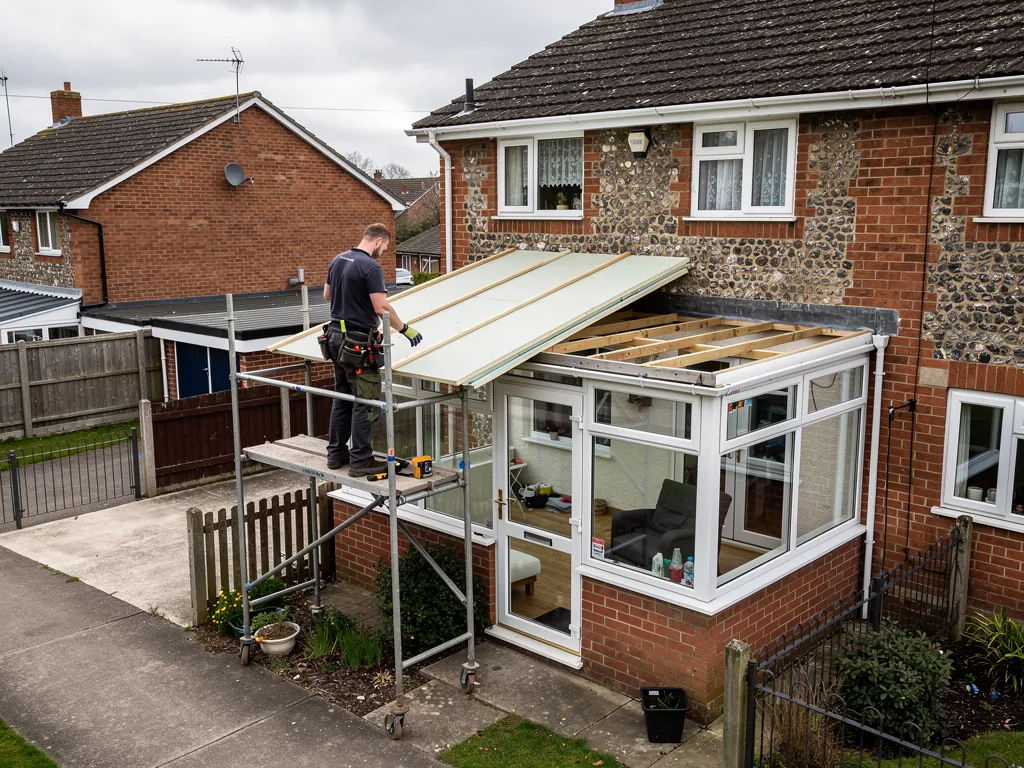
A solid roof replaces the glazing with an insulated build-up: a structural panel or a tiled or slated roof over insulation, with a plasterboard ceiling underneath. It is the strongest fix for a cold conservatory, because it adds real insulation where there was almost none. Rooms with solid roofs hold warmth after the heating goes off, they stop the glare that makes a south-facing conservatory unusable in summer, and they cut the noise of rain.
Two things come with it. Light is the first: a solid roof removes the glass, so the room gets darker, which is why many owners add roof windows or a lantern. Our page on solid conservatory roofs explains the choices. Regulation is the second. Homebuilding & Renovating (updated 17 July 2023) says a switch to a solid roof falls under the Building Regulations, so a building control application has to go in. Where notification applies, we explain the process and submit it for you.
MyBuilder's guide puts solid roofs at around £5,000 to £10,000, and structural reinforcement of the frame, where it is needed, at £500 to £2,000. Treat these as typical figures from a national guide rather than a quote for your room. Tiled conservatory roofs have a long life compared with glazing: HomeBuilding gives a tiled roof as lasting in excess of 50 years.
Before you pay for any solid roof, check who is dealing with the building control application, and whether the price covers scaffolding and VAT.
An insulated ceiling inside the existing roof
A third route leaves the roof as it is and builds an insulated ceiling beneath it. It is cheaper and less disruptive than a new roof, and it can suit a conservatory with a sound roof that is still within its working life. The ceiling holds back the warm air, so the room heats faster and holds its warmth for longer.
It has limits worth knowing. The glazing above the ceiling is still cold, and if the gap between the two is not ventilated, condensation can form on the glass and the frame. You lose height in the room, and you lose the sky view for good. An internal ceiling also hides the roof, so any leak above it can go unnoticed until the damage is larger. If the roof above is already failing, building a ceiling under it is a poor use of money. Our guide to the conservatory internal ceiling sets out when it makes sense and what the build involves.
Roof windows in a ceiling
An internal ceiling can include roof windows or a lantern, so the room keeps some daylight. Each opening is a weak point for heat and for leaks, so it should be flashed and sealed properly, and the survey is the time to decide where they go.
Heating, ventilation and the damp question
Once the roof is improved, heating the room becomes simpler. Underfloor heating, a slim radiator on the house system or a small electric panel can all work, and a room that holds its heat needs less of any of them. A conservatory heated by a roaring fan heater under a bare glass roof is expensive to run, and it will still feel cold at the edges.
Ventilation matters more than most people expect. A warm, closed room full of people, plants and drying washing makes moisture, and a cold roof gives it somewhere to condense. Roof vents, trickle vents in the frame and a window opened for a few minutes each day help. Droplets streaming off the glass, or black mould creeping along the roof bars, the roof is telling you the surface is too cold. Our guide on conservatory roof insulation goes through the condensation question in more detail.
Old and listed buildings
If the conservatory belongs to an older house or a Victorian-style room, the options narrow and the rules matter. Check our notes on listed buildings and conservation areas, and on the particular problems of a Victorian conservatory roof, before you decide.
Choosing between the options
The table below sets the options side by side. Costs are national typical ranges from MyBuilder's guide updated 21 August 2026, and the last column is what we look at on a survey.
| Option | Typical national cost | What it changes | What we check |
|---|---|---|---|
| Blinds and seals | Small outlay | Takes the edge off evenings | Gaskets, doors, vents |
| Glass roof | £3,000 to £8,000 | Warmer, quieter, clearer | Frame load, glazing bars |
| Solid roof | £5,000 to £10,000 | Large gain in warmth, less light | Frame, base, building control |
| Internal ceiling | Priced on survey | Faster heating, lower ceiling | Condition of roof above |
Our advice is to choose the least work that cures the cold. Sometimes that is a new set of seals and a door that closes. Sometimes the frame is sound and the roof is spent, and a new roof is the right answer. Photographs of your own conservatory come with the survey, so each recommendation has its reason beside it. Our conservatory roof cost guide shows what drives the price, and the conservatory roof replacement hub covers the wider picture.