
People often assume that a conservatory roof is a minor job that needs no permission anywhere. For many houses that is close to the truth. Putting one covering in place of a similar one rarely calls for a planning application, and many roof alterations count as permitted development when they keep within the legal limits. The picture changes when the house is listed, when it sits in a conservation area with an Article 4 direction, or when the new roof looks very different from the old one.
This guide sets out the questions to ask in order: is the building listed, does an Article 4 direction apply, how different will the new roof look, and what do the Building Regulations ask for regardless. Treat it as background reading rather than legal advice, because it is Swindon's or your own council's planners who rule on your address. For the wider choices, see our guide to repairing or replacing a conservatory roof.
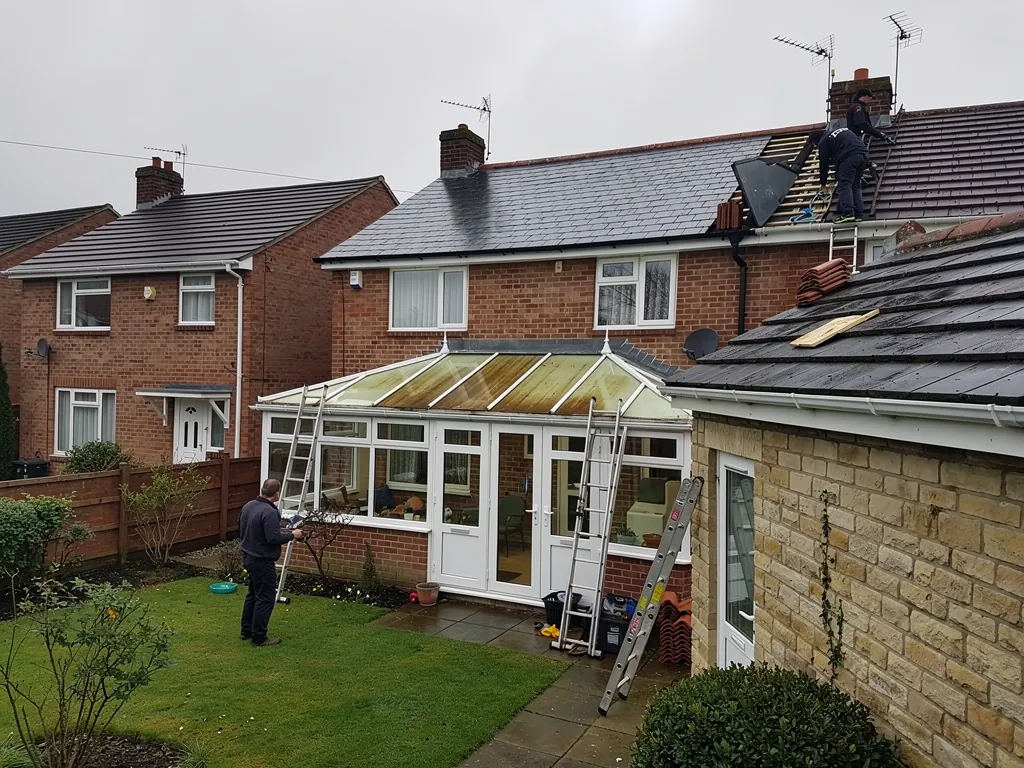
Start with the easy question: is the house listed?
Listing changes everything, so it is the first thing to check. Section 7 of the 1990 listed buildings legislation prohibits works that alter or extend a listed building in ways touching its character, unless those works are authorised. Section 9 makes it an offence to do so without consent. That is listed building consent, and it is separate from planning permission.
A conservatory joined to a listed house is not outside these rules simply because it went up in recent decades. Replacing its roof can still affect the setting and the junction with the historic wall, and the council may treat it as part of the listed building. A conservatory on its own plot, away from the house, is a different matter. The question of what counts is one the conservation officer can answer for your address.
Age is not the test either. Listing protects the whole building and often its attached structures, and the council looks at how the roof sits against the historic fabric: the stonework or brick it touches, the windows near it and the height of any eaves it crosses. A like-for-like glass roof may be accepted where a heavy tiled one is not, so describe the real roof, not an idea of it.
Where to check
The National Heritage List and your council's planning pages show whether a building is listed. Swindon Borough Council also publishes its conservation material and an email address for conservation questions. If you are not sure, ask before ordering anything, because listed building consent must be granted ahead of any work. A refusal or a request for changes at that stage costs a few emails; the same news after a new roof is fitted costs a great deal more.
What a conservation area changes
Councils designate conservation areas to protect or improve a place whose architecture or history is worth keeping. Swindon's conservation areas page lists 27 areas, including Swindon Old Town, Highworth, Wroughton, Chiseldon and the Railway Village. Vale of White Horse, Cotswold District, Wiltshire and West Berkshire have their own lists.
Living in one does not usually stop you replacing a roof, and plenty of conservatories in the Old Town and the villages have been re-roofed without trouble. Where the new roof matches the old, planning permission is seldom the issue, designated area or not. What a conservation area does add is a tighter grip on exterior changes that are visible, on trees, and on demolition. If your new conservatory roof will look noticeably different from the street, the council may want to consider it. Changing a glass roof for a solid tiled roof, or a polycarbonate roof for a lantern, changes the outline of the building even when the footprint is the same.
The other thing to watch is whether the area's permitted development rights have been withdrawn. That brings us to Article 4.
Article 4 directions and withdrawn rights
National planning guidance describes an Article 4 direction as a direction that lets the council withdraw specified permitted development rights across a defined area. An earlier permission can also carry a condition that takes those rights away. In practice, a job that needs no application elsewhere can need one here.
On Swindon's conservation page, Bishopstone and the railway village are the two places noted as having Article 4 directions. The council's appraisal for the Railway Conservation Area says the direction there covers the residential streets of the Railway Village and Church Place, and it was adopted in 1980. The works it brings under control include extensions and alterations, so an owner there should assume a conservatory roof change needs a conversation with the council first.
Your own house
If you live in a conservation area or an older estate, ask the council if an Article 4 direction or a planning condition applies. Check the paperwork from when the house was built too: some new-build estates have conditions that remove rights over extensions and roofs, and the conservatory may have needed permission itself.
A short email to the council settles it, and the reply deserves a place with your house papers.
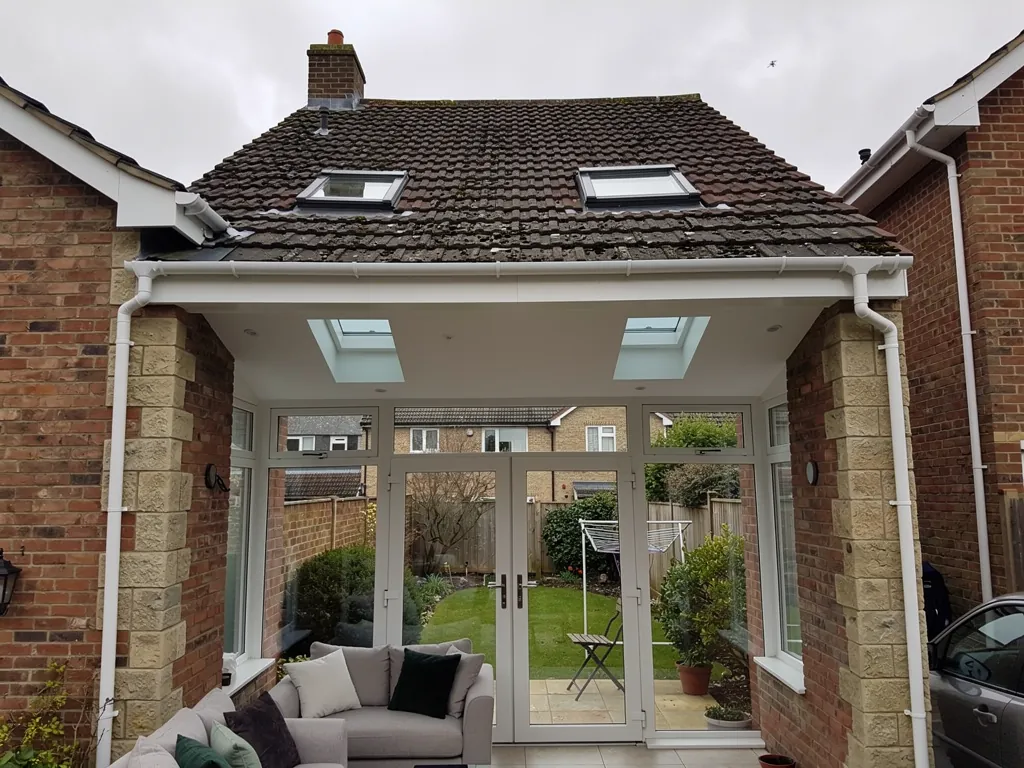
National Landscapes and other protected land
The North Wessex Downs and the Cotswolds are National Landscapes, the name used since 22 November 2023, though they are still legally Areas of Outstanding Natural Beauty. Land in a National Landscape counts as article 2(3) land, the same category as a conservation area, and some permitted development rights are narrower there.
For a conservatory roof, the practical points are limited. National Landscape status does not remove the right to alter a roof under permitted development, it does not change like-for-like re-roofing, and it does not change Building Regulations. The council decides planning matters, not the National Landscape body, which has an advisory role. A large lantern or a roof that rises noticeably higher than the old one is still the kind of change to talk through with the planning team beforehand.
If your house is in a village on the downs, that conversation costs nothing, and the result is sometimes useful: a council that has seen your roof plan can tell you at once whether anything needs to be applied for. We do not name which villages lie in the Cotswolds, because the boundary is for the council and the National Landscape body to confirm for your address.
How different the new roof will look
The test that matters most outside listing is how much the roof's appearance changes. The Planning Portal's FAQ on conservatory roofs treats most roof alterations as permitted development provided they stay inside the legal limits, and warns that a roof which changes a great deal in structure or looks may need planning permission.
Two limits in the permitted development rules are worth knowing. Under Class C, the new work may stand no more than 0.15 metres proud of the old slope, and it may not finish higher than the old ridge line. A new roof that stays within the old outline is the safest case. A taller ridge or a lantern that stands up from the slope needs a closer look.
Roof windows in the new roof
If the new roof has windows in a side slope, every one must be obscure-glazed, and each must be fixed shut unless its opening parts sit more than 1.7 metres above the floor. The height softens only the fixed-shut rule, never the obscure glass. Dormers are a different category and are not permitted development in a conservation area or National Landscape.
Our page on lean-to conservatory roofs shows how a pitch change affects the outline.
Building Regulations apply whatever the planning answer
Planning consent and Building Regulations are different systems. A conservatory roof can need no planning permission and still need a building control application. Homebuilding & Renovating (updated 17 July 2023) says a solid replacement roof brings in the Building Regulations, and the Planning Portal expects any new roof to meet them on structure, energy use and ventilation.
The application is made to the council's own team, or alternatively to a registered building control approver. Either one inspects at set stages and confirms completion, which gives you a record to pass on when you sell. Swindon Borough Council has its own team, as does Cotswold District, while Vale of White Horse shares Southvale with South Oxfordshire and West Berkshire is served by Building Control Solutions. For Wiltshire addresses, use Wiltshire Council's building control team. At the survey we tell you which one covers your address, and if the work is notifiable we submit the notification for you.
The wider conservatory roof replacement page sets these steps alongside the choice of roof. Listed buildings do not escape this either. Listed building consent covers the heritage side, and building control covers the structure, so a listed house may need both. Our conservatory roof process page shows where each step fits in the job.
How to find out what applies to you
You do not need to decode all this alone. A short sequence works for most households, and it takes a few emails at the most.
Ask in writing, keep the reply, and ask before you sign anything. A council officer's email is worth far more than a recollection of a phone call.
- Establish if the house is listed, in a conservation area or inside a National Landscape.
- Ask the planning team if an Article 4 direction or a planning condition removes rights over roofs or extensions.
- Describe the new roof in plain terms: material, height, any windows or lantern, and whether it matches the old outline.
- Ask if planning permission or listed building consent is required.
- Confirm the building control route and who is submitting the application.
We can help with step three. Our survey brings photographs of your own conservatory and a written quote, which gives you something exact to describe to the council. We talk you through consent and manage the notification side, but the decision on listed building consent and planning rests with the council, and we never ask you to start before the answers are in.
If the cold is what is driving the change, our guide to a cold conservatory in winter compares options that may need less consent than a full roof.