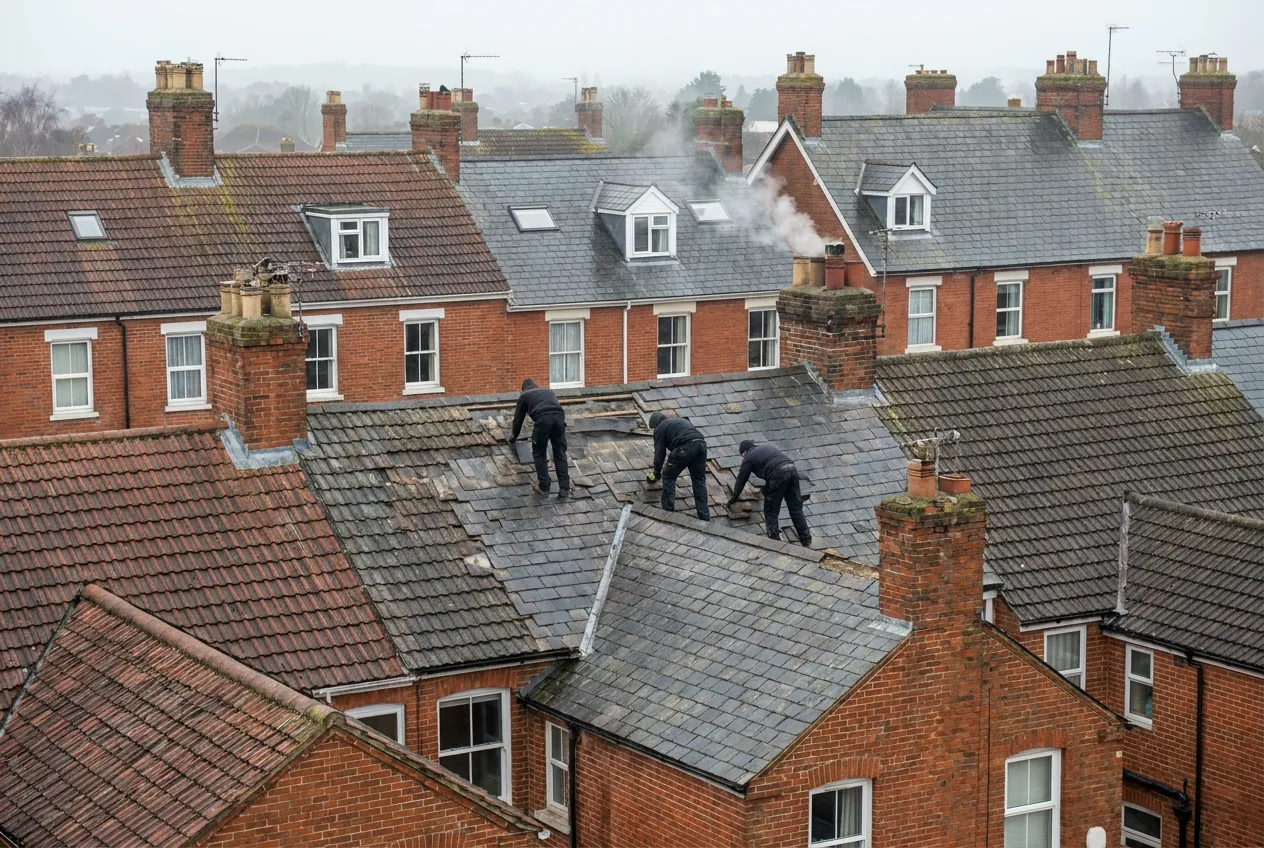
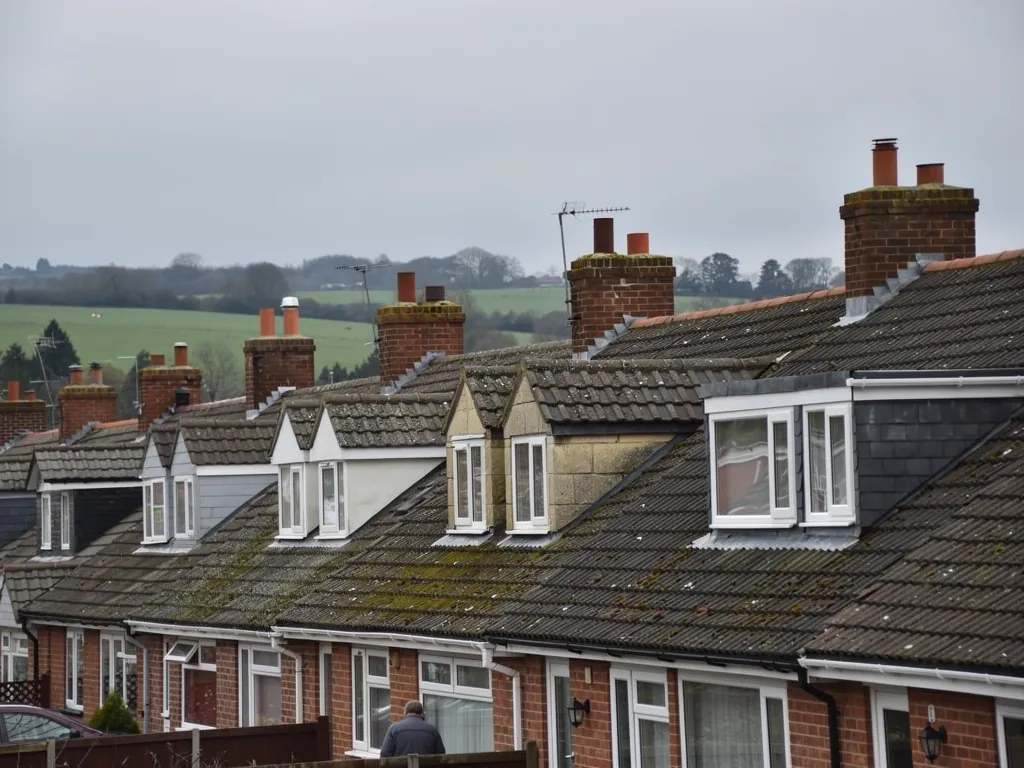
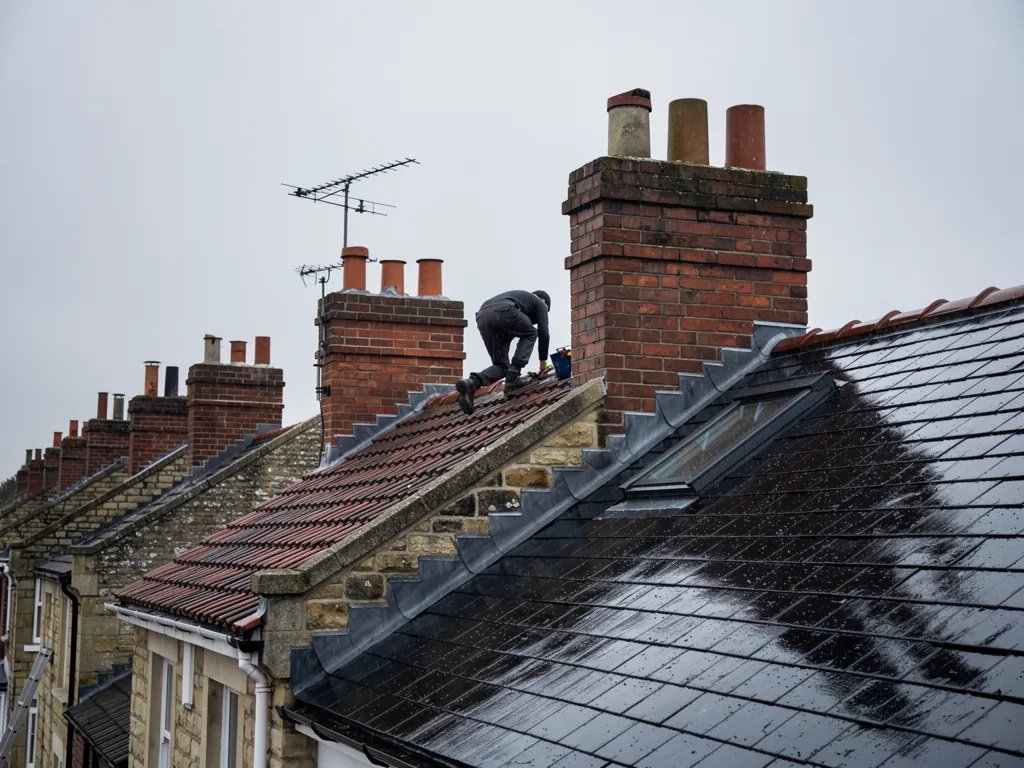
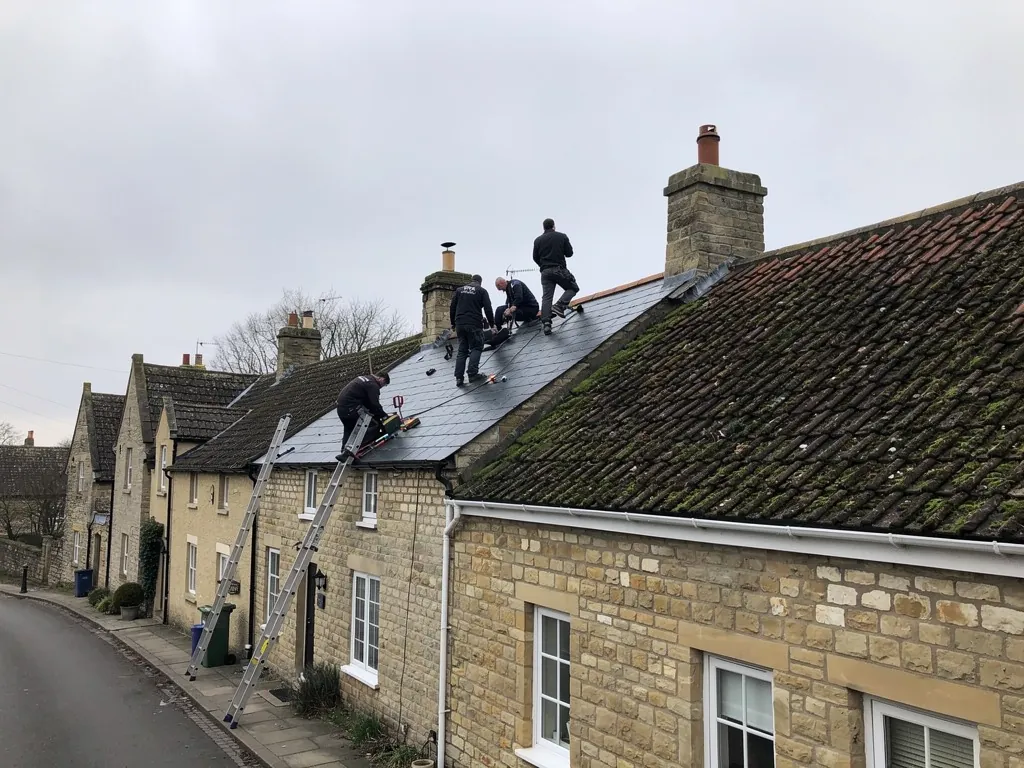
Roofers on a slate roof along a limestone village street

Roofers in Bridgemead

Commercial roof repairs, flat roof renewals and gutter work for the retail and industrial units at Bridgemead, and house roofing for the West Swindon streets around the park.

Bridgemead's roofs, from unit to cul-de-sac

Low-slope roofs on a trading estate
The retail and industrial units

Bridgemead is a retail and industrial park in West Swindon with few homes, so the roofs that matter most here belong to commercial units. These are broad, low-slope buildings, and their coverings fall into a few families: profiled metal sheeting, built-up bitumen felt, single-ply membranes such as EPDM, and older fibre-cement sheets. Each has its own faults. Metal sheets lose fixings and sealant at the laps, felt cracks and blisters, membranes are punctured by foot traffic and plant, and rooflights crack or leak at their kerbs. Behind a parapet or between two units there is often a valley gutter, and a blocked outlet there can put a lot of water into a building quickly.

Houses and shops beside a district centre
Westlea and West Swindon

Bridgemead sits beside Westlea in West Swindon, the planned extension that began in the 1970s at Toothill and grew through the 1980s. West Swindon parish has a short stretch of the M4 as its southern boundary, and the River Ray forms part of its eastern edge. Part of the original plan was industrial land, and Norman Foster's Renault Distribution Centre at Rivermead, completed in 1982 as the carmaker's UK distribution centre and now listed Grade II*, is a reminder that large commercial roofs sit right among the housing here. A roofer working in this district moves between pitched domestic roofs and big flat ones, sometimes in the same week, and each needs a different kind of survey and a different kind of quote.

Cul-de-sac houses with tiled roofs
Rushey Platt and Freshbrook homes

Freshbrook went up between 1980 and 1984, and most of its houses stand in cul-de-sacs, so the roofs there are around forty years old now. At Rushey Platt the old Midland and South Western Junction line had a station, opened in 1883, and goods trains, mainly milk, ran on the line until 1964. Homes in both areas share the faults of their decade: ridge and verge mortar that has cracked, tired underlay, and flat porch or garage roofs that have outlived their first covering. We treat a house on one of these streets as a house, with a pitched-roof survey, and not as a smaller version of a commercial unit.

Between Westlea and Rushey Platt

Map showing Bridgemead and central Swindon. 3 road miles west of central Swindon.

Distance
3 road miles west of central Swindon
Council
Swindon Borough Council
Council
Swindon Borough Council, which also runs building control
Conservation area
None; the council's 27 do not include Bridgemead
Setting
A retail and industrial park in West Swindon, with few homes

Bridgemead roof questions

Who pays for a Bridgemead unit roof, landlord or tenant?

That depends on the lease, not on us. We survey the roof, photograph the fault and write a report that both sides can read, so any discussion about the repair rests on evidence and not on recollection.

Can a unit keep trading during re-roofing?

Often, if the work is phased bay by bay and the weather cover is agreed first. We settle the sequence, the access route and the protection for stock and staff with you at survey stage, before a date is fixed.

Are the 1980s houses near Bridgemead due for re-roofing?

Not automatically. A roof of that age often needs ridge, verge and flashing work first, and the covering underneath may have years left in it. The survey photographs show which case you are in.

Q1

What wears out first on a Bridgemead unit roof?

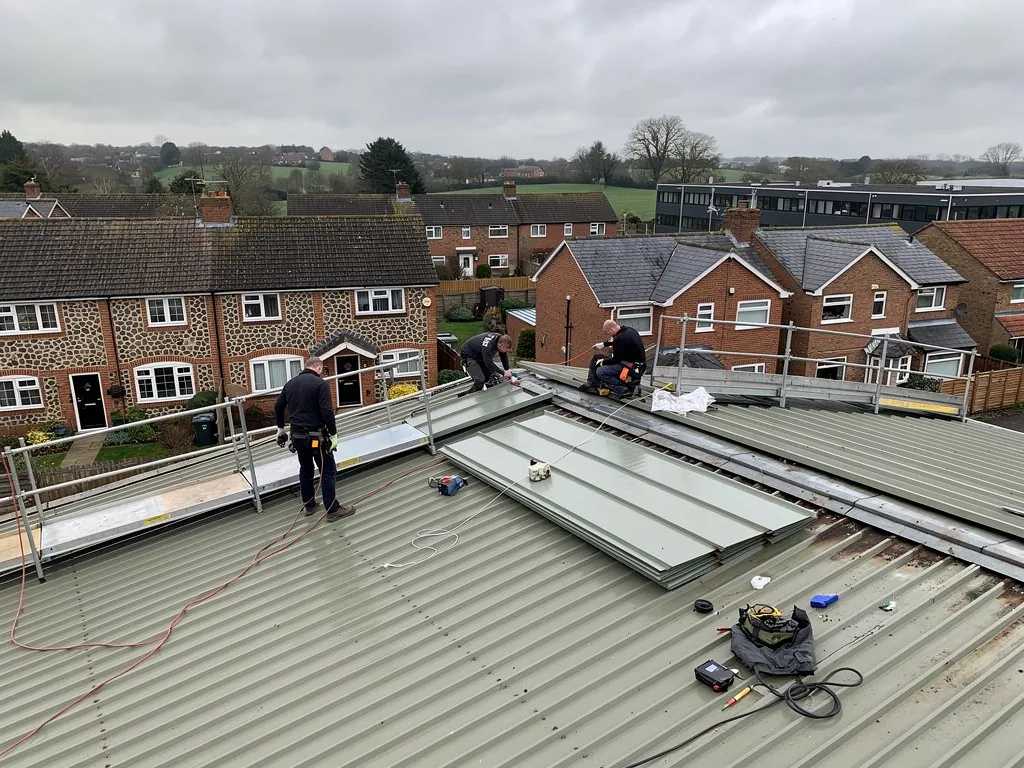
Roofers fitting profiled metal sheets on a commercial unit roof
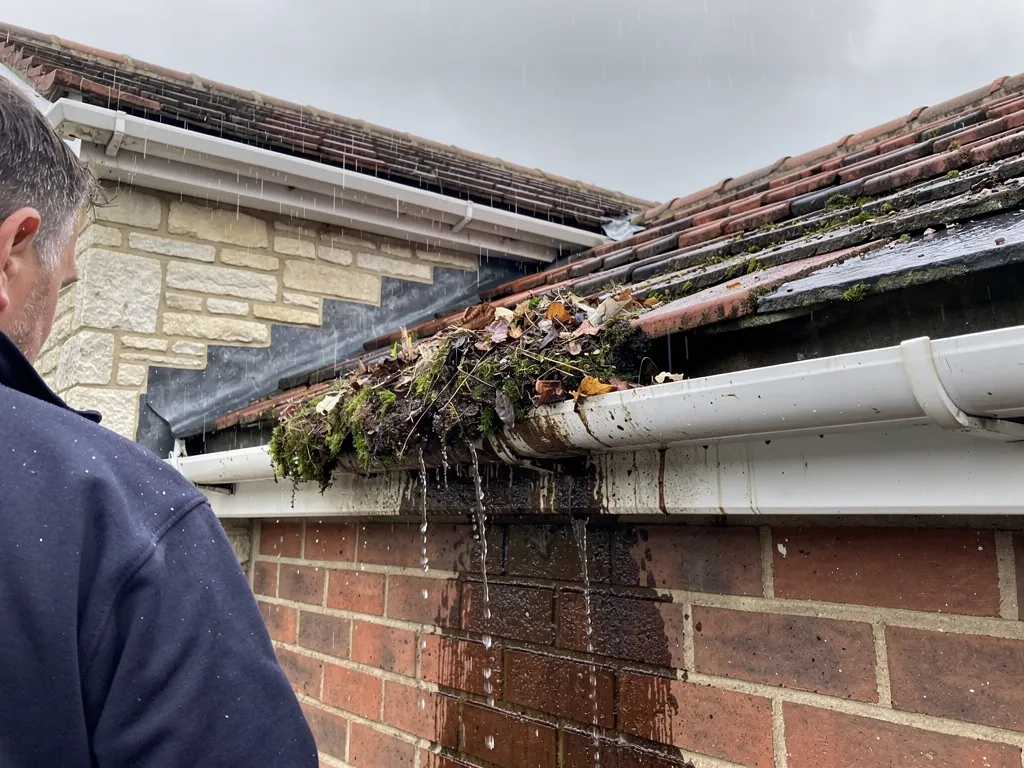
Blocked gutter full of leaves overflowing down a brick wall

The short answer

On a low-slope commercial roof the weak points are the laps, the rooflight kerbs, the gutters and the outlets, not the open field of the roof. The covering sets the lifespan, but water gets into the building through a failed detail well before the covering itself is finished, so that is where a survey looks first.

A unit roof is a large area with a small number of details, and nearly every leak starts at one of those details. Looking for them in the right order saves time and money, and it keeps the survey short enough not to disturb trading.

Why do laps, fixings and sealant fail?

On profiled metal sheeting, rain is kept out by the overlap between sheets and the sealant and fixings through them. Over the years the sealant hardens, fixings back out as the metal moves with heat and cold, and the washers perish. Re-fixing and re-sealing is a modest job when the sheets themselves are sound, and it can often be done without closing the building. Where the sheets are corroded through, the answer changes, and the photographs make that obvious.

Why do membranes and felt depend on the fall?

EPDM, a synthetic rubber sheet, and built-up felt both depend on the fall of the roof. The recommended minimum fall is 1:80, designed at 1:40 to allow for tolerances, according to guidance citing BS 6229. Where a roof has settled, water ponds, and standing water speeds up wear on the surface, especially in winter when it freezes and thaws. Seams and upstands, the short vertical returns at walls and rooflights, are the next point of failure.

Why check gutters and outlets first?

Box gutters and parapet gutters carry the water from several bays into a few outlets. A handful of leaves or a plastic bag at the outlet can send an overflow into the building. We clear and check the outlets first on every survey, because it costs little and rules out a common cause before anyone discusses a bigger job. Outlets also reveal whether the gutter has dropped out of fall, which a bare eye on the roof can miss.

The commercial roofing page sets out the systems in detail, and our guide to commercial roof systems compares them.

Typical lives of flat and low-slope coverings (Less, GreenSpec, MyBuilder)
CoveringTypical lifeWhere it fails first
EPDM20 to 30 years or moreSeams, upstands and punctures
GRP25 to 40 yearsCracks at movement joints
Torch-on felt10 to 20 yearsBlisters and open laps
Flat roofs generally15 to 30 yearsPonding where the fall has settled
Q2

Who pays when a Bridgemead unit roof leaks?

The answer

The lease decides, usually through the repairing covenants and any service charge. A survey with dated photographs gives landlord and tenant something concrete to read. We report what we find, make a leaking roof safe first and leave the contractual question to you.

A commercial lease can make the tenant responsible for internal repair, the landlord for the structure and roof, or split the cost through a service charge. Because leases differ, we do not guess at which applies.

What goes in the report?

A report that helps both parties states where the water enters, what is wrong, how long the fault has probably existed and what the narrowest repair is. It includes photographs of the covering, the details and the damage inside. We do not draft the legal argument, but we answer technical questions from either side, in writing, so that the answer is on record.

Should the roof be repaired, patched or replaced?

If one bay has failed and the rest is sound, a repair is the sensible choice. If seams are opening across the roof and the membrane is nearing the end of its expected life, repeated patches cost more than a planned re-cover. The report sets out both routes, so that the landlord and tenant can agree which to take before the written quote is drawn up. Our flat roofing page explains the choices for low-slope roofs.

How is the roof made safe in the meantime?

When water is coming in over stock, equipment or a work area, we prioritise leaks and make the roof safe first, by sheeting, sealing or diverting the water, and the permanent repair follows once the cause is clear. The report records the make-safe visit and the permanent repair with their own dates, which helps when landlord and tenant later settle who pays.

Where a roof sits above a shared or multi-tenant building, the report also notes which bays the fault affects, since that often settles who is involved.

Evidence first

Dated photographs and a written cause let landlord and tenant settle the bill without argument.

Q3

How do you plan roof work around trading units?

Industrial units with grey metal roofs beyond a roof under repair
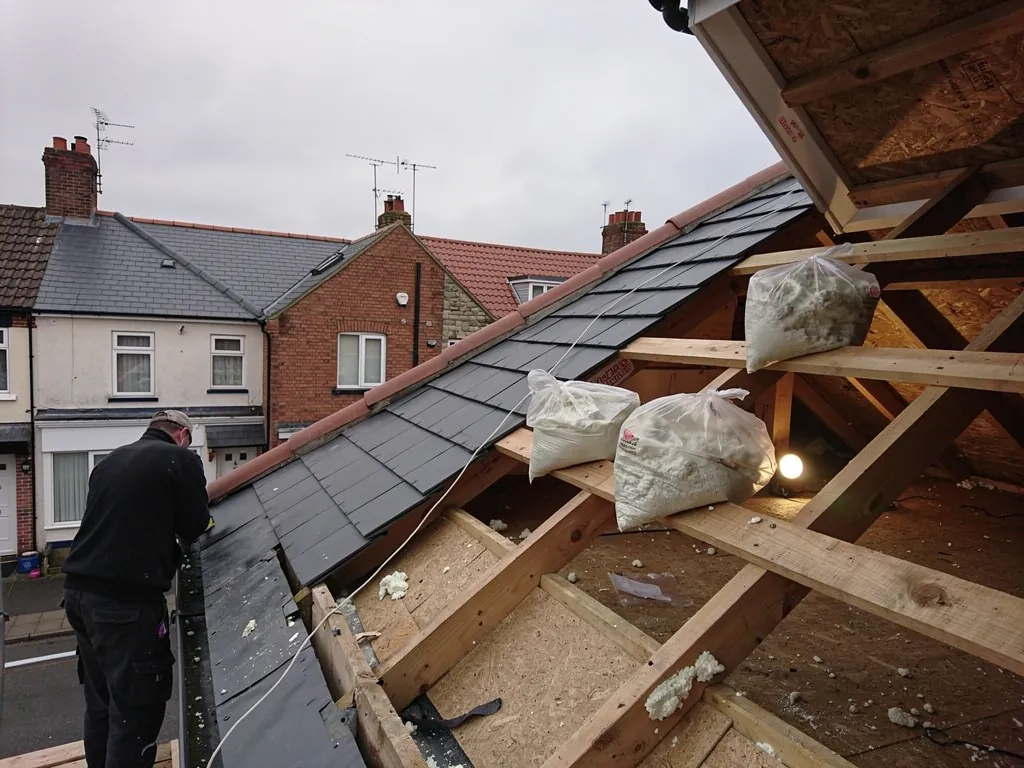
Opened roof with bags of removed spray foam on rafters

The short answer

By agreeing access, sequence and protection before anyone goes up. Large roofs are usually done in phases so the building keeps working underneath. Older sheeting built or refurbished before 2000 is assumed to contain asbestos until tested, and that changes how the job is planned.

Re-roofing a unit is a logistics job as much as a roofing one. Stock, customers, deliveries and staff all sit beneath the work, so the plan matters before the first sheet moves.

How are access and sequence agreed?

We agree where materials are stored, which yard doors stay clear and when the noisiest work happens. Phasing by bay lets part of the roof be open while the rest is covered. Temporary weather protection goes on before any covering comes off. Rooflights and gutters are handled in the same pass so the roof is not opened twice, and the new work is photographed as it goes.

Could older sheeting contain asbestos?

HSE says that a building built or refurbished before 2000 should be assumed to contain asbestos. Fibre-cement roof sheeting from that period is a typical example. Removing it carefully and unbroken is non-licensed work, but if it has been substantially broken the work becomes notifiable. Asbestos insulating board, found in some older soffits, is mostly licensed work for a specialist firm. Testing comes before any lifting here; anything that needs a licence goes to an outside specialist, and we stop and tell you if the survey points to the material. Our commercial roofing page covers the wider process.

When is building control involved?

A re-cover beyond the Planning Portal limits of 25 per cent of the building envelope and 50 per cent of the roof, or one that changes the weight or fire performance of the covering, needs a building control application. Swindon Borough Council runs its own team, and a registered building control approver is the private option. Where the job is notifiable, the paperwork is ours to look after.

Send us the unit's address, a few photographs and the lease's repair clause if you have it, and we will arrange a survey. The written quote follows it, and the 10-year workmanship guarantee that comes with our work is given in writing. Once the work is done we sweep up and take our rubbish away.

Questions from the park and the streets round it

Why does the flat roof on a Bridgemead unit pond after rain?

Usually because the deck has settled or the original falls were shallow, so water cannot reach the outlet. Debris at the outlet can have the same effect. Ponding speeds up wear on the covering. We measure the fall, check the outlets and tell you whether a repair, extra drainage or an entirely new covering suits the roof best.

How do you survey a large unit roof?

We go onto the roof only where access is safe, photograph every detail, check gutters and outlets, and look at the ceiling from inside as well. Where a surface is fragile, such as old rooflights or fibre-cement sheets, we do not step on it and record it from a safe position. Each repair we propose is tied to a photographed fault by location, and the written price you receive covers everything the survey found.

Do you also work on the houses around Bridgemead?

Yes. Houses in Westlea, Freshbrook, Rushey Platt and Toothill are all close, and we survey them as houses, with a pitched-roof approach. Garage and porch roofs on the same property are looked at in the same visit, and the written quote covers whichever of them need attention.

Is Bridgemead inside a conservation area?

No. It does not appear among the 27 areas on Swindon Borough Council's list. Listed buildings are a separate matter, and a call to the council's planning officers will settle the status of any building before work is priced, a quick step that avoids surprises.

Ask us about your roof

Tell us what’s happening and we’ll call you back.

  • Photos of what we find
  • A written quote
  • 10-year workmanship guarantee

Or call 01793 626096

Call Get a quote