Roofers on a slate roof along a limestone village street

Roofers in West Swindon

Roof repairs, re-roofing, chimneys, gutters and flat roofs across West Swindon, from the first Toothill houses to the Freshbrook estates and the larger buildings around the West Swindon Centre.

West Swindon's roofs, estate by estate

Concrete tiled roofs on an older estate
Toothill and the first estates

West Swindon's growth began in the 1970s at Toothill, on farmland that had been split between the parishes of Lydiard Millicent and Lydiard Tregoze, with a small part in Wroughton. Houses from that first phase are now several decades old, and their roofs are old enough for small faults to compound. On homes of this period we look first at the places where the roof meets something else: the flashings around chimneys and party walls, the cement fillets along abutments, and the verges where the tiles stop at a gable. Underlay from the same era can also dry out and split, which only shows once tiles are lifted. Many of these jobs turn out to be repairs rather than replacements.

Gabled houses in a 1980s estate
Freshbrook and the 1980s

The 1980s brought Freshbrook and the West Swindon Centre, and with them the houses, garages and low-pitched extensions that late twentieth-century estate building produced. Roofs of this kind are often simple in form, with gables, a few valleys over porches or bay windows, and a garage attached at the side. Simple shapes are easy to work on, but the weak points are predictable: ridge tiles bedded on mortar alone, valley linings that have aged, and fascia boards and soffits painted over for years. Because neighbouring houses were frequently built to the same pattern, a fault on one roof is a useful clue to what may be happening next door, and a survey of one can save a surprise on the other.

Flat roof on a large building
The Renault Centre and larger buildings

Not every roof in West Swindon belongs to a house. The Renault Centre, designed by Norman Foster and built in 1982 as Renault's UK headquarters, is a reminder that the area is more than streets of homes, and the West Swindon Centre with its Link Centre sits at the heart of it. Larger buildings tend to carry wide, low-pitched or flat roofs with membranes, rooflights and outlets that need regular inspection, not the tile-by-tile attention a house roof gets. We work on commercial and industrial roofs as well as homes, and the questions are different: how to reach the roof safely, how it drains, and how to keep a building trading while the work goes on.

Between the M4 and the River Ray

Map showing West Swindon and central Swindon. 4 road miles west of central Swindon.

Distance
4 road miles west of central Swindon
Council
Swindon Borough Council
Boundaries
The M4 to the south, the River Ray to the east
Conservation area
None on Swindon Borough Council's list
Council
Swindon Borough Council

Roof questions from Toothill to Freshbrook

Does a Toothill or Freshbrook house need planning permission for a new roof?

Tiles to match the existing ones seldom need planning permission, and West Swindon has no conservation area. Changing the roof's appearance is different, so ask Swindon Borough Council's planning team first.

Why do ridge tiles on 1980s estate houses come loose?

The original mortar bedding cracks and crumbles with age, and building standards no longer treat it as enough on its own. We re-bed the tiles and add mechanical fixings so they stay put.

Can you repair a flat roof near the West Swindon Centre?

Yes, on houses, garages and larger buildings. We find where the water is getting in, repair that, and tell you plainly if the covering has reached the point where a new one makes better sense.

Q1

What goes wrong on West Swindon's 1970s and 1980s roofs?

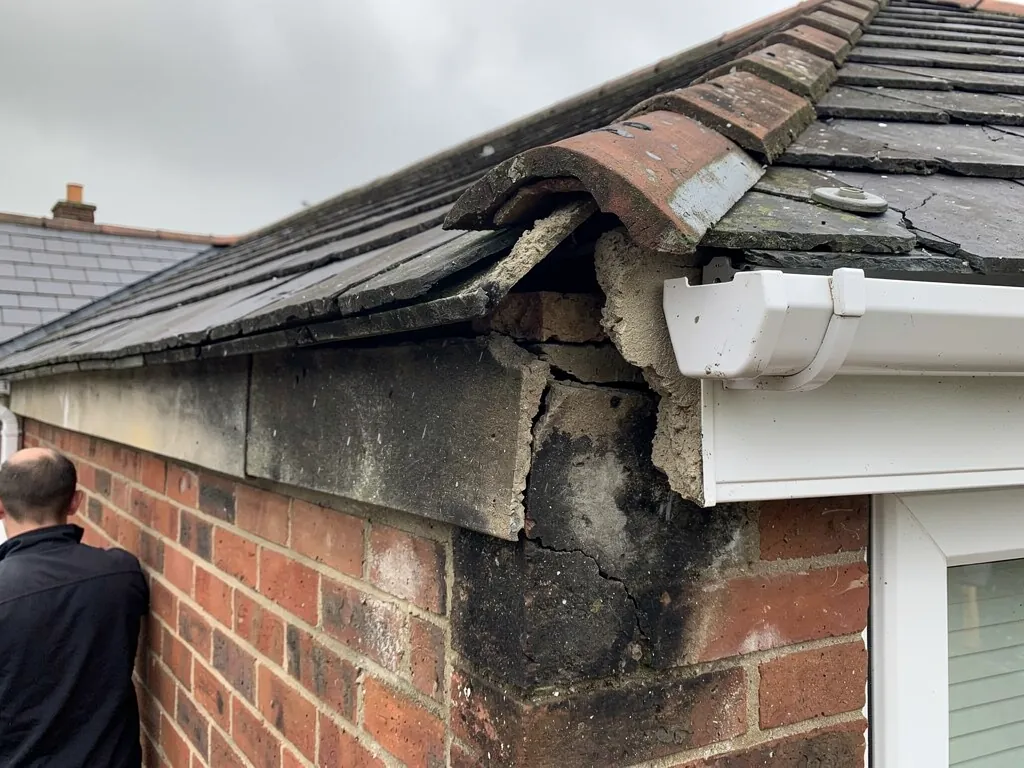
Crumbling mortar and cracked brickwork at a tiled roof eaves corner
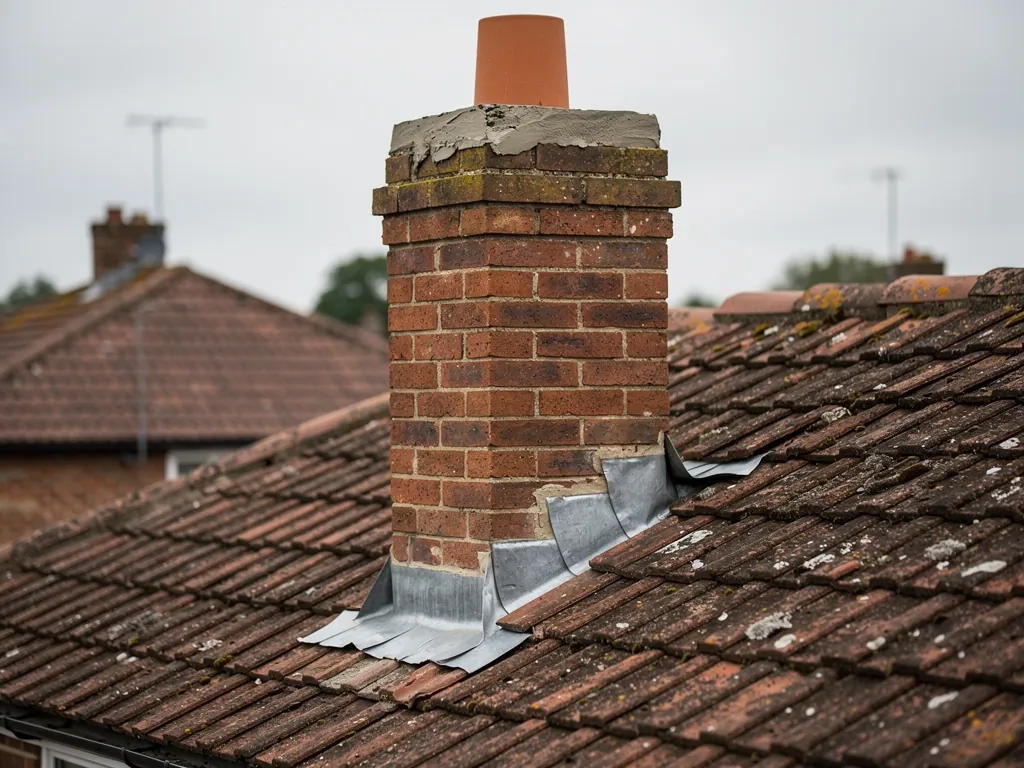
Brick chimney stack with new lead flashing on a clay tile roof

The short answer

The same few faults turn up again and again: ridge and hip tiles whose mortar has failed, flashings that have lifted at chimneys and walls, tired valleys, and underlay that has dried out. Because streets were built to repeating patterns, one survey often explains a whole row.

West Swindon was laid out as a series of new neighbourhoods between the M4 and the River Ray, built in stages through the 1970s and 1980s. Houses put up in the same few years age in the same ways, which is useful to a roofer. Once we know what has gone wrong on one roof, we know what to look for on the next.

Where does the roof meet something else?

Flashings are the metal strips that waterproof the junction of a roof slope with a wall or chimney stack. On a house of this age the original cement fillet that sealed some of those joints has often cracked away from the brickwork, and water follows the gap into the loft. Replacing a fillet with a proper lead flashing is a modest job. Left for another winter, it can become a stained ceiling.

What goes wrong along the top edges?

Along the crown sits the ridge, hips run down the outward corners where slopes meet, and the verge is where the tiles end at a gable. All three were commonly bedded in sand and cement. That mortar shrinks and cracks over the decades, and the 2014 revision of BS 5534 stopped treating mortar by itself as adequate for ridge and hip tiles. We re-bed them and add mechanical fixings, or switch to a tested dry-fix ridge. Our ridge, verge and dry-fix page explains the choices.

What is happening underneath the tiles?

Underlay is the sheet beneath the battens that catches anything the tiles let through. Older bitumen felt can become brittle, and where it has torn at the eaves or around a roof window, a roof can leak with no tile out of place. A survey that lifts a few tiles in the right spots tells us whether a repair is enough, and the photographs we send with the quote show you what we saw.

For leaks and slipped tiles, our roof repairs page sets out how we diagnose before we quote.

Q2

Is a flat roof on a Freshbrook garage worth repairing?

The answer

Frequently, if the fault is confined to one spot: a split at an upstand, a failed joint or a blocked outlet. If the covering is soft underfoot, blistered across its whole area or holding water, repair buys little and a new covering is the better spend. The survey tells you which.

The houses that came with West Swindon's estates were frequently built with a garage at the side, and over the years many have gained a flat-roofed porch, kitchen extension or lean-to. Those small flat roofs tend to be the first parts of a house to need work, and the repair-or-replace question comes up often.

When is a repair enough?

Where the fault is local, a repair makes sense. A seam that has opened, a cracked upstand against the house wall, or an outlet blocked with leaves and moss can usually be put right for a modest sum. Water often travels along the deck before it shows inside, so a mark inside the house may sit well away from the real opening. We trace it before we quote.

When is a new covering the better spend?

If the surface is blistered over its whole area, the deck underneath feels soft, or the roof holds standing water because the falls are too gentle, patching is borrowing time. A new covering, in EPDM (a synthetic rubber membrane), GRP (glass-reinforced plastic) or felt, goes on a repaired and properly drained deck. For a new flat roof the design fall is 1:40 so that the finished roof still reaches at least 1:80.

What the work costs depends on the size, the access and the covering. MyBuilder's garage roof guide, updated on 21 August 2026, gives national typical figures for replacement, shown in the chart, and our written quote after the survey replaces them with a price for your roof.

Which covering should I choose?

EPDM and GRP suit small, awkward roofs because each can be formed as a single sheet with very few seams. Felt remains a sound choice where it is laid well. Our flat roofing page compares them in detail.


What it typically costs

  • Flat-roofed single garage£700 to £1,000
  • Flat-roofed double garage£900 to £1,400
  • Pitched garage roof£2,500 to £4,500
National typical replacement figures for a garage roof. Your own price, set out in writing after the survey, reflects the size, access and covering of your roof. MyBuilder garage roof replacement cost guide, updated 21 August 2026.
Q3

Who has to be told before West Swindon roof work starts?

Rolled lead roof covering over a bay above white windows
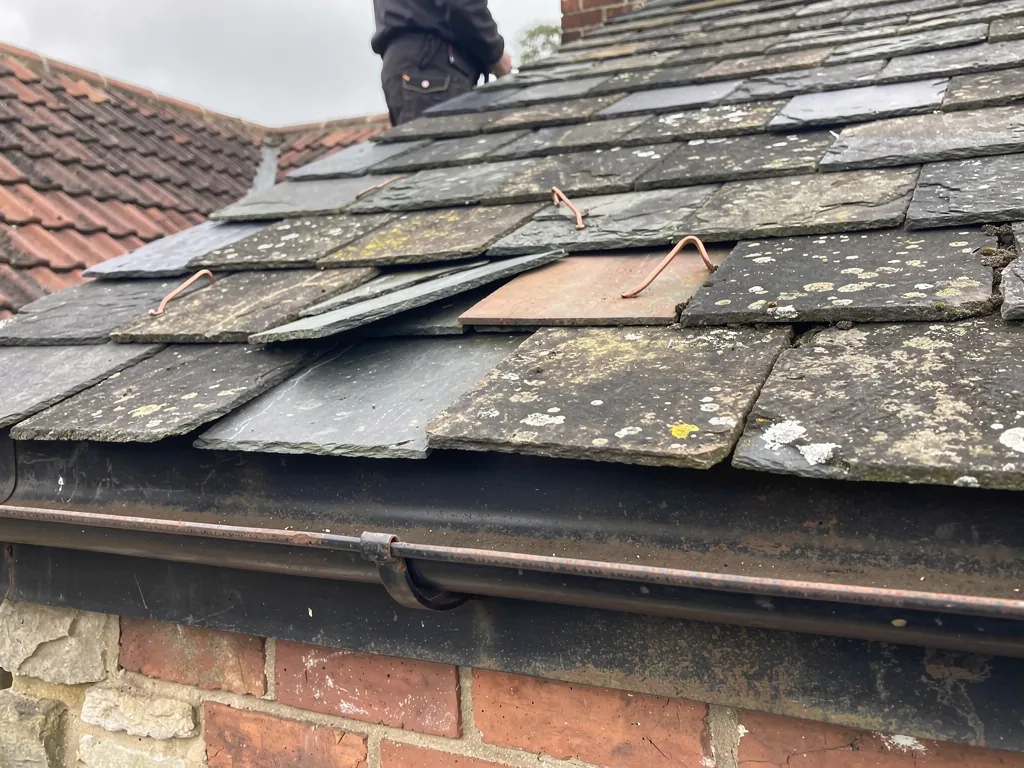
Replacement slates held with copper tingles on an older slate roof

The short answer

Most repairs need nobody's permission. Bigger re-roofs can fall under Building Regulations, which Swindon Borough Council's building control team or a registered building control approver deals with. West Swindon has no conservation area, but a listed building is always a separate matter.

Because West Swindon was built up from farmland in the twentieth century, its roofs are mostly free of the layered restrictions that cover an old market town. That makes the paperwork lighter, though it does not remove it.

Is any of West Swindon a conservation area?

Swindon Borough Council lists 27 conservation areas, and West Swindon is not among them. Article 4 directions, which withdraw some permitted development rights, cover just two places in the borough, Bishopstone and the Railway Village. Re-covering an ordinary house in the same material therefore rarely calls for a planning application. If you want to change how the roof looks or add roof windows, put the question to Swindon Borough Council's planners first. The council's conservation areas page shows where the boundaries lie.

When do Building Regulations come in?

A re-roof does not normally need a building control application when less than 25 per cent of the total building envelope and less than 50 per cent of the roof is affected. Go past either figure, or pick a covering at least 15 per cent heavier, and approval applies, which can bring a thermal upgrade with it. Swindon Borough Council runs its own building control service. Where work is notifiable we do the notifying, and tell you what the council will want to see.

What about the older buildings nearby?

Lydiard House in Lydiard Park, a Grade I listed house remodelled in Palladian style in the 1740s, is a reminder that West Swindon has history older than its estates. If a building is listed, alterations that change its character need consent from the council, which can also tell you whether yours is listed. For a quote on a house like yours, start with roof replacement.

MythA new estate roof can be replaced with anything, because there are no old-town rules to follow.

FactThe weight of a heavier covering and the size of the job can still bring Building Regulations into play.

Questions from Toothill, Freshbrook and Shaw

Why does my 1980s West Swindon house leak where the roof meets the chimney?

On houses of that period the joint is often sealed with a cement fillet, which cracks as the brickwork and roof move at different rates. Water then tracks into the loft along the gap. The lasting fix is a lead flashing stepped into the brickwork, with the chimney checked at the same visit, and we show you photographs of the joint before and after.

Do you work on commercial roofs around the West Swindon Centre?

Yes. We repair and replace flat and low-pitched roofs on commercial and industrial buildings as well as homes. The survey for a larger roof looks at access, drainage, rooflights and the condition of the membrane, and the written quote explains how the work could be phased to keep the building in use.

Is a Toothill roof old enough to need replacing, not repairing?

Not necessarily. Age alone is a poor guide, because a well-laid tiled roof can outlast the ridge mortar, flashings and underlay around it. Our advice is whichever job is smallest and still cures the fault, with a replacement only when the survey shows the covering, battens or structure are no longer sound.

Do you cover Shaw, Freshbrook, Westlea and the other parts of West Swindon?

Yes. We work across the whole of the area between the M4 and the River Ray, and in the neighbouring districts of Swindon. Our areas page lists every town and district we cover, and the form or a call to 01793 626096 is the quickest way to book a survey.

Ask us about your roof

Tell us what’s happening and we’ll call you back.

  • Photos of what we find
  • A written quote
  • 10-year workmanship guarantee

Or call 01793 626096

Call Get a quote