Edwardian brick villas with clay tile roofs and decorative ridges

Roofers in Shaw, Swindon

Roof repairs, re-roofing, guttering and flat roofs in Shaw, from the 1980s streets around Holy Trinity to the few corners that remember the hamlet before the houses came.

Shaw's roofs, from hamlet to housing

An older brick cottage with tiled roof
What the hamlet left behind

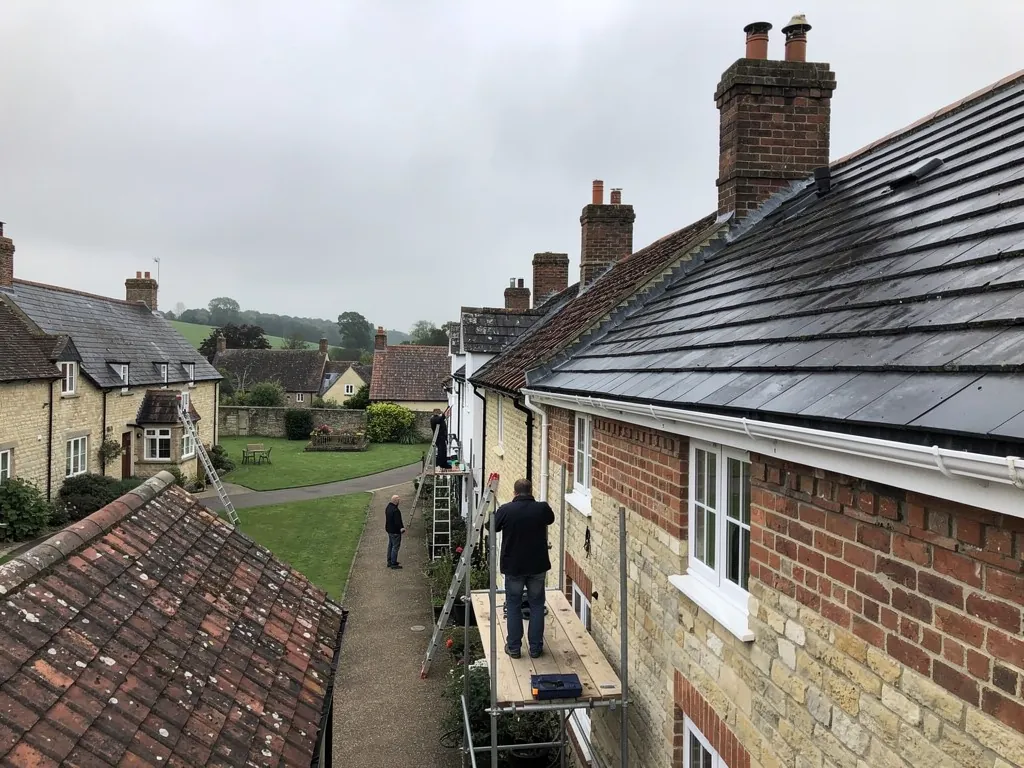
Before West Swindon was built, the countryside here belonged to Lydiard Millicent parish, and Shaw was one of its hamlets alongside Roughmoor and Nine Elms. Almost everything around Shaw's present streets arrived with the later estates, so any older building that survives from the hamlet years stands apart from its surroundings. A farmhouse, outbuilding or cottage of that kind is likely to have been put together very differently from an estate house, with timber that has had far longer to move and a covering that may have been renewed more than once. Roofs like that reward a careful survey and a repair that fits the building, not a standard specification. Old brick, timber and mortar each behave differently, and matching them matters more than speed.

Rows of tiled houses on a newer estate
The housing of the mid-1980s

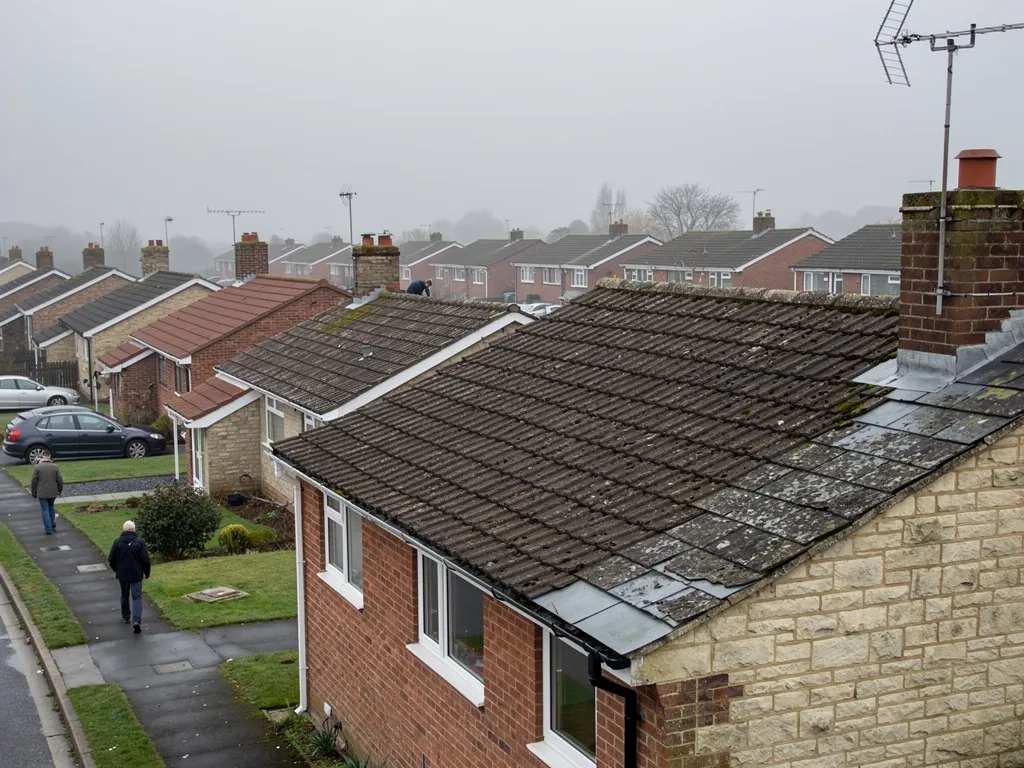
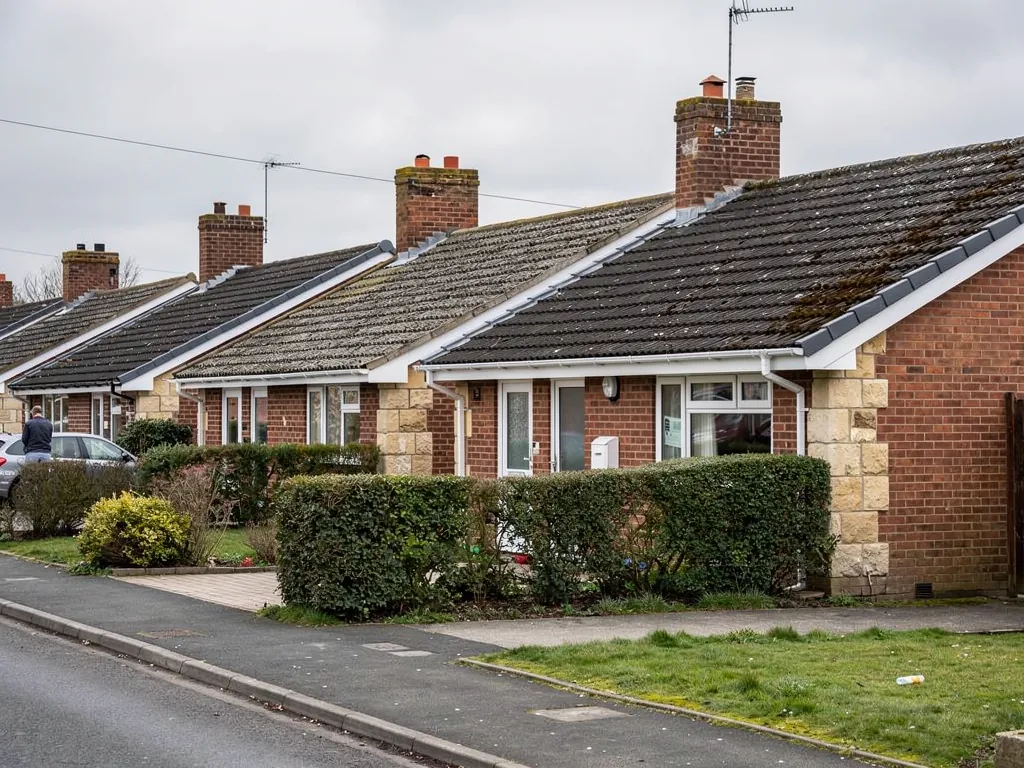
Housebuilding at Shaw started in 1984, so the oldest streets are now roughly forty years into their life. A house of that age has usually seen its first round of maintenance and is heading into the second. The things we find most often are practical ones: concrete interlocking tiles that have gathered moss and lost some of their surface, ridge tiles whose bedding has crumbled, lead or cement work at chimneys and party walls, and a roofline of fascias, soffits and gutters that has been painted or patched more than once. None of it is unusual for the period, and most of it can be dealt with one fault at a time.

Flat-roofed extension on a brick house
Porches, garages and low roofs

Holy Trinity church, built at Shaw in 1989 to serve the growing suburbs, marks the point where the neighbourhood became settled, and the houses around it have since gained the usual extras. Porches, integral garages, conservatory roofs and rear extensions with low or flat roofs are common on estate housing of this age, and they often wear out ahead of the main roof. A flat roof over a kitchen extension, or a lean-to over a side door, is exposed to standing water and sun in a way a steep pitch is not. We repair these where the fault is local and replace them where the covering has finished.

From Roughmoor and Nine Elms to Shaw Forest

Map showing Shaw, Swindon and central Swindon. 4 road miles west of central Swindon.

Distance
4 road miles west of central Swindon
Council
Swindon Borough Council
Council ward
Shaw, created in 2012, covering the Shaw Forest area
Conservation area
None on Swindon Borough Council's list
Church
Holy Trinity, built in 1989

Roof questions from the Shaw estates

Is a house built in Shaw in 1984 due a new roof?

Not by age alone. A concrete-tiled roof of that vintage often needs ridge, flashing and underlay attention before it needs replacing, and the survey shows which applies.

Why are the gutters on my Shaw house overflowing in rain?

Usually blockage, sagging brackets or joints that have opened, not a gutter that is too small. We clear and re-level where that is enough, and replace the run where it is not.

Does Holy Trinity or the Shaw ward change the rules for my roof?

No. Shaw has no conservation area, so an ordinary house re-roofed in matching material follows the standard rules, with Building Regulations applying above certain limits.

Q1

What ages first on a Shaw estate roof?

Torch showing a water-stained rafter beneath slates in a loft
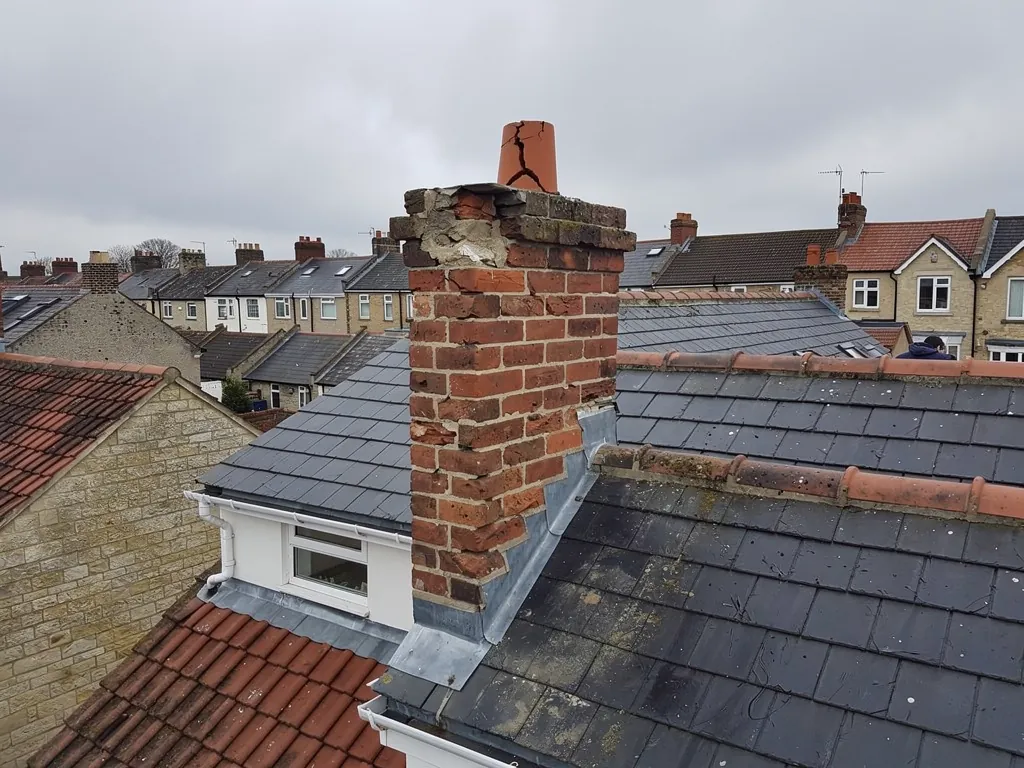
Weathered brick chimney stack with eroded joints and cracked pot

The short answer

Usually the details, not the tiles. Ridge bedding, flashings at chimneys and walls, and the underlay under the battens tend to give up before the covering itself. Rooflines of fascia, soffit and gutter come next, and that is where most Shaw repairs begin.

A roof is a set of parts with different lifespans, laid together on the day the house was built. Shaw's oldest houses were roofed from 1984 onwards, and the parts have not aged at the same speed. Knowing the order helps you decide whether you are looking at a repair or a replacement.

How long does the covering itself last?

Concrete tiles on estate housing are durable, and sources give a wide range for how long they last, often 30 to 60 years. The surface does weather: the colour coat fades, moss settles in the shaded slopes, and the occasional tile cracks. A roof in that state is not failing, though it is worth a look before the next winter, and a clear-out of the gutters at the same visit saves a second trip. Replacing tiles only becomes the sensible answer when many are cracked, or when the battens beneath have started to soften and the roof will no longer hold a repair.

Where do the leaks usually start?

The weak points are the joints. Mortar under the ridge shrinks, a cement fillet at a chimney lets go of the brickwork, and the verge pointing at a gable end loosens. These are small jobs on their own, and they are where a leak usually starts. Our ridge, verge and dry-fix page explains how we re-secure them.

What about the parts nobody looks at?

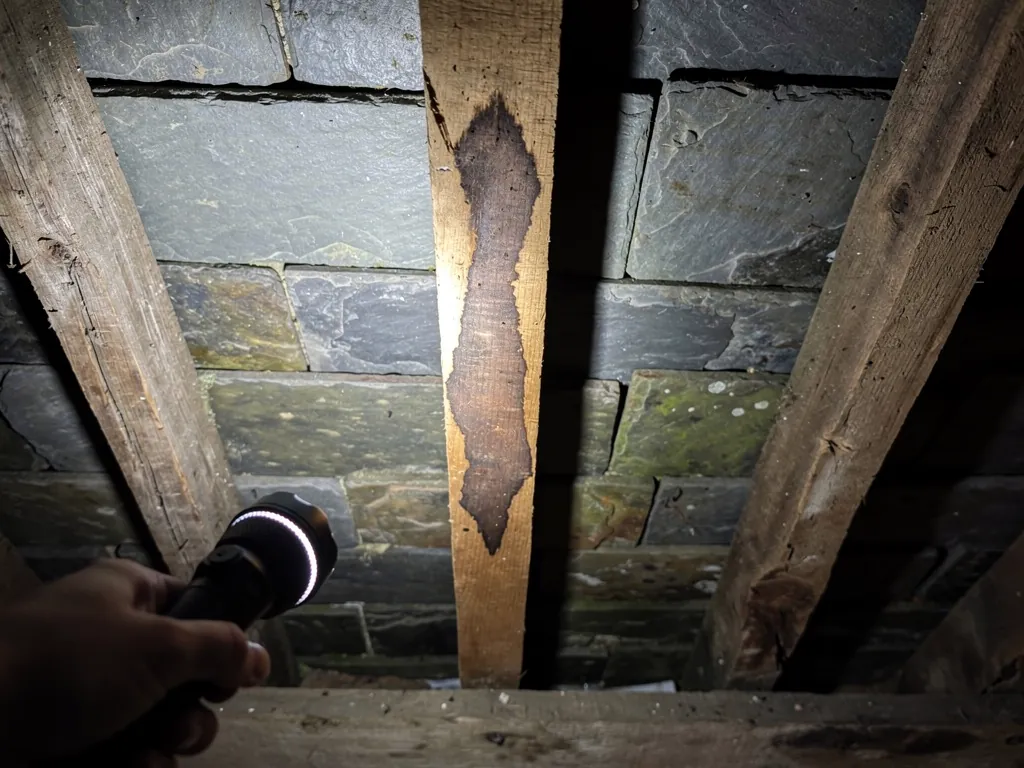
Underlay, the sheet beneath the battens, is out of sight. On a house of this age it may have curled or torn at the eaves, and a loft inspection with a torch will often show daylight or damp timber before any tile has moved. Should you be able to get into the loft without risk, look for stains on the underside of the roof and around the chimney breast, and send us a photograph.

If you notice a drip or a stained ceiling, our roof repairs page explains how we trace the cause before recommending anything.

Q2

How do I know when Shaw guttering and fascias need replacing?

The answer

When water spills over the front of the gutter in ordinary rain, the fascia board behind it is soft or stained, or joints and brackets have failed along more than one run. A single cracked section can be replaced alone. A tired run on a two-storey house is usually worth doing together.

Where the roof ends and the walls begin you will find the fascia board carrying the gutter, the soffit tucked beneath the eaves and, at a gable, the bargeboard. On houses of Shaw's age the boards are often plastic, fitted when the house was built or replaced since, and it costs little to put right early and a good deal more to leave.

How can I tell a repair will not hold?

Water that runs down the wall behind a gutter has found a gap. Brackets that have loosened let the run sag until it holds water, and green staining under a joint tells you where it has been leaking. A fascia board that gives under a thumb has rotted behind its covering, and fitting new gutters to it would only shift the problem a few years down the line.

Why do the roofline and roof edge at the same time?

Scaffold is a large part of the cost on a two-storey house, and the roofline is about the same height as the roof edge. So we look at fascias, soffits and the roof edge together. If the bottom row of tiles needs refixing, or the felt at the eaves has failed, it is far cheaper to find out while the access is in place.

MyBuilder's guide, updated on 21 August 2026, gives national typical figures per metre, shown in the chart. Your house gets its own figure in writing once we have surveyed it, with photographs of the board and the joints it is based on. Our gutters, soffits and fascias page covers the work in detail.

What it typically costs

  • Guttering replacement£30 to £70 per metre
  • Fascia board£80 to £150 per metre
  • Soffit£100 to £180 per metre
National typical figures for roofline work. The written quote after the survey prices your own boards, runs and access. MyBuilder price guide for roofline work (gutters, fascias, soffits), updated 21 August 2026.
Q3

What approvals apply to roof work on a Shaw house?

1980s estate houses with brown concrete tile roofs
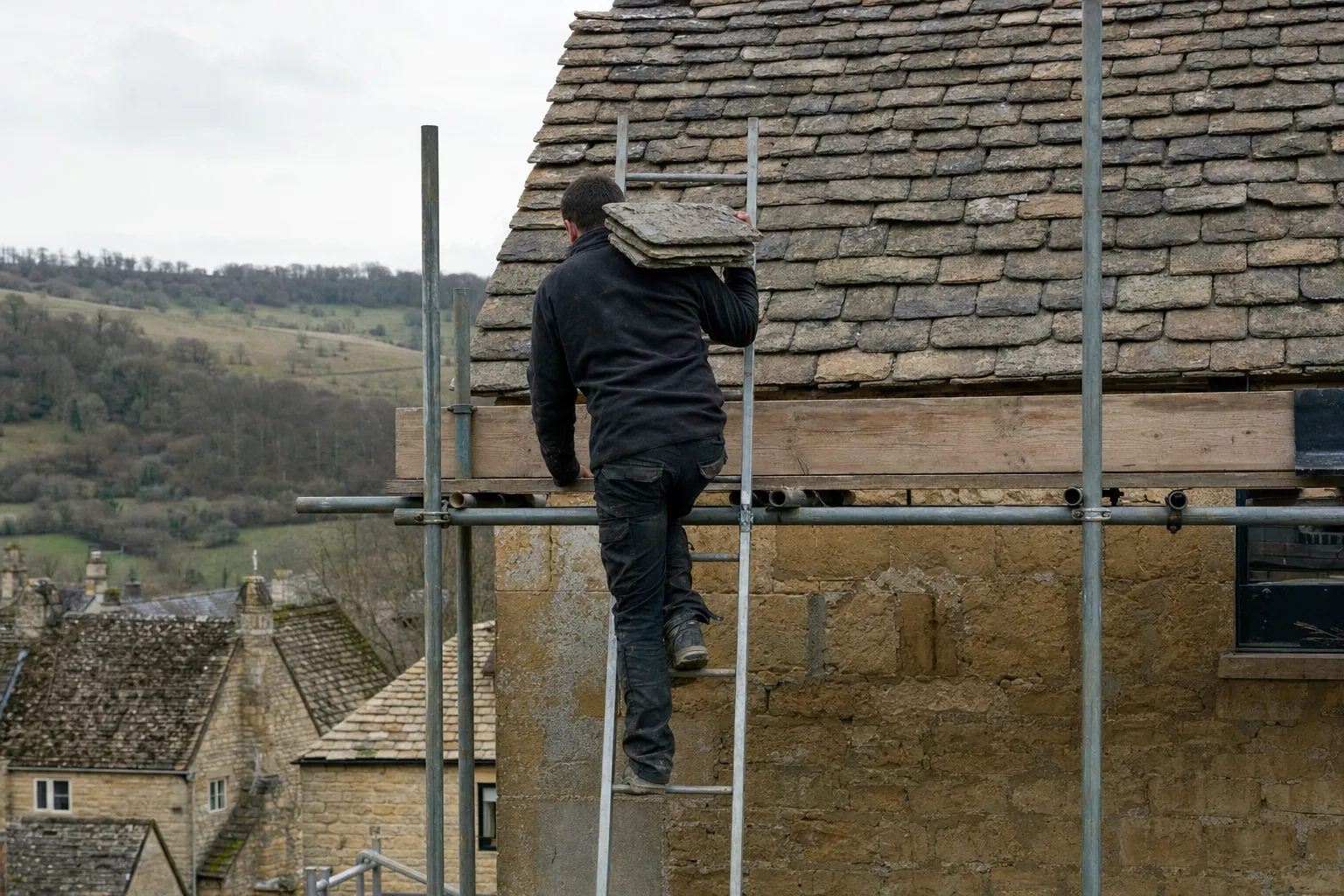
Roofer carrying stone slates up a ladder on scaffolding

The short answer

Very little for repairs. Shaw is not a conservation area, so matching re-roofing needs no planning application in the usual case. Larger re-roofs can trigger Building Regulations, which Swindon Borough Council's building control team deals with. Listed buildings and places of worship follow separate rules.

Shaw grew up with the western estates of the 1980s, and the approvals picture is correspondingly simple for ordinary houses. It is still worth knowing where the lines fall before a job is priced, because they decide what is in the quote.

Does a Shaw re-roof need planning permission?

Laying a covering back in the same material counts as upkeep, so no application is usually required. Swindon Borough Council lists its conservation areas on its website, and Shaw is not among them. If you are thinking about roof windows or a change of material, put the question to Swindon Borough Council before you order anything.

When is a re-roof notifiable?

Smaller re-roofs sit outside the building control process: fewer than 25 per cent of the total building envelope, and fewer than 50 per cent of the roof, affected. A re-roof that goes past those limits, or adds weight at 15 per cent or more, is notifiable. When it is, the existing roof may have to be insulated to current standards, and the new covering must suit the rafters. Swindon Borough Council's own team handles applications, as can a registered building control approver. The Planning Portal's re-roofing guidance sets out the thresholds.

What about churches and other buildings?

Holy Trinity was built in 1989, and the roofs of places of worship follow their own consent system. Churches still used for worship by the Anglican, Catholic, Methodist, Baptist and United Reformed denominations are exempt from listed building consent under the ecclesiastical exemption. For the Church of England the control runs through the faculty system. Other denominations do not have the exemption, and a church that has closed for worship loses the exemption. The answer for a particular building comes from the church authorities or the council, and we price the roof work once you know where you stand. The same applies to church halls and other community buildings: ask who owns the roof and who must approve changes before a quote is accepted.

For work on an ordinary house, the survey photographs show what you have, and the written quote says what is notifiable. Our roof repairs team can start from either.

Our view

Tell us how big the job is, and we will tell you whether the council needs to know.

Questions from the streets around Holy Trinity

Why do Shaw roofs from the 1980s get so mossy on the north slope?

Moss settles where a slope stays damp and out of the sun, and concrete tiles with a rough, worn surface hold moisture. It does not mean the roof is failing, though a thick mat can lift tile edges and block gutters. We can scrape or treat it, and the survey shows whether tiles beneath have cracked.

Can you repair a flat porch or garage roof on a Shaw estate house?

Yes. Small flat roofs are a regular part of our work, and the first job is to find where the water is entering, which is often an upstand, a joint or a blocked outlet, not the middle of the roof. If the whole covering has blistered or holds water, we will say a new one is the better spend.

Do you cover Lydiard Millicent, Toothill and the other neighbourhoods near Shaw?

Yes. They fall well inside the area we cover from Swindon, together with the villages beyond the town. The areas page lists every place, and you can book a survey by ringing 01793 626096, through WhatsApp or with the website form.

What does the survey of a 1980s Shaw roof actually include?

We look at the covering, ridge and hips, verges, flashings, valleys and the roofline from a ladder and, where it is safe, the loft. The photographs show your roof as it is today, and we tell you which repairs are urgent and which can wait. We recommend the smallest job that actually cures the fault, with nothing added for the sake of it.

Ask us about your roof

Tell us what’s happening and we’ll call you back.

  • Photos of what we find
  • A written quote
  • 10-year workmanship guarantee

Or call 01793 626096

Call Get a quote