The short answer
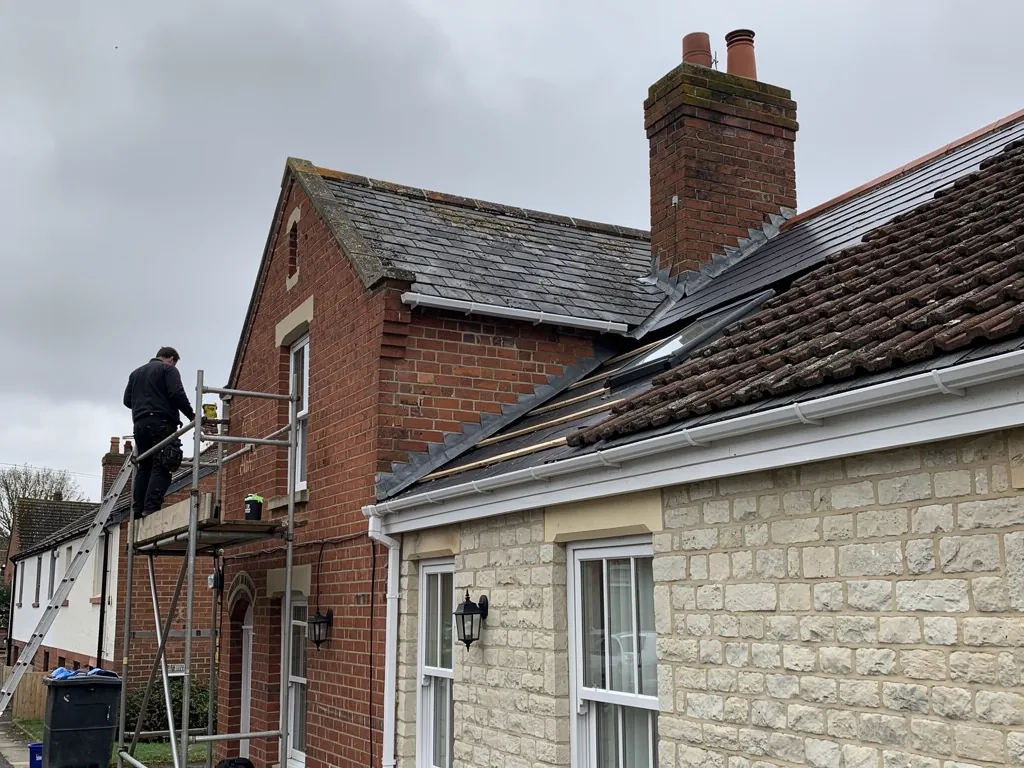
On a roof of around forty years the order is usually underlay and battens, then ridge and verge bedding, then flashings, and last the tiles. What lies underneath settles the choice between a repair that lasts and a slope that needs re-covering, so we examine those layers before recommending anything.
A roof built in the 1980s was put together to a good standard for its time. It simply has not had the benefit of modern materials, and the hidden layers have had a long time to age.
Q1.1What has happened to the felt and battens?
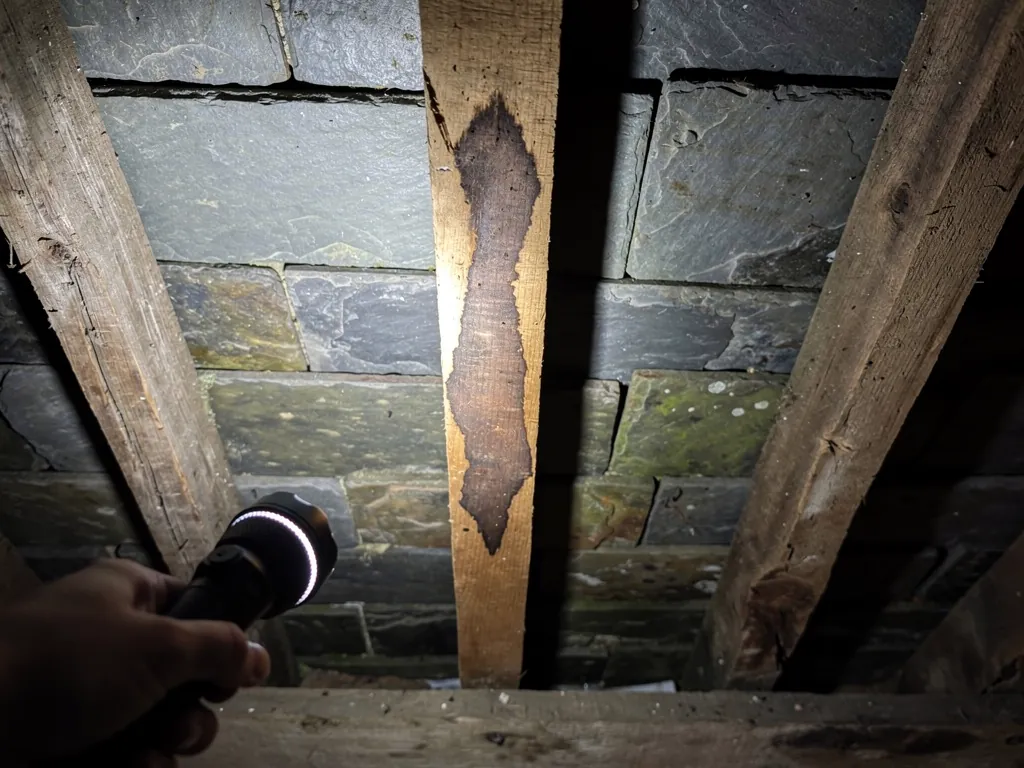
Felt under the tiles of this era tends to be bitumen-based, and by now it may have turned brittle, split along the battens or sagged between rafters. Where it has failed, water reaches the battens, which soften and let nails loosen. Tiles then slip even though they are intact. You can have a roof where the tiles look excellent from the road and the structure beneath is giving up.
Q1.2Is the pitch right for the tile?
Interlocking tiles have a minimum pitch, set by the manufacturer. Below it, rain can be driven under the laps. Marley's published figures include 15 degrees for Mendip, 17.5 for Edgemere and 22.5 for Double Roman, so a shallow roof needs the right tile and a well-laid underlay. Our page on minimum tile pitch explains how to check yours.
Q1.3Are the ridge, verge and flashings still holding?
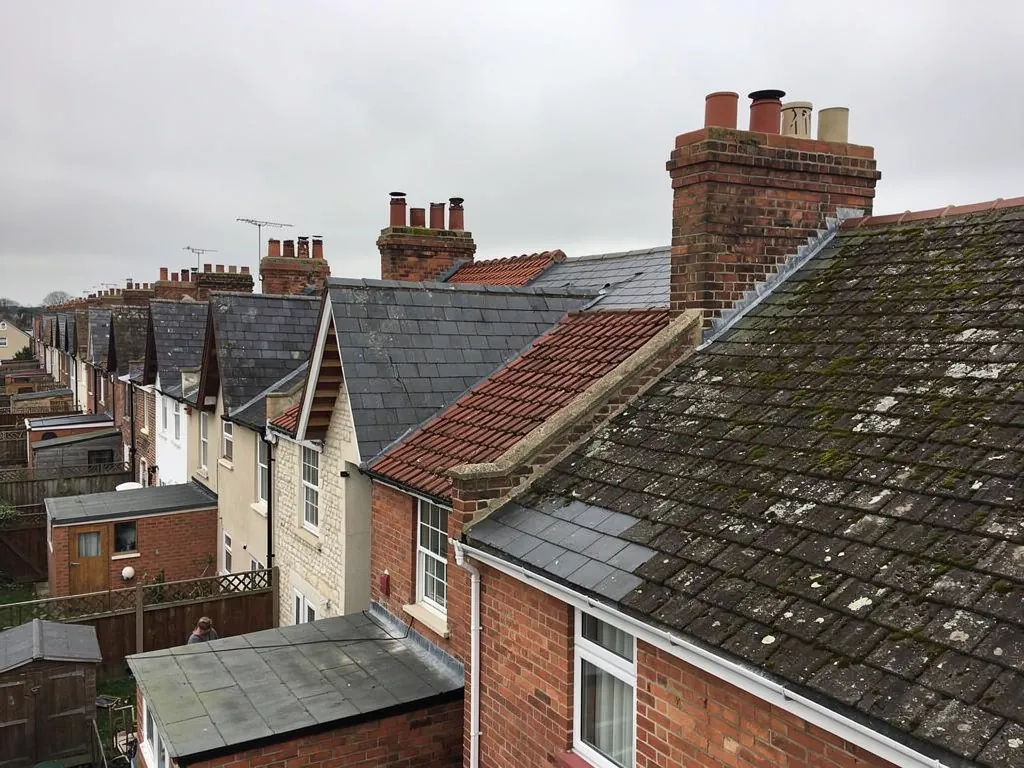
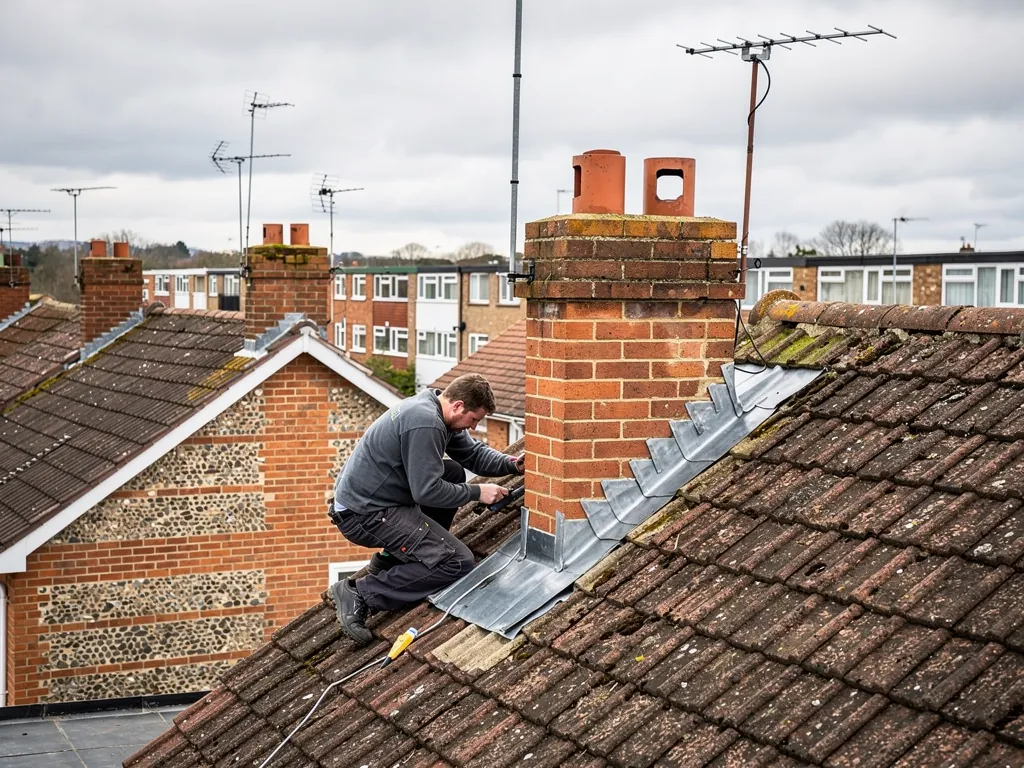
Bedding that has lasted forty years is a good result, but it is rarely sound by now. Ridge tiles are now clipped or screwed as well as bedded, following BS 5534:2014, so re-bedding an older ridge also brings it up to the present method. Lead and cement flashings at chimneys and adjoining walls should be checked at the same visit.
Our roof repairs and roof replacement pages explain how we decide between the two.
We lift a few tiles at the survey where needed, photograph the felt and battens underneath, and show you what we found. That gives you a fair picture of the remaining life in the roof, and if the answer is that the roof has years left, the quote says exactly that. Where it does not, the photographs make the case for re-covering far better than a verbal opinion could.