The short answer
Roofs on the earliest Peatmoor homes are close to forty years old, and the later ones from the 1990s are around thirty. The estate was built over several years, so ages vary street by street. Age alone is not a reason to replace; the condition of the battens, underlay and fixings is what decides.
The 1988 Link article places the lagoon, and the first houses around it, in the late 1980s. The 1997 article records social housing finishing at Peatmoor and a private builder with eighty homes still to come. Peatmoor was therefore not built in one go, and the roofs sit in different stages of life.
Q1.1How does a tiled roof change after forty years?
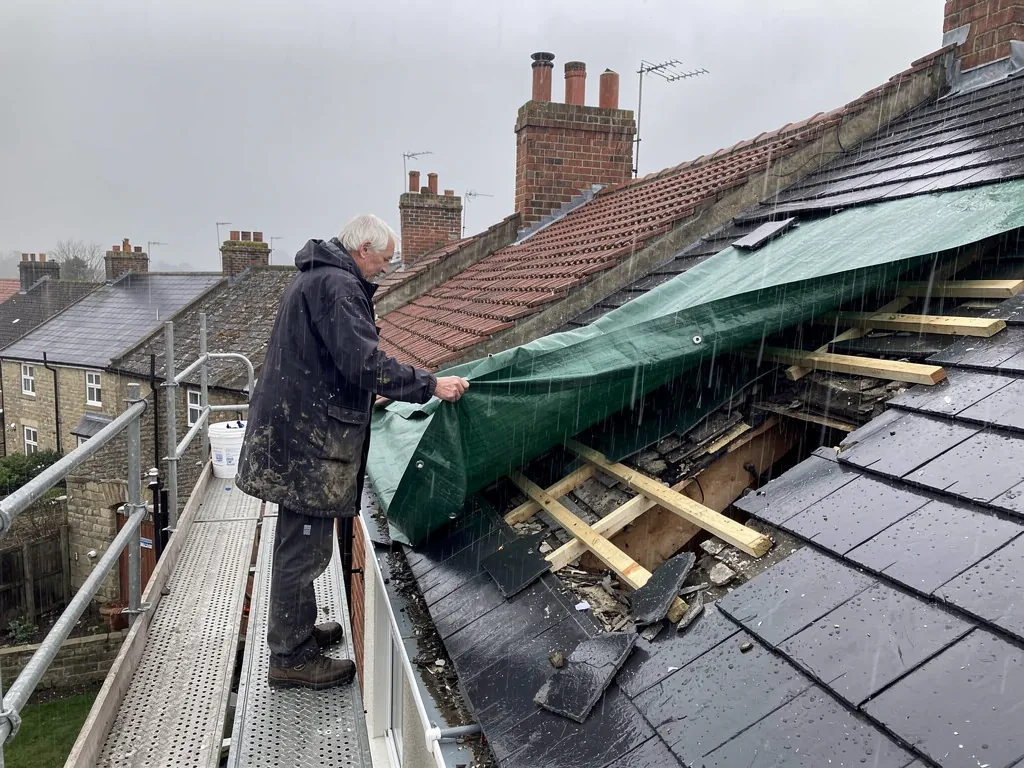
Guides quote 30 to 60 years for concrete tiles, so a roof of this age is in the middle of its range, not at the end. What deteriorates sooner is everything around the tiles: the cement under the ridge, the lead at the chimney, and the underlay, which can lose its flexibility after decades under the batten line. Moss and algae gather on north-facing slopes and hold moisture against the tile, and the fixings below can corrode.
Q1.2What does the survey look for?
A survey starts outside, with tiles, edges and flashings photographed, then moves into the loft. Daylight where it should not be, dark staining on rafters, damp insulation and droppings from roosting birds each tell a different story. The photographs go in with the quote itself, which lets you look at exactly what we looked at.
Q1.3Can roof work be planned in stages?
Some households choose to put a small budget aside for roof work rather than wait for a leak. A phased plan is possible: the ridge and verges this year, flashings next, and the covering when the evidence calls for it. Our pitched roofing page describes how each stage works, and the roof inspections and surveys page lists what a survey covers.
If a protected species such as a bat is found in a roof, the work must pause, so we look for signs before starting.
A copse and a lagoon bring wildlife close to the houses. Birds look for nesting spots beneath the eaves or beside the ridge, and squirrels sometimes gnaw at fascia boards to reach the loft. Gaps like these are worth closing with the right ventilated filler while the roof is open, because they let in water as well as animals, and they are cheap to deal with once scaffolding is up.
Gutters on an estate beside trees need attention more often than ones on open ground, and a blocked gutter can soak the top of a wall and the felt behind it. A tidy-up every year before autumn leaves are down is worth the time.