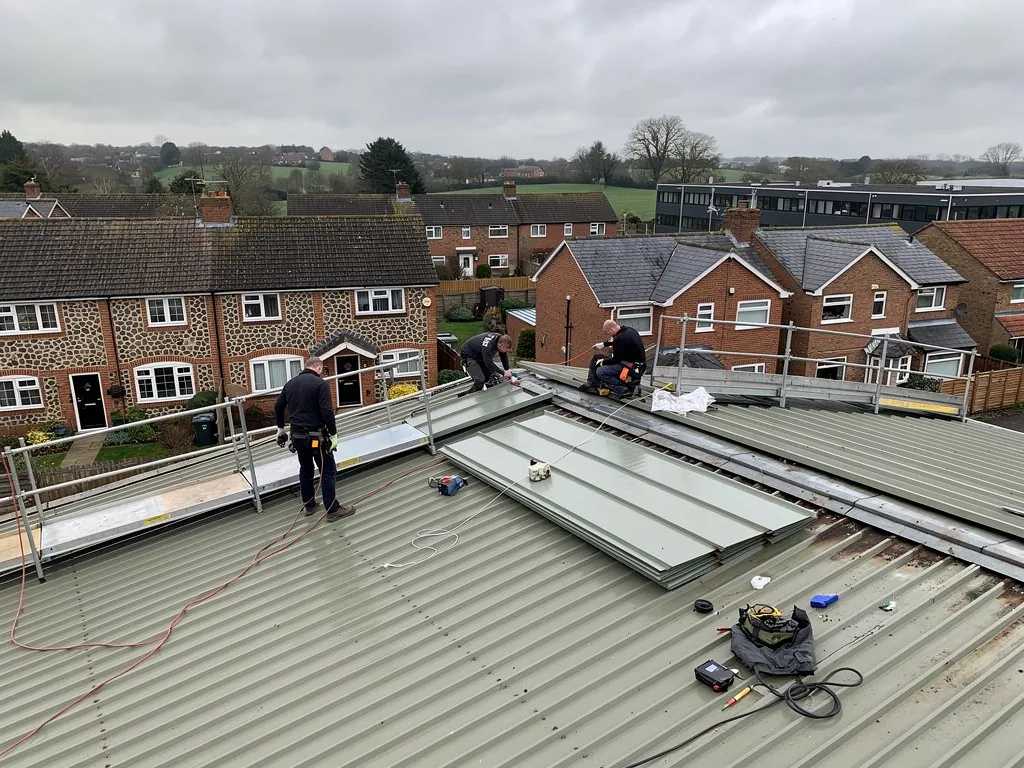
The West Swindon district centre brings together shops, offices and public buildings, and many have flat or low-pitched roofs. The same principles apply to a small garage and a large commercial roof, but the scale and the access change what the job involves.
Q2.1How is the entry point found?
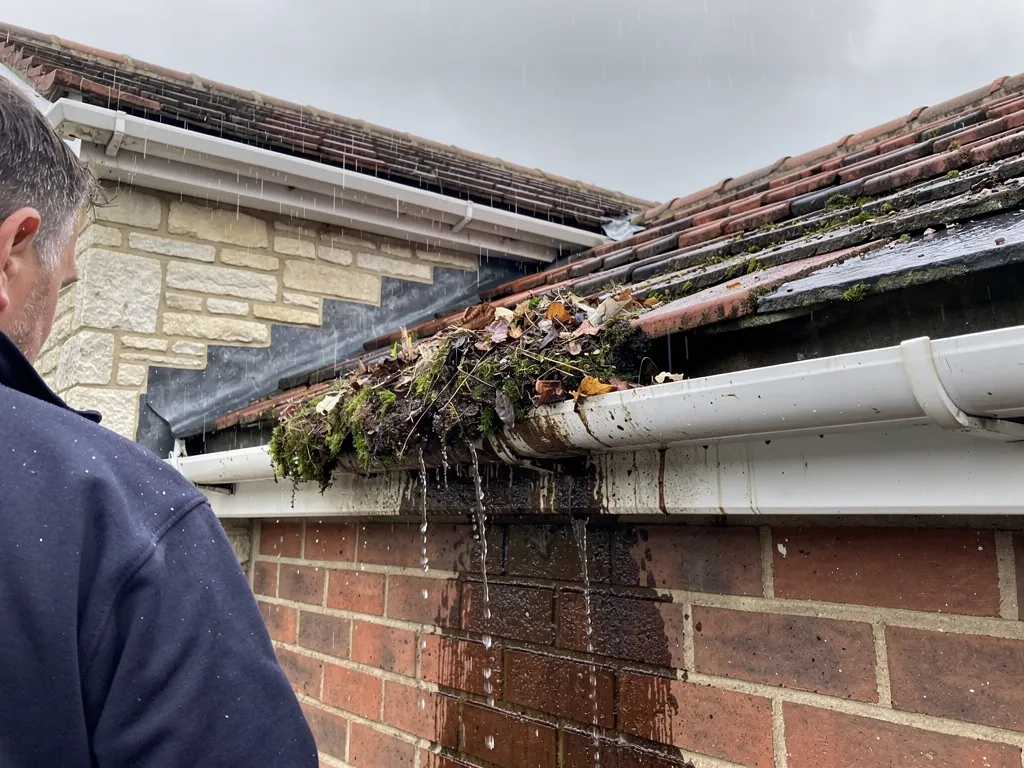
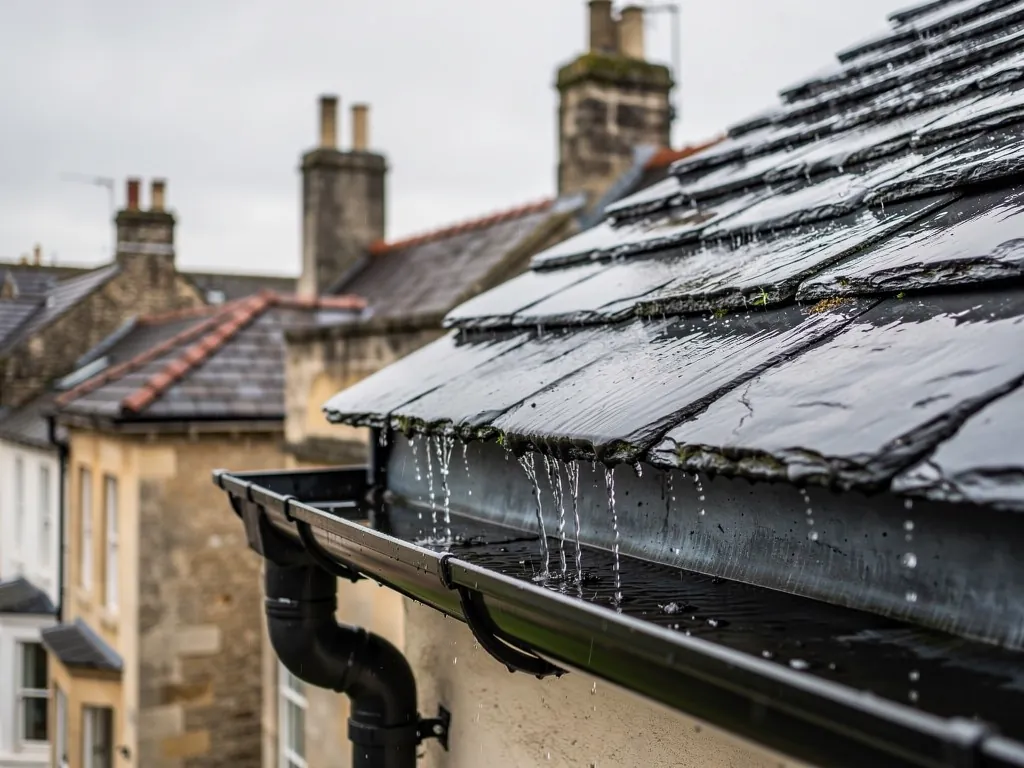
Water on a flat roof travels along the deck before it appears inside, so the stain on a ceiling may be metres from the hole. We look at drainage first: outlets, gutters and gullies, because a blocked outlet leaves standing water that tests every seam. Then the upstands, the short vertical edges at walls and parapets, and the laps, where sheets overlap. Rooflights and their kerbs are another common source. Photographs go to the building owner with the quote so the repair is clear.
Q2.2Which system suits which building?
On a small domestic flat roof we often suggest EPDM rubber or GRP fibreglass. On larger commercial roofs, a single-ply membrane or built-up system may suit better, and the choice depends on the deck, the falls, the foot traffic and the budget. Our commercial roofing page covers how we survey and price larger buildings, and the flat roofing page covers the materials.
Where a commercial roof is shared between tenants or leaseholders, the survey photographs show where each fault sits, so every party can see what affects their own space and what affects the building as a whole.
A leak over stock or equipment is a worry for any tenant, so the first visit concentrates on keeping water out, with the longer repair planned afterwards. Storm damage and active leaks go to the front of the queue.