The short answer
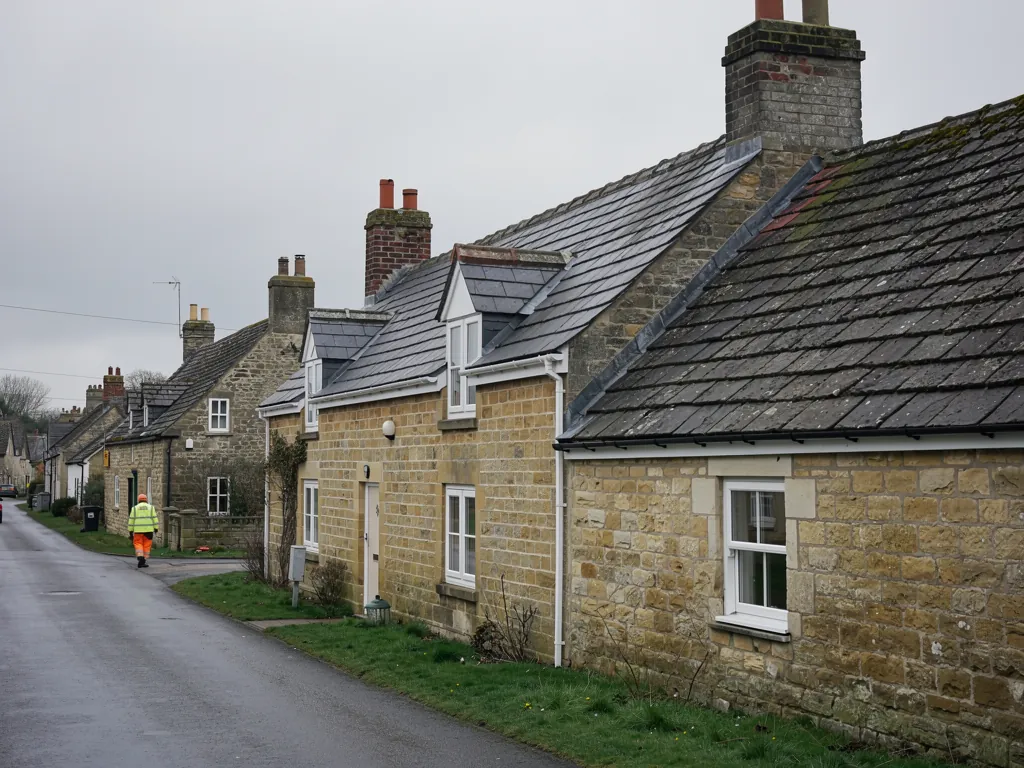
It sets the pattern for the village. Thatch is the predominant traditional covering, so a roofer's work here is often the chimneys, lead, drainage and slated or tiled parts around it, planned to protect the straw and never disturb it.
When thatch predominates, every other roofing job in the village is shaped by it. A good repair nearby protects the straw and keeps its character; a careless one can damage it.
Q1.1What does a chimney stack through thatch need?
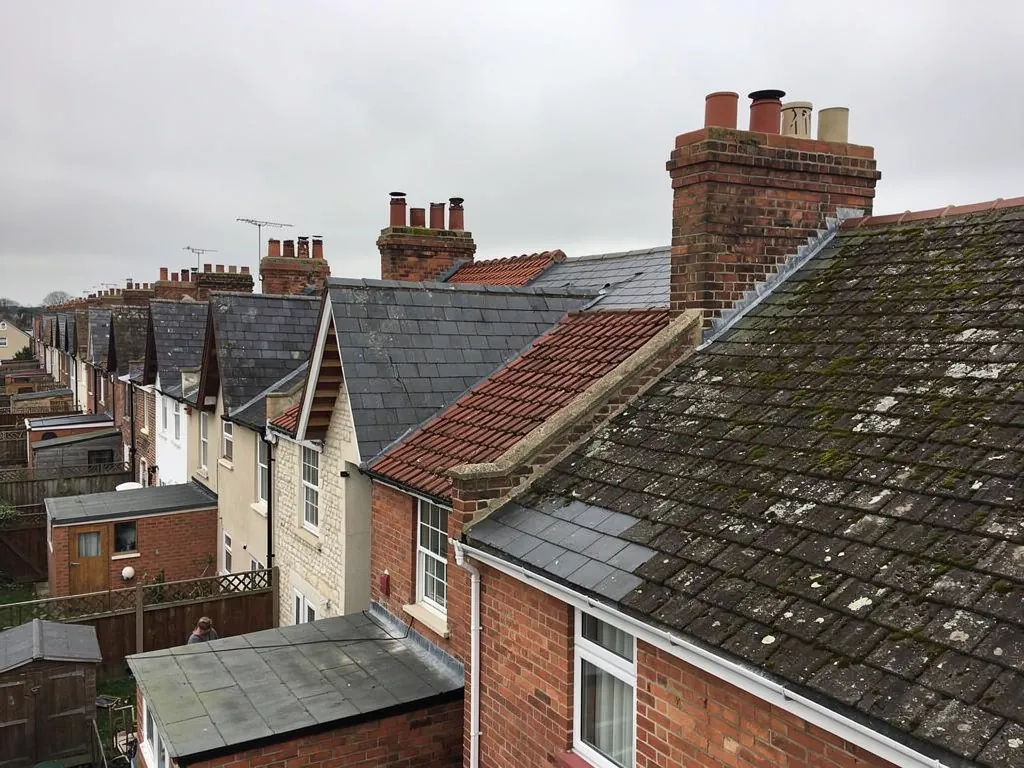
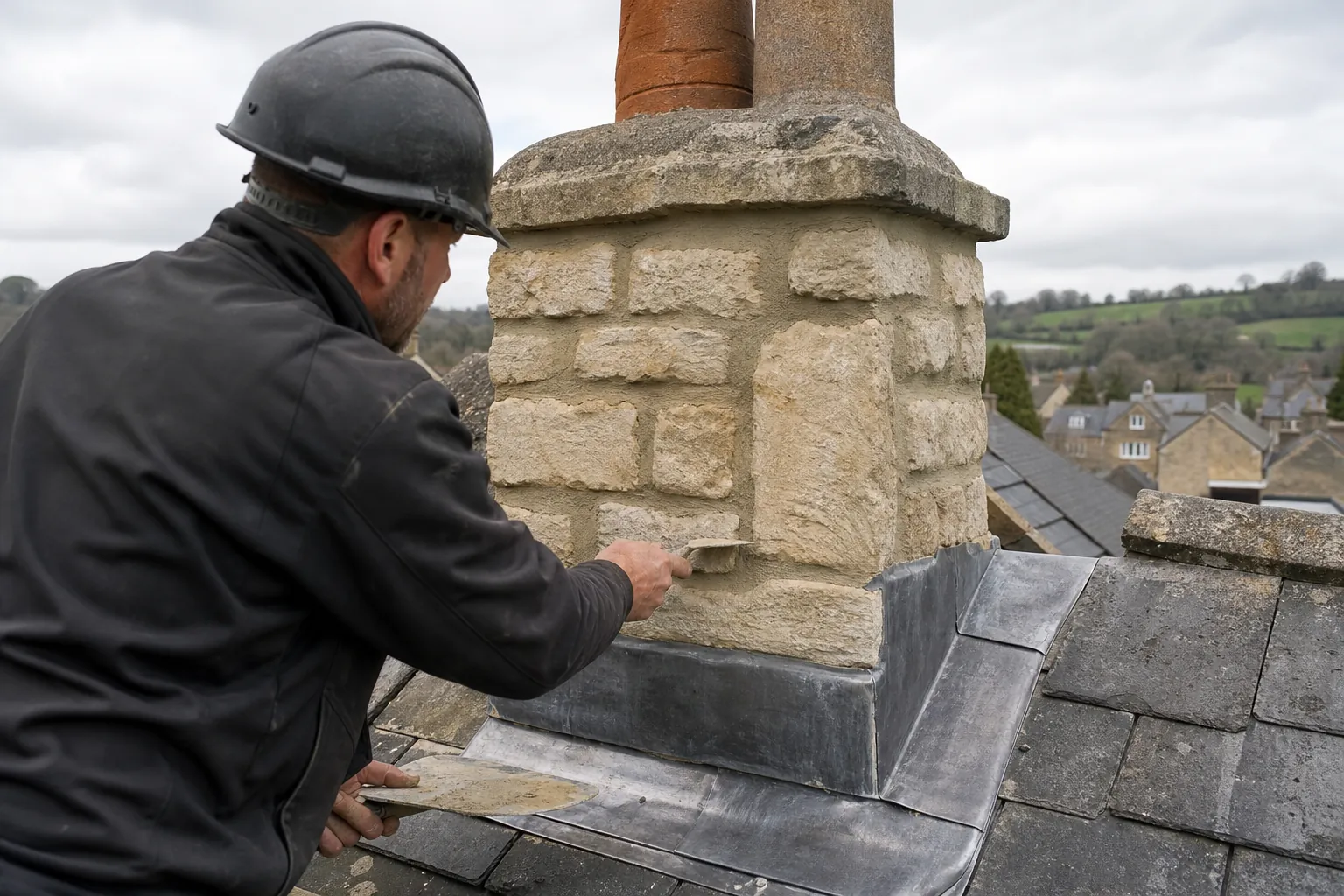
A chimney that passes through thatch is a hot, damp and fragile point. The stack needs sound brickwork and pointing, a flaunching (the mortar cap across the top) that throws water clear, and a lined flue in good order, because sparks and heat matter more beside straw than beside slate. The lead tray at the stack's base is the weather seal, and it is commonly the first thing to fail. A cracked stack head can also drop mortar and debris onto the roof below, so the stack is checked from top to bottom, not only where water shows.
Q1.2Do gutters matter under a thatched eaves?
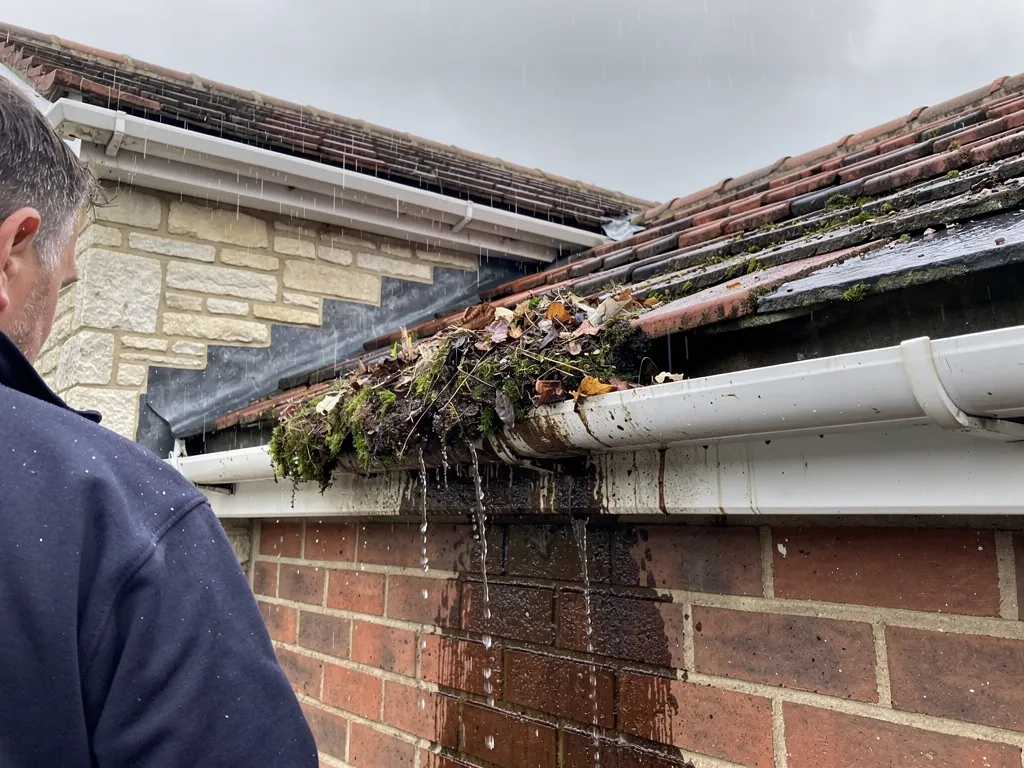
Water running off thatch is slow, but gutters and drains at the base still need attention. A blocked gutter lets water back into the wall and the eaves, and the damp then travels into the structure. We clear, realign or replace as the survey shows, and on a cottage with a low eaves line that can be a short job with a big effect on the inside walls.
Q1.3What about the slated lean-to at the back?
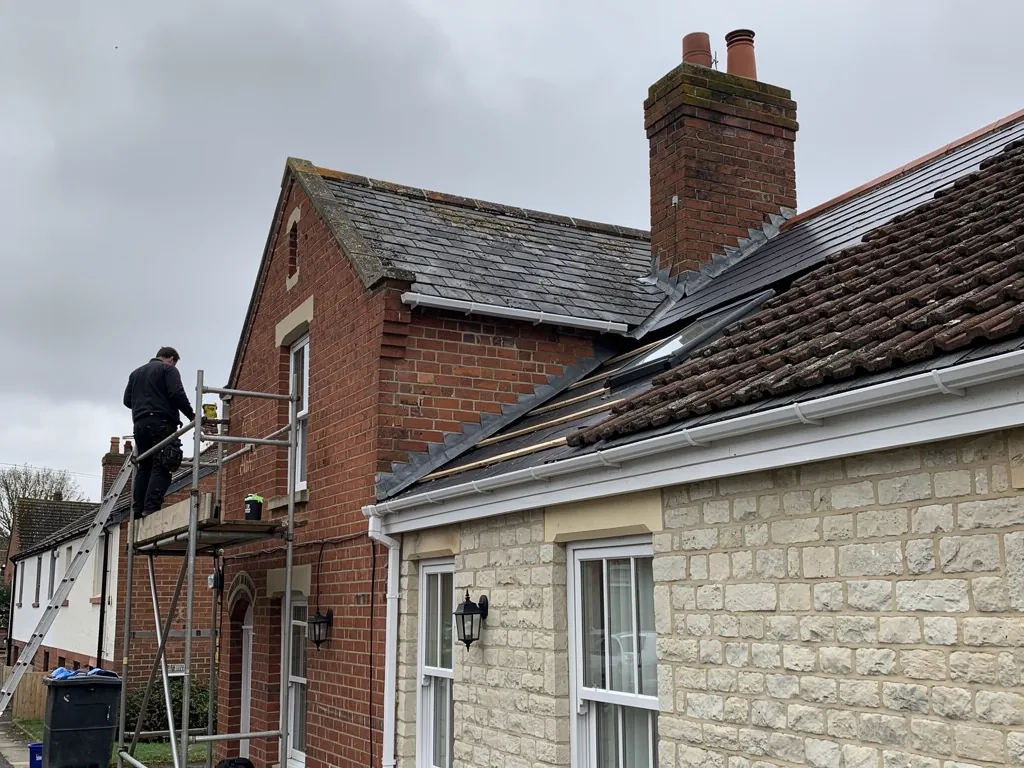
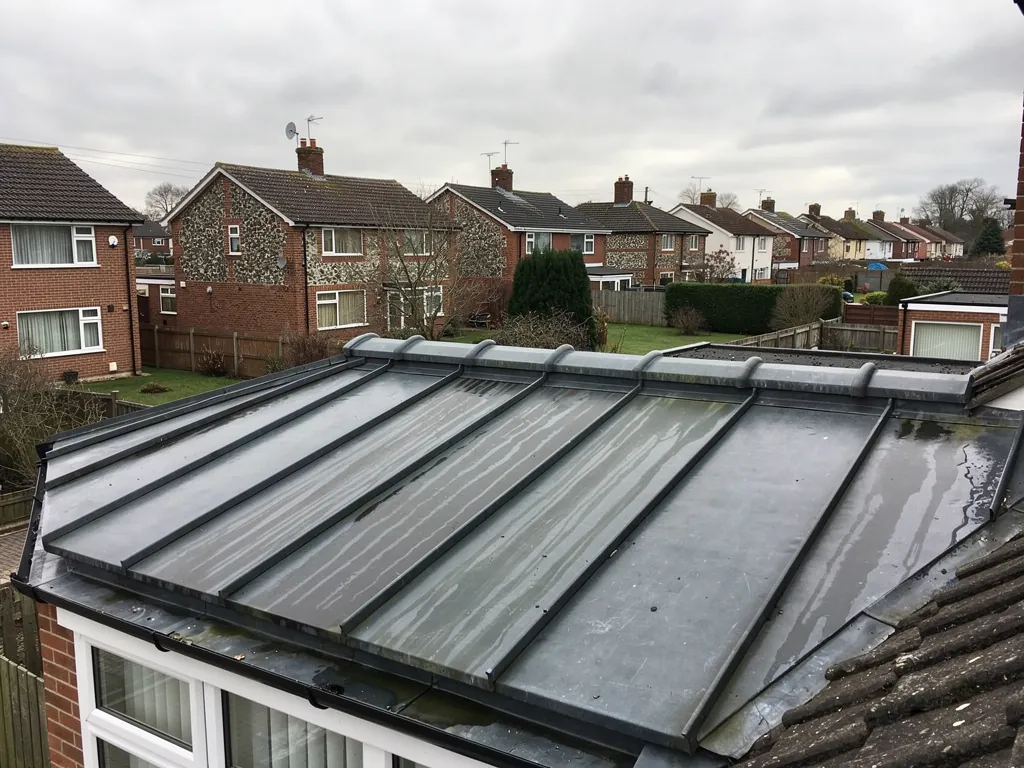
Many thatched cottages have a slated lean-to, porch or rear extension. These roofs have their own lifespan and detail, and where they meet the old walls they need lead flashings. A shaded north-facing lean-to in a coombe can stay damp for much of the year, so its timbers and gutter deserve a check at the same visit. Our chimney repairs page explains stack work in detail.
If you are not sure which parts of a roof are thatch work and which are ours, the survey photographs make the split clear, and a thatcher can use the same pictures to quote for the straw.