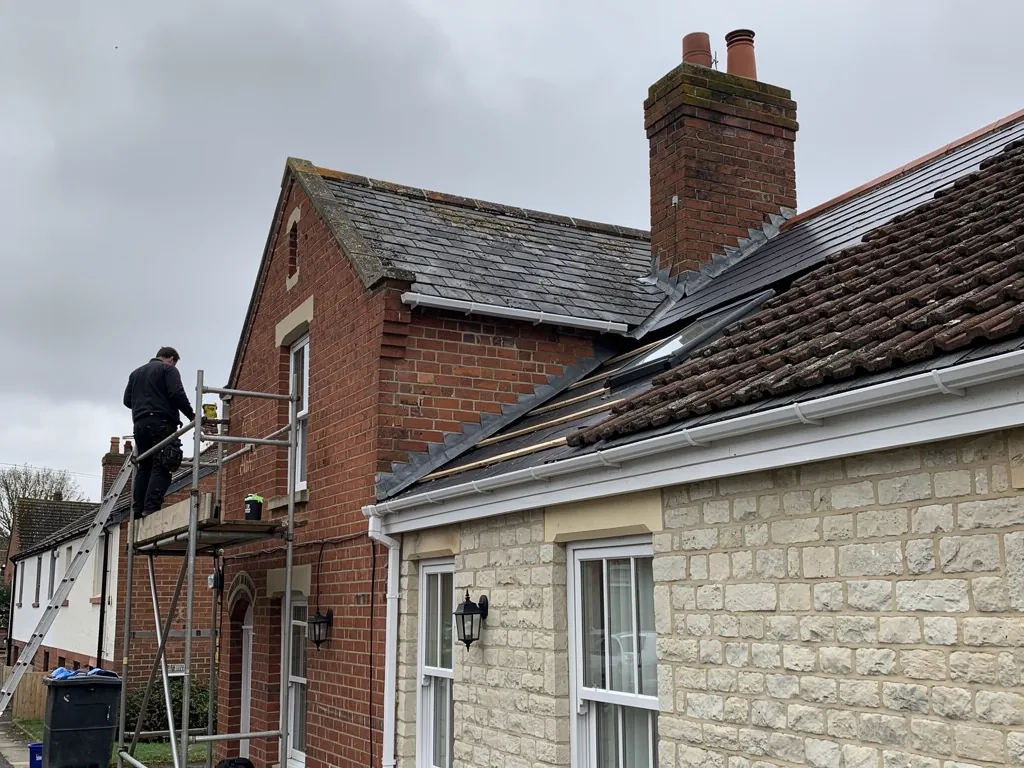
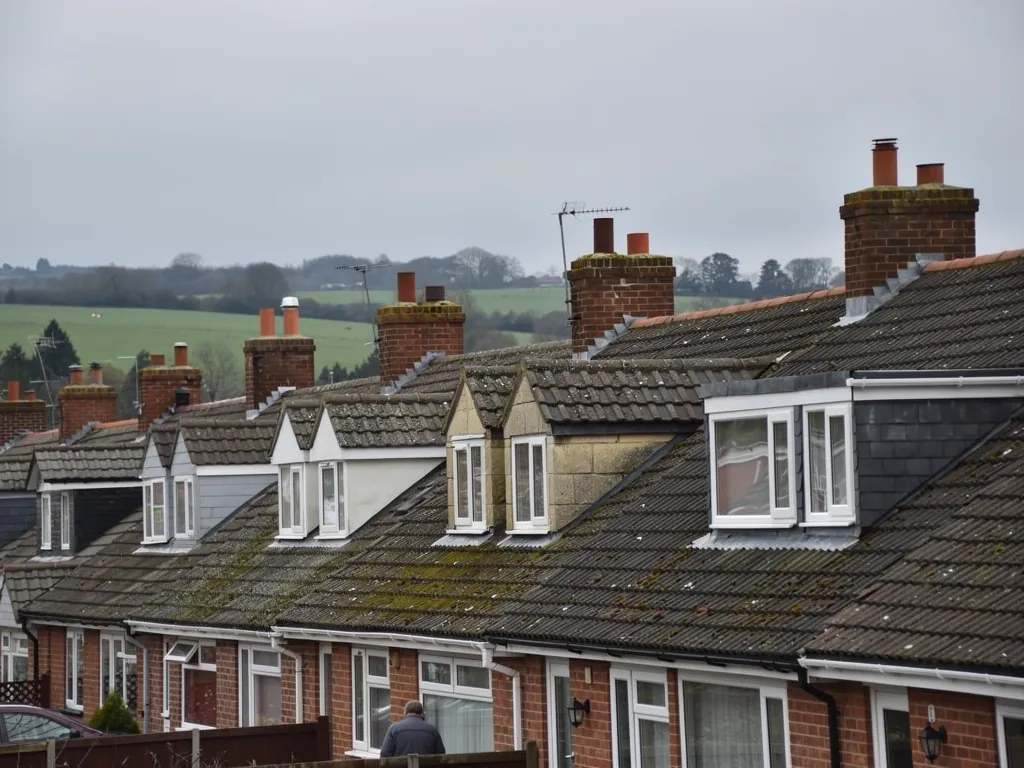
Concrete tiled estate rooftops towards green hills

Roofers in Wanborough

Roof repairs, replacement coverings, chimney work and flat roofs across Upper and Lower Wanborough, where chalk downland meets the Upper Thames vale and the old buildings carry thatch, slate and stone.

Wanborough's roofs, from downs to vale

Stone cottages on a hillside village street
Upper Wanborough on its promontory

The council's appraisal says Upper Wanborough stands in open countryside on a promontory overlooking the low clays of the Upper Thames valley, with chalk downland to the south. The Domesday Book records the village as Wemberge, and the Church of St Andrew, listed grade I, was largely recast in the 14th century. The appraisal lists local materials as a feature of the area, notably thatch and local stone, greenstone and chalkstone. Roofs here are high and open, so they face the wind from several quarters, and verges, ridges and chimney stacks need to be sound. Listed buildings include The Lynch House, Southdown, 8 Church Road and the Calley Arms, all from the 18th and 19th centuries.

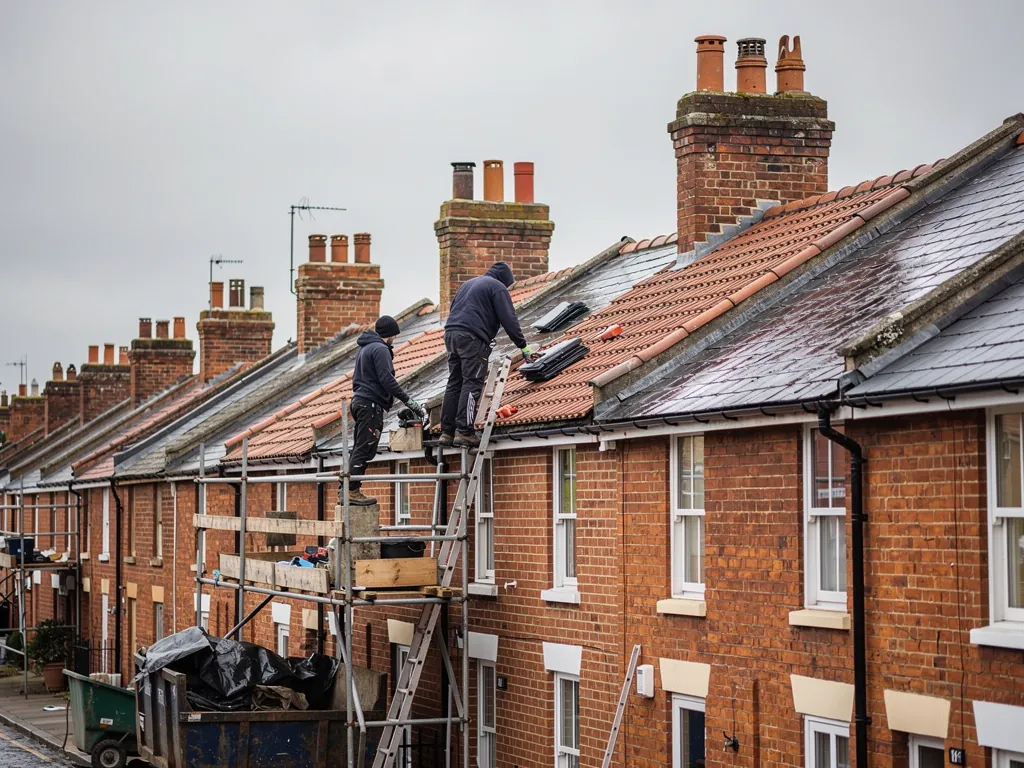
Slate and thatch roofs side by side
Lower Wanborough, thatch and its neighbours

In Lower Wanborough the appraisal says thatch predominates, interspersed with Welsh slate or stone tiles, and it names the thatched Harrow Inn and Plough Inn. Concrete tile appears on some altered buildings, such as The Old Malthouse. A street where thatch, slate and stone sit side by side means neighbouring roofs behave differently. Thatch is steep and light. Slate is thin and relies on its fixings. Stone is heavy and relies on its timbers. A roofer working on the slate or stone next door to a thatched cottage has to be careful with flashings and abutments, because water running off one roof soaks another. A small former Methodist chapel in Chapel Lane is now a house.

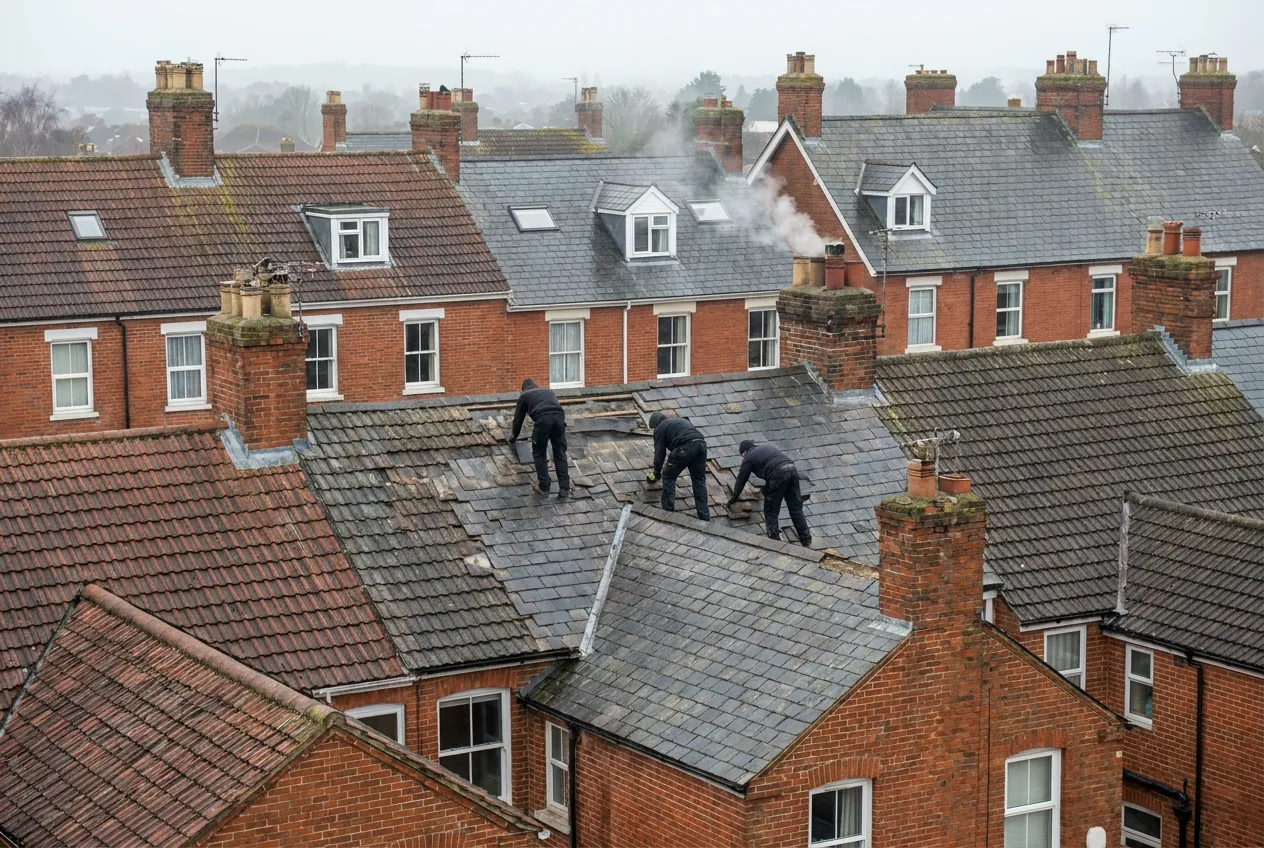
Tiled farm buildings and a barn roof
Later houses and farm buildings

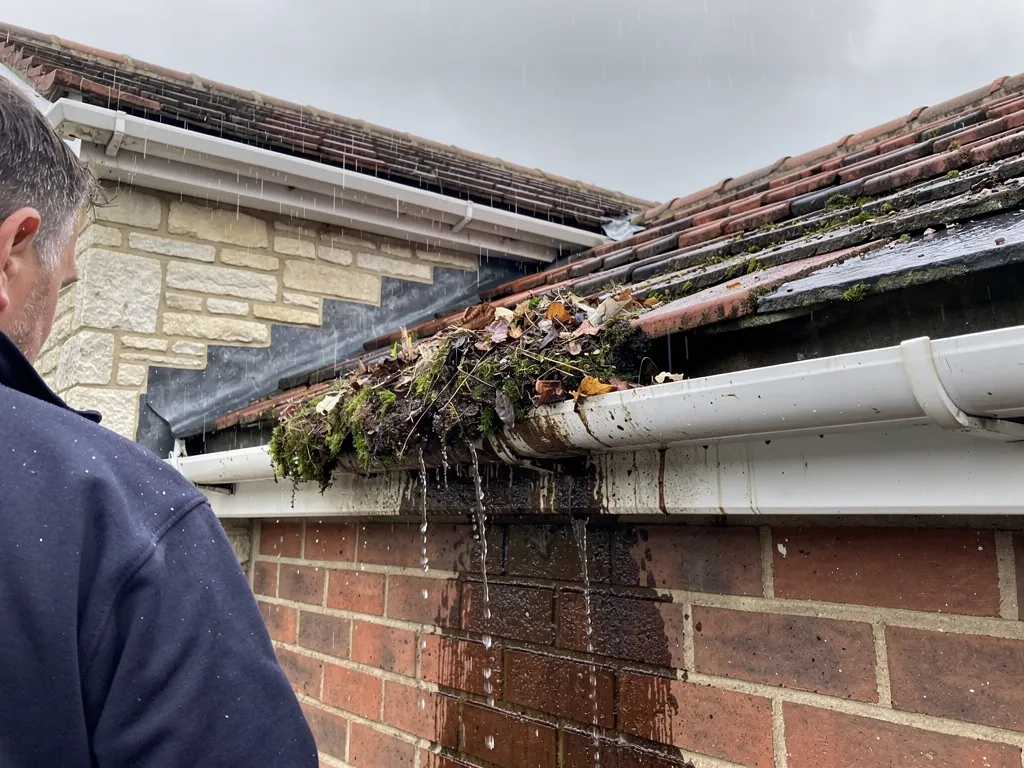
Away from the two old centres, Wanborough has newer houses, bungalows and converted farm buildings, with roofs that may be concrete tile, clay tile or profiled sheet. Those roofs raise the problems any country property does: ridge bedding that has shrunk, valleys that have clogged with leaf litter, and gutters that overflow because the downpipes are too small for the roof area. Barns and outbuildings often have roofs of corrugated sheet, some of them cement-based, and older ones can contain asbestos. We do not disturb a suspect sheet: it is identified first, and the way to handle it is agreed with you before anything is touched.

Wanborough and the downs above it

Map showing Wanborough and central Swindon. 5 road miles east-south-east of central Swindon.

Distance
5 road miles east-south-east of central Swindon
Council
Swindon Borough Council
Conservation areas
Upper and Lower Wanborough, first designated together on 1 May 1973 and re-designated separately in 1990
Landscape
Church Road marks the North Wessex Downs National Landscape boundary; the southern half of Upper Wanborough lies inside it
Setting
Chalk scarp village on the Icknield Way

Wanborough roof questions

Can slate be repaired beside a thatched roof in Lower Wanborough?

Yes. The risk is at the shared edge, where flashings and water run-off meet thatch. We keep fixings and lead clear of the thatch and photograph the junction before and after.

Is my Wanborough house inside the North Wessex Downs boundary?

Church Road is the boundary, and only the southern half of the Upper Wanborough conservation area lies within it. The council decides planning; the landscape body only advises.

Do the Wanborough conservation areas have an Article 4 direction?

The council's conservation page names Bishopstone and the Railway Village for those, not Wanborough. The two conservation areas still apply, so run any switch of covering past the planning team first.

Q1

How do slate and stone sit beside thatch?

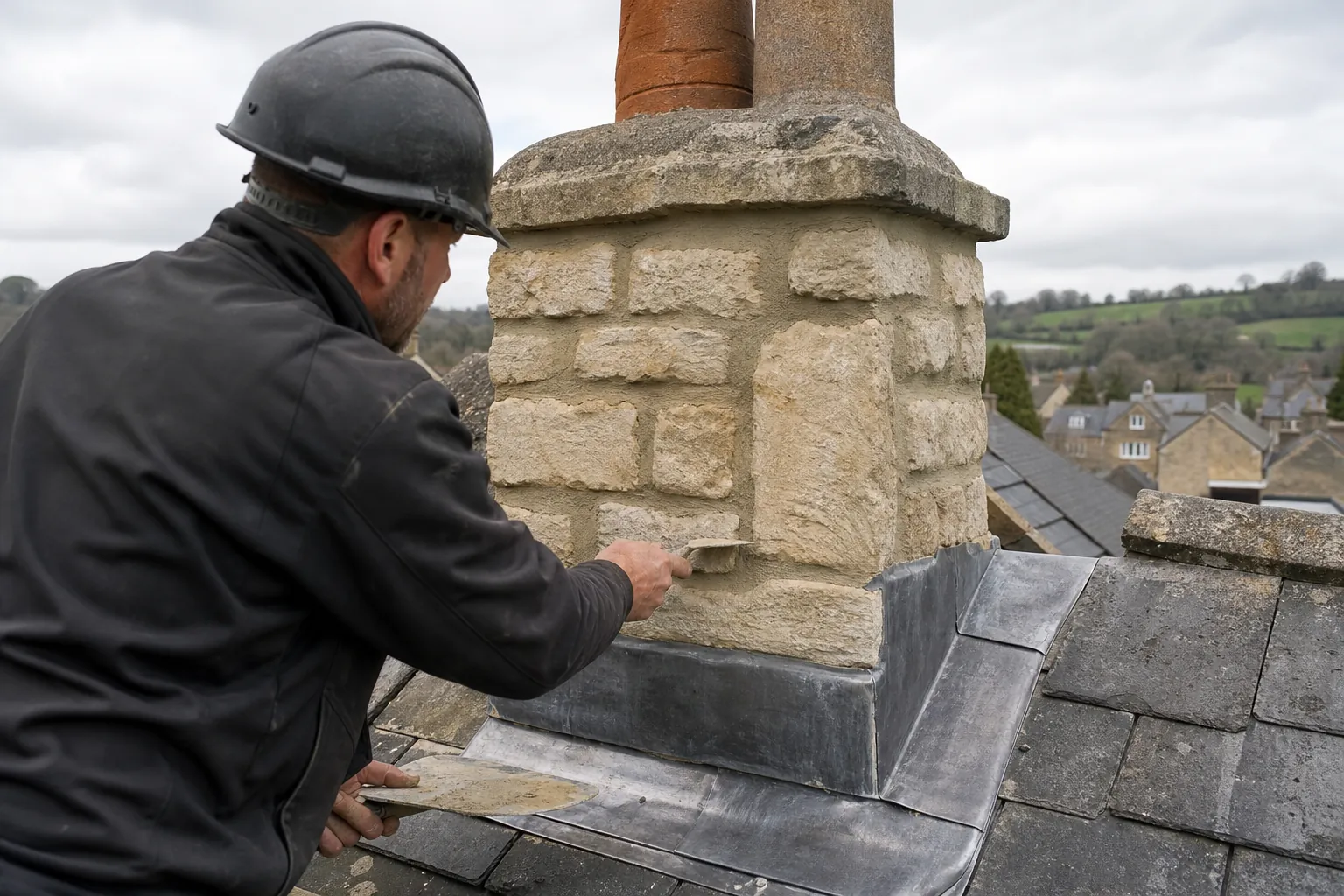
Roofer repointing a stone chimney stack above lead flashing
Blocked gutter full of leaves overflowing down a brick wall

The short answer

Treat each roof on its own terms. Thatch needs a thatcher's judgement and dry edges; slate needs sound fixings and good lead; stone needs its timbers kept sound. When we work on a slate or stone roof next to thatch, we protect the neighbour and keep every junction clean and watertight.

Lower Wanborough shows how a village roof line grows over centuries. The appraisal says thatch predominates, with Welsh slate and stone tiles between, and later alterations in concrete tile. That mix needs a roofer who reads each roof for what it is.

What happens where different coverings meet?

The line where one roof meets another is where leaks start. A slate roof that abuts thatch needs a lead flashing dressed so water is carried clear and does not run into the thatch. Lead is a metal sheet that is bent and dressed to fit, and its weight, called its code, is chosen to suit the position. A gutter above a thatched eave is best avoided or carefully detailed, since it can overflow onto the thatch.

What about chimneys and abutments?

Chimney stacks in a village like this are often tall and exposed, with cement pointing that has cracked and let in rain. The stack, the flashing and the flaunching, which is the mortar slope on the stack top that sheds water off the pots, all matter. We check each from a ladder or a platform, then photograph the stack so you can see its condition.

How is a thatched neighbour kept safe?

Where a roof shares a party wall with a thatched cottage, we plan the sequence so no loose debris or hot work is anywhere near the thatch. Our chimney repairs and slate roofing pages describe the methods.

If you have a thatched roof of your own, a thatcher is the right person to look at it. We work around thatch, not on it.

Scaffolding needs thought in a lane like this. Chapel Lane is a short, narrow lane, other old streets leave little room as well, and a scaffold tower has to leave room for neighbours and not rest on a thatched eave or a delicate stone coping. We plan access at the survey stage and tell you what we need, whether that is a parking bay, a few days' notice to a neighbour or a licence from the highway authority.

Finally, gutters. Cast iron and half-round profiles suit older buildings, and a modern plastic run clipped to a thatched eave can do harm when it overflows. Our gutters, soffits and fascias page covers options by building type.

Q2

How do I get a repair right inside Wanborough's conservation areas?

The answer

Repair like with like. Matching slates, stone tiles or clay, with the original details kept, usually needs no planning application. Swapping the covering, fitting roof windows or rebuilding a chimney can need the council's agreement. For a listed building, listed building consent covers changes to its special character. Ask Swindon Borough Council's planning team if in doubt.

Wiltshire County Council designated a single Wanborough conservation area, covering parts of both villages, on 1 May 1973, and Thamesdown Borough Council re-designated Upper and Lower Wanborough as separate areas, with boundary adjustments, in 1990. The designation does not stop repairs. It asks that changes respect what the council values.

Does matching maintenance need an application?

Putting back slates of the same kind, refixing stone tiles or repairing a ridge in matching material leaves the look of a building as it was, so a planning application is rarely called for. The Town and Country Planning Act draws the line at works that leave a building's outward look materially unchanged. Keep receipts and photographs, since they show what was there before.

What if the building is listed?

St Andrew's Church is grade I, and as a working Church of England parish church its roof work is authorised by faculty through the diocese, not by the council. The Lynch House, Southdown, 8 Church Road and the Calley Arms are listed, and the Harrow Inn and Plough Inn are thatched. If your house is on that list, the roof counts as part of it: anything that alters the building's special character calls for listed building consent, and the covering is a big part of that character. We begin from like-for-like materials and fixings, and anything that departs from them is talked through with you before it is priced.

Does the National Landscape have a say?

The southern half of Upper Wanborough lies within the North Wessex Downs National Landscape, which was an AONB and still is in law. The landscape body only advises; Swindon Borough Council makes the planning decisions. Roof windows follow their own rules, which our skylights page sets out.

Ringing the council's conservation officer before work is priced costs nothing. Bring the appraisal map to the call, and we will go through it with you to see which side of the boundary your house falls.

MythA Wanborough roof cannot be touched without the council's permission.

FactMatching repairs rarely need it; the council looks at changes to the appearance, and at listed buildings.

Q3

What about the roofs of Wanborough's barns and outbuildings?

Chimney stack taken down below roof level during removal
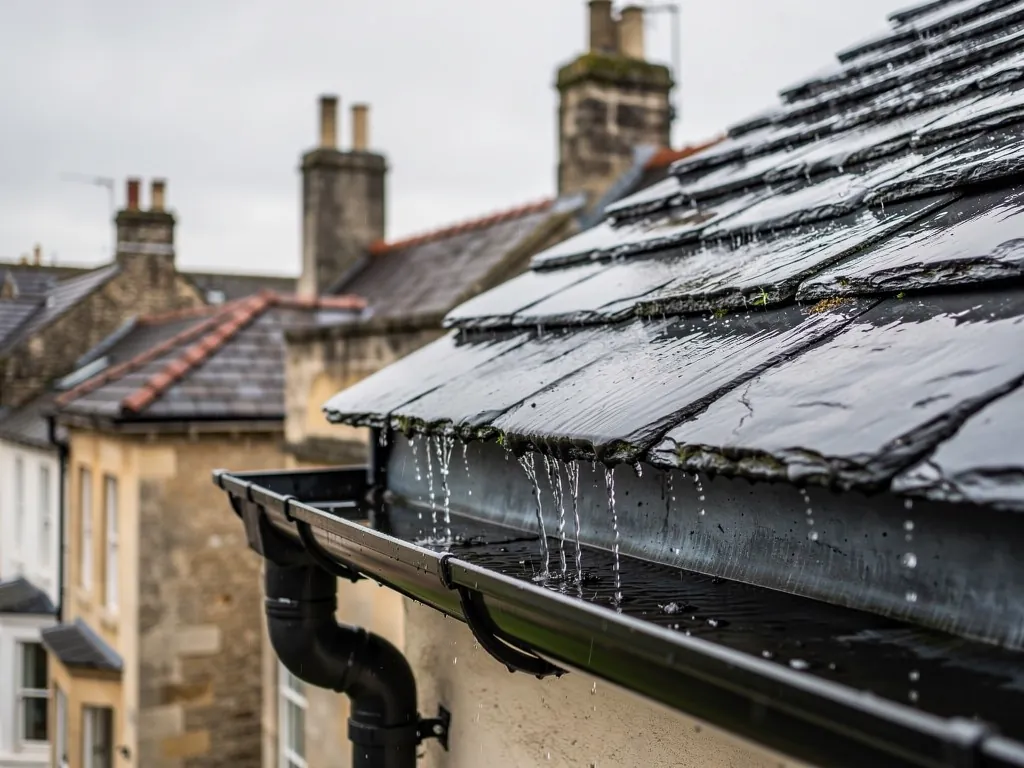
Rainwater running off slates into a black gutter and downpipe

The short answer

Older barns, stables and garages may carry corrugated cement sheets that contain asbestos. Intact sheets left alone are low risk; breaking them is not. Taking sheets down with care is non-licensed work, while heavy breakage makes it notifiable. We identify the material before touching it and agree the safe route with you.

A village on the edge of the downs has plenty of outbuildings, and their roofs get less attention than the house.

What might the sheets be made of?

Corrugated sheets on farm buildings and garages may be cement-based, steel, fibre-cement or modern profiled sheet. Older cement sheets, from before the ban, may contain asbestos. You cannot tell by looking, so a suspect sheet is treated as such until it is tested. The HSE puts careful removal of the cement type in the non-licensed category; substantial breakage moves it to the notifiable non-licensed group. Waste from a household needs a consignment note when it is taken away.

What happens on site?

We look for cracking, moss, weathering and previous repairs, then photograph. If asbestos is likely, nothing is drilled, broken or pressure-washed. We tell you the options: leave it and monitor it, overclad it where the structure allows, or arrange safe removal and disposal. Old soffits and boards are a separate matter, since asbestos insulating board is mostly licensed work and needs a specialist.

What can replace the old sheets?

New cladding for a barn is usually profiled steel or fibre-cement, fixed to purlins that may need checking first. For garages, a pitched tiled roof or a single-ply flat roof both work. Our garage roof replacement page explains the choices.

Before work begins, we also look at what the roof is holding up. Old purlins can sag, a long span of sheeting can flex, and a farm building that once stored hay may now shelter vehicles or a workshop, which changes how water should be drained. We ask what the building is used for today, check the gutters and downpipes for capacity, and plan the fall so water leaves the roof without pooling at a low corner.

At the end the yard is left tidy and every load of waste leaves with us, with the paperwork for any hazardous material handled properly.

Safe first

Identify the sheet before anyone touches it, because breaking cement sheet is where the risk lies.

Roofing services in Wanborough

Questions from below the downs

Why do some Wanborough roofs look so different from their neighbours?

The village has been altered for centuries. The council's appraisals describe thatch, Welsh slate, stone tile and concrete tile in the same streets, with local greenstone and chalkstone in the walls. Repairs in different decades used what was available, so a single street can carry four or five coverings, and each wants its own kind of care.

Can the wind on Wanborough's scarp lift my ridge tiles?

It can, particularly on roofs with old mortar bedding. Mortar by itself no longer counts as a full fixing under BS 5534:2014, so a sound repair adds clips or screws. On the edge of the downs a loosened ridge or verge is high on our list when we go through the survey photographs.

Do you work along the Icknield Way villages around Wanborough?

Yes. Wanborough and the villages along the foot of the downs are all within the 30 road miles we cover. Send a few photographs by WhatsApp if you want a first opinion before booking the survey.

Can you repair the roof of an 18th-century house like those on Church Road?

Yes, using the same materials and the same methods. Several buildings there are listed, 8 Church Road among them, so the plan is agreed with you before work begins, and a call to the council is worth making if any element would alter the look. A like-for-like repair seldom does, and photographs before and after keep the record clear.

Ask us about your roof

Tell us what’s happening and we’ll call you back.

  • Photos of what we find
  • A written quote
  • 10-year workmanship guarantee

Or call 01793 626096

Call Get a quote