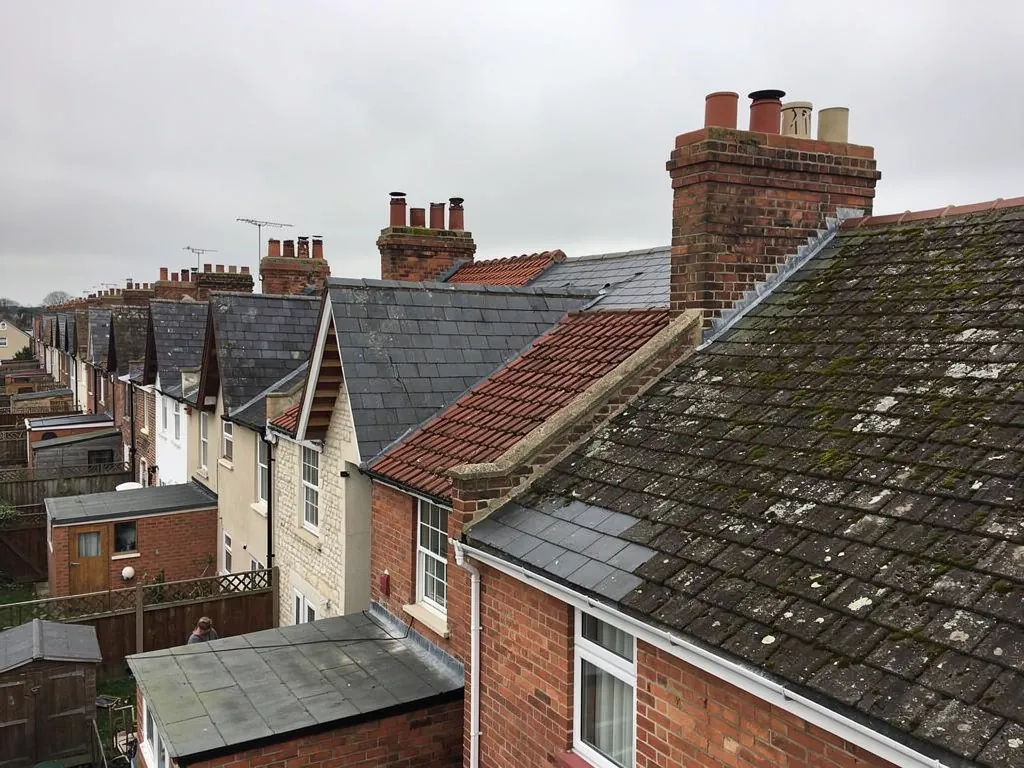
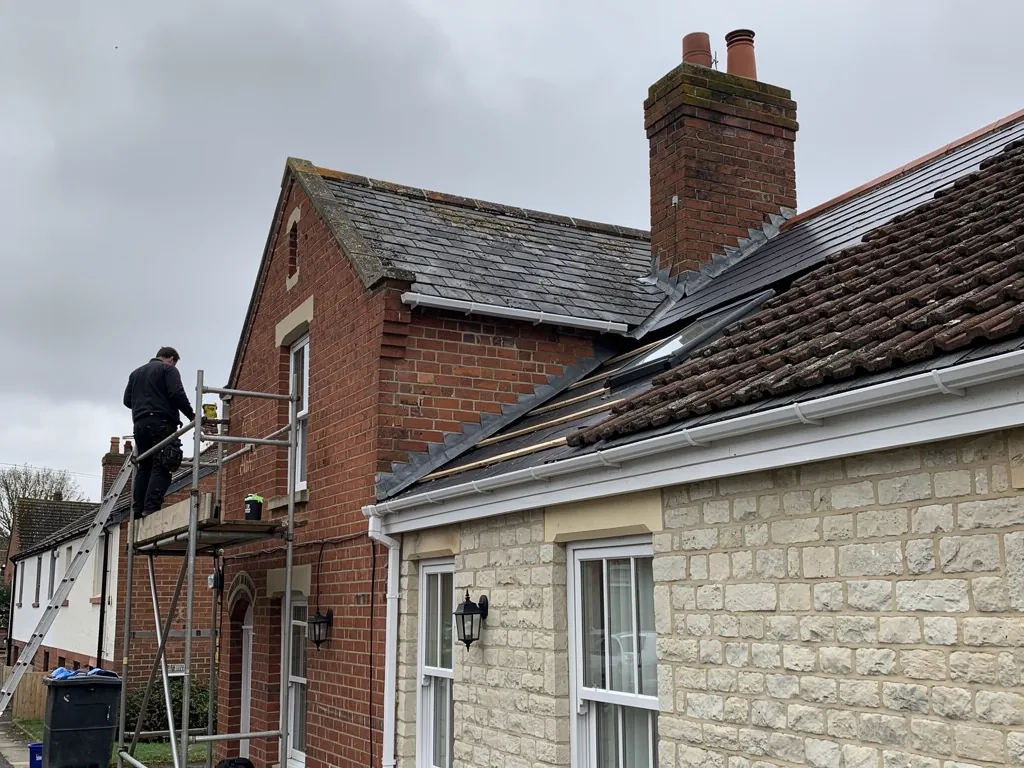
Brick end-of-terrace gable beside a limestone house, slate roofs

Roofers in Badbury

Leak repairs, chimney work and full re-covers in Badbury, plus garage and extension flat roofs, for the stone-walled cottages along the village road and the newer homes of Badbury Park by Coate Water.

Badbury's roofs, from thatch to estate tile

Stone cottages with thatch and chimney stacks
The conservation area cottages

Badbury's conservation area is small, with about 30 dwellings, and Swindon Borough Council's appraisal describes downland cottages and late twentieth century bungalows strung along the road, often behind stone walls. Local stone, with the occasional sarsen block and some chalkstone, is named as a key material, and the appraisal says many older buildings still keep thatched roofs. Badbury Cottage, an eighteenth century thatched house of sarsen stone rubble, is one of several listed thatched cottages. When we are asked to look at a roof like this, the work sits around the thatch: the chimney stack that rises through it, the lead where masonry meets the slope, and the tiled outbuildings beside it.

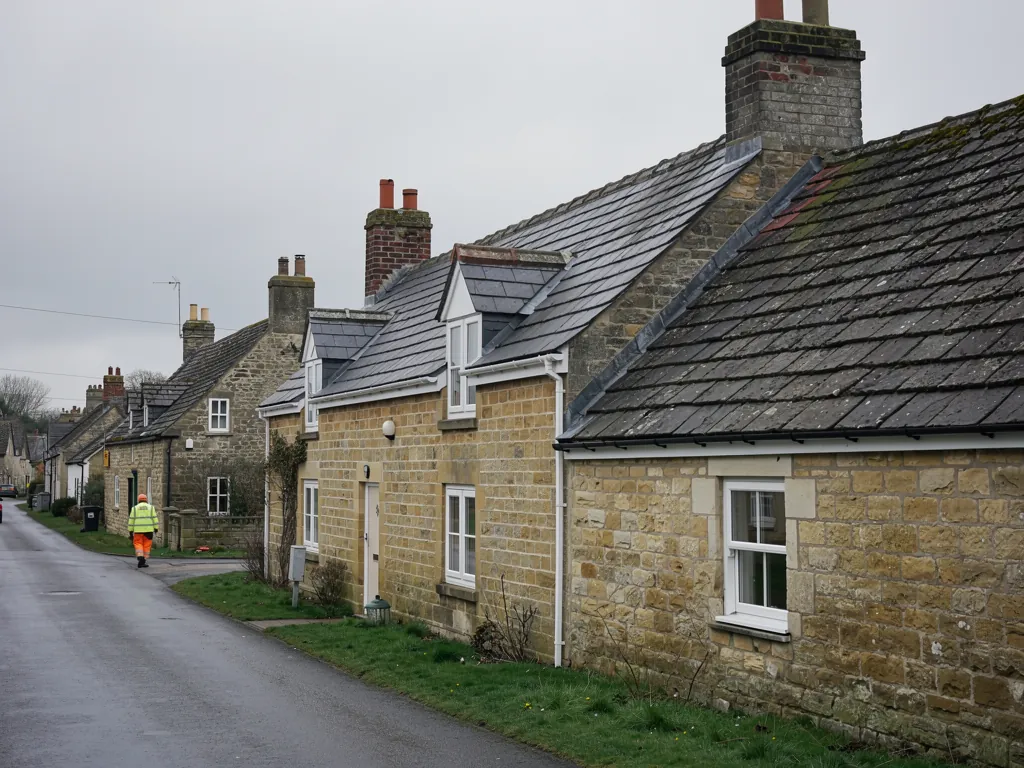
Old stone farmhouse with several roof ranges
The Manor and the farmhouse tradition

The Manor is a Grade II listed farmhouse, apparently an eighteenth and early nineteenth century rebuild of a sixteenth century stone farmhouse, and it shows how a downland house grows by additions. A roof altered over several centuries carries joins: a stone gable meeting a later extension, a valley between two ranges, a stack coming up through the slope. Water tends to find those joins well before it troubles the main slopes. On a listed farmhouse we photograph every junction, plan the repair around keeping as much original fabric as can sensibly be saved, and talk to the council before anything changes the character of the building.

Concrete tile roofs on newer houses
Newer homes and Badbury Park

The appraisal notes that some newer dwellings in the village use reconstituted stone with concrete tile roofs, and the Badbury Park estate on the edge of Swindon adds modern housing close by. Concrete tiles have faults of their own: ridge tiles that loosen as the bedding fails, cracked tiles, and tired flashings around chimneys, porches and bay windows. The late twentieth century bungalows along the road have low roofs that make gutters, fascias and verges easy to inspect and just as easy to neglect. Garages and flat-roofed extensions on these plots need their own plan, because a felt or rubber roof ages on a different timetable from the tiles next to it.

From Swindon to the downs

Map showing Badbury and central Swindon. 5 road miles south-east of central Swindon.

Distance
5 road miles south-east of central Swindon
Council
Swindon Borough Council
Conservation area
Badbury, designated 30 April 1990
Landscape
North Wessex Downs National Landscape
Council
Swindon Borough Council

Badbury roof questions

Does a thatched neighbour change how you work on my roof?

It changes the planning, not the standard of the work. Access, tools and any work near a stack are agreed at survey, and the thatch is kept clear and protected throughout.

Is my Badbury cottage inside the conservation area?

The appraisal map shows the boundary, which holds about 30 dwellings. If you sit near the edge, the council's conservation team can confirm it before any work is priced.

What do open downland winds do to a Badbury roof?

Chalk downland gives little shelter, so the exposed parts of the roof, meaning ridge, verge and gable edge, feel it first. Their fixings matter more than the slope itself.

Q1

What is on the roofs of old Badbury?

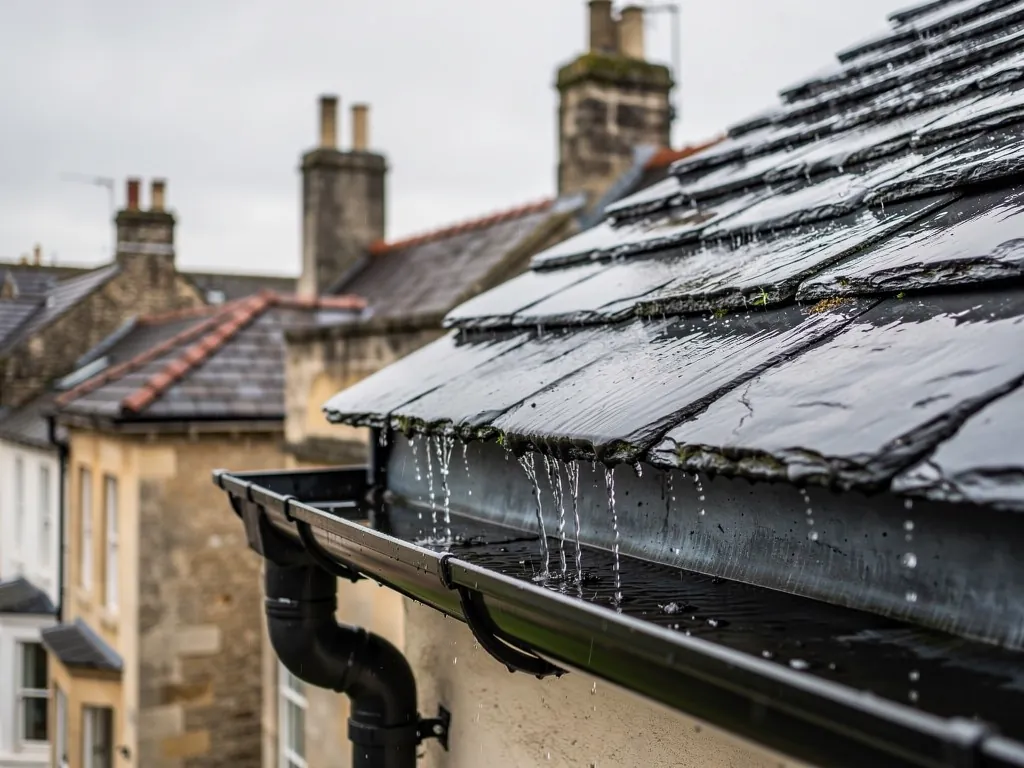
Rainwater running off slates into a black gutter and downpipe
Chimney stack taken down below roof level during removal

The short answer

A village of stone walls and thatch, with later tile. The council's appraisal names local stone, including sarsen and chalkstone, and thatch as the key materials, with reconstituted stone and concrete tile on some newer dwellings and bungalows from the late twentieth century.

The old village is small enough to take in on a short walk, and the council's appraisal gives a clear picture of what stands along the road. Stone is the walling of the older houses, thatch is the covering the appraisal ties to the Wessex downlands, and newer houses and bungalows from the later twentieth century sit among them.

What surrounds the thatch?

Thatch is a thick, steeply pitched coat of straw or reed, shaped by hand over rafters and battens, so each roof differs from its neighbour. What surrounds it is where we are usually asked to help: the chimney stack rising through the slope, the lead where a stack or gable wall meets the roof, and the porch, outbuilding and extension roofs that were added later in tile, slate or felt. Flashing, in roofing, is the lead or metal strip that bridges the gap where a slope butts against a wall or stack. If it lifts, water runs down behind it and into the masonry, and where thatch meets a stack that seal has to be right.

How do the newer tiled roofs fail?

Some of the newer dwellings use reconstituted stone walls with concrete tile roofs. Concrete tile is heavier than slate and is laid in regular courses on battens, over an underlay, which is the membrane beneath the tiles that catches whatever gets past them. The usual faults are loosened ridge tiles, cracked tiles and flashings that have lifted. Moss and lichen build up on north-facing slopes shaded by trees or a neighbouring wall, and a gutter choked with that debris sends water over the edge and down the wall below.

Our roof repairs page explains how we approach a leak: find the source first, photograph it, and quote for the smallest job that fixes it.

Along the road the bungalows raise a different set of questions. Their roofs are low and easy to reach, but gutters, fascias and verges there can go unwatched for years, and a quick look from the ground often tells us where to start.

Q2

How do you repair a stone cottage roof in Badbury?

The answer

By finding the exact fault first and repairing only that. On a stone-walled cottage the trouble is usually at a junction, such as a stack, a gable or a valley, rather than across the whole slope. We photograph it, explain it and quote the narrowest repair that works.

Old walls move a little with the seasons, and a roof that sits on them moves too. Sarsen rubble and chalkstone are forgiving materials, but they are not flat, and a roof laid against them develops small gaps where the building has shifted over the years.

Where do stacks, gables and verges leak?

On a stone cottage the verge, the sloped finish where roof meets gable wall, is often finished with a mortar fillet or a row of cut tiles. When that mortar cracks, rain gets under the edge tiles and into the gable. Fixing it means raking out the failed material and re-forming the edge, not replacing the whole slope. Chimney stacks are the other usual source: the flaunching, which is the mortar cap on top of the stack, splits, the pot loosens, or the lead tray at the base lifts.

Our chimney repairs page covers each of those faults, and the dry-fix work on ridges and verges is worth reading if a ridge has loosened.

How are replacements matched?

On a listed cottage, or one in the conservation area, replacement tiles are chosen to echo the existing ones in size, tone and surface, so the repair blends in. Where a patch needs a few tiles that no longer match exactly, the survey photographs show the options and you choose. A repair beside thatch is planned around the thatch: access is agreed first, and nothing that could harm it is brought near.

Your written quote comes once the survey is done, illustrated with your own roof, so each proposal and its reason are visible before you commit. Stone cottages also reward a regular look from the ground each autumn, once the leaves are down, because a slipped tile or a sagging gutter is far cheaper to deal with in October than in February.

Our view

Repair the junction that is leaking and leave the sound slope alone.

Q3

Who signs off roof work in Badbury's conservation area?

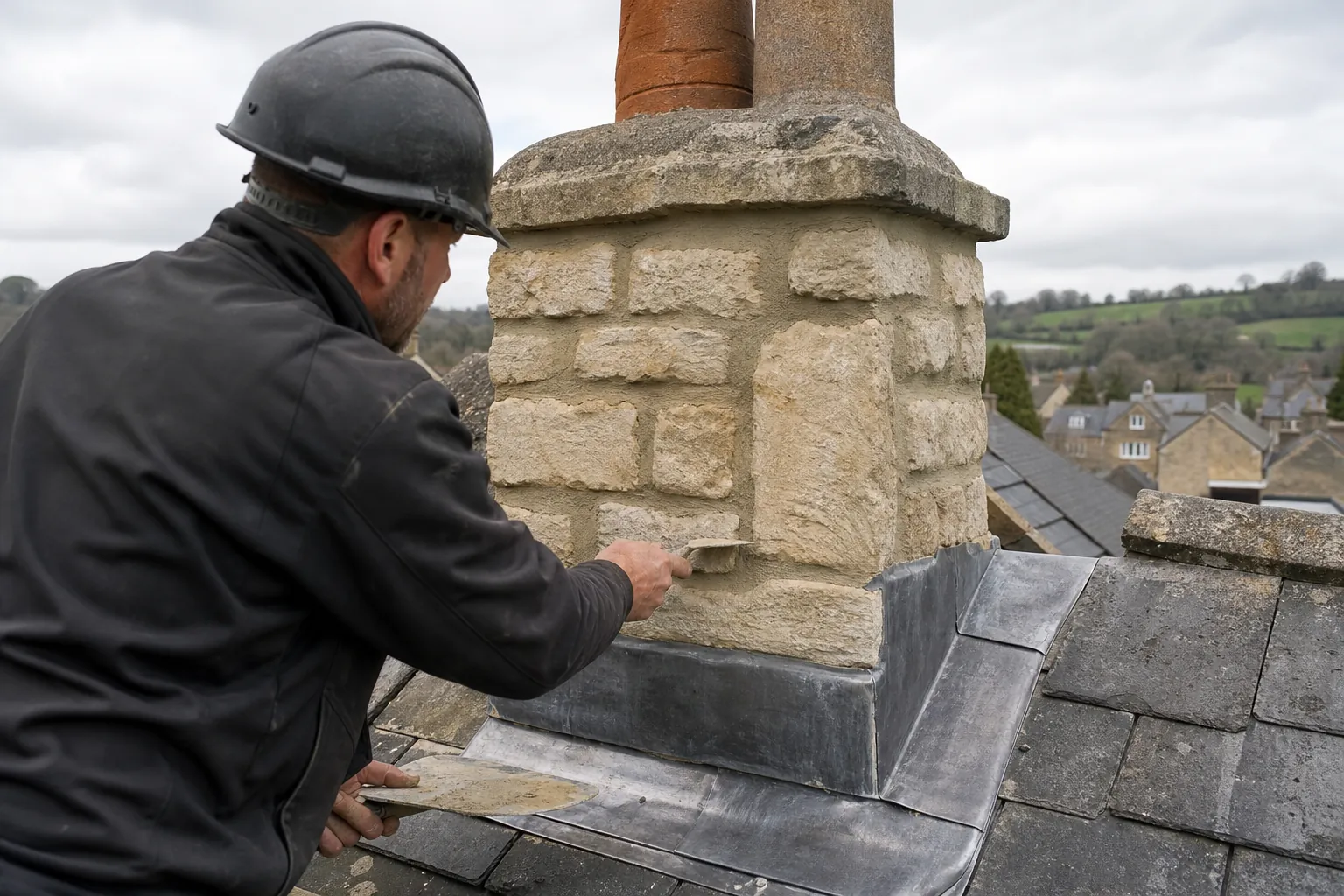
Roofer repointing a stone chimney stack above lead flashing
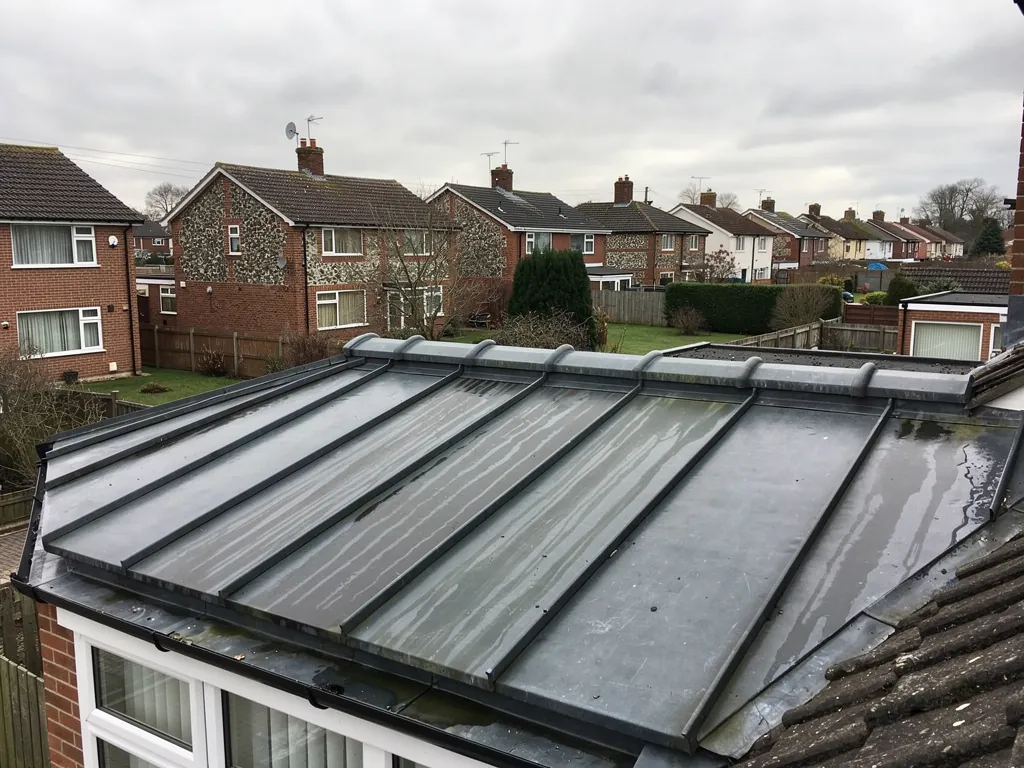
Rolled lead roof covering over a bay above white windows

The short answer

Swindon Borough Council covers Badbury. Its building control team, or a private registered approver, handles notifiable roof work, and its planning and conservation officers deal with listed or conservation area questions. Matching repairs usually need no application at all.

Plenty of roof jobs in the village need no paperwork: refixing a few tiles, renewing a flashing or re-bedding a ridge with matching material counts as maintenance. Three kinds of job are different.

When is a Badbury re-roof big enough to need approval?

A building control application is not normally required, says the Planning Portal, when less than 25 per cent of the total building envelope and less than 50 per cent of the roof is involved. Above those limits the work needs building control approval, and the insulation in the roof might have to be improved at the same time. Approval also applies when a new covering outweighs the old by 15 per cent or more. The borough's own building control team takes those applications, and where a job is notifiable we make the notification for you.

What if the material changes?

The conservation area dates from 30 April 1990, when Thamesdown Borough Council designated it, and Swindon Borough Council's Planning Committee approved the current appraisal and management plan on 10 February 2009. The council's list of Article 4 directions names Bishopstone and the Swindon railway village, not Badbury. Matching repairs leave the street as it was, so they seldom need an application, whereas a change of material can. A word with the council before you commit costs nothing.

What about the listed cottages?

The Manor is Grade II listed, and several of the thatched cottages are listed too. Altering a listed house's character, down to the roofing material, needs listed building consent before the work begins. The North Wessex Downs National Landscape body advises on planning in the wider area, but the council makes the decision.

We start from like for like: same material, same fixing method. If a different covering seems sensible, that conversation happens with you before anything is priced.

MythLiving in a conservation area means every roof repair needs an application.

FactA like-for-like repair rarely does; the council looks hard at anything that alters how the building appears.

Questions from the village road

What goes wrong where a Badbury stone gable meets the roof slope?

Water gets in at the edge. The mortar fillet along the verge cracks because the wall and the roof move at different rates, and rain tracks behind the edge tiles into the gable. The cure is to rake out the failed material, re-form the edge and check the first few courses of tiles for slipped or cracked pieces, rather than re-covering the whole slope.

Do I need consent to re-roof a listed Badbury cottage?

A matching repair on a listed building rarely needs consent, but changing the covering or altering the building's character does. You agree the method before anyone starts, and where the plan departs from what is on the roof now, we suggest speaking to the council's conservation team first.

Do you cover Chiseldon, Liddington and the villages around Badbury?

Yes. Chiseldon, Liddington, Wanborough and Wroughton all sit inside our working radius of 30 road miles around Swindon, and the main areas page has the full list of places. If you are unsure about a particular address, the enquiry form will settle it quickly.

What comes with the quote for a Badbury roof?

Pictures from the survey showing your own roof, and a written quote that spells out the work. Beyond that, a written 10-year workmanship guarantee, a tidy site once we leave, and a recommendation for the least work that deals with the fault properly, which is sometimes a patch rather than a re-cover.

Ask us about your roof

Tell us what’s happening and we’ll call you back.

  • Photos of what we find
  • A written quote
  • 10-year workmanship guarantee

Or call 01793 626096

Call Get a quote