Edwardian brick villas with clay tile roofs and decorative ridges

Roofers in Chiseldon

Leak repairs, stacks, flashings and full re-covers in Chiseldon, for the chalkstone and brick cottages around Holy Cross church and the brick and artificial stone houses built since.

Chiseldon's roofs, from Holy Cross to the old railway

Thatched cottages and a stone church tower
Cottages around Holy Cross

The council's appraisal of the Chiseldon conservation area describes historic buildings dating mainly to the seventeenth and eighteenth centuries, with 21 listed buildings, including the Grade I medieval Church of the Holy Cross. Chalkstone, red brick and thatch are named as the local materials, and the traditional cottage is rubble stone or chalkstone, sometimes rendered or painted, under a steeply pitched thatched roof that often has eyebrow dormers. Chiseldon Cottage, Grade II listed with sixteenth century origins, is thatched. Around roofs like these our work is the brick and stone chimney, the lead at its base, the verges and the tiled or slated additions that grew up beside the original house.

Red brick houses with chimney stacks
Brick and the railway years

The appraisal says later buildings in the village are brick. The railway between Swindon and Andover, later part of the Midland and South Western Junction Railway, ran through Chiseldon from 1881 until 1961, and Chiseldon Army Camp operated from 1914 to 1962, so the village carries building from several different eras rather than one. Brick houses of those periods have gable ends, chimney stacks and porches, and age shows first at the details: mortar joints on the stacks, flaunching cracks, and slipped or sun-baked tiles where a slope faces south. Where a roof is hipped, meaning its slopes fold round an outward corner instead of ending in a gable, the hip tiles along that fold need secure fixing, and we check how they were bedded and whether anything holds them mechanically.

Twentieth century houses with tiled roofs
Twentieth century homes

Dwellings of the twentieth century are described in the appraisal as coloured brick and artificial stone, and they are the roofs most owners ask us about. Covered in tile, they hold their own for a long time, then show their age in familiar ways: ridge bedding that crumbles and lets tiles shift, flashings at the chimney that have lifted, valleys that carry leaves and moss, and gutters that sag between brackets. Garage roofs, porches and rear extensions with flat or shallow roofs deserve a place in the same survey, since they tend to give trouble earlier than the main roof, and one visit with one set of photographs covers everything. A felt, rubber or fibreglass roof of that kind has a working life of its own, and it is better to plan its replacement than to wait for a stain on the ceiling.

From Swindon to the Marlborough Downs

Map showing Chiseldon and central Swindon. 5 road miles south-south-east of central Swindon.

Distance
5 road miles south-south-east of central Swindon
Council
Swindon Borough Council
Conservation area
Chiseldon, designated in 1990
Landscape
North Wessex Downs National Landscape
Council
Swindon Borough Council

Chiseldon roof questions

Can the roof of a Chiseldon church-side cottage be repaired?

Yes, in matching materials and methods. With 21 listed buildings in the conservation area, any change to the roof covering is discussed with the council first.

Do eyebrow dormers make a Chiseldon roof harder to repair?

They add curved junctions where leaks start, but the repair is the same careful work: expose the fault, renew the weathering, and match the line of the roof around the dormer.

How does the old railway line affect roof work in Chiseldon?

It does not, directly. The line closed in 1961. Its legacy is a village with building from several periods, so each house is surveyed on its own materials and age.

Q1

What roofs surround Chiseldon's Holy Cross church?

Roofer repointing a stone chimney stack above lead flashing
Brick and limestone cottages around a small village green

The short answer

Buildings of the seventeenth and eighteenth centuries in chalkstone, rubble stone and red brick. The appraisal records 21 listed buildings in the conservation area, thatch as a local material, and a steeply pitched roof with eyebrow dormers as the traditional cottage form.

Chiseldon sits on the edge of the Marlborough Downs, about a mile south of the M4, on the line of the Icknield Way and the Ridgeway. The conservation area follows the older streets, and the council's appraisal reads as a list of materials as much as of buildings.

What are the old cottages built of?

Rubble stone and chalkstone give the older cottages thick, uneven walls, sometimes rendered or painted. Red brick appears in later houses and in the chimney stacks. Thatch gives the roof its steep pitch and its eyebrow dormers, where the covering curves up and over a window like a raised brow. The roofs we work on in the village are the ones around that thatch: tiled or slated extensions, outbuildings and the masonry stacks that rise through every range.

Church of the Holy Cross is Grade I listed, and it is a good reference for the village: a medieval stone building, still in use, whose roof is looked after through the Church of England's faculty system rather than by the council.

What leaks first?

On a chalkstone cottage the stack is often the first thing to go. Rain finds the flaunching, the mortar cap holding the pot, and then the joints below it. Water that runs down inside a chalkstone wall can sit for a long time, so a stack repair is a job worth doing early. Our chimney repairs page shows what that involves, from repointing to a new lead tray, and our roof repairs page covers the tiled and slated parts of the village.

Lead flashings are the other recurring item: a strip dressed into the wall joint and over the tiles splits, lifts or slips with age, particularly around dormer cheeks and stacks. Our lead roofing page explains the codes and thicknesses, and why a thin strip on an exposed stack will not last as long as a heavier one.

Because the village runs along an old route at the foot of the downs, a roof here is rarely sheltered by anything taller. Open ground on several sides means the wind reaches ridges, verges and eyebrow dormers directly, and a loose edge tile can become a leak within one wet week.

Materials the Chiseldon appraisal names
MaterialWhere it appearsWhat we watch for
Chalkstone and rubble stoneWalls of the older cottagesDamp at stack and gable junctions
Red brickLater houses and chimney stacksOpen mortar joints and cracked flaunching
ThatchSteeply pitched cottage roofs with eyebrow dormersAdjacent masonry, lead and extensions
Coloured brick and artificial stoneTwentieth century housesRidge bedding, valleys and gutters
Q2

When is a Chiseldon chimney stack worth rebuilding?

The answer

When repointing no longer holds. If the joints keep opening, bricks are spalling or the stack leans, a rebuild is the honest answer. If the problem is a cracked cap or tired lead, a smaller repair is usually enough. The survey photographs show which case yours is.

Stacks stand in the wind, rain and frost at the highest point of the house, and they are built of materials that take in water. In a village where red brick and chalkstone both feature, the stack is often the most exposed piece of masonry on the property.

Repair or rebuild?

A stack that is basically sound but weathered needs repointing: raking out the failed mortar and filling the joints with a mix that suits the brick or stone. A new flaunching and a lead tray at the base often follow. Rebuilding is for stacks where the bricks themselves are crumbling, the stack leans, or earlier patching has run out of road. Rebuilding means taking down to a sound level, relaying in matching brick, and renewing the lead. The cost depends on the stack's height, its position on the roof and whether scaffold is needed, so the written quote after the survey fixes the figure for your house.

What about chimneys that no longer serve a fire?

Many Chiseldon cottages have chimneys that no longer serve a fire. A capped, ventilated flue is much better than an open one, which lets in rain. Taking a chimney breast out of the house is a different job: it needs approval under the Building Regulations every time, with a party wall notice added when next door shares the breast.

Thatched neighbours add a point of care. Anyone working near a thatched roof plans the access, the tools and the clean-up with that in mind, and we agree the arrangements at survey.

If you are not sure how bad your stack is, the first step is a look from a safe position, with photographs, before anyone climbs anything.

Rule of thumb

Repoint while the bricks are sound, and rebuild only when they are not.

Q3

What consent do Chiseldon's conservation area and listed buildings need?

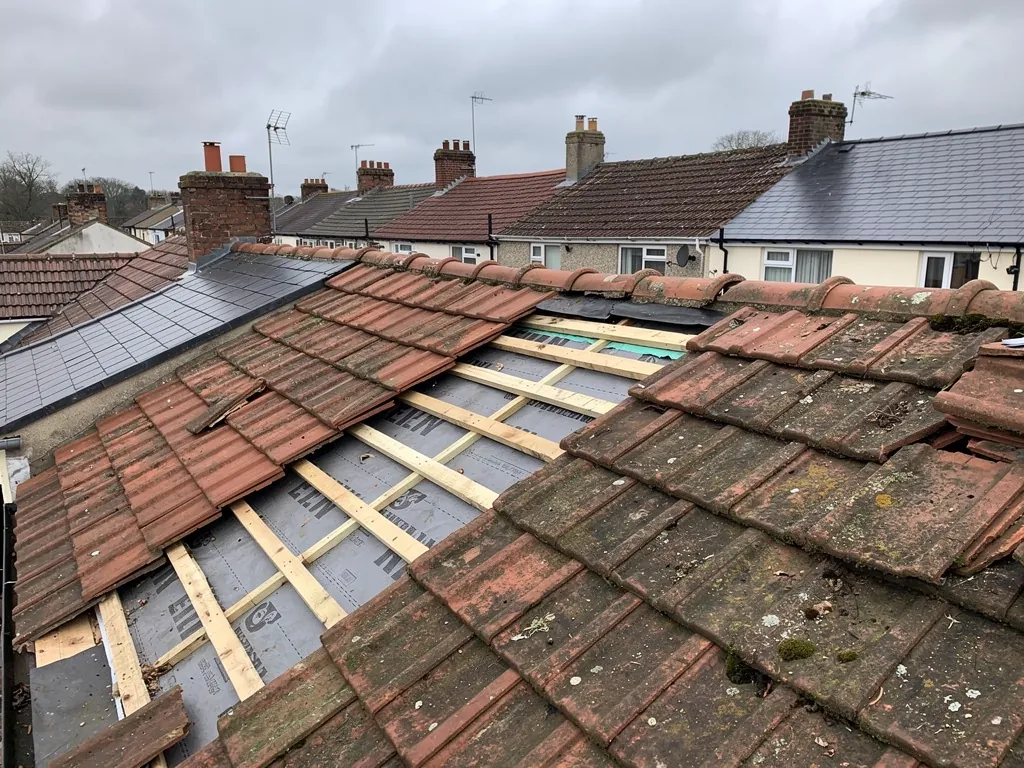
Clay tile roof opened to battens and membrane for repair
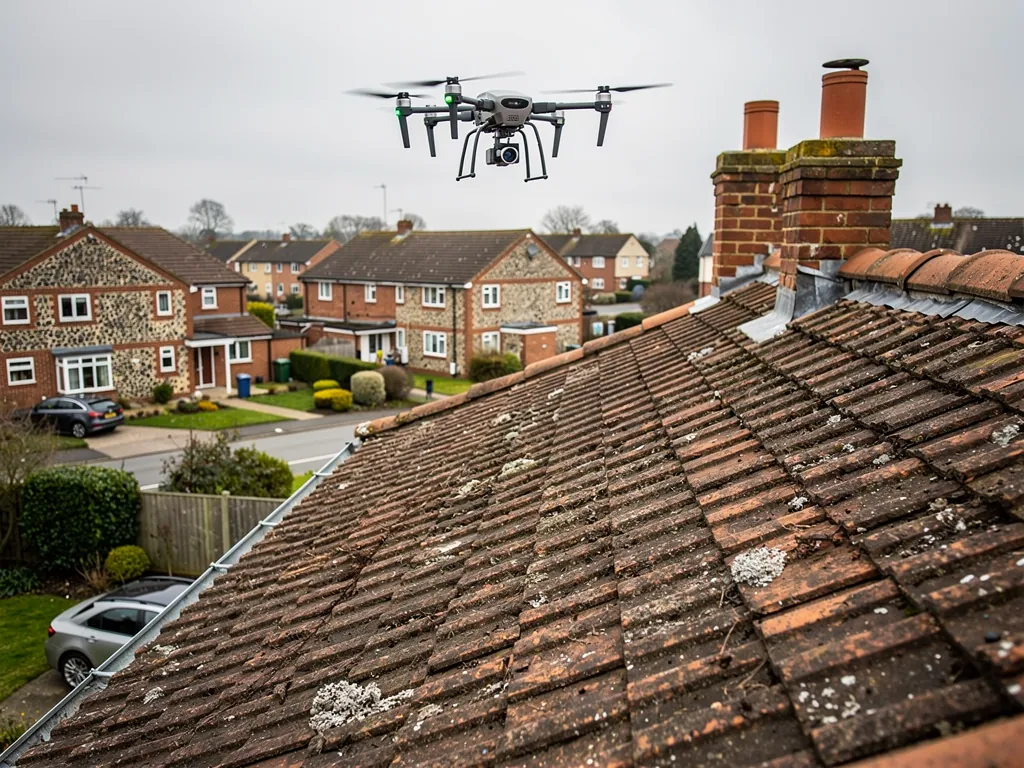
Drone hovering above a tiled roof during a roof survey

The short answer

Swindon Borough Council is the planning authority. Matching repairs rarely need an application. A listed house needs listed building consent for changes that alter it, the working parish church follows the faculty route, and notifiable jobs go to building control at the council or a registered approver.

Most roof repairs in Chiseldon need no permission. Where they do, the route depends on which of three buildings you are dealing with.

What applies to homes in the conservation area?

Thamesdown Borough Council designated the conservation area in 1990, and its appraisal and management plan was adopted on 10 February 2009. The council's page on conservation areas lists Article 4 directions for Bishopstone and the Swindon railway village, and Chiseldon is not named with them. A repair in matching materials does not change how the building looks, and so does not usually need planning permission. Replacing thatch, stone or clay with a different covering can, so ask first.

What about Chiseldon Cottage and Holy Cross?

Chiseldon Cottage and the Church of the Holy Cross are among the listed buildings. On a listed house, any work altering its character needs listed building consent first. The church is a separate case: while the Church of England still holds regular worship there, the ecclesiastical exemption applies and roof work is authorised by faculty, which the parish arranges with the diocese.

Does a re-roof bring in Building Regulations?

Repairs and re-covering do not normally need approval while less than 25 per cent of the building envelope and less than 50 per cent of the roof is touched. Go further, or pick a covering 15 per cent or more heavier, and the job becomes notifiable, often with better insulation required too. Notifiable roof work goes to the council's own building control team or to a registered approver, and the notification is ours to make.

Not sure which of these applies to your house? Tell us the address and attach a photo using the enquiry form, and we can talk it over before a survey is booked. A short conversation at that stage often saves a longer one later, and it means the quote that follows the survey already allows for whatever consent the work needs.

MythA listed cottage cannot have its roof repaired without a full application.

FactRepair in matching materials is routine; consent is for work that changes the character of the building.

Roofing services in Chiseldon

Questions from the Ridgeway side of Swindon

Why do some Chiseldon roofs have eyebrow dormers and others do not?

Eyebrow dormers belong to the thatched cottage tradition, where the roof covering curves up and over a window. Later brick and artificial stone houses have ordinary tiled roofs with conventional dormers or none. Each type leaks in its own places, so a survey looks at the junctions around any dormer first.

Is the Grade I church a reason my own roof is harder to repair?

Not by itself. What matters is whether your own house is listed or within the conservation boundary. The appraisal map and the council's conservation pages show the line, and we will go through them with you before pricing begins.

Do you work around the M4 junction and the villages beyond Chiseldon?

Yes. Chiseldon, Wroughton, Liddington, Badbury and the other places around the M4 are inside our 30 road mile radius from Swindon. Send the address through the enquiry form or on WhatsApp and we will confirm it is in range.

What does a Chiseldon roof guarantee actually cover?

The workmanship we carry out, for 10 years, in writing. It is a workmanship guarantee, not insurance, and it does not stretch to faults in work done by others. Survey photographs and a written quote come first, so what is being covered is clear before you agree to anything.

Ask us about your roof

Tell us what’s happening and we’ll call you back.

  • Photos of what we find
  • A written quote
  • 10-year workmanship guarantee

Or call 01793 626096

Call Get a quote