The short answer
Start with the parts that age fastest, not the tiles: the underlay beneath them, the mortar at the ridge and verges, the metalwork at wall junctions, and the timber roofline. A 1970s tile covering often outlasts all of these, so repairing the right part can add years without replacing the roof.
An Eldene house is now about fifty years old. Its tile covering may still shed water perfectly well, so a leak is rarely proof that the whole roof has failed. It usually traces back to one of four components, and each one has its own remedy. Working out which one is the whole point of a proper survey.
Q1.1What happens to the underlay and battens?
Beneath the tiles sit battens, small timber laths nailed across the rafters, and under those a waterproof layer called the underlay. On a 1970s roof that layer is bitumen felt, and felt stiffens with age, then splits at the overlaps or around nail holes. From the loft you notice daylight at the eaves, dark staining on the rafters or damp insulation. Replacing the underlay means lifting the tiles on that slope, so we judge how widespread the damage is before we suggest it.
Q1.2Why do the ridge, hips and verges work loose?
The ridge runs along the apex where the two slopes join, while the verge finishes the roof at a gable end. Both were commonly set in mortar on estate roofs of the period. Since BS 5534:2014, the ridge and hips need more than a mortar bed, so fresh bedding now comes with metal fixings, or the roof moves to a tested dry-fix kit. Our ridge, verge and dry-fix page sets out the choices.
Q1.3What about the flashings and the roofline?
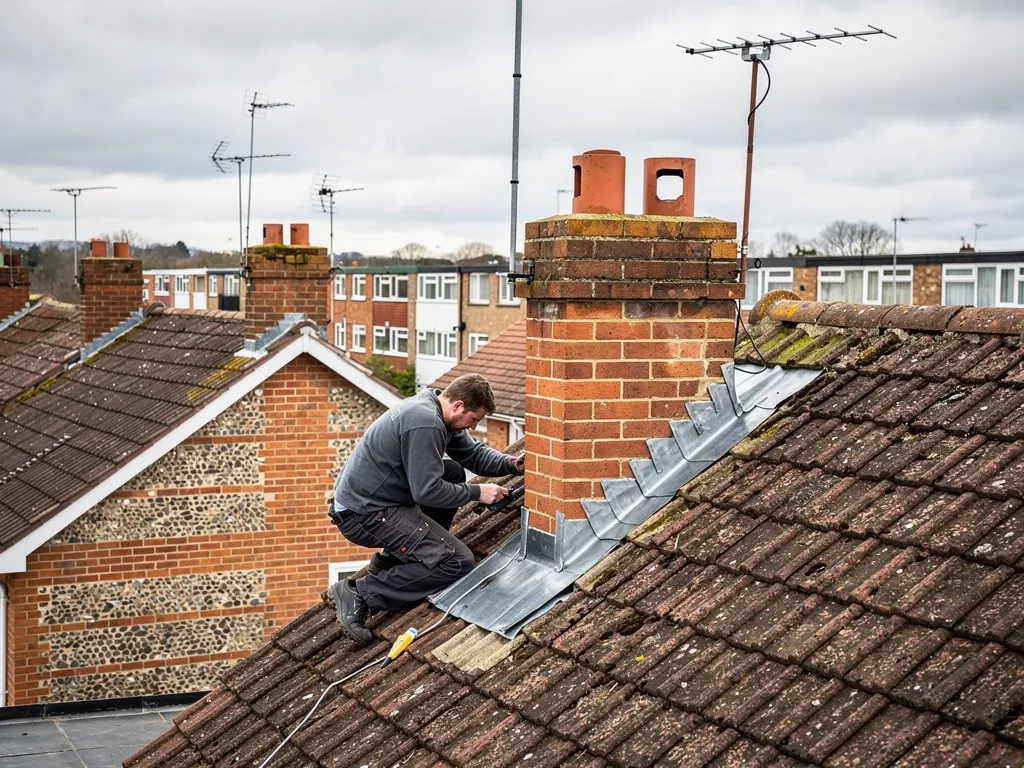
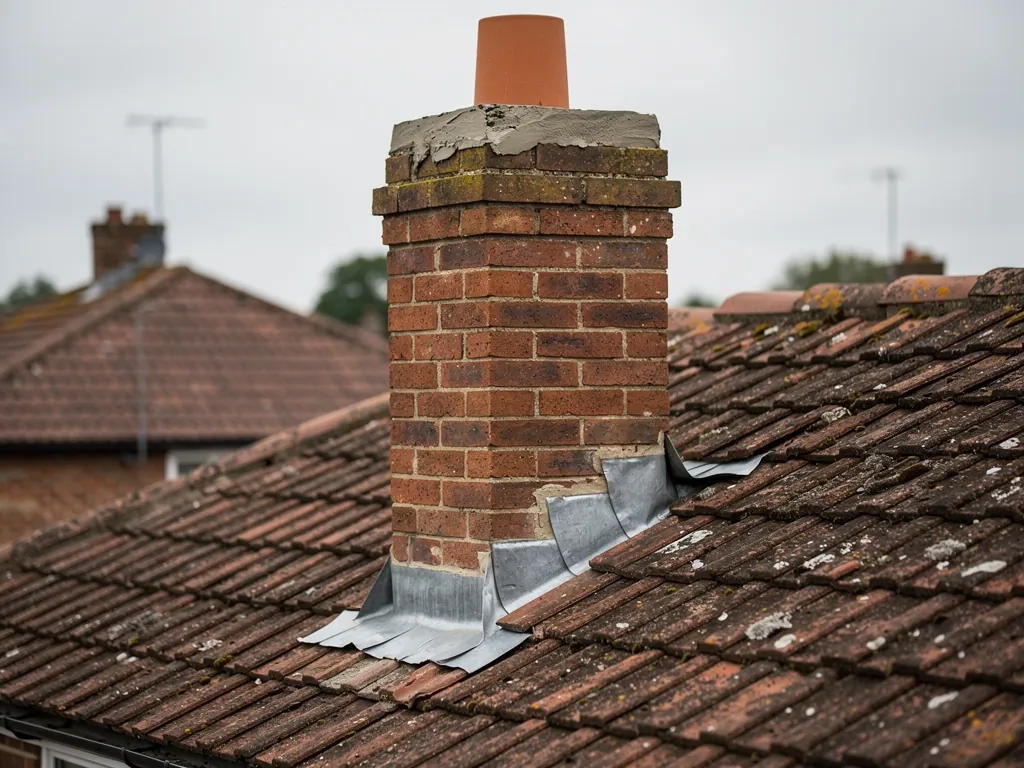
Where a roof slope meets a brick wall or a chimney stack, a metal strip called a flashing bridges the gap. Old mortar fillets crack there, and sheet lead replaces them for the long term. Along the eaves, timber fascias and soffits rot wherever a gutter has leaked. Spotting these early keeps each repair small, which is the way we prefer to work. Our roof repairs page explains the process.
From the pavement you can often spot early signs: ridge tiles no longer in a straight line, a verge with gaps, a gutter that overflows at one corner in heavy rain, or a green fringe of moss along the lower tile edge. Phone photographs of those help us plan the survey, though they never replace a look at the roof itself, and they let us bring the right materials on the first visit.