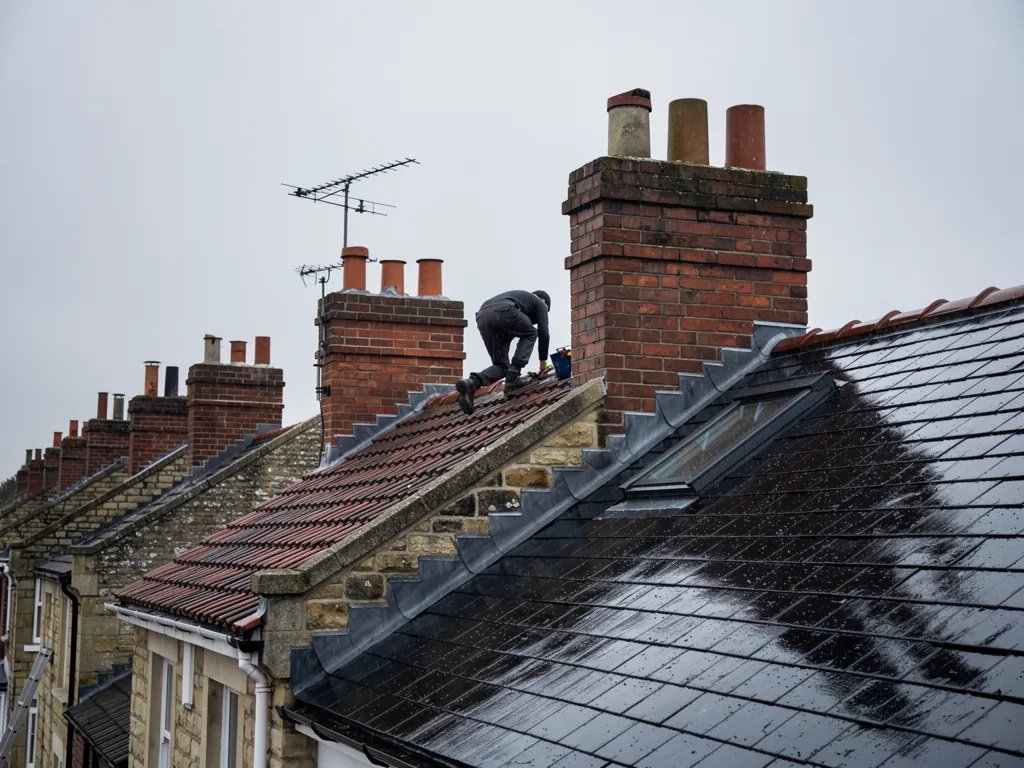
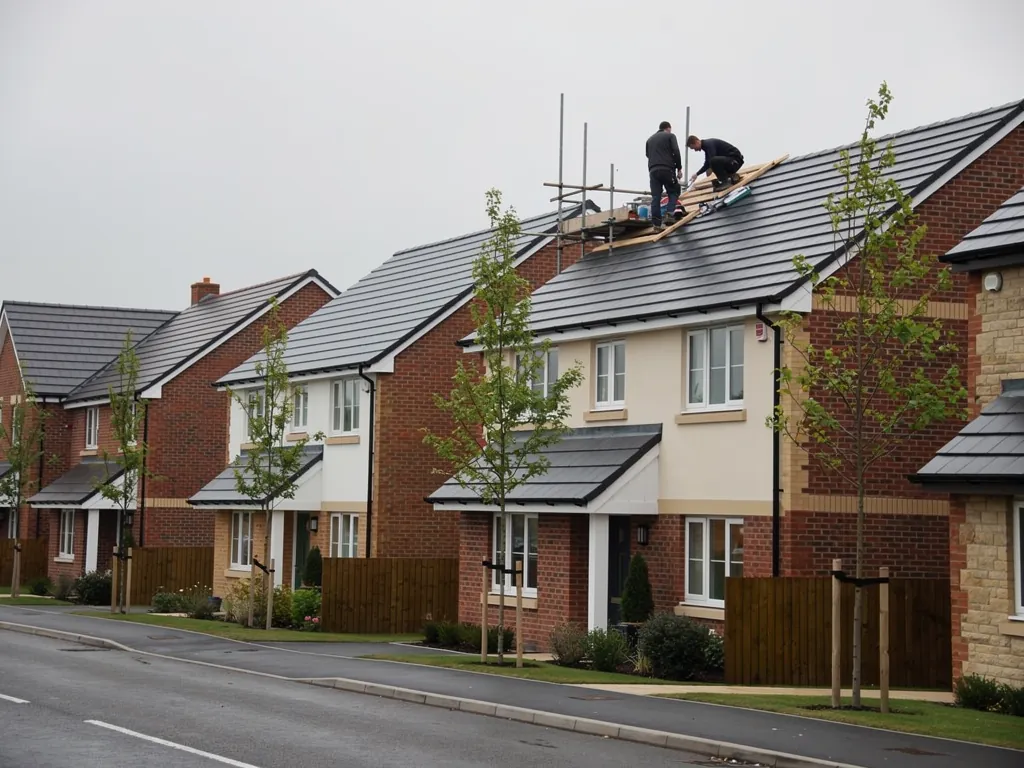
New-build brick and render estate houses with grey tile roofs

Roofers in Blunsdon

Repairs, replacement roofs, chimney work and flat-roof coverings across Blunsdon, from the stone-tiled buildings around St Leonard's Church on the scarp top to the slate and brick cottages and newer homes below it.

Blunsdon's roofs, scarp top to scarp foot

Stone-tiled roofs beside an old church
Around St Leonard's Church

The oldest building in Broad Blunsdon is St Leonard's Church, which dates from the 13th century and was heavily restored by Butterfield in 1870. The council's conservation area appraisal says rubble stone is the usual walling material here, and that stone tiles roof the church, the Manor House, West Hill House, the Old Rectory and Teapot Cottage. Stone tiles are heavy, laid so the stones get smaller as they climb towards the ridge, and held by pegs and battens that usually give out long before the stone does. This smaller part of the conservation area sits wholly on top of the scarp, so these roofs catch weather from every direction, and the fixings at ridges and gable edges carry most of the load.

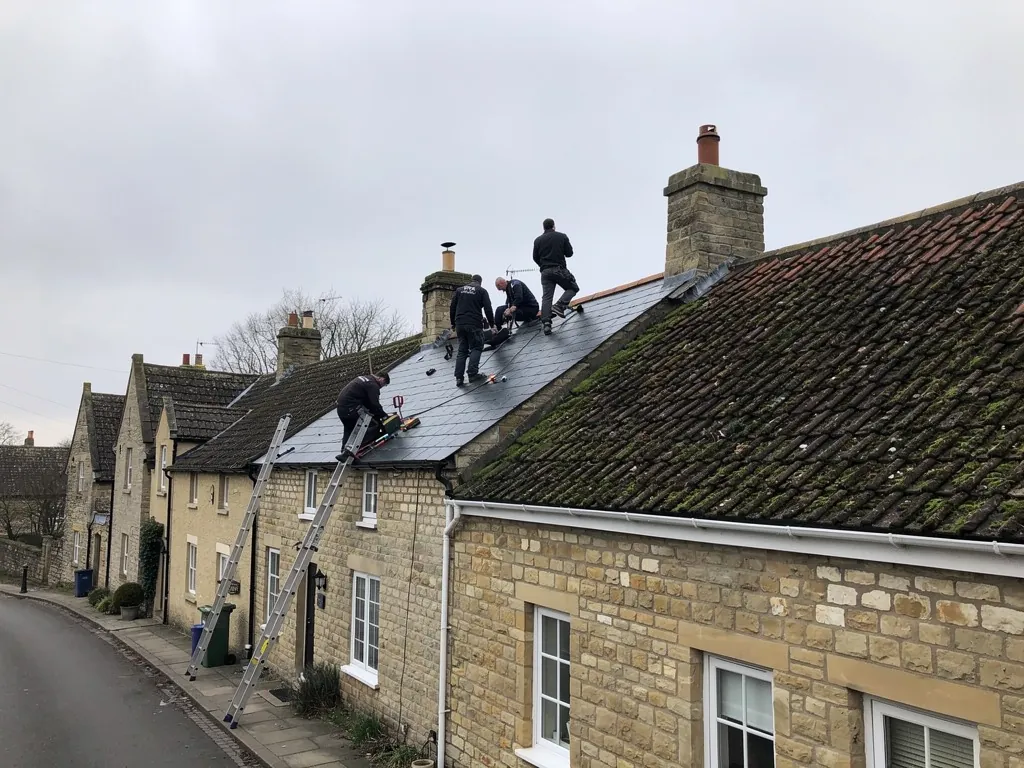
Slate roofs on brick cottages
Thatch, slate and what replaced them

The appraisal records that only 47 High Street and The Cottage in Chapel Lane still have thatched roofs, and that many original thatched and stone-tiled roofs have since been slated or, more recently, covered in concrete tile. Welsh slate and red brick arrived in the nineteenth century. Each change left its mark. A cottage with a roof pitch built for thatch is steep, so slate sits happily on it, but concrete tile is much heavier than slate and can strain old rafters. When a slate roof here fails, the cause is usually rusted nails, tired lead and old mortar rather than the slates themselves.

Brick houses with concrete tiled roofs
Lower Blunsdon and newer homes

Below the scarp, Lower Blunsdon has its own conservation area, designated in 1992, and the wider area has plenty of later housing. Those later roofs have different troubles from the stone ones: ridge bedding that has crumbled, valley linings that have worn, and flat-roofed porches, garages and extensions that age faster than the main slopes. Extensions with flat roofs are especially common on later houses, and they need regular checks at their edges and upstands. A tiled roof from the later twentieth century is not a heritage matter, but it still deserves a careful survey before anyone prices a replacement.

Three conservation areas around Blunsdon

Map showing Blunsdon and central Swindon. 4 road miles north of central Swindon.

Distance
4 road miles north of central Swindon
Council
Swindon Borough Council
Conservation areas
Broad Blunsdon and Blunsdon St Andrew (16 July 1990) and Lower Blunsdon (14 September 1992)
Setting
Split between the top and the foot of a scarp
Council
Swindon Borough Council

Blunsdon roof questions

Which Blunsdon conservation area is my house in?

There are three: Broad Blunsdon, Blunsdon St Andrew and Lower Blunsdon. The council's appraisal maps show the boundaries, and we can read them with you before pricing.

Can a Blunsdon stone-tiled roof be patched?

Yes, usually. Slipped stones are refixed and failing pegs or battens are replaced, so the original stones stay on the roof wherever they are sound.

Should my old Blunsdon thatched-era cottage have slate?

Many already do, since the appraisal notes that much of the village's thatch and stone was replaced. We repair slate with matching slate, not with a heavier tile.

Q1

How do you repair a stone roof near St Leonard's?

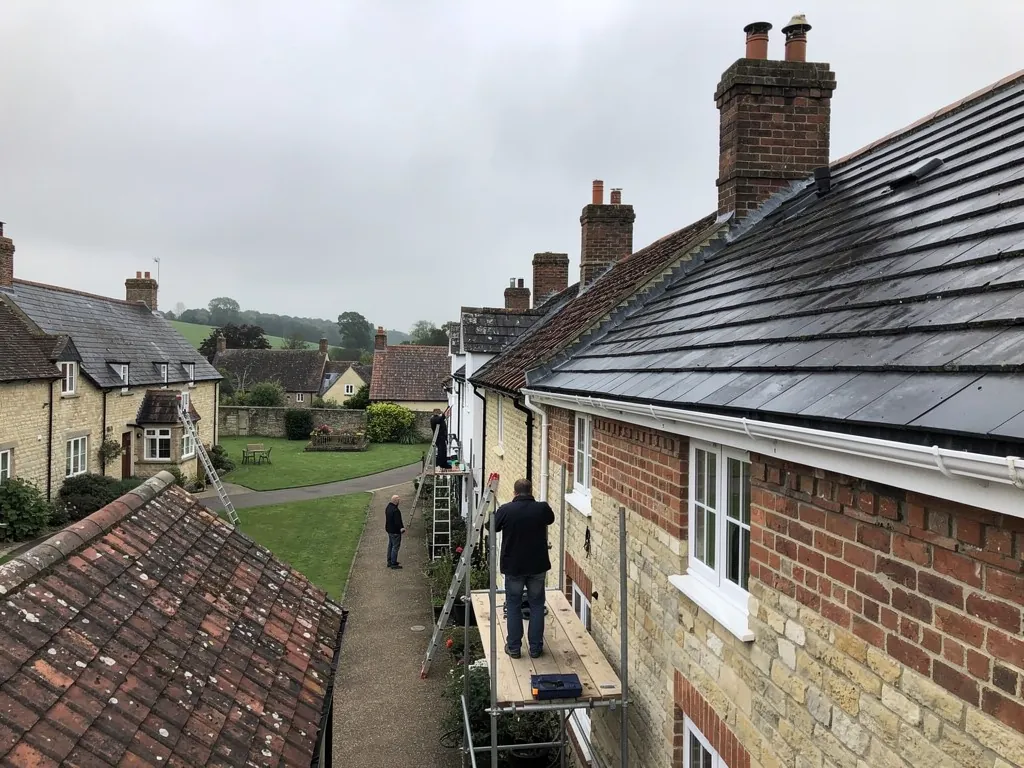
Brick and limestone cottages around a small village green
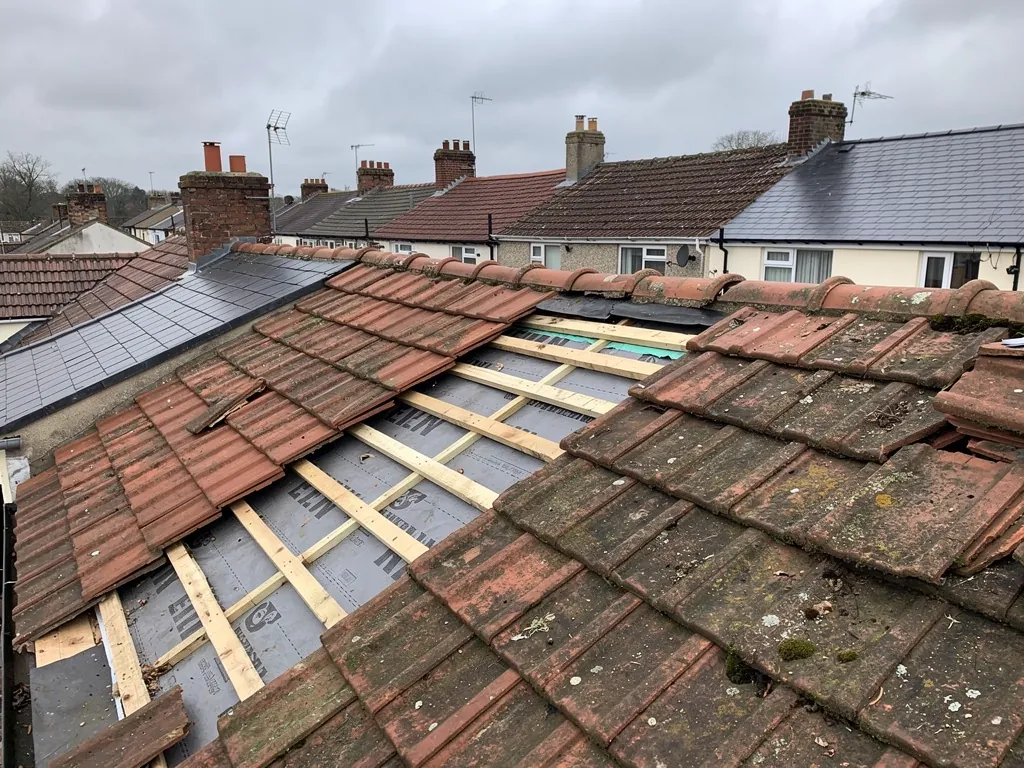
Clay tile roof opened to battens and membrane for repair

The short answer

By keeping the stones and renewing what holds them. Pegs, battens and bedding fail first, so a careful repair refixes slipped stones, replaces rotten fixings and re-lays courses with matching reclaimed stone only where a stone is broken. Stripping a whole slope is the last resort, not the first.

Stone tiles are heavy and old. The appraisal lists them on the church, the Manor House, West Hill House, the Old Rectory and Teapot Cottage, and the village's cottages once carried them too. Roofs like these ask for patience.

Why do stones slip?

A stone tile hangs from a peg through a hole near its head, resting on a batten. Over decades the peg rots or the batten softens and the stone slides. The stone itself may be perfectly sound. Moss packs the gaps between courses and holds moisture against the timber, which makes things worse. Each slipped stone opens a gap for rain, and if left alone the stones around it follow.

Can a stone be refixed rather than replaced?

The first question on a visit is whether a stone can be refixed rather than replaced. Often it can, with a new peg or a stainless fixing that does the same job. Where a stone has split, a replacement of matching thickness and size goes in the same course. Stones are laid in diminishing courses, so the big ones sit at the eaves and the small ones near the ridge, and a stone of the wrong size cannot simply be dropped in.

When does a slope have to come apart?

Where battens and fixings have failed across an entire slope, the right answer is a careful strip: stones lifted off and graded into piles by size, new timber fixed, and the stones laid back in order. We photograph the roof before anything comes off so the pattern is recorded. Our Cotswold stone roofing page explains the method in more detail, and the roof repairs page covers smaller faults.

Sourcing matters as well. Reclaimed stone is matched by thickness, size and colour, and we say where it came from, so you are never left wondering whether your new stones came off another building's roof.

Q2

Do Blunsdon's conservation areas restrict roof work?

The answer

Repairs in matching materials seldom need a planning application, even inside a conservation area. Changing the material, adding roof windows or altering chimneys can need consent, and listed buildings need listed building consent whenever the work touches what makes them special. If in doubt, Swindon Borough Council's planning team can say.

Blunsdon is unusual because it has not one conservation area but three. The three are Broad Blunsdon, Blunsdon St Andrew and Lower Blunsdon, and your house may sit in any one of them or in none.

What do the designations mean?

Broad Blunsdon and Blunsdon St Andrew were both designated on 16 July 1990, and Lower Blunsdon on 14 September 1992. The council's Article 4 directions are listed only for Bishopstone and the railway village, so no Article 4 direction applies to Blunsdon. A conservation area does not freeze a roof. It asks the council to look more carefully at changes that alter the look of a street or a group of buildings.

Is matching work allowed?

Re-covering a slate roof in slate, or refixing stone tiles, is maintenance that leaves the outward look of the house as it was, and a planning application is seldom required. The caveat is a listed house: changes to its special character need listed building consent, and on a stone-tiled house the stone itself is part of what is protected. The appraisal identifies two grade II* buildings, St Leonard's Church and Manor House Farm. St Leonard's is still the working parish church, so a repair to its roof is approved under the Church of England's faculty rules, not by listed building consent.

Could a different covering be allowed?

Replacing stone or slate with concrete tile, fitting new roof windows or altering a chimney is a different conversation. The village has already lost much of its thatch and stone to later materials, which is one reason the council pays attention. Roof windows have their own planning rules, covered on our skylights page.

If your house is in any of the three areas, a call to the planners at the council costs nothing, avoids surprises and is best made before the job is priced. We can help you read the boundary maps and say what we would propose.

MythLiving in a conservation area means you cannot touch your roof.

FactMatching repairs are normally fine; it is changes to the look, and listed buildings, that need the council's say.

Q3

When does a Blunsdon re-roof need Building Regulations?

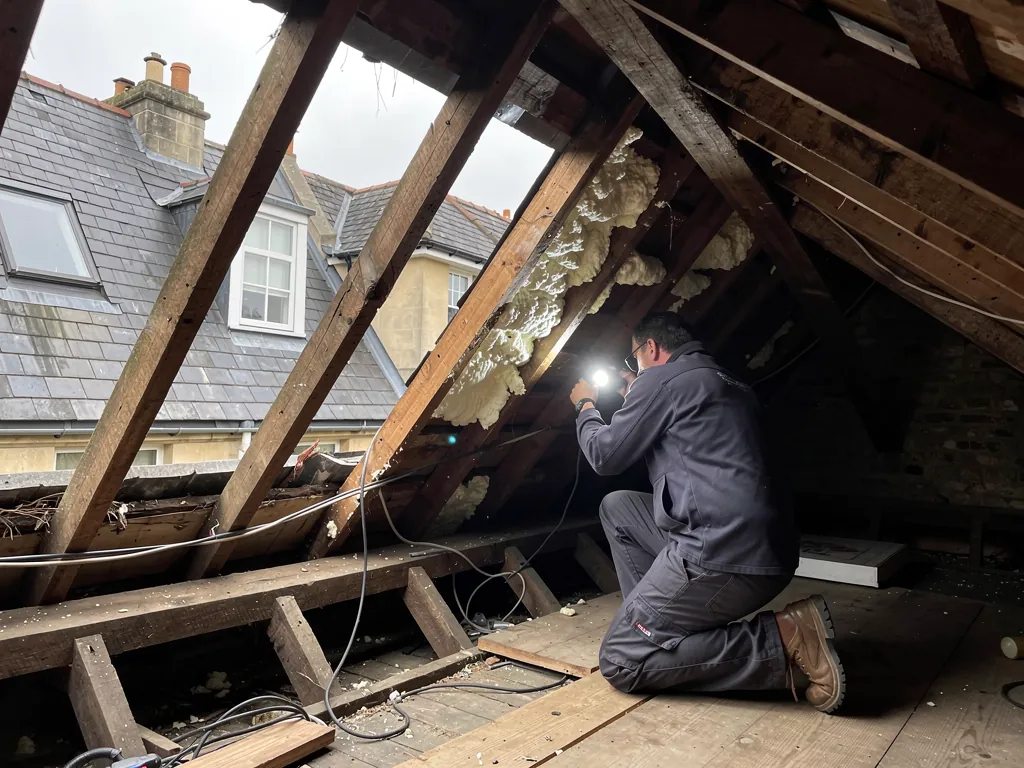
Surveyor checking spray foam on rafters with a torch
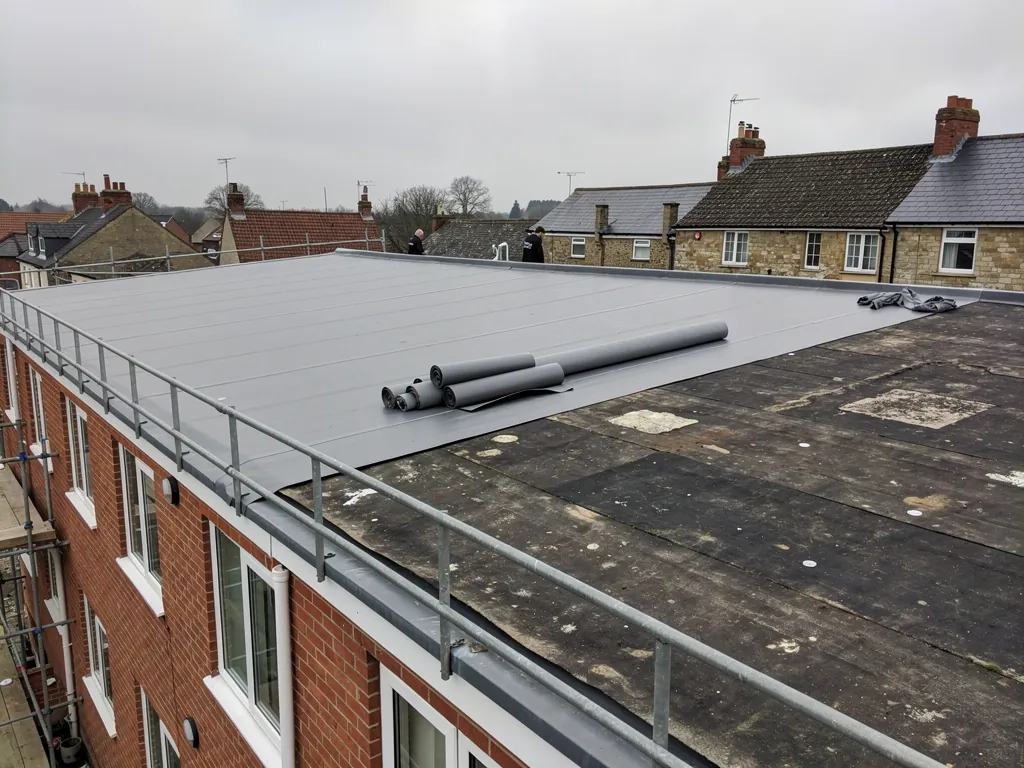
Long flat roof on a 1960s brick building being re-covered

The short answer

Normally no application is needed while less than 25 per cent of the total building envelope and less than 50 per cent of the roof changes. Any bigger job brings approval into it, and the insulation may need upgrading. Swindon Borough Council runs its own building control, and if the job needs notifying, that paperwork is ours to file.

The question comes up most when a cottage is being re-covered in full. The rules look at the share of the roof replaced, not on how old the building is.

What are the thresholds?

The Planning Portal sets the test: you can normally skip an application while less than 25 per cent of the total building envelope and less than 50 per cent of the roof is affected. Exceed either one and the job needs Building Regulations approval, with a Part L thermal upgrade a likely consequence, which usually means insulating at rafter or ceiling level as the roof is opened.

Can the rafters take a heavier covering?

Approved Document A makes a separate point about heavier coverings. The Planning Portal puts the line at 15 per cent or more heavier, and Approved Document A says more than 15%. In Blunsdon the practical case is a cottage that was once thatched or stone-tiled and now carries slate. Putting concrete tile on the same rafters adds a great deal of weight, so the structure needs checking first.

Who handles the notification?

Swindon Borough Council runs its own building control team, and a registered building control approver is the private alternative. At the survey stage we say which route applies, and any notification the job needs is ours to send. A simple repair of stone tiles or a ridge falls well under the thresholds and needs no application.

For historic buildings, the council's building control team can sometimes allow a lower standard of insulation to protect the fabric, but that is a conversation to have with them directly, not something we can promise in advance.

Re-roofing and Building Regulations
SituationUsual position
Refixing stone tiles on one slopeMaintenance; no application
Re-covering under the 25 and 50 per cent testsNo application normally needed
Re-covering above those testsBuilding Regulations approval applies
Covering 15 per cent or more heavierApproval needed; structure checked

Questions from the scarp

Why are there stone tiles on the church, the Manor House and Teapot Cottage?

Rubble stone and stone tiles are the village's old materials, and the appraisal names these buildings as having stone-tiled roofs. Later work swapped many roofs to slate or concrete tile, so the surviving stone roofs matter more now. When one needs attention, we keep the existing stones and renew only the fixings that have failed.

Do you work in Lower Blunsdon and Blunsdon St Andrew as well as the scarp top?

Yes. All three conservation areas, and the newer streets around them, are within our area. Houses beside the thatched cottages on High Street and Chapel Lane get the same survey as those near the church. Afterwards the written quote comes with pictures taken on your roof.

Is a roof at the foot of the scarp different from one on top?

The materials may be the same, but the exposure is not. The smaller Broad Blunsdon area around the church sits wholly on the scarp top, so ridges and verges take more wind. Below it, the work tends to focus on gutters, valleys and flat roofs, where water collects rather than where weather arrives.

My Blunsdon roof has both slate and concrete tile patches: is that a problem?

It is a sign of past repairs. The appraisal notes that many old roofs here were changed over time. A mixed roof can be sound, but the weight differs, the fixings differ and the junction between the two is a likely place for a leak. We look at that joint carefully and tell you what to do.

Ask us about your roof

Tell us what’s happening and we’ll call you back.

  • Photos of what we find
  • A written quote
  • 10-year workmanship guarantee

Or call 01793 626096

Call Get a quote