Damp in a loft worries people because it looks like a failing roof. Sometimes it is, and sometimes the roof is blameless and the loft simply cannot breathe.
Q2.1How do you tell a leak from condensation?
A leak tends to leave a stain below a particular tile, flashing or pipe collar, with wet timber that dries in a few dry days and returns after rain. Condensation shows as dampness across a wider area, droplets on the underside of the felt, black spotting on rafters and wet insulation, and it is worst in cold spells after the heating has been on. Different causes, different cures.
Q2.2How is air meant to move through the loft?
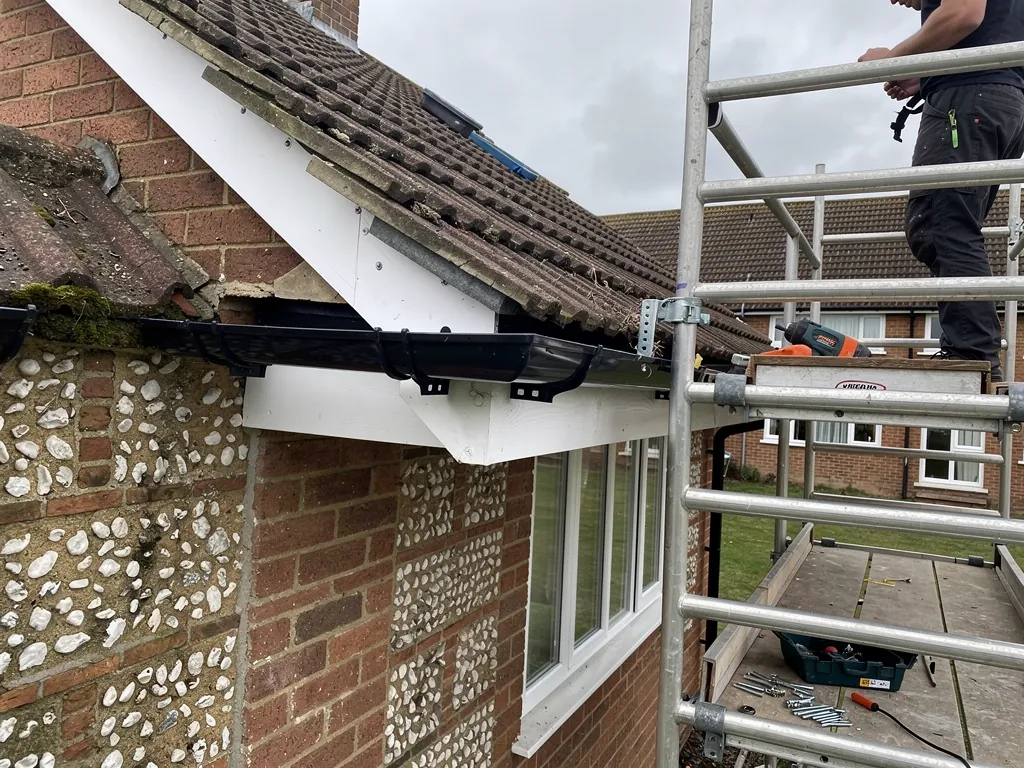
Marley's guidance, drawing on BS 5250, sets out ventilation for cold roofs. With a non-breathable underlay it asks for a continuous 10 mm gap along the eaves on pitches above 15 degrees, and extra high-level ventilation where the pitch exceeds 35 degrees or the roof spans more than 10 m. Loft insulation pushed into the eaves can block that gap completely, which is a common result of well-meant top-ups.
Q2.3What is the fix?
If the airflow is blocked, the fix is eaves trays or vents and clearing the insulation back. If there is a defect, we repair it. Where both are present the quote lists both, because dealing with only one leaves the damp in place. Our roof ventilation guide goes through the options.
Bathroom and kitchen extract fans venting into the loft, rather than outside, are another frequent source of moisture that gets blamed on the tiles.
Photographs taken in the loft form part of the survey, so you can see the damp for yourself and follow our reasoning. Where the cause is moisture rather than rain, a roofer who simply replaces tiles has not solved anything, and the stains return the following winter. So we check the entire roof space, from the eaves to the ridge, before recommending a single repair.