The right answer depends on where the problem actually sits, so the survey covers the loft, where staining and daylight show up, as well as the tiles seen from the scaffold or ladder.
Q2.1When is a repair the right job?
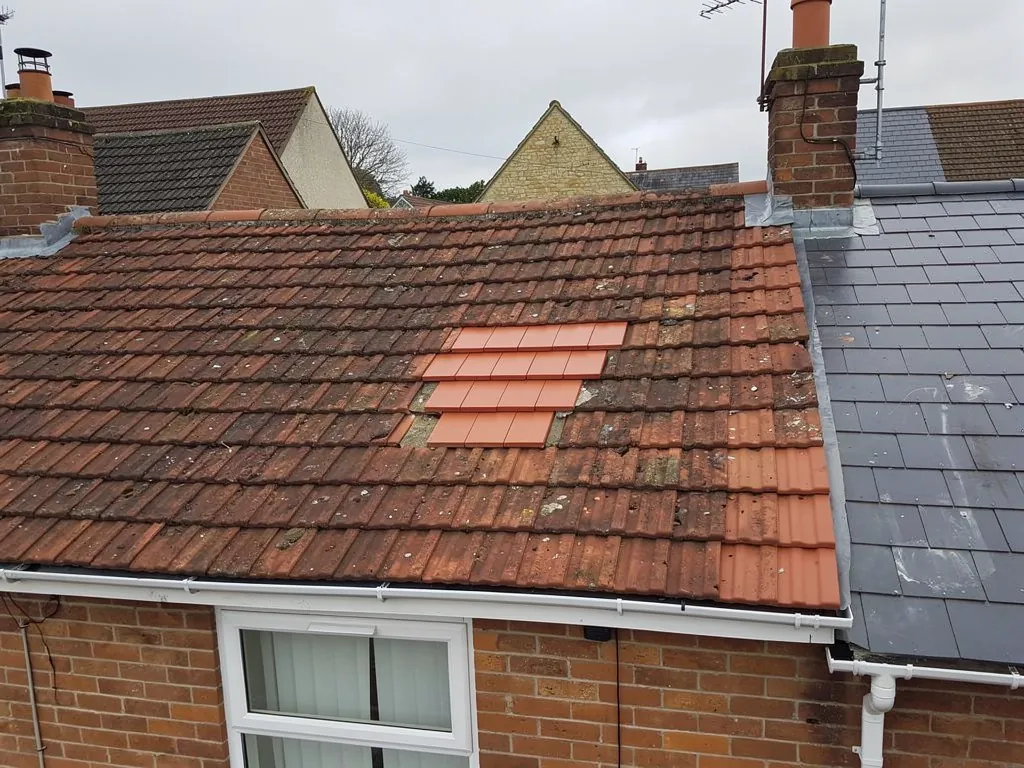
If the tiles are intact and the battens are firm, individual faults can be fixed on their own: a few cracked tiles replaced, a ridge section re-bedded and fixed, a flashing renewed. Concrete tiles often last somewhere between 30 and 60 years, a typical span and no promise, so a roof in its fourth decade can have plenty of life left when the details around it are kept in order. Where a repair genuinely cures the fault, a repair is what we will write up, even though a bigger job would be easier to sell.
Q2.2When should a whole slope come off?
If the loft shows daylight at the tile laps, damp felt, soft battens or staining along several rafters, patching becomes false economy. Taking the slope back to the rafters, fitting fresh underlay and battens, then putting tiles back on (reused where sound, new where worn) treats the cause rather than the symptom. Sound tiles can often go back on, and we say which ones are worth reusing.
Q2.3What moves the cost?
Size of slope, access, how many tiles need replacing, whether the chimney needs rebuilding or re-flashing, and whether scaffolding is needed all change the figure. After the visit you get a single written figure covering everything, scaffolding included where it is needed, and we aim to keep it fair. Our page on tiles lifting in the wind covers one common cause of the damage that starts this decision.
If you are weighing up both options, ask for the repair priced alongside the re-roof, so you can see exactly what each would buy you.