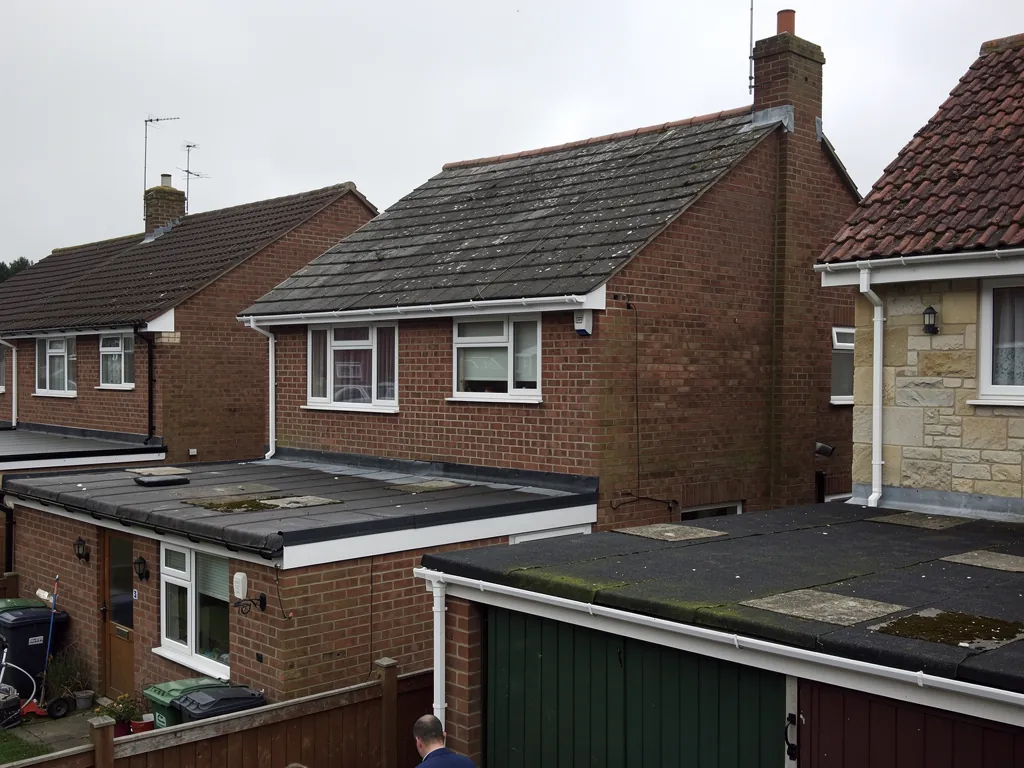
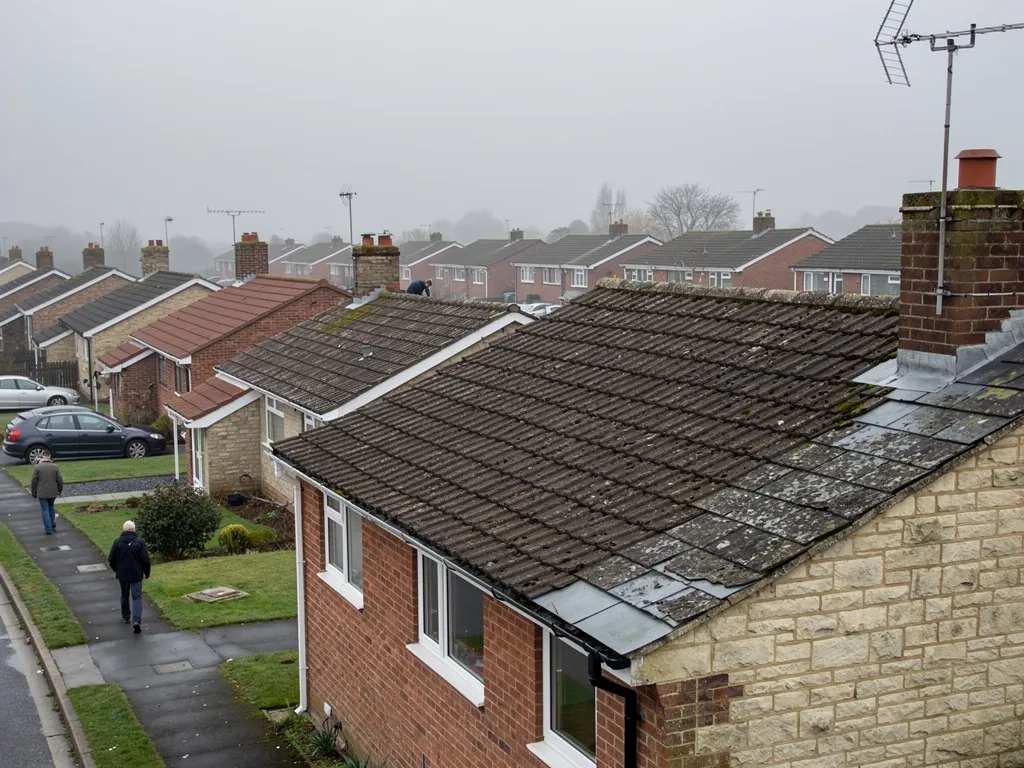
1980s estate houses with brown concrete tile roofs

Roofers in Penhill

Roof repairs, ridge and verge refixing, flat roofs and full re-roofs across Penhill, from the long terraces of the 1950s estate to the maisonettes, garages and extensions that have been added since.

Penhill's roofs, from terrace to tower

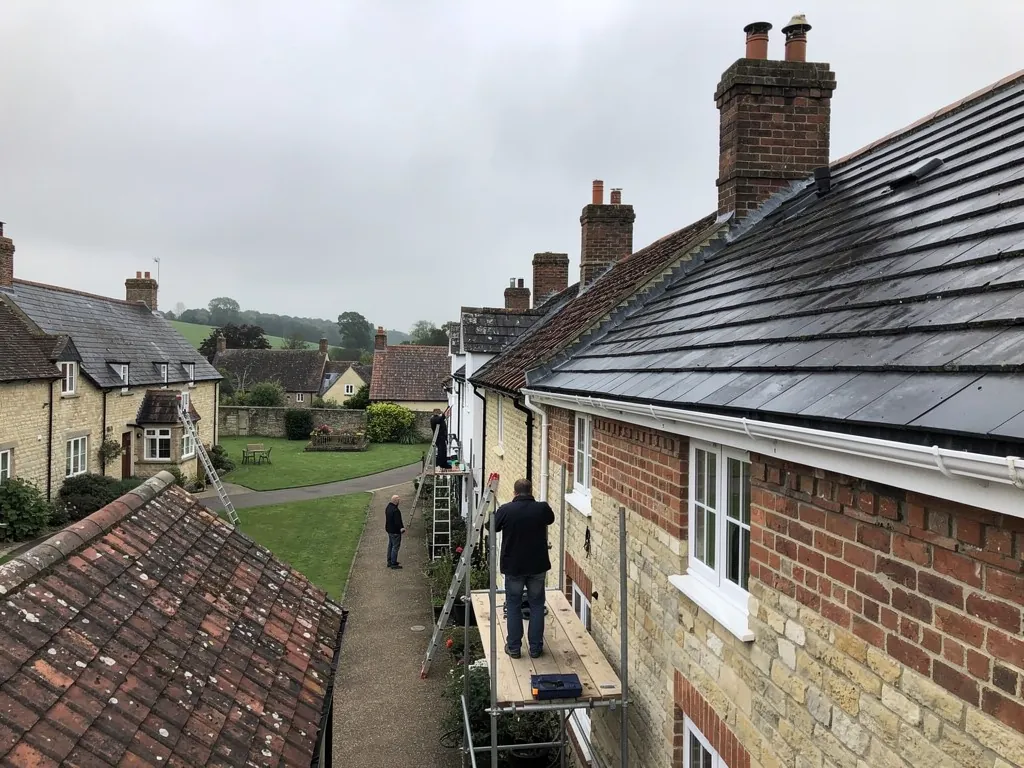
A long terrace of pitched tiled roofs
The three-bedroom terraces

Penhill was built as a local authority estate in the early to mid 1950s, one of the first big post-war council estates in Swindon, and most of its houses are three-bedroom terraces. Terraces mean long, shared roof lines: a row of pitched roofs divided by party walls, with a chimney stack on the walls between neighbours and a gable at each end. Most faults appear at the places where one house meets the next. The verge, the edge of the roof at a gable end, is held with mortar that ages and lets go. Ridge tiles are bedded the same way. Lead and mortar around the stacks take the weather from both sides. We check those places first on a terrace, because they leak long before the main slopes do.

A low-rise block with a flat roof
Maisonettes and low-rise blocks

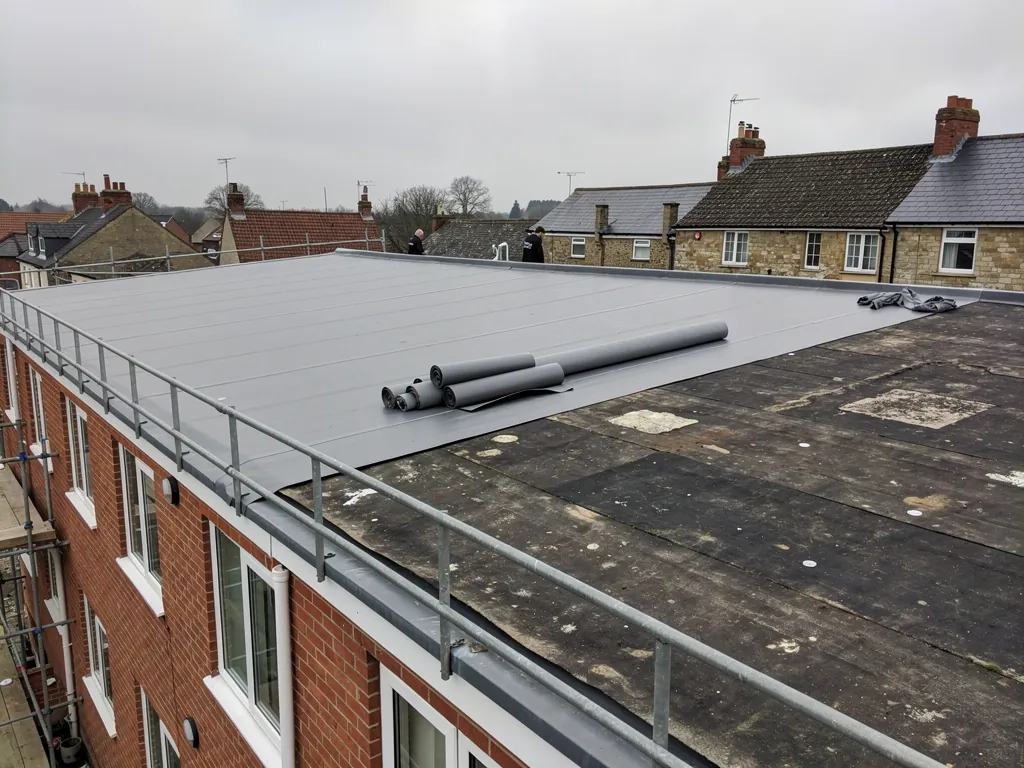
The estate also includes some low-rise maisonettes, and that changes the roofing question. A maisonette is a home arranged over two floors within a larger building, and the roof above it is often shared. Whether it is pitched or flat, one roof can serve several households, so a leak in one home may start in a repair that belongs to the building as a whole. Flat roofs on blocks and on low walkways are covered with felt, EPDM or GRP, each with its own typical faults at upstands, outlets and edges. We photograph the whole roof, not only the patch above the stain, and the quote names exactly which part we are pricing.

Garages and porches with low-pitched roofs
Tower blocks, garages and additions

Penhill also has three tower blocks: Cleverton Court, Seagry Court and Upavon Court. Roofs on that scale are a job for the landlord or managing agent and for specialist access, and we do not suggest otherwise. Everywhere else on the estate the roofs are ones we can reach from a scaffold: single and double garages in blocks, porches, rear kitchens, utility rooms and conservatories added over the decades. Those later additions tend to have flat or shallow roofs that were put on with less thought than the house itself, so water often finds its way in where the old roof and the new one meet.

From Swindon to the 1950s estate

Map showing Penhill and central Swindon. 3 road miles north of central Swindon.

Distance
3 road miles north of central Swindon
Council
Swindon Borough Council
Built
Early to mid 1950s, as a council housing estate
Conservation area
None listed by Swindon Borough Council
Council
Swindon Borough Council

Penhill roof questions

Who pays for the roof on a former council house in Penhill?

If you own the freehold, the roof is yours. A lease sets out who is responsible, so read it first. Tenants of a landlord report faults to the landlord instead of hiring anyone.

Does a Penhill terrace roof repair involve the neighbours?

Not for repairs on your own slope. Work that cuts into or removes a chimney on a shared wall is different, and it brings in a party wall notice to your neighbour.

Is a 1950s estate roof worth repairing or time to replace?

It depends on the covering and the underlay beneath it. Isolated faults get repaired. If tiles are cracking across a whole slope and the underlay is perished, replacement is the better value.

Q1

What goes wrong on a 1950s terrace roof in Penhill?

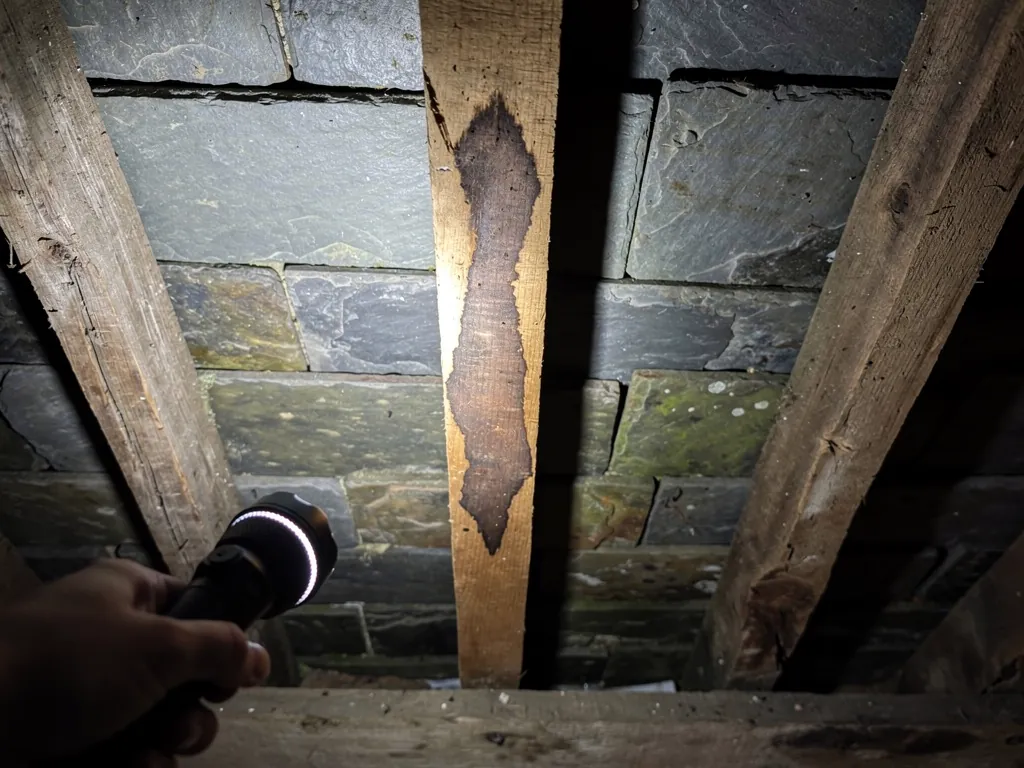
Torch showing a water-stained rafter beneath slates in a loft
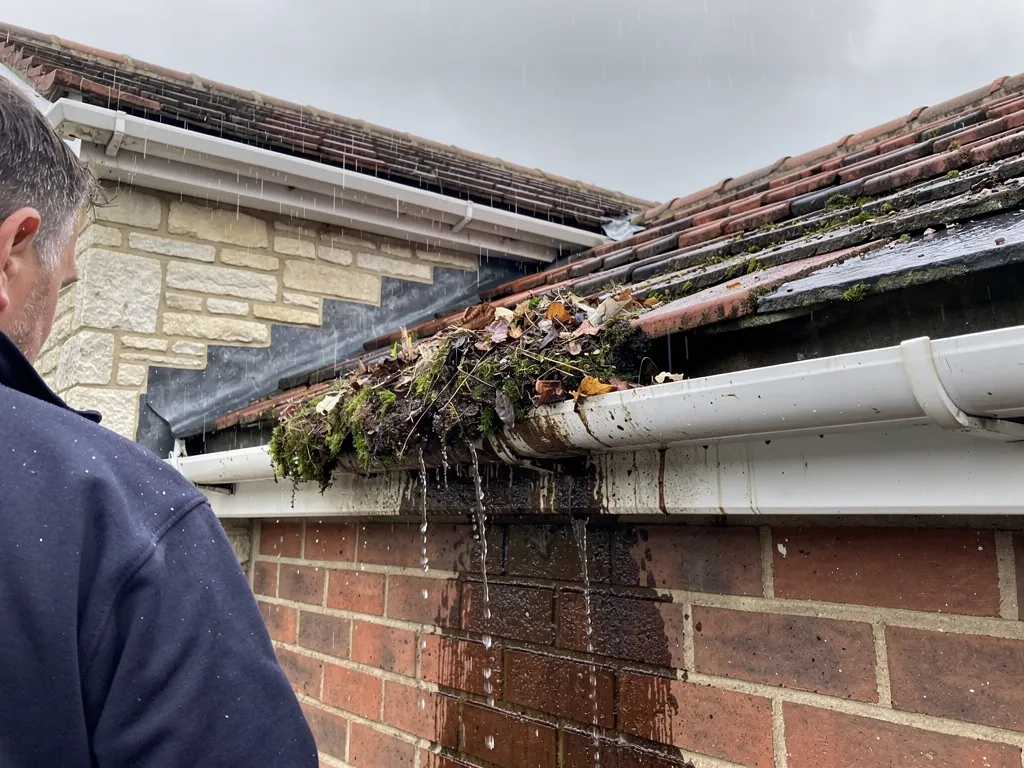
Blocked gutter full of leaves overflowing down a brick wall

The short answer

A roof of this age tends to fail at its joints and edges before its tiles give out. Ridge and verge mortar crumbles, flashings around the shared chimney stacks lift, and the underlay below the covering can perish. We trace the actual cause on the survey, because the wet patch is often some distance from the fault.

A 1950s roof has had many winters, and what we find on a Penhill terrace is usually ordinary wear rather than anything dramatic. The skill is in finding the true cause, not the nearest one.

Why do the edges and ridges go first?

The ridge is the top line of a pitched roof and the hips are its sloping external angles. Both are capped with ridge tiles that were originally set in mortar. Since BS 5534 was revised in 2014, a mortar bed on its own is not relied upon to hold them, and mechanical fixings go in too. On older estate roofs the mortar has often cracked, so a loose ridge or verge heads the repair list. Our ridge, verge and dry-fix page explains the alternative.

What is happening under the tiles?

Beneath the covering sits the underlay, a sheet laid over the rafters as a second line of defence. In roofs of this period it was bitumen felt, and felt that has been in the dark for decades can dry out and tear. Torn underlay will not show from the street. It shows when a tile slips and rain gets through the gap behind it, which is why the survey includes a look inside the loft as well as at the roof.

Can gutters and eaves cause the damp?

Where guttering sags or leaks, water streams down the brickwork and soaks the timber at the eaves. Renewing a failed length of gutter or a rotten fascia board is often the smallest job that stops damp returning to a gable wall.

Where the tiles themselves are cracked or porous, we replace them individually, and we say if the roof as a whole is reaching the point where repairs stop being good value.

Where we look on a Penhill terrace
Part of the roofWhat we look forUsual remedy
Ridge and hipsCracked bedding, loose or rocking tilesRe-bed, with mechanical fixings added
Verges at gable endsMortar dropping out, tiles lifting at the edgeNew bed or a dry-fix verge
Shared chimney stacksOpen joints, split flashings, damp on the party wallRepoint and renew the lead
Field of tilesCracked, porous or slipped tilesReplace individual tiles
Underlay and battensTorn felt, softened battens seen from the loftLocal repair or strip and re-cover
Q2

How do repairs work when neighbours share the roof line?

The answer

Your slope is yours to repair, but a terrace shares its party walls, stacks and gable ends, so we look at how a fault joins on to the next house. Where a repair crosses the boundary we talk it through with you first, and a neighbour's scaffold can often serve both roofs.

A terrace is a single long building that happens to have several front doors. The roof is easiest to understand as one continuous structure with property lines drawn across it.

Where does one roof meet the next?

The party wall rises through the loft and sometimes above the tiles as a parapet or a stack. Flashing along that wall can leak into either house, and the water often shows up in the neighbour's ceiling before it shows in yours. We work out which side of the line the fault is on and say so in the photographs. If the problem is clearly next door's, we tell you rather than do work you do not need.

Can neighbours share a scaffold?

Terraces make access easier than you might think. A single scaffold can run across two or three houses, and where neighbours are doing work in the same month, sharing it can be cheaper for everyone. We agree this with each owner individually; we do not assume. Scaffolding typically costs around £850 to £1,200 for a standard two-storey house, according to MyBuilder's guide (updated 21 August 2026), so a shared arrangement is worth asking about.

What about chimneys on a shared wall?

Taking down a chimney stack above the roof is one thing. Taking out the chimney breast inside the house is another, and it always needs Building Regulations approval, plus a party wall notice when the breast stands on the wall you share. Our chimney repairs page covers the options for a stack that has seen better days.

Any leak that crosses the line is photographed from both sides, so owners can see the same evidence.

Our view

Fix the fault on your side properly, and tell the neighbour what the photographs show.

Q3

Who looks after a maisonette or ex-council roof in Penhill?

Long flat roof on a 1960s brick building being re-covered
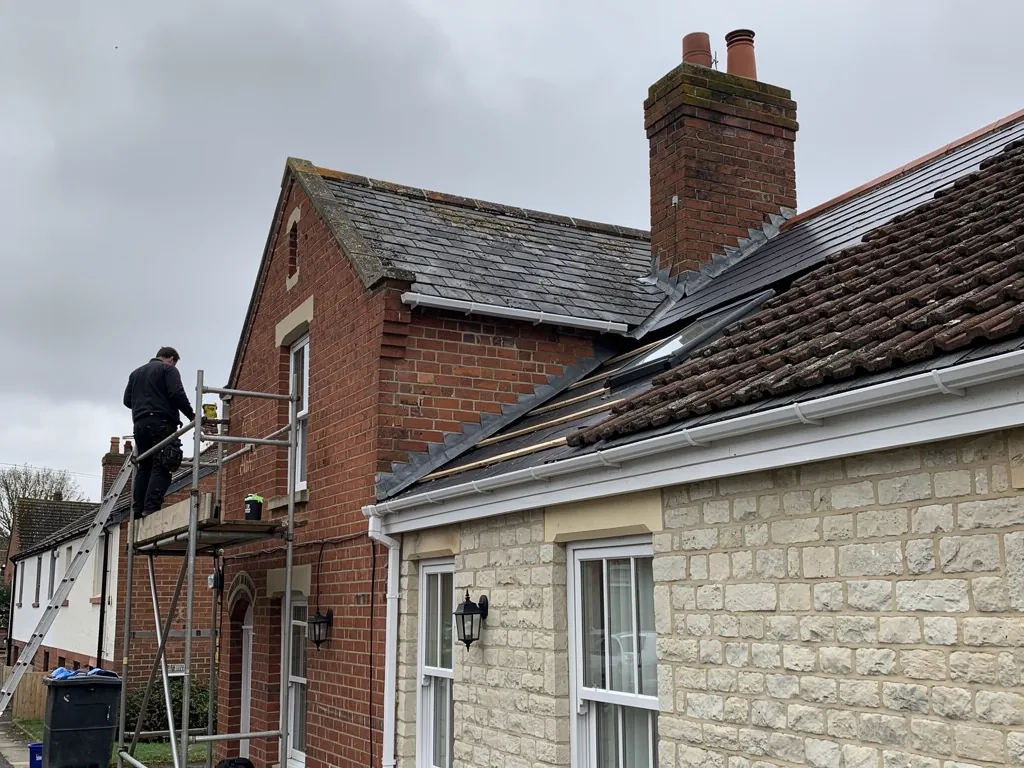
Brick end-of-terrace gable beside a limestone house, slate roofs

The short answer

It depends on who owns the building. A council tenant reports roof faults to the landlord. A freeholder arranges and pays for their own roof. Owners of a maisonette or flat should read the lease, because the roof is often a shared responsibility handled through the freeholder or managing agent.

Penhill started life as council housing, and a mixture of ownership has built up since. The roof is where that mixture matters most.

What if I rent from a landlord?

If your landlord is the council or a housing association, the roof is the landlord's to repair, and you report the fault rather than hire a contractor. Please do not let someone onto the roof at your own expense when the repair is theirs. We are glad to pass on an honest assessment of what we see if that helps your report.

What if I own the house?

A freehold house owner is responsible for the whole roof, and, on a terrace, for the part of the party wall joint that sits on their side. The sums involved are significant. MyBuilder's roof replacement guide, updated on 21 August 2026, puts a typical roof replacement at £5,000 to £12,000, with a semi-detached gable roof between £5,000 and £8,000, so it makes sense to get repairs done before a slope fails.

What if I own a flat or maisonette?

If you own a leasehold maisonette, your lease will say who repairs the roof and how the cost is shared. The roof may be repaired by the freeholder and recharged. Flat roofs on these buildings are covered under our flat roof repair or replace guide, which sets out how to tell a patch job from a full re-cover.

As a note on consent, Penhill is not in a conservation area, so a like-for-like roof repair does not normally need planning permission. Larger re-roofs follow the Planning Portal thresholds of 25 per cent of the building envelope or 50 per cent of the roof, and Swindon Borough Council runs building control.

Questions from around the Penhill estate

Why do the verges on Penhill's terraces crack and shed mortar?

A verge is the sloping edge of the roof where it stops at a gable end, and it faces the weather with little to shelter it. The mortar that seals the tile edge cracks and drops out after decades of wetting and drying. A new mortar bed with mechanical fixings, or a dry-fix verge system, restores it.

Can you repair a roof on one house in a terrace without touching the others?

Yes. Repairs on your own slope do not affect the other houses. Where a fault sits on the party wall or a shared stack, we photograph both sides and agree with you how far the work reaches before it begins.

What should I do if my landlord is the council and the roof leaks?

Report it to your landlord in writing and keep the date. If water is coming in right now, protect the contents, switch off any electrics near the wet area, and ask your landlord for a make-safe. We can describe what we see on the roof if that helps, but the repair is theirs to arrange.

Do you cover Kingsdown and the neighbouring estates?

Yes. Penhill and its neighbours sit well inside the area we cover, which takes in every district within 30 road miles. Phone 01793 626096, use WhatsApp or fill in the enquiry form, and we book a survey that ends in a written quote with photographs of your roof.

Ask us about your roof

Tell us what’s happening and we’ll call you back.

  • Photos of what we find
  • A written quote
  • 10-year workmanship guarantee

Or call 01793 626096

Call Get a quote