The short answer
Check what the roof is made of, whether any of it is asbestos cement, how it drains, and who is responsible for it under the lease. Buildings from before 2000 should be treated as possibly containing asbestos until a survey says otherwise. That decides how the work is planned and priced.
Industrial roofs are not larger house roofs. They have different materials, different failures and different responsibilities, and mistakes cost more because the building is usually in use beneath the work.
Q3.1What is the roof made of, and what state is it in?
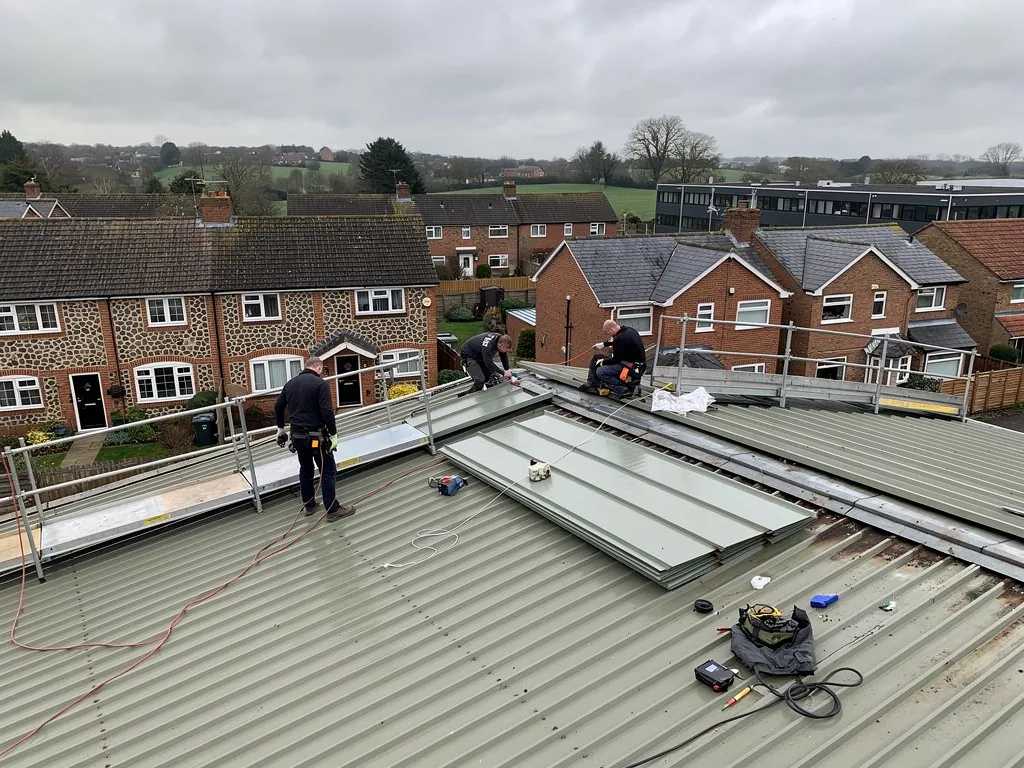
Profiled metal sheets fail at fasteners, laps and rooflight surrounds. Older cement-based sheets become brittle and lose their surface. Built-up felt and single-ply membranes fail at seams and outlets. Each calls for a different repair, and each reaches a point where overlaying or replacing is better value than patching. We survey the whole roof, not only the part that is leaking, and photograph each area so the occupier and the owner see the same evidence.
Q3.2What if the sheets contain asbestos?
For any building erected or refurbished before 2000 the HSE's advice is to assume asbestos is there. Taking out asbestos cement carefully, without breaking it up, is non-licensed work. Substantial breakage turns it into notifiable non-licensed work, so we settle the method before any sheet moves. Our commercial roofing page shows how we handle these roofs, and the quote says plainly what the survey found.
Q3.3Who pays, and how is access agreed?
Whether a tenant or a landlord pays for a repair or a replacement is set by the lease, not by us, but we can write the survey so both sides read the same findings. Access, safe working at height and the hours of the business are agreed before work starts. We finish by clearing the site and removing the waste.
Roofs on big buildings are also the ones where small leaks become costly, because water travels a long way along steel purlins and rooflight upstands before it drips on stock or machinery. Surveying the lot, not only the stained corner, is how we avoid a return visit. For a unit on the old airfield land, tell us the roof type, the approximate age and who holds the lease, and we can plan the survey around those answers.