Brick and limestone cottages around a small village green

Roofers in Stratton St Margaret

Slate, tile and stone roofs mended or renewed throughout Stratton St Margaret, with chimneys and flat roofs looked after too, from the rubblestone farmhouses of Lower Stratton to the red-brick buildings and newer streets that now join the village to Swindon.

Lower Stratton's roofs, from rubblestone to red brick

Stone-tiled roof on an old farmhouse
Stone cottages and farmhouses

Lower Stratton began as a rural village on Ermin Street, and the council's conservation area appraisal says local stone is prevalent in the old cottages. The Wheatsheaf on Ermin Street is grade II listed, and the appraisal gives it a typical Cotswold stone tiled roof, laid in diminishing courses, so the stones shrink steadily as they climb from the eaves towards the ridge. Church Farm, a mid to late seventeenth century L-plan farmhouse of local rubblestone, is grade II listed too, as is 73 Swindon Road, a coursed rubblestone farmhouse dated 1773. Roofs on buildings like these are heavy, old and often protected, so each repair is planned to disturb as little original stone as possible, and the survey photographs show you exactly where the work would start and stop.

Red-brick terrace with slate roofs
Red brick after the railway

The appraisal records red brick for the buildings that followed the railway, and brick also frames the stone on many older fronts. Brick houses of that period are usually roofed in slate or clay tile, and the faults are the familiar ones: lead soakers and flashings worn thin where the roof meets a chimney or party wall, valley gutters that have softened, and ridge tiles bedded on mortar alone. The appraisal also notes that original slate and timber on some buildings has been replaced with concrete tiles and plastic. Where that has happened we look at the weight on the old rafters before anything else is planned.

Newer tiled houses with a flat-roofed garage
Newer streets and extensions

Around the old village the land has been built over, and the newer houses carry whatever covering suited their decade, concrete interlocking tile among them. Those roofs bring their own jobs: ridge and hip tiles whose bedding has failed, verges that have lifted at the gable end, and cracked tiles above the porch. Garages, kitchen extensions and flat-roofed additions are common on streets like these, and a felt or single-ply roof that is fifteen years old is worth inspecting before the first stain appears on a ceiling. Our survey covers every roof on the property, including the one that is not yet leaking.

From Swindon to Lower Stratton

Map showing Stratton St Margaret and central Swindon. 2 road miles north-north-east of central Swindon.

Distance
2 road miles north-north-east of central Swindon
Council
Swindon Borough Council
Conservation area
Lower Stratton, designated 14 September 1992, with a second area at Kingsdown
Listed buildings
St Margaret's Church (grade I) and four other listed buildings in the Lower Stratton area
Council
Swindon Borough Council

What Stratton St Margaret owners ask before a roof job

Does re-roofing in Lower Stratton's conservation area need consent?

A repair in matching materials rarely does. A change of covering, or any work on a listed building, is worth raising with Swindon Borough Council before work is priced.

Can Cotswold-style stone tiles be repaired near Ermin Street?

Yes. Stones are matched by size and thickness and hung in courses that diminish towards the ridge, so a repair sits flat among the old work.

What if render covers the stone walls under my roof?

It changes the detailing. Flashings and verges are cut to the wall as it stands, and we check where render has stopped short of the roof edge.

Q1

What roofs make up Lower Stratton's old village?

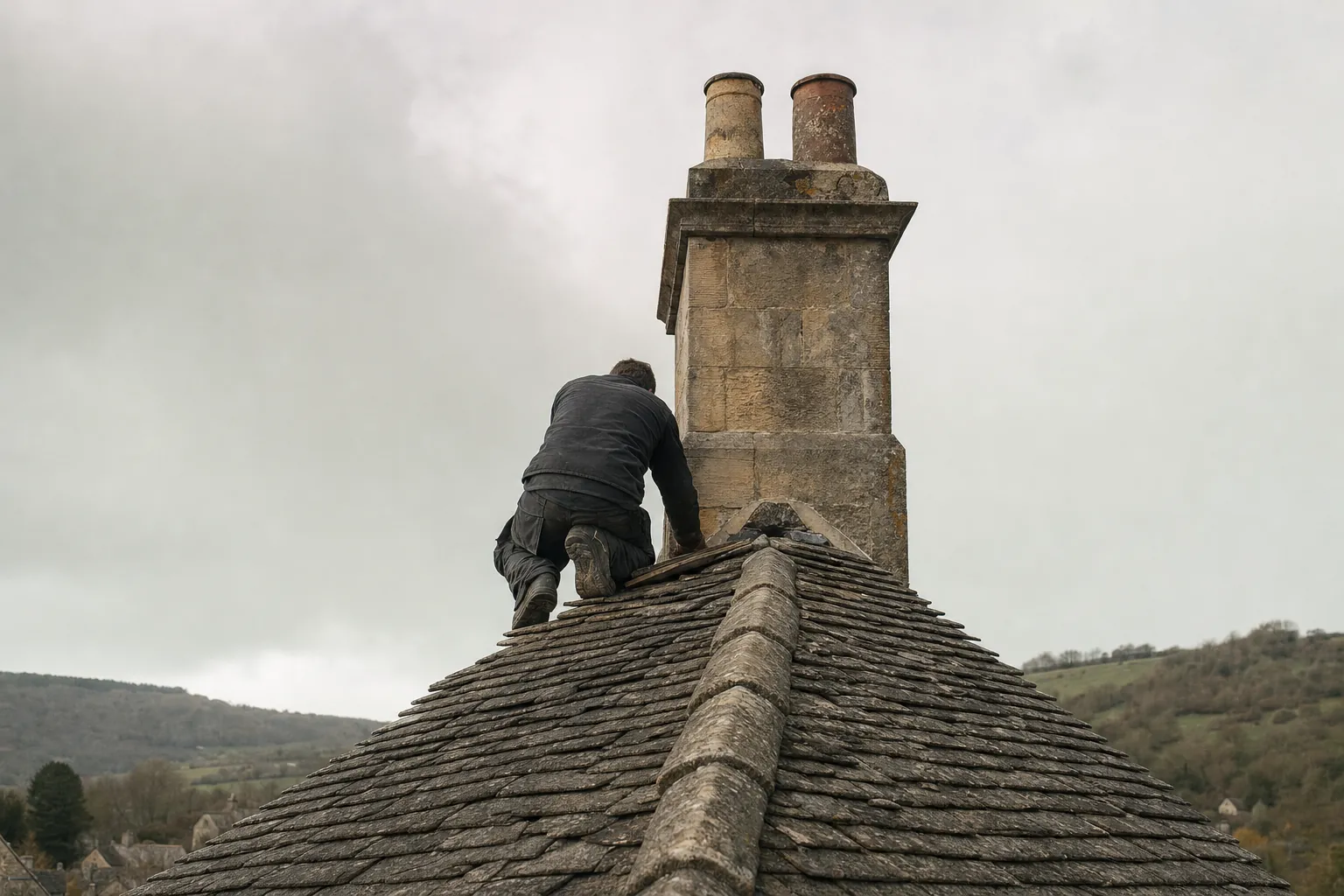
Roofer repointing a stone chimney stack above lead flashing
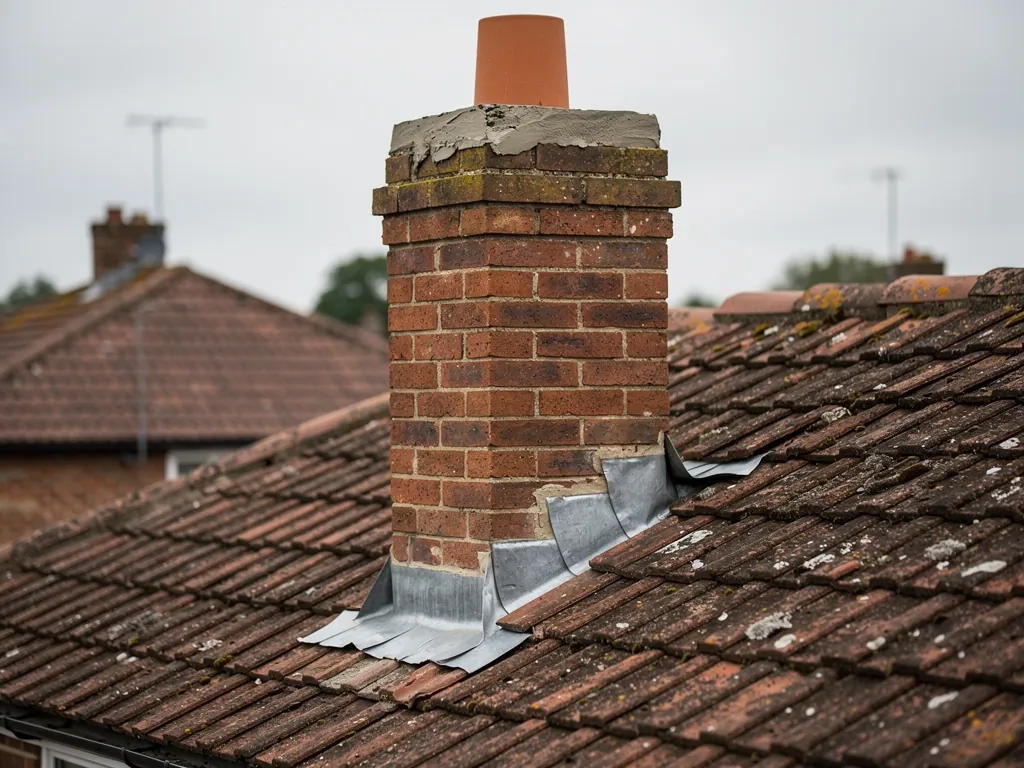
Brick chimney stack with new lead flashing on a clay tile roof

The short answer

A layered mix: Cotswold-style stone tiles on the oldest buildings, heavy rubblestone walls beneath them, red-brick buildings from the railway years, and later replacements in concrete tile. Each calls for a different repair, so we identify the covering before suggesting anything.

Lower Stratton has the layering you would expect of a village that was swallowed by a town without being flattened by it. The council's appraisal calls it a former rural village now incorporated into the urban fabric of Swindon, and the roofs reflect both lives.

How were stone tiles laid over rubblestone walls?

The old cottages and farmhouses are built of local stone, and the roofs above them were laid to suit. Stone tiles are hung over battens in courses that shrink towards the ridge, so a roofer reading a slope can judge the age of the work from the size of the stones. On a rubblestone building the walls are thick and uneven, which means eaves, verges and chimney junctions are rarely straight, and every flashing is cut to the wall as it is, not to a drawing.

Where does red brick fit in?

When the railway arrived, new buildings went up in red brick, and the appraisal records red brick alongside the stone as well. Brick houses of that period are normally paired with slate or clay tile. The details to watch are the same as anywhere in Swindon: lead soakers and flashings that have tired, valleys that have gone soft, and chimney stacks whose pointing has weathered back.

What has been replaced over the years?

The appraisal also notes that original slate and timber on some buildings has been swapped for concrete tiles and plastic, and that many stone facades have been rendered or painted. For a roofer that matters twice. A concrete tile on a roof framed for slate changes both weight and look, and render that stops short of a verge can hide the very point where damp gets in.

Our Cotswold stone roofing page explains how stone slate is laid and repaired. We bring the same care to any covering: look first, photograph the roof, then choose the smallest repair that properly fixes the fault.

Q2

Is it worth repairing stone tiles near Ermin Street?

The answer

Usually, yes. Stone tiles are long-lived, and what fails first is normally the pegs, the battens or the bedding beneath them, not the stone. Refixing and re-laying the same stones keeps the roof's character and normally costs less harm and money than stripping it for something new.

A leak under a stone roof tempts people to assume the whole covering is finished. In practice the stones themselves are seldom the weak point. Oak pegs rot, battens soften and the packing between courses crumbles, so single stones drop out of line and gaps open along the ridge and the gable edges.

What does a stone tile repair involve?

If only a few stones have moved, they are lifted, the fixings renewed and each stone set back where it belongs. If a whole slope is shifting, the sounder course is a careful strip: sort the stones by size, put in new battens and pegs, then lay the same stones again in their courses, making up any breakages from matching stock. The traditional guidance puts the weight at about a tonne for every ten square metres, so we plan access and temporary support before a single stone is lifted.

Where should replacement stone come from?

New stone should match the old in size, thickness, tone and, above all, geology. English Heritage policy, as reproduced in Cotswold District Council's 2000 guidance, holds that salvaged slates go back only onto the roof they were taken from, and that sandstone and limestone slates must never share a roof. We work to that principle and tell you where any stone has come from.

When is a repair not enough?

Sometimes the rafters have sagged, or an earlier owner covered part of the roof in something lighter and the two no longer sit together. Then a fuller re-cover may be the honest answer. Our roof repairs page explains how we weigh mending against replacing. On a listed building such as the Wheatsheaf, a different material would also need the council's agreement first.

Left alone, stone roofs reward small, regular attention. Scraping moss, resetting a slipped stone and keeping gutters clear of the eaves will do more for a Lower Stratton roof than any single large job.

Q3

What approvals apply to roof work in Lower Stratton?

Roofer on a stone slate ridge beside a stone chimney
Roofer on a scaffold tower working on a brick chimney stack

The short answer

Most repairs need none. Larger re-roofs can bring Building Regulations into play, and Swindon Borough Council runs its own building control. In the conservation area, changes to the look of a roof are worth raising with the council, and listed buildings need listed building consent for work affecting their character.

Swapping a handful of broken tiles, resetting slates or bedding ridge tiles afresh with the same materials counts as maintenance, and nobody has to apply for anything. Three situations are different, and it pays to know which one applies before a roof is priced.

Which re-roofs bring in Building Regulations?

When re-covering touches 25 per cent or more of the total building envelope, or 50 per cent or more of the roof, Building Regulations apply and the insulation may need upgrading. A new covering 15 per cent or more heavier needs approval too, according to the Planning Portal. Swindon Borough Council runs its own building control team, and we put in the notification ourselves whenever a job falls under the rules.

What does the conservation area change?

Lower Stratton's conservation area was designated on 14 September 1992, and Kingsdown, a separate area, carries the same date. The council's list of Article 4 directions names neither, so a matching repair is not caught by one. A different covering, new openings in a front slope or alterations to a chimney are another matter. Our page on tiled roofs in conservation areas sets out what the council looks for.

What about the listed buildings?

St Margaret's Church is grade I listed, and the Wheatsheaf, Church Farm and 73 Swindon Road are grade II. For those three, anything altering their character needs listed building consent from the council, and the roof covering counts. St Margaret's remains a working Anglican parish church, so its roof falls to the diocesan faculty system rather than the council. We begin with like for like, and raise any departure with you before it reaches the quote.

Unclear whether your house is listed, or which boundary it falls inside? Both answers sit on Swindon's conservation web pages, and we will go through them alongside you. If a chimney is involved, our chimney repairs page covers the stack, the flashings and the flaunching.


Our view

Match the old covering, ask the council before changing it, and let a written quote record which is which.

Roofing services in Stratton St Margaret

Questions from around Ermin Street and the church

Why does the appraisal mention concrete tiles and plastic in Lower Stratton?

Because some buildings there have lost original slate and timber, and the council treats that as a loss of character. When we repair a roof, we start from what is there. A like-for-like repair keeps the street as it was, and a switch to a different covering is something to discuss with the council first.

Is Kingsdown inside the same conservation area as Lower Stratton?

No. The council lists Kingsdown as a second Stratton St Margaret conservation area, though both carry the same 1992 date. The council's conservation pages and the appraisal maps show which boundary your road falls inside, and we are glad to go through the maps with you at survey stage.

Do you work on farmhouse roofs like the ones along Swindon Road?

Yes, in matching materials and methods. Rubblestone farmhouses usually need flashings cut to irregular walls and a careful look at the timbers underneath. Where the house is listed, we confirm the approach with you first and suggest a word with the council if anything is to change.

Do ridge tiles on older Stratton houses need new fixings when re-bedded?

In most cases, yes. After the 2014 revision of BS 5534, mortar by itself is no longer relied upon along a ridge or hip, so renewing the bedding now comes with mechanical fixings or a tested dry system. Our ridge, verge and dry-fix page lays out the options, and the survey photographs show which suits your roof.

Ask us about your roof

Tell us what’s happening and we’ll call you back.

  • Photos of what we find
  • A written quote
  • 10-year workmanship guarantee

Or call 01793 626096

Call Get a quote