New-build brick and render estate houses with grey tile roofs

Roofers in Gorse Hill

Slate, tile and flat roof work in Gorse Hill: repairs, re-covers and chimney work for the long Victorian terraces beside the Cricklade road and the streets around Ferndale Road.

Gorse Hill's roofs, street by street

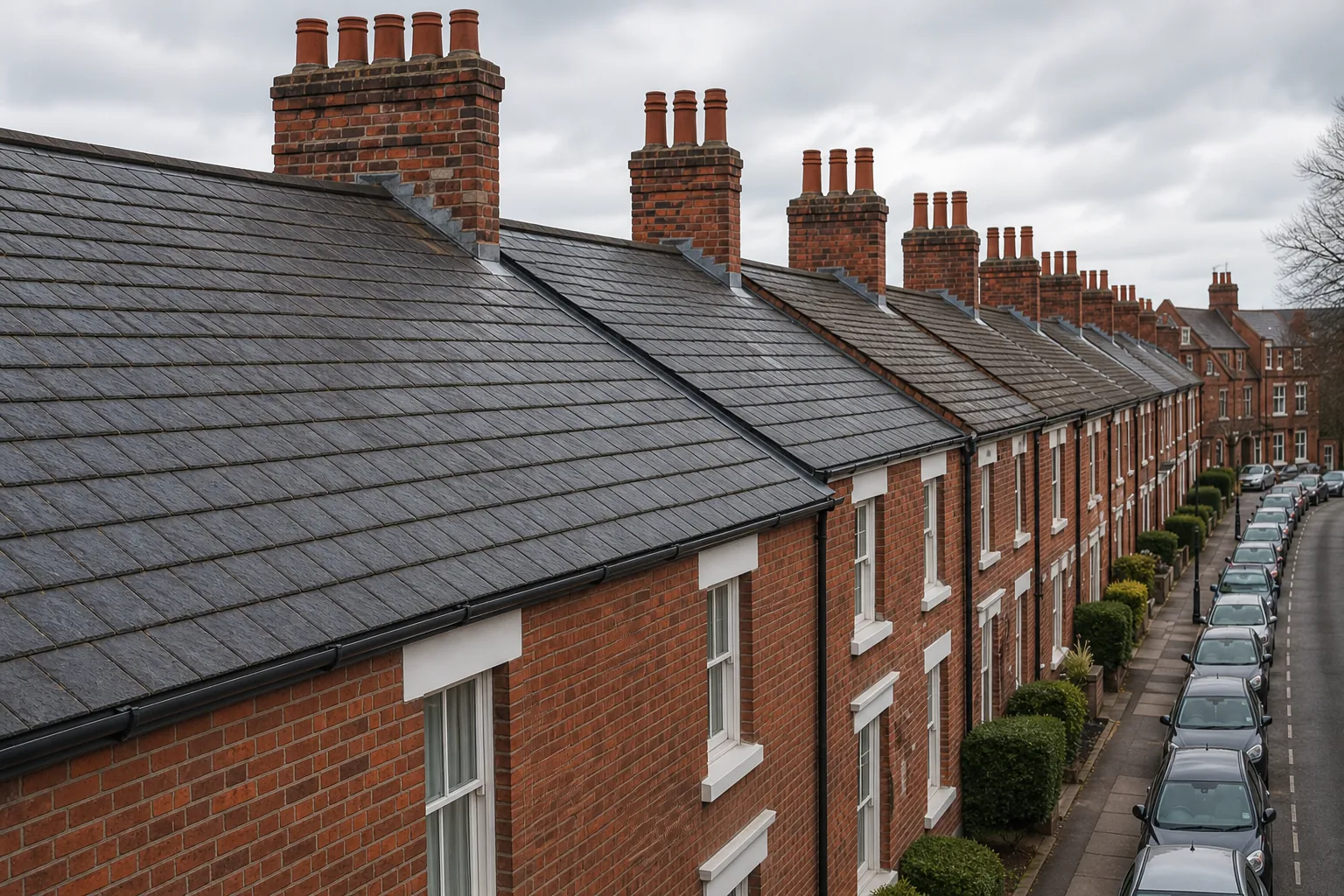
Long brick terrace with chimney stacks
The 1870s terraces

Before the 1870s Gorse Hill had only one or two houses and a public house called the Tabernacle. Then Avening, Chapel, Hinton and Bright Streets went up, along with long terraces on the west side of the Cricklade road. A terrace built in one campaign has one continuous roof structure, so a problem at a party wall, a shared chimney stack or a rear valley can show itself two doors away. The things we look for are slipped or nail-sick slates, tired lead flashings where the roof meets a stack, and ridge tiles that were bedded in mortar and never mechanically fixed. Roofs of this age have usually been repaired more than once, so we check what earlier hands left behind.

Brick houses with bay windows and gables
Ferndale Road and the plots

Land fronting Ferndale Road was on sale in plots by 1895, part of the Gorse Hill Farm estate, and Ferndale Road with Florence, Whiteman, Poulton and Beatrice Streets was considerably built up by 1900. Plots sold one at a time tend to be built by different hands, so neighbouring houses can differ in pitch, in the way a bay window roof meets the main slope, and in how the rear extension was tied in. Those junctions are where leaks usually begin. A bay roof is small, but its lead and its meeting with the main roof need to be right, and a rear lean-to often has a flat or low-pitched section that ages faster than the pitched roof above it.

Mixed tiled and flat roofs on a house
Re-covered and extended roofs

A house that is well over a century old has often had its covering changed at least once, and the replacement can be anything from a careful re-slate to a heavier concrete tile put on for speed. Neither is a fault in itself, but the two behave differently. A tile roof wants its ridge and verges mechanically fixed and its underlay checked, while a slate roof wants its nails and lead looked at. Gorse Hill also has porches, garage roofs and rear kitchen additions with flat roofs, and these sit lower, collect leaves and tend to need attention before the main roof does. Every slope and every lower roof gets surveyed, including the ones that have not started dripping yet.

From Swindon to the Cricklade road

Map showing Gorse Hill and central Swindon. 1 road miles north-north-west of central Swindon.

Distance
1 road miles north-north-west of central Swindon
Council
Swindon Borough Council
Council
Swindon Borough Council
Conservation area
Gorse Hill is absent from the council's list of 27
Setting
A Victorian railway-era suburb along the Cricklade road

Gorse Hill roof questions

Why do Hinton Street terrace roofs leak at the party wall?

Usually the lead flashing or the mortar fillet where the slope meets the dividing wall has worn. Water then runs down inside the brickwork, so a stain can appear a long way from the actual fault.

Is permission needed to re-roof a Gorse Hill house?

Swapping one covering for a matching one seldom calls for planning permission, and the council lists no conservation area here. Building Regulations can still apply to bigger jobs, so we explain which route fits your house.

Can one Avening Street house be re-roofed without touching next door?

Yes. Each house has its own slopes, though the lead at the shared wall and stack has to be tied in neatly with the neighbour's roof, so we photograph the junction before and after.

Q1

How old are Gorse Hill's terrace roofs?

Row of slate roofs and chimney stacks on a Victorian terrace
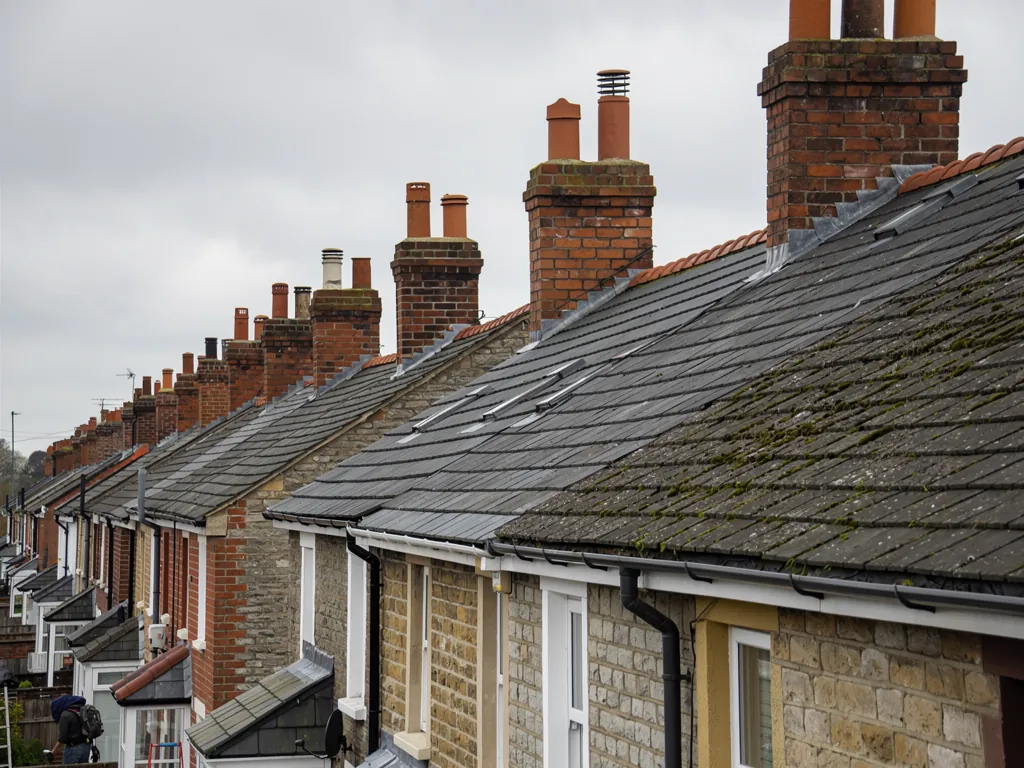
Row of Victorian terrace slate roofs with brick chimney stacks

The short answer

Many are around 150 years old, because the streets off the Cricklade road were built from the 1870s. A roof that age may well be a later re-cover, and what matters is the condition of the nails, battens, underlay and lead rather than the date alone.

The long terraces beside the Cricklade road date from the 1870s, so a roof that has never been touched has stood for well over a century. Plenty have been re-covered since, which is why age on its own tells you little. The first job on any survey is to work out which parts are original and which are later additions.

Do the slates or their nails fail first?

MyBuilder's slate roof guide, updated in August 2026, gives Welsh slate a life of more than a hundred years. The slate is rarely what fails. The iron nails that hold it rust through, the slate slides a little, and a gap opens that lets water reach the timber behind. Refixing a few slates is a small repair. A whole slope that is sliding tells you the fixings have reached the end of their life.

What sits under the slates?

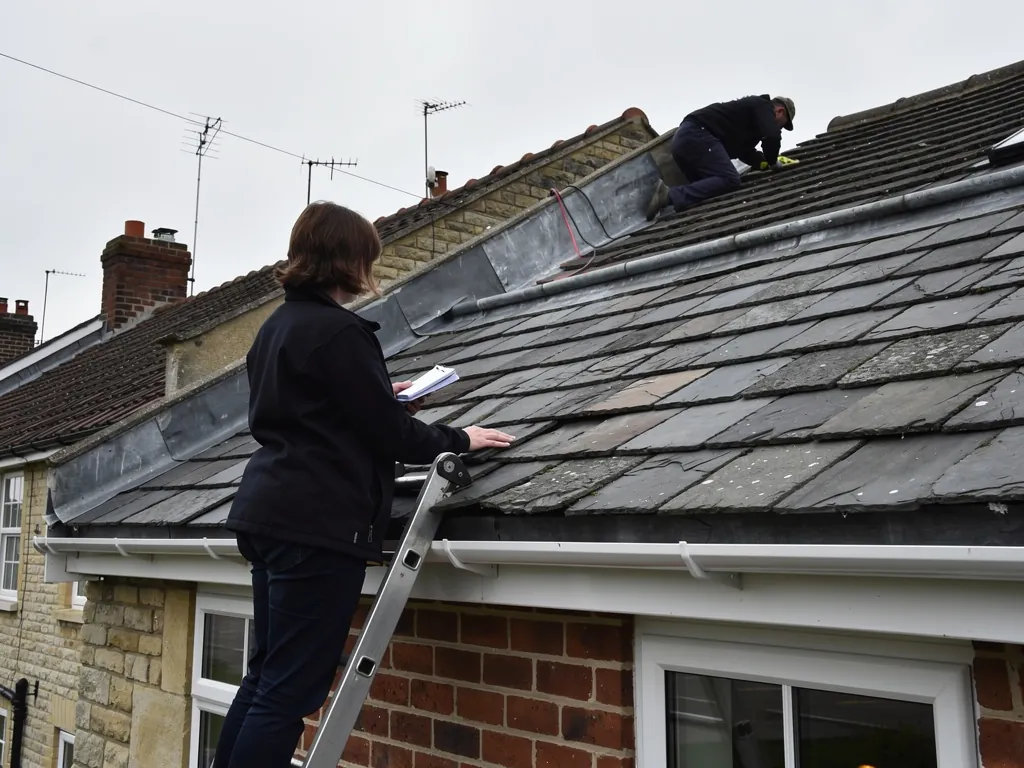
Behind the slates sit the battens, and under them either old felt or nothing at all. Damp timber at the eaves and around the chimney stacks is the usual casualty. We lift a few slates in a sound area and in a suspect one, then compare the two, so the photographs that come with your quote show the difference clearly.

Why does the lead at each stack matter?

Flashing is the lead strip that seals the joint where a roof slope meets a wall or a chimney. A terrace has dozens of these joints: every stack, every party wall upstand, every rear outrigger. The lead itself can outlast the house, but the mortar holding its top edge in a raked-out joint does not. A flashing that has lifted at the top lets water in even though the metal is perfect.

Our slate roofing page explains how a slate slope is repaired or re-laid.

Q2

Should a Gorse Hill terrace be patched or re-roofed?

The answer

Patch it if the fault stays in one place while the rest of the covering is sound: a few slipped slates, a lifted flashing, a loose ridge. Re-roof the slope when fixings are failing across it, since repairing one failure at a time then costs more than doing the whole slope once.

The test is how many repairs the same slope has needed. A single leak at one stack is a repair. Three leaks in two winters, from slates sliding in different places, is a roof telling you something bigger.

When is a repair enough?

Refixing slipped slates, renewing a section of lead flashing, re-bedding a few ridge tiles: these are repairs that properly solve a fault, and we recommend nothing larger when that is what the survey finds. MyBuilder's roof repair guide, updated August 2026, puts minor repairs at £100 to £300 and moderate ones at £500 to £1,000 as typical national figures. Your written quote reflects your own roof and its access.

When does a slope need more than a repair?

If nails are failing right across a slope, the sounder route is to strip that slope, renew the battens and underlay, and re-lay the good slates with new ones to make up the numbers. Doing that once costs less over ten years than patching four times, and the slope is then dependable.

Why does scaffold decide so much?

On a terraced street, access is a large part of the price. Scaffolding goes up for a re-roof, and one visit with scaffold can include repairs that would otherwise need a second set-up. When we survey, we note anything that would be better done while the scaffold is there, then leave the choice with you.

Our roof repairs page covers the repairs we carry out most often on older houses.

What it typically costs

  • Minor roof repair£100 to £300
  • Moderate roof repair£500 to £1,000
  • Re-bedding or replacing ridge tiles£300 to £600
  • Chimney leadwork, full replacement without scaffold£350 to £460
National typical ranges, not Skyline prices. Your quote is written after the survey and set by your roof, its height and its access. MyBuilder price guides (updated 21 August 2026); MyJobQuote (22 September 2026).
Q3

What consent does roof work in Gorse Hill need?

Roofer repointing a stone chimney stack above lead flashing
Surveyor on a ladder checking slates with a notebook

The short answer

Most roof work here needs no consent. Gorse Hill is not one of the council's conservation areas, and swapping a covering for a matching one seldom needs planning permission. Larger re-roofs can bring in Building Regulations, which Swindon Borough Council's building control team or a registered approver handles.

For most Gorse Hill houses the paperwork is lighter than people expect. Three things are worth knowing before you book.

Does a re-roof here need planning permission?

Replacing a covering with a matching one seldom calls for planning permission, and Swindon Borough Council does not list Gorse Hill among its conservation areas or its Article 4 areas. If your house happens to be listed, which is worth checking on the council's pages, the position changes and listed building consent comes into it.

When do Building Regulations apply?

The Planning Portal sets the line at 25 per cent of the total building envelope and 50 per cent of the roof: stay under both and a building control application is not normally needed. Pass either and approval applies, with an insulation upgrade possible. A covering that is 15 per cent or more heavier is also caught, so swapping slate for a thick concrete tile is a case to check first. Swindon Borough Council runs its own building control team. If your job is notifiable, we sort out the notification and tell you what it means.

What about a stack on a party wall?

Taking down a chimney stack that stands on a party wall is a different job. Taking out a chimney breast always requires Building Regulations approval, and removing chimneys from a party wall means serving notice on the neighbour under the Party Wall etc. Act. Repointing or relining a stack is not the same thing, and we tell you which one you are asking for.

The council's planning team can confirm the position for your address.

Where to start

Ask the council about listing and building control before work starts, not after the scaffold goes up.

Roofing services in Gorse Hill

Questions from the Cricklade road side of town

Why do the slates keep slipping on my Chapel Street house?

On roofs from the 1870s the usual cause is the iron nails holding the slates. They rust through, and the slate drops a few centimetres and lets water behind it. Refixing the odd slate is a small job, but when slates are slipping in several places the fixings across that slope are probably tired, and re-laying it is the sounder answer for the longer term.

Can you work on the roofs around Ferndale Road?

Yes. Ferndale Road and the streets named for Florence, Whiteman, Poulton and Beatrice were considerably built up by 1900, and the roofs there include slate and tile, with bay windows and extensions. We survey the whole house, photograph each slope and give you a written quote that says plainly whether a repair will do or a bigger job is due.

My neighbour's roof is joined to mine. Who pays for a shared flashing?

That is an arrangement between you and your neighbour, and it depends on which side the fault sits. We photograph the junction so you can show them exactly what the problem is. Work that cuts into a party wall can bring in the Party Wall etc. Act, so check before anything is opened up.

Are the ridge tiles on a Gorse Hill terrace fixed with mortar?

Often they were, because mortar was standard practice for generations. Since BS 5534 was revised in 2014, tiles on the ridge and hips are fixed mechanically as well, not left to the bedding alone. Redoing a ridge on an older terrace therefore means mechanical clips or a tested dry ridge kit, because the old mortar is usually the first part to give way.

Ask us about your roof

Tell us what’s happening and we’ll call you back.

  • Photos of what we find
  • A written quote
  • 10-year workmanship guarantee

Or call 01793 626096

Call Get a quote