Street of 1960s brick bungalows with concrete tile roofs

Roofers in Rodbourne Cheney

Roof repairs, slate and tile work, chimneys and flat roofs in Rodbourne Cheney, from the old hamlet around St Mary's church and the Manor House to the Victorian streets and later extensions that surround it.

Rodbourne Cheney's roofs, from manor to terrace

Stone-tiled roof on an old manor house
The hamlet around St Mary's

Before the suburb arrived, Rodbourne Cheney was a rural hamlet, and the conservation area around St Mary's church, the Manor House and the green still holds its older buildings. The council's appraisal counts six listed buildings there and mentions farmhouse and cottage architecture that predates the suburb. The Manor House is Grade II* and described as a typical stone-tiled Wiltshire manor house of late sixteenth-century origin. Stone tiles go on in diminishing courses, which means the biggest stones sit along the eaves and the stones shrink as the courses climb towards the ridge, where the two slopes meet at the summit. Because of that arrangement a small slipped patch can usually be put right without disturbing the rest. They are heavy, they hang on pegs and they move with the building over the centuries, so repair here means careful refixing rather than replacement.

Brick terrace with a slate roof
The Victorian streets

The appraisal describes a mixture of Victorian houses, with Nos 228 to 234 Cheney Manor Road a stone terrace with red brick dressings and a red brick and slate dwelling cited as typical of the area. Slate roofs of that age fail in familiar ways. Iron nails rust and slates slip. Flashings, the strips of lead sealing the joint between roof and chimney or wall, split and lift. Soakers, the small folded lead pieces that interlock with the slates beside a wall, wear out under them. On a terrace, water from a party wall can run along the loft and appear two houses away, so we trace it before we price anything. We repair first and re-slate a slope only when the slates themselves have given up.

Flat-roofed rear extension on a brick house
Infill, porches and extensions

The appraisal records limited twentieth-century infill, and houses of any age in a suburb pick up porches, garages, kitchen extensions and loft conversions. Those add roofs that behave differently from the main one. A flat or low-pitched extension roof is waterproofed with bitumen felt, a rubber membrane called EPDM, or a resin-and-glass laminate known as GRP, and the weak points are the upstands and edges where it meets the house wall. Concrete interlocking tiles on later pitched roofs lose their ridge bedding and crack with age. The appraisal also notes that unlisted buildings in the conservation area have lost detail as natural slate was swapped for concrete tile, so a repair that keeps the original covering protects the street as well as the ceiling.

From Swindon to the Hreod Burna brook

Map showing Rodbourne Cheney and central Swindon. 2 road miles north-west of central Swindon.

Distance
2 road miles north-west of central Swindon
Council
Swindon Borough Council
Conservation area
Rodbourne Cheney, designated 25 June 1990
Setting
A former village on the Hreod Burna brook, now suburban
Council
Swindon Borough Council

What Rodbourne Cheney owners ask before a roof job

Is there an Article 4 direction on Rodbourne Cheney's roofs?

Article 4 directions are noted on the council's list for Bishopstone and the railway village alone, which leaves Rodbourne Cheney without one. Conservation area and listed building rules still apply, so check any change of material with the council's planning team first.

Can a Victorian slate roof here be repaired rather than replaced?

Usually, yes. Slipped slates are refixed, failed lead is renewed and the sound slates stay. A slope is only re-slated when the slates themselves are flaking or the fixings have gone across the whole of it.

Does swapping slate for concrete tile matter on an older house?

It can. Concrete is heavier, so the roof structure needs checking, and in the conservation area it changes the look the council is protecting. We would rather keep the slate and repair it.

Q1

What fails first on a Victorian slate roof in Rodbourne Cheney?

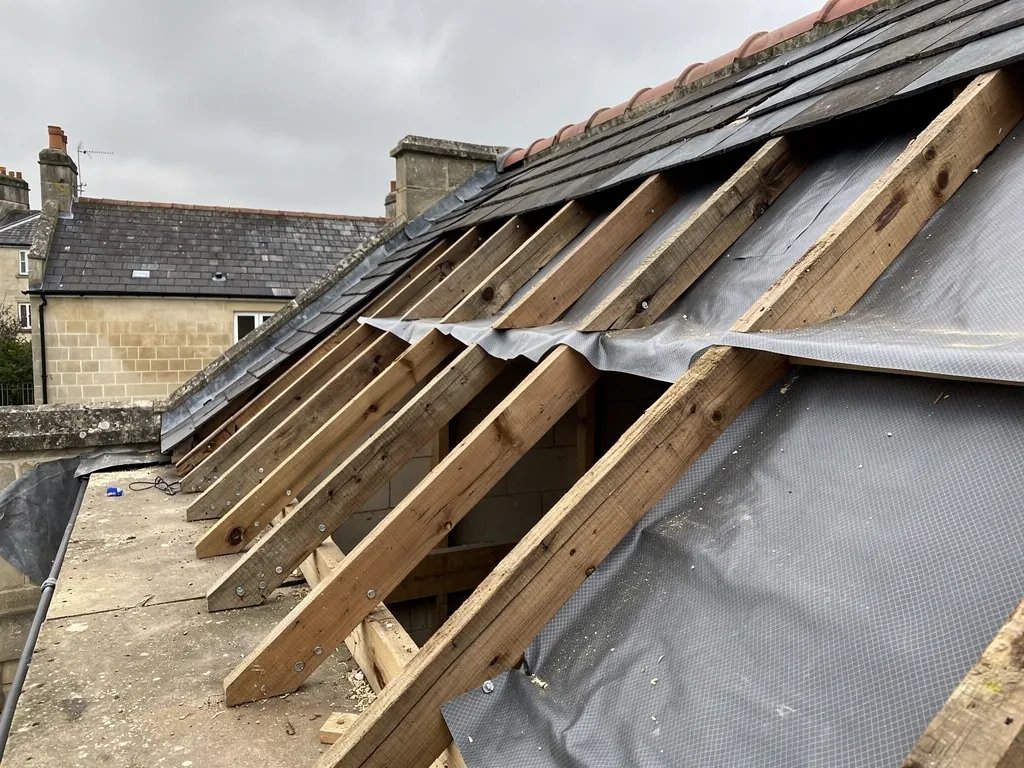
Roof opened to rafters and membrane during foam removal
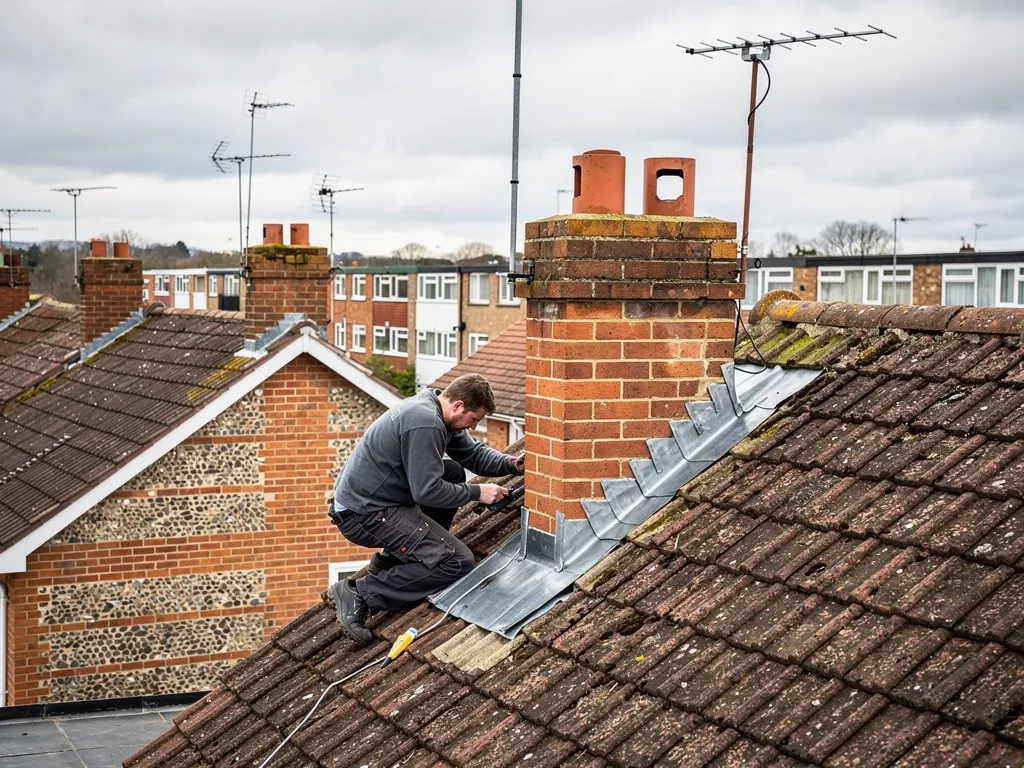
Roofer dressing stepped lead flashing around a brick chimney

The short answer

Usually the fixings and the lead, not the slates. Iron nails corrode and let slates slip, and flashings and soakers around chimneys and party walls wear out. Leaks often start at those joints, so the slates can frequently be saved and refixed rather than the whole slope stripped.

Slate is a tough covering, which is why so many Victorian roofs are still working after a century and more. What gives out is everything holding it on and everything sealing its edges.

Why do slates slip?

Each slate hangs from nails driven into battens, the thin timber strips fixed across the rafters. Over a long life the nails rust through, and a slate that was snug starts to slide. You notice a gap on the slope, or a slate lying in the gutter after a blow. Half a dozen slipped slates can go back with copper nails or stainless clips, which is a small repair. If slates are dropping across a whole slope, the nails are failing across the whole slope, and a re-slate that reuses the same slates is the sounder job.

What happens to the lead at the joints?

Chimneys, party walls and valleys, the inward-sloping channels where two slopes meet, are sealed with lead. Correctly fitted lead has a long life, but it fatigues and cracks where it has been bent over and over, and any old mortar fillet that stands in for a flashing opens up sooner still. Replacing the lead and re-forming the soakers is usually what stops a ceiling stain returning. Our slate roofing page sets out how we approach it, and the roof repairs page covers the smaller jobs.

How can you tell sound slate from tired slate?

Sound slate rings when tapped and stays flat. Tired slate flakes in layers, turns soft at the tail and breaks when lifted. We lift a few from different parts of the roof during the survey so the quote says which kind you have, with photographs of your own slope.

Q2

How do you repair a stone-tiled roof near St Mary's?

The answer

By working with the existing stones. We find the cause, usually failed pegs, battens or a bedding joint, then refix or strip and re-lay only the area affected, matching any new stone by size, thickness and type. Heavy old stone roofs are better kept than replaced.

The Manor House and the older cottages around the green carry the kind of roof the council's appraisal prizes, and repairs to them need patience more than speed. The stones are rarely the problem.

What gives way on a stone roof?

Stone tiles hang on pegs through a hole near the top of each stone. Pegs rot, battens soften, and the stones slip as the supports behind them fail. Cotswold District Council's 2000 technical guidance on stone slate roofing records that a roof of this kind can easily last a century with regular maintenance. We apply the same thinking here: tidy the failures before they spread.

How is new stone matched to old?

Heritage guidance would sooner see fresh-quarried stone than second-hand, and says reclaimed stone should go back only onto the building it came from. It also warns against mixing sandstone and limestone. We ask where stone has come from before we use it, and we keep the original stones for your building wherever they can be saved. Concrete lookalikes are not suitable for historic buildings.

How heavy is a stone roof?

The same 2000 guide puts stone roofs at about 1000 kg for every 10 square metres. Such a roof needs sound timbers underneath, so we check the rafters and purlins, the horizontal timbers that carry the rafters, during the survey. Our page on stone roofing explains the stone-tile method in more detail.

If we strip a slope, we photograph it first, number the courses and keep the stones in sorted piles, so the roof goes back on the way it came off, with every course in its original place.

Our view

Keep the old stones, renew the pegs and battens behind them, and re-lay in the original courses.

Q3

Does roof work in the Rodbourne Cheney conservation area need consent?

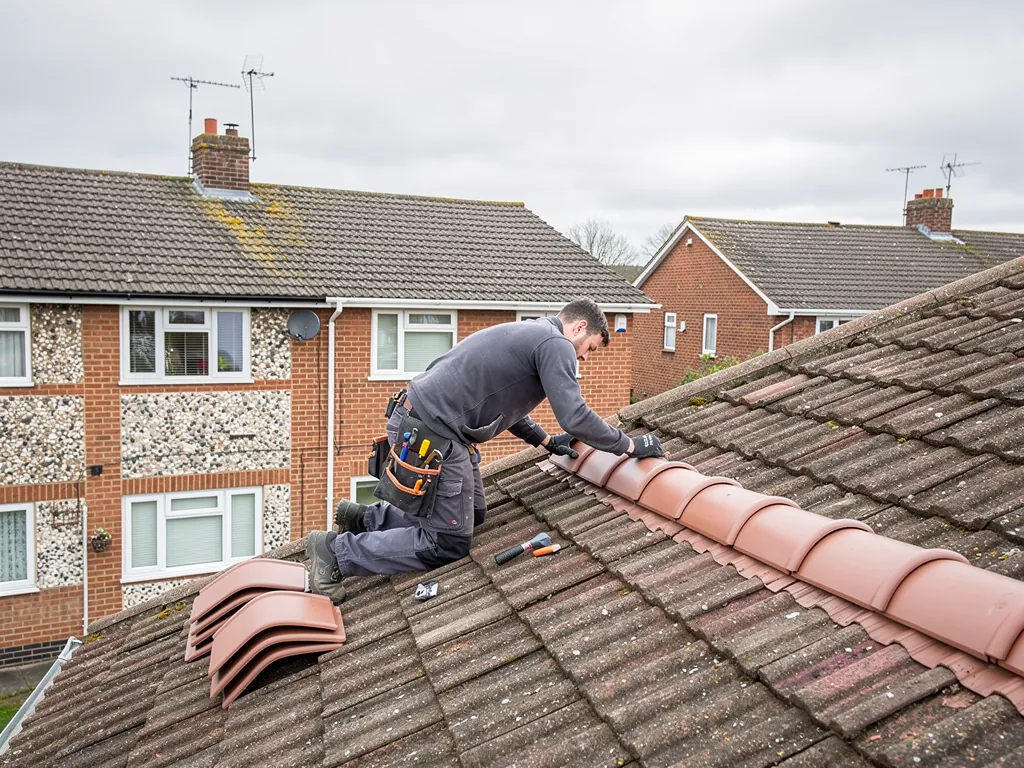
Roofer fixing new red ridge tiles along a concrete tile roof
Rolled lead roof covering over a bay above white windows

The short answer

Not usually for a like-for-like repair. A change of covering, new roof windows facing the road or changes to a chimney are worth discussing with Swindon Borough Council first, and a listed building such as the Manor House needs listed building consent for work affecting its character.

The conservation area goes back to 25 June 1990, the day Thamesdown Borough Council designated it, and the appraisal followed on 10 March 2009. Everyday maintenance is left alone by these designations. The rules that matter for a roof are less dramatic than people expect, and they fall into three groups.

Do matching repairs need permission?

Replacing a slipped slate with a matching slate, or re-bedding a ridge, keeps the building's appearance unchanged. That is maintenance and does not normally need planning permission. The council lists no Article 4 direction here, so the usual permitted development rights are not removed by one. Our guide to tiled roofs in conservation areas goes further.

When do bigger re-roofs need approval?

Building Regulations are a separate matter from planning. According to the Planning Portal, a building control application is normally unnecessary while the work affects less than 25 per cent of the building envelope and less than 50 per cent of the roof. Exceed either figure and approval is needed, and the roof's insulation can come into the picture too. Choosing a covering that is 15 per cent heavier or more brings approval into play as well, which is why a slate-to-concrete swap is checked before anyone orders tiles. Swindon Borough Council runs its own building control, so the notification goes to the council or to a registered building control approver, and we handle that step when the job is notifiable.

What about listed and church buildings?

Six listed buildings sit inside the conservation area. Any change to the character of one of them calls for listed building consent, and the roofing material counts. St Mary's, a working Anglican church, sends its roof work through the faculty system rather than the council while worship continues there. Not certain whether your own house is on the statutory list? A call to the council's conservation team settles it, and it is worth making before anything is priced, because the answer changes how we write the specification.


MythAnything done to a roof in a conservation area needs an application.

FactLike-for-like work seldom needs one; the council's eye is on changes to materials and appearance.

Roofing services in Rodbourne Cheney

Questions from around the green

Why do chimneys on old brick terraces like Cheney Manor Road leak first?

A stack sits above the roof, takes the weather from every side and is sealed to the slope with lead that has been flexing for generations. Mortar joints open, flaunching (the sloping mortar cap that seats the pots) cracks, and lead lifts. Water then runs down the flue wall into the bedroom below. Repointing, new flaunching and renewed flashings usually stop it.

Can you work on a roof close to St Mary's church?

Yes. The roof of a house near the church is just a roof, though if it is listed or inside the conservation area we check the rules first and agree materials with you. Access can be tight on narrow lanes, so we plan scaffold and deliveries before the start date.

How is a ponding porch or extension roof put right?

Standing water means the fall is too shallow or the deck has sagged. Sometimes the covering can be renewed over a corrected deck, sometimes the deck itself needs rebuilding with a new fall. The survey photographs show which, and the written quote states the method.

Do you cover the rest of Swindon as well?

Yes. Rodbourne, the railway area and the streets around them are all within reach of our Swindon base, as is everywhere within 30 road miles. Ring 01793 626096 or get in touch by WhatsApp, and we book the survey. You get photographs taken on your slope and the quote in writing.

Ask us about your roof

Tell us what’s happening and we’ll call you back.

  • Photos of what we find
  • A written quote
  • 10-year workmanship guarantee

Or call 01793 626096

Call Get a quote