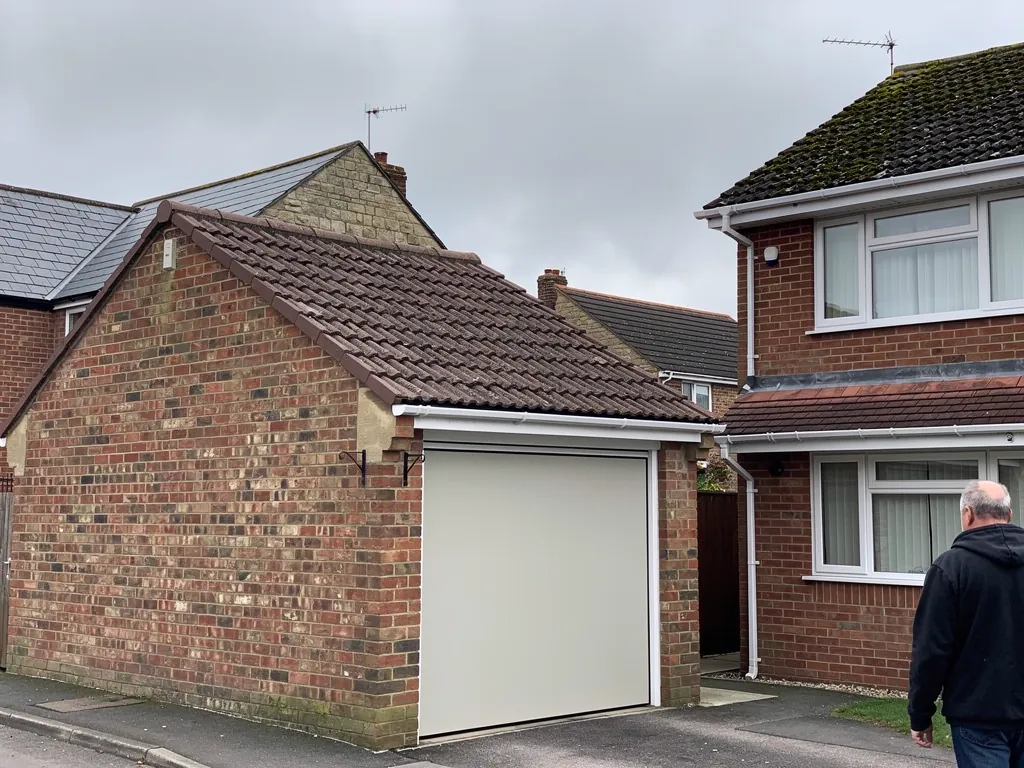
People partway along a lengthy terrace often assume roof work needs a street meeting. It does not, but it does call for a word with the two next doors, and for a roofer who has thought about the join before the first tile comes off.
Q2.1Where exactly does my roof end?
A party wall rises between two houses and usually stands a little proud of the slope, so each roof butts against it. The seal is made with lead flashing or soakers, which are small folded pieces of lead that sit under each course of tiles or slates and turn up the wall. When we re-cover one house, we renew those joins on our side, and tell you if the neighbour's side is so worn that it threatens your new work.
Q2.2Will a new roof match the rest of the run?
A freshly covered house beside an older neighbour will look different for a few years, in colour and in how crisp the ridge line is. That is not a fault, but it is worth discussing before you commit. For slate we can often source a close match, and for repairs we match as nearly as the material allows.
Q2.3What if the stack is shared?
If a stack straddles the party wall, taking it down is a bigger matter. Taking down a chimney breast always requires Building Regulations approval, and removing a chimney from a party wall means giving the neighbour notice under the party wall rules. Tell us early and we will explain what applies to your stack before anything is priced.
Scaffolding is the practical point on a street like this. Front elevations face the pavement and the rear yards are narrow, so the access plan decides how much of the job is hand-carried and how much can be lifted. We look at both sides of the house on the survey, note where a tower or a full lift is needed, and allow for that access in the written quote total.