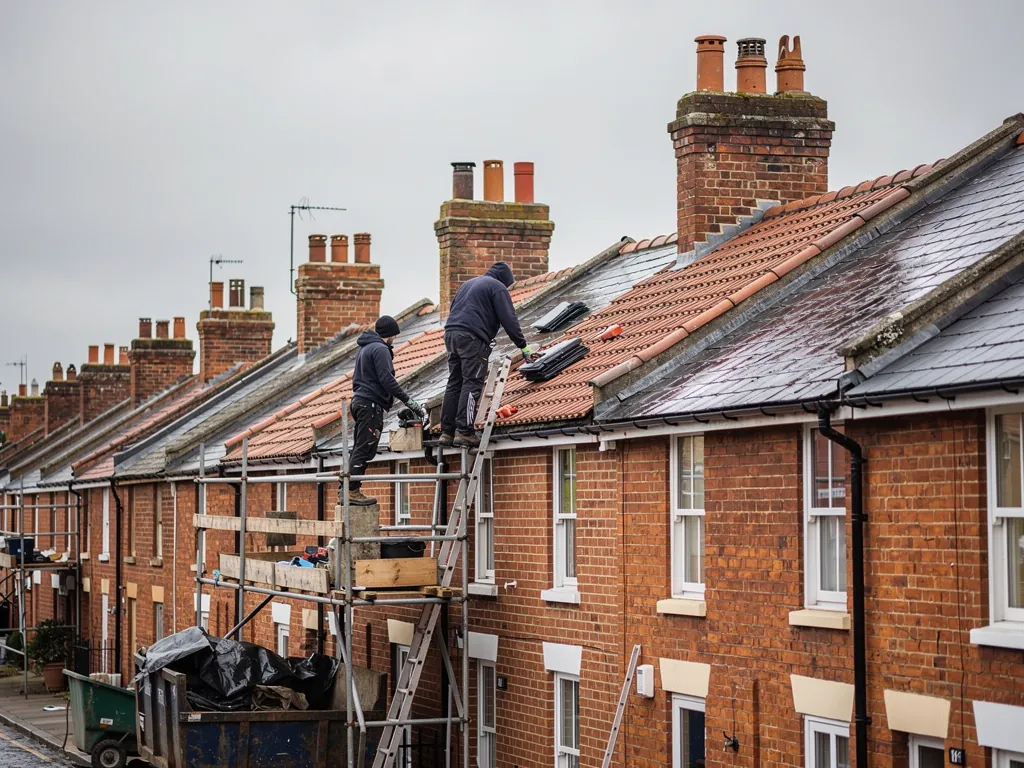
Victorian brick terrace street with slate roofs and chimneys

Roofers in Walcot

Roofing for Walcot's two estates: the 1950s council streets of Walcot East, the older private houses of Walcot West, and the garages, porches and flat roofs that go with both.

Walcot's roofs, from East to West

Rows of semi-detached houses with tiled roofs
Walcot East, the 1950s estate

The municipal Walcot East estate was built mostly in the 1950s, and many of its first tenants were Londoners who had struggled to find homes after the Blitz. Houses put up for that kind of programme were laid out in pairs and short terraces to a repeated pattern, which means one house's roof problem is very likely to be the next house's problem too. On houses of that vintage the covering is frequently a concrete interlocking tile laid over bitumen felt, with ridges and verges bedded in mortar and timber fascias and soffits along the eaves. After seventy years the felt has often dried out, the mortar has cracked, and the timber at the eaves has begun to soften. None of that is dramatic, but all of it is cheaper to put right early.

Hipped tiled roofs on interwar semis
Walcot West, interwar to 1950s

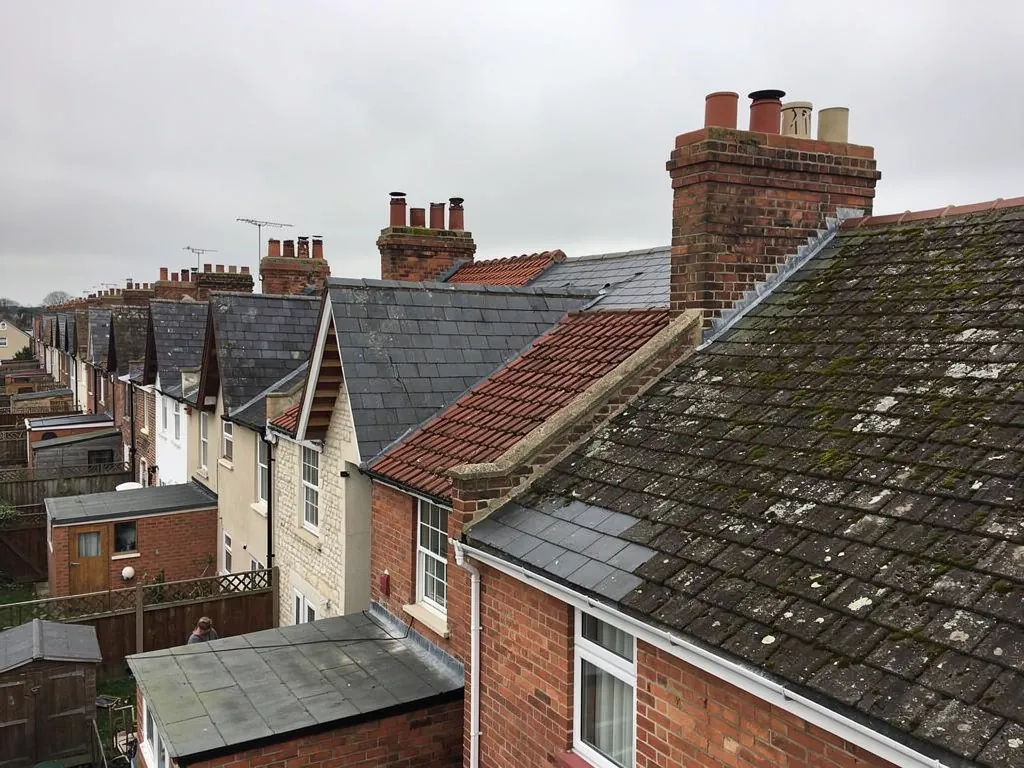
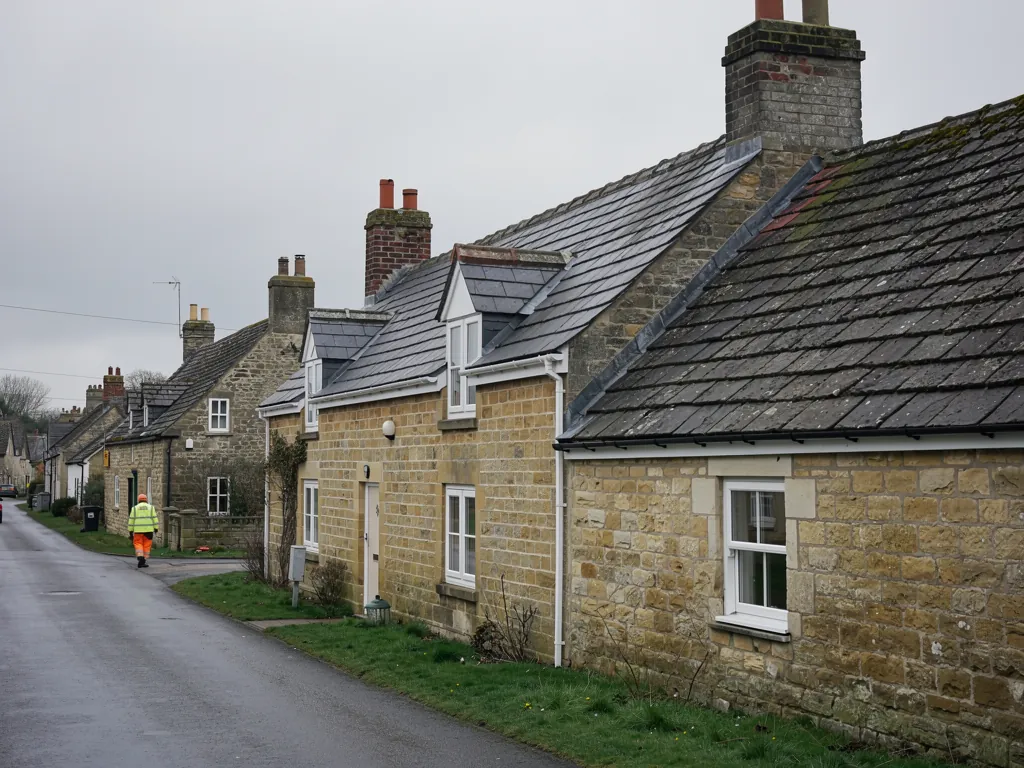
Walcot West is a private estate of mixed dates, running from the interwar years to the 1950s. A mixture of dates means a mixture of roofs: hipped and gabled, with bay windows, porches and attached garages, each with its own small roof to keep watertight. Hipped roofs have hip tiles running down each corner, and those take a lot of weathering because they meet the ridge at an awkward angle. Interwar houses often have clay or concrete tiles that have lasted well but whose pointing and flashings have not. Chimneys on semi-detached houses are commonly shared, so lead at the stack is a regular repair.

Garage block with flat roofs
Garages, porches and the shop parade

In 1958, a few years after the first houses were built, the local authority developed a small shopping centre on the estate. Parades of that kind, like the rows of lock-up garages and porches that grew up around the houses, tend to have flat or very shallow roofs rather than pitched ones. Flat roofs are a different trade from tiling. They depend on falls to the outlet, the state of the membrane and how it is dressed up against the walls. Some older garage roofs are corrugated cement sheets, which need careful handling because of the asbestos that may be in them. We identify the roof type before we quote.

From Swindon town centre to Walcot

Map showing Walcot and central Swindon. 1 road miles east of central Swindon.

Distance
1 road miles east of central Swindon
Council
Swindon Borough Council
Council
Swindon Borough Council
Conservation area
Walcot is not in the council's list of 27
Setting
Walcot West (private housing) and Walcot East (1950s council estate)

Walcot roof questions

Can you re-bed the verge tiles on a Walcot East semi?

Yes. The verge, where a roof stops at the side of a gable wall, is the part the wind gets under first. We clear out loose mortar, set the tiles back in fresh bedding and clip them down, which is what current practice expects where wind catches the gable.

Is it worth re-covering a flat-roofed Walcot garage?

Usually, provided the boards below the felt are still dry and firm. A new membrane over rotten boards fails quickly, so we check the timber first and tell you if the deck needs replacing too.

Does Walcot have conservation area limits on roof work?

The council's list of conservation areas does not include Walcot, so matching repairs and re-roofs are straightforward. Building Regulations can still apply to a larger re-roof.

Q1

What do 1950s roofs on Walcot East need by now?

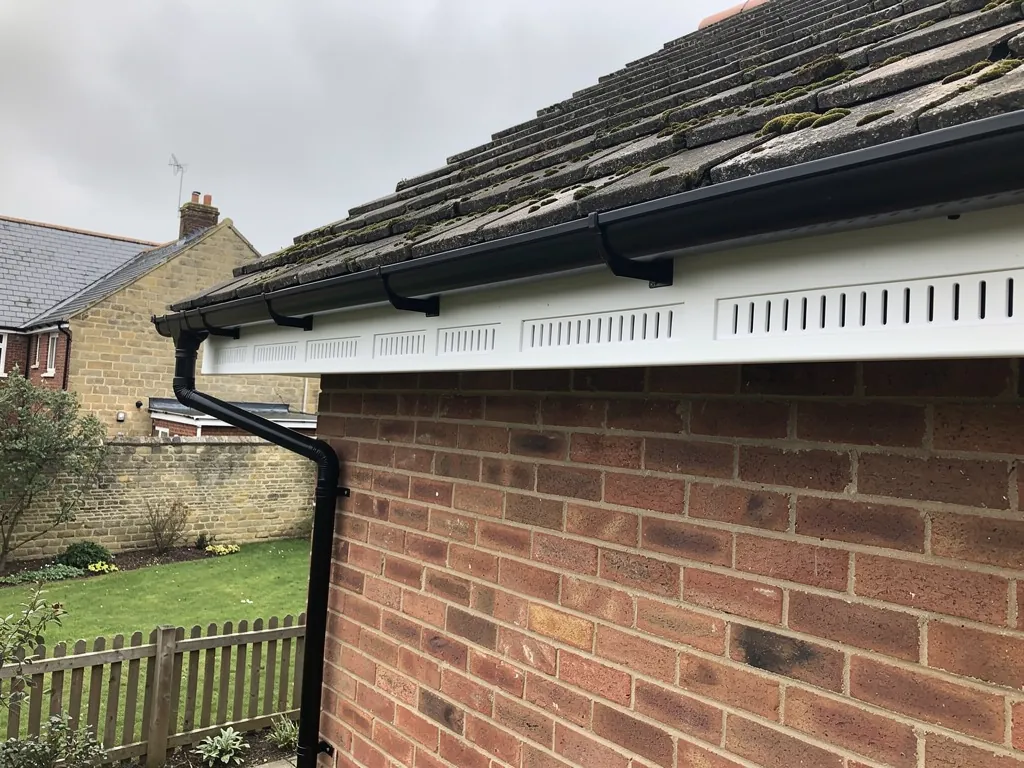
New white uPVC fascia, soffit and black gutter on brick eaves
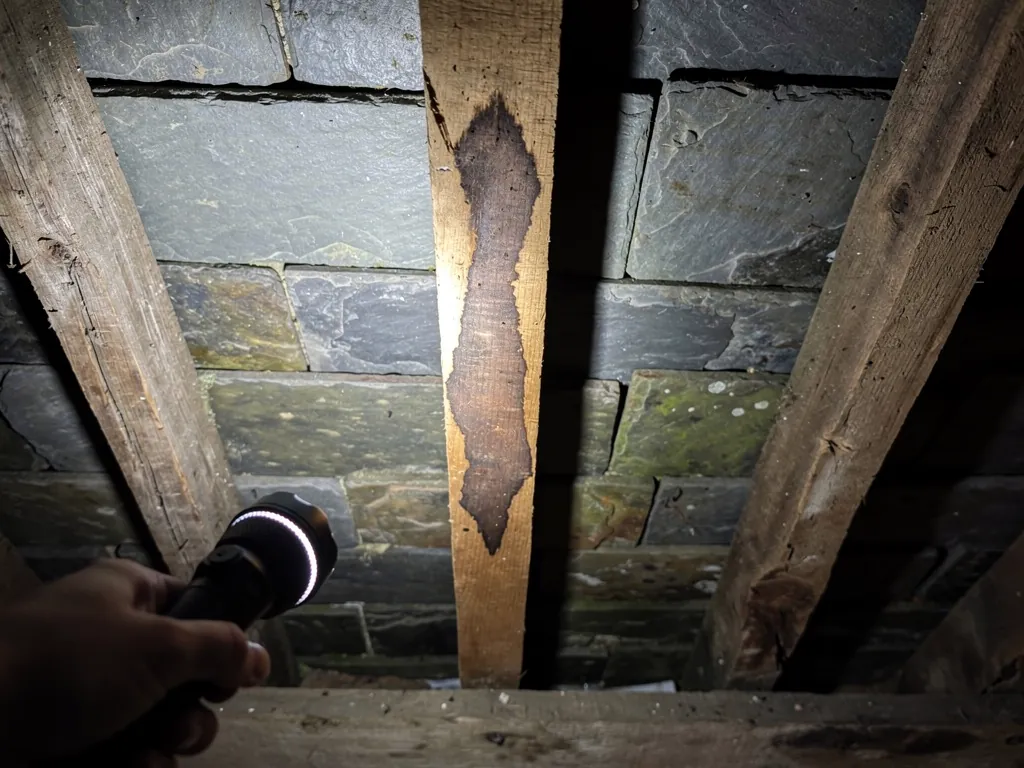
Torch showing a water-stained rafter beneath slates in a loft

The short answer

Most need their ridges and verges looked at, their felt checked and their eaves timber inspected. A roof from the 1950s is typically seventy years old, so the tiles may be fine while the parts beneath and around them are tired. The survey photographs show which.

When the first houses on the Walcot East estate went up, roofs were built quickly and to a pattern. That is good news for repairs, because a fault we have seen on one house tells us where to look on the next. It also means the same weaknesses are showing up all along a street at about the same time.

What state is the 1950s felt in?

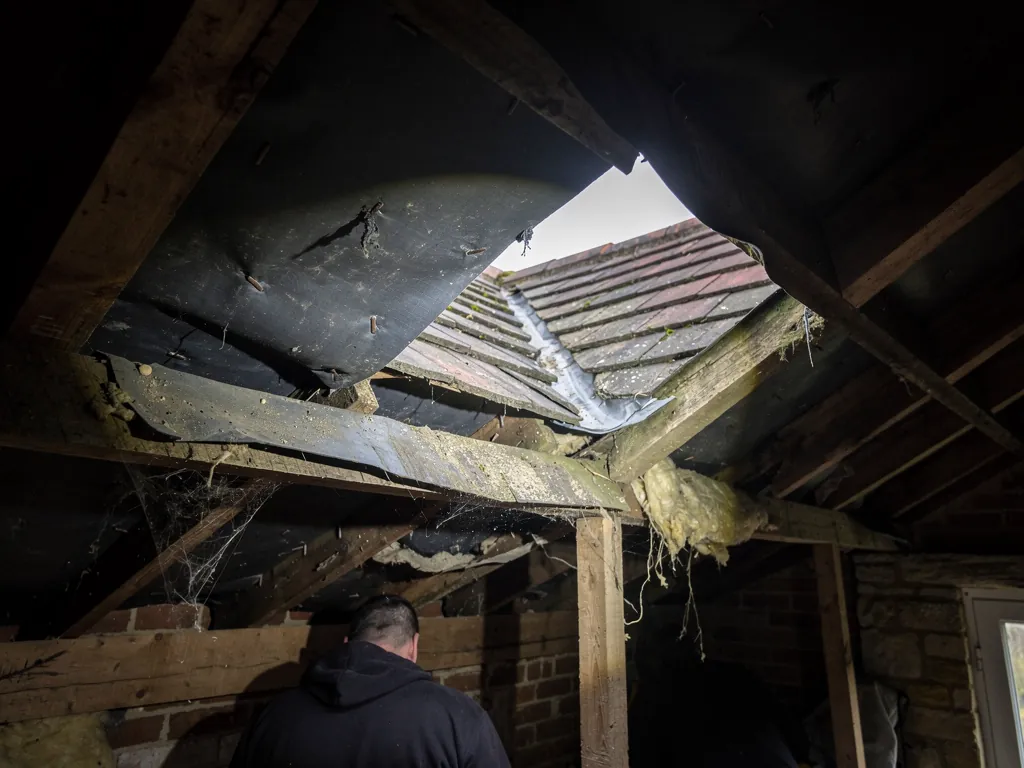
Under the tiles is the underlay, and in the 1950s that was bitumen felt. Felt dries, cracks and tears with age, especially around the ridge and at the eaves. Torn felt does little while the tiles are all in place, but when a tile slips or cracks, water reaches the battens and rafters. We lift tiles at the eaves, the ridge and a plain area to see what is there.

Why do the ridges and verges work loose?

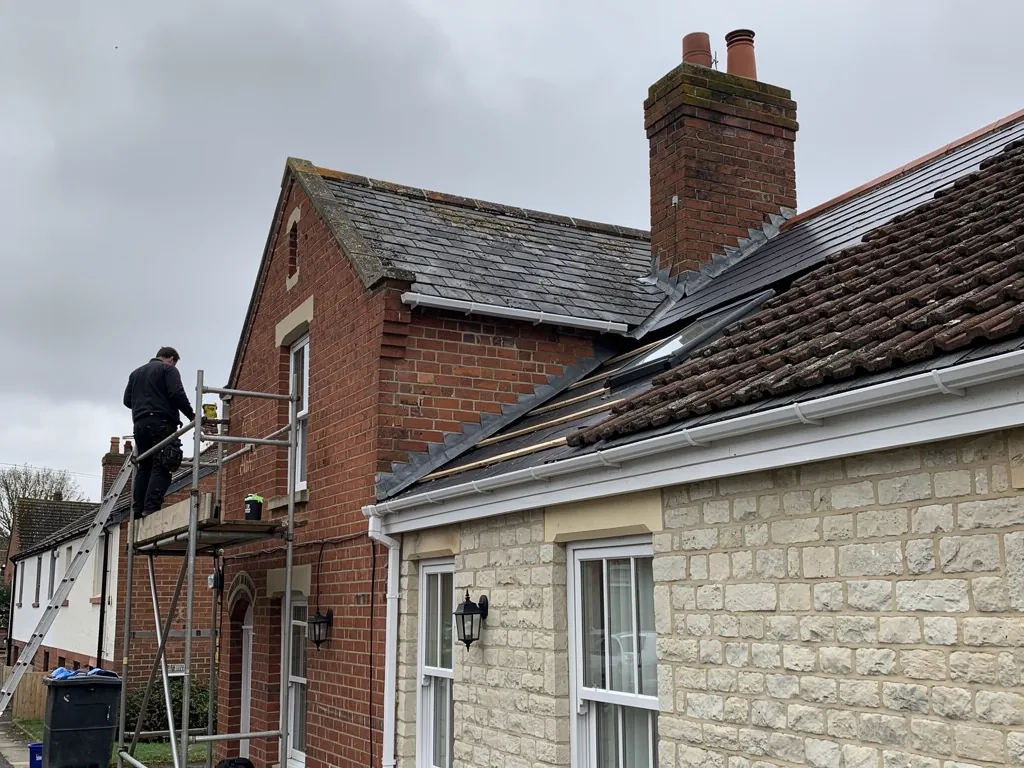
Ridge tiles cap the line where two slopes meet at the top, and verge tiles finish the roof along a gable wall. Both were traditionally bedded in mortar, and in the 1950s nobody thought to do anything more. That mortar cracks over decades, and a loose ridge tile is one of the first faults we look for. A repair that adds clips or a dry ridge system holds in a way that fresh mortar alone does not, so the same ridge is not back on the list two winters later. Between the ridge and the verge sit the top courses of tiles, which take the worst of the wind and are worth checking while the scaffold or ladders are in place.

What about the fascias, soffits and gutters?

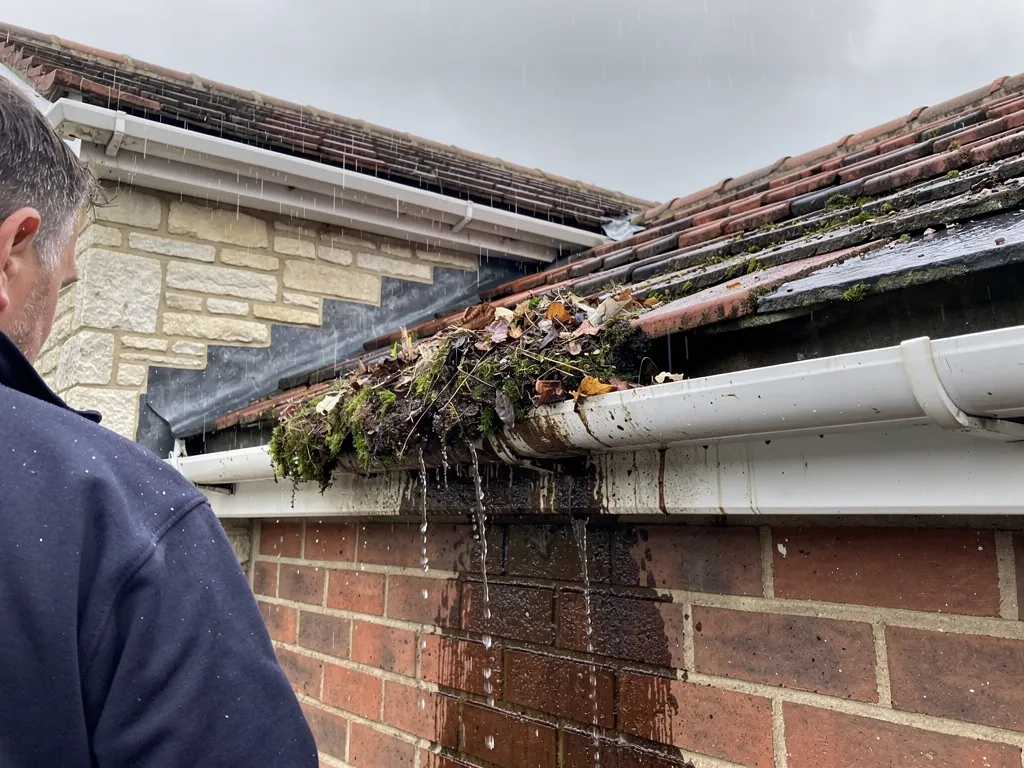
At the eaves, the fascia is the board the gutter fixes to and the soffit is the underside panel. Timber fascias can rot where the gutter has overflowed for years, and the roof then loses its edge support. Sometimes the soffit board of this era contains asbestos, which the next answer covers. Gutters matter here as well: brackets spaced too widely let a gutter sag, and a sagging run holds water against the fascia. Renewing the lot as one job is often tidier than patching it a section at a time.

Our ridge, verge and dry-fix page shows how a mechanical ridge repair is made.

Q2

Could a Walcot garage roof contain asbestos?

The answer

It can. The HSE advises assuming there is asbestos in a building built or last refurbished before the year 2000. Corrugated cement sheets and some soffit boards of the 1950s are the usual places. We identify the material first, and nothing is broken up or thrown into a skip.

A garage roof made of grey corrugated sheets is a common sight on estates built in the 1950s. The sheets can be asbestos cement, which is a stable material while it is intact. The risk comes from breaking it, drilling it or dropping it, and from sweeping up the debris afterwards. Householders sometimes pressure-wash or scrape moss from these roofs, and that is exactly the wrong thing to do to them.

What do the HSE rules say about cement sheets?

The HSE classes careful removal of asbestos cement, roof sheeting included, as non-licensed work, provided the sheets come off whole. Sheets that are substantially damaged, or that will break up in the removal, fall into notifiable non-licensed work, which means telling the enforcing authority before the job starts and arranging medical examinations for the workers. A sheet cracked by a fallen branch is therefore a different job from a weathered one that is still whole, and it is why we never guess from the ground. Weathering alone does not move a sheet into the notifiable category.

Could the soffit boards contain asbestos too?

Asbestos insulating board, known as AIB, was used in places like external soffits, and it is hard to tell by eye from a modern board. Removing most AIB is licensed work, so a board we suspect is tested before anyone touches it.

Who deals with the asbestos waste?

Asbestos waste from a home is hazardous waste. A contractor taking it away must complete a consignment note as the waste producer. We arrange disposal properly and keep the paperwork, instead of leaving you with a pile of sheeting to deal with.

Our garage roof replacement page explains the choices once the old roof is gone.

What it typically costs

  • Single garage asbestos roof removal£350 to £1,295
  • Double garage asbestos roof removal£650 to £1,800
  • Full garage removal£1,100 to £3,750
National typical ranges for removal and disposal, not Skyline prices. Your written quote follows a survey that identifies the material. MyBuilder asbestos removal guide (updated 21 August 2026).
Q3

What changes when a Walcot estate house is re-roofed?

Blocked gutter full of leaves overflowing down a brick wall
Loft interior with torn felt and daylight through a roof gap

The short answer

For a matching re-roof, little changes in planning terms. Building Regulations come in once the work passes certain limits or the new covering is much heavier, and a roof stripped to the rafters may need better insulation. Swindon Borough Council's building control or a registered approver handles that.

The council's list of conservation areas leaves Walcot out, so a re-roof in a matching covering is mostly a question of Building Regulations rather than planning. The details are worth knowing before you compare quotes.

How much of a Walcot roof can be redone before approval?

The Planning Portal puts the limits at less than 25 per cent of the total building envelope and less than 50 per cent of the roof. A full re-roof of a semi crosses the roof limit, so approval applies. Approved Document L then asks for the roof to reach a better U-value when the covering is stripped down to the rafters, which in practice means insulation between or above them.

Does a heavier tile change anything?

Replacing old concrete tile with the same weight of new concrete tile changes nothing. Moving from a light covering to a heavier one is different: approval is also needed for a covering 15 per cent or more heavier, and the Planning Portal advises a structural check. Most 1950s roofs can take a modern concrete tile, but we confirm the loading when it is a different product.

How does the loft stay ventilated?

A 1950s roof often breathed through gaps. A new, tighter underlay changes that, and BS 5250 guidance on cold roof ventilation, as Marley sets it out, asks for continuous openings at the eaves. We build that into the specification so the loft stays dry, and we tell you where vents will appear. Loft insulation that has been pushed hard into the eaves can block the airflow, so we check that too when we are up there.

Swindon Borough Council runs its own building control team. Where the work is notifiable, our office makes the notification and keeps you informed of the outcome, so nothing is left for you to chase after the scaffold has come down. Ask for the completion paperwork to be kept with your house deeds, as a future buyer's solicitor may ask for it.

MythA full re-roof on a house outside a conservation area needs no sign-off at all.

FactPlanning permission is seldom needed, but a re-roof past the Planning Portal limits brings in Building Regulations and an insulation upgrade.

Questions from the Walcot estates

Why are the ridge tiles on my 1950s Walcot house rocking?

Mortar bedding cracks and crumbles through decades of warm and cold spells, and a tile with nothing else holding it can lift in a gust. After the 2014 revision of BS 5534, ridge and hip tiles are also fixed mechanically, and mortar alone no longer carries them. A modern ridge repair uses clips, screws or a tested dry system.

Can I re-roof one Walcot East semi without affecting the other half?

Yes. Each house has its own slope, but the party wall, the shared ridge and the verge between you need careful tying in. We photograph that junction before and after so both owners can see what has been done. Any work that cuts into the party wall may fall under the Party Wall etc. Act.

My Walcot garage has a corrugated cement roof. Is it safe to leave?

An intact, weathered sheet is generally left alone safely, and the risk comes from breakage and drilling. We check the sheets, report what we find, and give you the options for replacement. If sheets are cracked or the roof is failing, removal needs proper handling and a consignment note for the waste.

Do you cover the flat roofs on the shop parade and garages?

Yes. Flat roofs across Walcot, whether on lock-ups, porches or small commercial units, are surveyed for falls, ponding and the condition of the membrane. We recommend a repair when the deck is sound and a new covering when it is not. The written quote says which, and why.

Ask us about your roof

Tell us what’s happening and we’ll call you back.

  • Photos of what we find
  • A written quote
  • 10-year workmanship guarantee

Or call 01793 626096

Call Get a quote