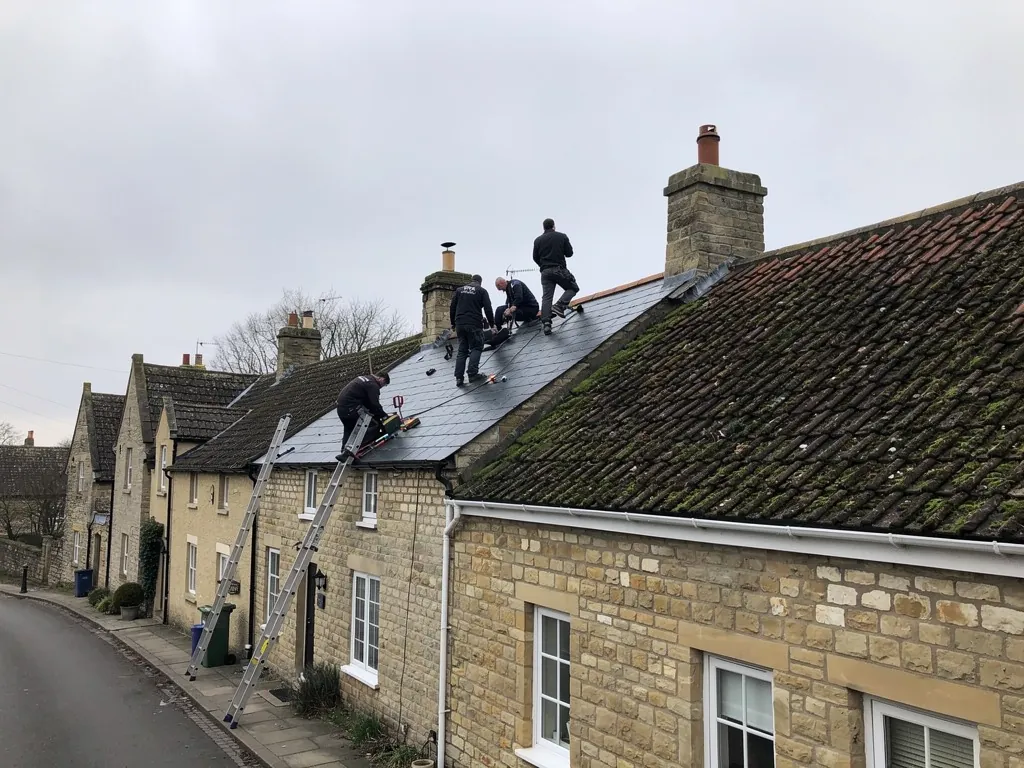
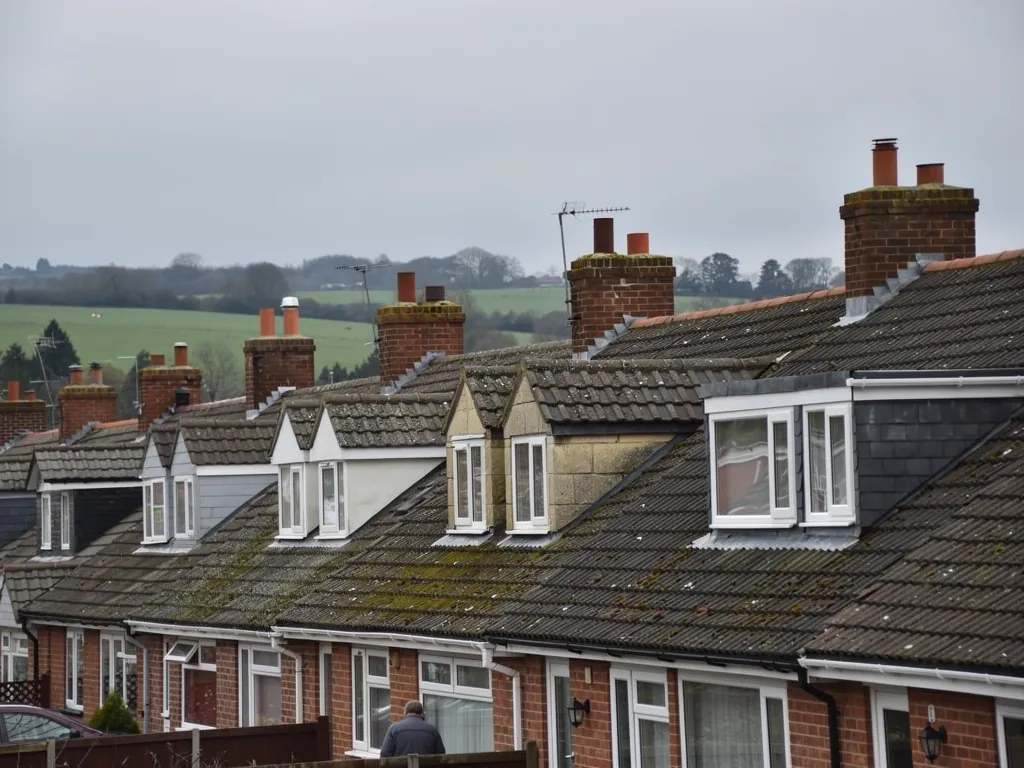
The homes built around RAF Lyneham after 1940 were put up quickly and in numbers, and the roofs that survive are the same age as the houses or have been replaced once since. That gives two very different starting points, and the right job depends on which one you have.
Q2.1When is a repair enough?
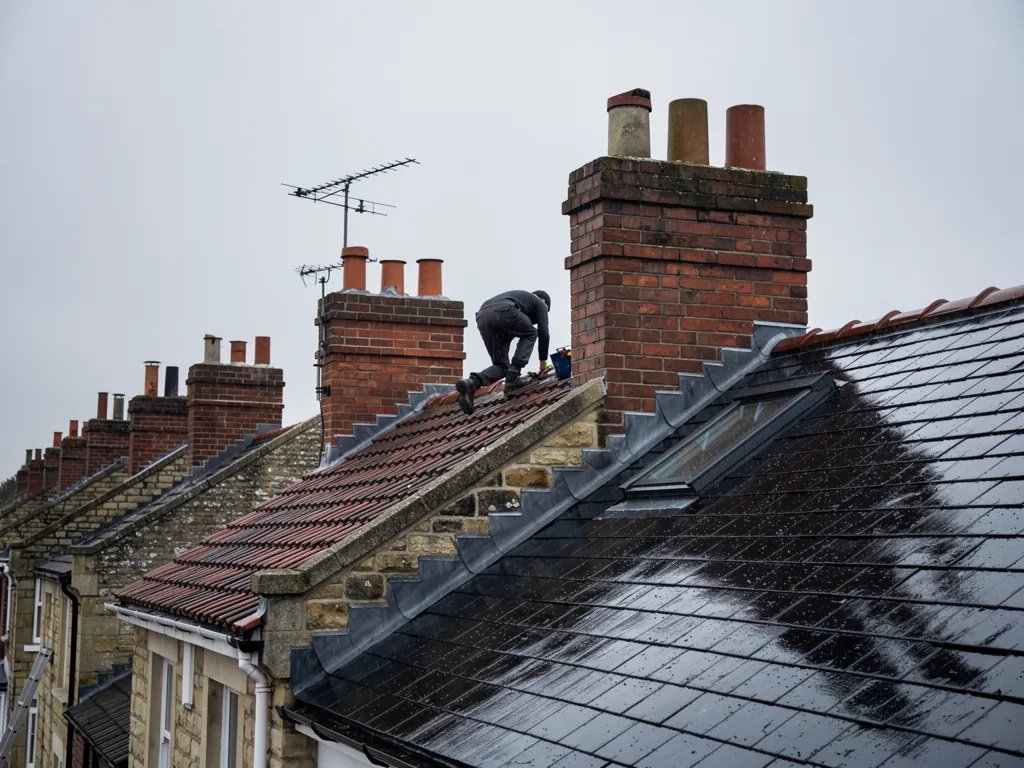
If the battens are sound, the underlay is intact and the tiles are only loose or cracked in places, replacing the broken ones and re-bedding the ridge deals with the fault. The quote names the least work that will put the fault right, with photographs of your roof beside it so you can judge for yourself.
Q2.2When is a re-cover the better answer?
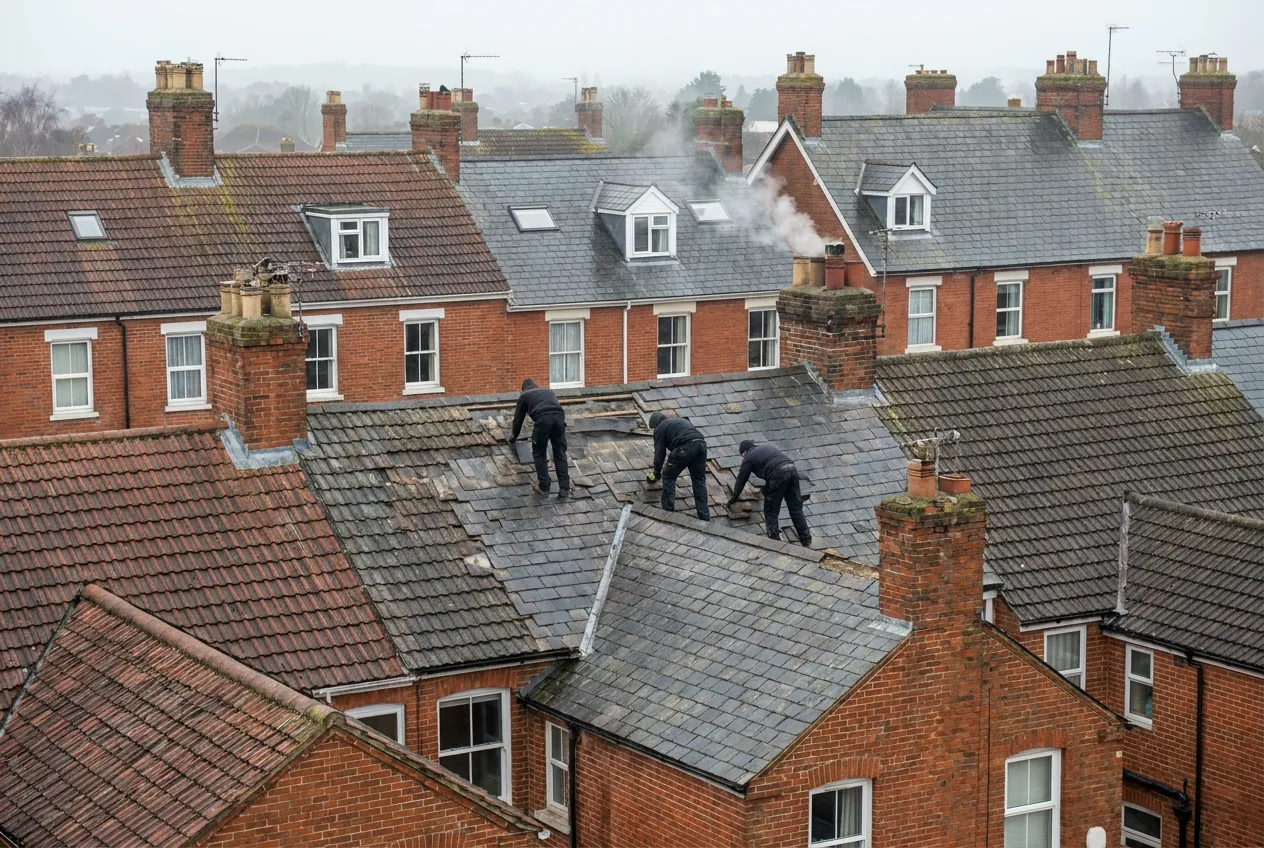
If you can see daylight at the laps in the loft, the felt is brittle, battens are soft or the tiles are crumbling at the surface, patching becomes a repeat expense. A full strip and re-cover on new battens and underlay removes the cause. Our roof replacement page covers what that involves, including scaffold, waste and the order of work.
Q2.3Does a heavier tile bring in the regulations?
Concrete tiles are heavy. Where the replacement tiles weigh 15 per cent or more beyond the originals, the Planning Portal says approval is needed, and Approved Document A uses the wording more than 15 per cent. Before any heavier tile is specified, we look at the rafters and wall plates to see whether the structure can carry it, and we tell you what we find. Re-covering also becomes notifiable when it affects 25 per cent or more of the building envelope or 50 per cent or more of the roof. In Lyneham that means Wiltshire Council's building control team, or a registered approver. If your job falls inside the notifiable range, we explain the process and send the notification ourselves.
Whichever route you take, the quote is written, the site is cleared, and the 10-year workmanship guarantee is in writing.