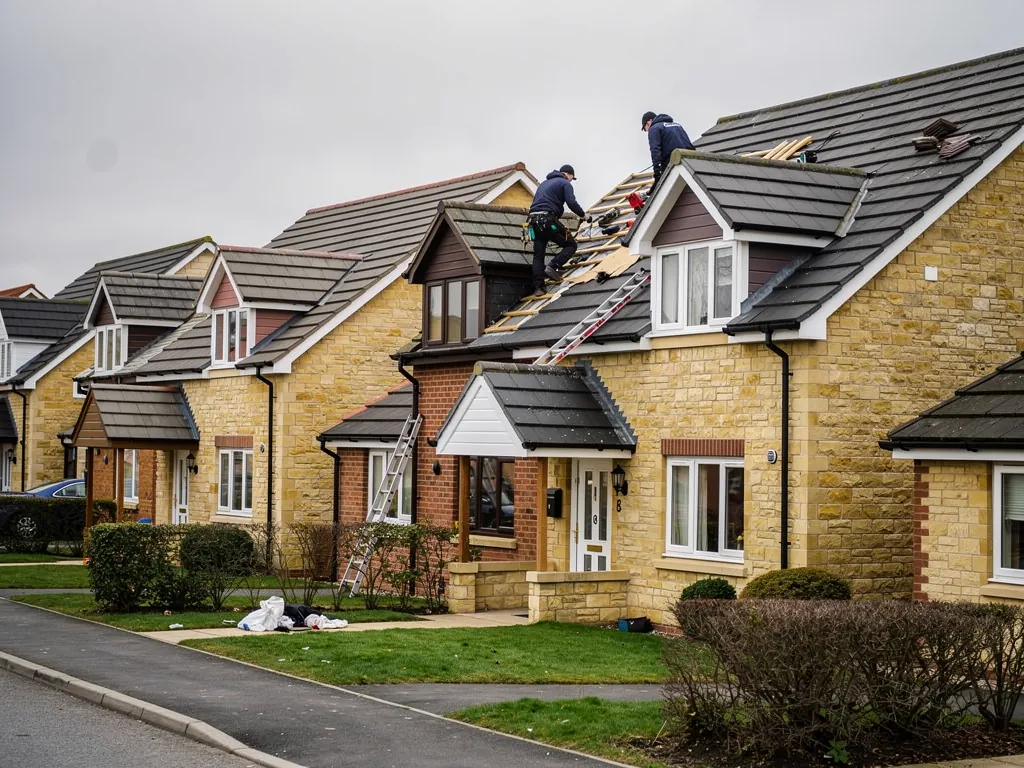
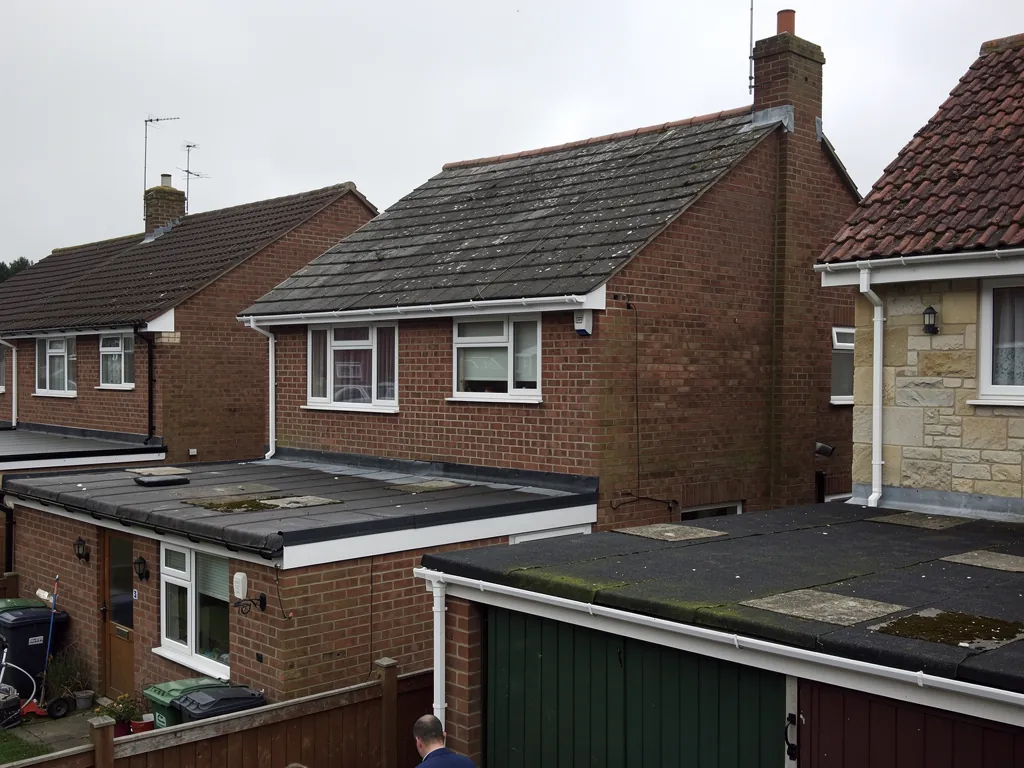
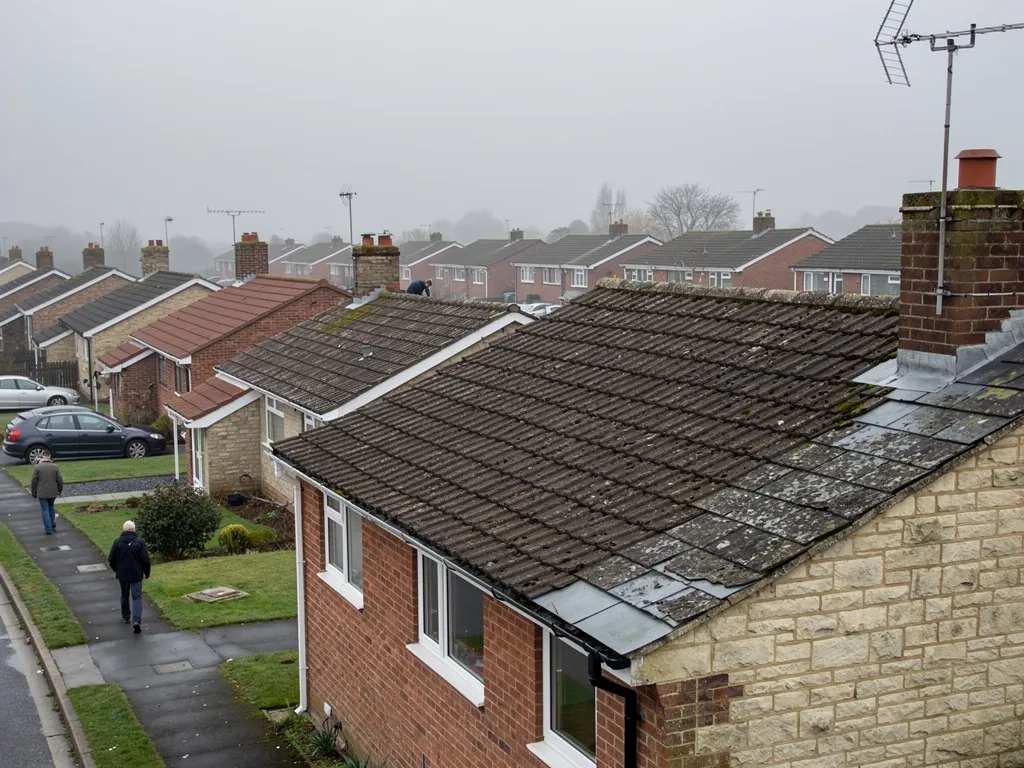
1980s estate houses with brown concrete tile roofs

Roofers in Wroughton

Slate, clay and concrete tile roofs, chimneys and lead across Wroughton, from the thatch-and-stone lanes of the conservation area to the newer homes spreading towards the M4 and the downs.

Wroughton's roofs, from chalkstone to Welsh slate

Thatched and stone cottages along a village lane
The conservation area cottages

Swindon's appraisal of the Wroughton Conservation Area names local stone, red brick and thatch as the materials that define its character. The oldest cottages use rough and squared chalkstone, with sarsen stone in the foundations and at the base of walls. The appraisal counts eleven thatched properties, dating from the seventeenth century onwards, and says thatch was the traditional covering. Thatch is a specialist trade of its own, and it is a roof you will notice from the lane. Cottages with a tiled or slated roof beside them have a different set of needs: thick walls, shallow eaves and chimney stacks built into the gable, where flashings and pointing take the weather.

Welsh slate roofs on brick-built houses
Welsh slate and red brick

As bulk transport improved, the appraisal says, Welsh slate and imported red brick became more common, and it cites Swan House and 50 Prior's Hill as examples. Slate laid on a Victorian house of that kind is thin, hard and long-lived, but the nails, the lead and the ridge give out well before the slate does. When slates slip, the cure is usually to refix them with copper nails or riveted clips and to replace the cracked ones with matching Welsh stock, which keeps the roof looking like its neighbours and avoids a patchwork effect on a street where every roof is read against the next.

Tiled family houses on a newer street
Newer Wroughton beyond the old village

Wroughton parish counted 8,239 residents at the 2021 census, and a village of that size has grown well beyond its historic lanes. Houses from later decades may carry machine-made clay or concrete tiles, while their porches, garages and extensions often sit under low-pitched or flat roofs, which age quicker than the main pitch and ask for a different repair method. These behave like roofs anywhere in Swindon: ridge bedding, verge mortar, valleys and flashings are the usual weak points, and the fix is rarely a whole new covering. The village also sits on the edge of the North Wessex Downs, so roofs on its higher side face open ground and the weather that comes with it.

From Swindon south to the edge of the downs

Map showing Wroughton and central Swindon. 3 road miles south-south-west of central Swindon.

Distance
3 road miles south-south-west of central Swindon
Council
Swindon Borough Council
Conservation area
Wroughton, designated on 30 April 1990
Setting
Between the M4 and the edge of the North Wessex Downs
Notable buildings
St John the Baptist and St Helen (Grade I); Woodham's Mill (Grade II)

Wroughton roof questions

Is a Wroughton cottage roof covered by conservation area rules?

If it stands inside the 1990 boundary, yes, though a like-for-like repair rarely needs consent. Anything that changes the look is worth raising with Swindon Borough Council first.

Can slates on a Prior's Hill house be refixed rather than replaced?

Often. If the slates are sound and the nails have rusted, refixing with new fixings and replacing only the cracked ones keeps the original roof and costs less.

Who looks after the roof of Wroughton's parish church?

St John the Baptist and St Helen is a Church of England building, so changes to it are decided through the faculty system rather than by listed building consent. The parish and its architect handle that route.

Q1

What are Wroughton's old village roofs made of?

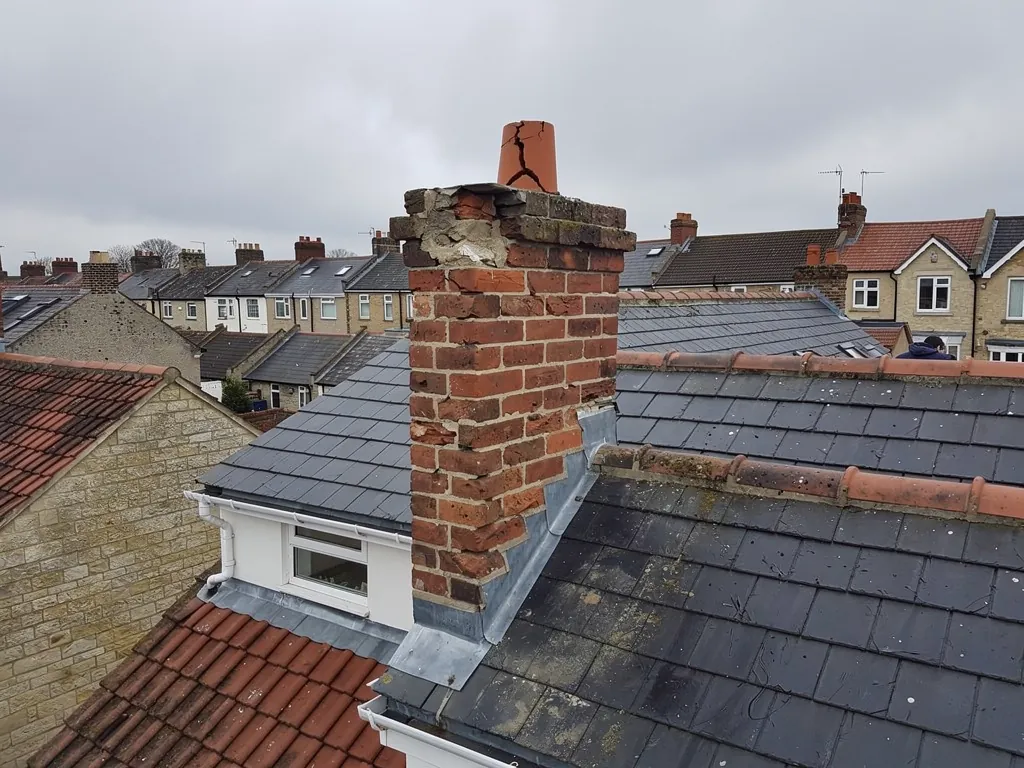
Weathered brick chimney stack with eroded joints and cracked pot
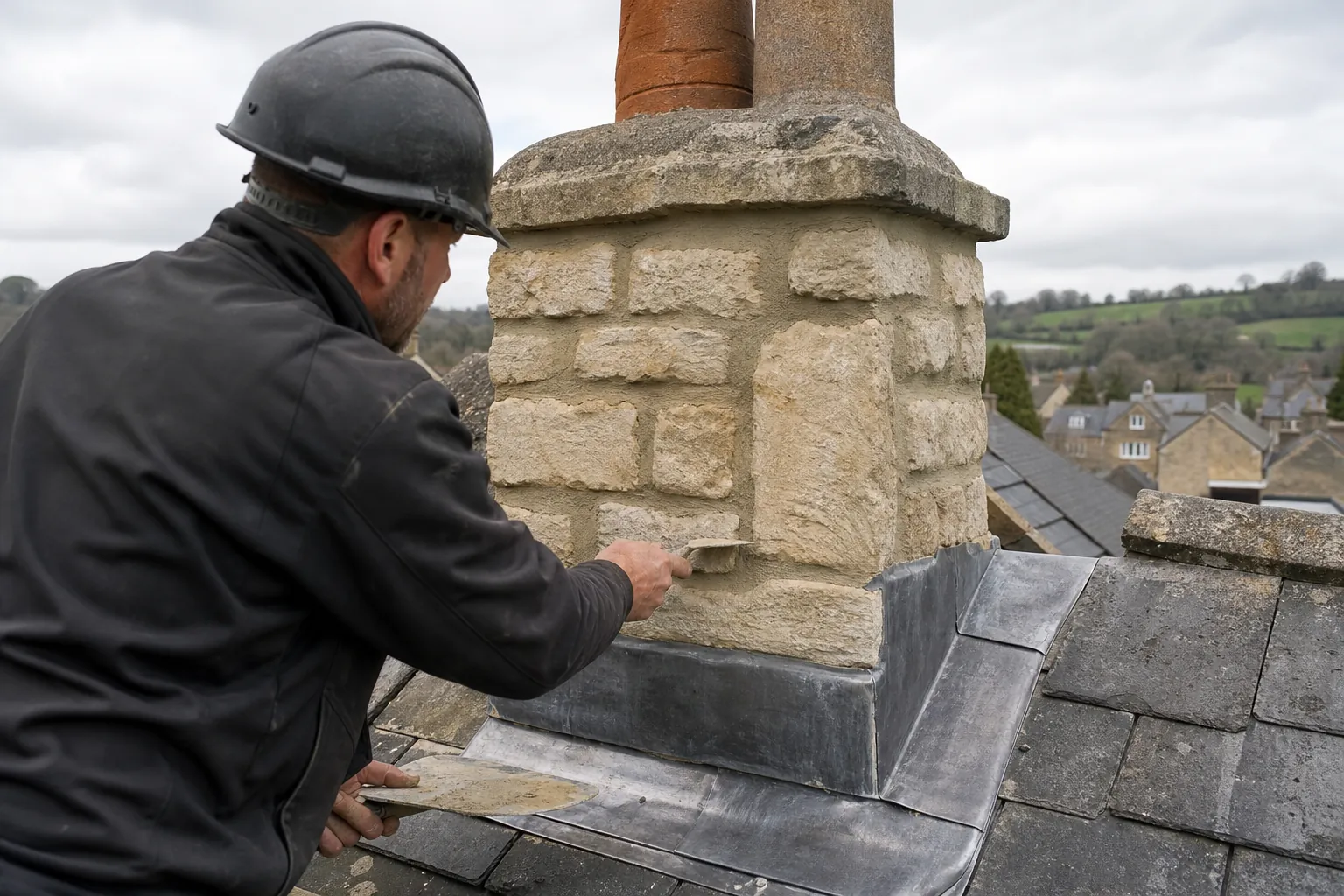
Roofer repointing a stone chimney stack above lead flashing

The short answer

The council's appraisal names local stone, red brick and thatch as the traditional materials, with eleven thatched properties from the seventeenth century on. Welsh slate and imported red brick arrived as transport improved. Beneath the covering, walls are chalkstone with sarsen stone at the foot.

The conservation area at Wroughton was designated on 30 April 1990 under Thamesdown's old borough council, and the appraisal that followed is the best single description of what the village's roofs and walls are made of. It says the special interest of the area includes the prevalent use of local building materials, notably stone, red brick and thatch.

What are the old walls built of?

The oldest cottages use rough and squared local chalkstone, with sarsen, a hard sandstone boulder found on the downs, for foundations and wall bases. Those walls are thick and soft-lime built, and they behave very differently from a modern cavity wall. Water that finds its way in at a failed flashing or a cracked chimney haunching does not simply drip out. It soaks into the stone and shows up weeks later as damp on the inside face.

Why do chimneys and flashings cause most leaks?

A stack built into a gable of stone or brick is the place where an older roof most often goes wrong. The flashing, which is the strip of lead that seals the joint between roof and masonry, has usually been replaced more than once, and the mortar behind it is rarely as sound as it looks. Our chimney repairs page explains what we look at on a stack, from the pots and haunching down to the lead work at the roof.

Where the roof is slate or tile, a careful repair can leave the building looking exactly as it did, with only the lead and the bedding renewed. We photograph the stack from every side so the written quote shows where the water gets in.

Q2

Is it worth re-slating a Victorian Wroughton house?

The answer

Sometimes, but a repair comes first. Welsh slate can outlast its nails, battens and lead by a wide margin, so a roof that leaks may need only refixing, new flashings and a re-bedded ridge. A full re-slate makes sense when the battens are rotten or the slates themselves are failing across the slope.

Slate is one of the longest-lasting roof coverings, but the parts that hold it down are not. That is the starting point for any decision on a Victorian house in Wroughton, whether it is a terrace on Prior's Hill or a detached villa near the old mill.

What fails first on a slate roof?

The nails go first. Iron or steel nails rust through and the slate slips, which is why a roof can lose slates in a gale while the rest of the slope looks fine. After the nails come the battens, which rot at the eaves where damp lingers, then the lead around chimneys and wall junctions. The slates themselves may be perfectly good. Sorting them, rejecting the cracked ones and re-laying the rest on new battens is often the better value.

When is a full re-slate the right call?

If the slates are delaminating, flaking in layers or snapping when lifted, that slate is spent and no repair will hold for long. A re-slate uses new or reclaimed Welsh slate, new battens, a breathable underlay where the roof structure allows it, and a ridge fixed mechanically, as BS 5534 now expects. Our slate roofing page explains the process in more detail.

Inside the conservation area, a switch from slate to something else could draw comment from Swindon Borough Council, so we keep to the existing material wherever possible. Where earlier owners patched with concrete or artificial slate, we talk through the options with you, and suggest ringing the conservation officers before anything is ordered. That one call can save a lot of redoing.

Our view

Refix and reflash a sound slate roof before you consider stripping it.

Q3

Who signs off roof work at a Wroughton cottage or church?

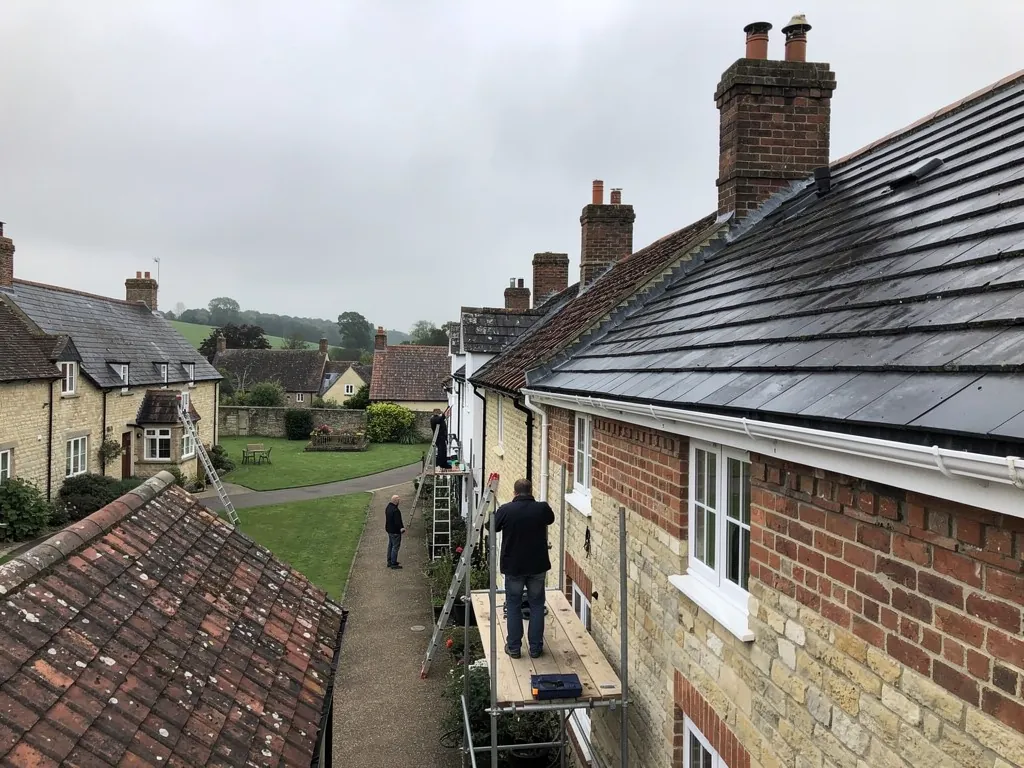
Brick and limestone cottages around a small village green
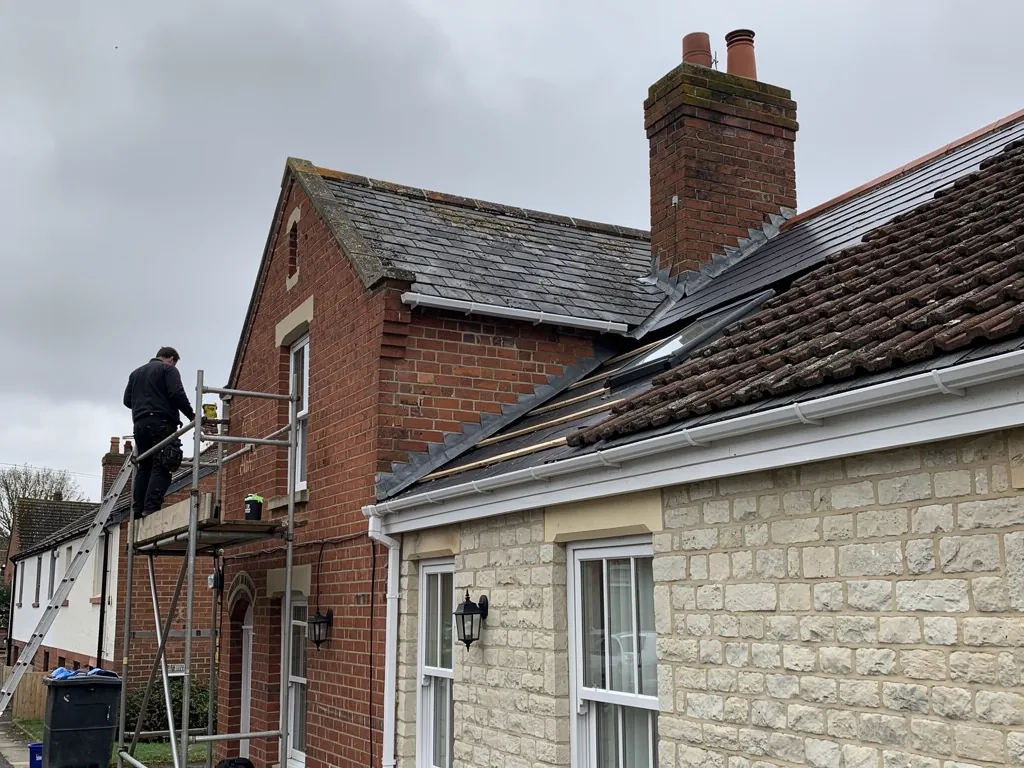
Brick end-of-terrace gable beside a limestone house, slate roofs

The short answer

Swindon Borough Council covers Wroughton, so notifiable work goes to the council's building control service or to a registered building control approver. Conservation area and listed building questions go to the council's planning and conservation officers, while an Anglican church in regular use follows the faculty system instead.

Many roof jobs in Wroughton need no permission, and the cost of finding out is a phone call. The rules matter when a job reaches certain limits or when the building has a protected status.

When do Building Regulations apply?

A part re-roof stays clear of building control if the work affects less than 25 per cent of the total building envelope and less than 50 per cent of the roof. Cross either limit and the job needs approval, with an energy upgrade possible under Part L. The weight test is separate: the Planning Portal says a covering 15 per cent or more heavier needs approval, which matters when concrete tile is proposed for a roof originally built to carry slate. We explain these tests at quote stage and arrange the notification where work is notifiable.

What changes in the conservation area or for a listed building?

The conservation area has no Article 4 direction, so a matching repair is simply maintenance. Listed buildings are different, because consent is needed for changes that affect their character, and that includes the roof covering. Woodham's Mill, a Grade II listed building that is now residential and the only survivor of the three mills that once stood in the conservation area, is a reminder that conversion does not remove listing.

Who approves work on the parish church?

The Church of St John the Baptist and St Helen is a Grade I Church of England building. The ecclesiastical exemption applies to an Anglican church still used for worship, so its changes go through the faculty system, not listed building consent. Our own work is on houses, cottages and commercial buildings around the village, where the routes above apply.

Once a job ends, the scaffold comes down, the waste goes in our vehicle and a written 10-year workmanship guarantee reaches you. The survey photographs stay with the quote, giving the next owner a clear account of what was done to the building.

MythEvery roof job in Wroughton's conservation area needs planning permission.

FactA repair in matching materials is maintenance; it is changes to the look or the covering that the council examines.

Roofing services in Wroughton

Questions from along Prior's Hill and the old lanes

Why do some Wroughton houses have thatch and others slate?

Thatch was the traditional covering in the village, and the council's appraisal counts eleven thatched properties from the seventeenth century onwards. As bulk transport improved, Welsh slate and imported red brick became more common, and the appraisal points to late Victorian buildings such as Swan House and 50 Prior's Hill as examples of that change. Cottages can therefore sit next to each other with completely different coverings.

Will you work on a listed cottage near Woodham's Mill?

Yes, using matching materials and methods. A like-for-like repair rarely needs consent, but work that changes the building's character does, and that can include the covering. The method is settled with you ahead of any start date, and anything uncertain goes to Swindon Borough Council's conservation team first.

Is Wroughton close to the North Wessex Downs boundary?

The council's appraisal puts the village on the edge of the North Wessex Downs, which is a National Landscape. The council still decides planning questions, and the landscape body only advises. For roof work, that means paying attention to materials and appearance, and giving extra thought to fixings on the higher, more open side of the village where the wind has a clear run at ridges and verges. A roof that sits there is worth a careful look at its edges after a stormy winter, whatever its covering.

My Wroughton chimney is crumbling above the roof. Is that urgent?

It can be, because loose masonry can fall and water enters through cracked pointing. A leak or storm damage gets priority, and the roof is made safe first, then we survey the stack, flashing and pots properly. Sometimes repointing and new lead is enough; sometimes the top courses need rebuilding. The photographs and written quote show which.

Ask us about your roof

Tell us what’s happening and we’ll call you back.

  • Photos of what we find
  • A written quote
  • 10-year workmanship guarantee

Or call 01793 626096

Call Get a quote