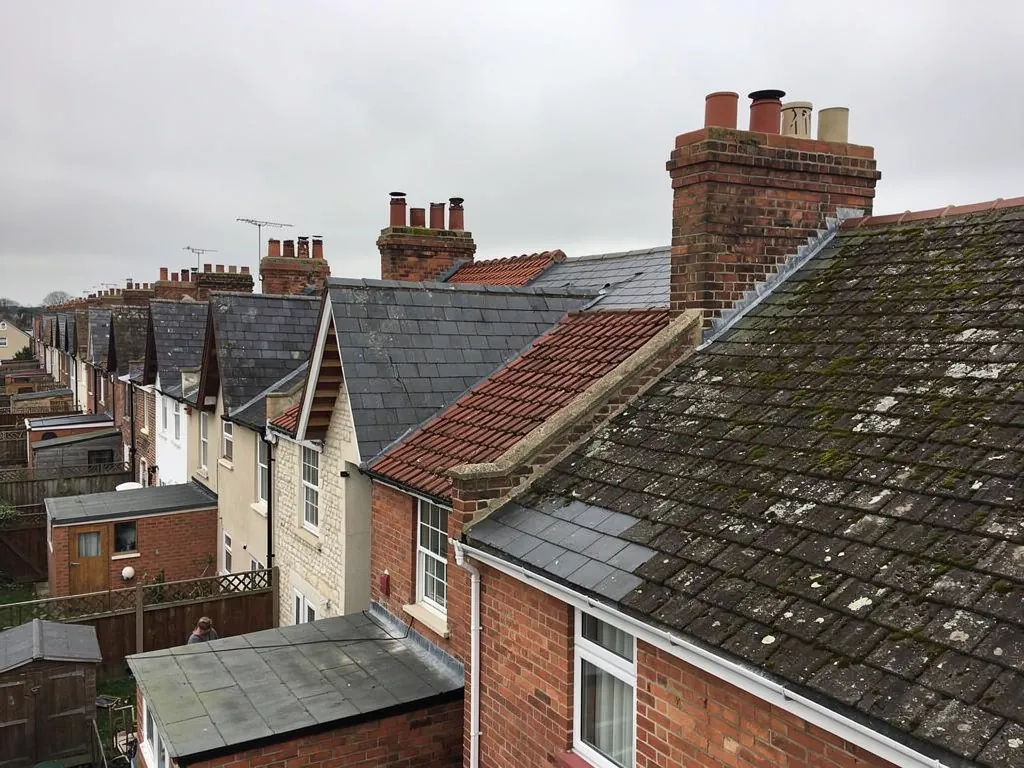
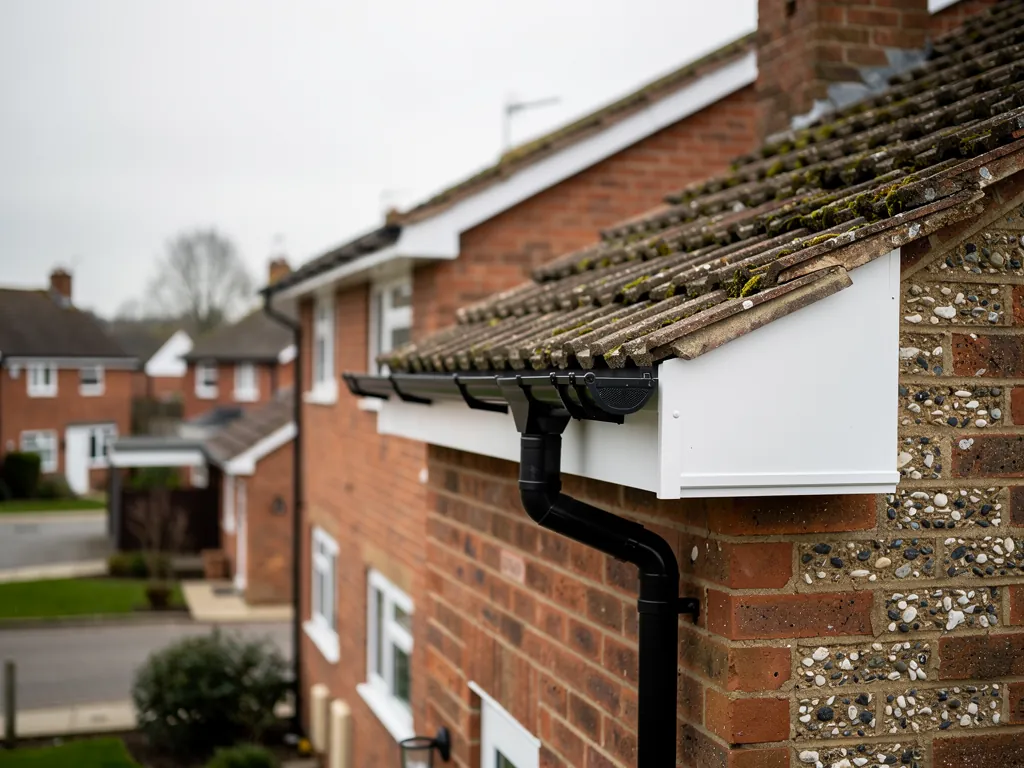
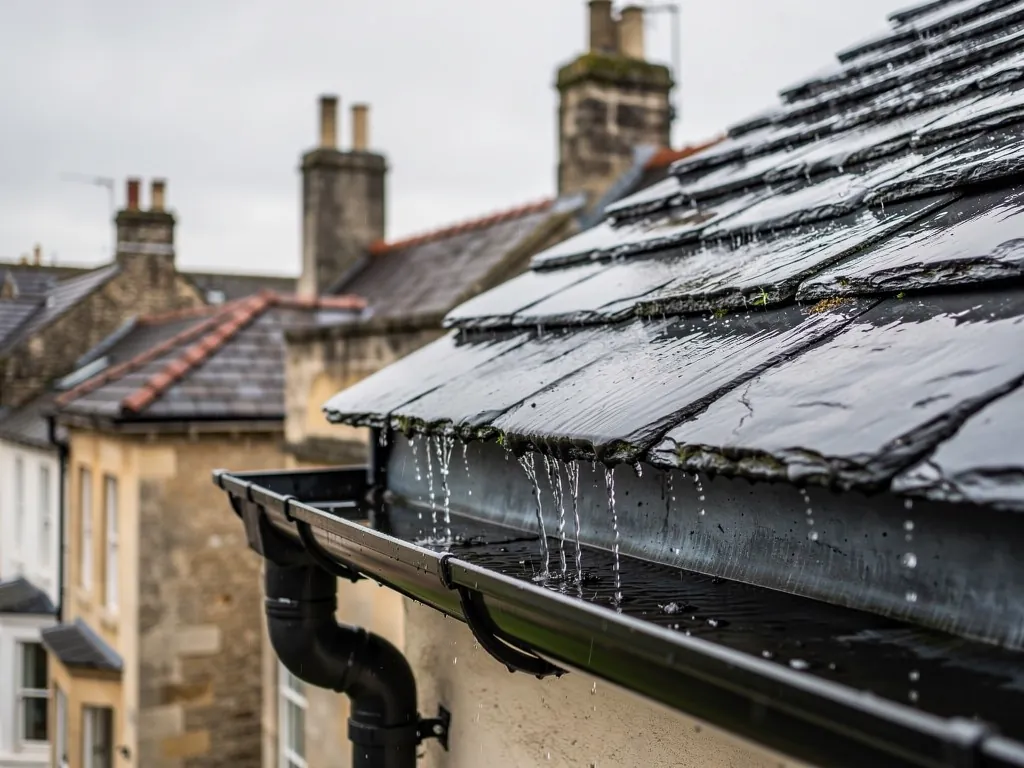
Brick end-of-terrace gable beside a limestone house, slate roofs

Roofers in Hook

Pitched roofs, flat roofs, gutters and chimneys for the cottages, farms and houses of Hook, the small village on the road between Royal Wootton Bassett and Purton, just north of the M4.

Hook's roofs, from Hook Street to the post-war homes

Small village cottages with low eaves
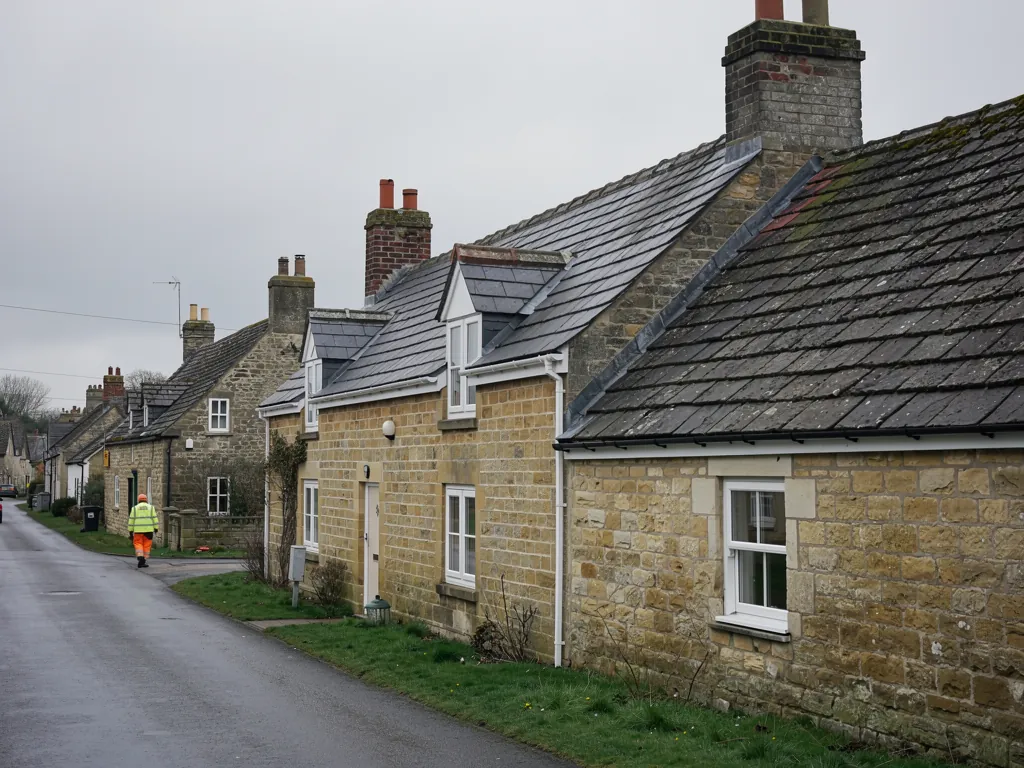
Hook Street and the old cottages

The Victoria County History says Hook is the only place in Lydiard Tregoze parish where houses cluster, along the road between Royal Wootton Bassett and Cricklade and part of Hook Street. It also records charity cottages built on land at Hook Common that Viscount St John gave in 1733. A roof that old has usually been re-laid once or twice, and the timbers beneath can differ from one cottage to the next, with some rafters sound and some replaced in a later century. Eaves are often low, which puts the gutters within easy reach of overhanging branches and makes them quick to fill with leaves. Thin old walls leave little margin for a roof that sheds water badly, so the first things we check are the gutters, the verges and whether rain is running down the face of the wall. A cottage in this setting may also have an extension at the back that was added in a different material and a different decade.

Village chapel with a pitched roof
Chapels, the old school and farm buildings

Hook had a Primitive Methodist chapel in 1840 and a small iron chapel in 1886, enlarged in 1889, and a school was built there in 1860 that taught the parish's children until 1965. The farms belonged to the St John (Bolingbroke) estate, which sold its land in stages from 1920, with Hook Farm in the sale of 1930. Small public buildings and farm buildings have a different roofing problem from houses: wide spans, few internal walls to carry the load, and valleys and gutters that collect a lot of water. Sheet metal and older tile or slate coverings each fail in a particular way, and they are repaired in particular ways too. Whether a building now serves as a hall, a store or a home, the roof is usually the largest single cost of keeping it sound, which makes an accurate survey worth more here than a quick estimate.

Post-war semi-detached houses with tile roofs
Post-war and later houses

The village history records a few council houses built in Hook after the Second World War, and later infill has followed on the same lanes. Houses from the middle of the twentieth century onward often carry concrete tiles, with fascias and soffits in timber or plastic, plus a flat roof over a porch, garage or rear extension. The faults are well known: ridge bedding that has loosened, cracked or slipped tiles, felt that has gone brittle at the eaves, and flat roofs that hold water. Garages and outbuildings built before 2000 may carry cement sheet roofing, which we identify before anyone disturbs it. Because the lanes are narrow and the plots small, we also plan where a ladder, a scaffold tower and a skip can stand before the day of the work, and tell you what access we need.

Out to Hook, by the M4

Map showing Hook and central Swindon. 7 road miles west of central Swindon.

Distance
7 road miles west of central Swindon
Council
Wiltshire Council
Council
Wiltshire Council, not Swindon Borough
Parish
Lydiard Tregoze
Setting
A small village just north of the M4

Hook roof questions

Is a Hook Street cottage listed, and who confirms it?

Wiltshire Council can say whether a house is on the statutory list or sits in a designated area. Ask before any roof work is priced, because a listing changes what counts as a matching repair.

Do you work along Hook Street and the Cricklade road?

Yes. Hook sits between Royal Wootton Bassett and Purton and is well inside the area we cover. The survey comes with photographs of your roof, and the quote is written.

Can a small chapel or hall roof be repaired in stages?

Often, yes. We agree access, scaffold and timing with whoever manages the building first, so a service or a booking can carry on around the work.

Q1

What roofs line Hook Street?

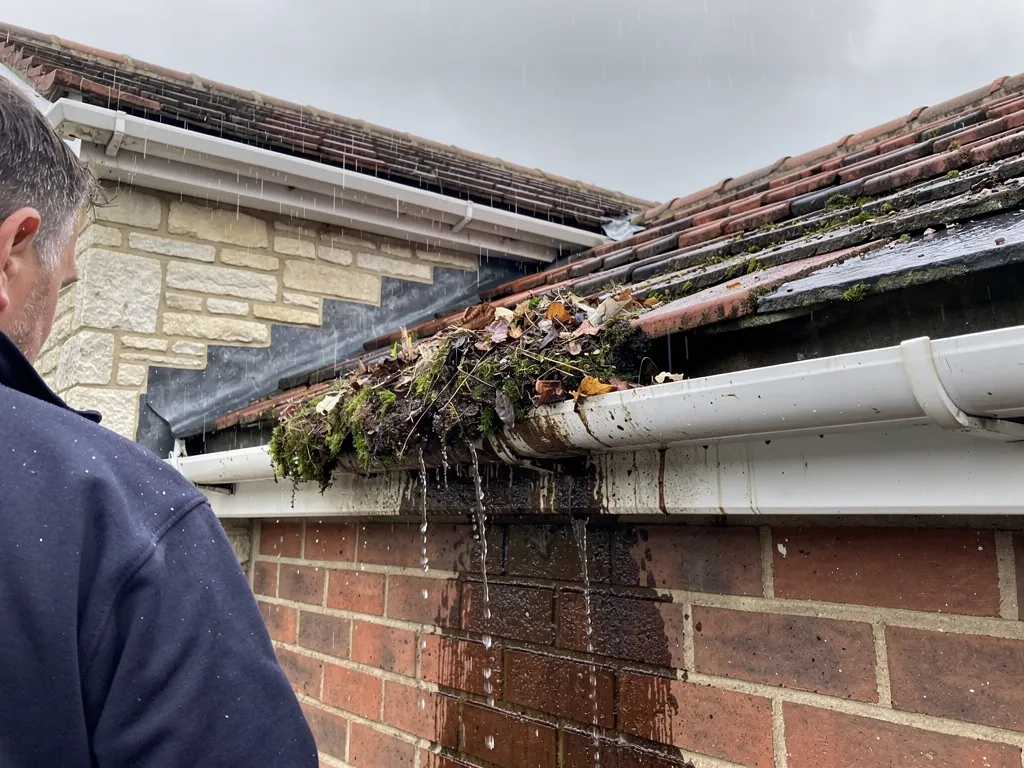
Blocked gutter full of leaves overflowing down a brick wall
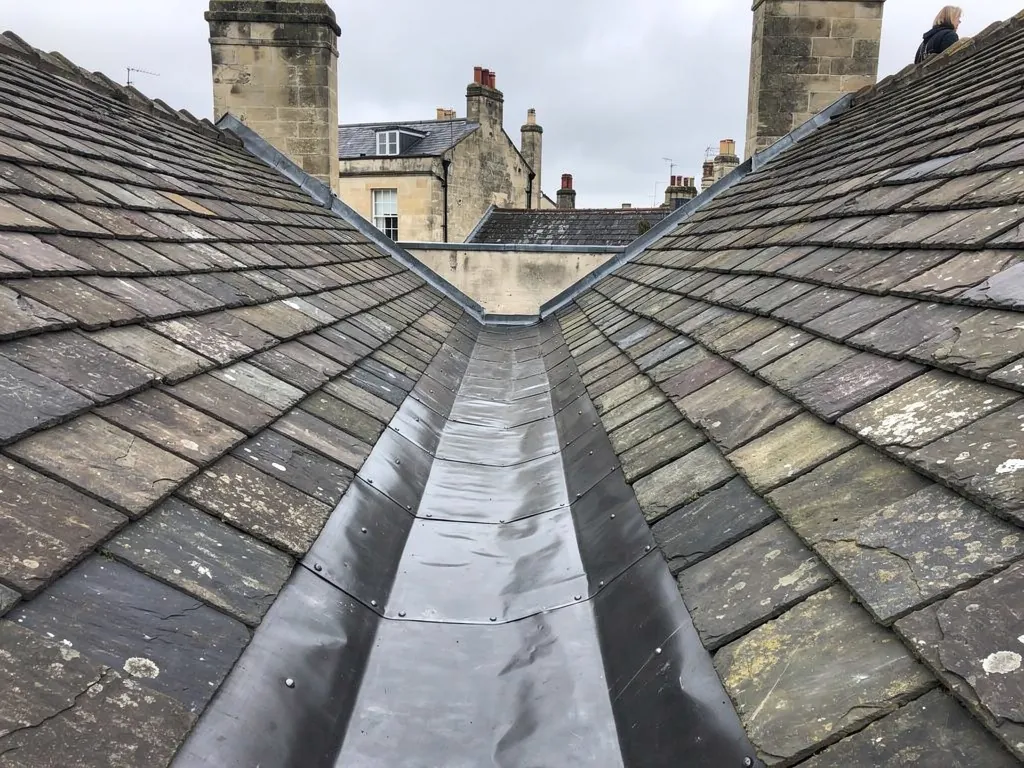
Lead-lined valley gutter between two slate roof slopes

The short answer

A mix that reflects how the village grew: eighteenth century cottages, buildings that served the chapel and school, farm roofs from the old estate, and homes from the post-war decades. Each age fails in its own way, so we read the roof before we recommend a repair.

Hook is a small place, and its roofs are better read as a set of separate stories than as one style. The village history records that the houses cluster in only one part of Lydiard Tregoze parish, and the buildings there date from several periods.

Why do neighbouring cottage roofs look so different?

An eighteenth century cottage may have a roof that was re-laid in the nineteenth century, patched in the twentieth and left alone since. When the estate sold its land in stages from 1920, with Hook Farm offered in 1930, farmhouses and cottages passed into separate hands, and each owner repaired their own roof in their own way. That is why neighbouring roofs on a lane like this can look so unalike: different tiles, different pitches, different ridge details, and often an extension attached at the back in yet another material.

What do you check first on a Hook cottage?

On a cottage with low eaves, gutters and fascias take the first beating, so a blocked or sagging gutter is the commonest early warning. Next come the chimney stack and its flashing, then the valleys and the roof edge at the gable. We photograph all of it, from the ground and from the roof, and the photographs go with the written quote.

What about barns, stables and cart sheds?

Barns, stables and cart sheds have long roofs, big gutters and heavy rain loads, and a failed section of rainwater goods can soak a wall for years. Our roof repairs page explains how we find a leak before recommending a fix.

Many of the buildings in a village like this have been extended or altered over the years, so the junction between old roof and new is worth a close look. A lean-to added to a cottage wall, a porch fixed under an eave, or a flat extension tied into a pitched slope each create a joint where water collects. We look at the joint first, because it is usually where the leak starts and the smallest place to put it right.

Q2

What suits the roof of a small chapel or hall?

The answer

A repair that respects how the building is used. Small chapels and halls have wide spans, few internal walls, and valleys and gutters that carry a lot of water. We survey, agree access and timing with whoever manages the building, and fix the fault without disturbing more than the work needs.

Hook's history includes a Primitive Methodist chapel dating from 1840 and a small iron chapel from 1886, enlarged three years later. Whatever a village building is used for now, its roof raises the same questions.

Why is a hall roof harder to keep sound?

A chapel or hall is usually a single open room under one roof. With no cross walls to share the load, the roof timbers span the full width, and any rot or sag is serious. A small tear in the felt or a slipped slate can let water into the timbers for months without anyone seeing it from inside the room. A survey that reaches the loft or roof void is the surest way to catch it, and where there is no safe way in, photographs taken from a ladder or a tower along the eaves show a good deal.

Can a rusting iron roof be saved?

Buildings roofed in corrugated iron or similar sheet metal fail by rusting along the laps, at the fixings and around any opening. Painting can buy years of life when the sheets are sound. Where the corrosion has gone through, replacing sheets, or the whole roof, is the honest answer. What matters is telling surface rust, which can be treated, from rust that has already cost the sheet its strength. A screwdriver tip pressed gently on the worst patch tells you more than the colour does, and the photographs we take show the same thing without anyone climbing on the sheets.

Does a chapel roof need consent?

A chapel still in use as a Methodist place of worship is outside the listed building consent system, because the Methodist Church runs its own. When worship stops, that exemption ends and the local authority's controls apply, which in Hook means Wiltshire Council. If the building has become a home or a hall, ask the council what applies before work starts. Our roof replacement page sets out how a complete new covering is planned, from stripping to the final check.

MythRust on an old sheet roof is only a cosmetic problem.

FactRust that has eaten through a lap or a fixing lets water in, and painting cannot restore metal that has gone.

Q3

What do Hook's post-war homes need from their roofs?

New black gutter, downpipe and white fascia on a brick house
Rainwater running off slates into a black gutter and downpipe

The short answer

Attention to the parts that wear out before the tiles do: ridge bedding, felt at the eaves, gutters, fascias and soffits, and flat roofs over garages and extensions. A survey with photographs shows which of those are failing and which still have years left.

The Victoria County History notes a few council houses built at Hook after the Second World War, and later infill has joined them. The roofing needs of homes from these decades are well known, and most of them sit at the roof edge or on the flat roofs attached to the house.

Could the roofline boards hide a problem?

The roofline is where water first gets into a house of this age. Gutters sag, joints leak, and fascia boards behind them rot where water has run down for years. Soffits, the boards under the eaves, can also hide an older material. HSE names external soffits among the spots for asbestos insulating board, and it is hard to tell it from a safe board by eye, so on a pre-2000 house nobody should drill or break one until it has been identified. HSE puts most removal of that board in its higher-risk category, so if it turns up on survey we stop, tell you what we have found and explain what the next step is. Sound boards that are left undisturbed and painted are a different matter from boards that are cracked or wet, and the photographs show which you have.

Does a concrete-tiled roof need re-covering?

On a concrete-tiled house, small repairs usually answer the problem: ridge tiles re-bedded and fixed mechanically, a few slipped tiles replaced, a torn strip of underlay renewed. The roof only needs re-covering when the failures are widespread, and we show you where they are. If a re-cover is the answer, Wiltshire Council's building control team, or a registered building control approver, is the route for approval where the work calls for it, and we explain that before you sign.

What do roofline repairs typically cost?

National guides price rainwater goods and roofline boards by the metre, and the figures below are their typical ranges, not ours. What your house costs is one total figure in the written quote after the survey.

What it typically costs

  • Replacing guttering£30 to £70 per metre
  • Fascia boards£80 to £150 per metre
  • Soffit board£100 to £180 per metre
Typical national ranges, before scaffold, removal and disposal. MyBuilder gutter, fascia and soffit guide, updated 21 August 2026.

Questions from Hook Street

Why do the cottages on Hook Street have such different roofs?

Because the farms were part of a large estate that was broken up. The Victoria County History records that Hook's farms belonged to the St John (Bolingbroke) estate, which sold its land in stages from 1920. Once houses passed to separate owners, each roof was repaired in its own way, which is why neighbours can differ in tile, pitch and ridge detail, and why we read each roof on its own terms.

Is a former chapel roof treated differently from a house roof?

It can be. A chapel in use by the Methodist Church is covered by the ecclesiastical exemption, but once worship stops, listed building and planning controls apply as they would to any other building. If you have bought or are converting one, ask Wiltshire Council first, and send us photographs so we can talk through the roof.

Do you cover Lydiard Tregoze and the lanes towards Purton?

Yes. Hook, the rest of Lydiard Tregoze parish, Purton and Royal Wootton Bassett all sit within 30 road miles of Swindon, the radius we work across. A rural lane or a farm track makes no difference to the survey.

Could the soffits on my Hook house contain asbestos?

They could if the house was built or refurbished before 2000. HSE's guidance is to assume asbestos is present in buildings of that age, and it names external soffits among the places insulating board turns up. Leave the board unbroken. We identify the material first, then tell you what the options are before any work is priced.

Ask us about your roof

Tell us what’s happening and we’ll call you back.

  • Photos of what we find
  • A written quote
  • 10-year workmanship guarantee

Or call 01793 626096

Call Get a quote