
A roof coating is a liquid that is rolled, brushed or sprayed onto an existing roof and cures into a continuous skin. On a large industrial or retail roof it can look like the cheap alternative to a new covering, and sometimes it is the sensible one. A tired but sound metal sheet roof, with its laps and fixings sealed, can be given a further period of service without the disruption of stripping it.
The trouble starts when a coating is asked to do a job it was never designed for. It sits on the surface and takes on the shape and condition of whatever lies beneath. If that surface is wet, corroded through or moving, the coating will fail with it. This guide explains the common systems, the checks that decide whether coating is a good idea, and the situations in which a different approach is better. For the alternatives, our guide to roof overcladding covers fitting a new sheet over the old.
What a commercial roof coating actually is
The word covers several different chemistries, and they behave differently. Acrylic coatings are water-based, relatively easy to apply and often used on metal and felt where the roof drains well. Polyurethane coatings form a tougher, more flexible film and tend to cope better with foot traffic and movement. Silicone systems shed water and resist ponding better than most, but they attract dirt and are difficult to recoat with another chemistry. Bitumen-based and cementitious products appear on older flat roofs and sit between the two in cost and performance.
Most systems are built up in stages rather than applied as one coat. A cleaning and preparation stage comes first, then a primer where the surface needs one, then a base coat, a reinforcing fleece or fabric over joints and details, and a top coat. The reinforcing layer is what turns a thin film into something that bridges cracks and laps, and it is the part cheaper quotations tend to leave out of the description. A roof coated without it is more likely to craze or split along the lines where sheets meet.
Is a coating the same as a new roof covering?
No. A new covering such as a single-ply membrane replaces the waterproof layer and is designed to do its job without help from what lies below. A coating works with the existing surface and depends on it. That is why the survey comes before the product choice, and why our commercial roofing work always starts on the roof itself rather than from a catalogue.
Where coatings work well
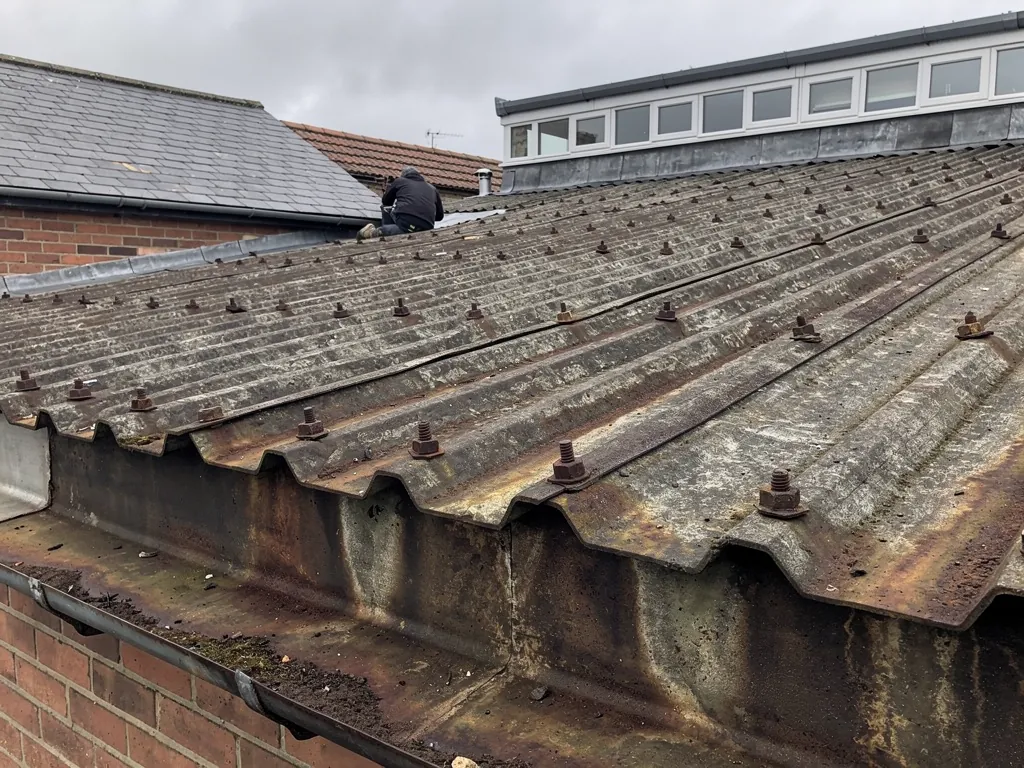
The best candidate is a roof that is leaking at its seams, not through its sheets. Profiled metal roofs on industrial units and warehouses often start to leak at laps, around fixings, at rooflight edges and along ridge flashings long before the sheets themselves have failed. If the metal is sound, fixed firmly and not heavily corroded, a coating system with reinforced details can seal those paths in one operation across the whole roof.
Felt and bitumen roofs on flat sections can also be coated, provided the surface is dry and the felt is still stuck fast to the deck. Cracked or blistered felt can be cut out, patched and then sealed under a reinforced coating, which delays full replacement. Single-ply roofs sometimes take a coating too, although compatibility is the key question and the manufacturer's data sheet is the reference.
Does it help with heat and energy use?
Reflective top coats reduce solar heat build-up on metal roofs, which can matter in a unit with a low roof and equipment inside. A coating does not insulate in the sense of Part L, however, and it should not be described as insulation. If thermal performance is the real concern, commercial roof insulation is the page to read.
The checks that decide whether to coat
Before any product is chosen, the roof needs to pass a series of simple tests. The surveyor is looking for the condition of the substrate first. Corrosion on metal sheets is graded from surface rust, which can be treated, to perforation, which cannot. Fixings are checked for looseness, since a coating over a screw that is backing out will crack as it moves. Laps are inspected for gaps, and sheets are examined for deflection that suggests the purlins beneath are moving.
Moisture is the second issue. If water has got into the insulation of a built-up or composite roof, a coating can trap it. A moisture survey, using a meter or thermal imaging, shows where wet areas lie. Where the insulation is saturated, coating over it conceals the trouble for a winter or two at best. For roofs that are more than one layer thick, our guide to commercial roof layers explains how to read the build-up.
What about adhesion and weather?
Surfaces must be clean, dry and free from oil and loose paint, and the application needs settled weather. Coatings cure by drying or by chemical reaction, and rain or heavy dew during the first hours can ruin a coat. That is why larger jobs are programmed around the forecast, and why a coating is rarely the right choice for an emergency on a wet day.
Where coatings stop working
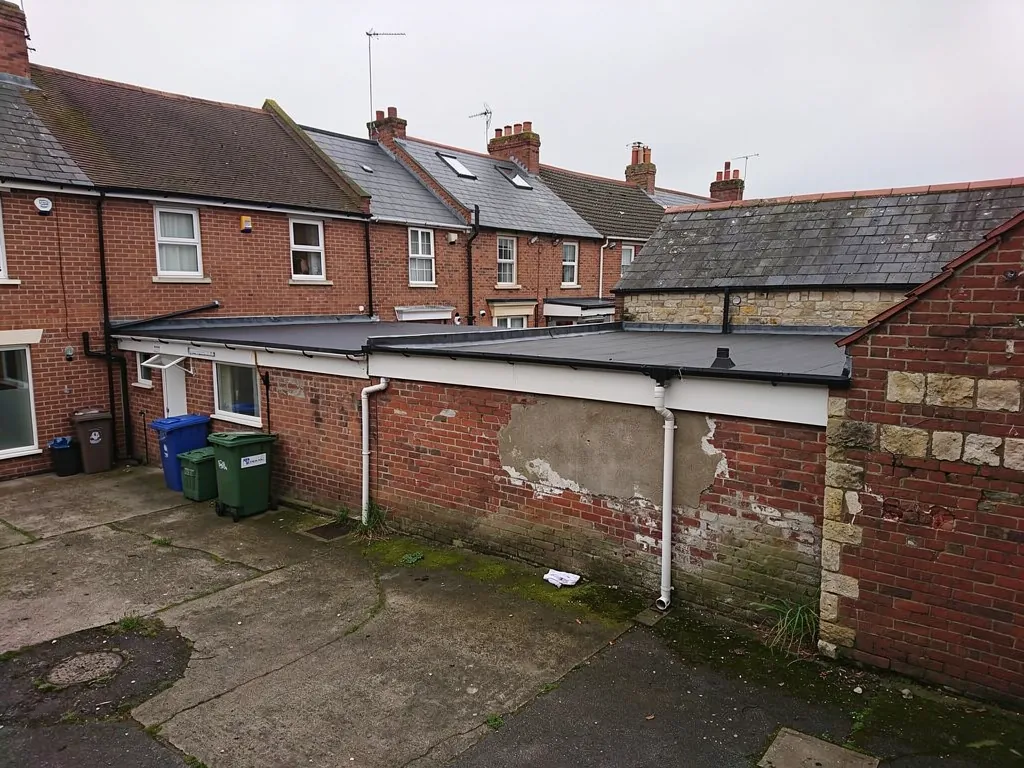
Standing water is the first limit. A flat roof that ponds, because the deck has sagged or the falls were poor, will hold water on the coating for days after rain. Some silicone systems tolerate this better than others, but ponding is never ideal, and the underlying cause remains. Flat-roof guidance points to a design fall of 1:40 to achieve a finished minimum of 1:80; a coating cannot create the fall the roof lacks.
Structural failure is the second limit. A sheet that is corroded through, a purlin that has rotted or a fixing that has pulled out of its support cannot be repaired by painting over it. The same applies to a roof that is fragile: coating does not make it safe to walk on, and the access arrangements covered in our guide to fragile roofs and safe working still apply.
Repeated recoating is the third limit. Each layer adds weight and, where a different chemistry is chosen, can cause adhesion problems. After several cycles the cost of preparing the surface rises and the cheap option stops being cheap. At that point we would rather say so than apply another coat.
If a roof was built or refurbished before 2000, HSE advises assuming that asbestos is present until a survey shows otherwise. Do not clean, scrape or coat a roof of that age until it has been checked.
Asbestos cement sheets, churches and special roofs
Older industrial sheets are often asbestos cement, and the first question on any such roof is whether it has been identified. HSE says that careful handling of weathered but not substantially damaged asbestos cement is non-licensed work. Cleaning, brushing and pressure washing of such sheets is a different matter, because it can release fibres and spread contamination. Encapsulating coatings are sold for the purpose, but a decision to coat should follow a proper survey and advice on the rules that apply, not a sales pitch.
Special buildings need their own thinking. A listed building, a conservation-area building or a church roof may restrict what can be applied to the surface, and some historic coverings should not be coated at all. Lead and stone are examples. Our guide to church roof repairs explains the consents that apply to places of worship.
Does coating affect Building Regulations?
It depends on what the work is. Under Approved Document L, renewing a flat roof's waterproof membrane counts as renovating a thermal element, which can trigger an insulation upgrade. Whether a particular coating system counts is a question for your building control body, and we would raise it before work starts. Coating a metal roof to seal it is a different job from stripping a membrane, and a short conversation with building control settles which one you have.
Warranties, lifespan and what to ask a supplier
Coating manufacturers commonly offer product or system warranties, and these are worth reading closely. A warranty is not a lifespan. It sets out what the manufacturer will do if the product fails under stated conditions, usually requiring approved preparation, approved applicators and the right number of coats. Check what is excluded, such as ponding, foot traffic, damage by others and roofs not maintained to the stated schedule.
Lifespan depends heavily on the substrate, the exposure and the maintenance. Flat roofs generally last 15 to 30 years according to MyBuilder, and a coating on a roof that is already near the end of that span is buying time, not renewing the roof. Ask any supplier, and any contractor quoting for the work, for the data sheet, the specification for your type of roof, and the preparation steps that come before the first coat.
What should the specification say?
It should name the substrate, the cleaning method, the primer, the number of coats and their thickness, the reinforcement used at laps and details, and the curing time before the roof can be used. A written specification lets you compare like with like if you ask more than one firm.
Planning a coating alongside maintenance and cost
A coating is most useful as part of a plan. A roof that is surveyed, cleaned, repaired and coated, then inspected every year or so and kept clear of debris, will give the best return from the coating. Neglect after coating, particularly blocked gutters and outlets that cause ponding, shortens the benefit. Our planned roof maintenance guide describes what a regular visit covers.
Cost comes down to area, preparation, how much of the roof needs repair before coating, the access equipment needed and the system chosen. Moss and lichen removal, rust treatment and fixing replacement are often a large share of the work. The written quote is issued once the survey is done, with pictures taken on site, which lets you see the preparation involved before agreeing to anything. A coating specification should show that clearly, with the extent of repair work stated. For the wider picture on budgets and when replacement is the cheaper long-term option, read commercial roof cost.
Our approach is to price only what the fault needs, and our work carries a 10-year workmanship guarantee in writing. Sometimes that is a coating. Sometimes it is a patch, an overcladding or a new covering, and the survey tells us which. Send us photographs, the roof type and any previous reports through the enquiry form, on WhatsApp or by phone on 01793 626096.