
Ask five commercial tenants who is responsible for the roof and you may get five different answers, all of them confident. That is because there is no single rule. A landlord is responsible for a commercial roof only where the lease, or the arrangement for a shared building, puts that duty on the landlord. Where the lease puts it on the tenant, the tenant pays, even though the tenant does not own the building.
For a warehouse tenant in Swindon, a shop owner on a parade or a landlord with a small industrial estate, the practical question is which clause to read and in what order. This guide walks through the usual lease structures, what a service charge can and cannot cover, and what a roofer needs from you before pricing. It is general information, not legal advice: for a dispute, take advice from a solicitor who handles commercial leases. If the roof itself needs assessing, our commercial roof survey guide shows what a written report contains.
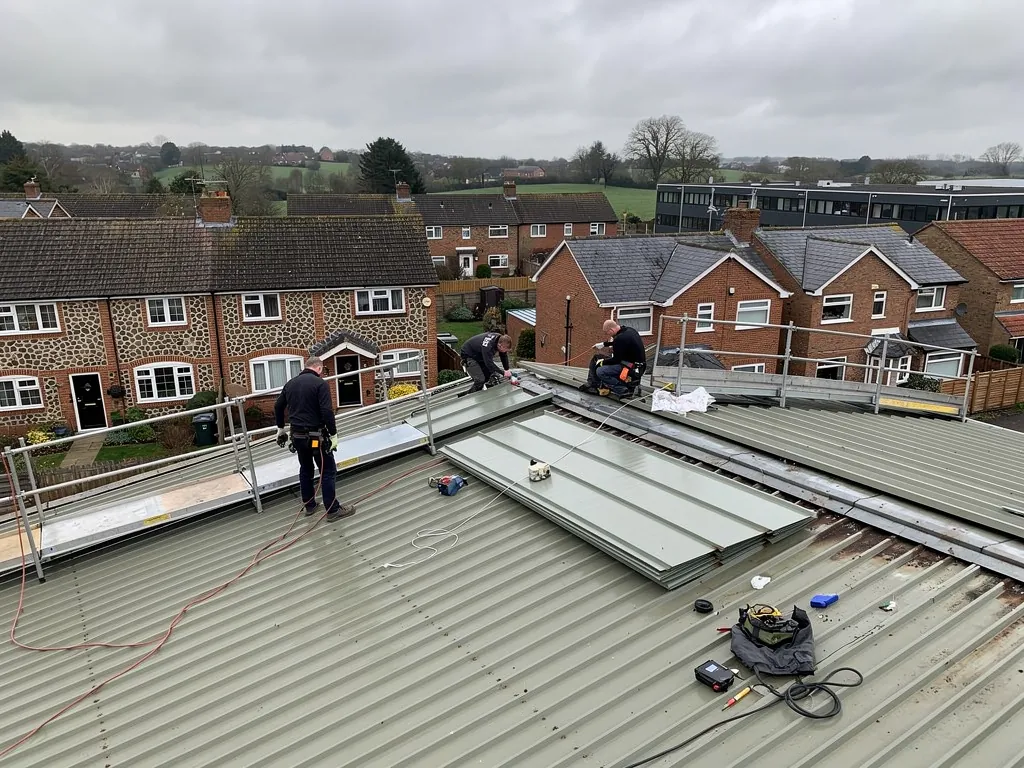
Why the lease settles it, not the law of the land
Commercial tenancies are governed mainly by the contract between the two parties. Unlike a home rental, where some repair duties are fixed for the landlord whatever the agreement says, a commercial lease is a negotiated document and the parties are largely free to divide the repair burden as they like. So the first step in any roof dispute is to find the lease, not to guess at what a landlord ought to do.
Three parts of the document matter most. The first is the description of what has been let, often called the demise. A lease may let the whole building, a floor, or only the internal space of a unit with the roof, the structure and the external walls kept back by the landlord. The second is the tenant's repairing covenant, which says what the tenant must keep in repair. The third is the landlord's covenant, if there is one, and the service charge schedule that explains what the landlord can recover from tenants.
What if the roof is not mentioned at all?
Silence is common in older or shorter documents. A roof that is not named is judged by what the demise includes. If the tenant has the whole building, the roof is normally part of it. If the tenant has a unit within a larger building, the roof above is more likely to stay with the landlord. Where the wording is unclear, a solicitor reads the whole lease together rather than one clause on its own.
Full repairing leases and the single-let unit
The most common arrangement for a whole building let to one occupier, such as a trade unit, a small factory or a stand-alone showroom, is a full repairing lease. The phrase is often seen as full repairing and insuring. It means the tenant takes the whole building, including the roof, and agrees to keep it in good repair for the length of the term. The landlord's role is mostly to collect the rent.
That surprises many tenants who assume that the owner looks after the big items. Under a full repairing lease the tenant pays for gutters, rooflights, sheet fixings and leaks, and may also be asked to hand the building back in the condition the lease requires. A tenant who takes on a tired roof with a long lease is taking on a real cost, which is why a schedule of condition is worth agreeing at the start. It is a dated record, usually with photographs, of how the building looked on day one, and it limits what the tenant can later be asked to put right.
Does a tenant have to replace a failed roof?
Not necessarily. Repairing covenants usually oblige the tenant to repair, which is different from rebuilding. Whether a particular job counts as repair or as something larger is a legal question that turns on the wording and the facts, and it is a common source of disagreement. Rather than guess, ask for a written scope from a roofer and take the lease and that scope to a solicitor together.
For a roof that is reaching the end of its life, it also helps to compare the repair cost with the cost of a new covering, which our commercial roof cost guide sets out.
Multi-let buildings and the service charge
When several tenants share one building, such as a terrace of units on a trading estate, a parade of shops with flats above, or an office block, the landlord usually keeps the roof and the structure and recovers the cost from the tenants. The mechanism is the service charge, a share of the landlord's costs set out in each lease and paid on top of the rent. Roof repairs are commonly recoverable this way where the lease says so, but only to the extent the lease says so.
That wording matters in three ways. The lease must actually include roof repairs among the costs the landlord can pass on. The share each tenant pays must follow the lease's formula, which is often a fraction based on floor area. And the costs must be reasonable, which is why a landlord who plans a large roof job should expect questions and should keep written quotes and survey notes on file.
Can a landlord charge for a whole new roof?
Sometimes, sometimes not. Many leases limit the service charge to repair and maintenance, and a full renewal of the covering can fall outside that depending on the wording. Others include a sinking fund, a reserve collected over years to spread the cost of large items. If you are a tenant facing a big demand, ask for the quotes, the survey and the clause the landlord relies on. If you are a landlord, a written condition report makes the case for the work far easier to explain.
Landlords of multi-let buildings often find that planned maintenance is easier to recover and explain than an emergency job. Our planned roof maintenance guide covers how a regular inspection programme works.
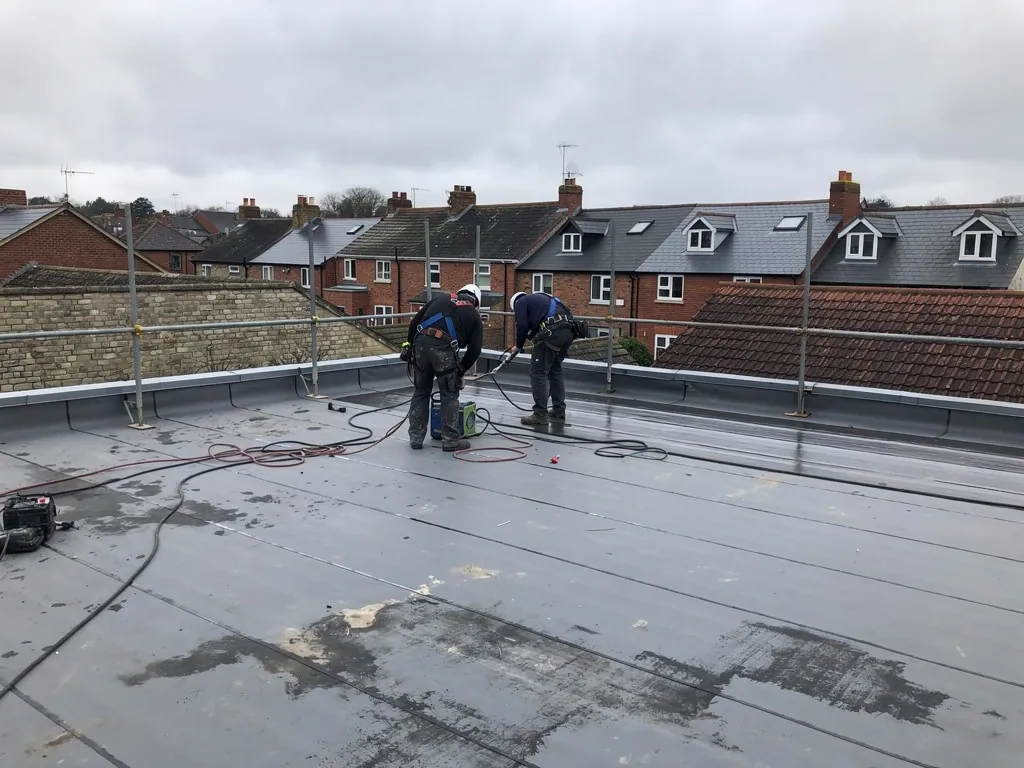
Where the roof sits in a repair, a defect and a renewal
Three words come up repeatedly in these disputes, and they do not mean the same thing. A repair puts right damage or wear to something that exists, such as replacing a cracked sheet, resealing a lap or renewing a failed flashing. An improvement is a change that makes the roof better than it was, for example a different system, added insulation or a new covering over the old. A defect in the original design or construction is a flaw that was there from the start, and it raises questions about who built it, not only who maintains it.
The distinction matters because the lease may oblige a party to repair but not to improve. A tenant asked to pay for an overclad of a failing asbestos cement roof, for example, may reasonably ask whether that is a repair or an upgrade. Where the covering has simply aged out, the answer often depends on how the lease words the duty and on the evidence about the roof's condition.
Why does the survey evidence matter?
Because it fixes the facts. A written report with dated photographs of the covering, the fixings, the laps, the gutters and the rooflights records what is wrong and how widespread it is. Both sides, and a solicitor if one is needed, can then argue from the same record instead of from memory. A report that shows whether a localised patch is enough or the sheets are close to the end of their working life settles most of the argument.
Where a roof is made of layers added over time, how commercial roof layers build up explains what a surveyor is reading.
Insurance, storm damage and the cause of a leak
Buildings insurance sits alongside the repair question and does not replace it. In many commercial leases the landlord arranges the buildings policy and recovers the premium from the tenant, or the tenant arranges it and notes the landlord's interest. Which applies is stated in the lease. Either way, an insurer is more likely to ask what caused the damage than who is responsible for the roof.
Policies often distinguish between sudden damage and gradual deterioration. The Financial Ombudsman Service asks whether there was a storm on the date in question, whether the damage is consistent with storm damage, and whether storm conditions were the main cause or whether the damage might have happened anyway. Which? warns that cover for wear and tear can be missing from standard policies, with water entering through a poorly maintained roof as its example. None of that is a promise either way: whether a claim succeeds is for the insurer, and we do not handle claims.
What should I record after a storm?
Photographs of the damage from a safe position, the date and time you noticed it, the weather at the time, and any temporary repair made, with receipts. Advice issued by the Association of British Insurers for Storm Eunice in 2022 was to contact your insurer as soon as possible, and to arrange emergency repairs to stop things getting worse but speak to the insurer first. A roofer can then add a written description of the cause on inspection, which helps whoever is making the claim.
Reporting a leak and giving access
Most leases require a tenant to tell the landlord promptly about disrepair, and some make the tenant liable for extra damage if they sit on a defect. A short written notice with photographs, sent by the method the lease specifies, starts a clear timeline. If the roof is the landlord's responsibility, written notice is the tenant's best tool. If it is the tenant's, written notice to the landlord is still good practice where consent is needed for the works.
Access is the other practical hurdle. A roofer working above a trading unit needs to reach the roof safely, and a roof shared by several tenants may need the landlord's permission, a gate key or an arrangement with neighbouring units. Fragile roof sheets and rooflights mean fall protection and a clear plan, which is covered in our guide to repairing a roof while the business keeps trading.
Who arranges a temporary repair?
Whoever is responsible for the roof under the lease, but where a leak is damaging stock or equipment, waiting for a dispute to be resolved is usually the wrong move. A make-safe repair that stops water entering can be done first, with the argument about cost settled afterwards, provided everyone has agreed in writing that the temporary work does not decide who pays.
What to send before we survey the roof
Having the right papers to hand shortens the whole process. The survey and the written quote that follows are quicker when we know who the contact is, what the lease says about the roof, and whether anyone else needs to sign off the work. Our advice is to do only what the fault requires, and to say where a repair will do and where a section needs replacing.
Photographs of the roof come with the quote, and the work carries a 10-year workmanship guarantee in writing. The landlord, the tenant or a managing agent can instruct the work, as long as the lease allows it.
Send the demise plan or lease extract that covers the roof, the service charge clause if the building is shared, any previous roof reports, and photographs of the leak or damage with dates. Ring 01793 626096, use WhatsApp, or fill in the enquiry form.
Where the debate is over a large job, the commercial roof design guide explains what drives the specification, and the options in single-ply membranes or metal roof sheets show what a new covering could be. For the wider service, see commercial roofing.