
Roof coatings are sold as a quick route to a tidy roof. A tile roof that has gone dark and patchy gets cleaned, sprayed or rolled with a pigmented coat, and the house looks different by the evening. For a certain kind of roof in a certain condition, that can be a fair decision.
The trouble is that a coating is a surface treatment, not a repair, and it changes how the roof behaves and how it is judged. It can hide faults a buyer's surveyor would want to see, it ties you to a recoating cycle, and on some buildings it needs consent before it goes on. None of that makes coatings wrong. It makes them a decision to take with the facts in front of you. We set out those facts below, then explain how we approach the question when we survey a roof. For the wider cleaning picture, see our roof cleaning and moss removal page.
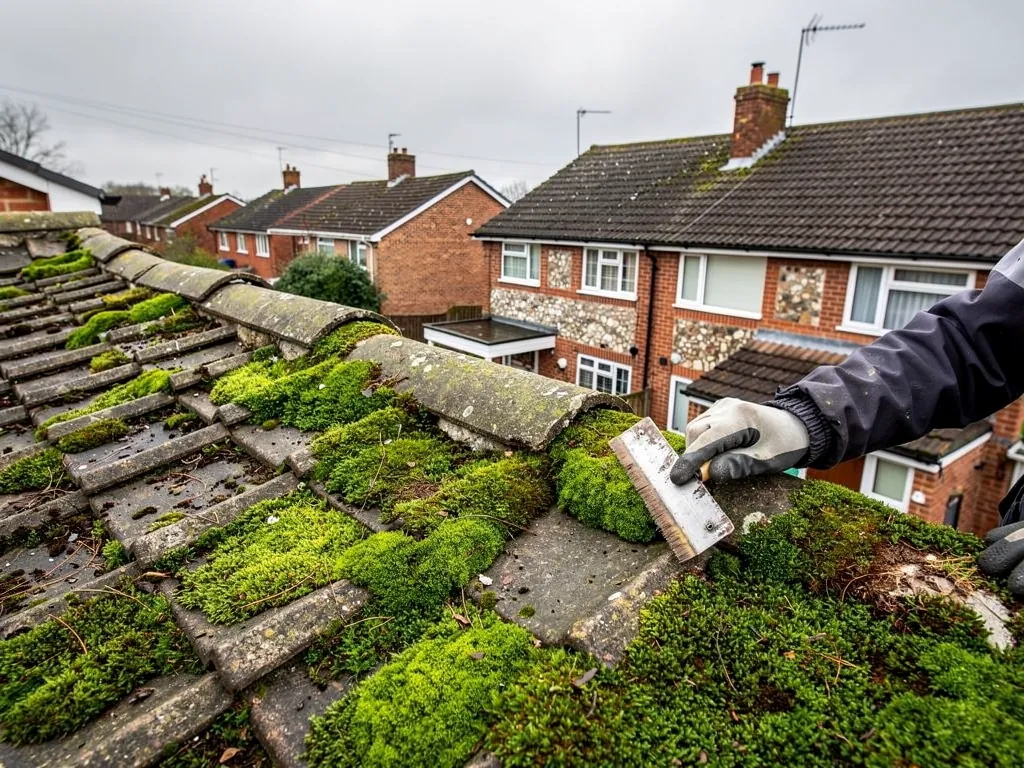
What a roof coating is meant to do
A domestic roof coating is a paint-like film applied over a cleaned roof covering, usually concrete tiles. The makers describe a handful of aims: to renew the colour of weathered tiles, to give the surface a smoother finish that sheds moss and algae spores less readily, and to seal a very porous surface so it soaks up less water.
Those aims are reasonable. A concrete tile is a cement and sand product, and as it ages the thin skin on top wears, exposing a rougher, more absorbent face. Moss and lichen take hold on that face, and the roof looks tired. A coating gives the surface a new skin, which is the whole proposition.
What it cannot do is change what is underneath. A tile that has cracked still leaks through the crack. A slipped tile stays slipped. Perished mortar at a verge or ridge stays perished. The coat sits on the outside of everything and says nothing about whether the roof is sound. Colour charts and sample boards show how the finish looks on the day, not how the tiles beneath are faring.
Some products are marketed as sealants that bridge small cracks. Even where that is true, a hairline crack that has been bridged is still a crack, and the movement that made it is still there.
Is a coating a roof repair?
No. It is a cosmetic and surface-protection treatment. If the roof needs a repair, the repair comes first, and the coating, if wanted at all, follows once the fabric is sound. We would rather you knew that before you pay for a colour change over a fault.
Where coatings go wrong
Most of the problems with coatings come from preparation and from what the coating is laid over. A coat applied to a damp, mossy or half-cleaned surface does not bond properly, and the first sign is flaking or peeling at the edges of tiles and along the overlaps, where the film is stretched and rubbed.
Four failures come up repeatedly.
- Poor adhesion. Dirt, algae residue, or leftover treatment under the coat stops it gripping, so it lifts in patches.
- Trapped moisture. A tile that is already wet inside, sealed on the outside, dries slowly, and moisture held in a cement tile can push the film off in cold weather.
- Blocked ventilation. Some roofs have small gaps and vents between tiles that matter for airflow. A thick coat run into those gaps can narrow them.
- Uneven finish. Runs, thin patches and brush or spray marks show up in low sun, and they are permanent until the roof is recoated.
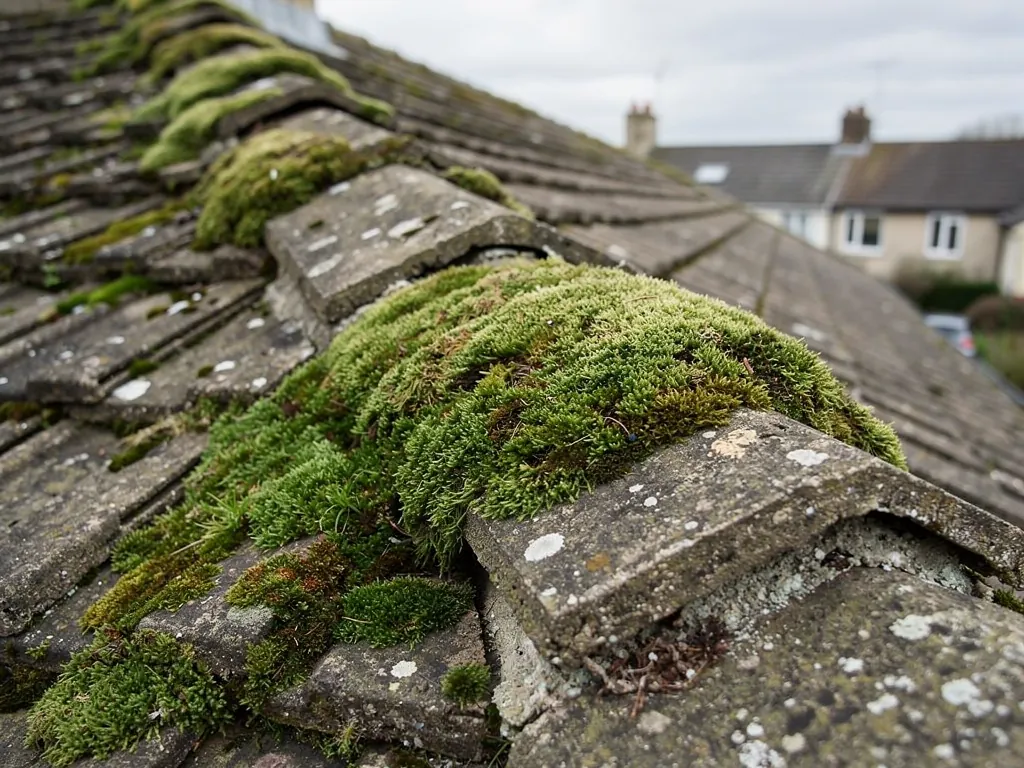
Moss and algae also return to a coated roof, often more patchily than before, which can leave the roof looking worse than an plainly weathered one. A coating may give them a harder time at first, but spores land on any surface that stays damp and shaded, and a coating that has lost its sheen holds dirt like any other. If your roof is shaded, our guide on lichen on roofs explains why growth often comes back faster than owners expect.
Which roofs suit a coating, and which do not
A coating makes most sense on concrete interlocking or plain tiles that are sound but weathered: no cracks, no slipped courses, tidy ridges and a surface that has simply faded. Even then the owner takes on a maintenance commitment.
Several types of roof are a poor fit.
Should natural slate or clay be coated?
We would not usually advise it. Natural slate and clay tiles are valued for their own colour and texture, and they are designed to weather. A film over them changes the look of the roof for good and tends to hide a valuable material. Slate that is failing needs repair or a re-slate, not paint.
What about older concrete tiles?
Old concrete tiles that are crumbling or very porous may drink a coating unevenly. The surface can look blotchy, and the tile beneath may have little service left, in which case money spent on a coat is money spent on a roof that will soon need replacing. A survey tells you which side of that line you are on.
Is a coating suitable for a roof with heavy moss damage?
Only after the moss is removed and any damage repaired. Coating over live growth is the quickest way to a failed finish. The best time of year for the preparation stage depends on dry settled weather, which our guide on the best time to remove moss covers.
Flat roofs are a different subject altogether. Liquid and membrane coatings on felt, EPDM or GRP are repair and maintenance products with their own rules, and we deal with them on the flat roofing pages.
Listed buildings, conservation areas and consent
A new colour or finish on a roof alters what neighbours and passers-by see, and that is where consent can come in. Section 55 of the 1990 planning legislation puts maintenance works outside the definition of development where they leave the outward look of the building materially unchanged. A visible colour change can cross that line, and the council decides whether it does.
In a conservation area, planning rules are tighter, and some areas have an Article 4 direction that withdraws permitted development rights. The council's conservation areas page lists 27 areas, and it notes Article 4 directions for the Railway Village and for Bishopstone. If you live in a conservation area, speak to Swindon Borough Council's planning team before coating a roof, and to your own authority if the house is outside the borough.
For a listed building, the rule is firm. A listed house needs consent for any alteration that changes its special character, and carrying out unauthorised works is an offence. A coat on a listed roof, whatever the covering, is a question for the council's conservation officer before any work starts, not after.
If your house is listed, or you are unsure whether it sits in a conservation area, ask the council before anyone coats the roof. Consent is far easier to get beforehand than to put right afterwards.
Our guide to cleaning listed roofs covers the cleaning side of those same buildings, and the points it makes about gentle methods apply with more force to coatings.
What buyers' surveyors and lenders may ask
This is the concern we hear raised most quietly. When a house with a coated roof goes on the market, the buyer's surveyor inspects the roof as they would any other. A freshly coated roof gives them less to see: the surface is uniform, and defects a surveyor would normally note may be less visible. A careful surveyor will often say so in the report and may recommend that the roof is inspected closely.
That can lead to a conversation. A buyer may ask what the coating is, when it was applied, who applied it and whether there is any paperwork. If there is no record of what was used, the buyer may ask for a roof inspection, a price reduction or reassurance from the seller. None of this is certain, and each surveyor and each lender sets their own approach. But the pattern is common enough to plan for.
What paperwork is worth keeping?
Keep the written quote, the product name and data sheet, the date of application, photographs of the roof before the clean and after the coat, and anything the applicator says about recoating. If a guarantee is offered, keep that too and read who it protects and for what.
Should I mention a coating to my insurer or lender?
It is reasonable to ask. Lenders and insurers set their own policies, and none of us can speak for them. A short call costs nothing, and an email reply gives you something in writing if the question comes up on a sale.
Ongoing cost and the recoating cycle
A coating is not a one-off purchase. The film weathers, loses its sheen and eventually wears at edges and overlaps, and at that point the owner chooses between recoating and living with the look. Manufacturers give estimates of how long a coating lasts, and those are best read as a sales claim rather than a promise. Exposure, shade, tree cover and the quality of the preparation all change the result.
Recoating has its own preparation cost, because the old film has to be assessed, cleaned and in places stripped back before new coat goes on. The clean itself costs what any roof clean costs; our page on roof cleaning costs gives published UK ranges. The coating comes on top of that.
What are the alternatives?
Often the better value is simpler. A careful clean with a proper treatment, repeated when the growth returns, keeps a sound roof presentable and leaves the tile unchanged. Where the issue is black staining rather than moss, our answer on black streaks on roofs explains the cause and the usual treatment. And where the roof has genuinely come to the end of its life, the proper fix is a new covering, not a new colour.
When we survey a roof we say plainly which of these we think suits the building, and we steer you to the lightest job that settles the problem. You get survey photographs of the roof along with the written quote, and repairs we carry out are covered by a 10-year workmanship guarantee in writing.