
People ask when moss should come off a roof as if there were one correct month. There is not. Moss grows wherever a roof stays damp and shaded, and in this part of Wiltshire that describes plenty of roofs for much of the year. What changes with the seasons is how safe and how effective the cleaning is, and how long the result looks good before the next damp winter starts to undo it.
This guide takes the year season by season, then covers the weather that rules a day in or out and the cases where waiting is a mistake. For the wider picture, see our roof cleaning and moss removal page.
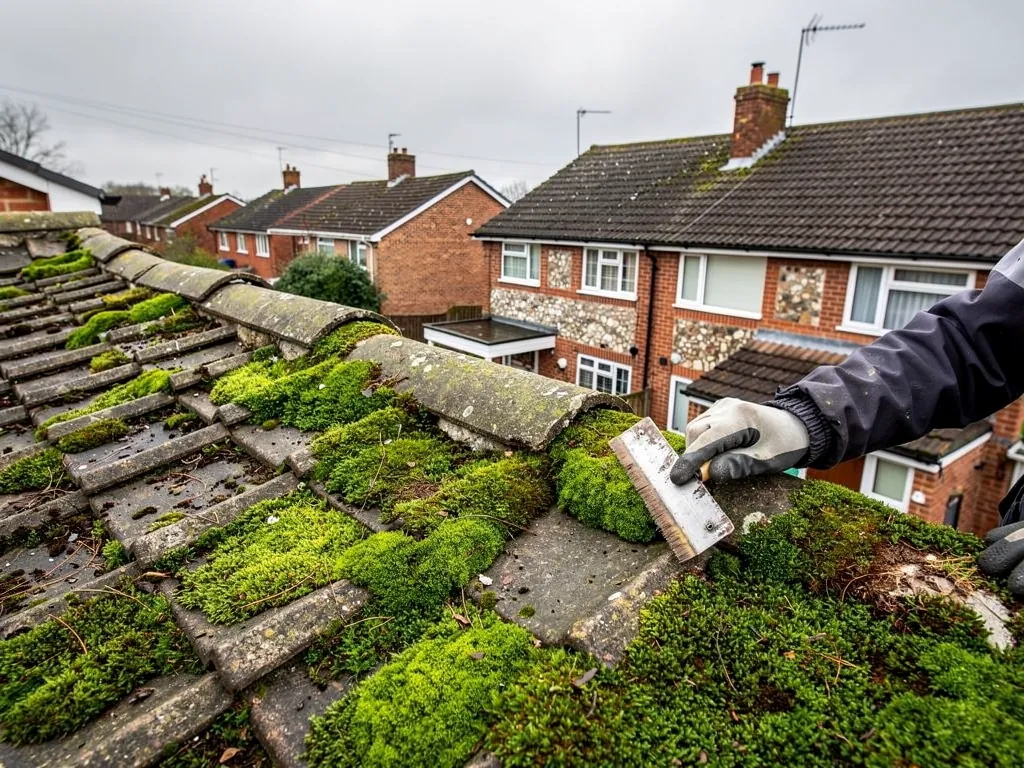
Why the calendar matters less than the forecast
A roof is cleaned on a particular day, not in a particular season. A bright, still week in February can be a better working window than a showery week in May. What we look for is a stretch of dry weather on either side of the job, a roof that is not iced over or soaking wet, and wind light enough to work at height and to keep spray and debris where we want it.
That said, seasons do shape the odds. Moss is a plant that thrives on moisture and survives drought by shrivelling and waiting. It spreads by spores, and it keeps growing slowly through mild, damp spells even in winter. Roofs that face away from the sun, sit under trees or run alongside a tall neighbouring wall hold water longest and grow moss most reliably, so those roofs need a slightly different approach to timing from an open, south-facing slope.
Does moss grow all year round?
It grows most strongly when it is mild and wet, and slows when it is cold or properly dry. On a shaded north-facing slope it may never stop completely. Brown, brittle moss in a dry summer is dormant, not dead, and it greens up again with the first prolonged rain.
Spring: the usual first choice
Spring is the season most roofers prefer for a clean, and there are good reasons. The roof has come through the wettest months and is carrying the most moss it will carry all year, so the case for cleaning is clearest. The weather is turning drier and the days are lengthening, so a job is less likely to be postponed or cut short. Roof surfaces dry out between showers, which helps both manual removal and any treatment applied afterwards.
Cleaning in spring also means the roof is clear before the growing season for moss and algae picks up again, and before the leaf cover of summer makes access awkward under overhanging trees. If the roof has been neglected, spring is a sensible time to find out what lies underneath: slipped slates, cracked tiles and failed pointing show up as soon as the moss is gone, and there is time to put them right before the next winter.
Is there a downside to spring?
Spring is also when birds start nesting in roof edges, eaves and chimney tops. Nesting birds are protected, so work around an active nest has to wait or be planned around it. If we see a nest in use during the survey, we tell you and agree what to do.
Summer: dry, but not always ideal
Summer looks like the obvious answer, because dry weather is exactly what a cleaning job wants. Often it works well. Moss on a hot, dry roof is brittle and comes away more easily by hand, and treatments get the settled spell they need to do their work.
There are catches. A roof in strong sun can become very hot to work on, and tiles that are too hot to touch are a safety problem for anyone kneeling or walking on them. A hot, still spell is also the time when summer thunderstorms arrive, and a downpour can arrive within minutes of a clear sky. Early starts help, and so does choosing a day with some cloud cover.
Does summer cleaning last longer?
Not in itself. How long a roof stays clean depends on shade, trees, the roof material and what has been done to slow regrowth. Our guide on what a moss-free guarantee really means explains how to read promises about the future.
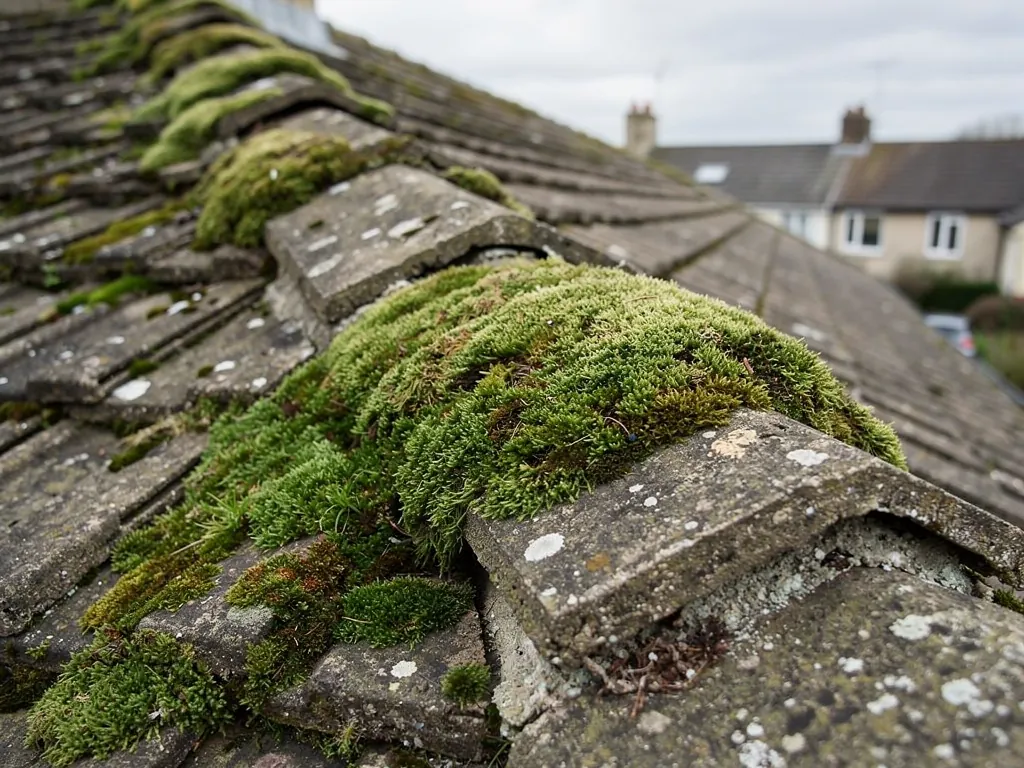
Autumn: before the wet and the leaves
Early autumn is the second good window. The roof has had the whole growing season to build up moss and lichen, and the weather is often still settled enough to work. Cleaning then, before the leaves come down and before the long damp months begin, means the roof and gutters go into winter in their best condition.
Timing within autumn matters. September and early October can be excellent. By the time leaf fall is under way, gutters and valleys fill as quickly as they are emptied, and wet leaves lie on the slope and hold moisture against the tiles. A roof cleaned and then buried in leaves within a fortnight has gained little. If trees overhang the roof, we suggest planning the clean for after most of the leaf has dropped, or arranging a gutter clear alongside it. Our guide to how a roof is reached and cleaned covers the access side of this.
Should I clear the gutters at the same time?
Yes. Moss and loosened debris end up in the gutters, and a clean roof draining into a blocked gutter simply moves the problem to the fascia. Clearing the gutters as part of the visit keeps the water moving to the downpipes and lets us check the brackets and joints while we are there.
If moss has already spilled into valleys or gutters and water is overflowing, do not wait for the perfect season. A blocked valley can let water into the roof timbers.
Winter: possible, but only on the right day
Winter is the hardest season to clean a roof, though not an impossible one. The obstacles are practical. Frost and ice on a roof make it unsafe to walk or kneel on, and wet slates and clay tiles are slippery at the best of times. Days are short, so there is less working light. Cold, saturated surfaces also dry slowly, which matters if a treatment is going on.
Frost damage is a second concern. A tile or slate that is saturated and then freezes can be stressed by the ice, and hot water or a high-pressure jet on a frozen surface is a bad combination. We do not clean a roof that is iced over, and we would rather rebook than work on a surface that is not safe.
On the other side, a mild, dry winter day happens regularly. If the moss is thick enough to cause a problem, such as lifting tiles or filling a valley, there is a case for acting rather than waiting for spring. We take a view on the day, using the survey photographs and the forecast.
What if the roof is leaking now?
Then moss is a secondary question. A leak needs tracing and a repair, and cleaning can wait until the roof is sound. Our roof repairs team deals with the fault first; cleaning, if it is still needed, follows.
The weather on the day, and the days either side
Whatever the month, a few conditions decide whether a cleaning day goes ahead.
How much wind is too much?
Strong or gusty wind makes work at height unsafe, throws spray and debris about, and can carry loosened moss onto neighbouring gardens and cars. We call a halt well before conditions are dangerous, and on an exposed hilltop or open Downs edge that happens more often than in a sheltered street.
Does it matter if it rains afterwards?
It depends on the method. Washing methods use water anyway, so a shower afterwards does little harm. Where a treatment is applied to the roof to slow regrowth, it needs a dry period to settle and rain too soon can dilute or wash it off. That is why the forecast for the day after matters as much as the day itself. Our page on DOFF steam roof cleaning explains how the method differs from a chemical-led clean.
What about early morning dew and frost?
A roof can be slippery with dew or a thin film of frost long after the air has warmed. We start when the surface is safe, not when the clock says.
When it is wrong to wait for the best season
Waiting for spring or early autumn is sensible for a roof that is simply looking tired. It is the wrong call in a few situations.
If moss has built up thick enough to hold water against the tiles or slates, it can keep the surface wet for days after every shower, and that is what lifts edges and encourages frost to work on the material. If it has crept into a valley or is sitting in a gutter, water can back up and run where it should not. If you are selling, a roof that looks neglected in the surveyor's photographs can raise questions; our page on cleaning a roof before selling goes through that. And if a roofer is already due on site for a repair, it often makes sense to deal with the moss on the same visit, because scaffolding or access equipment is already in place.
Equally, a roof with fragile old slates or a nest in active use should wait until it is safe to proceed. Part of the survey is deciding which case yours is.
How do I plan around cost?
Cost is driven by roof size, pitch, height, access and the method chosen, rather than the month. MyBuilder's roof cleaning guide, updated 21 August 2026, puts typical cleaning at £450 to £850 for a pitched roof and £300 to £600 for a flat one. The written quote arrives after the survey as one price. Check whether any quote you are given includes VAT and access equipment.
Making the clean last: what you can do between visits
Timing the clean well is only half of the picture; what happens afterwards decides how long the result lasts. A few habits help on almost any roof.
Keep trees cut back from the roof where you can, since overhanging branches drop leaves and keep slopes in shade. Clear gutters at least once a year, ideally after the leaves have fallen, so water drains rather than backs up. Check the roof from the ground a couple of times a year, ideally with binoculars, for slipped tiles, dark patches or moss starting to creep up from the lowest courses. Never climb onto a roof to scrape moss off yourself; falls from roofs are among the most serious home accidents, and walking on tiles can crack them.
Metal strips along the ridge are a common suggestion for slowing regrowth, and they have limits of their own. Our answer on whether zinc strips stop roof moss sets out what they can and cannot do.
If you want the clean done at the best time, tell us when you are free and what worries you about the roof. We will fit the survey and the work to the weather rather than to a fixed date.