
Lead theft is rarely noticed on the day it happens. A strip of flashing goes from a chimney, a valley liner is peeled out from between two slopes, or the covering of a flat porch roof is rolled up like a carpet. The first sign is usually water: a brown stain on a ceiling after the next rain, or a damp chimney breast that was dry last month.
Metal that has gone cannot be tested or repaired, so every repair begins by getting weather out of the building, and only then do you choose what goes back. That decision matters more than people expect. Putting back identical lead in the same place invites the same visit, while a different material in the wrong place can look out of keeping or fail early. Below we set out how theft usually happens, what makes it harder, and how replacement is planned. For the wider picture of lead on a house, start with the lead roofing hub.

How a roof is stripped of its lead
Thieves choose roofs for three reasons: the metal is within reach, it comes away quickly and nobody is looking. A garage roof, a single-storey extension, a porch or a bay window roof can be climbed from a wall, a bin or a fence in a few seconds. Once up, the work is fast. Lead flashing is only held at its top edge, usually pushed into a joint in the brickwork and wedged, so a screwdriver or a bar frees a long run without much effort. Sheet lead on a flat roof or in a valley is rolled back and cut away with a hook blade.
Empty or part-occupied buildings suffer more because no one hears footsteps overhead. Churches, schools, village halls, empty shops and houses between owners are all at risk for that reason, along with the back slopes of terraces where a neighbour's view is blocked by an extension.
Why lead rather than other roofing
Slate, clay and concrete tiles have little value once removed, and they are heavy, awkward and fragile to carry. Lead is the opposite. A few square metres roll into a bundle that fits in a rucksack or the boot of a car, and the weight alone makes it worth the trip. Copper is taken for the same reasons, which is why theft pressure is not unique to lead.
Where in the day or year it happens
Theft tends to follow opportunity rather than any calendar. Evenings with poor light, quiet bank holiday weekends and the period when scaffolding stands unattended outside a building all give thieves cover, and scaffold also gives them the climb. For that reason we advise clients to take down or at least alarm access when work stops for a few days.
The details thieves look for on an ordinary house
On a typical Swindon semi or terrace, the lead that matters sits in a handful of places. Knowing them tells you what to look at from the ground after a night of high winds or strange noises, and what to photograph for the record.
The first is the flashing along a chimney, which the trade calls an apron at the front, step flashings along the sides and a back gutter behind. The second is the valley where two slopes meet. The third is the cover over a bay window or porch, often a small lead flat roof just below the first-floor sill. The fourth is a dormer, whose cheeks (the side walls) and flat top are often lead. The fifth is any junction between a slope and a taller wall, finished with a flashing tucked into the brickwork.
Of these, low roofs and bays are taken most often because they are the easiest to climb. Chimney flashings are targeted when scaffolding or a flat roof gives a route to the stack. Dormers and high valleys are harder, which is why they are usually lost in larger, more organised thefts than in a single opportunist visit.
Signs it has already been taken
Look for bare, dark felt or a pale bead of mortar where grey metal used to be, a bent or missing strip along the top of a wall, wet patches on a chimney breast, or loose slates beside a valley where the lining has been peeled away. Fragments of lead on the ground are a clue too. If any of this applies, a roofer can usually confirm it from the ground and photographs before anyone goes up.
Deterrents that make a visit less attractive
No measure makes a roof theft-proof. The aim is to make yours slower, noisier or riskier than the next one along. The ones that tend to help are simple and fit most houses.
Start with access. Remove the easy climb: store bins and ladders away from the wall below a low roof, trim the shrub or fence post that makes a step, and consider anti-climb paint or a spiked strip where the rules for that location allow it. Good lighting at the back of a property, ideally on a sensor, matters more than people think because roofs are mostly worked on in the dark.
Then look at the metal itself. Forensic marking, where lead is coated with a traceable liquid that identifies the building, makes scrap dealers wary of taking it, and signs saying the roof is marked add to the effect. Alarms that detect cutting or vibration on the metal can be wired back to a bell or a phone. Fixing flashing more firmly, with clips and a proper chase, also takes longer to rip out than a loose wedged strip, although it will never stop a determined person.
Photograph every lead detail on your roof while it is intact, with a date. The images help a police report, a conversation with your insurer and the design of the replacement.
Is an alarm or camera worth it?
On a church, a school or an empty building, probably yes, because the loss is large and the metal can be extensive. On a modest house, the better spend is usually good lighting plus keeping the climb clear. A camera that covers a rear garden can also help neighbours who see activity at the back, and you may reach a point where the choice is between security measures and a different material altogether, which we cover below.
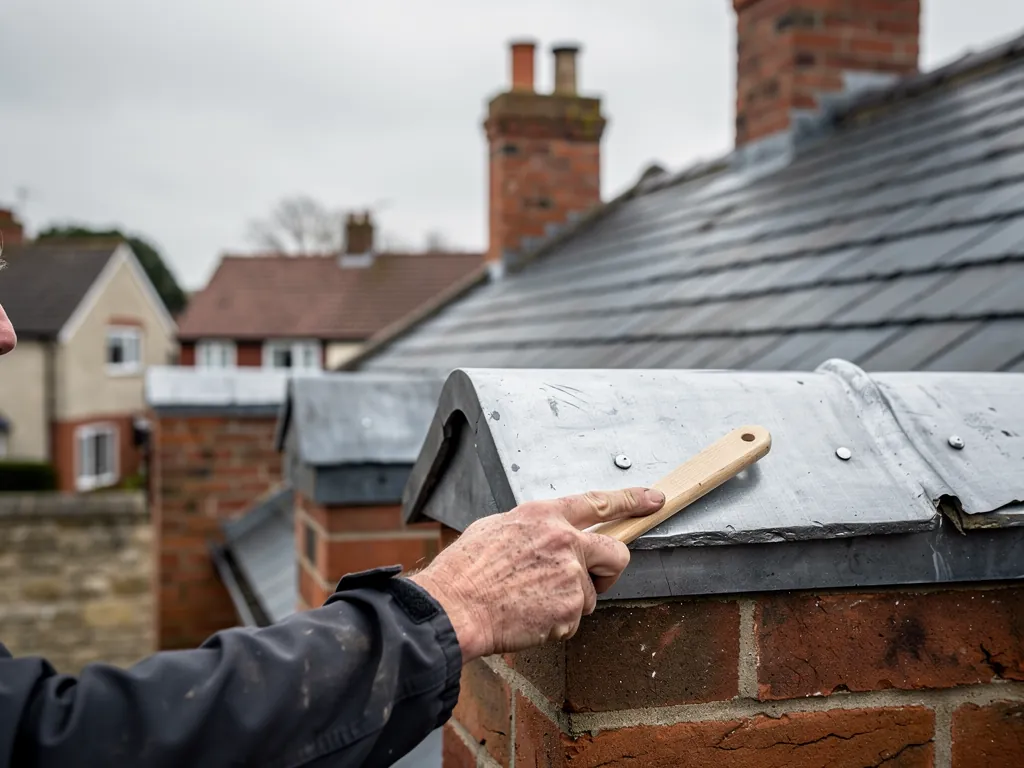
What a theft leaves behind
The visible loss is the lead. The harder problem is what water does next. A missing chimney apron lets rain run behind the stack and into the roof timbers. A peeled valley exposes the underlay and battens beneath it, and wet battens rot where they stay damp. A lead porch roof taken down to the boards lets water straight into the ceiling below. Thieves rarely tidy up either, so slates around a valley are often cracked or lifted, and brickwork may be chipped where flashing was torn out of a joint.
What we do first
Our first visit is about stopping water, which may mean a temporary covering such as a membrane or boards held down properly while the permanent work is planned. We move leaks to the front of the queue, and stolen lead qualifies once rain is coming in. The visit also records what has been taken and what has been damaged around it, with photographs, so the quote that follows is built on what is really there.
Damage you can't see yet
Wet insulation, stained plasterboard and soaked timber may only show later. Where we can reach it, we check the underside from inside the loft, and we tell you if something needs drying out or will need checking again after a spell of weather. Where a flat roof deck was exposed, we check whether the boards beneath are sound before any covering goes back on.
Putting lead back, or choosing something else
Replacing like for like means the same metal, in a code suited to the job, fixed properly. Code 4 is the common weight for ordinary flashing, and heavier codes are used in valleys and gutters, as explained in our guide to lead sheet lengths. Correct detailing matters as much as thickness: soakers under a slate or tile course, flashings that step down a slope and laps that match the pitch are what keep it watertight for decades. Lead properly fitted can last for decades, with MyJobQuote saying correctly installed flashing can last over 80 years.
Many owners now ask whether to use a substitute. Alternatives include bitumen-backed flashing strips, EPDM, zinc and GRP on flat sections, and each has strengths and limits. They are less attractive to thieves, but they are not the same as lead in how they weather or how they are repaired. Our guide to lead alternatives compares them detail by detail.
When lead is the better answer
On older houses, listed buildings and conservation areas, a substitute may spoil the appearance or fall foul of the council. On a chimney in a prominent position, lead is often the right choice and the better protection comes from improving access and marking the metal rather than changing material. On a hidden flat roof, a single-ply or GRP covering may do the job more cheaply and with no scrap value at all.
Will it look the same?
New lead is bright and will weather to a dull grey in time. Treating it so the finish arrives evenly is covered in our note on lead patination.
Steps to take after a theft
Report the theft to the police and keep the reference number. Take photographs from the ground of what is visible, and from the loft of any water coming in. If you have earlier photographs showing the lead intact, keep them with the new ones.
Tell your insurer promptly and ask what they need from you. Policies differ in what they cover and the conditions attached, so no one can say beforehand whether a claim will be paid. We do not handle claims ourselves, but we can supply the written quote and photographs once we have surveyed, which insurers often ask for. Our stolen lead insurance page goes into what to expect.
Arrange a temporary repair so that no more water gets in. Insurers generally expect you to limit further damage, and ABI advice issued for Storm Eunice in 2022 said to arrange temporary emergency repairs, but to contact your insurer first and hold on to receipts. That order makes sense after a theft too.
Neighbours and shared roofs
On terraces and semis, a stolen flashing along a shared chimney or party wall can leak into the next house. Let your neighbour know, because the repair may need access from both sides and it often makes sense to do it once.
Getting the work done
After the survey you will have pictures of your roof taken by us, plus a written quote for the temporary and permanent work. The permanent repair carries a 10-year workmanship guarantee, in writing. Rubble and offcuts leave with us, and if building control is involved we talk it through before anything starts.