
Thermal imaging has a reputation for seeing through things, and that idea is where the confusion begins. An infrared camera does not see inside a roof. It records how warm or cool each surface is and paints the difference as a colour picture. Wet insulation beneath a flat roof covering, a gap in loft insulation or a draught around a roof window can each show up as a bright or dark shape, and that is genuinely useful.
It is useful in the way a stethoscope is useful: it tells you where to listen, not what the diagnosis is. A hot spot on a picture needs someone up there with a meter, a probe or a blade before any repair list is written. This guide explains what the technique picks up, the conditions it needs, the limits that matter on British roofs, and what a typical survey costs. For the wider range of methods, see roof inspection methods, and the roof inspections and surveys hub for the rest.
What the camera actually measures
Every surface gives off infrared radiation, and the amount depends mainly on its temperature. A thermal camera converts that into an image in which warmer areas are drawn in one colour range and cooler ones in another. It measures the outside skin of whatever it is pointed at: a roof covering, a ceiling, the wall of a dormer. Nothing below that skin is visible.
What the camera can do is pick up differences in how materials hold and lose heat. Dry insulation resists heat flow, so a sound roof build-up tends to look uniform. Wet insulation conducts heat differently and keeps its temperature longer, so it can stand out against the dry material around it. A gap in the insulation lets heat travel through, and on a cold day that shows as a warm stripe on a ceiling or a roof surface.
Is the picture a measurement or an opinion?
Both. The temperatures in the image are measured, but the meaning is an interpretation. The camera only knows that one area differs from its neighbours. The surveyor decides whether the cause is moisture, thinner insulation, a pipe, a shadow from a parapet or a different material. That is why the report should always show a normal photograph beside each thermal one, so that you can see what the camera was pointed at.
A thermal image shows where a roof behaves differently. It never shows why. The why comes from a person with a moisture meter or a core sample.
Flat roofs and wet insulation: where it earns its fee
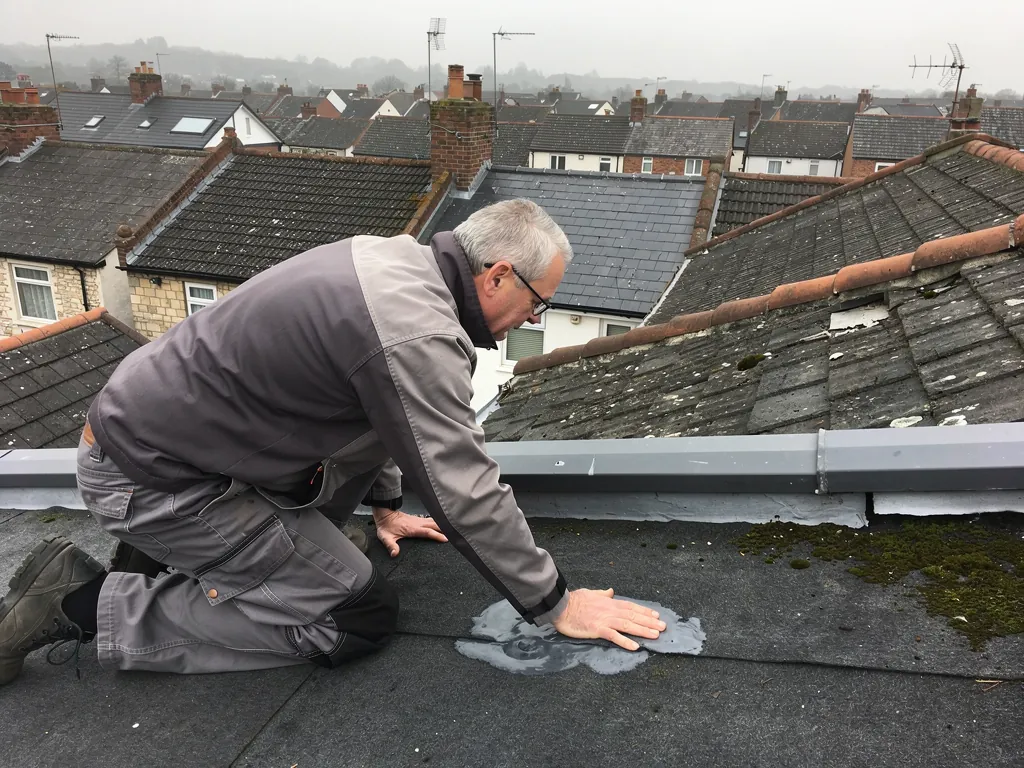
The strongest case for thermal imaging is a flat roof with insulation under the covering. Water that gets through a split in felt, or a failed upstand, can travel sideways through the insulation and sit there while the surface looks perfectly dry. Standing on the roof, you see nothing. A scan can show the outline of the wet area, which helps decide whether a patch will do or whether the whole covering is spent. Our flat roof condition survey page sets out how this fits with a physical inspection.
It works partly because wet insulation behaves differently in the hours after the sun goes down. A flat roof soaks up warmth during the day and gives it back in the evening. Dry areas cool at a certain rate, and wet ones tend to hold their heat longer, so the damp zone glows against the rest. That is why many scans of flat roofs happen around dusk, after a day that has warmed the surface.
Can it find the leak itself?
Not directly. Water entering a roof at one point often shows up in a different place on the ceiling below, and a thermal image of the ceiling shows the damp area rather than the entry point. What it does is narrow the search. Once a wet zone is outlined, the surveyor checks the covering above it for splits, blistered seams, a blocked outlet or a poorly sealed pipe collar. Our guide to roof repairs shows how a located fault is put right.
Lofts, ceilings and missing insulation
On a pitched roof, thermal imaging is more often used from inside than from outside. A scan of the ceilings on a cold day can show where loft insulation is thin, compressed or absent, where a hatch leaks warm air, and where recessed lights or a bathroom extractor duct have left a hole. These show as warm patches because heat from the rooms is escaping upward.
That is valuable on a new home. A developer's handover may include insulation that has slipped, been left out at the eaves or been pushed aside during other work, and a scan can show it before you move furniture in. Our guide to new build roof snagging covers what else a handover check should include.
Does it show a leak in a tiled roof?
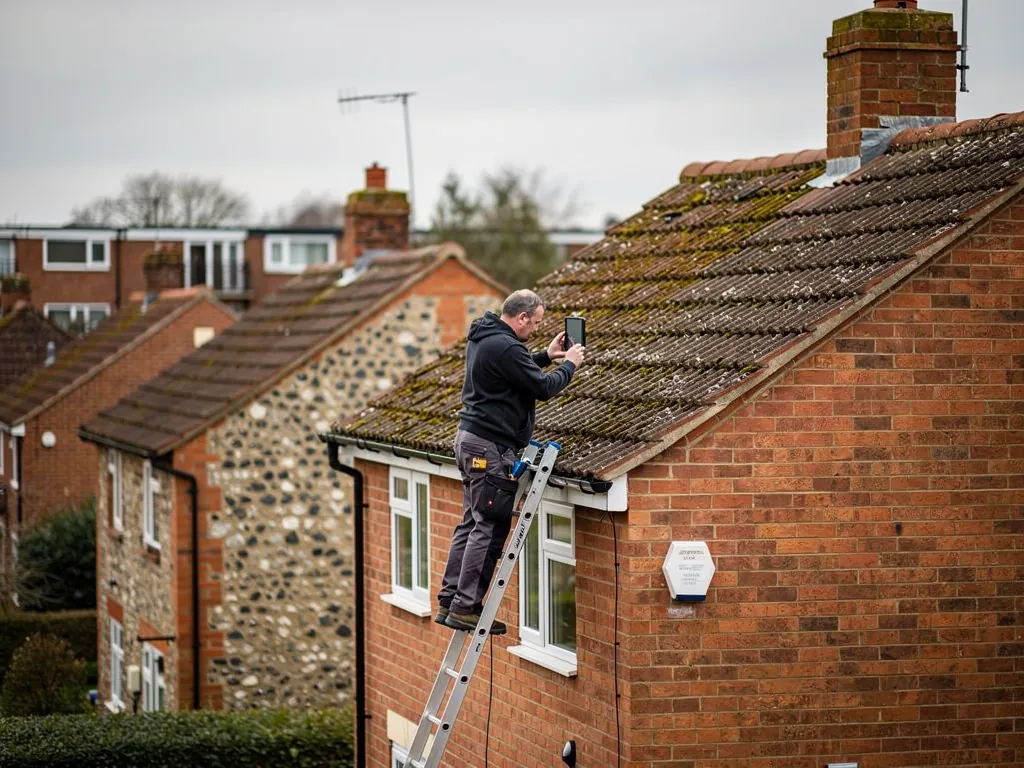
Only sometimes, and rarely clearly. A concrete tile or a slate covering is a poor surface for infrared. The tiles are many small overlapping pieces, they sit in the weather, and the underlay and battens hide whatever is going on underneath. Warmth from the sun, shade from a chimney and the pattern of the tiles themselves all create variation that has nothing to do with moisture. A pitched roof with a suspected leak is far better served by a loft inspection and a look at the flashings and valleys.
Where a roof is part of an older building, such as a stone-tiled cottage, the thick walls and old timbers make thermal readings even harder to interpret. Our period roof surveys page explains what we use instead.
The conditions a thermal survey needs
Thermal imaging depends on a temperature difference. To look at heat loss, the inside of the building needs to be noticeably warmer than the outside, which is why surveys of ceilings are done in cooler weather with the heating on. To look at a flat roof for moisture, the surface needs to have been warmed and then allowed to cool, which is why a clear day followed by a dry evening is ideal.
Rain, wet surfaces and strong wind spoil both. Water on a roof cools it unevenly and hides the pattern underneath, and wind carries heat away from the surface faster than the camera can read it. Reflective materials such as bright metal, glossy paint or standing water can bounce the heat of the sky or the sun back at the camera and show temperatures that belong to something else.
Why is a booking sometimes moved?
Because a poor day gives a poor result. A scan taken in the wrong conditions produces plausible pictures that mean nothing, which is worse than no scan. We would rather move a visit than send you a report that cannot be trusted. The weather decides the day.
Does the time of day matter?
Yes. For a flat roof, late afternoon into evening works well because the surface has been heated and begins to cool. For a ceiling scan, early morning is often best because the building has been cold overnight and the heating has not yet evened out the differences. The surveyor chooses based on what is being checked.
The limits that catch people out
The first limit is depth. The camera reads the surface only, and the further a wet patch is from that surface, the fainter its signal. A thick ballast layer over a flat roof, or a deep build-up, can hide moisture altogether. The second is false positives: a warm pipe, a different insulation board, a lap in the membrane or a patch of shade can all look like damp. The third is false negatives, where a real fault sits under a dry-looking area at a temperature that blends in.
Surface emissivity matters too, which is how readily a material gives off infrared. Different materials with the same actual temperature can appear to differ, and a surveyor allows for that by setting the camera for the material being scanned. A report that gives no information on conditions, settings or the time of the scan is hard to rely on.
Finally, a scan is a snapshot. It shows the roof at one moment. A leak that only happens with wind-driven rain from one direction may be dry on the day, and the picture will say nothing about it.
What confirms a thermal finding?
A physical test. That may be a moisture meter reading through the covering, a small cut to inspect the insulation below, or a core sample. Without one, a thermal image is a lead rather than a finding. Treat any report that jumps straight from a coloured picture to a full replacement price with caution, and ask what was done to confirm it.
What a thermal survey costs and what the report should contain
National figures give a sense of the price. MyBuilder's roof inspection guide, updated 21 August 2026, puts standard roof inspections at about £150 to £250, drone surveys at about £200 to £400 and thermal surveys at about £300 to £500. Treat those as typical national ranges from a third-party guide, never as a quote. Roof size, awkward access, whether the scan is of the roof or the ceilings, and whether a second visit is needed for conditions all move the price. A written quote follows our survey of your roof.
A useful report shows a thermal image and an ordinary photograph of the same spot, labels each location, gives the conditions on the day, and says what the surveyor thinks each pattern means and how sure they are. It should end with recommendations, ranked, and say which items need a physical check before anything is priced.
Is thermal imaging worth paying for?
It is worth it when the question is where moisture is on a flat roof, how a large or complex roof is performing or whether a handover is missing insulation. It is poor value as a first step on a pitched tiled roof with an ordinary stain on the ceiling, where a loft visit will find the answer faster. Matching the method to the question is part of the work, and sometimes that means advising against a scan.
Should a roof prove to need work, the written quote is a single total price. It covers the narrowest repair that properly solves the problem, and any rubbish goes with us when we leave. Photographs of your own roof come with that quote, so the thermal pictures sit beside ordinary ones and the whole story is on paper.