
People ask for a roof report for different reasons, and the same document does not suit them all. A buyer wants to know whether the roof will cost money in the first few years. A landlord wants evidence that the property is looked after. An owner planning a loft conversion wants to know whether the roof can take the work. Someone who has just had a storm wants a record of how things stand.
This guide explains what a roof condition report is, what a useful one contains, and how the purpose changes the emphasis. It also covers the limits: a report describes what could be seen on one day, and it is not a guarantee about the future. The practical side of how roofs get looked at is on our roof inspections and surveys page.

What a roof condition report actually is
At its simplest, a condition report is a written account of the state of each part of a roof, with photographs, dated and signed off by whoever carried out the inspection. It names the covering, notes how each part is holding up, lists defects in order of importance, and says what was not seen. A good one reads in a few minutes and tells a layperson what to do next.
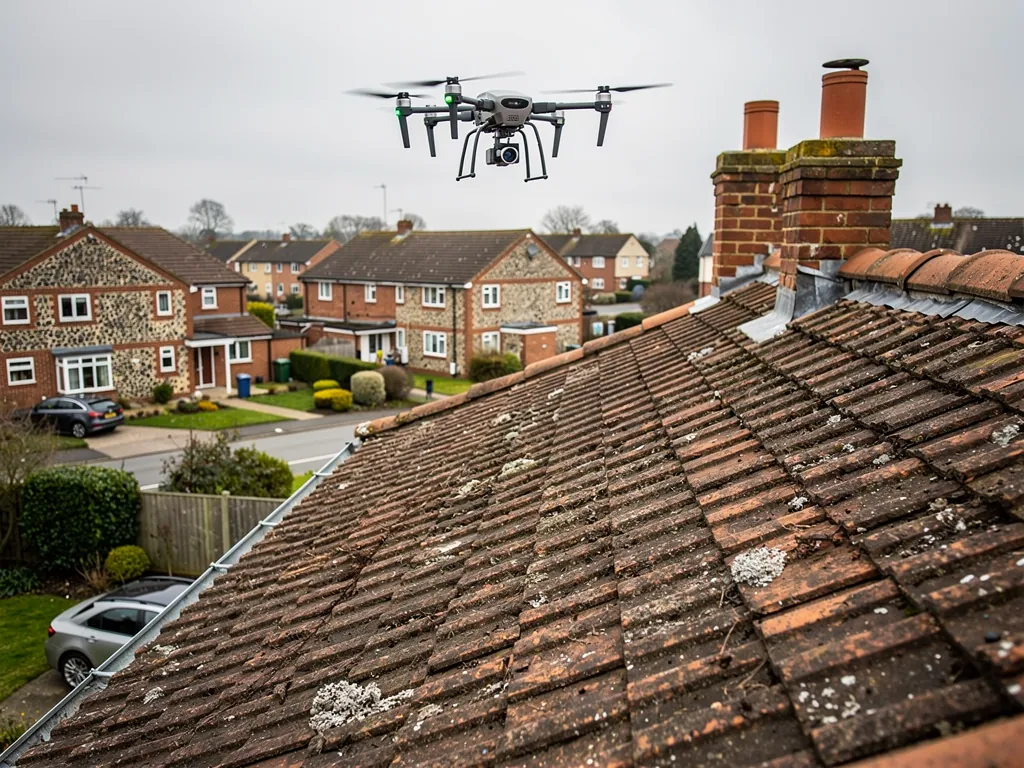
It differs from a quote. A quote prices a piece of work. A report describes a roof and can stand alone, even if nobody ever builds anything from it. With us, the survey photographs of your roof and the written quote both come from the same visit, yet you can keep the findings and walk away from the work.
Is a condition report the same as a full building survey?
No. A building survey looks at the whole property, and the roof gets a paragraph or two. A roof condition report is narrower and deeper: the covering, the fixings, the flashings, the ridge, the chimney stacks, the roofline and the loft side. Neither replaces the other, and a buyer often benefits from both.
Does it have to be paid for?
A quote visit and a formal report are different things. Our answer on what a free roof inspection really includes sets out where the line falls, and typical national prices for inspections are on the guide to survey costs.
Reports for house buyers
For someone buying, the roof is often the largest single repair risk in the house, and the one hardest to judge from the street. A homebuyer survey will usually comment on the roof from the ground or with binoculars and a quick look into the loft. If that comment raises a flag, a separate roof report fills in the detail.
The questions a buyer wants answered are practical. Has the covering got years left in it? Are there loose or missing pieces? Are the flashings and chimney pointing sound? Is the loft dry, ventilated and free from signs of past leaks? And what would it cost to deal with whatever is found, roughly, so that it can inform an offer?
What should I do if the survey has already flagged the roof?
Our guide on what to do when a homebuyer survey flags the roof works through reading the surveyor's wording, getting a roofer's opinion and using it in negotiation. A roofer's report is most useful when it arrives before exchange, while the price can still move.
How much weight does a roofer's report carry with a seller?
It carries the weight of its evidence. Dated photographs of a specific defect are hard to argue with. A general remark that the roof is old is much easier to dismiss. Ask for pictures, not just conclusions.
Timing matters in a purchase. Access to a roof can be awkward once a sale is moving, because the seller or their agent has to arrange the visit, so mention it early. Where the property is empty or tenanted, say so when you book, and have the loft hatch cleared if you can. A report that could not see into the loft says so, and a buyer should read that limit as a prompt to ask for a second look before exchange.
Reports for landlords and managing agents
A landlord has a duty to keep a rented home in repair, and the roof is part of that. Keeping a rented home in repair includes the roof, and a condition report gives a dated, photographed record of the check, the state found and the action taken. When a tenant reports damp later, the record shows the state of the slopes ahead of the problem and whether anyone had flagged it.
Landlords with several properties tend to use the reports to plan. A roof with plenty of life left goes on a long-range replacement forecast. A roof with a loose ridge goes to the top of the repair list. Our guide to roof inspections for landlords goes into schedules and record keeping.
What interval should a rented property follow?
There is no single interval that suits every roof. A sound modern roof can go longer between checks than a tired one, and a storm is a good reason to look sooner. What matters is that checks happen on a pattern you can show, and that each one is recorded. The short answer on how often a roof should be inspected gives the usual reasoning.
A report that records a defect and a decision, even a decision to wait, is better evidence of care than no report at all.
Reports for insurers, claims and storm records
Home insurance and roof condition are tied together, and not always in the way owners expect. The Financial Ombudsman Service looks at three things in a storm complaint: did a storm happen on that date, does the damage fit what storms do, and did other factors mean the damage might have happened regardless. Which? warns that standard policies may exclude wear and tear, and gives a poorly maintained roof letting water in as its example.
A dated condition report does not decide any of that, and nothing here promises that a claim will be paid. What it can do is document the state of the roof at a point in time. If the roof was in sound order six months before a storm, that is a fact you can point to. If the report flagged a loose ridge that nobody fixed, it records that too, and it is best to know that before an insurer does.
Should I get a report before a storm or after one?
Both have a use. A report before gives you a baseline. A report after records what changed, and the make-safe work comes first if water is coming in. Keep receipts for any emergency measures, and tell your insurer what you plan to do before you go further than the essentials. Our fuller guide to roof reports for insurance goes into the detail.
Reports ahead of planned work
The fourth common purpose is planning. Before a re-roof, an extension, a loft conversion, a solar installation or a new chimney liner, someone needs to know which material is on the roof now, how much of it is sound, and what state the timbers are in. A condition report written for that purpose is aimed at scope: what has to be stripped, what can stay, what needs strengthening.
Planned-work reports often feed straight into Building Regulations questions. The Planning Portal sets two limits for repairs and re-covering: less than 25 per cent of the total building envelope, and less than 50 per cent of the roof. Exceed either and a building control application is likely, as it is when a new covering weighs 15 per cent or more than the old one. A report that measures the area involved and records the existing covering helps work out which side of those lines a job falls.
Does the report decide whether I need a full re-roof?
It supplies the evidence. Whether a section can be repaired or the whole roof should be renewed depends on how widespread the failures are, and a report with photographs of each slope makes that visible. Our page on why to survey before a re-roof shows how findings become a scope of work.
Can the same report be used for a solar or loft project?
Often, yes, provided it names the covering and says how the rafters look. The installer or designer may still need to check the structure for the added load, which is a separate calculation.
What a useful report contains
Reports vary in quality, and length is a poor guide. A useful one has a short list of elements in a consistent order, so that you can compare it with a future report on the same roof.
- The date, the address and how the roof was accessed or viewed.
- The roof covering, its approximate age if known, and each slope described separately.
- Ridge, hips, verges and eaves.
- Flashings, valleys, chimney stacks and roof windows.
- Rainwater goods and roofline where they bear on roof drainage.
- The loft, if reachable: timbers, insulation, ventilation, signs of damp.
- Photographs matched to each finding.
- A ranked list of defects, and the areas that could not be seen.
The last item matters more than it looks. A report that states what could not be inspected, such as a rear valley hidden behind an extension, is more trustworthy than one that implies it saw everything. The way the inspection is carried out shapes what can be said, so see our comparison of roof inspection methods for what each approach can and cannot reach.
Should a report give prices?
Not necessarily. Findings and prices are different jobs. We keep the written quote separate from the findings, so the report stays a plain description of the roof, whatever you decide to do about it.
Limits, shelf life and how to use a report afterwards
A condition report is a snapshot. It was true on the day, for the parts that were visible. Roofs change with weather, and a loose slate can slip a week after the report is written. So a report has a limited useful life, and it goes stale quickly when something happens to the roof. A storm, a fallen branch or work by another trade resets the clock.
Reports also cannot see everything. A covering can look fine and still be fixed with failing nails. A timber can be sound on the surface and damaged inside. Where something looks doubtful, the report should say so, and recommend a further look.
What happens to the report once it lands on my doormat?
Keep it with the property papers, with the photographs saved in more than one place. Act on the top items first. If a defect is active, such as water getting in, that comes before anything cosmetic. If the report lists several smaller repairs, ask whether they can be done in one visit, which can save on access costs.
Who is the report for if I am selling?
A seller can use a recent report to answer a buyer's questions in advance, and to show that someone has kept an eye on the slopes. A buyer's solicitor may also be glad of a dated record of any repair, with the invoice kept beside it. That is a point for you, so long as the report is open about anything that needs attention.
To have your own roof recorded, send us an enquiry or ring 01793 626096. We book the visit, and the survey pictures and a written quote follow.