
You have paid for a survey, opened the report, and found a paragraph about the roof with words like "nearing the end of its life", "limited access" or "recommend further inspection by a roofing contractor". The sale is in the balance, and you have a week or two to decide what it means. Roof comments are among the most common to trigger a pause, partly because a roof is expensive and partly because surveyors can only see so much of it.
The first thing to know is that a surveyor's job is to flag, not to quote. They work from the ground, from binoculars and from the loft hatch, and their wording reflects what they could not check as much as what they saw. This guide takes you through the next steps in order: reading the comments, commissioning a roofer's report, understanding the findings and turning them into a sensible conversation with the seller. If you have not yet had a survey, our checklist for buying a house covers what to look at beforehand.
Decoding what the surveyor actually wrote
Surveyors tend to use a small vocabulary, and each phrase carries a different weight. A comment that the covering shows "general weathering" or "moss growth" is an observation about age and upkeep. It tells you the roof is old, not that it fails. A note of "slipped or cracked tiles" points to a defined repair. "Sagging" or "undulating" slopes are different, because they hint at the structure underneath, and they are the comments that deserve a closer look before you commit.
Many homebuyer reports also colour-code each element on a simple three-step scale, from nothing to do through to a serious or urgent defect. A roof marked in the middle band usually means repairs or an eventual replacement should be budgeted for. A roof in the top band usually means a specialist should be asked to look before you exchange contracts. Treat the rating as a pointer to the question, not a measurement of the fault.
Which words suggest the surveyor could not see?
Phrases such as "not inspected at close quarters", "visible from the ground only" and "no access to the roof space" mean the surveyor is passing the question on, not answering it. Those lines are about the limits of the visit. They are frequently included as standard wording, so their presence alone says little about the condition of your roof, but they do tell you a roofer's report would add real information.
Is a long list of small items a warning?
A page of minor notes, such as a cracked flaunching cap, a stained soffit and a bit of loose pointing, is rarely a reason to walk away. Taken together they usually add up to one afternoon of work. What matters is whether any single item points to water already entering the building, and the roofer's report answers that.
Why a surveyor sends you to a roofer
A general surveyor covers the whole property, from drains to damp, and does not carry the tools for opening a roof up. Surveyors do not normally walk on roofs, lift tiles to examine battens or spend time in the corners of a loft. When a roof raises doubts, the right move is to hand the question to someone whose daily work is on roofs.
That is not a failing in the survey. It is the survey doing its job, which is to separate the things that need a specialist from the things that do not. The recommendation also helps you later: a surveyor who has put a further inspection in writing has given you a documented reason to ask the seller for time, or for a price conversation.
Should you use the surveyor's recommended contractor?
Choose the roofer yourself. A recommendation can be useful, but what you need is someone who will report on what they find rather than on what a job might be worth. Whoever you pick, ask for the findings in writing, with photographs, and ask whether they are also quoting for work. Keeping the inspection and the quote clearly separate helps you judge both.
For a wider look at when each kind of visit is worth having, see do I need a roof survey, and for an overview of what a written roof assessment contains see roof condition reports.
Getting a roofer's report before you exchange
Timing is the main practical problem. You are not the owner yet, so you need the seller's agreement for anyone to enter the house and go into the loft. Ask your estate agent or solicitor to arrange it as soon as the survey lands. Sellers are usually receptive, because a clear roofer's report can only help move the sale forward, whereas an unanswered survey comment leaves the buyer nervous.
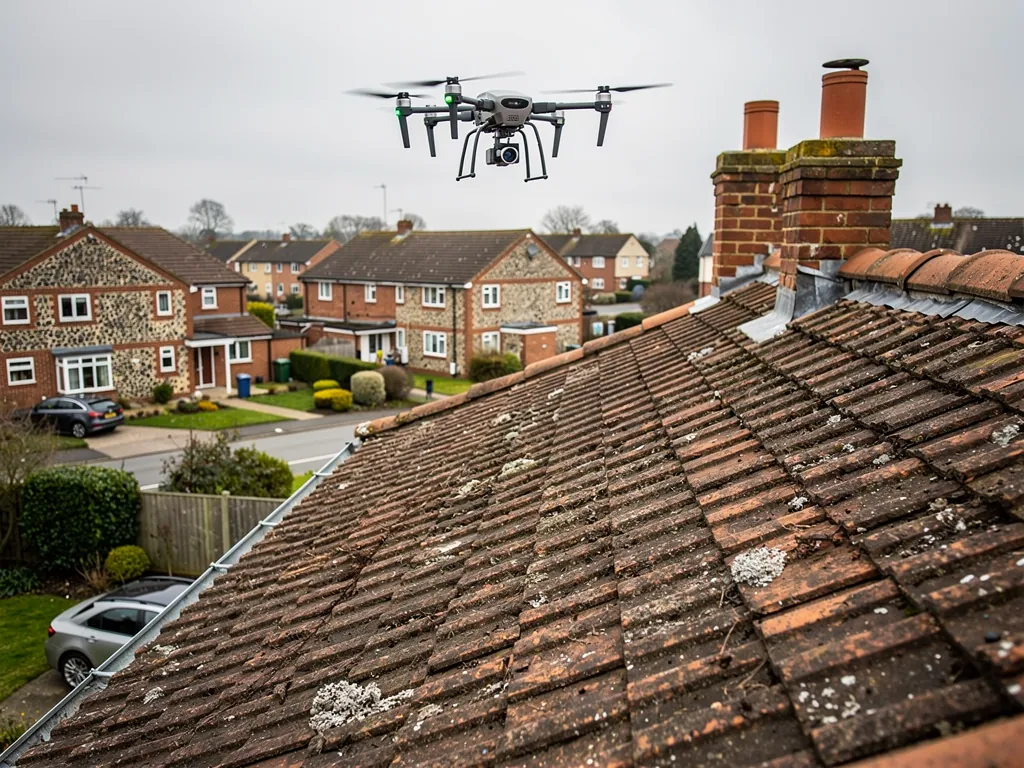
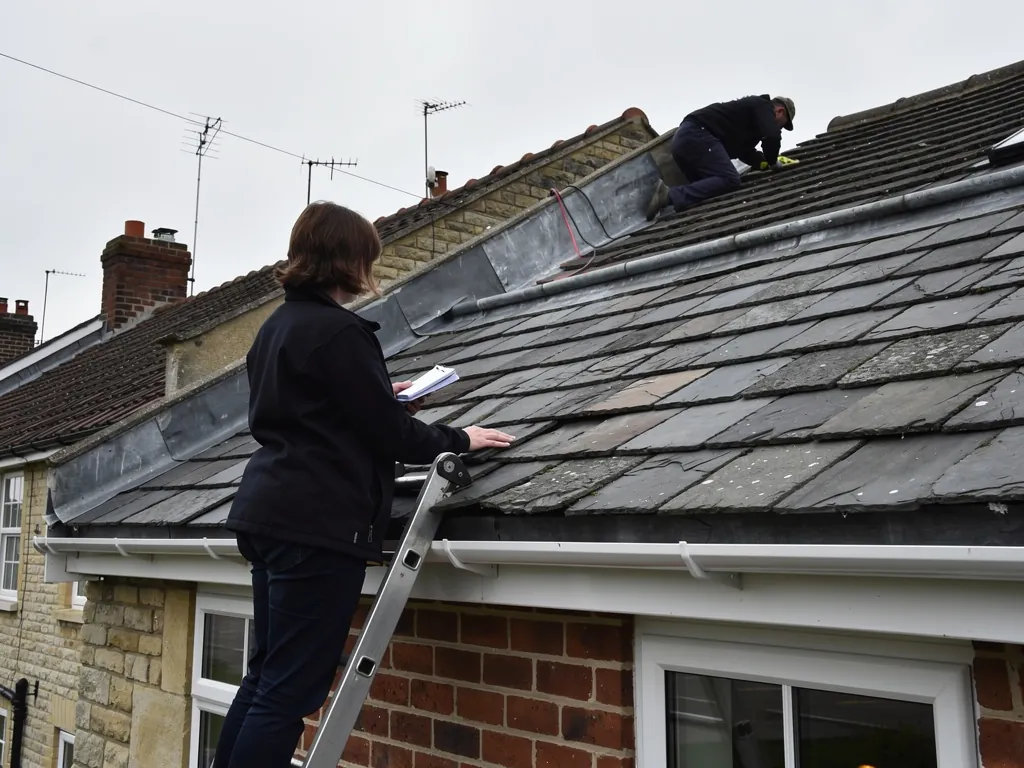
A proper roof visit includes the outside of every slope, the ridge and hips, the chimneys, the lead and the gutters, together with a look inside the loft at the timbers, the underlay and the insulation. Some roofers use a drone for outside views, and our guide to drone roof surveys explains what that does and does not show. Photographs should be taken of each defect, labelled by location, so that the report can be read by someone who has never stood in the garden.
What should the report say at the end?
It should say, in plain words, which items are maintenance, which are repairs and whether the roof is likely to need replacing. It should state the evidence for each: a photograph, a measurement, a description of what was lifted or touched. Ask for any estimate to be given as a total for the work described, with a note of whether VAT and scaffolding are in.
When the seller allows a visit, you receive our findings with pictures of that very roof, and a written quote for anything we advise. Our aim is the lightest job that cures the fault, so a roof needing a few repairs is reported as exactly that. The wider roof inspections and surveys hub shows the other kinds of visit available.
Making sense of the findings
Roof findings usually fall into one of three piles. The first is upkeep: clearing moss or gutters, repointing a ridge, reseating a flaunching cap. The second is a repair with a defined edge, such as replacing re-seating slipped slates, renewing a run of lead or patching a flat roof. The third is a covering that is simply worn out and due for replacement, whether soon or within a few years.
Typical UK figures help you place a repair. MyBuilder's roof repair guide, updated 21 August 2026, describes minor repairs at around £100 to £300, moderate ones at £500 to £1,000 and major ones at £2,500 or more. For replacement, MyBuilder's roof replacement guide, updated the same day, gives a typical range of £5,000 to £12,000 for a roof of average size. These are national figures from third-party guides, and the price for your own roof only becomes firm when it is surveyed and quoted in writing.
When is a roof worth repairing and when is it done?
Where the roof is otherwise sound and a few clear defects stand out, repair is the sensible choice and the rest of the covering stays in service. If slates or tiles are failing across the whole slope, the fixings are worn out, or the timbers beneath are damaged, repair money is better spent on the new roof it will eventually lead to. The report should say which, and why.
What counts as urgent?
Anything letting water in now, anything structural, and anything that could drop such as a loose chimney stack or a leaning ridge. Those matter whether or not you proceed with the purchase. Where water is coming in at this moment, stopping that comes first, and the lasting repair follows.
Using the report to negotiate
A written roofer's report with a written quote is the strongest document you can take to the seller. It turns a surveyor's phrase into a defined job with a price. There are usually three routes from there. You can ask for a reduction in the price equal to the work, ask the seller to have the work done before completion, or agree a split. Each is a normal conversation, and each is easier when the evidence is clear.
If the seller has the work done, find out who did it and what paperwork exists. A guarantee in writing is useful, though it belongs to whoever commissioned the work, so ask the seller whether it can be passed to you. Our own workmanship guarantee runs for 10 years in writing and is not insurance-backed, and if you buy and then commission us, it applies from your own contract.
Should you ask for the full cost of a new roof?
Only if the report says the roof needs one. If the finding is a repair, a reduction to cover the repair is the reasonable ask. Sellers respond better to a figure with evidence behind it than to a round number, and agents are used to seeing roofer's reports handed over as part of a negotiation.
What do you tell your solicitor and mortgage provider?
Pass on the survey and the roofer's report as soon as you have them, and ask your solicitor whether anything needs recording. Some lenders ask about condition findings, so it is best to let them see what you are working from. Your solicitor will know what is required at your stage of the purchase.
Special cases: flat roofs, chimneys and rented properties
Flat roofs are flagged more often than pitched ones because they age visibly. A surveyor looking at blistered felt or ponding will usually recommend further inspection, and the answer depends on the covering, its age and how it was laid. A roofer's report should say what the deck beneath is built from and whether the falls drain properly. Water standing for days after rain is one sign that the roof has settled or was laid nearly level.
Chimneys are the other frequent item. A surveyor sees the stack from below and may note the pointing, the cap or a leaning pot. Only a visit shows whether the lead around the base is sound, or whether the flue has been capped. A stack in good order is cheap to leave alone; one in poor order is worth putting in the negotiation, because work on it tends to need scaffold.
If you are buying to let, a roofer's report also gives you a record to work from. Our page on landlord roof inspections explains how that carries on after purchase.
If you are in any doubt about the sale, speak to your solicitor before you act on a roof finding. A roof is one part of a larger decision.