
A roof is one of the most expensive parts of a house to put right, and it is often the part buyers look at least. The viewing is about kitchens and gardens, the survey comes back with a paragraph or two about the roof, and by then you are already committed in your head. A bit of structure helps.
This guide is a buyer's checklist. It is built around three vantage points: the street, the loft and the paperwork. It also covers the things that can complicate a purchase, such as spray foam in the roof space and asbestos in an older garage or soffit. If a survey has already flagged the roof and you want to know what happens next, our page on roof inspections and surveys picks up from there. This page is for the stage before. We are Skyline Swindon Roofing, working across Swindon and the villages around it.
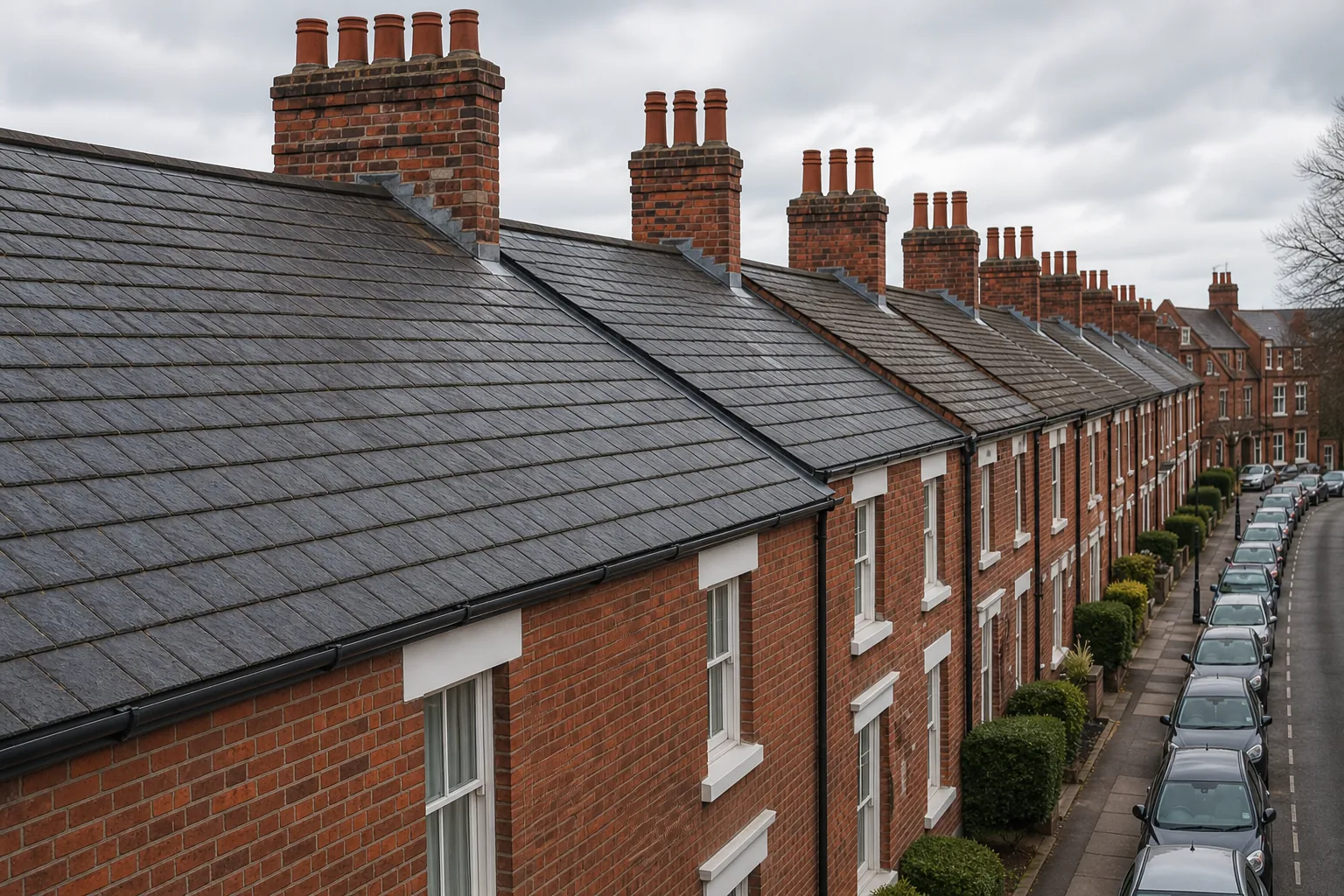
What you can see from the street before you book a viewing
Start outside, and start on the pavement across the road. From there the whole roof is in view and you are not distracted by the estate agent. Take a photo and zoom in afterwards; a phone picture shows more than the eye does.
Look at the line of the ridge first. It should run straight, with no dips or humps. A sagging line can mean timbers that have moved, a covering that is heavier than the roof was built for, or rafters that have spread. Then look at the surface. Missing, slipped or cracked tiles show as gaps or darker patches. Patches of different colour can be a sign of past repairs, which is not a fault in itself but tells you the roof has been worked on.
Chimneys, gutters and the edges
A chimney should stand upright with sound brickwork and tidy flashing where it meets the slope. Look for a leaning stack, loose pots or a cap that has gone. Gutters should be level and clear; green growth from the gutter, or dark streaks on the wall below, suggest water has been overflowing for some time. At the verges on a gable end, check for mortar falling away and for gaps where birds could get in.
Moss, lichen and what it means
A mossy roof is not necessarily a bad roof. Moss holds water, though, and on older tiles it can speed up wear. The surface condition tells you something about maintenance more than about structure.
Reading Swindon's housing types
Swindon's housing stock is varied, and the same fault turns up in different places depending on the building. Knowing the type of house helps you know where to look. Our guide to Swindon roof types goes into the detail; here is the buyer's version.
Railway-era terraces and Victorian houses
Older terraces often have slate roofs, with brick chimney stacks shared between neighbours. The Railway Village appraisal describes its roofs as generally slate. On a slate roof, the things to check are slipped slates, which can point to failing nails, and the lead where the roof meets a party wall or chimney. Shared stacks and party walls mean a fault on one side can affect the house next door. If you are buying into a conservation area, read our guide to the Railway Village roofs, because the rules there are tighter.
Estate houses and newer builds
Later housing tends to have concrete or clay tiles on a roof with felt or a breather membrane underneath. Ridge and hip tiles on houses from before 2014 were often bedded on mortar alone, so check whether they are loose or cracked. Next, look into the valleys, the internal channels between slopes, and at the join with any extension.
Flat roofs on extensions and garages
Kitchen extensions, garages and dormers often have flat roofs. These are cheaper to build and shorter-lived. Typical lifespans vary by material; Less quotes 10 to 20 years for torch-on felt and 25 to 40 for GRP, and a good installation can outlast a poor one. Ask what the covering is and when it was laid.
In the loft: what to check on the day
If the loft is accessible, ask to see it. A vendor who refuses is telling you something. Take a torch even if the light is on, and look before you step: boards are not always where you expect, and a foot through a ceiling is a poor way to start a purchase.
Look at the underside of the roof first. Staining on the timbers or the back of the boards suggests past leaks. Dark patches round the nails can come from condensation, which is a ventilation issue rather than a hole in the covering. Daylight showing through anywhere other than a designed vent means the roof is open to the weather. Check whether there is an underlay at all; many older roofs have none, which is common and not always a problem, but it changes how much a small fault matters.
Insulation and ventilation
Deep insulation laid over the whole floor can leave the roof space cold and damp if the eaves are blocked. Look at the eaves: air should be able to move in at the edge of the roof. Insulation pushed hard against the felt or the soffit can cut that off.
Timbers
Touch nothing, but look for dark, crumbling or damp timbers, especially near chimneys, valleys and the bottom of the rafters. Fine round holes with dust may indicate beetle activity. You are not diagnosing; you are collecting questions for the survey.
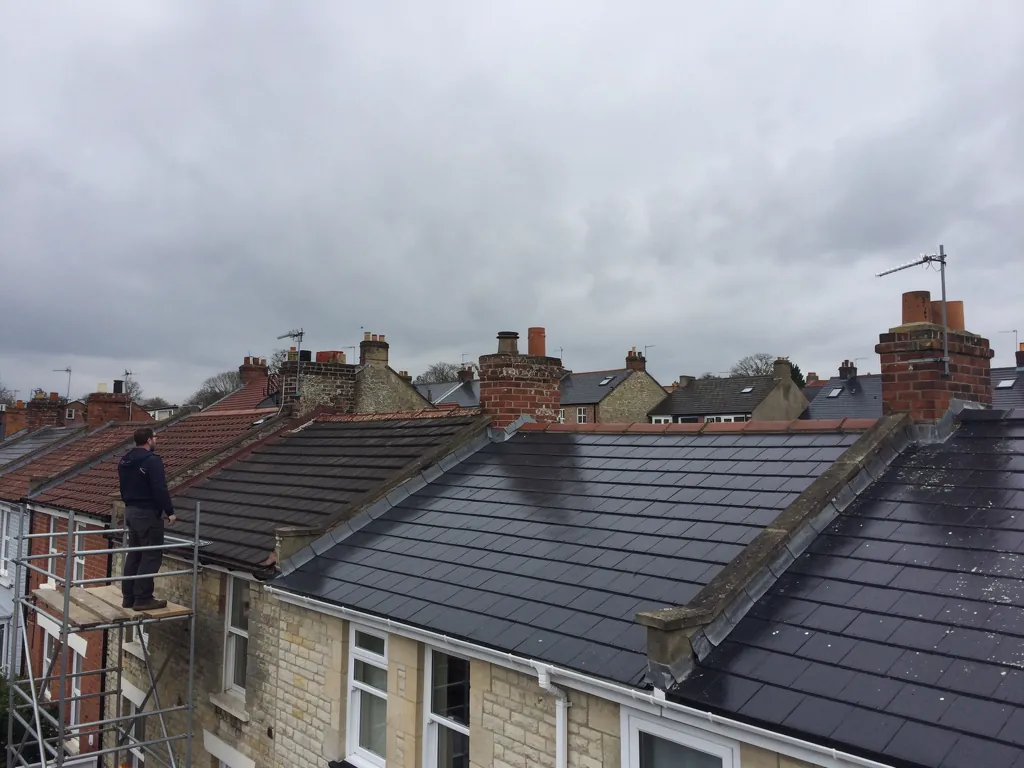
Spray foam and asbestos: the two flags that change a purchase
Two things can turn a roof from a repair bill into a negotiation. Both need handling with care.
Spray foam insulation
Some homes have had foam sprayed onto the underside of the roof. It is easy to spot: a hard, yellowish or off-white layer over the rafters and the back of the tiles, with no timber visible. The RICS consumer guide warns that badly fitted foam can bring damp, uncontrolled condensation included, and suggests owners put the question to the lender and to the home insurer first. A surveyor may also weigh the foam when forming a view of value.
Lender attitudes differ. As of November 2024, some declined such homes outright and others weighed each case. That picture is dated, so put the question to your own lender early. Foam is not always a reason to walk away, and it is not always removed, but you should know before you exchange. If it has to go, our page on spray foam insulation removal explains the work.
Asbestos
HSE tells owners to assume asbestos could be in anything built or refurbished before the year 2000. On roofs, the usual places are cement sheeting on garages and outbuildings and, in older houses, soffits that could be insulating board. Asbestos cement that is intact and left alone is a different matter from material that is broken. If a survey or your own eye suggests it, ask for it to be identified before you commit. Removal and disposal costs belong in your negotiation, and household asbestos waste has to be consigned properly.
Never break, drill or sand a suspect sheet yourself. Leave it intact and have it assessed.
Reading the survey report without panic
Mortgage valuations and building surveys use wording that sounds worse than it is. A survey will often give a roof a rating or a short note, and the phrases are cautious on purpose. "Some slipped tiles" or "limited life remaining" are common, and what matters is the next step they suggest.
Look for the following in the report:
- Whether the surveyor reached the loft, or only looked from the ground.
- Any mention of damp, staining or timber decay beneath the roof.
- Comments on chimneys, flashings and valleys.
- Advice to get a specialist roofer's report.
- Anything about previous alterations, insulation or extensions.
When the report says "get a roofer in"
That is your cue. A survey is a general document written from a few observations, not a repair plan. If it flags the roof, a roofer's survey with photographs of the covering, the flashings and the loft timbers will tell you whether you face a repair or a replacement. We provide survey photographs with the quote, and the quote is written. What happens after a report flags the roof is covered in our inspections section.
Do not rely on the vendor's quote for a roof they say was done recently. Ask for paperwork: invoices, a guarantee in writing, and any building control certificate if the work needed one.
Paperwork worth asking for
A roof's history lives in documents as much as in tiles. Ask the seller, through your solicitor, for anything relating to roof work, extensions, loft conversions and insulation.
Guarantees and certificates
A written guarantee from a previous roofer is only useful if the firm still exists and the document says what it covers. Be careful with the word insurance-backed: it is a particular type of protection, and our guide to roof insurance cover explains how home insurance treats roofs, including wear and tear. A guarantee is not the same as a policy.
Planning Portal guidance says re-roofing does not normally need a building control application where less than 25 per cent of the total building envelope and less than 50 per cent of the roof is affected. Past those limits, approval is required and the insulation may have to be improved too. A loft conversion or a solid conservatory roof needs a building control application. If those were done, there should be a completion certificate. Without one, ask your solicitor how to resolve it; regularisation is available from the council's building control team or a registered building control approver.
Listed buildings and conservation areas
Should the house be listed, or stand in a conservation area, ask what consents were obtained for roof work. Unconsented alterations to a listed building can become your problem when you buy.
Maintenance records
Even a note of when the gutters were last cleared or the chimney repointed helps. Our roof maintenance checklist is a good model for what a well-kept roof's paper trail looks like.
Costs, negotiation and timing before exchange
Once you know the roof has a problem, the questions become practical: how much, who pays and does it affect the timetable?
National cost guides give a feel for scale. MyBuilder, updated 21 August 2026, gives £150 to £1,500 for roof repairs, with major repairs at £2,500 or more, and £5,000 to £12,000 for a typical replacement. Those are national figures, not quotes for any house. The real number depends on access, roof size, the covering and whatever a survey turns up. Find out if VAT and scaffolding sit inside each total.
Ways to use what you find
You can ask for a price reduction, ask the seller to repair before completion, or accept the house as it is knowing the cost. A roofer's written quote gives you a number to negotiate with. Because quotes take time, get the roofer in early, not the week before exchange.
Funding the work
If a replacement is likely soon after you move in, think about it in your budget. Our page on roofing finance covers the options available to homeowners.
When to walk away
Rarely, a roof's problems come with structural movement, widespread timber decay or contamination you cannot price. In those cases the right answer may be no. For most houses the roof is a cost, not a reason to lose the purchase, and the sooner you know the figure, the easier the decision.
Where a patch will do the job we say that, and where it will not we say that too. If you are buying and want a roofer's eye on the property, ask for a survey before exchange.